
Crime
OPHK Air Strikes Kill 103 ISWAP Terrorists in Eight Days, Hit Abu Saleem’s Hideout

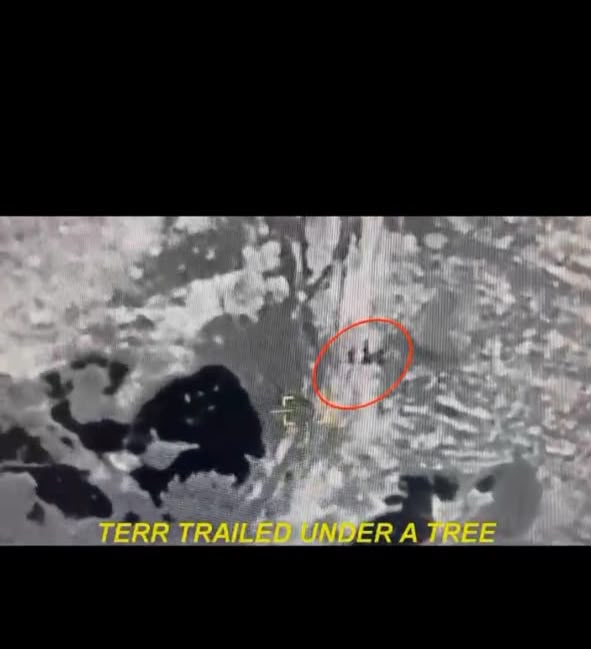
OPHK Air Strikes Kill 103 ISWAP Terrorists in Eight Days, Hit Abu Saleem’s Hideout
By: Zagazola Makama
The Nigerian military says sustained intelligence-led air operations by Operation Hadin Kai (OPHK) neutralised 103 Islamic State West Africa Province (ISWAP) terrorists and destroyed several logistics facilities across the North-East between Oct. 10 and 18.
The operations involved Nigerian Army Aviation, the Nigerian Army Remotely Piloted Aircraft Regiment (NARPARS) and the Air Component, which conducted seven precision strikes against terrorist concentrations, hideouts and logistics facilities in Borno and Adamawa states.
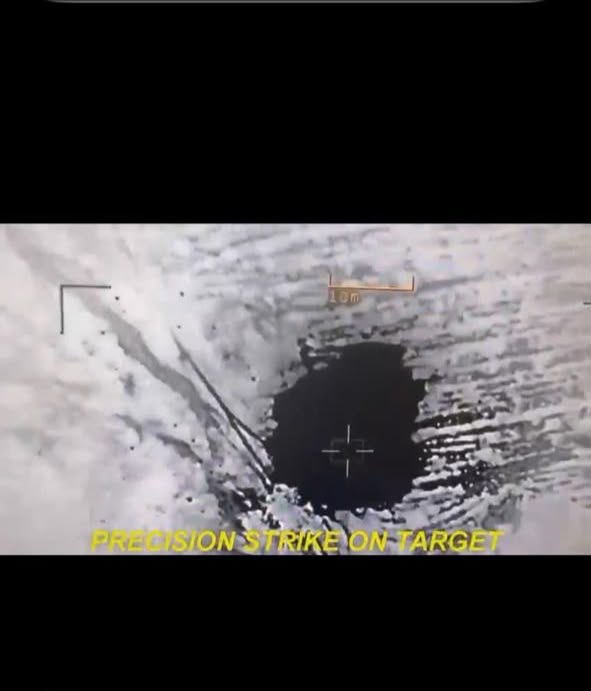
Security sources said the strikes targeted locations around Gudumbali in Guzamala Local Government Area, Badu in Monguno LGA, Mairari, an area east of Badu, Duste Uku in Gombi LGA of Adamawa State, and the alternate residence of Abu Saleem, ISWAP’s Wali of South Lake Chad, in the Arina Woje area of Monguno LGA.
A major operation was recorded on Oct. 18 when an Air Component strike targeted Abu Saleem’s alternate residence following intelligence, surveillance and reconnaissance activities.
Subsequent human intelligence reportedly confirmed the neutralisation of Jindullah, a prominent ISWAP fighter said to have served as Abu Saleem’s chief security guard, and Abul Kissa, a member of the group’s Shura Council.
Other prominent fighters were also reportedly killed in the strike.
The targeted structure was completely destroyed, alongside logistics assets, including nine boat engines and several motorcycles stored at the premises.
The destruction of the facility is expected to disrupt the group’s use of the location as a hideout and logistics point within the forested area.
Earlier, on Oct. 13, a Guardian air asset reportedly tracked a group of 16 terrorists from the Mairari axis to a gathering of more than 100 fighters accompanied by several motorcycles in an area approximately 23 kilometres east of Badu and 19 kilometres west of Monguno.
A subsequent precision strike on the gathering was assessed to have killed about 30 terrorists, although the extent of damage to the motorcycles remained unconfirmed.
Other strikes conducted during the eight-day period targeted suspected terrorist elements and facilities around Gudumbali, Badu, Mairari and Duste Uku.
According to the military account, the seven strikes collectively resulted in the neutralisation of 103 terrorists and the destruction of several logistics hubs and storage facilities.
The operations were aimed at disrupting ISWAP’s leadership structures, degrading its mobility and logistics capabilities, and denying the group safe havens across the theatre.
The sustained air campaign also highlights the growing coordination between Nigerian Army Aviation, NARPARS, the Air Component and ground forces in intelligence-led operations against terrorist networks in the North-East.
Zagazola Makama reports that the military has continued to apply pressure on ISWAP positions and logistics infrastructure as part of efforts to weaken the group’s operational capacity and restore security across the Lake Chad Basin.
OPHK Air Strikes Kill 103 ISWAP Terrorists in Eight Days, Hit Abu Saleem’s Hideout


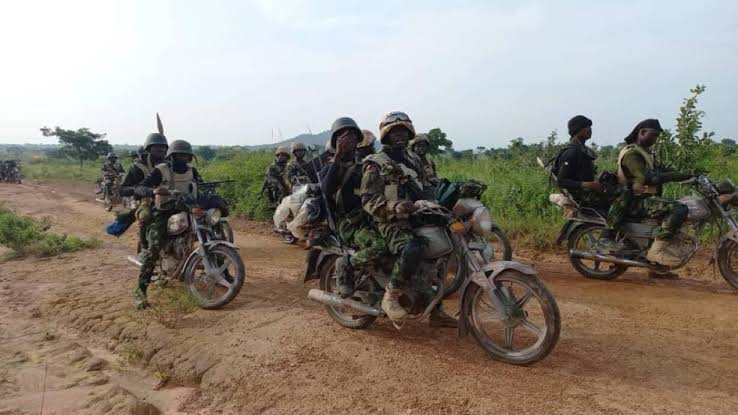
Troops secure release of kidnapped civilian in Plateau
By: Zagazola Makama
Troops of Operation Enduring Peace (OPEP) have secured the release of a civilian abducted along Cubana Street in Bassa Local Government Area of Plateau.
Security sources said the incident occurred at about 10:05 p.m. on Oct. 18, prompting troops from Sectors 1 and 3 to launch a search-and-rescue operation.
The sources said the troops subsequently searched Dutsen Kura, Rafin Bauna and Rafiki communities in an effort to locate the victim and track down the abductors, but made no contact with the fleeing criminals.
They added that the victim was later released following sustained pressure mounted on the abductors by the troops.
The rescued civilian was subsequently reunited with his family.
The sources said efforts were ongoing to track down and apprehend the fleeing suspects.
They added that security operations would be sustained to prevent further incidents and improve safety in the area.
Troops secure release of kidnapped civilian in Plateau
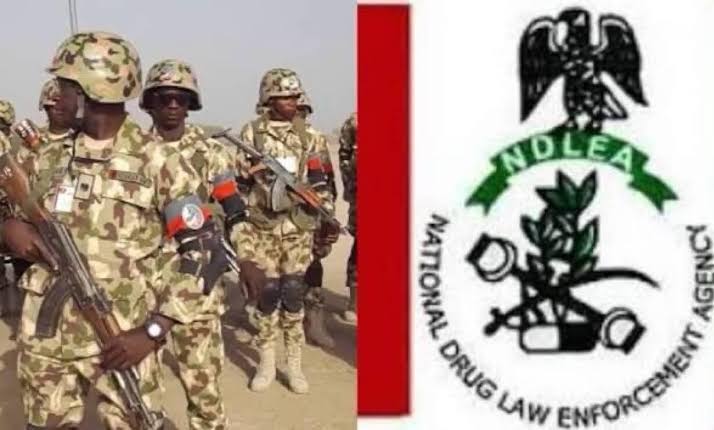
Troops, NDLEA operatives arrest four suspects in Kebbi raids
By: Zagazola Makama
Troops of the Nigerian Army, in collaboration with operatives of the National Drug Law Enforcement Agency (NDLEA), have arrested four suspects during raids on suspected criminal flashpoints in Maiyama Local Government Area of Kebbi.
Security sources said the operation was conducted at about 5:11 p.m. on Oct. 18 by troops of 1 Battalion and NDLEA personnel at Dakin Kowa, Karaye and Gubba villages.
The sources said four suspects were apprehended during the raids, while some items were also recovered.
They added that the suspects and recovered items had been handed over to the NDLEA for further investigation and necessary action.
The operation was part of ongoing efforts by security agencies to tackle criminal activities and strengthen security in the state.
Troops, NDLEA operatives arrest four suspects in Kebbi raids
Crime
ZAGAZOLA RESPONSE: OLD BOKO HARAM VIDEO RESURRECTED AS ‘RECENT’ FOOTAGE IN FRESH ATTEMPT TO MANUFACTURE RELIGIOUS PROPAGANDA
ZAGAZOLA RESPONSE: OLD BOKO HARAM VIDEO RESURRECTED AS ‘RECENT’ FOOTAGE IN FRESH ATTEMPT TO MANUFACTURE RELIGIOUS PROPAGANDA
By: Zagazola Makama
There is a dangerous difference between exposing terrorism and exploiting it to manufacture a religious narrative.
Unfortunately, the commentary by Franc Utoo Esq., circulated under the banner of Equipping The Persecuted, appears to cross that line by presenting old footage as a recent event and using it to advance sweeping claims about religious persecution in Nigeria.
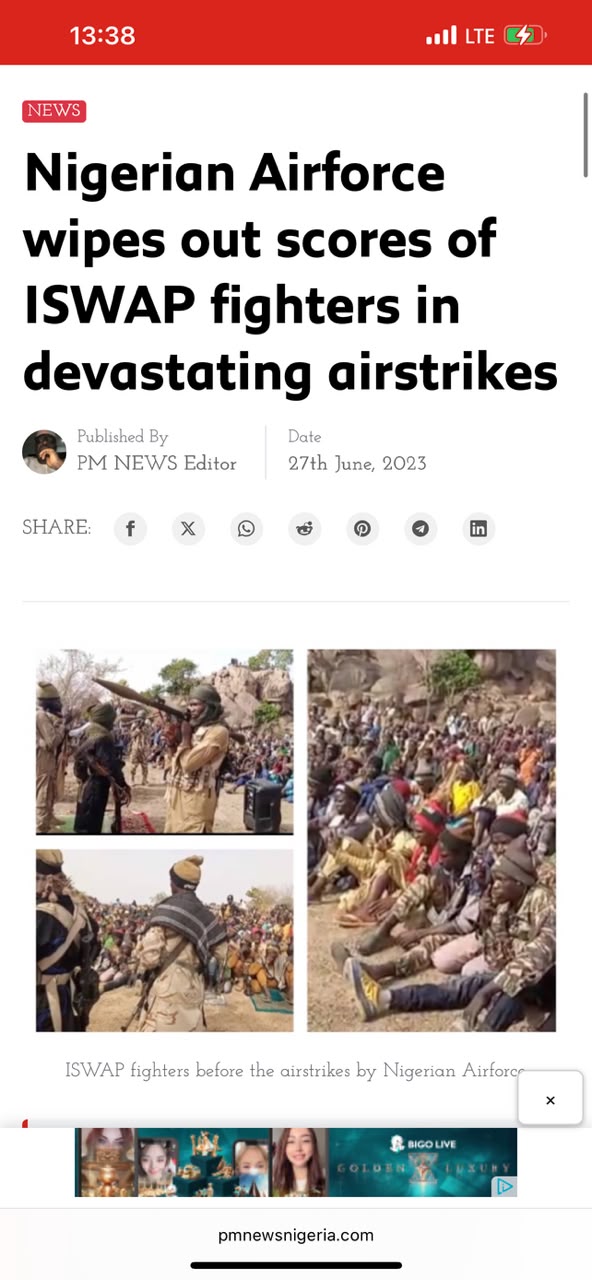
But why is footage first published by Zagazola in 2023 being presented as evidence of a recent Sallah gathering by Boko Haram? The video is not new. It was circulated by Zagazola in 2023 and showed fighters associated with Boko Haram factional leader Ali Ngulde participating in Eid prayers.
Zagazola also reported on and released footage of devastating military strikes that reportedly killed more than 200 Boko Haram fighters. In a series of leadership decapitation operations, the Air Component of Operation HADIN KAI destroyed more than seven insurgent enclaves in the Mandara Mountains. These operations and their outcomes were reported by local and international media organisations.
Now, Mr Utoo is recycling our old material to create the impression of a new development. If the author has evidence that the video was recorded during the most recent Sallah celebration, he should publish the date, location, verification method and supporting evidence.
Otherwise, the claim is misleading.
You cannot manufacture a new security incident by recycling an old video and attaching a fresh caption to it. Equally troubling is the attempt to associate the footage with a Christian-dominated area of Nigeria’s Middle Belt.
The footage was previously associated with Boko Haram activity around the Mandara Mountains, along the Borno–Cameroon border, a rugged area that has served as a hideout and operational environment for insurgent factions for years. It is not the Middle Belt.
The Mandara Mountains form part of the wider northeastern borderland, extending across parts of southern Borno State and into Cameroon. The cross-border security challenges in this region explain the deployment of Cameroonian forces as part of the Multinational Joint Task Force (MNJTF). This is a well-known operational theatre in the fight against Boko Haram. It cannot simply be relabelled as the Middle Belt to fit a preferred religious narrative.
The most glaring distortion in this commentary is its attempt to frame Boko Haram’s activities almost exclusively through the lens of anti-Christian violence.
Boko Haram has attacked churches and killed Christians. Those crimes are real, reprehensible and deserving of condemnation.
But it is equally undeniable that the insurgency has devastated Muslim communities across Borno and the wider Lake Chad Basin on an enormous scale.
For more than a decade, Muslim civilians have been massacred, abducted, displaced, extorted and forced from their homes. Muslim clerics who rejected the terrorists’ ideology have been targeted.
Traditional rulers, traders, farmers, fishermen and entire communities have suffered under an insurgency that claims to act in the name of Islam but has inflicted extraordinary suffering on Muslim populations.
Thousands of traditional rulers and community leaders have reportedly been displaced, while many have been killed or forced to abandon their domains.
Consider Gwoza, where Boko Haram ambushed and killed the Emir. The town’s population was subjected to mass displacement, and in 2014, the terrorists declared the area part of their so-called caliphate.
These realities expose the fundamental weakness of a narrative that presents Boko Haram’s insurgency primarily as a campaign against Christians while overlooking the extensive violence inflicted on Muslim populations.
The terrorist organisation’s victims cannot be divided into those whose suffering fits an international advocacy narrative and those whose deaths are conveniently ignored. Consider the communities of Kukawa, Monguno, Abadam, Marte and Guzamala in Borno State. These areas have experienced severe insurgent violence and have predominantly Muslim populations.
The author should also explain how his sweeping claims account for the security experiences of communities such as Chibok, Izge and Hawul, which have not experienced the same kind of sustained territorial takeover and mass displacement associated with Boko Haram’s occupation of Gwoza and other insurgent strongholds.
Although these communities have experienced security challenges, their circumstances cannot be reduced to the same narrative without examining the evidence. The Lake Chad region, where insurgents have maintained operational bases and hideouts, is also overwhelmingly Muslim.
The terrorists have not spared these communities because their inhabitants share the religion the insurgents claim to represent. In one notorious attack, the terrorists slaughtered about 140 farmers. There are numerous documented examples of attacks on Muslim farmers, fishermen and rural communities across the region. These are not isolated incidents. They form part of a long and devastating history of insurgent violence against civilians.
The author also needs to explain how his geographical and religious framing accounts for insurgent activity in northern Borno. The killing of Almuniki, also referred to as Abor Minok, in a US operation was not an incident in a Christian-dominated Middle Belt community. The area in northern Borno associated with the operation is part of a predominantly Muslim region.
This is important because the wider insurgency cannot be honestly explained by repeatedly suggesting that its principal operating environment is Christian-majority territory. Lets us use the most recent statistics of rescued populations in Borno, they are over 300,000 and 99 percent of them are muslims.
Therefore, Boko Haram and ISWAP have operated across communities with different local histories and demographic characteristics. Their violence has been driven by an extremist insurgent project, territorial ambitions, coercion, extortion and the targeting of people they consider enemies or obstacles to their authority.
The commentary invokes genocide and religious persecution while offering no fresh evidence establishing that the particular footage demonstrates a recent campaign against Christians.
On the same Eid occasion, ISWAP and Boko Haram reportedly held prayers at more than 10 designated prayer grounds, with footage subsequently circulated through channels associated with the groups, including Amaq.
The presence of armed fighters at a religious gathering is disturbing. But the footage alone does not establish the intended targets of the gathering or the existence of a new campaign against a particular religious community.
So, what is the purpose of presenting a three-year-old video as recent footage while placing it within a geographical and religious narrative that has not been substantiated?
Is it to inform the public about a verified security incident? Or is it to generate outrage, mobilise international sympathy and reinforce a predetermined account of the conflict?
Where advocacy organisations seek international attention and financial support, transparency about their evidence, funding and claims is essential.
Franc Utoo Esq. demands that the public look carefully at the footage. We agree.
Let the public look at it carefully, including its history. The video was published by Zagazola in 2023. Why is it being presented as footage of a recent Sallah celebration?
The footage does not, by itself, establish genocide against Christians. Where is the evidence connecting this particular gathering to the alleged campaign described in the commentary?
ZAGAZOLA RESPONSE: OLD BOKO HARAM VIDEO RESURRECTED AS ‘RECENT’ FOOTAGE IN FRESH ATTEMPT TO MANUFACTURE RELIGIOUS PROPAGANDA

Aleto Gas Explosion: HOMEF Demands Probe, Decommissioning of Unsafe Pipelines

India-Nigeria Ties: 60,000-Strong Indian Diaspora Bridges Cultural Divide

Troops secure release of kidnapped civilian in Plateau

Roger Federer’s Shock as DNA Results Reveal Myla and Charlene Are Not His Biological Children

THE PLIGHT OF FARIDA

FAILED COUP IN BURKINA FASO: HOW TRAORÉ NARROWLY ESCAPED ASSASSINATION PLOT AMID FOREIGN INTERFERENCE CLAIMS
-
 News3 years ago
Roger Federer’s Shock as DNA Results Reveal Myla and Charlene Are Not His Biological Children
-
Opinions5 years ago
THE PLIGHT OF FARIDA
-
 News2 years ago
FAILED COUP IN BURKINA FASO: HOW TRAORÉ NARROWLY ESCAPED ASSASSINATION PLOT AMID FOREIGN INTERFERENCE CLAIMS
-
 Opinions5 years ago
POLICE CHARGE ROOMS, A MINTING PRESS
-

 News3 years ago
EYN: Rev. Billi, Distortion of History, and The Living Tamarind Tree
-

 ACADEMICS3 years ago
A History of Biu” (2015) and The Lingering Bura-Pabir Question (1)
-

 Columns3 years ago
Army University Biu: There is certain interest, but certainly not from Borno.
-

 Politics1 year ago
2027: Why Hon. Midala Balami Must Go, as Youths in Hawul and Asikira/Uba Federal Constituency Reject ₦500,000 as Sallah Gift
