
Politics
Beyond VP Shettima: Atiku’s Real Test Is Offering Nigerians a Credible Alternative for 2027

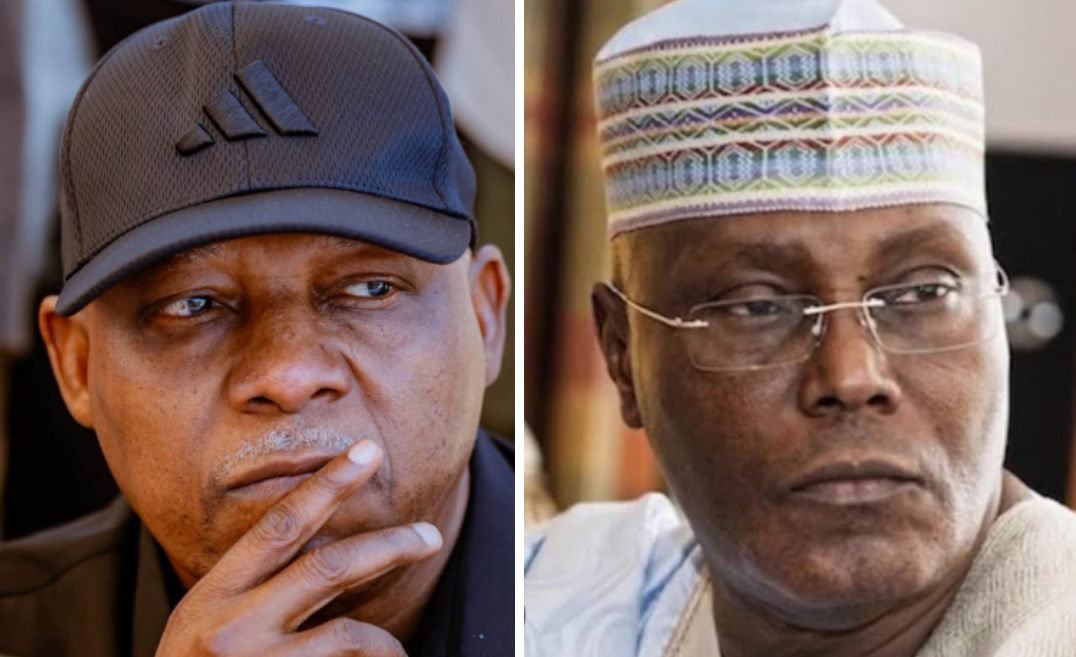
Beyond VP Shettima: Atiku’s Real Test Is Offering Nigerians a Credible Alternative for 2027
By: Dr. James Bwala
The political atmosphere in Nigeria is often shaped by sharp exchanges, personal attacks, and dramatic claims about who wields the greatest influence in government. This tendency was recently reflected in a story bearing the caption “2027: Atiku Lambasts VP Shettima: ‘Even Tinubu’s Wife, Son, Command More Influence Than You.’” The statement is provocative, but it also raises an important question: should political leadership be measured by the volume of one’s influence, the number of people surrounding one in the Presidential Villa, or the ability to serve the nation responsibly?
Atiku Abubakar, as a former vice president and a prominent opposition figure, has every right to criticize the administration of President Bola Ahmed Tinubu. In a democracy, opposition voices are necessary. They help hold government accountable, expose weaknesses, and offer citizens alternative perspectives. However, criticism becomes less valuable when it is reduced to personal attacks, speculation about influence, or attempts to diminish the constitutional role of another public officer. Atiku should understand that leadership is not measured by how loudly one criticizes others or by the level of personal influence one commands. It is measured by responsibility, competence, service, integrity, and the ability to present credible solutions to national problems.
Vice President Kashim Shettima occupies a constitutional office created and recognized by the Nigerian Constitution. He is not in the Presidential Villa merely to compete for influence with the President’s family, political allies, or other powerful individuals around government. His position is defined by law, public responsibility, and the duties assigned to him by the president within the constitutional framework. Whether or not one agrees with the policies of the Tinubu administration, the office of the vice president deserves respect. Its significance should not be reduced to informal calculations about who has the president’s ear or who commands more influence behind the scenes.
Atiku, having served as vice president between 1999 and 2007, ought to understand the nature of the office better than most politicians. He knows that the vice president does not operate as a rival president or as an independent center of executive authority. The vice president works within a political and constitutional arrangement in which the president remains the head of the executive branch. The effectiveness of the vice president, therefore, cannot always be judged by public confrontation, dramatic announcements, or visible competition with the president. In many circumstances, loyalty, consultation, coordination, and quiet policy work are more valuable than public displays of power.
Vice President Shettima’s calm disposition and loyalty to the administration should not automatically be interpreted as weakness or irrelevance. In public life, restraint is often mistaken for a lack of courage, while loudness is mistaken for strength. Yet a leader who refuses to engage in every political quarrel may be demonstrating discipline rather than incompetence. Shettima has generally presented himself as a supportive partner to President Tinubu. He has defended the administration, represented Nigeria at important national and international events, and participated in discussions concerning economic development, investment, agriculture, security, and social welfare. Whether his performance is considered adequate is open to public debate, but it is unfair to suggest that constitutional relevance depends on constant public confrontation.
Leadership is not a contest to determine who commands the most informal influence. In government, influence has meaning only when it is used to produce results. A person may have access to powerful individuals and still fail to improve the lives of ordinary citizens. Another person may operate quietly and yet contribute significantly to policy development, institutional stability, and national progress. The real test of public office is not how often an officeholder appears in political headlines but whether citizens benefit from his or her decisions.
This is why Atiku’s political interventions should go beyond attacks on Shettima. Nigerians are facing serious and urgent challenges: rising living costs, unemployment, insecurity, weak public institutions, poor infrastructure, educational decline, inadequate healthcare, and a fragile economy. Citizens want to know how political leaders intend to address these problems. They want clear answers about job creation, energy supply, food security, industrial development, public-sector reform, and the protection of vulnerable households. They need proposals that can be examined, debated, and implemented. Personal insults do not provide these answers.
If Atiku intends to contest the presidency again in 2027, his responsibility is to present a comprehensive and convincing program for national renewal. He should explain how his administration would improve the economy, strengthen democratic institutions, fight corruption, reform the security sector, and create opportunities for young Nigerians. He should show how his policies would differ from those of the present government and why Nigerians should trust him with power. A serious presidential aspirant must offer more than criticism; he must offer direction.
The electorate should not be expected to vote for political personalities merely because they are experienced, famous, or capable of attacking the government. Nigerians require leaders with practical plans, credible teams, and a demonstrated commitment to public service. The country cannot afford to return to an era in which politicians make broad promises during campaigns and later govern without a clear strategy. Political parties and presidential candidates must be judged by the quality of their ideas, the realism of their proposals, and their willingness to be held accountable.
Atiku’s political record and experience give him a strong platform from which to make meaningful contributions to national debate. He has occupied one of the highest offices in the land and has participated in Nigeria’s political and economic development for decades. He therefore has the capacity to speak authoritatively about governance. However, experience alone does not guarantee effectiveness. Former officeholders must be prepared to learn from the past, acknowledge shortcomings, and demonstrate that they possess fresh ideas for present challenges. Nigeria of today is different from Nigeria of twenty years ago. The population is larger, the economy is more complex, technology has transformed public expectations, and young people are demanding greater transparency and opportunity.
For this reason, Atiku should avoid relying on old political formulas or presenting himself simply as an alternative to whoever occupies the presidency. Nigerians need to know what he stands for beyond opposition to Tinubu. What is his economic philosophy? How would he manage public resources? Would he continue, reverse, or modify existing reforms? How would he protect poor Nigerians from the effects of economic adjustment? What would he do to ensure that public enterprises serve the national interest? These questions deserve detailed answers.
The reference to political “marabouts” and the fear of leaders who may perform “abracadabra” with government organizations reflects a genuine concern among Nigerians. Public institutions and state-owned enterprises must not be treated as personal property or political rewards. Their reform, privatization, commercialization, or restructuring should be based on transparent processes, economic evidence, and the public interest. Nigerians do not need magical promises or mysterious solutions. They need competent management, accountable institutions, honest leadership, and policies that can withstand public scrutiny.
The same standard should apply to every political actor, including the Tinubu administration and Vice President Shettima. Defending Shettima’s constitutional position does not mean that his performance should be beyond criticism. The vice president, like every public official, must be open to evaluation. Nigerians have the right to ask what he has achieved, what responsibilities he has undertaken, and how his office has contributed to solving national problems. Respect for his office should not become an excuse for avoiding accountability. At the same time, accountability must be based on facts and policy outcomes, not on personal comparisons involving the president’s wife, children, or other relatives.
Public debate improves when it focuses on institutions and results rather than rumors about influence. The claim that one person has more influence than another may generate headlines, but it does not help citizens understand how government works. Informal access is not a substitute for constitutional authority. A minister, adviser, family member, or political ally may influence a decision, but such influence must not be confused with legitimate public responsibility. In a constitutional democracy, authority should be exercised through recognized offices and accountable processes.
Vice President Shettima’s relationship with President Tinubu also demonstrates the importance of political cooperation within an executive administration. Disagreements may exist behind closed doors, as they do in every serious government, but public officeholders must maintain a degree of unity if government is to function effectively. Constant public conflict between the president and vice president would create instability and undermine confidence in the country. Shettima’s willingness to support the president does not necessarily mean that he lacks independent judgment. It may reflect an understanding that political differences should be managed responsibly rather than turned into public spectacles.
Atiku, as a former holder of the same office, should appreciate this reality. Instead of mocking Shettima’s style or questioning his relevance, he should engage the vice president and the administration on policy. If the government’s economic reforms are hurting citizens, he should explain what alternatives he proposes. If insecurity is worsening, he should provide a better security framework. If unemployment is rising, he should outline a credible employment strategy. If government-owned organizations are being reformed, he should explain what model he believes would protect public assets and improve efficiency.
Nigeria’s democracy will benefit when opposition politics moves from personal rivalry to intellectual competition. Parties should compete over who can provide better healthcare, stronger schools, safer communities, more reliable electricity, and a more productive economy. Candidates should debate how to improve tax collection without overburdening citizens, how to attract investment without compromising national interests, and how to use technology to reduce corruption and improve public services. These are the issues that should define the road to 2027.
Indeed, Atiku should focus on presenting his vision for Nigeria rather than attempting to shift public attention toward questions about Shettima’s influence. Nigerians are not looking for political drama alone. They are looking for leadership that can help them survive present difficulties and build a better future.
*James Bwala, PhD, writes from Abuja
Beyond VP Shettima: Atiku’s Real Test Is Offering Nigerians a Credible Alternative for 2027


Politics
Beyond Politics: The Imperative of Stakeholder Support for Engr. Mustapha Gubio’s Vision for a United and Educated Borno
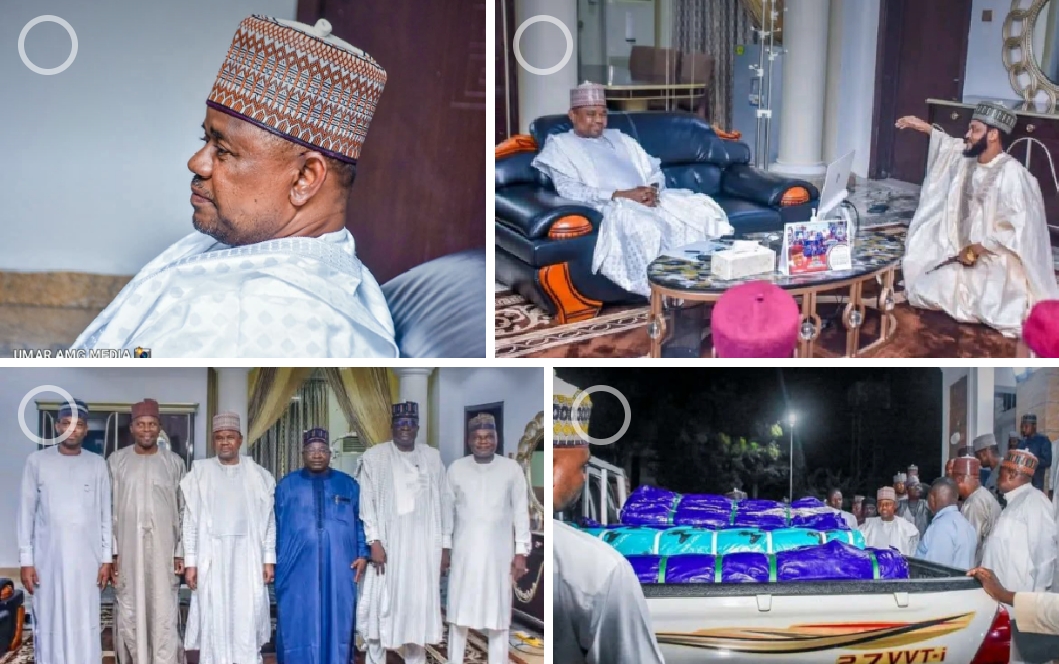
Beyond Politics: The Imperative of Stakeholder Support for Engr. Mustapha Gubio’s Vision for a United and Educated Borno
By: Dr. James Bwala
The political future of any state is shaped not only by the ambitions of individual candidates but also by the level of confidence, participation, and support expressed by its citizens. In Borno State, the recent solidarity visits to the All Progressives Congress (APC) gubernatorial candidate, Engr. Alhaji Mustapha Gubio, FNSE, represent a decisive moment in the state’s political and social development. The visits demonstrate that different groups and stakeholders are prepared to engage with his aspiration and contribute to a broader conversation about the future of Borno state.
Recently, among the visiting delegations was a prominent group of Fulani leaders and stakeholders from across the state, led by Ambassador Mohammed Yalli Bello. The delegation congratulated Engr. Gubio on his political ambition and expressed its readiness to support him, including a commitment to vote for his candidacy. Representatives of MBG Travel Trust Agency, Dr. Mustapha Gaidam, Permanent Secretary from Yobe State, and other well-wishers also visited to extend goodwill and encouragement.
These engagements should be understood as more than routine political courtesies. They reflect the growing importance of unity, inclusion, education, and responsible leadership in addressing the challenges confronting Borno State. Engr. Gubio’s response to the visitors—particularly his call on Fulani leaders to prioritize the education of their children—also highlights a central truth: political progress cannot be separated from human development. A prosperous Borno requires not only sound policies and infrastructure but also educated, empowered, and united citizens.
The solidarity expressed by the various delegations is significant because political leadership is most effective when it is built on consultation and broad participation. A candidate who engages with diverse groups is better positioned to understand the concerns and aspirations of the people. In a state as socially and culturally diverse as Borno, no single community or interest group can independently determine the direction of development. Progress requires cooperation among traditional leaders, professional associations, religious groups, business organizations, youth, women, farmers, pastoralists, and other members of society.
The visit by the Fulani leaders is especially important in this regard. Fulani communities are an integral part of Borno State’s social and economic fabric. Their contributions to agriculture, livestock production, commerce, and community life deserve recognition and inclusion in public policy. Their decision to engage directly with Engr. Gubio and express support for his ambition suggests a willingness to participate actively in the political process. It also demonstrates the value of dialogue in strengthening relationships between political leaders and communities.
Support of this nature carries both opportunity and responsibility. While the pledge of votes indicates political confidence, it should also encourage the candidate and his supporters to remain committed to fairness, accountability, and effective governance. Political support should not be viewed as a blank cheque. Rather, it should serve as a mandate for the candidate to listen carefully to the people, address their concerns, and pursue policies that benefit the entire state.
Engr. Gubio’s emphasis on unity and inclusiveness is therefore commendable. In a society affected by insecurity, economic pressure, and social divisions, leaders must avoid language and policies that deepen mistrust. They must promote a shared vision in which every citizen feels valued and protected. Unity does not mean that all citizens must have identical opinions. It means that differences can be managed peacefully and transformed into sources of strength rather than conflict.
For Borno State, the call for unity is particularly time-sensitive. The state has faced serious security and humanitarian challenges over the years. These difficulties have disrupted education, weakened livelihoods, displaced families, and created uncertainty about the future. Addressing such challenges requires more than security operations. It requires social cohesion, responsible political leadership, and cooperation among communities. When leaders and stakeholders work together with respect, they make it possible for peace and development to happen.
The participation of other well-wishers, including representatives of MBG Travel Trust Agency and Dr. Mustapha Gaidam, also shows that support for a political aspiration can extend beyond immediate local structures. Such visits help build relationships across professional, geographic, and institutional boundaries. They provide an opportunity for people with different experiences to share ideas about governance, investment, infrastructure, and social development.
Private organizations and professional groups have an important role to play in Borno’s development. Government cannot be expected to solve every problem alone. Businesses, civil society organizations, educational institutions, and community associations can contribute expertise, resources, and innovative solutions. A political administration that welcomes these partners is more likely to develop practical policies and implement them effectively.
At the same time, political engagement should be guided by issues rather than personalities alone. Supporters and stakeholders should seek clear commitments from candidates on matters such as education, healthcare, employment, agriculture, infrastructure, security, and transparent administration. The goodwill expressed during the solidarity visits can become more meaningful when it is translated into constructive policy dialogue. The people of Borno deserve leadership that combines vision with measurable results.
One of the most important issues raised during Engr. Gubio’s engagement with the Fulani leaders was the need to prioritize the education of their children. This message deserves widespread support because education is one of the most powerful instruments for individual and community transformation. It equips people with knowledge, skills, and confidence, enabling them to make informed decisions and participate productively in society.
For many pastoral and rural communities, access to formal education may be difficult because of mobility, distance, poverty, or inadequate facilities. These challenges, however, should not be used as reasons to abandon education. Instead, they should encourage government and community leaders to develop flexible and inclusive models that respond to the realities of different populations. Mobile schools, boarding facilities, community learning centers, scholarship schemes, and vocational programs can help ensure that children from nomadic and semi-nomadic communities are not left behind.
Education is particularly important for children from communities that have historically faced limited access to public services. Without education, young people may struggle to adapt to changing economic conditions and may remain excluded from opportunities in government, business, technology, and the professions. With education, they can become teachers, engineers, doctors, entrepreneurs, administrators, and community leaders. They can also preserve their cultural identity while gaining the skills required to navigate the modern world.
The responsibility for promoting education does not belong to government alone. Parents and community leaders must encourage children to attend school and remain committed to their studies. Traditional and religious leaders can play a powerful role by publicly supporting education and correcting misconceptions that discourage school attendance. Families must also recognize that educating girls is as important as educating boys. Educated women contribute significantly to healthier families, stronger economies, and more stable communities.
For education to produce meaningful results, however, access must be matched by quality. Schools need qualified teachers, adequate classrooms, learning materials, sanitation facilities, and safe environments. Children who attend school but receive poor-quality instruction may still lack the skills needed for employment and civic participation. A credible development agenda for Borno should therefore focus on both enrollment and learning outcomes.
The call for education also connects directly with the issue of sustainable development. A state cannot build a modern and prosperous economy when large sections of its population are excluded from learning. Education supports innovation, improves productivity, and strengthens public institutions. It helps citizens understand their rights and responsibilities, resist manipulation, and contribute to democratic accountability. In this sense, investment in education is not merely a social obligation; it is a strategic investment in peace and prosperity.
Engr. Gubio’s professional background as an engineer may also be relevant to this broader vision of development. Engineering is associated with planning, problem-solving, technical knowledge, and practical implementation. Borno requires these qualities as it rebuilds infrastructure, strengthens public services, and expands economic opportunities. Roads, water systems, schools, healthcare facilities, housing, and energy projects must be planned carefully and executed transparently. A development-oriented administration should use available resources efficiently and ensure that projects respond to genuine public needs.
Nevertheless, the success of any administration will depend on more than the professional background of its leader. It will depend on the quality of the team, the strength of institutions, and the willingness to listen to citizens. The goodwill expressed by stakeholders should therefore be transformed into a culture of continuous consultation. Communities should not be engaged only during election periods. They should remain involved in policy development, implementation, and evaluation.
The solidarity visits also demonstrate the importance of respectful political communication. In a democratic society, citizens should be free to express support for candidates and discuss their expectations. Candidates, in turn, must treat supporters and critics with equal respect. Political competition should focus on ideas and competence rather than personal attacks, ethnic division, or the spread of misinformation. Borno’s future is too important to be sacrificed to divisive politics.
Ultimately, the support shown to Engr. Mustapha Gubio presents an opportunity to build a broad coalition around unity, inclusion, and development. The commitment of Fulani leaders, professional representatives, public officials, and other stakeholders can contribute to a stronger political process. However, this support will have its greatest value when it is accompanied by clear expectations and continued civic participation.
A prosperous Borno State must be one in which every community has a sense of belonging, every child has access to quality education, and every citizen has the opportunity to live with dignity. It must be a state where leaders are accessible, institutions are accountable, and development is distributed fairly. Achieving this vision requires cooperation between government and citizens, as well as a commitment to peaceful dialogue and responsible participation.
The recent engagements with Engr. Gubio therefore carries a message that extends beyond politics. They suggest that stakeholders are prepared to work together and that communities are looking for leadership capable of uniting them around common goals. Engr. Gubio’s call for the education of Fulani children adds an important development dimension to this political conversation. It reminds all leaders and citizens that the future of Borno State is in the unity and education of its children. And to achieve that, leaders must begin to come together towards building a Borno for the future.
* James Bwala, PhD, writes from Abuja.
Beyond Politics: The Imperative of Stakeholder Support for Engr. Mustapha Gubio’s Vision for a United and Educated Borno
Politics
Emir of Fika appeals to APC gubernatorial candidate to define boundaries between Fika and Potiskum if elected

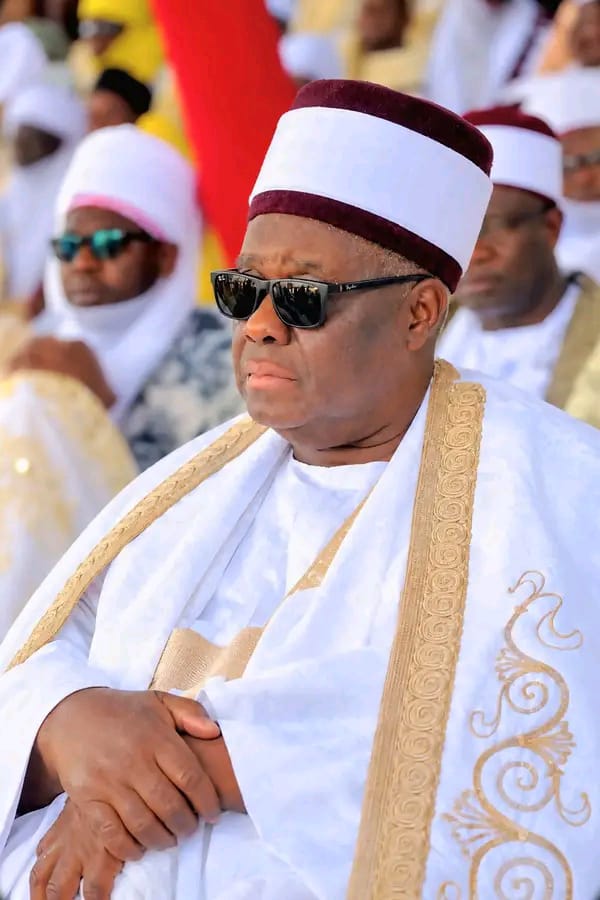
Emir of Fika appeals to APC gubernatorial candidate to define boundaries between Fika and Potiskum if elected
By: Yahaya Wakili
His Royal Highness, the Emir of Fika and Chairman Yobe State Council of Traditional Rulers, Alhaji Dr Muhammadu Ibn Abali Muhammadu Idrissa CON, CFR, has called on the Yobe State APC gubernatorial candidate, Alhaji Baba Malam Wali Mni, to define the boundaries between the Fika and Pataskum emirate councils, respectively.
The royal father made the call through the Zarma Kura of Fika, Barrister Baba Kura Ba’aba, when the Yobe state APC gubernatorial candidate paid him a courtesy visit at his palace in Potiskum town, the headquarters of the Fika emirate council.
“We are concerned by public rhetoric suggesting that Potiskum and Pataskum are interchangeable entities; respectfully, this is contrary to the provisions of the Yobe state chieftaincy law. The law and the instruments of appointment for the successive emirs of Fika clearly designate Potiskum as the headquarters of the Fika emirate, while Yerimaram serves as the headquarters of the Pataskum emirate.
According to him, “We believe this is a legal and administrative matter that requires formal government resolution rather than political interpretation. We urge you to exercise the necessary political will to clearly define the boundaries of the twelve districts involved, and this will safeguard the integrity of both institutions, prevent avoidable friction, and forestall potential threats to law and order.
“As a peace -loving and law abiding institution, the Fika emirate remains committed to upholding and respecting any lawful decision reached by your administration regarding this matter.” he added.
Responding, the Yobe state APC gubernatorial candidate, Alhaji Baba Malam Wali Mni, said the upcoming 2027 elections are very critical for the state and urged the electorates in the state to vote for President Bola Ahmed Tinubu GCFR and all APC candidates in the state.
According to Wali, the victory for the APC is essential and important to ensure the continuation of current development projects by the Tinubu administration. He noted that the incoming government is the government of continuity, and we are going to continue from where Governor Mai Mala Buni stopped, complete the remaining ongoing, and embark on new ones.
Emir of Fika appeals to APC gubernatorial candidate to define boundaries between Fika and Potiskum if elected
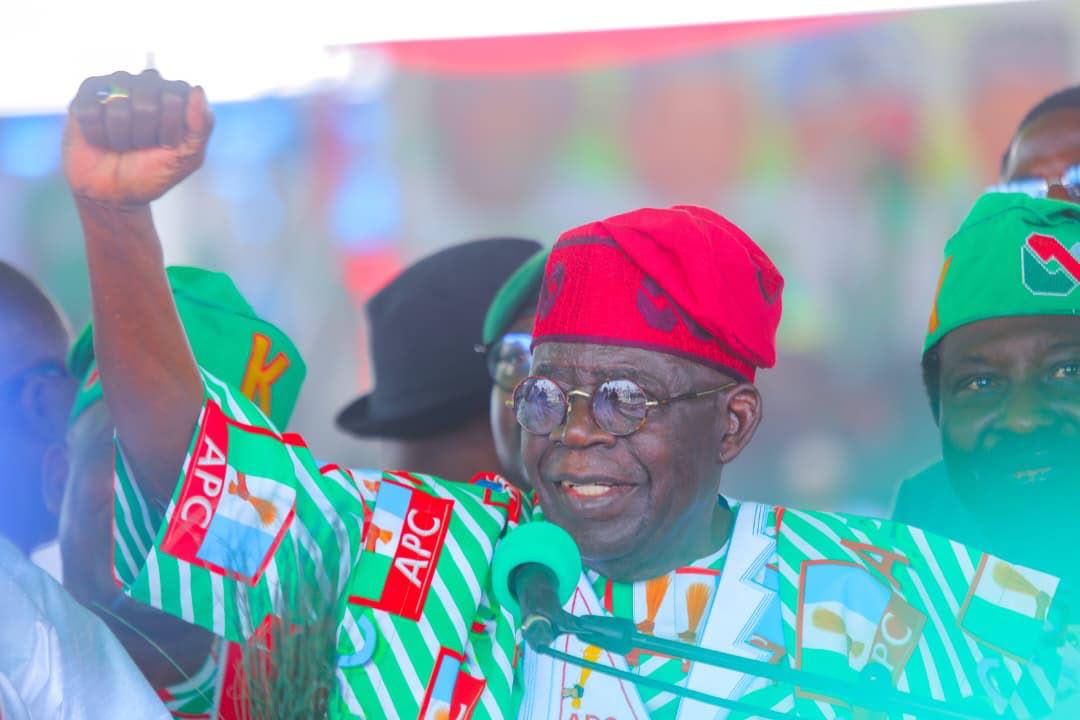
Tinubu vows to rescue abducted Askira-Uba schoolchildren, assures Borno of lasting peace
…President lauds Zulum’s restoration drive, commissions Maiduguri conference centre, female NYSC lodge amid rousing APC rally
By: Michael Mike
President Bola Ahmed Tinubu on Wednesday assured residents of Borno State that the abducted schoolchildren in Askira-Uba Local Government Area would be rescued, pledging renewed efforts to restore lasting peace and security in the North-East.
Tinubu gave the assurance in Maiduguri amid a rousing welcome by thousands of All Progressives Congress (APC) supporters and admirers who thronged the El-Kanemi Warriors Sports Centre and major streets of the state capital for the party’s rally.
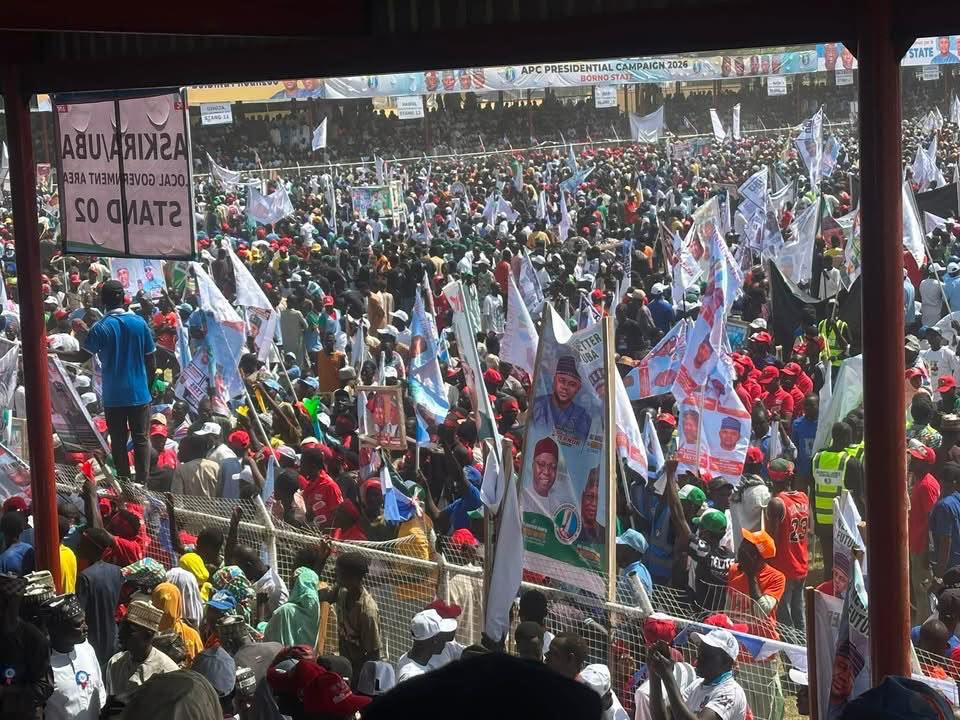
The President said security agencies, the military and intelligence operatives were working to secure the release of the abducted children, assuring families and residents that the victims would be brought home.
“They abducted children of Askira Uba. They are there with our prayers, with our armed forces and intelligence. We will rescue them. We will rescue them, insha’Allah,” Tinubu said.
He paid tribute to the armed forces for their sacrifices in confronting insurgency and terrorism, saying soldiers had endured harsh conditions in the bush, under the sun and in the rain, risking their lives to secure Borno, particularly Maiduguri.
“We will achieve that peace. Terrorism will go,” he declared, expressing confidence that sustained military and security efforts would eventually defeat insurgency.
Tinubu also urged terrorists and bandits to abandon violence and surrender their weapons, calling on them to seize the opportunity to renounce criminality and embrace peace.
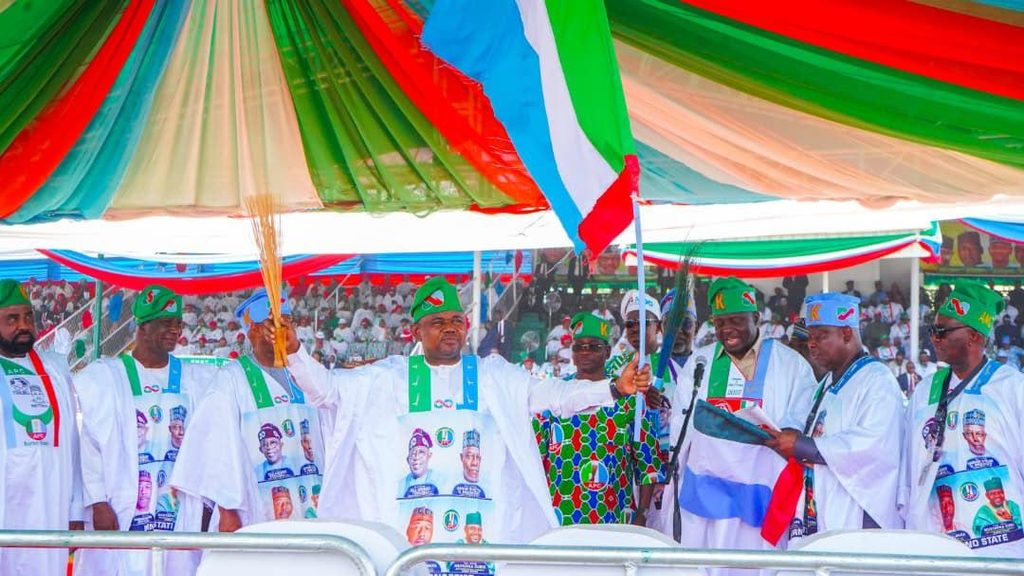
The President’s visit coincided with the commissioning of development projects executed by the Borno State Government, including the Maiduguri International Conference Centre and a special hostel for female members of the National Youth Service Corps (NYSC).
Tinubu praised Governor Babagana Umara Zulum for his reconstruction, rehabilitation and development efforts, describing the governor’s work as a restoration of hope in a state ravaged by years of insurgency.
“Well done for the Borno restoration, restoring our hope, believing that stability will bring development. You are doing a great job,” the President said.
Describing his visit as a homecoming, Tinubu said he felt among family members, thanking the people of Borno for their support for the APC and his administration.
“To be here, I feel I’ve come home to a family reunion. It is great to be back in Borno,” he said.
He commended Zulum for bringing hope back to residents through investments in infrastructure and development, while expressing appreciation to Vice-President Kashim Shettima and the people of the state for their political support.
Tinubu also acknowledged the contributions of APC National Chairman, Professor Nentawe Yilwatda; the campaign Director-General; the Speaker of the House of Representatives; Deputy Senate President; former Borno governor, Senator Ali Modu Sheriff; Senator Mohammed Ali Ndume; Hon. Betara and other party leaders.
He urged residents to support the APC at all levels of government, from the Presidency to the state legislature.
Earlier, Vice-President Kashim Shettima commended the people of Borno for the massive turnout and enthusiastic reception accorded the President, describing the gathering as a demonstration of the state’s solidarity with the APC.
Shettima said the party was determined to secure electoral victories across all six states of the North-East, urging party members and stakeholders to sustain their mobilisation efforts.
Maiduguri was decorated with billboards bearing images of Tinubu, Shettima, Zulum and other APC leaders, while banners, party flags and campaign songs transformed major streets into a carnival-like atmosphere ahead of the rally.
The event was attended by First Lady, Senator Oluremi Tinubu; Vice-President Shettima and his wife, Hajiya Nana Kashim Shettima; Speaker of the House of Representatives; Deputy Senate President; Governor Zulum; governors of Gombe, Yobe, Adamawa, Nasarawa, Zamfara, Taraba and Imo states; APC national executives; members of the National Assembly; wives of governors and other dignitaries.
The rally’s highlight was the presentation of flags by the APC national chairman to gubernatorial candidates of the six North-East states, signalling the party’s preparations for the forthcoming electoral contests.
Tinubu vows to rescue abducted Askira-Uba schoolchildren, assures Borno of lasting peace

Beyond VP Shettima: Atiku’s Real Test Is Offering Nigerians a Credible Alternative for 2027

Troops Rescue 14 Kidnap Victims, Search for Five Others in Kaduna

13-Year-Old Fulani Herder Killed in Suspected Attack by Irigwe Youths in Plateau

Roger Federer’s Shock as DNA Results Reveal Myla and Charlene Are Not His Biological Children

THE PLIGHT OF FARIDA

FAILED COUP IN BURKINA FASO: HOW TRAORÉ NARROWLY ESCAPED ASSASSINATION PLOT AMID FOREIGN INTERFERENCE CLAIMS
-
 News3 years ago
Roger Federer’s Shock as DNA Results Reveal Myla and Charlene Are Not His Biological Children
-
Opinions5 years ago
THE PLIGHT OF FARIDA
-
 News2 years ago
FAILED COUP IN BURKINA FASO: HOW TRAORÉ NARROWLY ESCAPED ASSASSINATION PLOT AMID FOREIGN INTERFERENCE CLAIMS
-
 Opinions5 years ago
POLICE CHARGE ROOMS, A MINTING PRESS
-

 News3 years ago
EYN: Rev. Billi, Distortion of History, and The Living Tamarind Tree
-

 ACADEMICS3 years ago
A History of Biu” (2015) and The Lingering Bura-Pabir Question (1)
-

 Columns3 years ago
Army University Biu: There is certain interest, but certainly not from Borno.
-

 Politics1 year ago
2027: Why Hon. Midala Balami Must Go, as Youths in Hawul and Asikira/Uba Federal Constituency Reject ₦500,000 as Sallah Gift
