
Columns
Buni’s Indelible Marks and The Treacherous Conspiracy Theory

Buni’s Indelible Marks and The Treacherous Conspiracy Theory
By: Aliyu Habib Zaria
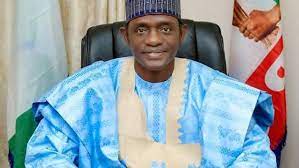
When the Yobe state Governor, Mai Mala Buni took over the affairs of All Progressive Congress, it was in a state of chaos, torn by varying political differences and interests, maladministration and high handedness. The party was on a speed to self destruction and death.
The committee under Governor Buni commenced the process of reconciliation with visitation to founding members of the party including Chief Bisi Akande and Ahmed Bola Tinubu, who gave their blessings to the caretaker committee, expressing optimism in the capacity of Mai Mala Buni to truly rescue reposition and rejuvenate the party to have a new lease of life.
Buni constituted various committees and embarked on reconciliation of all aggrieved persons, stakeholders and groups to give all the parties a sense of fair hearing.
As a team player, he gave responsibilities to key stakeholders of the party to promote inclusiveness and a sense of belonging to members to strengthen unity and enhance the repositioning of a divided APC.
Among his major achievements were the massive return of those who left the party just as those contemplating to leave, dropped the idea and stayed back.
It is an indisputable fact that Buni’s leadership made groundbreaking historical records ever recorded in Nigeria to bring in three serving governors into the party.
The hullabaloo on elongation of the Buni regime in the party, it is always punctured with justifiable evidence. For every extension, Governor Buni brings in one serving Governor with Millions of supporters.
Governors of Ebonyi Mr Dave Umahi, Cross River state Prof. Ben Ayade and Zamfara state Bello Mutawalli were great gains made by the committee to the party. They all defected along with Millions of their supporters. He has justified the extensions with great gains.
Apart from the governors scores of national and state assembly lawmakers also defected to the APC.
Other prominent members who joined the party include the Deputy Governor of Anambra state, Sen. Stella Odua, 11 Anambra state lawmakers, House of Reps members from Benue, Taraba etc. Again, PDP Board Of Trustee member Sen. Joy Emordi also joined the party.
To the credit of the Governor Mai Mala Buni led committee, APC Conducted successful membership registration and revalidation exercise. Today the party has over 41 Million registered members and still counting as the registration exercise remains a continuous process.
The APC under Buni promoted youth inclusiveness with the organization of Youth summit. The summit assembled representatives from across all the political wards in the country.
Similarly, the Buni led regime of the party organized a women ‘s conference to mobilise youth and women for the 2023 elections. There is no doubt that APC remains the most women friendly political party in Nigeria.
Buni’s commitment to the party is unparalleled to any of the stakeholders fighting his administration.
“Our ambition is to provide a machinery that would make APC to rule Nigeria beyond 5th, 6th, 7th, 8th, 9th or even 10th term of office” Buni has consistently preached.
Also Read: Gunmen attacks Kebbi deputy gov’s convoy, killed 16…
In the spirit of wide consultations,Governor Buni has consistently engaged Governor Atiku Bagudu of Kebbi State, Governor Abubakar Badaru of Jigawa state, Hope Uzodima of Imo, Kayode Fayemi of Ekiti, Yahaya Bello of kogi, Plateau, Ogun, Kwara, Niger and Gombe among others.
As Governor Nasiru El-Rufai said Governor Mai Mala Buni, is a victim of the secretariat staff and indeed some of his colleagues in the Governors’ Forum and some members of the Caretaker committee.
Certainly, the gains made by Mai Mala Buni for the All Progressives Congress in the last 19 months can not and will not be washed away easily.
Until the ‘coup’ in the party, there was no official communication from President Muhammadu Buhari to the party or Governor Buni.
With just 12 months to the election such a conspiracy will only breed more troubles for the party.
The building tension in the party is becoming a great threat to the chances of the party in the 2023 general election. They say a stitch in time saves nine. The earlier President Buhari moves to save the party and its 2023 chances, the better.
*Habib can be reached on ahabib23@editor
Buni’s Indelible Marks and The Treacherous Conspiracy Theory



The ‘Hyenas’ and The Fear of Radical Changes
By: Balami Lazarus
Nigeria’s persistent security challenges, governance shortcomings, and societal stagnation were discoursed in a recent controversial work titled “Radical Approach: Ways of Ending the Menace of Insecurity in Nigeria,” which has sparked vehement reactions. These responses, saturated with insults and threats, underscore not only the resistance to transformative ideas but also reveal deeper cultural and psychological barriers inhibiting national progress.
Hyenas occupy a complex place symbolically and ecologically. Known for their powerful jaws capable of crushing bone and their fearsome appearance, hyenas possess attributes of strength and resilience. Ironically, the very qualities that should have crowned them kings of the jungle remain unrealized due to internal flaws—excessive fear and greed. This metaphor resonates profoundly with the Nigerian socio-political landscape. Many citizens and leaders embody these counterproductive traits, which sabotage collective progress. The ‘hyenas’ here are those resistant individuals who react aggressively to change, fearful of losing entrenched privileges or comfortable mediocrity.
Despite their natural capacities, hyenas do not kill their prey outright but feed until the victim is entirely consumed, a parallel to how corruption, insecurity, and dysfunctional governance gradually erode Nigeria’s potential. Nevertheless, because of this fear and greed, the true power of the hyenas remains dormant. Similarly, Nigerians possess enormous potential—humans and resources alike—but systemic fear of radical transformation prevents the nation from ascending to greatness.
Resistance to radical change is hardly unique to Nigeria; however, the scale and intensity of opposition here are particularly pronounced. The author of the initial work rightly posits that fundamental restructuring or amicable separation (balkanization) may be necessary to ensure peaceful coexistence among Nigeria’s diverse ethnic and regional groups. While this proposition unsettles many, it is grounded in historical precedents where developing nations embraced bold reforms, coupled with decisive policies and enforcement mechanisms, to dismantle corruption and oppression effectively.
For example, South Korea’s transformative journey from a war-ravaged country to a technological powerhouse was marked by radical government-led reforms, strict anti-corruption measures, and an unyielding commitment to national goals. Similarly, post-apartheid South Africa undertook sweeping constitutional and institutional reforms to redress systemic inequalities. These examples suggest that change without fear, and with a clear vision, is achievable. In Nigeria’s case, however, political leaders often prioritize personal gain over national interest, shielding corrupt practices from scrutiny and accountability—a scenario that foreign nationals sometimes benefit from more than average Nigerians.
Hence, it is not just a question of reform but an urgent call for a radical overhaul of the political, economic, and security frameworks—an overhaul that will inevitably provoke discomfort among the ‘hyenas’ who thrive on the status quo. Their hostility reflects a deeper anxiety about losing undue influence rather than genuine concern for national welfare.
Those who dare to voice radical solutions face fierce backlash. The insults, threats, and online harassment directed at the author of “Radical Approach” epitomize the perils confronting reformists. Such antagonism stems from a culture where free expression is often conflated with subversion and where critical voices are silenced through intimidation rather than engaged with constructively. This atmosphere breeds cynicism and self-censorship, retarding public discourse essential for democracy and progress.
The paradox lies in the fact that while politicians and vested interests propagate falsehoods to maintain their grip, genuine advocates of change are vilified. This creates a toxic environment where truth-tellers face social ostracism, leaving the masses bewildered about whom to trust. The condemnation of the author’s suggestion to either restructure or separate the country illustrates how deeply sensitive and contested the issue of national unity is—yet it also reveals the urgency to address unresolved grievances before they escalate into greater conflict.
It is crucial to emphasize that opinions, especially those anchored in personal conviction and aimed at national betterment, deserve respect and consideration, even if controversial. Democratic societies thrive on diverse viewpoints and vigorous debate. The author’s claim to persist as a ‘honey badger’—an animal known for fearless tenacity—symbolizes the courage required to confront entrenched systems and societal fears.
Change is seldom comfortable; it disrupts established norms and compels individuals to rethink identities and power structures. But without this discomfort, stagnation ensues, and nations risk eventual decline or disintegration. In Nigeria’s context, the failure to act decisively invites greater insecurity, economic hardship, and social unrest, ultimately threatening the very fabric of the nation.
To overcome the paralysis induced by fear and entrenched interests, Nigerians must collectively embrace the concept of radical but non-violent reform. The analogy of hyenas vividly encapsulates the paradox of strength hindered by fear and selfishness—a situation familiar to Nigeria today. The vehement backlash against radical proposals for restructuring or separation signals a collective unease but also highlights the necessity for bold action. History teaches us that radical change, enforced with fairness and resolve, is often the catalyst for national rebirth.
Nigeria stands at a crossroads. Will it continue to be prey to internal fears and greed, or will it muster the courage to embrace transformative ideas, no matter how uncomfortable they may seem? Advocates like the author of “Radical Approach” bear the burden and honor of challenging the status quo. Their persistence embodies hope that someday, rationality and justice will prevail over hostility and inertia.
In this pursuit, Nigerians must shed the fearful mindset that binds them and instead harness their inherent strengths—diversity, resilience, and youthful energy—to reclaim their destiny. Only then can the nation finally silence the cacophony of ‘hyenas’ and evolve into a stable, prosperous democracy worthy of its vast potential.
Balami, Publisher/Columnist 08036779290
The ‘Hyenas’ and The Fear of Radical Changes
Radical Approach: Ways of Ending the Menace of Insecurity in Nigeria
By Balami Lazarus
Insecurity remains the most daunting challenge confronting Nigeria today, undermining our very existence and threatening the social and economic fabric of the nation. As a concerned citizen and observer of Nigeria’s ongoing crises, I hereby present my personal and radical perspective on how to eradicate this menace once and for all. This discourse is not an official stance of any institution but rather a heartfelt plea for decisive and transformative actions.
The scale of insecurity in Nigeria is alarming. Kidnappings, banditry, and terrorism have become the ominous triad casting a shadow over the country. Daily headlines recount stories of abductions, killings, and destruction of property, raising urgent questions: Are Nigerians truly safe? What concrete measures have our leaders put in place? Equally important, what roles are citizens playing in reversing this trend? The answers to these questions are not encouraging.
Drawing inspiration from the defiant spirit of the rock band Twisted Sister and their 1984 anthem, “We’re Not Gonna Take It,” the Nigerian people are increasingly exasperated with governmental inertia and broken promises. There is a collective realization that the status quo is untenable, and something must change radically. Yet, the fog of insecurity thickens, shrouded in layers of suspected conspiracies and opaque dealings that complicate straightforward solutions.
Having reflected deeply on the root causes and potential remedies, I propose a multi-dimensional and radical strategy aimed at dismantling the structures that perpetuate insecurity. This approach challenges conventional wisdom and demands bold leadership and citizen cooperation. It begins with the fundamental re-evaluation of Nigeria’s historical, geographical, and political arrangements—a re-examination crucial for any meaningful intervention.
First and foremost, restructuring Nigeria is imperative. Our current centralized system breeds inefficiency and disconnects governance from ground realities. A major component of this restructuring is the establishment of state police forces across all federating units. Each state should deploy well-trained, properly equipped security personnel, armed with sophisticated weaponry and clear operational mandates to combat insurgents, kidnappers, and bandits proactively. Presently, the absence of localized policing forces handicaps rapid response and intelligence gathering, allowing criminal elements to thrive.
State police would serve as frontline defenders, customizing security strategies to the unique threats within their jurisdictions. The federal police force can then focus on broader national security tasks rather than overstretching its already limited resources. By decentralizing policing, the government would empower states to take ownership of their security challenges, fostering accountability and efficiency.
Nigeria has already paid a dear price in lives lost and properties destroyed due to insecurity. The ripple effects extend to economic downturns, reduced foreign investment, and increased poverty—factors that further entrench instability. Given the apparent lack of political will by federal authorities to decisively confront these threats, an alternative democratic mechanism such as a national referendum on regional governments should be considered. This would allow the six geopolitical zones plus the Middle Belt to govern their affairs with greater autonomy, tailoring policies and security frameworks to local needs.
Such regionalism could dilute the potency of criminal networks by disrupting their operations and reducing the power vacuum currently exploited in many areas. Regional governments would also be better positioned to address socio-economic development, a vital component in the fight against insecurity since marginalization and unemployment often fuel violence.
However, if these reforms fail or are ignored, a more drastic option looms: the peaceful separation and balkanization of Nigeria into distinct republics. While controversial, this last-resort proposal recognizes the deep divisions exacerbating insecurity and mistrust among ethnic and regional groups. Envision independent states such as Biafra, Oduduwa, Niger Delta Republic, Middle Belt Republic, and Arewa, alongside any other ethnic groups seeking self-determination. Would insecurity persist in this new arrangement? I argue capital “no.”
Fragmenting the country along ethnic and cultural lines could usher in relative peace by allowing homogeneous populations to govern themselves without imposed central authority that currently breeds conflict. While skeptics fear such a breakup could trigger further violence, history suggests that forced unity without consensus breeds chronic instability. Thus, a consensual and peaceful partition might be preferable to ongoing bloodshed and despair.
This is not a call for reckless division but a candid assessment of the realities Nigerians face daily. The government, under the leadership of President Ahmed Bola Tinubu, stands at a crossroads. It can either embrace genuine reforms and act boldly to restructure governance and security frameworks or risk the disintegration of the Nigerian state altogether.
I believe Nigeria’s insecurity crisis demands radical and multifaceted solutions beyond incremental adjustments. The establishment of state police forces, regional autonomy through a national referendum, and, if necessary, peaceful balkanization represent pathways to ending this menace. The time for rhetoric is over; the moment for courageous and visionary action is now. If neglected, Nigeria’s unity and stability will unravel, leaving behind fractured states grappling with even graver challenges.
I urge the government, stakeholders, and citizens alike to consider these proposals thoughtfully and engage in frank discussions about the future of our nation. Only then can we hope to reclaim the peace and prosperity that every Nigerian deserves.
Balami Lazarus
Publisher/Columnist
08036779290
Radical Approach: Ways of Ending the Menace of Insecurity in Nigeria
Holdings in Three Arm Business Investments, a Path to Financial Freedom
By: Balami Lazarus
Long-term investments have never been the likes of most Nigerians. In fact, few have come to realize the secret of letting my money work for me through my investments in some going concerns (businesses).
Good and profitable investments in the three businesses
Arms will go a long way for financial independence and freedom.
Let me draw your attention to life in the jungle where rules are conditioned based on territorial control. The honey badger, the most fearless of all animals, has no respect for territories, including the swamps where crocodiles are kings. The Honey Badgers have long realized that their physical strength and ability do not lie in their size but in their biological capacity and anatomical system to do what they are used to doing at ease among other animals in the wild.
Similarly, if you invest and take a position in the three business investments, no doubt your returns on investments (RoI) will give you the desired results to control and rule without territorial limits in your domestic affairs and the environment.
I am not a business owner but a part owner of some businesses. One thing I know, and I always do, is to continue to develop and improve myself with knowledge in business investments for financial freedom and independence, considering my attitudes for self-freedom for when to do and/or not to do. Reasonably, you can exhibit this financial freedom through your returns on investments (RoI).
This has taught me what to do and when. It has further educated me on how, when, and where to invest—short or long-term period. I have also learned to develop some businesses and lease them out to other people to run them.
The information age has these days made making money through investments much easier and cheaper for those who want to be financially independent if tomorrow comes, most times with a modicum of health.
challenges.
Investment benefits will improve and
stabilized your mental and social life; an alibi to aging gracefully when the body is tired, weak, and fragile.
What are these three (3) arm investments? The phrase is my coinage, which simply means property (real estate), agriculture, and stocks. While some called it business streams. However, the good
The thing about investments is that an investor is making money in other businesses and is free from being part of the management of the business.
Therefore, the objective of every business investment is to translate them into financial gains. That is why core investors are always on the lookout for investment opportunities to put their money in and become part owners of the business concerns.
This piece, I believe, will be food for thought for wise minds. Better late than never.
Balami, Publisher/Columnist 08036779290
Holdings in Three Arm Business Investments, a Path to Financial Freedom

The ‘Hyenas’ and The Fear of Radical Changes

Parliamentarians in Sierra Leone mourn colleague Lucinda Kelly

Troops Neutralise Suspected Kidnapper While Attempting Escape in Plateau

Roger Federer’s Shock as DNA Results Reveal Myla and Charlene Are Not His Biological Children

THE PLIGHT OF FARIDA

FAILED COUP IN BURKINA FASO: HOW TRAORÉ NARROWLY ESCAPED ASSASSINATION PLOT AMID FOREIGN INTERFERENCE CLAIMS
-
 News2 years ago
Roger Federer’s Shock as DNA Results Reveal Myla and Charlene Are Not His Biological Children
-
Opinions4 years ago
THE PLIGHT OF FARIDA
-
 News1 year ago
FAILED COUP IN BURKINA FASO: HOW TRAORÉ NARROWLY ESCAPED ASSASSINATION PLOT AMID FOREIGN INTERFERENCE CLAIMS
-

 News2 years ago
EYN: Rev. Billi, Distortion of History, and The Living Tamarind Tree
-
 Opinions4 years ago
POLICE CHARGE ROOMS, A MINTING PRESS
-

 ACADEMICS2 years ago
A History of Biu” (2015) and The Lingering Bura-Pabir Question (1)
-

 Columns2 years ago
Army University Biu: There is certain interest, but certainly not from Borno.
-

 Politics1 year ago
2027: Why Hon. Midala Balami Must Go, as Youths in Hawul and Asikira/Uba Federal Constituency Reject ₦500,000 as Sallah Gift
