
Columns
My Binocular: Federal Orthopedic Hospital Azare achieves first interlocking intramedullary femoral nailing operation

My Binocular: Federal Orthopedic Hospital Azare achieves first interlocking intramedullary femoral nailing operation
By: Bodunrin Kayode
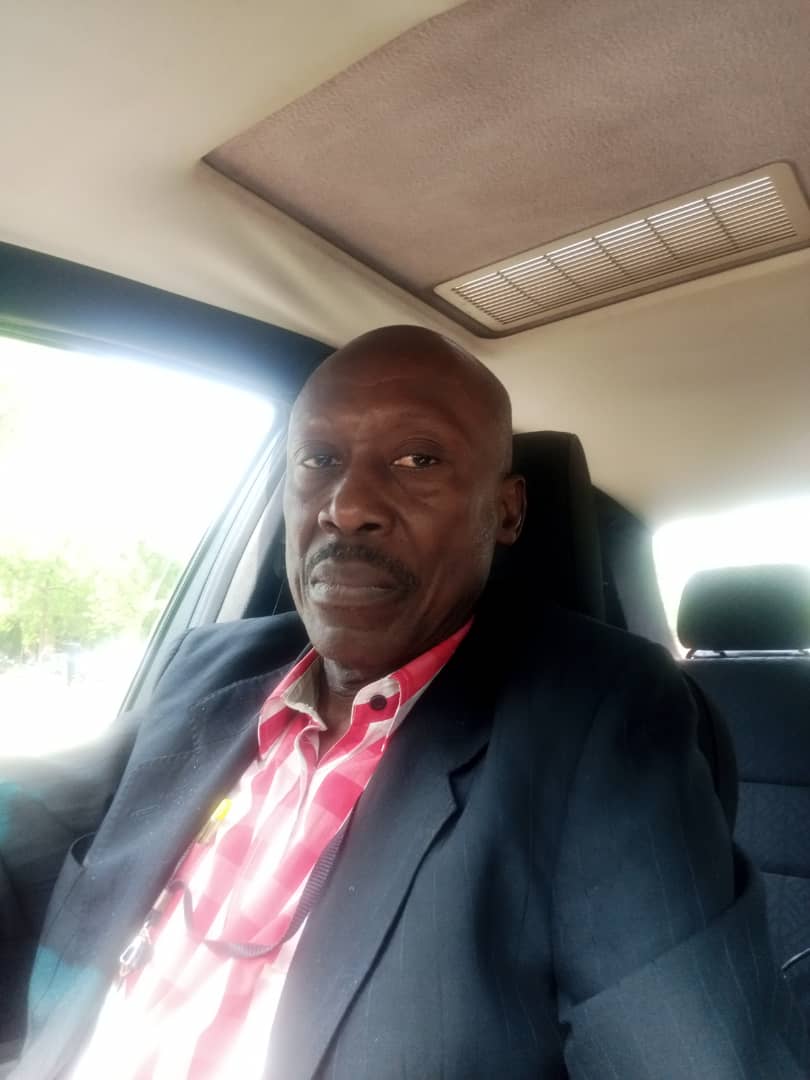
I got to know Dr Ali Ramat when I was directed to see him by the CMD of the University of Maiduguri Teaching Hospital (UMTH) Professor Ahmed Ahidjo a couple of years ago. He was to analyze the results from a Magnetic Resonance Imaging (MRI) I had undergone for the bottom side of my cerebrospinal region and treat me of the pains. I suddenly developed some serious pains towards the bottom of my back due obviously to a car crash I was involved in about 25 years ago in Niger state where I served as the correspondent of the guardian newspaper. I was treated then in the National Hospital Abuja and told to go home and rest instead of an immediate operation to fix back some of the shifted ribs as the X-ray depicted. 25 years later, possibly due to advancing age, the intervertebral stops down there as I want to address them in layman’s language are screaming pains due to stress whenever I indulge in long distance driving. Dr Ramat looked at the results I brought from Prof Zainab a consultant radiologist who ran the MRI and gave me some drugs which I took and the pain left. In my usual way I never left his office without saying thank you and prying into his young background. That was when he told me about his specialist training in Turkey on spinal matters. I was excited at the zeal of such a young professional who seemed to be moving at a speed far higher than his contemporaries in the same UMTH where he trained.
The University of Maiduguri Teaching Hospital (UMTH) is truly a citadel for the hatching of great minds dominating the medical sector in Nigeria. Within the last decade, it has produced several Chief Medical Directors now managing sister medical institutions in the entire North East region of the country. One of those products of the ” Prof Ahmed Ahidjo mentoring school” is Dr Ali Ramat of the department of orthopedic medicine. Ramat a young enterprising consultant orthopedic and spine surgeon calls Prof Ahidjo his mentor because he was instrumental in the advancement of his career in Turkey where he expanded his orthopedic knowledge by specializing in the critical spinal region. As an orthopedic Doctor, Ramat has treated several bone cases in the UMTH where he became one of the apples of the eye of the CMD Prof Ahidjo such that immediately it was time to set up the National Orthopedic Hospital Azare (NOHA) in Borno State, he was quickly recommended and today he is the first Medical Director of that Hospital. He follows the trail of Professor Chubado Tahir another mentee of the Ahidjo school who is equally managing the National Orthopedic Hospital Jalingo (NOHJ) and many others.
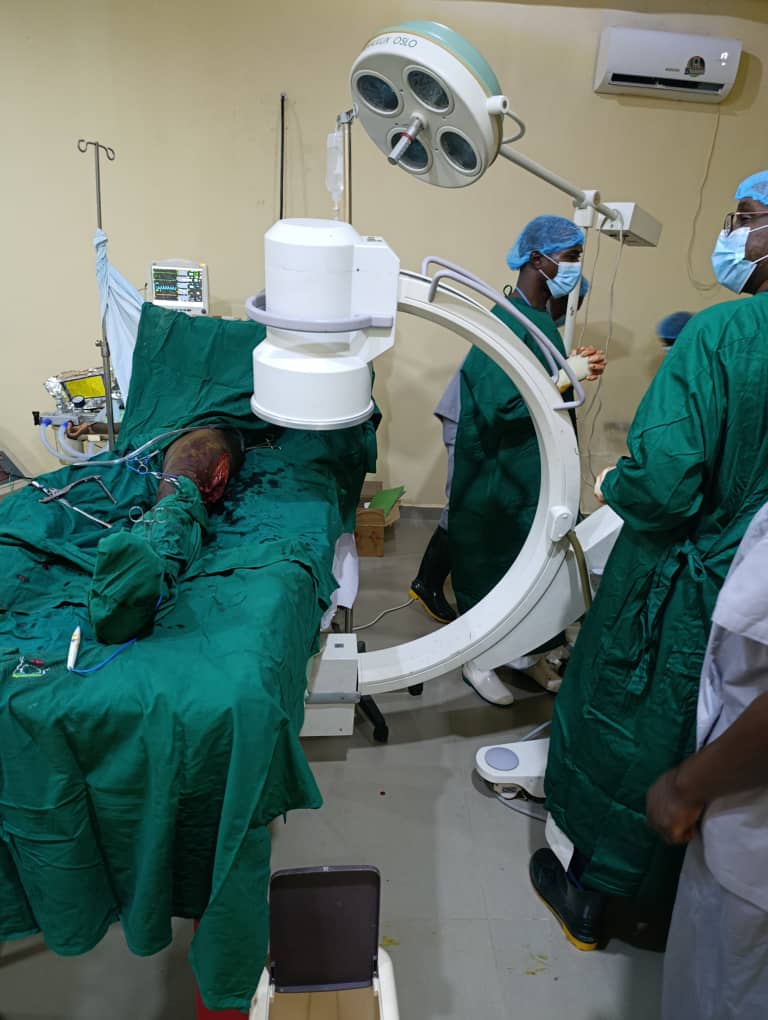
First successful operation in the National Orthopedic Hospital Azare, Borno State
After a memorandum of understanding (MOU) was signed between the federal and state government in May 2025 for the speedy take off of the facility, the newly appointed Medical Director Dr Ali Ramat hit the ground running by assembling his team of 29 doctors some of whom were equally seconded from the UMTH. The State government led by Professor Babagana Zulum had already given out it’s take off facility which is the former general hospital Azare and was very happy about the development. Commissioner of health Prof Baba Mallam Gana was beyond happiness because he is now the special apple of the eyes of Prof Zulum his Principal.
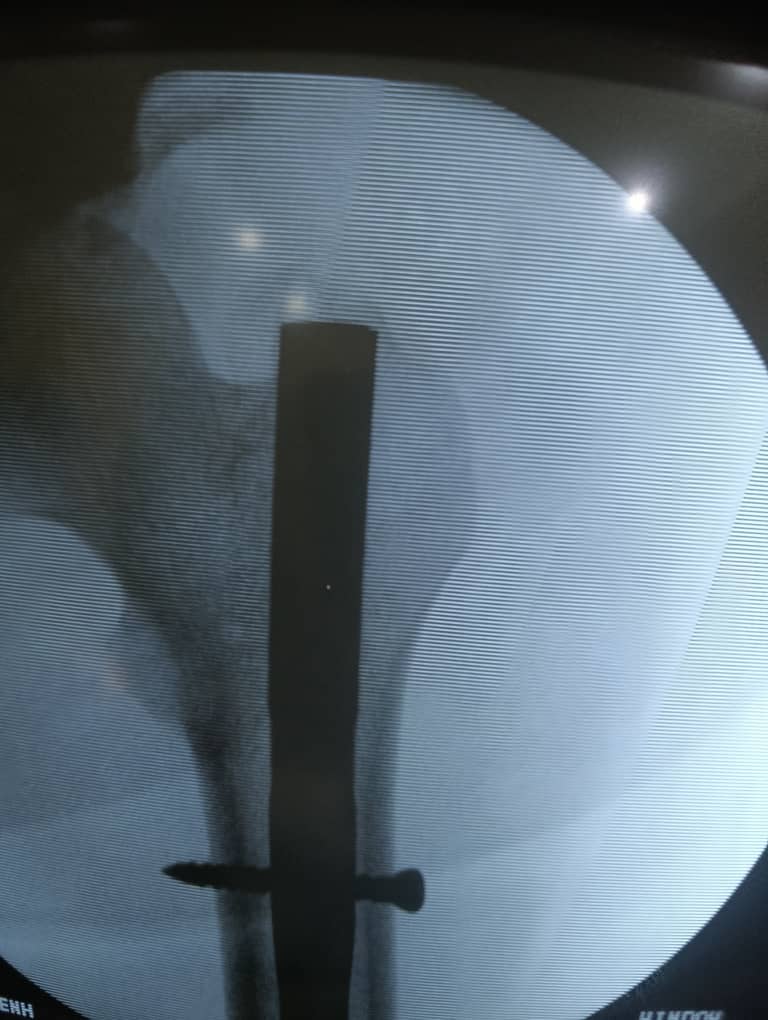
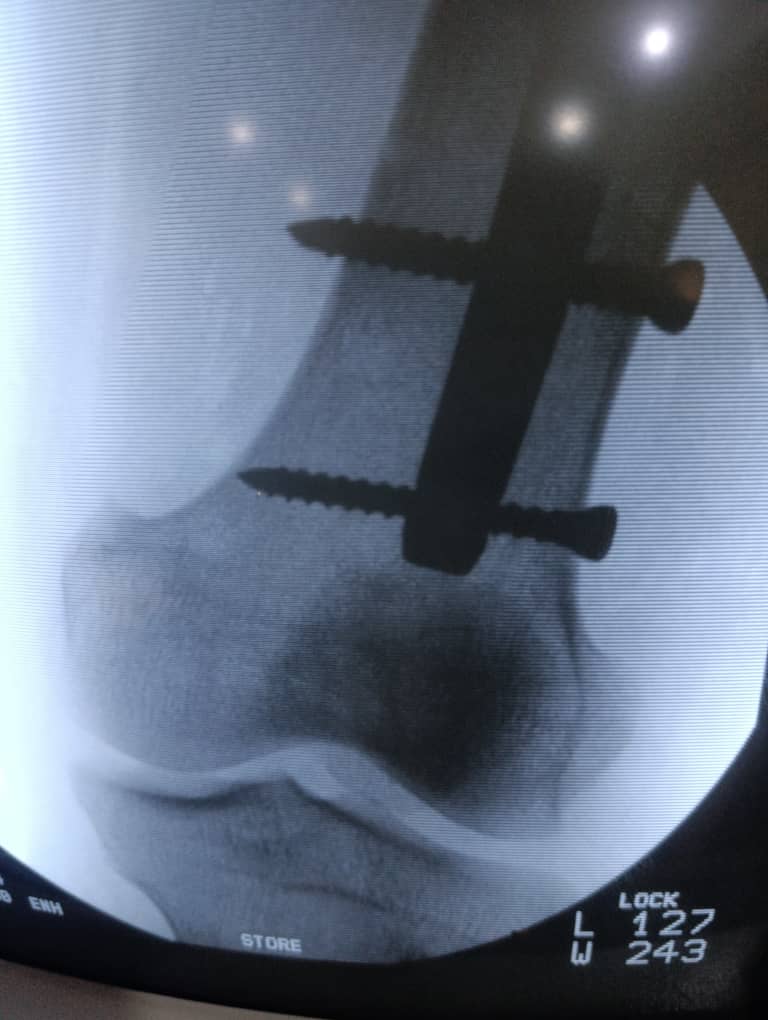
The speed with which the hospital had to take off without any take off grant from its federal benefactors did not affect him yet he started work. He was really in a hurry to stamp his knowledge acquired on the sands of time by ensuring that humanity is served quality dividends in a very short period. And that is what he did on the 6th of January this year which was my birthday. It was a special day in the anals of medicine in North East Nigeria and my special day too. In our chit chat, Ramat announced his first feat in the hospital this way. “Today Tuesday 6th January 2026 the National Orthopaedic Hospital Azare Hawul Borno State successfully conducted its first Orthopaedic Surgery of (interlocking intramedullary femoral nailing). The team was led by the Medical Director Dr. Ali Mohammed Ramat a Consultant Orthopaedic Surgeon. The patient is recuperating ” he said to me in a short, sweet and what I can describe as journalistic way. I am happy for him because he is a very young consultant who still has many years ahead of him before he begins to get tired or depreciate due to the law of diminishing returns which is quite natural with our common humanity. With this feat Ramat has started to write his name in gold in the country. He is also getting ready to move in a meteoric speed to serve humanity in a big way beyond northern Nigeria. Meanwhile as he and his team of about 29 doctors and 16 nurses wait for the usual red tape to be concluded in Abuja for more equipment to be supplied to the facility, Ramat has opened the hospital to everyone who is sick to approach them for treatment. This is a good beginning for orthopedic medication in Borno and Nigeria in general. Congratulations my friend Dr Ramat.
My Binocular: Federal Orthopedic Hospital Azare achieves first interlocking intramedullary femoral nailing operation


The British Massacres and Lugard’s Punitive Expeditions in Nigerian History
By: Balami Lazarus
Are we back to the days of Lord Fredrick Lugard? Nigeria is once again bleeding with innocent bloods caused by terrorists, bandits, and kidnappers.
And that there has never been in the annals of Nigerian history a chapter or even a complete page or paragraph that fully mentioned or explained the punitive expeditions of Lord Frederick Lugard’s massacres in Nigeria. I am yet to see that. But rather, he was hailed as the hero of amalgamation, which gave birth to modern Nigeria.
Similarly, today the aforesaid criminals are recognized and are printed and electronic.
From the late 18th century to the dawn of the 19th century was a period of colonial reformations where the north and the south stood as protectorates administered by the British government from Lagos as her crown colony.
Historical developments in both the north and south of the Niger were trials of blood, bloods of innocent Nigerians; Lokoja was the confluence of these bloods. These periods were marked by Lugard’s expeditions of massacres, killings, and punitive and wastage of human lives and resources.
Lord Frederick Lugard was brutal and ruthless, a British army officer who was known to have caused the deaths of many Nigerians in the protectorates that later made up the nation known, called, and addressed as Nigeria.
Lugard’s administration of Nigeria was an expedition of atrocities, killings, and massacres where terror was the rule of law. Towns and villages that showed resistance were dealt with mercilessly, resulting in massacres.
Let me reel out a few of Lugard’s punitive and bloody expeditions.
Akassa raid/Brass oil war (1895). Hundreds were killed. Akassa burnt down. Benin raid (1897). Over a thousand men and women were massacred, and historical works of art, among other treasures, were looted. Benin City was burnt down.
Sultan Attahiru the first and his over 1000 followers were mercilessly killed at Burmi in 1903 in present Gombe state. The most annoying thing about this was that Attahiru was pursued by Lugard and his soldiers and subsequently massacred them.
The Satiru massacres of 1906 were one of the worst punitive expeditions in the then Northern Protectorate carried out by Lord Frederick, where 2000 men were killed and Satiru was wiped out completely on the map of modern Nigeria as a town.
There were the Ekumeku massacres (1898-1911). Aba women riot (1929), where women were shot and killed. There were also the Iva Valley/Enugu Colliery massacres (1949).
There were pockets of punitive expeditions in both the protectorates. However, South Bled much longer, right from 1890 to 1949. While North conquest was sharp and short (1900-1907).
The colonialization process of Nigeria no doubt came with punitive expeditions and massacres. Therefore, Lord Frederick Lugard’s presence in the history of Nigeria is a subject of study. Over to historians and researchers.
Balami, a Publisher/Columnist, 08036779290
The British Massacres and Lugard’s Punitive Expeditions in Nigerian History

UMTH: Prof. Ahmed Ahidjo, Eight Years of Productive Leadership
By Balami Lazarus
Every stage of human life opens a new chapter of experience, responsibility, and opportunity. In positions of leadership, these opportunities become particularly significant because they provide individuals with the power to influence institutions, improve systems, and contribute meaningfully to society. For Prof. Ahmed Ahidjo, his eight-year tenure as Chief Medical Director of the University of Maiduguri Teaching Hospital (UMTH) represented an important period of service, innovation, and institutional transformation.
Prof. Ahidjo served as the eighth Chief Medical Director of UMTH from 4 September 2018 to 4 September 2026. During this period, he used his professional knowledge, administrative experience, and leadership position to advance medical services, improve healthcare delivery, and provide modern infrastructure and equipment for the hospital. His tenure was marked by a clear determination to strengthen UMTH as a center of healthcare, medical education, research, and professional development.

The conclusion of his tenure was commemorated through a weeklong program of activities in Maiduguri. The program brought together government officials, medical professionals, traditional rulers, academics, hospital staff, and members of the public. It included project commissioning, conferences, lectures, inspections of medical facilities, a book launch, and an award ceremony. These events provided an opportunity to assess the achievements of the outgoing Chief Medical Director and to celebrate his contributions to the development of UMTH.
As a consultant interventional radiologist, Prof. Ahidjo brought specialized medical knowledge to the administration of the hospital. Interventional radiology is a field that uses imaging techniques to guide minimally invasive procedures for the diagnosis and treatment of diseases. It requires advanced technology, specialized training, and strong institutional support. Prof. Ahidjo’s professional background therefore influenced his vision for improving not only radiology services but also the general quality of healthcare available at UMTH.
One of the significant achievements associated with his tenure was the advancement of interventional radiology. During the period under review, UMTH hosted the first national conference of the Association of Radiologists in Nigeria in northern Nigeria. The conference brought together experts in radiology from Europe, Egypt, Asia, and Nigeria. Its location in Maiduguri demonstrated the growing importance of UMTH as a center for medical learning and professional exchange.
The conference also created an opportunity for radiologists and other healthcare professionals to examine new developments in medical imaging and minimally invasive treatment. Participants discussed ways of improving standards, expanding training, and strengthening the practice of radiology in Nigeria. By facilitating such a gathering, UMTH positioned itself as an institution capable of hosting major national and international medical events, despite the challenges associated with operating in the region.
Infrastructure development was another important feature of Prof. Ahidjo’s leadership. Among the projects commissioned during the handing-over activities were the Fertility Care Centre, the En-Suite Maternity Complex, and the Animal House. These facilities are relevant to both clinical services and medical research.
The Fertility Care Centre is expected to support individuals and families requiring specialised reproductive health services. Its establishment represents an important step in responding to the medical and emotional needs of couples facing fertility challenges. By providing services within the hospital, patients may have greater access to professional care, counselling, diagnosis, and treatment.
The En-Suite Maternity Complex is also significant. Maternity services require safe, comfortable, and properly equipped environments for mothers and newborns. A modern maternity facility can improve the quality of antenatal care, delivery services, postnatal care, and emergency obstetric interventions. In a region where maternal and child health remain important public health concerns, the development of such a facility is a valuable contribution to healthcare delivery.
The commissioning of the Animal House further reflected the hospital’s interest in research and medical education. Selected animals kept in the facility will be used by medical experts and researchers for experiments and other approved scientific activities. Research facilities of this kind help institutions generate knowledge, test ideas, and train future medical professionals. They can contribute to the development of evidence-based medicine and improve the capacity of healthcare workers to address complex medical conditions.
Prof. Ahidjo’s leadership was not limited to buildings and equipment. His tenure also encouraged academic and intellectual activities. One of the major events during the transition program was the 84th inaugural lecture of the University of Maiduguri. The lecture was delivered by Prof. Ahidjo under the chairmanship of Prof. Muhammad Laminu Mele, the vice-chancellor of the university.
The lecture, titled “Interventional Radiology in Nigeria: The Journey So Far, My Aspirations, and My Visionary Concept,” provided an opportunity for Prof. Ahidjo to reflect on his professional journey and his aspirations for the future of interventional radiology in Nigeria. He discussed the progress made in the field, the challenges that remain, and the need for continued investment in specialized training and modern medical technology.
His vision included the development of interventional radiology and the training of more radiologists in Nigeria. This emphasis on human capacity development is particularly important. Medical infrastructure can only achieve its full purpose when trained professionals are available to operate, maintain, and effectively use it. By promoting education and professional development, Prof. Ahidjo highlighted the need to combine physical infrastructure with knowledge and expertise.
The inaugural lecture also demonstrated the connection between hospital administration, professional practice, and academic responsibility. As a medical specialist and university professor, Prof. Ahidjo was able to bring together his experience in clinical medicine, teaching, research, and hospital management. His public presentation of these ideas reinforced the role of teaching hospitals as institutions that must provide healthcare while also producing knowledge and training professionals.
Another notable event was the launch of the book titled “Duty and Courage: The Story of Prof. Ahmed Ahidjo,” written by Dr. James Bwala. The book documented aspects of Prof. Ahidjo’s professional and administrative journey. Its title captured two qualities that are essential in public service: a commitment to responsibility and the courage to act in difficult circumstances.
The book launch, like the other activities, allowed colleagues, staff, and members of the wider community to reflect on the impact of Prof. Ahidjo’s leadership. It also ensured that the experiences and lessons of his tenure would be preserved for future generations. Institutional history is important because it helps succeeding leaders understand the decisions, sacrifices, challenges, and achievements that shaped an organization.
The handing-over ceremony attracted prominent personalities, including the Governor of Borno State, Babagana Umara Zulum; the Shehu of Borno, Abubakar Ibn Umar Garbai; ministers; emirs; members of the National Assembly; and other senior government officials and community leaders. Their presence demonstrated the importance of UMTH to Borno State and the wider northeastern region.
The hospital serves a large population and remains a vital institution in the provision of specialized healthcare. Its role extends beyond Maiduguri because patients from other parts of Borno State and neighboring states depend on its services. Any improvement in the hospital’s infrastructure, equipment, professional capacity, and administrative structure therefore has implications beyond the institution itself.
The climax of the weeklong program was the presentation of awards and recognitions to current and former staff members who served under Prof. Ahidjo. This gesture acknowledged the fact that institutional progress is rarely the product of one individual. Although a chief executive provides direction, the achievement of organizational goals depends on the commitment of doctors, nurses, pharmacists, laboratory scientists, technologists, administrators, cleaners, security personnel, and other workers.
Recognizing staff members also promoted a culture of appreciation and teamwork. Employees who feel valued are more likely to remain committed to their responsibilities. In this regard, the awards ceremony was not only a farewell activity but also a reminder that the progress of UMTH rests on collective effort.
Prof. Ahidjo formally handed over the administration of the hospital on 3 September 2026, one day before the official gazetted end of his tenure. In his brief speech, he expressed appreciation to the hospital community for its support. He then handed over the institution, including its staff, structures, equipment, and facilities, to Dr. Abubakar Mohammad Abiso, the Acting Chief Medical Director.
Dr. Abiso had previously served as Chairman of the Medical Advisory Committee and is a consultant family physician with extensive medical and administrative experience. In his response, he thanked Prof. Ahidjo for considering him suitable for the position. His words reflected both humility and an awareness of the responsibilities associated with leading the hospital.
One of the most symbolic moments of the transition occurred when Dr. Abiso asked how Prof. Ahidjo would be remembered. He answered by naming the Interventional Radiology Centre after the outgoing Chief Medical Director. The decision was appropriate because it connected Prof. Ahidjo’s legacy with the medical specialty to which he devoted his professional life and which he promoted during his leadership of UMTH.
Naming the center after him also created a permanent institutional reminder of his contributions. It ensured that future staff, students, patients, and visitors would encounter his name in a place associated with innovation, specialized care, and medical advancement. More importantly, it placed his legacy within the continuing work of the hospital rather than treating it as a closed chapter.
The end of Prof. Ahidjo’s tenure provides an opportunity to consider the meaning of productive leadership in a teaching hospital. Such leadership involves more than managing daily operations. It requires strategic planning, resource mobilization, staff motivation, professional competence, accountability, and the ability to respond to the healthcare needs of the community. It also requires leaders to build systems that can continue to function after their departure.
By commissioning new facilities, promoting medical conferences, supporting research, delivering an inaugural lecture, and encouraging professional development, Prof. Ahidjo contributed to several dimensions of institutional growth.
Balami, Publisher/Columnist 08036779290
UMTH: Prof. Ahmed Ahidjo, Eight Years of Productive Leadership
UMTH: Prof. Ahmed Ahidjo, Eight (8) Years of Productive Leadership
By: Balami Lazarus
Every stage of man is a new chapter of life experiences that manifest itself in rights, privileges, and opportunities to add value to humanity.
Prof. Ahmed Ahidjo has used the privileges and opportunities of his positions, most especially that of Chief Medical Director (CMD) of the University of Maiduguri Teaching Hospital (UMTH), for the past eight (8) years to provide and facilitate developments in medical and healthcare delivery with infrastructures, medical materials, and equipment of international standards for the hospital in his eight (8) progressive years.
NEWSng has been there all these years. And here we are, once again in Maiduguri to cover the weeklong packed handing-over ceremony to mark the end of Prof. Ahmed Ahidjo’s eight-year tenure as the 8th CMD since the inception of the hospital over 40 years ago.
Each day was full of activities to bid him farewell. Visitors and guests were always engaged in either commissioning of projects, conferences, lectures, book launches, or inspections of medical facilities/centers, asking questions on how Prof. Ahidjo did it.
The erstwhile CMD Prof. Ahidjo is a consultant interventional radiologist whose eight years of exemplary and visionary leadership began on the 4th September 2018 and end on the 4th September 2026.
There was the first-ever national conference of the Association of Radiologists in Nigeria (ARIN) in the north to be held in Maiduguri at UMTH, where experts in radiology from Europe, Egypt, and Asia met to improve on the standards of this branch of medical science.
There was a book launch “”titled “Duty and Courage”: The Story of Prof. Ahmed Ahidjo,. by Dr. James Bwala.
as part of the activities of the handing-over ceremony that was graced by the state governor, Babagana, Umara Zulum; ministers; Shehu of Borno, Abubakar Ibn Umar Garbai; emirs; and some members of the National Assembly, among other high government officials and personalities.
There was also commissioning of the Fertility Care Centre, En-Suite Maternity Complex, and Animal House, where some selected animals shall be kept to be used for experiments by the hospital medical experts/researchers.
To continue… .
UMTH: Prof. Ahmed Ahidjo, Eight (8) Years of Productive Leadership

Farmer Injured in Machete Attack Allegedly by Herdsmen in Plateau

Suspected Fulani bandits Kill Man, Block Road in Plateau Community

NHRC seeks death penalty moratorium as 3,000 inmates languish on death row

Roger Federer’s Shock as DNA Results Reveal Myla and Charlene Are Not His Biological Children

THE PLIGHT OF FARIDA

FAILED COUP IN BURKINA FASO: HOW TRAORÉ NARROWLY ESCAPED ASSASSINATION PLOT AMID FOREIGN INTERFERENCE CLAIMS
-
 News3 years ago
Roger Federer’s Shock as DNA Results Reveal Myla and Charlene Are Not His Biological Children
-
Opinions5 years ago
THE PLIGHT OF FARIDA
-
 News1 year ago
FAILED COUP IN BURKINA FASO: HOW TRAORÉ NARROWLY ESCAPED ASSASSINATION PLOT AMID FOREIGN INTERFERENCE CLAIMS
-

 News3 years ago
EYN: Rev. Billi, Distortion of History, and The Living Tamarind Tree
-
 Opinions5 years ago
POLICE CHARGE ROOMS, A MINTING PRESS
-

 ACADEMICS3 years ago
A History of Biu” (2015) and The Lingering Bura-Pabir Question (1)
-

 Columns3 years ago
Army University Biu: There is certain interest, but certainly not from Borno.
-

 Politics1 year ago
2027: Why Hon. Midala Balami Must Go, as Youths in Hawul and Asikira/Uba Federal Constituency Reject ₦500,000 as Sallah Gift
