
Opinions
Musings With Abdullahi Adamu And Abubakar Kyari As Allies.

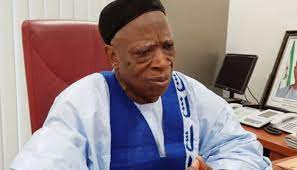
Musings With Abdullahi Adamu And Abubakar Kyari As Allies.
By: Inuwa Bwala
Now that the battle seems to be over in seeking for the soul of the ruling All Progressives Congress, APC, the new National Working Committee, under the leadership of my boss, Senator Abdullahi Adamu must have awakened to the realities of the war tomorrow.
The party does not need a soothsayer to know that the actual war is still ahead and it promises to be as daunting as never before.
With over seventy officers returned as members, the perceptions that came with each of the new hands must give way to a new realignment and narrative with equally new tact.
Pre-convention alliances presuppose that, each of them carried the burden of particular interests and each with seeming idiosyncratic mannerisms and psyche: but against the expectations from Mr President, party stakeholders and Nigerians, Adamu needs a thorough sift from the motley crowd in selecting his first eleven.
The circumstances of Adamu’s emergence make his assignment more of a task, than it is of leadership only.
This is more so, when there is little time to address all issues before facing the primary assignment ahead.
It is not impossible to go with everybody, but it is not possible to carry the views of everybody in this quest, seeking for the party’s survival.
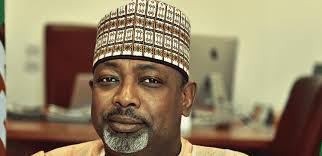
I know Abdullahi Adamu fairly well, just as I know Abubakar Kyari, the Deputy Chairman, North well, and can vouch for their individual capabilities.
I also know as a matter of fact that they have also worked together very closely and must have clearly defined their targets as team players. Bringing them together in the National Working Committee of the party at the top level is a compatible combination, with very high potential for good results.
I have always advocated for the emergence of a highly intellectually studded leadership for the APC, which could be the antidote for the challenging combination in the opposition People’s Democratic party, PDP.
With Adamu and Kyari, combining with others who I might not know well, I think every party will be given the run for their money; including the emergent third force.
Reasoning together between Adamu and Kyari could be the best end of the seeming leadership quagmire of the APC, which is still smarting from months of internal wranglings. While Adamu brings forth the the benefits of his age and wisdom, experience and dogdeness to combine with Kyari’s youthful dynamism, vibrance, pragmatism and capabilities, the party ends up with a kind of triumph that could beat the permutations of skeptics.
Adamu has been long enough in the national political circles, and one does not need to go and tell Nigerians what he is capable of doing. Those who dismiss him as a spent force did so at a very expensive cost, as those of us who know him can say, that Adamu is the type that will die standing.
I have followed him through the thick of his battles to know that, Abdullahi Adamu never calls it quits, rather, he pursues that which he believes in, even if he finds out that he is the only one left fighting that cause.
Also Read: Senator Abubakar Kyari: The Expectations and Gains For APC
That he was given the title of Sarkin Yakin Keffi, before he was elevated as the Turakin Keffi, presupposes that Adamu is a fighter, as such titles are not conferred on cowards.
Many people may not have known Abubakar Kyari, though they may have heard about him and his exploits.
I may not have much to add to Kyari’s introduction, more than what former Bauchi State Governor, Isa Yuguda said of him while mounting the podium to announce his withdrawal from the race for the office of the Deputy National Chairman, North and to endorse the candidature if Senator Abubakar Kyari.
He described Kyari as his younger brother: young, dynamic, pragmatic, vibrant and capable. Short as that remark was, I am sure even as a tall man, Kyari could not have gotten a concise resume, than this.
Those who monitor happenings in the Senate could attest to the fact that Abubakar Kyari has been visible in debates, moving motions and passing of bills. But for the necessity of his service to his party, the people of Borno North would have been reluctant in allowing Kyari to go.
The days ahead will put to test President Muhammadu Buhari’s thesis of bringing these two gentlemen into the leadership of the APC, in the party’s drive to reposition for the war tomorrow.
Musings With Abdullahi Adamu And Abubakar Kyari As Allies.



Scholarship or Trap? Why Northern Nigerian Youth Must Verify Foreign Opportunities
By Alhassan Bala
Hundreds of young Nigerians, including students and graduates from northern Nigeria, have benefited from legitimate scholarships and educational opportunities offered by foreign governments and institutions. Such programmes can open doors to quality education, professional development and international exposure.
However, the growing use of social media to advertise scholarships, jobs and training opportunities abroad also presents serious risks.
Some seemingly attractive offers may be fraudulent, exploitative or even serve as channels for human trafficking and forced recruitment.
This is why young Nigerians must exercise extreme caution before accepting foreign scholarships or employment opportunities promoted online.
Recently, I came across a northern Nigerian professor working outside the country advising Nigerians, particularly young people from the North, to take advantage of a scholarship opportunity reportedly being promoted by educators he knows in Russia.
I have enormous respect for the professor, as I do for many academics who genuinely want to help young Nigerians access opportunities abroad.
Nevertheless, his recommendation reminded me of the disturbing experience surrounding the Alabuga recruitment programme in Russia and the need for prospective applicants to verify such offers independently before travelling.
The Alabuga warning,
For those unfamiliar with the Alabuga controversy, the programme began attracting young Africans through online advertisements offering employment, vocational training and what was presented in some cases as educational opportunities in Russia.
Investigations by international and Nigerian media later raised serious concerns about the programme.
Young Africans, including Nigerians, were recruited through social media and other online channels and taken to Russia.
Reports indicated that some participants who expected education or employment opportunities ended up working in facilities associated with the production of drones used by Russia in its war against Ukraine.
The Nigerian Ministry of Education subsequently said its website had been compromised and that advertisements for the controversial Alabuga Start programme had been posted without official authorisation.
Officials also stressed that the programme was not part of Nigeria’s approved bilateral scholarship arrangements with Russia.
The episode should have taught Nigerians an important lesson: the appearance of government endorsement, the involvement of a university professor or the presence of an attractive scholarship advertisement on social media does not, by itself, establish that an opportunity is genuine or safe.
From scholarships to the battlefield.
There is an even more disturbing dimension to the growing concern over recruitment of Africans to Russia.
In recent years, reports have emerged of Africans travelling to Russia after being promised civilian employment, only to find themselves recruited into the Russian military and deployed to the war in Ukraine.
In February 2026, the Russian ambassador to Nigeria, Andrey Podyelyshev, denied that Moscow operated any government-supported programme to recruit Nigerians to fight in Ukraine.
He said that if illegal individuals or organisations were recruiting Nigerians unlawfully, such activities were not connected to the Russian state.
Despite the denial, investigations and reports have documented cases involving Nigerians and other Africans who allegedly travelled to Russia believing they were taking up civilian jobs before being sent to the battlefield. In one widely reported Nigerian case, Adam Anas and other Nigerians were recruited under the guise of security employment and subsequently deployed to fight in Ukraine.
The cases are not limited to Nigeria. In March 2026, the Association of Nigerien Students in Russia announced the death of Abdoulaye Issaka Ismael, a Nigerien master’s student who, according to the student organisation, had been recruited into Russian combat forces and deployed to the frontline in Ukraine.
Ghana has also reported serious losses. Its Foreign Minister disclosed in February 2026 that 55 Ghanaians had died after being lured into fighting in the Ukraine war, while hundreds more were believed to have joined the Russian military.
These cases demonstrate that the danger is not merely theoretical.
The lesson for young Nigerians, especially those desperately seeking educational or employment opportunities abroad, is straightforward: verify before you travel.
Anyone offered a scholarship in Russia or any other foreign country should first establish whether the programme is officially recognised by the Nigerian government and the government of the destination country.
Applicants should independently contact the Federal Ministry of Education, the Federal Scholarship Board, the Ministry of Foreign Affairs and the relevant embassy or high commission before committing money, submitting sensitive documents or travelling.
They should also verify the name of the university, its accreditation, the exact course of study, the physical location of the institution, the identity of the sponsoring organisation and the legal status of whoever is recruiting them.
Most importantly, prospective applicants should be suspicious of opportunities that are promoted exclusively through WhatsApp, Telegram, Facebook, TikTok or other social media platforms, particularly when recruiters pressure applicants to travel quickly or discourage them from contacting government authorities.
A genuine scholarship should withstand scrutiny.
Northern Nigeria has millions of young people searching for education, employment and opportunities to improve their lives.
That makes the region particularly vulnerable to individuals who exploit unemployment and economic hardship with promises of quick opportunities abroad.
Professors, academics, journalists, community leaders and other influential Nigerians therefore have a special responsibility when sharing foreign opportunities.
Before recommending a scholarship or job to young people, they should verify it through official channels and make the evidence available to prospective applicants.
A recommendation from a respected professor can give an opportunity credibility that it may not deserve. If the opportunity later turns out to be fraudulent, the consequences may be devastating.
The Nigerian government also needs to do more.
Government agencies responsible for education, foreign affairs, Nigeria Immigration Service, labour and youth development should maintain accessible, regularly updated databases of approved foreign scholarships and legitimate overseas recruitment programmes.
They should also promptly alert Nigerians whenever questionable opportunities emerge online.
The Alabuga experience showed how easily a dubious programme could acquire an appearance of legitimacy when its advertisements appeared on an official government website.
The subsequent reports about Africans being deceived into military service demonstrate the potentially fatal consequences of inadequate verification and oversight.
Young Nigerians deserve opportunities, but they also deserve protection.
A scholarship should lead to a classroom, laboratory or recognised institution not a factory where they are exploited, and certainly not a battlefield.
For young Nigerians seeking opportunities abroad, the safest rule is simple: do not trust an opportunity because it looks attractive; verify it because your life may depend on it.
Alhassan Bala, wrote this piece from Abuja
Scholarship or Trap? Why Northern Nigerian Youth Must Verify Foreign Opportunities

When Official Directives Become More Powerful Than the Law
By: Ibrahim Welye
There is a dangerous habit gradually becoming normal in Nigeria’s public institutions: the assumption that once an instruction comes from a sufficiently powerful office, somebody somewhere must have the authority to carry it out.
A letter arrives from a senior official. A ministry acts on it. Another agency processes the request. A bank opens an account. A department prepares a budget. A committee gives its approval. Before long, what began simply as an instruction has acquired all the appearance of legality.
But there is a question we too often forget to ask:
Where is the law that gives you the power to do this?
That question should come before the letterhead, before the signature and certainly before the status of the person issuing the instruction.
In a constitutional democracy, authority does not flow from importance. It flows from law.
A minister is powerful because the law gives the office certain powers. A governor exercises authority within powers conferred by the Constitution and legislation. The President, despite occupying the highest executive office in the country, does not possess unlimited authority merely because he is President.
Public office does not create its own powers.
Yet increasingly, our institutions appear willing to confuse political authority with legal authority. And that is where the danger begins.
A Government Letter Is Not the Law
There is a strange reverence for official correspondence in our public system.
Once a letter carries the right crest, the right signature or the name of the right office, institutions sometimes behave as though the legal question has already been settled.
It has not.
A completely genuine letter can contain an unlawful instruction. A properly constituted office can act outside its powers. An official can have authority over one matter and absolutely no authority over another.
This distinction is fundamental.
The first responsibility of any ministry, department, agency or public institution receiving an instruction should therefore not merely be: Who sent this?
It should be: Under what law are we being asked to act?
That simple question could prevent an extraordinary amount of institutional misconduct.
Instead, what often happens is an administrative chain reaction.
One institution assumes another institution has done the legal checks. The next institution assumes the first would not have approved the matter without authority. A third sees two government approvals and concludes that the issue must be legitimate.
Eventually, an act for which nobody can clearly identify a legal foundation has accumulated enough stamps, minutes, signatures and approvals to look perfectly official.
We could call this the administrative laundering of illegality.
Something questionable enters the system at one end and emerges at the other wearing the full uniform of government.
The number of institutions involved does not make it lawful.
Ten government agencies cannot collectively manufacture a power that the law gave to none of them.
The Problem With ‘Oga Said’
Many Nigerians will recognise the culture behind this problem.
‘Oga said.’
‘The Honourable Minister directed.’
‘The Governor has approved.’
‘The Presidency wants it done.’
These statements may explain why somebody wants an action taken. They do not necessarily explain why government has the legal authority to take it.
There is a difference.
And a country gradually loses its institutional foundations when its civil servants become more afraid of questioning an instruction than of violating the law.
The public officer who asks for the statutory basis of an instruction is not being difficult.
The legal adviser who says, ‘We do not have the power to do this,’ is not obstructing government.
The permanent secretary who insists that proper procedure be followed is not necessarily resisting political leadership.
Sometimes, these are the very people protecting the government from itself.
Political appointees will eventually leave office. Directors will retire. Administrations will change.
The files will remain.
The signatures will remain.
The payment records will remain.
And when questions are eventually asked, ‘I was instructed’ may explain what happened, but it does not automatically make what happened lawful.
The Precedent You Celebrate Today May Be Used Against You Tomorrow
Perhaps the most troubling part of Nigeria’s relationship with institutional illegality is our tendency to judge it according to who benefits.
When an administration we support stretches the rules, we suddenly discover the virtues of pragmatism.
We say government must be allowed to work.
We say procedure should not frustrate development.
We say critics are being political.
Then power changes hands.
The same institutional shortcuts are used by people we dislike, and suddenly we rediscover the Constitution.
This is how countries weaken themselves.
The danger of tolerating unlawful power is not simply what the present government will do with it. The greater danger is that the power survives the government that created the precedent.
Those benefiting from weakened safeguards today should remember that they will not remain in office forever.
Every shortcut created for your convenience becomes available to your successor.
Every institution taught to obey personalities rather than law will simply transfer that obedience to the next personality.
If an agency learns today that a powerful political instruction is enough to bypass its rules, why should anyone expect that same agency to suddenly become courageous when a future administration gives an instruction against today’s beneficiaries?
Institutions do not remember who first corrupted their standards.
They simply remember the new standard.
That is why defending the rule of law only when one is in opposition is not a commitment to democracy. It is merely political convenience.
The Real Victim Is the Ordinary Nigerian
Institutional illegality may sound abstract until we consider who ultimately pays for it.
The ordinary Nigerian is expected to obey the rules.
Bring this document.
Complete this form.
Obtain this approval.
Wait for this process.
Pay this statutory fee.
Meet this deadline.
Then another person arrives carrying a letter from an influential office and suddenly the same institution discovers flexibility.
That is how citizens begin to realise that Nigeria has two administrative systems: one governed by procedure and another governed by access.
Once political connection becomes more useful than legal compliance, people stop believing that institutions are neutral.
Businesses become uncertain about whether today’s approvals will survive tomorrow’s administration. Public resources can be directed towards structures whose legal foundations are questionable. Appointments can be created outside established frameworks. Government institutions spend money, time and credibility implementing decisions they may never have had the authority to make.
The cost is eventually paid by citizens through weaker services, wasted resources, arbitrary government decisions and declining trust in the state.
We Should Stop Treating Legal Scrutiny as Disloyalty
One cultural change is particularly necessary.
Public officials must be allowed to say no.
Not a political no.
Not an ideological no.
A professional no.
‘No, Minister, the law does not give this institution that power.’
‘No, Director-General, this procedure has not been completed.’
‘No, Chairman, we need legal advice before proceeding.’
‘No, there is no statutory basis for what we are being asked to do.’
That kind of resistance should be valued, not punished.
A leader surrounded entirely by people who say yes eventually becomes dangerously uninformed about the limits of his own authority.
The best civil servants are not necessarily those who implement every instruction fastest. Sometimes, the most valuable officer in the room is the person courageous enough to prevent everyone else from making a mistake.
Oversight Must Ask a Different Question
Our accountability institutions also need to widen the way they think about misconduct.
We often wait until money disappears before asking questions.
But sometimes the first failure happened long before the money moved.
Before asking whether funds were stolen, an auditor or legislature should sometimes ask: Did this institution have the authority to create this programme in the first place?
Was the entity receiving public resources lawfully established?
Who authorised it?
Under what legislation?
Was a lawful delegation made?
Which institution first accepted the arrangement as legitimate?
What legal advice was obtained?
Those questions matter because government can waste enormous resources implementing something that should never have entered the administrative system at all.
Accountability should follow the entire chain.
And every institution involved should explain its own decision.
‘We acted because another agency approved it’ cannot become the standard defence of public institutions.
Citizens Must Also Be Consistent
There is another uncomfortable truth.
Politicians are not alone in encouraging this culture.
Citizens often excuse illegality when the outcome favours their party, region, religion, ethnic group or preferred leader.
That is a mistake.
A constitutional safeguard surrendered because it inconveniences your opponent will not magically reappear when you need it.
We cannot demand strict legality from governments we dislike and invent excuses for governments we support.
The rule of law cannot be a weapon we bring out against our opponents and put back in the cupboard when our friends are in power.
Either the law restrains everybody or, eventually, it restrains nobody.
Nigeria’s challenge is therefore bigger than any single questionable directive, appointment, agency or programme.
It is about the kind of state we are building.
Do we want institutions whose first instinct is to ask, ‘What does the law permit?’
Or institutions whose first instinct is to ask, ‘Who gave the instruction?’
The difference between those two questions is the difference between an institution and an entourage.
Governments will come and go. Today’s powerful officeholder will eventually become yesterday’s officeholder. Political beneficiaries will change. Parties will rise and fall.
The institutions will remain.
We should therefore be extremely careful about what we teach those institutions to obey.
Public power is borrowed, not owned.
An official directive can begin an administrative process, but it cannot create powers that the Constitution or legislation does not provide. A dozen official signatures cannot transform an unlawful act into a lawful one.
And whenever government is about to act, one question should remain stubbornly at the front of the file:
Where is the legal authority to do this?
Nigeria will be safer when asking that question becomes an act of professionalism rather than an act of courage.
— Ibrahim Welye
When Official Directives Become More Powerful Than the Law

THE EFCC BILLIONS AND THE NDDC: WHAT NEXT?
By Frank Tietie
The reported recovery by the Economic and Financial Crimes Commission of substantial statutory levies owed to the Niger Delta Development Commission by defaulting oil companies is commendable. It demonstrates what determined regulatory enforcement can accomplish when public institutions act decisively.
According to disclosures made before the Senate Committee on Public Accounts, the EFCC investigated 43 oil companies following findings in the Nigeria Extractive Industries Transparency Initiative’s 2021–2023 Oil and Gas Sector Audit Report. Twenty-four companies had outstanding liabilities totalling approximately ₦76.88 billion and $81.08 million, while 19 were cleared.
The EFCC further disclosed that some companies paid ₦6.71 billion and $16.99 million directly to the NDDC. Of the sums recovered through the EFCC, ₦73.37 billion and $67.07 million had reportedly been released to the Commission, leaving ₦3.51 billion and $14.01 million in the EFCC recovery account.
These recoveries are significant, but recovering the money is only the beginning. The more important question is: what happens to the funds after they reach the NDDC?
For too long, the NDDC has failed to maximise its statutory mandate to facilitate the rapid, even and sustainable development of the Niger Delta, particularly in communities directly affected by oil and gas exploration and production.
Instead of transforming the living conditions of the people, the Commission has repeatedly been associated with allegations of political patronage, abandoned projects, inflated contracts, procurement irregularities and payments for work that was either poorly executed or never performed.
A particularly troubling example involved allegations made by the NDDC against the late Senator Peter Nwaoboshi. In 2020, the Commission alleged that he used 11 companies as fronts to secure contracts worth approximately ₦3.6 billion in September 2016. The late senator denied the allegations. The NDDC subsequently demanded the refund of about ₦2.5 billion in relation to a contract for the supply of plastic desks and chairs.
The public deserves to know whether the demanded sum was ever recovered and, if not, what steps are being taken against the estate, companies, or other persons legally responsible. Allegations involving public funds should not simply disappear because an accused person has died. Although criminal liability is personal, properly established civil claims, recovery proceedings and forfeiture orders may, where legally sustainable, continue against companies, assets or an estate.
The wider picture is even more disturbing. The forensic audit submitted to the Federal Government in 2021 reportedly identified 13,777 projects whose execution was substantially compromised, despite the NDDC receiving approximately ₦6 trillion from statutory and non-statutory sources between 2001 and 2019. This represents a profound betrayal of the people for whose benefit the Commission was established.
If the Federal Government truly cares about the Niger Delta, it cannot simply congratulate the EFCC for recovering the funds and then allow those funds to enter the same opaque system that produced thousands of abandoned and questionable projects.
The EFCC should apply comparable determination to investigating past and current NDDC contracts, particularly contracts for which substantial or full payments were made without corresponding performance. Such investigations should determine whether contracts complied with the Public Procurement Act and applicable procurement regulations and whether the projects were actually executed at the approved locations with the quality and quantity of work delivered corresponding with the sums paid;
Where criminal conduct is established, those responsible should be prosecuted. Where money was paid without value, recovery proceedings should be commenced against the contractors, their companies and any public officials who facilitated the unlawful payments.
The NDDC must move beyond the politics of loyalty and patronage. Its management should understand that the recovered funds are not a political windfall. They are statutory resources that, in practical and moral terms, belong to Niger Delta communities that continue to endure environmental degradation, poor roads, inadequate healthcare, unemployment, polluted water, and deficient educational facilities despite decades of oil production.
Priority should therefore be given to projects that have an immediate and measurable impact on the people, such as the provision of potable water, healthcare, education, environmental remediation, electricity, roads, skills development and sustainable employment.
The EFCC deserves commendation for recovering funds owed to the NDDC. However, its responsibility should not end with transferring the money. It must help ensure that the recovered funds do not become subject to the same corruption and embezzlement that have historically undermined the Commission.
The true success of this recovery will not be measured by the billions announced before the Senate. It will be measured by completed roads, functioning hospitals, equipped schools, clean water, restored environments and improved livelihoods across the Niger Delta.
The money has been recovered. The next and more difficult task is to ensure that it reaches the people.
Frank Tietie
Nigerian Lawyer, Media Personality and Executive Director of Citizens Advocacy for Social and Economic Rights (CASER) writes from Abuja
THE EFCC BILLIONS AND THE NDDC: WHAT NEXT?

APC received 5000 decampees in Yobe

Borno APC candidate, Gubio attacked by ISWAP as security forces repel deadly ambush

NSCDC Rescues 15 Trafficked Children, Recovers Stolen Rifles, Busts Telecom Vandalism Syndicate

Roger Federer’s Shock as DNA Results Reveal Myla and Charlene Are Not His Biological Children

THE PLIGHT OF FARIDA

FAILED COUP IN BURKINA FASO: HOW TRAORÉ NARROWLY ESCAPED ASSASSINATION PLOT AMID FOREIGN INTERFERENCE CLAIMS
-
 News2 years ago
Roger Federer’s Shock as DNA Results Reveal Myla and Charlene Are Not His Biological Children
-
Opinions5 years ago
THE PLIGHT OF FARIDA
-
 News1 year ago
FAILED COUP IN BURKINA FASO: HOW TRAORÉ NARROWLY ESCAPED ASSASSINATION PLOT AMID FOREIGN INTERFERENCE CLAIMS
-

 News2 years ago
EYN: Rev. Billi, Distortion of History, and The Living Tamarind Tree
-
 Opinions5 years ago
POLICE CHARGE ROOMS, A MINTING PRESS
-

 ACADEMICS3 years ago
A History of Biu” (2015) and The Lingering Bura-Pabir Question (1)
-

 Columns3 years ago
Army University Biu: There is certain interest, but certainly not from Borno.
-

 Politics1 year ago
2027: Why Hon. Midala Balami Must Go, as Youths in Hawul and Asikira/Uba Federal Constituency Reject ₦500,000 as Sallah Gift
