
Tribute
TRIBUTE: MALA KACHALLAH STIlLL MY HERO 15 YEARS AFTER.


TRIBUTE: MALA KACHALLAH STIlLL MY HERO 15 YEARS AFTER.
By: Inuwa Bwala
Another year has gone by, it is fifteen years since the man of peace, my mentor, my father, my boss and my confidant, Mala Kachallah passed on. One may say it has been long, yet for me, everything is still fresh in my mind. There is nothing new I may have to say, having marked his death for the past fourteen years with tributes.
I have narrated the events in my previous piece, but I need to restate parts of it for emphasis and for the benefits of those who have not followed my series on Maka Kachallah. Every time the year goes round, I look back at the events of that fateful day, 18th April, 2007, when the heat was intense, and in the same campaign year for the 2007 General elections.
We had gone round with Mala Kachallah touring the southern part of Borno state for the campaigns and only once did he call my attention in Askira to inform me he was not feeling fine and may not go for the second leg of the tour. Otherwise, he looked hale and hearty, and even asked me to continue with the team for the remaining tour and get back to him when we return to Maiduguri.
I did not suspect anything even when Honorable Mohammed Wakil called me to his inner room, until he informed me that my attention was needed at Mala Kachalla’s residence. He said they were leaving me behind, but that I should feed him back on what the matter was. I could sense something was wrong, but nobody betrayed any form of expression towards me, even as I went out of the house heading to Mala Kachalla’s residence on the Airport Road.
I could see three or more groups of people in the open yard at Mala Kachallah’s house discussing in hushed tongues. They looked away from me immediately I entered, but by then it was obvious that something was wrong in the house. I went into the house and was confronted by some prominent people, including his former deputy, Ali Abubakar Jatau. They pointed to his door and I headed straight for it, with my heart in my mouth. I did not need to be informed at that stage what had happened.
Since then, the events of that day and the attendant events in the state long after his death remind me that the peace of Borno may have departed with him. And every time I write to commemorate that sad event, I always pay tribute to him, I take a mental tour of the once home of peace with nostalgia of the Mala Kachallah days.
Everytime I pray, I crave to pray for leaders in the mould of Mala Kachallah, with the hope that Borno may once more experience the tranquility of his era. We seem to be gradually getting there, with Professor Babagana Umara Zulum: though I know it is not yet uhuru.
Also Read: Kashim Shettima: On the Day of valedictory for Senators Exiting the Red Chamber
I equally pray that God should grant me the grace to replicate the things he told me: one of which I should never keep nalice. Even for the lessons I learnt through his life, I remain ever faithful and grateful to Mala Kachallah even after his death.
Today, not so many people remember him, not even in the political cycles, but everybody relishes the era of his leadership as one of the most peaceful in Borno state. Mala Kachallah who everybody prefers to call the man of peace gave every section a sense of belonging in Government, and everybody a sense of justice, to the effect that he was christened “The Captain of Peace”. Those who had the privilege of coming into contact with him, can also testify that Mala Kachallah was so hospitable and lavish with his resources on others, that he left office a virtual pauper. Beyond these, Mala Kachallah was Godly and passionate about his faith.
I quite agree that every leader has an idiosyncratic approach to solving problems; in which case such approaches may differ from one leader to the other. The circumstances surrounding Mala Kachalla’s leadership may be different from what obtains after him, but every time there is crisis in Borno state, I often reminiscence on his style of leadership; often asking with a very strong sense of nostalgia: what would Mala Kachallah have done differently to solve such a crisis.
I often find solace in the activities of Governor Babagana Umara Zulum, who, given the rightful atmosphere, has demonstrated sufficient will and capacity to replicate the deeds of Mala Kachallah or even surpass him. I also admire Senator Kashim Shettima’s fidelity to the legacies of Mala Kachallah while he was the Governor. Both men always encourage me to keep Mala Kachallah’s memory alive. I have never ceased to acknowledge the fact that each leader after Mala Kachallah gave their best in their own ways. I am particularly impressed with the efforts of the Borno State Government which has not only immortalized Mala Kachallah, but has not left his family in penury.
May God continue to grant him eternal rest.
TRIBUTE: MALA KACHALLAH STIlLL MY HERO 15 YEARS AFTER.


Tribute
Tribute: Three decades after His Demise Uncle Alaba’s Positive Dreams For Mushin and The Entire Lagos Still Unfulfilled

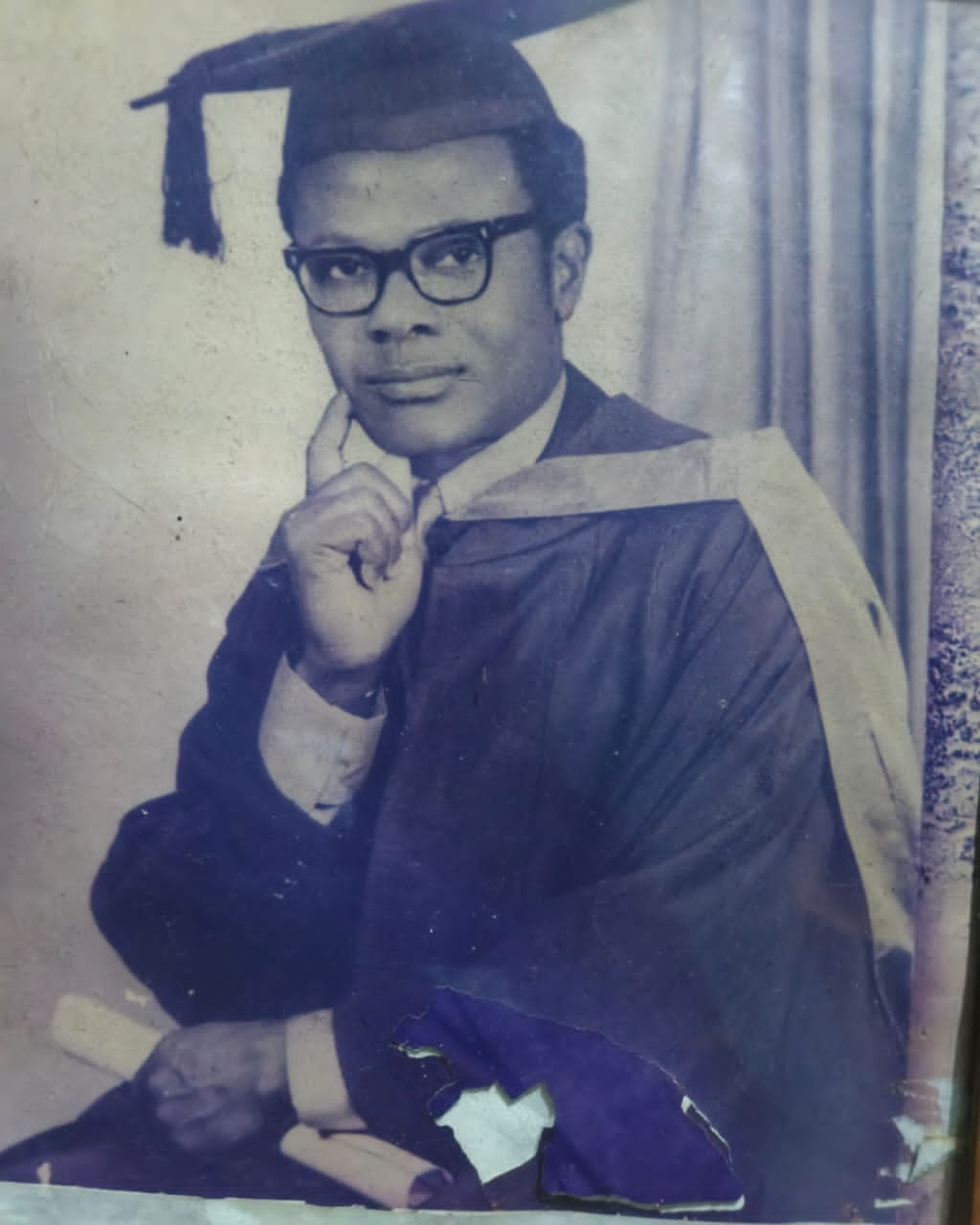
Tribute: Three decades after His Demise Uncle Alaba’s Positive Dreams For Mushin and The Entire Lagos Still Unfulfilled
By Bodunrin kayode
Everyone is a player on the world stage and when the appointed time comes, we will all take a bow and disappear into dust. This is our fate and the most permanent phenomenon affecting all mortality created by God before Christ returns. But no matter how long, we the survivors never forget those who touch our lives in one way or the other.
It’s another November and time to remember my special paternal uncle who left this world over 30 years ago. “Uncle Alaba” as everyone called him would have been a celebrated grand uncle if he was alive today. Uncle, one of my father’s brothers spent most of his retirement lifetime in the Pa Benjamin Akinlawon family house in folarin street, Mushin a suburb of Lagos state. He was a humanist and an uncle to everyone on that street and surrounding ones like Tadeyo, Lapite and all the back streets up to the Methodist Church Palm Avenue and beyond the boundaries of Isolo. Folarin street was a Jerusalem of some sorts for us the descendants of Akinlawon and any day we the nephews of Uncle wanted to see him, he was there to ease our tensions acquired due to the restlessness associated with the very existence of young people of the eighties.
Uncle’s love and prayers for Mushin to grow beyond the staccato developmental melodies of the 70’s and 80’s
Mushin in Lagos state then was originally an awori suburb were people hardly sleep with their two eyes closed till first light due to the excesses of miscreants who made life sometimes difficult to manage. In spite of all the vagaries of this life brought about by the then oil boom, uncle was a natural teacher who taught us how to survive in the midst of plenty or even scarcity. To him, if you could survive in Mushin, Idioro, Challenge, Oshodi, Isolo, ojuelegba, Lawanson and Suru Lere in the early 80’s, then you were ready to call yourself a real lagosian because of the myriads of social challenges that were associated with such densely populated suburb. Most of the explored islands of Lagos then were mangrove swamps except for some parts of Isale Eko, Ikoyi and Victoria Island which were left over relics of British colonialism.
Very few criticized the dangerous sand filling going on in the remaining mangrove islands dotting the Atlantic which some hard dies ignorantly assume may one day replace the real lagos which remained unattended to then.
The topography of Mushin was not as organized and planned as nearby Yaba were our grandparents lived in the colonial railway quarters. Indeed uncle’s Dad, grandpa Benjamin Akinlawon Beckley worked as a railway clerk before retiring and building his retirement home in Mushin which was a stone’s throw from Yaba another awori suburb. Yaba became slightly developed because of the acquisition of a major chunk of it by the British in 1924 from the Oloto family to establish the Yaba estate garden city.
Mushin never enjoyed such facelift till this day because the population was massive. Uncle prayed and hoped for a planned and modernized Mushin but never saw it till he left us. The aworis and other residents in conjunction with the council authorities built Mushin with their sweat. This suburb according to Uncle was abandoned by successive governments who could not put common pipe born water in strategic street corners for people to use. People had to dig boreholes in front of their homes where we bought portable drinking water.
Most of the urban development policies of government were created for the upper elite class who suddenly found solace in Ikeja which became the capital of Lagos state yet the governors and administrators never lived in Ikeja. They always returned to Marina House following after the footsteps of the British even as they continue to second rate residents of the mainland. Looking back, I now agree with uncle’s parlor lectures that victoria Island was the El Dorado of the technocrats who took over from the colonialists. “They don’t really care about us” as he would say but don’t allow them to dampen your spirits because life must go on. As a matter of fact this is the meaning of the inscription “this is Lagos ” you may see around. “Just try and make the best out of life Sam because with God all things are possible ” uncle would say.
Why Mushin And Most parts of the mainland lagos are practically unplanned and full of slums
The governments before and after the indefatigable Alhaji Lateef Jakande were never ready for the structural challenges caused by an almost insane population explosion because Lagos was both the administrative and commercial capital of Nigeria. The four administrators before jakande were soldiers who had no business in government so they never improved on the “selfish” master plans created by the British to suite their special administrative convenience.
People came in from all corners of the country with some even prepared to sleep under bridges or fly overs just to eck a living. Existing gutters were turned to sewage dumping centres while many homes lacked toilets and proper sewage collection points till this day. Sadly also, no deliberate efforts were made to pull down the massive slums created in the precolonial era to build the desperately needed thousands of km of drainage systems missing in the resultant city.
In the 80’s streets were tarred without drainage systems. Those that had drainages were turned to garbage dump sites and we all knew what that did to Lagos then. So the result was unplanned conurbation all over the mainland which is why 80 percent of mainland Lagos is sadly still a glorified slum. While watching the famous network news of the Nigerian Television Authority (NTA) uncle will sometimes dive into angry soliloquy and later remembers I am around in the parlor and then he would say Sam did you hear what that rascal said? I would smile and interject if it entails an interjection. If not a yes or a no sir.
Uncle never participated openly in partisan politics to my knowledge but was extremely alert about how the government treated people in Mushin including those he grew up with in surrounding surburbs. He was the replica of my father when it comes to using his resources to help people around. He will not hear that some one did not go to school because of school fees. He had a large heart to sort the problems of all who dared call him Uncle.
Uncle’s View of the Mad traffic jams in Lagos
Indeed uncle Alaba was my assessment meter of measuring why no government in the last 60 years has been able to correct the sickening traffic challenges associated with Lagos and how that sad syndrome slangily called “go slow” reversed people’s progresses in many ways. Many lost jobs for arriving late to work while others left home at three am and took their baths at work just to work in the island. The lingering traffic situation in Lagos state is one of the reasons Abuja was created. The federal authorities lost long productive hours criss crossing the state which was suffering from bad roads messed up by “molue” and other heavy trucks especially in the Apapa area.
Many of the gutters and channels coming up were laced with heavy pollution. The odd and even plate number movement plans to the island never worked because the technocrats were scratching the challenges on the surface. When it rains and it was flooding, they were unable to bring down illegal buildings which have turned to conurbation blocking waterways.
That gave rise to a lot of substandard buildings which started collapsing on people. Sadly according to Uncle some of the politicians he thought would be proactive enough were obviously too timid of pulling down thousands of emergency homes blocking front and back streets for exit traffic in the city. And that gave rise to many collapsed buildings which killed many residents. Uncle though a biochemist was extremely exposed for his generation. He knew all this and was irritated about these social wrongs which he knew were very easy to fix if the government made up its mind to. Another factor which down graded the city before international observers was the Lagos floods. It diminished the city from assumed sophistication to a slum which was never ready to transform into modernity. Once we gather in the parlor to watch the popular nta network news and mention is made of flood destroying properties and taking of human lives, uncle was always irritated. He regretted that most of the managers of Lagos knew the state was below sea level but did nothing about meticulous probing of approved sites for building.
And that is why Lagos can never be rated in the same ranking as well planned cities I have visited like Abidjan or Yamasucro in West Africa because it just went through an evolution as a result of population explosion from the hinterland. The French are crazy about massive roads and if Lagos must survive beyond the current crazy traffic jams, many structures must go and roads expanded properly. Rail transportation is just scratching the challenges on the surface.
Uncle the man of the people, resilient survivor and lover of humanity
Uncle was a survivor who taught most of us after their generation the resilience needed to survive in the mainland of Lagos which was the host of the capital city Ikeja. Uncle Alaba knew all the crannies of Lagos and understood why the population explosion did not allow past administrations to empower their urban planning departments to be proactive. So many mistakes were made because many of the political managers could not follow the blue print of the Lateef Jakande era to plan the surburbs properly. Alleys and closes were created in the wrong places and people built anything to live inside due to population explosion. So we the younger ones in the eighties learnt how to meander through these alleys and return before the traffic clears.
If Uncle sends you on an errand be sure he is guiding you through a knowledge trip were you are expected to return with additional information on your strolling spree. He asked tasking questions and was always a guide when mistakes were made.
Whenever you stroll with him, you discover new things. He was indeed a man of the people known by all as Uncle in Tadeyo,
Lapite down to Ladipo and Palm Avenue. A a principled socialite of some sort who gave ears to lots of challenges of his neighborhood and ensures speedy solutions are got. Even the politicians sorted his counsel. He was what residents of Mushin describe literally as a “jolly good fellow”. A friend of everyone in the family. My paternal Uncle can never be forgotten by all who came across him on folarin street in Mushin, Lagos. He was known in the entire vicinity up to Lapite and the council area Secretariat. He was no visitor to many at Palm Avenue right up to the Methodist Church where he worshiped God. At the mushin bus stop he had friends he stopped to say hello to. Some from the north whom he spoke fluent hausa language with and other parts of the country.
Uncle Alaba Beckley was once full of life and ready to teach us his nephews almost everything he knew as a man because boys learn from men to become Men. For me there was no difference between myself and his kids because i lived with him for sometime. Never a dull moment with Uncle a man with many parts. He was equally a good cook and cooked and served us many times as kids. Whenever he sends me to the market to get fast condiments, we were sure uncle will cook dinner that day. It was like a party was being hosted by him.
Sometimes we meet people in life who leave indelible impressions in our lives. These impressions linger many years after they have gone. We never forget such very strong impressions which we used to grow up. Uncle Alaba is one soul I would never forget because of the myriads of things we did together while he was alive. I never met my grand parents who were uncle’s parents Grandpa Akinlawon and Grandma Oredolapo but each time I visit Uncle and his siblings in that family home, I bask in the ambience of Grandpa Akinlawon, a great man who laid the foundation for one of the many linages of the Beckleys who originated from Wasinmi Ake in Abeokuta. Uncle’s death on the 1st of November 1996 at 57 was a devastating blow to the entire family in Lagos where the patriarch Akinlawon Beckley had built his family residence. He has been greatly missed by all who encountered him in one way or the other.
Bodunrin Kayode wrote from Maiduguri
Tribute: Three decades after His Demise Uncle Alaba’s Positive Dreams For Mushin and The Entire Lagos Still Unfulfilled
Tribute
A Tribute to My Beloved Father, His Eminence Sultan Muhammad Maccido, CFRTwenty Years Gone, Forever Remembered

A Tribute to My Beloved Father, His Eminence Sultan Muhammad Maccido, CFR
Twenty Years Gone, Forever Remembered
By Halilu Maccido
Twenty years have passed since the tragic day we lost a remarkable father, a revered traditional ruler, a distinguished statesman and a guiding light. Yet two decades on, the memory of His Eminence Sultan Muhammad Maccido remains as vivid in our hearts as ever. Time has moved on, but the love, admiration and respect we hold for him have not diminished.
To us, his children and family, he was a loving and devoted father whose wisdom, guidance and prayers remain an enduring source of strength. To the Sultanate, he was a custodian of tradition and a symbol of dignity. To the nation, he was a father figure whose life was defined by humility, faith, service and an unwavering commitment to peace, unity and the well-being of others.
Baba lived a life of purpose. He led with wisdom, carried his responsibilities with humility, and touched countless lives through his kindness, generosity and sense of duty. His leadership went beyond the throne. It showed in his character, in his devotion to his people, and in his belief in peace, justice and mutual understanding.
Though his time with us was cut short, the legacy he left continues to speak long after his passing.
His life reminds us that true greatness is measured not by the position one holds, but by the lives one touches, the values one upholds and the difference one makes in the world.
Baba, twenty years without you have taught us that while a father may depart this world, his influence never dies. We miss your presence, cherish your counsel and hold dear the lessons you instilled in us. We wish you were here to see the years pass, to offer your wisdom and to guide us with the quiet strength and dignity that were uniquely yours.
Today we remember you not only with tears and longing, but with immense gratitude to Almighty Allah for the privilege of being your children. Your life was a blessing, your guidance a gift, and your legacy is a responsibility we must continue to honour.
As we mark twenty years since your return to your Creator, we pray that Allah (SWT) envelop you in His infinite mercy, forgive your shortcomings, illuminate your grave, reward your good deeds abundantly and grant you Jannatul Firdaus al-A’la. May He accept your service to humanity as Sadaqatul Jariyah and reunite us with you in Jannah. Ameen, Ya Rabbal Alameen.
Forever loved. Forever missed. Forever remembered.
May your noble legacy continue to live through us and through all whose lives you touched.
Rest in eternal peace, Baba. Your memory remains a blessing, your legacy an inspiration, and your place in our hearts irreplaceable.
His Eminence Sultan Muhammad Maccido, our beloved father, our pride, and a legacy that time can never erase.
Halilu Maccido is the son of the late 19th Sultan of Sokoto, His Eminence Sultan Muhammad Maccido, who died 20 years ago in the ill-fated ADC Airlines crash on October 29, 2006.
A Tribute to My Beloved Father, His Eminence Sultan Muhammad Maccido, CFR
Twenty Years Gone, Forever Remembered
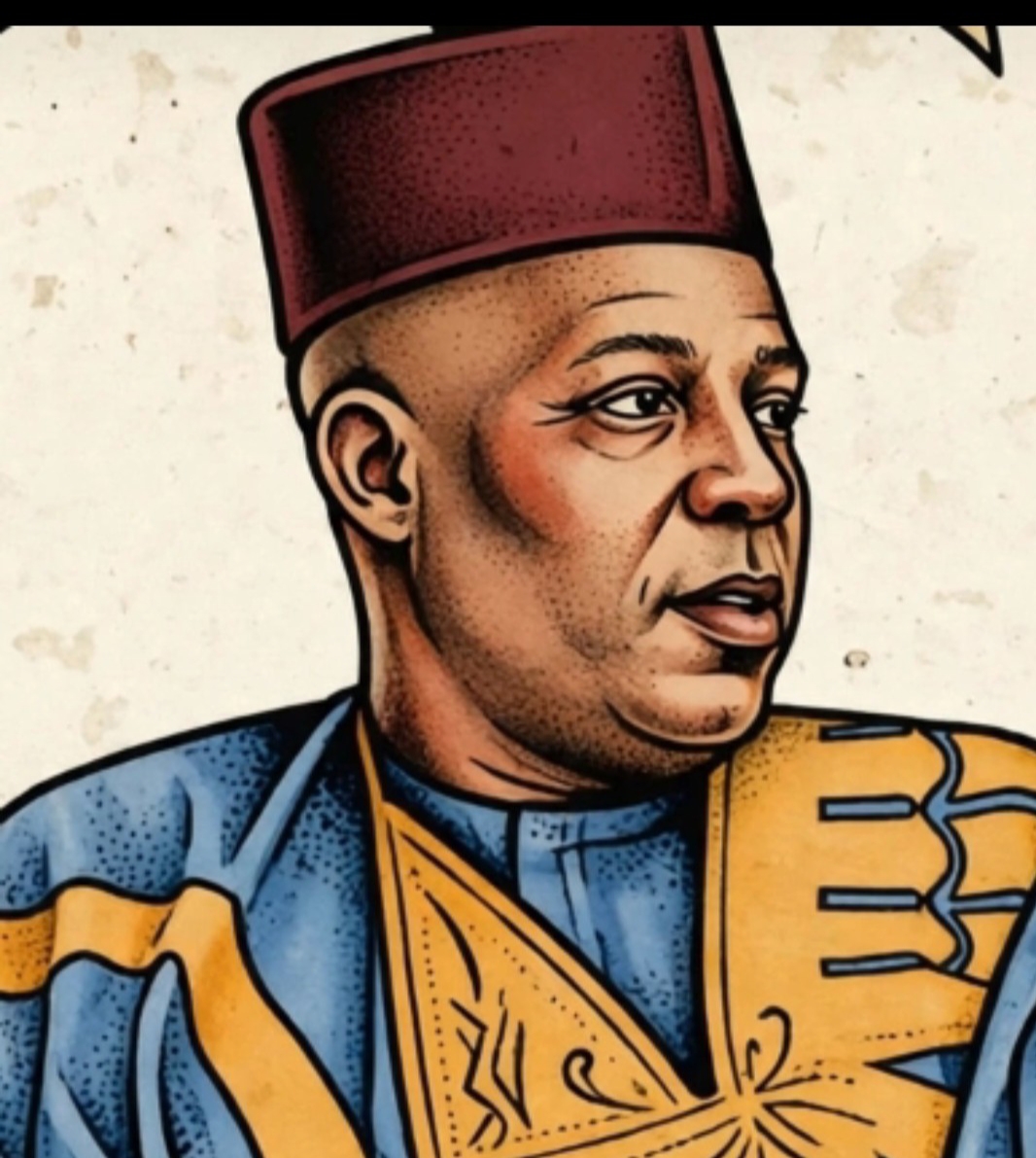
Kashim Shettima @60: To My Brother, Friend, Leader, and Boss
By: Dr. James Bwala
At sixty, a person does not merely celebrate age; he celebrates a journey. He celebrates the people he has influenced—this includes yours sincerely. He celebrates the challenges he has faced in life and survived, the princiles he has defended, and the lives he has touched. Today, I celebrate you—not only as my brother, friend, leader, and boss, but also as a man whose life has demonstrated the meaning of loyalty, courage, resilience, and service to a great nation, Nigeria.
September is our month of birth, and this reflection brought in thousands of memories, lessons, and gratefulness. I watched how you carried the cross, taking the bullets and still standing strong not because you are made of iron but because you love Nigeria and everyone you came across on the line of this journey. Your story is one of remarkable growth and enduring impact. Since 2007, when you came into public service as Honorable Commissioner and impacted five ministries under the Modu Sheriff administration, you have demonstrated a unique leadership style I had loved long before you came into the public glare. Today, our relationship has grown beyond politics, public office, or professional association. Over the years, it has developed into a bond rooted in brotherhood, trust, and shared experiences.
You have always been the big brother, a good friend, an exemplary leader, and a kind boss. Time has tested that bond between us, but it has never weakened our resolve to watch each other’s back. I am grateful to have you on my side; it was a privilege, and I never took it for granted. I learned the ways of patience from you and saw the keys that opened the gates that define loyalty. You live by it, and instead of breaking down, every challenge has strengthened the conviction that our relationship is greater than the circumstances that first brought us together. I see that in your current relationship with people in the corridors of power, and I wish people had observed and have drawn lessons from your teachings not only about power but also about loyalty, trust, steadfastness, and beliefs.
I recalled when you stood by me during my sad moments, when I lost my dear mother. Your kind words sink deep—’ She was our mother! ‘ you said. I recalled a text of your reply to Professor Aminu, who asked how much you are paying me for writing about you in defense and for promoting you, and you said, ‘My relationship with James is beyond money.’ ‘That sinks deep. I recalled when the permanent secretaries came to pay homage to you, and you said, ‘Look at that man standing by the door—James Bwala. We have been together through thick and thin. ”That can only come from a brother.
I often remember myself as a young boy and first time into the secondary school domitary in the 80s – Yerima House at Government Comprehensive Secondary School, Potiskum. I remember the young man who grew into adulthood along the street of late retired custom officer’s, Alhaji Usman Alkali (of blessed memory) in Bullimkuttu-Abuja, Maiduguri, the Borno State capital. I remember the shy smile, the uncertainties of youth, and the gradual transformation into a man learning to understand life, leadership, and responsibility. Through many stages I try to learn and fate brought us in that that journey, I tried to learn about people and meeting you; hearing you speak and envisioning your thoughts and reading your lips makes the difference in learning. You were not merely a superior or public figure but someone who saw potential, offered guidance, and treated me as a younger version of yourself.
Our relationship has never been distant or ceremonial. It has been real, personal, and sometimes humorous. I remain the young man you would often punch in the stomach in your familiar, brotherly way as my governor in Borno state and I imagine, that, if I were a boxing bag, then I must proudly admit that I contributed immensely to the building of your muscles. Those moments, though playful, represent something deeper: the comfort and familiarity that exist between people who have shared many years together. They remind me that true leadership is not always expressed through formal speeches or public gestures. Sometimes, it is reflected in the ease with which people relate to one another, in the freedom to laugh, correct, challenge, and remain connected.
Over the years, standing with you has not always been easy. I have received both accolades and criticism for my loyalty. Many moves were made by people to disconnect this relationship, but we stood and overcame. Those who hate you, I got the percentage for standing with you, and some people praised my courage while others questioned my judgment. I became, in the eyes of many, the nightmare of those who wanted your downfall on newspaper pages. They could not understand why I remained consistent when the political atmosphere became charged and difficult with voices, pens, and inks calling for your replacement, but this boy keeps faith as fate brought us together. They could not understand why I stood on the deadly ground, why it matters to me when silence would have been easier and safer. Many wondered about the mystery of this relationship, and they asked questions. To some, I have no answer, and to others, especially those I rejected their move to trade you for cheap blackmail, those you already knew, I simply said, “He is my brother.” Some still wonder how I could read your lips from a distance or understand your position before you expressed it publicly. I told them this is the power of brotherhood.
Others believed that the statements, revelations, and positions I expressed on newspaper pages were the products of secret conversations between us. They imagined that every defense was calculated, paid for, or politically motivated. Many asked how much you were paying for the promotions, public statements, and defense of your personality. Their questions revealed how difficult it is for some people to believe in loyalty that is not purchased, especially in a society where relationships are often measured by personal gains and benefit. I understand their fears, particularly as genuine brotherhood can appear mysterious.
Indeed, like you told those who want to know. You gave them the answer yourself: my journey with you goes beyond money and political alliance. It is a journey built on brotherhood that has existed for decades. It is founded on memories, trust, affection, and conviction. I told Alhaji Bana Shettima I had stood with you not because he came to ask me to move into the campaign train ahead of the 2023 elections but because I knew the man behind the public image. I knew your character beyond the headlines, your struggles beyond the political battles, and your humanity beyond the office you occupied.
Public life often attracts both admiration and hostility. Leadership exposes a person to praise from those who benefit from his decisions and condemnation from those who oppose his direction. In such an environment, it becomes difficult to distinguish between genuine friends and temporary allies. Many people remain close during moments of comfort but disappear when controversy begins. Others stand beside a leader only when doing so is profitable. Your experience, however, has revealed the value of relationships that endure beyond power, position, and political advantage.
You have lived well, and you have led well. These words are not empty compliments; they are conclusions drawn from years of observation. To live well is to maintain dignity in the face of pressure, to remain committed to one’s principles, and to treat people with respect regardless of their status. To lead well is to accept responsibility, make difficult decisions, inspire confidence, and continue moving forward even when criticism becomes overwhelming. By these measures, you have distinguished yourself.
Leadership is not the absence of mistakes or opposition. No leader escapes criticism, and no public journey is free from controversy. True leadership is demonstrated in the ability to withstand challenges without losing one’s identity. It is shown through resilience—the strength to rise after setbacks, to learn from difficult seasons, and to continue serving with purpose. Your journey has included moments of trial, but those moments have not defined or defeated you. Instead, they have revealed the depth of your character.
At sixty, you represent more than a successful individual. You represent a generation that has witnessed major changes in our society, our politics, and our institutions. You have carried responsibilities that required courage and endurance. You have interacted with people from different backgrounds and religion, managed difficult situations, and occupied spaces where every decision attracted public attention. Through it all, you have continued to build relationships and maintain a sense of humanity.
The significance of this milestone is therefore not limited to the number sixty (60). It is a celebration of experience. It is a recognition of the wisdom gained from years of service, the lessons learned through adversity, and the value of the people who have walked with you. It is also an opportunity for those of us who know you personally to testify to the qualities that public commentary often overlooks.
I testify that you are more than the titles you have held. You are more than the offices you have occupied and the political roles you have played. You are a brother who has shaped my life, a friend whose presence has endured, a leader whose example has influenced many, and a boss who has taught me the importance of commitment. Your impact cannot be measured only by official achievements. It can also be seen in the loyalty you inspire, the confidence you build, and the memories you leave in the lives of those around you.
My own story is inseparable from the story of our relationship. From the boy at Yerima House to the young man from Bullimkuttu, my development has unfolded alongside the lessons and experiences we shared. I have learned that loyalty requires courage. I have learned that friendship must be tested before it can be trusted. I have learned that leadership demands both strength and compassion. Most importantly, I have learned that a relationship built on genuine brotherhood can survive seasons that would destroy ordinary alliances.
As you celebrate your sixtieth birthday, I want you to know that your life has been meaningful and your leadership has mattered. The people who stood with you did so because they saw something worth defending. The people who trusted you did so because you gave them reasons to believe. And those of us who call you brother do so because our relationship has grown beyond convenience.
At sixty, you are still the best—not because you are without flaws, but because you are authentic, resilient, and committed. You have continued to prove that greatness is not defined by the absence of challenges; it is defined by the courage to face them. You have lived through changing times, shifting alliances, public controversies, and demanding responsibilities, yet you remain standing with dignity.
Today, I celebrate the man, the leader, and the brother. I celebrate the years behind you and the possibilities ahead. I celebrate the laughter, the arguments, the public battles, the private encouragement, and every experience that has strengthened our bond. I celebrate a sexagenarian of our time—a man whose life reflects service, loyalty, and perseverance.
May the years ahead bring you greater wisdom, renewed strength, sound health, and enduring peace. May your leadership continue to inspire, and may your life remain a source of blessing to your family, friends, colleagues, and the wider society. May you enjoy the rewards of the good you have done and the lives you have touched.
Today, September 2, 2026, I celebrate you. Happy 60th birthday to my brother, my friend, my leader, and my boss. Our journey goes beyond money, politics, or public recognition. It is a journey of brotherhood—one that has endured for decades and will remain cherished for many more years to come.
* James Bwala, PhD, is the author of the book Duty & Courage and writes from Abuja.
Kashim Shettima @60: To My Brother, Friend, Leader, and Boss

Reps FCT Committee Hails Betara at 60, Celebrates Legislative Leadership

BAMA, KONDUGA SPEAKS LOUD: MASSIVE 2027 TURNOUT REAFFIRMS GUBIO’S GROWING POLITICAL MOMENTUM IN BORNO

Troops Launch Search-and-Rescue Operation After Woman Is Kidnapped in Jos

Roger Federer’s Shock as DNA Results Reveal Myla and Charlene Are Not His Biological Children

THE PLIGHT OF FARIDA

FAILED COUP IN BURKINA FASO: HOW TRAORÉ NARROWLY ESCAPED ASSASSINATION PLOT AMID FOREIGN INTERFERENCE CLAIMS
-
 News3 years ago
Roger Federer’s Shock as DNA Results Reveal Myla and Charlene Are Not His Biological Children
-
Opinions5 years ago
THE PLIGHT OF FARIDA
-
 News2 years ago
FAILED COUP IN BURKINA FASO: HOW TRAORÉ NARROWLY ESCAPED ASSASSINATION PLOT AMID FOREIGN INTERFERENCE CLAIMS
-
 Opinions5 years ago
POLICE CHARGE ROOMS, A MINTING PRESS
-

 News3 years ago
EYN: Rev. Billi, Distortion of History, and The Living Tamarind Tree
-

 ACADEMICS3 years ago
A History of Biu” (2015) and The Lingering Bura-Pabir Question (1)
-

 Columns3 years ago
Army University Biu: There is certain interest, but certainly not from Borno.
-

 Politics1 year ago
2027: Why Hon. Midala Balami Must Go, as Youths in Hawul and Asikira/Uba Federal Constituency Reject ₦500,000 as Sallah Gift
