
Opinions
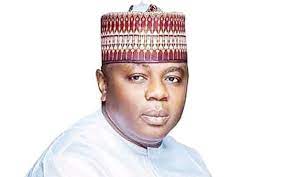
BETARA: INSULATING THE EMIR OF BIU

BETARA: INSULATING THE EMIR OF BIU
By: Inuwa Bwala
It is a tradition amongst political office seekers in Borno to pay homage to every traditional ruler they visit in his domain and to seek for prayers.
If this tradition is not known to me and if I were not a witness to the presentation of the forms, to Muktari Betara Aliyu in Biu on Saturday, I might have fallen for the insinuations that the Emir of Biu, His Royal Highness Mustapha Umar Mustapha II presented the forms to Honorable Betara Aliyu to contest political position.
Beyond that, the Englishman says that pictures do not lie: so, if our verbal testimonies were not enough, one could have easily called for the full film report to ascertain the truth.
Also Read: 2023: Peter Obi takes campaign to North East, holds…
Betara Aliyu could not have been an exception to this well-known tradition of paying homage, and could not afford to go to Biu, even to the frontage of the Emirs palace, where most political activities in Biu take place, without paying the traditional homage and prayers that usually come after such homages.
I find it rather disparaging and uncharitable for people who did not witness the event, only to go behind trying to create a narrative contrary to what transpired in Biu.
It is a verifiable fact that, former Deputy Governor of Borno State and Waziri of Biu, Adamu Shettima Yuguda Dibal, who led others to Biu for the presentation of Expression of Interest and Nomination forms to Honorable Muktari Betara Aliyu made the symbolic presentation, assisted by key stakeholders of Betara’s party, the APC.
Dibal left nobody in doubt about the roles of traditional rulers in politics, to the effect that they are father’s to everybody and bless every son or daughter that comes forward.
When Dibal eventually presented Betara to the royal father for prayers, after the symbolic public presentation, he went on to show the emir Betara’s forms, as the subject for which prayers should be directed.
Those of us who were inside when the emir prayed for Betara and wished him well did not see when he made any presentation, nay made any partisan statement to the effect that he endorsed Betara.
I am aware that, the outing in Biu could have unsettled many political hopefuls, and was capable of kick-starting campaigns that may seek to smear the royal father.
The leader of the delegation succinctly explained that they were not at the palace to woo the traditional ruler, but to pay the traditional homage and to seek for prayers.
To my mind, as much as I agree that politics is a dirty game and in as much as the rights of every individual is guaranteed to opine, dragging the revered emir into any sort of political controversy will amount to a great disservice to us.
In any case, we have a way we interact with our royal fathers and we do not need political jobbers to tell us how and when to come to them for blessings.
I conclude that, nobody throws stones at a fruitless tree,but a mother tree suffers pelts because of the beauty and sweetness of her fruits.
Above summation is like the fate of the Emir of Biu, Alhaji Mustapha Umar Mustapha II, in the unfolding politics but that should not deter him in blessing his subjects whenever they seek the same.
BETARA: INSULATING THE EMIR OF BIU




Is Zagazola Makama now siding with Plateau people?
By: Our Reporter
It is striking how often Masara Kim’s name has become a recurring point of fixation for certain commentators, serving as a convenient target for extended commentary and attack. Among them is Zagazola Makama, whose interventions on Plateau and broader security issues have increasingly raised concerns about fairness, consistency, and credibility. Rather than offering careful analysis grounded in transparent evidence, his commentary often relies on sweeping assertions, loaded framing, and narratives that appear designed more to influence public perception than to clarify the facts.
For instance, last May, Makama published what critics said were AI-generated images purporting to show Abu Bilal al-Mainuki, reportedly a senior IS commander killed by the Nigerian army. He stated that he had legitimately obtained the image and was praised in some quarters for publishing it first. But the controversy that followed raised broader concerns about verification standards, editorial judgment, and the risks of circulating unverified material in conflict reporting. As one critic put it: “This isn’t reporting; it’s narrative engineering. When those covering security issues choose fabrication, public trust collapses and we’re all in danger.”
The same pattern appeared last March after more than 35 people were killed in a terror attack in Angwan Rukuba, north Jos, on Palm Sunday. Within hours of the incident, Makama reportedly described it as a clash between rival cult gangs. That speed, together with the absence of publicly presented evidence at the time, raised legitimate questions about whether the incident had been characterised prematurely and whether such framing diverted attention from establishing the full facts.
Makama also claimed that my video reporting of an attack on mourners during a mass funeral in Nding Sesut, in Barkin Ladi Local Government Area of Plateau State on May 6, was staged. Yet the incident was associated with four recorded deaths: Pam Gwom, 62; Dayal Davou Gyang, 32; Dadung Julius Gwom, 24; and Ezra Musa Rondong, 38. In the face of those fatalities, dismissing the footage outright raises serious questions about the basis for that denial and about the standards being applied when local accounts of violence are challenged rather than investigated.
Makama has on several occasions dismissed terrorist attacks in Plateau and other Middle Belt states, including incidents in which children and other civilians were killed, as mere clashes between farmers and herders. He has also portrayed civilian guards struggling to protect their homes and families with homemade pipe guns and hunting rifles as terrorists or tribal militias, reinforcing a “clash” narrative that many affected communities view as misleading. More recently, he has sought to position himself as an advocate for the same people whose accounts and suffering he has often downplayed. That contradiction is difficult to ignore.
Mr. Idris Aminu, also known as Zagazola Makama, has entered this debate too late to exploit temporary disagreement within Plateau for his own argument. Commissioner Peter Gwom has already apologised for the remarks captured in the video, and by all indications that issue has begun to settle. What should not be allowed to happen, however, is for outside commentary to weaponise internal tensions in order to present Plateau people as confused, divided, or incapable of recognising what they have lived through. We may disagree among ourselves, as any community does, but that does not mean we are unable to identify harmful narratives when we see them.
Zagazola Makama’s recent statement about the views of the youth leaders tries to present itself as a defence of truth and accountability, but it raises the very questions it seeks to dismiss. A commentary that accuses others of sensationalism must itself be held to the highest standard of accuracy, transparency, and consistency. That standard is not met by broad assertions, selective outrage, or repeated efforts to discredit community voices whenever they challenge official or convenient narratives.
The central problem with the statement is not that it asks for scrutiny. Scrutiny is necessary in every conflict. The problem is that scrutiny appears to flow in only one direction. When victims, youth leaders, or local advocates raise alarm over killings, displacement, or insecurity in Plateau, they are swiftly portrayed as emotional, manipulative, or misinformed. But when the same commentator advances claims that align with official talking points or minimise the scale of attacks, those claims are presented as sober analysis. That is not balance. It is selective credibility.
The statement also relies heavily on a familiar tactic: shifting attention from the substance of people’s concerns to the character of those raising them. Instead of confronting why so many communities feel unheard, unprotected, and repeatedly gaslit after attacks, the article frames dissenting voices as conflict entrepreneurs and social media actors feeding off tragedy. That rhetorical move may be effective propaganda, but it is not evidence. Communities that have buried their dead do not need lectures about tone; they need honesty, protection, and a record of facts that does not change depending on who is being shielded from criticism.
If there are concerns about miscaptioned videos or inaccurate claims, those should be addressed through verifiable facts, transparent sourcing, and consistent correction standards for everyone, not just for activists or community-based reporters. The same burden of proof must apply to commentators who dismiss deadly incidents, recast attacks as ordinary clashes without public evidence, or repeatedly adopt language that appears to downplay organised violence. In a place as traumatised as Plateau, careless framing is not a minor error. It shapes public understanding, influences policy responses, and can deepen mistrust among people who already feel abandoned.
The article further weakens itself by pretending that criticism from within a community automatically settles the matter. It does not. Communities are not monolithic, and no single youth body, government official, or commentator can claim absolute ownership of the truth. What matters is whether the facts presented are complete, independently verifiable, and responsibly framed. That is the standard the public should insist on, especially from anyone claiming expertise in security and conflict reporting.
There is also a deeper issue at stake. When the voices of grieving communities are routinely met with suspicion while official failures are explained away as complexity, the result is not peacebuilding. It is a culture of denial. Plateau has suffered too much for its pain to be filtered through narratives that appear more concerned with managing perception than confronting recurring insecurity. Any commentator who wants to be taken seriously must be willing to apply the same level of suspicion to military briefings, political narratives, and all sides of the conflict, not only to those documenting local suffering.
The public does not need more personality wars. It needs rigorous reporting, transparent methods, and a refusal to weaponise uncertainty against victims. If CNN to command.
Is Zagazola Makama now siding with Plateau people?

ELECTIONS CAN WAIT: SAVING NIGERIA FROM COLLAPSE MUST COME FIRST
By Jonathan Ishaku
The rush toward the 2027 general elections amid Nigeria’s worsening security crisis raises a fundamental question: what is the purpose of an election in a state that is progressively losing control over significant portions of its territory, struggling to protect its citizens, and increasingly unable to perform the most basic functions of governance?
This is an uncomfortable question in a country that has spent the last quarter century celebrating electoral democracy. Yet it is a question that must be asked if Nigeria is to avoid drifting toward national catastrophe. Elections are important.
Democracy is important. Constitutional government is important. But none of these can survive if the state itself collapses. The first duty of any government is not the conduct of elections; it is the preservation of the nation.
Today, Nigeria confronts a multifaceted security crisis whose cumulative impact has long surpassed the threshold of conventional warfare. The nation is simultaneously battling Boko Haram and ISWAP in the North-East, bandit terrorism in the North-West, genocidal and ethnic-cleansing violence in parts of the North-Central, separatist violence in the South-East, organized kidnapping networks across large sections of the federation, and various forms of criminal violence that continue to undermine public authority.
The statistics are sobering. Millions of Nigerians remain internally displaced. Thousands are killed annually. Entire communities have been emptied. Farmers abandon their fields for fear of attack.
Schools have been shut down. Rural economies have collapsed across vast areas. Millions of children remain out of school. Food insecurity continues to deepen. In many places, armed non-state actors impose taxes, regulate movement, dictate local affairs, and exercise more practical authority than the government itself.
Yet, amid this gathering storm, the political class appears consumed by preparations for the next election cycle.
Political alignments are being negotiated. Campaign structures are being assembled. Alliances are being forged and broken. Presumably, too, resources that ought to be directed toward the preservation of national security are increasingly diverted toward political calculations. The nation appears to be preparing for an election while simultaneously losing an existential war.
This contradiction is both dangerous and unsustainable.
History provides useful guidance. Nations facing existential threats have often suspended normal political processes in order to focus on survival. During the Second World War, the United Kingdom postponed the general election due in 1940.
Parliament repeatedly extended its mandate because national leaders understood a simple reality: there can be no meaningful democratic contest while the nation is engaged in a struggle for survival. The priority was victory, not politics.
More recently, Ukraine has postponed elections because of its war with Russia.
Although Ukraine’s situation differs significantly from Nigeria’s, the underlying principle remains the same. Elections, however desirable, must not be allowed to undermine national survival.
Indeed, there is a strong argument that the impact of Nigeria’s crisis on governance is, in some respects, more devastating than that of Ukraine’s war.
Ukraine faces a clearly defined external enemy. The war has strengthened national cohesion and mobilized society behind a common purpose. Despite enormous destruction, the Ukrainian state remains largely intact. Government institutions continue to function. National identity has been reinforced.
The population understands the nature of the threat.
Nigeria’s challenge is far more complex and arguably more corrosive. The threats are multiple, dispersed, decentralized, and deeply embedded within society’s divisions. There is no single battlefield. There is no single enemy. There is no unified national mobilization. Instead, violence gradually hollows out state authority from within.
Entire communities negotiate directly with bandits because they have lost confidence in state protection. Families sell assets to pay ransom. Farmers pay levies to armed groups to gain access to their own farmlands. Local governments become little more than administrative shells. Schools are abandoned. Health facilities cease functioning. Roads become unsafe. Economic activities shrink.
This is not merely insecurity. It is the progressive erosion of sovereignty.
For this reason, the argument that Nigeria is not technically at war misses the point entirely. War is not defined solely by the presence of foreign armies crossing national borders. The real test is the degree to which violence threatens the state’s monopoly of force, disrupts governance, destroys livelihoods, displaces populations, and undermines national stability.
By these measures, Nigeria has long crossed the threshold of a war-like situation.
The consequences extend far beyond the battlefield. Education has become one of the major casualties. Thousands of schools have been closed or rendered inaccessible by insecurity. Millions of children have been denied learning opportunities. Entire generations risk growing up with limited education, diminished prospects, and increased vulnerability to recruitment by criminal and extremist groups.
Agriculture, the backbone of rural livelihoods, has also suffered enormously. Large areas of fertile land are either inaccessible or cultivated under constant threat. Farmers are kidnapped, murdered, or forced to pay protection levies to armed groups. The resulting decline in agricultural productivity contributes directly to food shortages and rising prices, worsening poverty and hunger.
The economic implications are equally severe. Investors avoid insecure regions. Businesses close or relocate. Transport costs rise because of insecurity along major routes. Public funds that should support development are diverted toward emergency security operations.
Communities already struggling with poverty sink deeper into deprivation.
The governance implications are perhaps the most troubling. In many areas, the state is no longer perceived as the primary guarantor of security. Citizens increasingly rely on self-help arrangements, vigilante groups, traditional structures, or direct negotiations with armed actors. Whenever citizens lose confidence in the state’s ability to protect them, the legitimacy of the state itself begins to erode.
Against this backdrop, the insistence that elections must proceed according to schedule deserves closer scrutiny.
Those who advocate an unalterable electoral timetable often invoke democracy. However, elections and democracy are not identical concepts. Elections are merely one instrument of democratic governance. By themselves, they do not guarantee accountability, competence, security, development, or justice.
Nigeria’s experience since 1999 demonstrates this reality. The country has held multiple election cycles, yet insecurity has increasingly worsened, poverty has deepened, infrastructure remains inadequate, corruption persists, and public confidence in institutions continues to decline. Elections have become routine, but good governance remains a challenge.
The assumption that another election, conducted amid escalating insecurity, will somehow solve these problems is therefore highly questionable. Neither Peter Obi nor Atiku Abubakar has the magic wand.
On the contrary, there is reason to fear that the electoral process itself may become compromised. How can elections be considered fully credible when millions of citizens are displaced from their homes? How can voter registration be effectively conducted in areas under the influence of armed groups? How can election officials safely access vulnerable communities? How can citizens freely participate when fear dominates daily life?
More importantly, how can political leaders devote the necessary attention to national security when they are simultaneously engaged in an intense struggle for political survival?
The pursuit of power inevitably consumes time, energy, resources, and attention. Elections magnify these distractions. Instead of concentrating on defeating insurgents, dismantling kidnapping networks, restoring rural security, and rebuilding state authority, political elites become preoccupied with campaigns, alliances, nominations, endorsements, defections, and electoral arithmetic.
The nation cannot afford such a diversion at this critical moment.
What is required instead is a comprehensive national security emergency. The federal government should seriously consider suspending partisan political activities and declaring a state of emergency focused specifically on national security and state preservation. Such a measure must be constitutionally grounded (involving the National Assembly), time-bound (specific timeframe), and subject to oversight. Its purpose would not be to destroy democracy but to preserve the conditions necessary for democracy to survive.
The entire nation should be mobilized toward a single objective like all nations at war: restoring security and recovering state authority. National resources should be redirected toward intelligence gathering, border security, protection of critical infrastructure, rural stabilization, and support for conflict-ravaged communities. The military, police, intelligence agencies, traditional institutions, local communities, and civil society must be integrated into a coordinated national effort.
This is not an argument against democracy. It is an argument for saving democracy from the consequences of state failure.
A nation does not exist because it conducts elections. Rather, it conducts elections because it exists as a functioning state. When the existence of that state is under severe threat, preserving it becomes the highest democratic responsibility.
The lesson from Britain in 1940 and Ukraine today is not that elections are unimportant. It is that there are moments in the life of a nation when survival must take precedence over political competition.
Nigeria may have reached such a moment.
History will not judge President Bola Tinubu by whether he held an election on schedule. History will judge him by whether he still a nation left to hold that election.
Jonathan Ishaku wrote in from Plateau.
ELECTIONS CAN WAIT: SAVING NIGERIA FROM COLLAPSE MUST COME FIRST
Nigeria Is Innovating. But Who Will Ensure No One Is Left Behind?
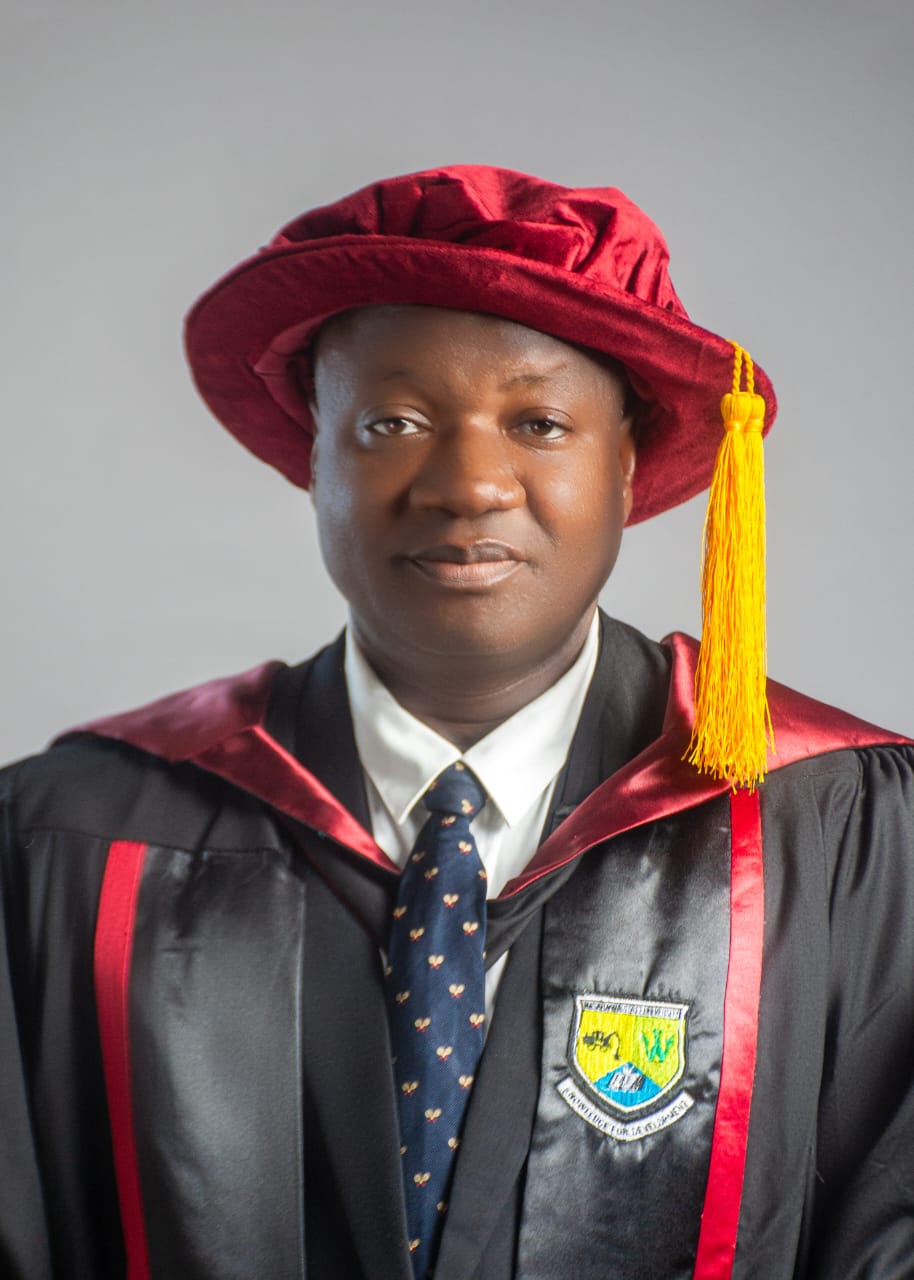
By: Michael Mike
A wake-up call to Science Journalists as innovation hubs prepare to open new frontiers
Nigeria is building the labs. But an important question remains: who will translate the science?
Across the country, a quiet transformation is underway. Innovation hubs are emerging spaces where ideas are tested, collaboration is nurtured, and solutions are imagined.
Initiatives such as the Mine Tech Innovation Hub, hosted at Nasarawa State University, Keffi and supported by UNDP under the leadership of Ms. Elsie Attafuah, are preparing a new generation to move research beyond theory and into real-world application. These hubs represent more than infrastructure; they embody ambition, creativity, and the promise of inclusive growth.
This is not just progress. It is possibility.
Yet at the heart of this transformation lies a critical challenge: while Nigeria’s innovation ecosystem is expanding, there remains a significant gap in translating scientific knowledge into accessible and actionable understanding. In many cases, solutions remain largely within laboratories and classrooms, while the communities they are meant to serve continue to grapple with persistent challenges.
The issue is not a lack of innovation.
The gap is translation.
Nigeria stands at a crossroads. With growing research capacity, a vibrant youth population, and increasing institutional support, the country has the potential to become a leader in innovation across Africa.
However, innovation in isolation does not guarantee impact. Without deliberate efforts to communicate and contextualize knowledge, breakthroughs risk remaining invisible, inaccessible, and ultimately underutilized.
As these hubs evolve into powerful ecosystems of growth and inclusion, a crucial question emerges: will innovation reach the people it is meant to serve—or will it remain out of reach and without impact?
This challenge directly affects progress toward SDG 9, which emphasizes industry, innovation, and infrastructure. Achieving these goals requires more than generating ideas; it requires ensuring that those ideas are understood, embraced, and applied in ways that improve lives.
This is where science journalism steps in as a gamechanger.
Innovation does not scale through technical language alone. It scales through understanding—through storytelling that connects research to reality. A community cannot engage with what it does not understand. A policymaker cannot act on what is not clearly communicated. An investor cannot support what has not been made visible.
Science journalists are not merely reporters; they are translators of complexity. They serve as bridges between break through and society, transforming abstract concepts into meaningful narratives that people can relate to and act upon.
Without this bridge, innovation risks being admired in principle but ignored in practice.
To close this gap, Nigeria must act deliberately, with all stakeholders treating science journalism as a strategic priority within the innovation ecosystem.
Further efforts to enhance access, training, and engagement for science journalists could significantly strengthen the impact of innovation initiatives
Storytelling is not an add-on or an afterthought—it is infrastructure.
Strengthening science communication within innovation ecosystems can enhance the translation of breakthroughs into accessible knowledge for communities, policymakers, and investors.
Nigeria’s path to innovation is now a reality unfolding.; it is an emerging force in the present. The systems are forming. The ideas are maturing. The opportunities are expanding. Yet progress alone is not enough.
If the story is not told, the impact will not be felt.
Science journalists must rise—not tomorrow, but now.
Because inclusive development is not achieved simply by creating solutions. It is achieved when those solutions are understood, embraced, and allowed to reach every corner of society. Otherwise, we risk building innovations that never leave the lab—and futures that never arrive.
About the Author
Dr. Nelson Okoko is a Geologist, Development Communication Specialist, science journalist, and social and behavioural communication expert based in Abuja. His work focuses on participatory communication and innovation ecosystems for inclusive development. He is the proponent of the Collaborative Sovereign Communication Theory (CSCT), a forward-looking framework redefining communication dynamic in development practice.
Nigeria Is Innovating. But Who Will Ensure No One Is Left Behind?

AMF Celebrate the African Child: Building Foundations for Dreams, Learning, and Leadership

Is Zagazola Makama now siding with Plateau people?

A New Dawn for Nigeria’s Power Sector: Minister Tegbe’s Brilliant Start

Roger Federer’s Shock as DNA Results Reveal Myla and Charlene Are Not His Biological Children

THE PLIGHT OF FARIDA

FAILED COUP IN BURKINA FASO: HOW TRAORÉ NARROWLY ESCAPED ASSASSINATION PLOT AMID FOREIGN INTERFERENCE CLAIMS
-
 News2 years ago
Roger Federer’s Shock as DNA Results Reveal Myla and Charlene Are Not His Biological Children
-
Opinions4 years ago
THE PLIGHT OF FARIDA
-
 News1 year ago
FAILED COUP IN BURKINA FASO: HOW TRAORÉ NARROWLY ESCAPED ASSASSINATION PLOT AMID FOREIGN INTERFERENCE CLAIMS
-

 News2 years ago
EYN: Rev. Billi, Distortion of History, and The Living Tamarind Tree
-
 Opinions5 years ago
POLICE CHARGE ROOMS, A MINTING PRESS
-

 ACADEMICS2 years ago
A History of Biu” (2015) and The Lingering Bura-Pabir Question (1)
-

 Columns2 years ago
Army University Biu: There is certain interest, but certainly not from Borno.
-

 Politics1 year ago
2027: Why Hon. Midala Balami Must Go, as Youths in Hawul and Asikira/Uba Federal Constituency Reject ₦500,000 as Sallah Gift
