
News
Abbas Declares Violence Against Women, Girls, Unacceptable

Abbas Declares Violence Against Women, Girls, Unacceptable
By: Michael Mike
The Speaker, House of Representatives, Tajudeen Abbas on Monday declared as unacceptable violence against women and girls in the country.
Abbas decried this year’s United Nations report that for every 10 minutes a woman is being killed across the world.
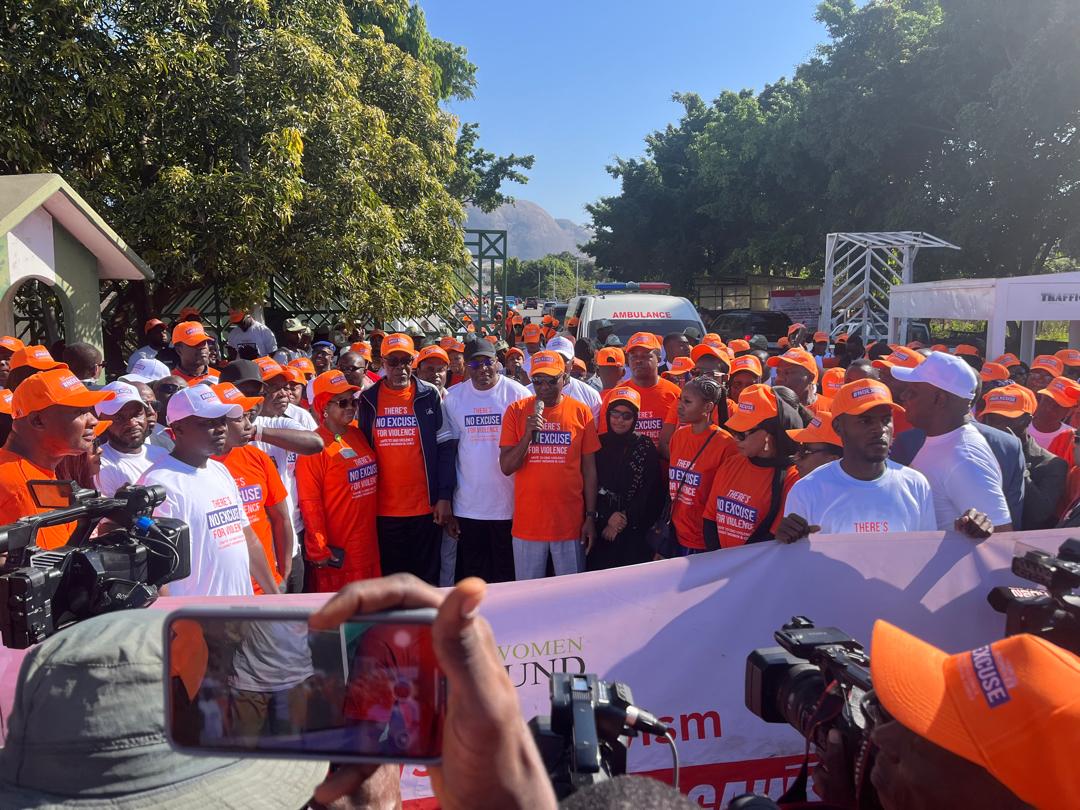
The Speaker who joined the United Nations organised walk against gender violence in the country, as part of the activities lined up for the 16 Days of Activism Campaign against Gender based Violence in Nigeria, called for actions to contain the ills against women.
The walk which was organised by the United Nations Women in collaboration with the House of Representatives as part of the 16 days of activisim, started at the National Assembly and terminated at the Police Headquarters in Abuja.
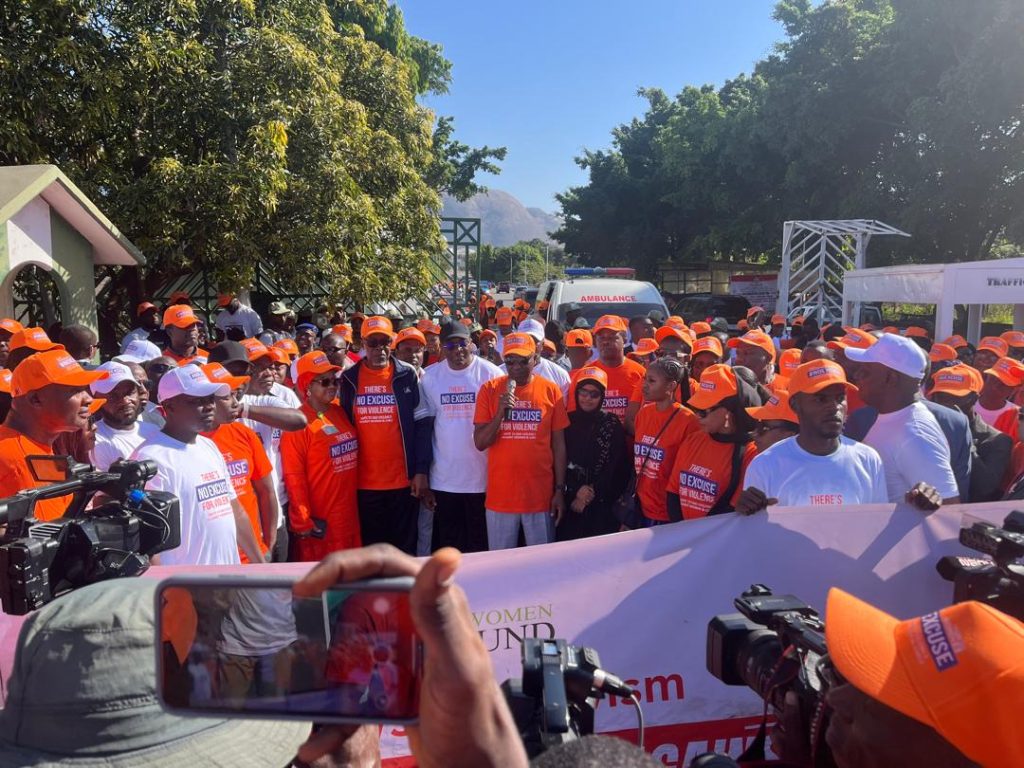
The Speaker assured the gathering that the House of Representatives will play an active role in the next national action plan against gender violence.
He said: “This year’s program came at a time when all over the world women are crying, women are in anger, women are in frustration. For this is the year the United Nations has issued a damn report that for every 10 minutes a woman is being killed across the world. This is an unacceptable trend.
“This is an unforgivable trend. We in the parliament must hope to unite more than ever before with relevant authorities, particularly the law enforcement in ensuring that we cut this dangerous trend to the barest minimum.
“I want to say it categorically clear here that the National Assembly will do everything humanly possible to ensure that all forms of violence against women and girls are drastically reduced if not completely eliminated in the very near future.
“I want to also announce that the National Assembly, particularly the House of Representatives, will play an active role in the next National Action Plan against women and violence that will be coming out very soon. We will send our representatives. We will also participate actively in ensuring that robust policies are enacted that will significantly reduce the incidence of violence of all kinds against women, against children, against girls.
“So it’s my pleasure, honourable colleagues, to declare these 16 days of activism to mark the elimination of women violence in Nigeria. We hope members of the press, our honorable colleagues and other partners will participate actively in the 16 days to show our own case, to make our own point that enough is enough. The time has come when violence of all kinds must stop.”
On his part, the Minister of Youth, Ayodele Olawande said the ministry will be establishing a help desk, specifically for the women, youth and girls whereby they can interact with the government.
He said that the current administration wants to ensure that the women and youth feel the government, adding that: “As a ministry, we have decided to also in coules of weeks time, we are going to have a young and secure which is women, youth and the Ministry of Youth will be coming up with help desk whereby all the youth in this country, most especially women and girls can communicate with us. We want to be with you. We want for the first time that the youth, women and girls feel the government.”
Speaking at the Police Headquarters, Hon. Kafilat Ogbara, Chairman, House of Representatives Committee on Women Affairs, urged the security outfit to join the fight against violence against women.
She said: “We are there to present a petition for immediate intervention, investigation and prosecution on gender based violence to the Inspector General of Police, Kayode Egbetokun.
“We are calling on you to combat gender based violence during the 16 days of activism and beyond. We want to bring to your attention, the harrowing plight of Nigerian women.
“As study indicate that one in every three women globally are victims of gender based violence in Nigeria. Report of National Demographics amd Health survey, reveals that 30% of women between 15 to 29 have experienced physical violence, with many suffering abuse in the hands of partners.”
She therefore urged the IG to put the police across the country on red alert to ensure justice for gender based violence, stressing that they want justice, adding that the leadership of House of Representatives are unanimous on the point that there is no excuse for gender based violence.
In his response, the IGP said the occassion is a reminder that eradicating gender based violence is a collective effort, adding, “It is not by law enforcement actions alone that we can eradicate gender violence. It is a collective obligation of every one of us.
Gender based violence is a grimreality that has continued to devastate lives across the globe.
“Across the continent of Africa, countless of women and children have continued to suffer all kinds of abuses including domestic violence, sexual assault. There are some areas where the traditions also abuses the right of women. We have cases of genital mutilation amongst others.
“It is a collective efforts that we must all fight. We must all come.together, put our actions together to eradicate this unacceptable reality in our communities.”
He further assured the women that since 2006, the Nigeria Police Force had developed a gender policy which it has integrated into its global framework of policing.”
Abbas Declares Violence Against Women, Girls, Unacceptable



FG Unveils Unified System to End Fragmented Aid, Accelerate Poverty Exit
By: Michael Mike
The Federal Government has unveiled a sweeping reform of Nigeria’s humanitarian and poverty reduction architecture, adopting a new unified framework aimed at ending years of fragmented interventions and placing vulnerable citizens on a clear path from survival to self-reliance.
At the close of a four-day National Technical Workshop in Abuja, the Minister of Humanitarian Affairs and Poverty Reduction, Dr. Bernard Doro, announced the adoption of the One Humanitarian – One Poverty Response System (OHOPRS) as the country’s new national coordination framework for humanitarian action, social protection and poverty reduction.
Speaking during a press conference at the United Nations House in Abuja, the minister said the initiative represents a decisive shift in Nigeria’s approach to addressing poverty and humanitarian challenges.
“Today marks a defining moment in our journey towards reforming humanitarian interventions and reducing poverty at scale,” Doro told journalists and development partners.
He explained that the workshop, convened by the ministry in collaboration with international and local partners, was designed to tackle what he described as a fundamental weakness in Nigeria’s humanitarian ecosystem — the fragmentation of programmes and lack of coordination among institutions.
The minister illustrated the urgency for reform with a story shared by a field team working in Nigeria’s conflict-affected North-East.
According to him, the team encountered a mother of four who had spent three years receiving intermittent humanitarian support but remained trapped in poverty.
“She received enough food to survive the week, but never enough tools to change her life,” he said.
Quoting the woman’s words, he added: “We are always helped… but we are never moving forward.”
Doro said the story reflects a broader systemic failure in the country’s poverty response mechanisms.
“It is not that support is not reaching people,” he said. “It is that our systems are not designed to move people from survival to self-reliance.”
The minister warned that failure to reform the system would continue to waste scarce resources and leave vulnerable communities trapped in cycles of dependence.
“If a patient arrives at a hospital and ten different doctors each treat one symptom — with no shared notes, no shared diagnosis — that patient may survive the day but will never truly recover,” he said.
“Nigeria’s poor have had many doctors. What they have not had is a consultant who sees the whole person.”
To address these gaps, the government adopted the One Humanitarian – One Poverty Response System (OHOPRS), which the minister described as a national operating system rather than another standalone programme.
“OHOPRS is not another programme,” he stressed. “It is intended as a national operating system.”
The framework is designed to unify humanitarian interventions, social protection programmes and poverty reduction initiatives under a single coordination platform.
According to Doro, the new system will drive five major structural changes in how assistance is delivered across the country.
These include the transition from multiple coordination mechanisms to a single national system, the integration of several beneficiary databases into one national registry architecture, and the shift from project-based funding to a pooled financing structure with stronger accountability mechanisms.
He added that the new framework would also focus on measurable poverty exit outcomes rather than mere intervention delivery, while introducing real-time monitoring systems to strengthen transparency.
Central to the reform is what the minister described as a “Ladder of Progress”, a structured pathway designed to track the journey of every beneficiary from identification to economic resilience.
Under the system, vulnerable citizens will first be identified through the National Social Register. Their interventions will then be tracked using a Unified Beneficiary Register.
Beneficiaries will subsequently move through a Poverty Exit Pathway designed to guide them towards economic independence, after which they will be monitored through a Growth Register to ensure they remain resilient and do not relapse into poverty.
Doro emphasised that the success of the initiative will depend on the alignment of institutions across all levels of government and development partners.
He called on ministries, departments and agencies, state and local governments, development partners, the private sector, civil society organisations and non-governmental organisations to integrate their interventions into the unified national system.
“This reform requires collective commitment,” he said.
The minister also framed poverty reduction as a strategic national priority under the administration of President Bola Ahmed Tinubu, noting that addressing vulnerability is central to national stability.
“Poverty reduction is not an act of charity; it is a pillar of national security,” he said.
“We are no longer content with managing poverty. Our goal is to end it.”
He added that the government’s new approach aims to move beyond temporary relief and focus instead on long-term economic empowerment.
“We are moving from helping Nigerians survive to enabling them to thrive,” he declared.
The workshop brought together government officials, development partners, humanitarian organisations and policy experts to deliberate on the structure, financing and operationalisation of the new system.
With the adoption of the framework, the Federal Government said the next phase will focus on implementation, integration of existing programmes and nationwide alignment of humanitarian and poverty reduction interventions under the OHOPRS platform.
FG Unveils Unified System to End Fragmented Aid, Accelerate Poverty Exit
News
El-Rufai’s Bereavement: Northern Christian Youths Praise Tinubu, ICPC for ‘Humanity Above Politics’
El-Rufai’s Bereavement: Northern Christian Youths Praise Tinubu, ICPC for ‘Humanity Above Politics’
By: Michael Mike
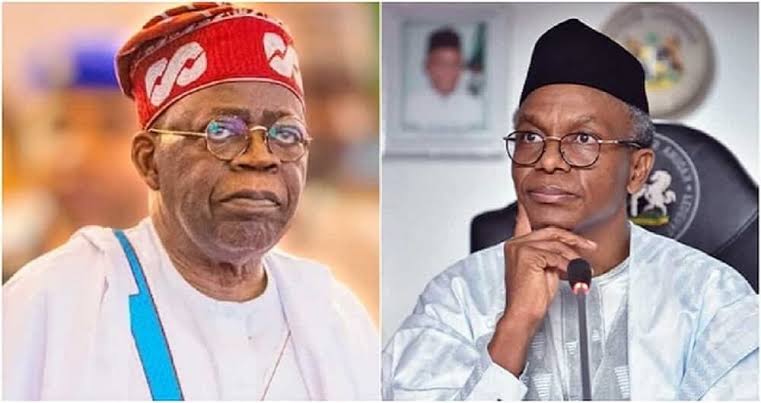
A northern Christian youth group has praised the decision of the Independent Corrupt Practices and Other Related Offences Commission (ICPC) to allow former Kaduna State governor Nasir El-Rufai time to mourn and bury his late mother, describing the move as a reflection of the leadership style of President Bola Tinubu
In a press statement issued on Saturday, the Northern Christian Youth Professionals said the commission’s decision demonstrated compassion and respect for human dignity, values it said have continued to shape the Tinubu administration’s approach to governance.
The group noted that allowing El-Rufai to attend to family matters despite existing political disagreements with the president highlights what it called “politics without bitterness,” where humanity is placed above partisan differences.
According to the statement signed by its chairman, Isaac Abrak, the gesture sends a strong signal that leadership should be guided not only by authority and political interests but also by empathy and understanding.
“The humane decision by the ICPC reflects a leadership disposition that prioritises compassion and respect for human dignity,” Abrak said. “It shows that governance can be conducted with empathy even in the midst of political disagreements.”
The group stressed that the development was particularly noteworthy given the widely known political differences between Tinubu and El-Rufai, arguing that the decision reinforces the president’s belief that political competition should not erase shared human values.
Abrak said the move stands in contrast to earlier periods in Nigeria’s political history when leaders were accused of showing little compassion in similar circumstances.
He recalled that former president Muhammadu Buhari was reportedly not allowed to attend his mother’s burial while he was detained after the 1985 change of government led by Ibrahim Babangida, an episode that generated public criticism at the time.
“Many Nigerians viewed that situation as reflective of a rigid leadership approach that placed limited emphasis on humanity,” the statement said.
The group argued that Tinubu’s leadership has demonstrated that governance can be exercised with grace and empathy without undermining the rule of law.
It also emphasised that granting El-Rufai time to mourn does not interfere with ongoing legal processes, stressing that investigations or judicial procedures should continue after the burial in accordance with the law.
“The pursuit of justice must remain firm,” Abrak added, “but it should not come at the expense of compassion when a citizen is faced with a moment of personal loss.”
The Northern Christian Youth Professionals urged leaders and institutions across Nigeria to emulate what it described as a balanced approach that upholds both humanity and accountability.
El-Rufai’s Bereavement: Northern Christian Youths Praise Tinubu, ICPC for ‘Humanity Above Politics’
Bangladesh Envoy Seeks Stronger Nigeria Ties, Laments Low Bilateral Trade
By: Michael Mike
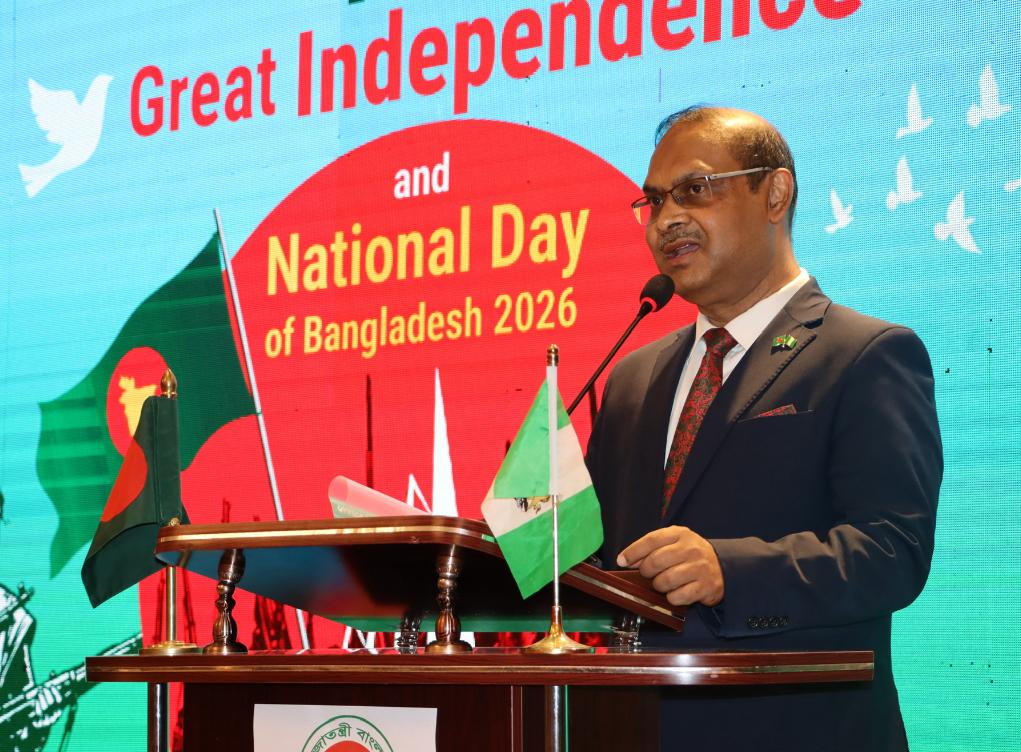
The High Commissioner of Bangladesh to Nigeria, Miah Md. Mainul Kabir, has expressed concern over the relatively low volume of trade between the two countries, describing it as far below its actual potential despite the strong diplomatic ties that have existed for decades.
Kabir made the remarks in Abuja while addressing guests at the celebration of the 55th anniversary of Bangladesh’s Independence and National Day. He stressed that expanding economic cooperation between both countries would remain a key focus of his diplomatic mission.
According to him, although trade between Nigeria and Bangladesh has recorded gradual growth over the years, the level of commercial exchange does not reflect the enormous opportunities available to both nations.
“Bilateral trade between our two countries has grown steadily yet remains well below its true potential,” he said. “Bangladesh offers competitively priced, high-quality products in textiles and garments, pharmaceuticals, ceramics, jute goods, processed foods and ICT services, while Nigeria, with its vast market, energy resources and agricultural depth, presents significant opportunities for stronger trade relations.”
The envoy highlighted agriculture as one of the most promising areas for collaboration, pointing particularly to contract farming as a new pathway for expanding bilateral economic engagement.
He explained that Bangladesh’s experience in high-yield and climate-adaptive agricultural production could be combined with Nigeria’s vast arable land and growing agro-processing industry to boost productivity and food security in both countries.
To unlock these opportunities, Kabir said Bangladesh is now intensifying its diplomatic and economic engagement with African nations, with Nigeria occupying a strategic position in that effort.
“Bangladesh is placing renewed focus on strengthening our partnerships in Africa, particularly with Nigeria — a country of immense dynamism, influence and opportunity,” he said.
The High Commissioner noted that the two countries share long-standing cordial relations rooted in similar historical experiences, youthful populations and shared democratic aspirations.
He added that both nations have consistently worked together within major international organisations such as the United Nations, the Non-Aligned Movement, the Organisation of Islamic Cooperation, the D-8 Organization for Economic Cooperation and the Commonwealth of Nations.
According to him, the partnership between the two countries reflects a broader commitment to South–South cooperation and collective efforts by developing nations to promote shared prosperity and global development.
Beyond trade, Kabir identified several other sectors where Nigeria and Bangladesh could deepen collaboration, including education, skills development, digital innovation, technical training and defence cooperation, particularly in professional military training and peacekeeping operations.
He also emphasised the importance of people-to-people engagement, noting that stronger cultural exchanges, academic partnerships and youth cooperation would further strengthen the bond between both nations.
The envoy used the occasion to commend Bangladeshi nationals living and working in Nigeria, describing them as responsible representatives of their country abroad.
“You are exemplary ambassadors of our nation,” he said. “Your hard work and integrity contribute significantly to the economies of Bangladesh and Nigeria and strengthen the bond between our peoples.”
Kabir also reflected on Bangladesh’s development journey over the past five and a half decades, noting that the country has emerged as a significant economic force among developing nations.
According to him, Bangladesh’s nominal gross domestic product is approaching half a trillion dollars, placing the country among the 35 largest economies in the world and making it a leading example of socio-economic progress in the Global South.
In his remarks, Director of Regions at Nigeria’s Ministry of Foreign Affairs, Bukar Hamman, reaffirmed Nigeria’s commitment to strengthening bilateral relations with Bangladesh.
Hamman said both countries share a strong belief in multilateral cooperation, peacebuilding and inclusive development.
“Both our nations have contributed significantly to United Nations peace operations, demonstrating mutual dedication to global peace and security,” he said.
He noted that bilateral engagement between Nigeria and Bangladesh has continued to expand in recent years, particularly in trade, agriculture, education and defence cooperation.
Hamman also welcomed the growing presence of Bangladeshi businesses in Nigeria and encouraged deeper collaboration between private sector actors from both countries.
“There is vast potential for collaboration in textiles, pharmaceuticals, ICT and renewable energy sectors where Bangladesh has developed notable expertise,” he said.
“As we look to the future, Nigeria remains committed to strengthening our ties with Bangladesh. Enhanced cooperation between our two countries will not only benefit our peoples but also contribute to stronger South–South cooperation and global development efforts.”
He added that the celebration of Bangladesh’s independence anniversary was not only an opportunity to reflect on the country’s historical journey but also a moment to recognise its aspirations for continued peace, innovation and progress.
Hamman stressed that Nigeria values Bangladesh as a trusted partner and friend, expressing confidence that the relationship between the two nations would continue to grow stronger in the years ahead.
Bangladesh Envoy Seeks Stronger Nigeria Ties, Laments Low Bilateral Trade

FG Unveils Unified System to End Fragmented Aid, Accelerate Poverty Exit

El-Rufai’s Bereavement: Northern Christian Youths Praise Tinubu, ICPC for ‘Humanity Above Politics’

Bangladesh Envoy Seeks Stronger Nigeria Ties, Laments Low Bilateral Trade

Roger Federer’s Shock as DNA Results Reveal Myla and Charlene Are Not His Biological Children

THE PLIGHT OF FARIDA

FAILED COUP IN BURKINA FASO: HOW TRAORÉ NARROWLY ESCAPED ASSASSINATION PLOT AMID FOREIGN INTERFERENCE CLAIMS
-
 News2 years ago
Roger Federer’s Shock as DNA Results Reveal Myla and Charlene Are Not His Biological Children
-
Opinions4 years ago
THE PLIGHT OF FARIDA
-
 News11 months ago
FAILED COUP IN BURKINA FASO: HOW TRAORÉ NARROWLY ESCAPED ASSASSINATION PLOT AMID FOREIGN INTERFERENCE CLAIMS
-

 News2 years ago
EYN: Rev. Billi, Distortion of History, and The Living Tamarind Tree
-
 Opinions4 years ago
POLICE CHARGE ROOMS, A MINTING PRESS
-

 ACADEMICS2 years ago
A History of Biu” (2015) and The Lingering Bura-Pabir Question (1)
-

 Columns2 years ago
Army University Biu: There is certain interest, but certainly not from Borno.
-

 Opinions2 years ago
Tinubu,Shettima: The epidemic of economic, insecurity in Nigeria
