
News
Abuse, Violence Threaten Safety of Nigerian Schools as FG, EU Launch Fresh Crackdown

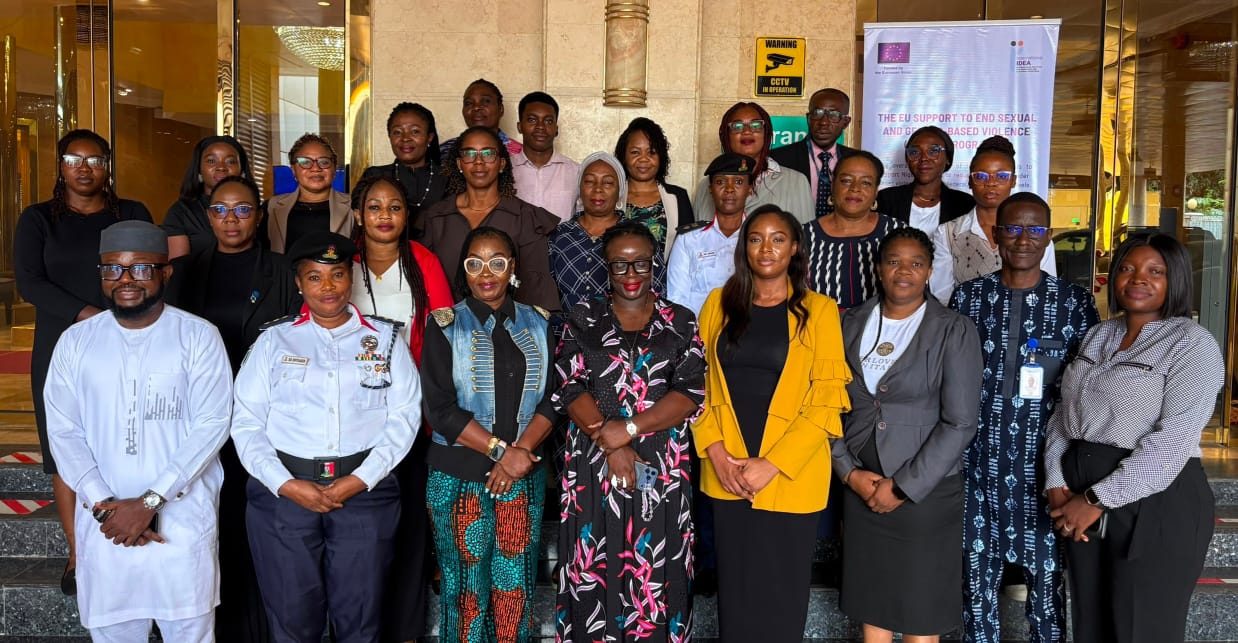
Abuse, Violence Threaten Safety of Nigerian Schools as FG, EU Launch Fresh Crackdown
By: Michael Mike
Schools across Nigeria, once regarded as safe spaces for learning and personal development, are increasingly becoming environments where children face abuse, exploitation and violence, prompting fresh intervention by the federal government and international partners to strengthen accountability and justice for survivors.
Alarmed by the growing prevalence of school-related gender-based violence (SRGBV) and the challenges victims encounter in seeking justice, stakeholders from the justice, education and child protection sectors have commenced coordinated efforts aimed at improving the prosecution of offenders and strengthening institutional responses to cases involving children.
The renewed commitment was underscored on Tuesday in Abuja during the First Training of Trainers Workshop on the Standard Operating Procedure (SOP) for the Legal Pathway for the Prosecution of Perpetrators of School-Related Gender-Based Violence.
The initiative, organised under the European Union-supported programme to end sexual and gender-based violence and implemented by the International Institute for Democracy and Electoral Assistance (International IDEA) in partnership with the Federal Ministry of Justice, brought together officials from key government ministries, security agencies, child protection bodies and civil society organisations.
Participants warned that violence within schools is taking multiple forms, including sexual harassment, abuse, bullying, corporal punishment, exploitation and technology-facilitated violence, leaving lasting scars on victims and undermining confidence in educational institutions.
Speaking at the event, Gender-Based Violence Policy and Strategy Development Specialist for the programme, Melissa Omene, described the situation as a major threat to the nation’s education system.
She noted that available studies indicate that nearly one-fifth of reported sexual violence cases occur within school environments, while a significant number of children continue to experience corporal punishment from teachers.
According to her, beyond the statistics are thousands of children whose safety, education and future prospects have been severely affected.
Omene said survivors often endure long-term emotional, psychological and educational consequences, with girls and other vulnerable groups bearing the heaviest burden.
She stressed that strengthening legal pathways for prosecution would send a strong signal that violence against children would no longer be tolerated and that institutions are prepared to act decisively against offenders.
She explained that although Standard Operating Procedures were jointly developed in 2024 by the Federal Ministries of Justice and Education to guide reporting, referrals, investigations and prosecution, inadequate awareness and inconsistent implementation have weakened their impact.
The current training, she added, seeks to bridge those gaps by equipping participants with practical knowledge to improve case management and accountability.
Omene also revealed that the European Union-funded programme, which runs from 2025 to 2029, is focused on strengthening legal and policy frameworks, improving access to quality support services for survivors and promoting social norms that discourage gender-based violence.
She disclosed that facilities within hospitals in the Federal Capital Territory have already been identified and are being assessed for conversion into Sexual Assault Referral Centres to provide specialised support for victims.
In her remarks, Head of the Sexual and Gender-Based Violence Response Unit at the Federal Ministry of Justice, Yewande Gbola-Awopetu, said the protection of children requires a united and coordinated response from all institutions.
She described the SOP as a critical tool for ensuring professionalism, accountability and consistency in handling cases of abuse within schools.
Gbola-Awopetu warned that violence in educational institutions does more than disrupt learning, noting that it erodes trust in public institutions and threatens the future of young Nigerians.
She urged participants to become agents of change within their respective organisations and work towards ensuring that no child is forced to choose between education and personal safety.
Also speaking, Assistant Director at the Federal Ministry of Education, Apakasa Augustina, disclosed that the SOP document had already been distributed to all 115 Federal Unity Colleges nationwide.
She said principals had been engaged on implementation strategies and stressed that teachers and school administrators remain central to identifying, preventing and responding to abuse.
According to her, effective efforts to tackle gender-based violence in schools cannot succeed without adequately training those who interact with children daily.
Executive Director of Protect the Child Foundation, Elizabeth Ebulejonu Achimugu, noted that many cases fail to progress beyond the reporting stage because frontline officers often lack sufficient knowledge of legal procedures and prosecution processes.
She said participants were expected to transfer the knowledge acquired during the training to colleagues within their institutions, while future phases of the programme would focus directly on teachers, caregivers and other school personnel.
Stakeholders expressed optimism that stronger collaboration among government agencies, educational institutions, civil society groups and law enforcement authorities would help close longstanding justice gaps, improve prosecution rates and restore schools as safe environments where children can learn and thrive without fear.
Abuse, Violence Threaten Safety of Nigerian Schools as FG, EU Launch Fresh Crackdown



Chad Accuses Sudanese Forces of Crossing Border, Bombing Convoy Deep Inside Chadian Territory
By Zagazola Makama
The Chadian General Staff has accused the warring parties in Sudan of violating Chad’s territorial integrity after aircraft and drones allegedly pursued and bombarded a convoy more than 100 kilometres inside Chadian territory.
The incident reportedly occurred at about 8 p.m. on Thursday, August 20, 2026, near Chad’s common border with Sudan, particularly around the Mourdi Department in the Ennedi-Est Province.
In a communiqué issued to the national and international public, the Chadian General Staff said aerial and ground assessments conducted throughout Friday, August 21, confirmed that the fighting in Sudan had once again spilled into Chadian territory.
According to the military authorities, aircraft and drones identified as belonging to the Sudanese Armed Forces (SAF) and/or forces supporting them were involved in the pursuit of a convoy.
The Chadian military said the operation initially took place on Sudanese territory but subsequently extended deep into Chad, with the convoy reportedly pursued and bombarded more than 100 kilometres inside Chadian territory.
The military authorities did not provide details on the identity of the convoy, the nature of its cargo, or the circumstances that led to the pursuit across the border.
However, the Chadian General Staff described the incident as a fresh violation of the country’s territorial integrity and warned all parties involved in the Sudan conflict against attempting to extend the war into Chad.
“Although no Chadian casualties have been recorded to date,” the military said, it strongly condemned what it described as the latest violation of Chad’s territorial integrity.
The General Staff issued a stern warning to the Sudanese belligerents, saying continued attempts to expand the Sudanese conflict into Chadian territory could have serious consequences.
It described such actions as a “suicidal risk” for those seeking to bring the Sudanese war onto Chadian soil.
The latest incident comes amid the continuing conflict in Sudan between the Sudanese Armed Forces and the paramilitary Rapid Support Forces, which has increasingly generated security concerns for neighbouring countries.
Chad shares a long and porous border with Sudan, particularly along its eastern frontier, where the security situation has remained fragile due to the movement of armed groups, refugees, weapons and combatants fleeing the Sudanese conflict.
The Chadian military said its defence and security forces remain on the highest level of alert to prevent further violations and protect the country’s population.
It further assured citizens that the security forces are prepared to respond forcefully to any threat capable of undermining the peace and security of the Chadian people.
The statement did not indicate whether Chad had identified the specific aircraft or drones involved through direct visual confirmation, radar data or other intelligence means, but said assessments conducted through aerial and physical means established that the operation had crossed into Chadian territory.
The development raises concerns over the potential regionalisation of the Sudan conflict, particularly as fighting and military operations continue to take place close to Sudan’s borders with Chad and other neighbouring countries.
For Chad, the alleged incursion represents a particularly sensitive security issue given the country’s proximity to the conflict and the potential for cross-border military operations to trigger a broader confrontation.
The Chadian authorities have therefore placed their forces on heightened alert while warning the Sudanese belligerents that further violations of its territory could provoke an energetic response.
The Chadian General Staff stressed that its priority remains the protection of the country’s territorial integrity and the safety of its citizens amid the continuing instability along its eastern border.
Chad Accuses Sudanese Forces of Crossing Border, Bombing Convoy Deep Inside Chadian Territory
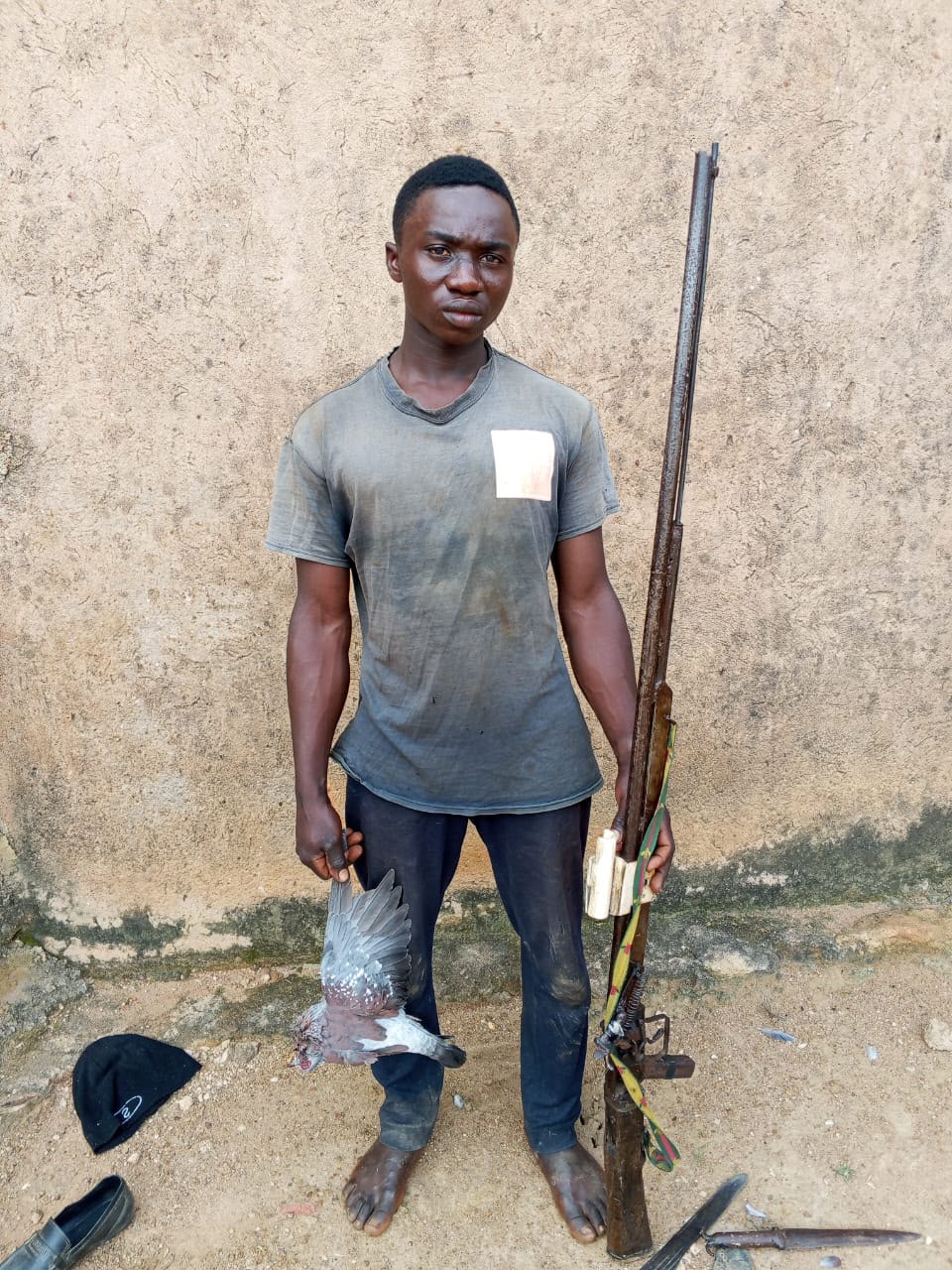
Troops Arrest 24-Year-Old Hunter With Dane Gun After Gunshots Report in Plateau
By Zagazola Makama
Troops of Sector 3, Operation ENDURING PEACE, have arrested a 24-year-old man and recovered a Dane gun following a report of gunshots in the DTV general area of Bassa Local Government Area of Plateau State.
The incident occurred at about 1:15 p.m. on Saturday, August 22, 2026, when troops deployed at DTV responded to reports of gunshots in the area.
According to military sources, the troops arrived at the scene and arrested the suspect, identified as Emmanuel Daniel, 24, who was found in possession of one Dane gun.
Preliminary investigation revealed that the suspect claimed to have fired the shots while hunting in the area.
The suspect and the recovered weapon are currently in military custody for further investigation and necessary action.
The arrest followed the prompt response of troops to reports of gunfire as security forces continue efforts to maintain peace and security across communities in Plateau State.
Troops Arrest 24-Year-Old Hunter With Dane Gun After Gunshots Report in Plateau
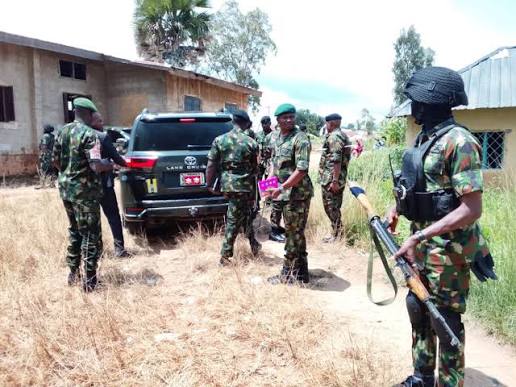
GOC 3 Division Urges Irigwe Stakeholders to Embrace Dialogue, Peaceful Coexistence
By Zagazola Makama
The General Officer Commanding (GOC) 3 Division and Commander, Operation ENDURING PEACE, Major General W.M. Dangana, has urged the Irigwe community in Bassa Local Government Area of Plateau State to embrace dialogue and peaceful coexistence in resolving differences and restoring lasting peace.
Dangana made the call on Friday, August 22, 2026, during a stakeholders’ engagement held at Miango community in Bassa LGA.
The engagement was attended by the Chief of Staff and Commander, Sector 3, Operation ENDURING PEACE, the entire Irigwe leadership and other stakeholders.
During the meeting, participants discussed critical security issues affecting the community and measures required to address the challenges and prevent further escalation of tensions.
The GOC emphasized the importance of dialogue as a means of resolving differences, urging the stakeholders to pursue peaceful solutions to issues affecting the community.
He also called on the Irigwe leadership and residents to promote peaceful coexistence, stressing the need for collective efforts towards restoring lasting peace in the community and Plateau State at large.
The engagement further illustrates the importance of cooperation between the security agencies, traditional institutions and local communities in addressing security challenges and strengthening peace-building efforts.
The meeting was hitch-free.
GOC 3 Division Urges Irigwe Stakeholders to Embrace Dialogue, Peaceful Coexistence

Chad Accuses Sudanese Forces of Crossing Border, Bombing Convoy Deep Inside Chadian Territory

Troops Arrest 24-Year-Old Hunter With Dane Gun After Gunshots Report in Plateau

Three Cows Die After Suspected Poisoning in Plateau

Roger Federer’s Shock as DNA Results Reveal Myla and Charlene Are Not His Biological Children

THE PLIGHT OF FARIDA

FAILED COUP IN BURKINA FASO: HOW TRAORÉ NARROWLY ESCAPED ASSASSINATION PLOT AMID FOREIGN INTERFERENCE CLAIMS
-
 News2 years ago
Roger Federer’s Shock as DNA Results Reveal Myla and Charlene Are Not His Biological Children
-
Opinions5 years ago
THE PLIGHT OF FARIDA
-
 News1 year ago
FAILED COUP IN BURKINA FASO: HOW TRAORÉ NARROWLY ESCAPED ASSASSINATION PLOT AMID FOREIGN INTERFERENCE CLAIMS
-

 News2 years ago
EYN: Rev. Billi, Distortion of History, and The Living Tamarind Tree
-
 Opinions5 years ago
POLICE CHARGE ROOMS, A MINTING PRESS
-

 ACADEMICS2 years ago
A History of Biu” (2015) and The Lingering Bura-Pabir Question (1)
-

 Columns2 years ago
Army University Biu: There is certain interest, but certainly not from Borno.
-

 Politics1 year ago
2027: Why Hon. Midala Balami Must Go, as Youths in Hawul and Asikira/Uba Federal Constituency Reject ₦500,000 as Sallah Gift
