
Uncategorized
ACBF, Gates Foundation Urge African Governments to Invest in Leadership for Sustainable Reforms


ACBF, Gates Foundation Urge African Governments to Invest in Leadership for Sustainable Reforms
…Say technical expertise alone cannot transform public institutions
By: Michael Mike
The African Capacity Building Foundation (ACBF) and the Bill & Melinda Gates Foundation have called for increased investment in leadership development across Africa’s public sector, saying technical expertise, sound policies and institutional systems alone cannot deliver sustainable reforms.
They made the call on Thursday at a webinar organised by ACBF on “Leading Public Sector Transformation in Africa: Leadership Lessons from the LEAPS Programme,” where participants examined how leadership capacity could help governments overcome resistance, strengthen public financial management (PFM) and translate reforms into measurable institutional results.
Executive Secretary of ACBF, Mr. Mamadou Biteye, said public-sector reform was rarely constrained by a shortage of good ideas, but more often by the ability to lead change, build trust, bring stakeholders together, overcome resistance and sustain momentum.
He said African governments were undertaking ambitious PFM reforms aimed at mobilising domestic resources, improving public investment, strengthening budgeting and enhancing expenditure management.
However, he noted that progress remained uneven, with leadership, coordination and implementation continuing to rank among the continent’s major capacity challenges.
According to him, this was the rationale behind the establishment of the Leadership Excellence for Africa’s Public Sector (LEAPS) programme by ACBF, with support from the Gates Foundation.
Biteye said the programme was founded on the recognition that while technical expertise was essential, it was insufficient to deliver complex institutional reforms.
“Reform leaders must do more than understand systems; they must inspire people, build trust, navigate competing interests, manage resistance, and sustain momentum when reforms become difficult,” he said.
He explained that LEAPS moves beyond conventional training by combining structured leadership learning with self-assessment, personal development plans, individual and group coaching, peer learning, technical seminars and case-based application to real PFM challenges.
Senior Programme Officer, Development Policy and Finance at the Gates Foundation, Mr. Adil Ababou, said the experience of working with ACBF on LEAPS had reinforced three major lessons about public-sector reform.
He said the first was that institutions and systems do not reform themselves; people lead reforms.
Ababou said many of the most difficult challenges facing public finance officials were not purely technical, but involved building consensus around difficult reforms, managing resistance, working across institutional boundaries and sustaining momentum when political or economic circumstances changed.
He said this was particularly important for public finance because the decisions of ministries of finance, revenue authorities, treasuries and other public institutions ultimately determine governments’ ability to fund schools, healthcare, social protection and other services.
“In the context of abrupt aid cuts, government finance is now, more than ever, the backbone of sustained and nationally owned development,” he said.
Ababou identified ownership as the second major lesson from the LEAPS experience, explaining that the programme was deliberately designed not to impose predetermined reforms or solutions on participating countries.
Instead, he said, the approach begins by understanding the capacity needs of participating institutions, after which participants receive sustained coaching while retaining responsibility for defining the problems they want to address and the objectives they want to achieve.
He said this was increasingly important as African countries placed greater emphasis on sovereignty, policy ownership and defining their own development priorities.
His third lesson was that leadership could not remain an individual capability.
“Successful reform requires teams, institutions and networks of officials who are able to work across the administrative silos that often characterise government,” he said.
Ababou noted that individual reformers could have much greater impact when their institutions gave them the space to act, senior leaders supported them and they were able to build coalitions around change.
“That is when individual leadership can start generating institutional momentum,” he said.
The LEAPS programme, a six-month executive leadership development initiative delivered through ACBF’s Ubora Academy, has enrolled more than 295 participants across eight African countries since its launch in 2024.
The countries reached are Côte d’Ivoire, The Gambia, Ghana, Kenya, Nigeria, Senegal, Tanzania and Zimbabwe.
The programme combines self-paced online learning with live facilitated sessions, executive coaching, group mentoring, technical seminars and peer exchange.
Its five modules cover African leadership paradigms; self-awareness and emotional intelligence; leading high-performing and inclusive teams; driving strategic organisational change; and engaging stakeholders and driving systemic transformation.
Biteye said early evidence from the first cohort showed that participants were translating their leadership development into institutional improvements.
In Kenya, participants demonstrated how people-centred leadership could complement technical expertise in advancing digital PFM reforms and securing stakeholder alignment.
In Senegal, leadership development contributed to stronger delegation, participatory management and communication, including efforts to make budget information more accessible to citizens.
In Ghana, coaching strengthened accountability, goal-setting and collaboration between finance and audit institutions, while in Zimbabwe, reflective and empathetic leadership practices helped officials navigate complex reforms under difficult institutional and resource constraints.
“These are not simply training outcomes; they are examples of leadership changing how institutions work,” Biteye said.
Ababou similarly said experiences from the first cohort were showing consistent changes, including greater delegation, improved communication, more participatory management, stronger cross-institutional collaboration and more deliberate listening and empathy.
He disclosed that an external evaluation of the programme was currently ongoing.
The impact of the programme was also reflected in testimonials from alumni, including Dr. Oluwole Olutola, Deputy Director at the Budget Office of the Federation, Ministry of Finance, Nigeria.
Olutola said LEAPS had changed his understanding of leadership from one centred on position and title to one based on shared responsibility.
“My understanding of leadership is shared leadership, collaborative leadership. It is no longer about position. It is no longer about title. It is no longer about office. It is about collective decision and collective responsibility,” he said.
He added that he now held regular meetings with his teams and ensured that members contributed to decisions.
Ana Awotwe Bosumafi, Assistant Auditor General of the Ghana Audit Service, said the programme made her realise that she still had considerable room for leadership growth.
Priscilla Maina, Director of Audit at Kenya’s Office of the Auditor General, said LEAPS helped her overcome her tendency to do everything herself and learn to trust others.
Lou Drinan Sylvie Epse Dah of Côte d’Ivoire’s Public Treasury said the programme strengthened her ability to manage her emotions, remain calm and show respect and consideration for colleagues.
The webinar also marked the formal launch of the LEAPS Change Story, titled Advancing Leadership Excellence in Africa’s Public Sector: Insights from the LEAPS First Cohort.
The publication documents participants’ leadership journeys, institutional outcomes and lessons across three cohorts and eight African countries.
It seeks to move beyond activity reporting by documenting what changed for individual leaders, how their institutions responded and what evidence exists on leadership development as a driver of public-sector reform.
Biteye said the experiences demonstrated the importance of developing leaders who could strengthen PFM institutions and improve public-sector delivery.
The event further marked the launch of the LEAPS Executive Leadership Programme, an expanded version of the initiative designed to make the programme available to public-sector and regional-body professionals across Africa.
The programme will provide a structured leadership journey incorporating online modules, live facilitated sessions, group coaching and mentoring, technical seminars, learning materials and an ACBF certificate.
According to ACBF, the programme represents an effort to expand access to continent-designed executive leadership development and build a sustainable pipeline of African public-sector leaders.
The programme is grounded in African leadership paradigms and case studies and is delivered in English and French.
Biteye said the next challenge was to ensure that leadership development did not remain an isolated opportunity for selected individuals.
He identified three priorities for the future: institutionalising leadership development; moving from individual transformation to institutional transformation; and sustaining and scaling what works.
He said LEAPS graduates should become mentors, reform champions and catalysts for wider changes in institutional culture.
The ACBF chief stressed that the Foundation was committed through LEAPS and the Ubora Academy to building a pipeline of African public-sector leaders who were technically competent, ethically grounded, collaborative and capable of leading change in complex environments.
Ababou similarly urged stakeholders to ensure that the gains made by individual participants were embedded in teams and institutions.
Biteye said the issue ultimately came down to the central role of people in reform.
“Systems do not reform themselves; budgets do not implement themselves; digital platforms do not transform institutions by themselves; and policies do not deliver results by themselves. People do,” he said.
He added that when people were equipped, inspired and supported, institutions could change.
ACBF, a specialised agency of the African Union established in 1991, has worked for more than three decades across more than 50 African countries to strengthen human and institutional capacity in areas including governance, public financial management, economic policy and leadership.
Through LEAPS, the Foundation is seeking to move leadership development from an individual training intervention into a broader institutional and continental reform strategy.
ACBF, Gates Foundation Urge African Governments to Invest in Leadership for Sustainable Reforms


Uncategorized
COAS unveils Nigerian Army Airborne School, tasks troops on special operations readiness

COAS unveils Nigerian Army Airborne School, tasks troops on special operations readiness
By: Zagazola Makama
The Chief of Army Staff (COAS), Lt. Gen. Waidi Shaibu, has unveiled the Nigerian Army Airborne Training School at Jaji Military Cantonment, Kaduna State, with a charge to personnel to attain the highest standards of specialised training and operational readiness.
Shaibu, who unveiled the School on Friday, September 25, 2026, said the establishment of the institution represents a strategic investment in developing highly skilled, agile and mission-ready personnel capable of undertaking complex airborne and special operations.
He said the changing character of warfare and the increasing sophistication of asymmetric threats require a force that is highly trained, adaptable and capable of operating effectively across difficult and diverse operational environments.

According to him, airborne and special operations capabilities are increasingly important to contemporary military operations, particularly in counter-terrorism, counter-insurgency and other asymmetric security environments.
The COAS therefore tasked the Commandant and instructors of the new School to develop and continually refine rigorous, operationally relevant training programmes that reflect global best practices while addressing Nigeria’s peculiar security challenges.
He said the School would serve as a centre of excellence for airborne operations, parachuting, air assault and other specialised military skills.
Shaibu explained that the initiative would enhance combat readiness and operational flexibility, while strengthening the Army’s ability to rapidly deploy appropriately trained personnel in support of joint and multi-agency operations.
The Army Chief assured the institution of continued support from Army Headquarters through the provision of necessary infrastructure, equipment and manpower required to fulfil its mandate.
He said the initiative formed part of ongoing efforts to build a more professional, adaptable, combat-ready and resilient Nigerian Army capable of effectively discharging its constitutional responsibilities.
Earlier, the Commandant of the Nigerian Army Airborne School, Brig. Gen. Muhammed Sani Usman, said the institution had been upgraded from a wing of the Nigerian Army School of Infantry, Jaji, into a full-fledged school.
Usman explained that the upgrade was driven by the Army’s continuing force-development efforts and the need to strengthen specialised capabilities, particularly those required to complement the operational employment of Nigerian Army Aviation.
The establishment of the School is expected to provide a dedicated institutional framework for developing personnel with specialised airborne capabilities and improving the Army’s capacity to generate forces for rapidly evolving operational requirements.
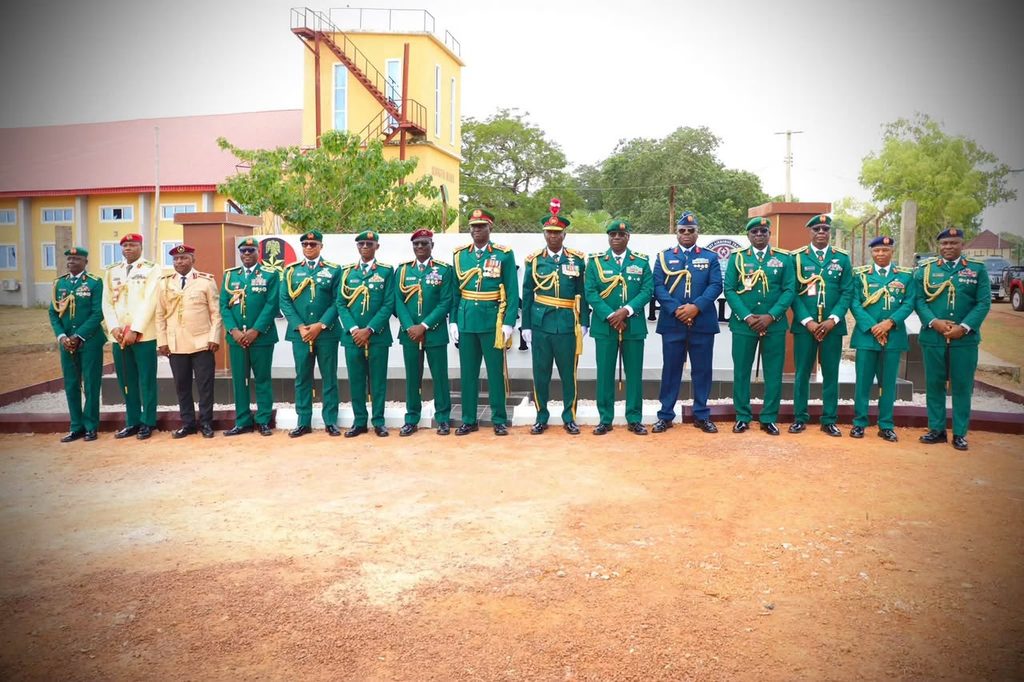
The event underscores the Army’s broader emphasis on specialised force development as it confronts increasingly complex security challenges requiring speed, mobility, precision and interoperability across conventional and asymmetric operational environments.
COAS unveils Nigerian Army Airborne School, tasks troops on special operations readiness
Uncategorized
Three Locals killed in Kassa in Reprisal to killing of fulani herder, rustling of 30 livestock, 10 sheep along Barkin Ladi–Mangu axis

Three Locals killed in Kassa in Reprisal to killing of fulani herder, rustling of 30 livestock, 10 sheep along Barkin Ladi–Mangu axis
By: Zagazola Makama
The security situation along the Barkin Ladi–Mangu axis of Plateau State has escalated following a fresh attack in Kassa village that left three locals dead, coming hours after a Fulani herder was killed by Berom Militia and 40 animals were reportedly rustled in the area.
Security sources told Zagazola Makama that the latest incident occurred at about 12:40 a.m. on Sept. 25, when troops of Sector 4, Operation Enduring Peace (OPEP), responded to reports of sporadic shootings in Kassa, Barkin Ladi Local Government Area.
The troops’ swift intervention reportedly forced the gunmen, suspected by security sources to be Fulani militias, to flee the area.
A search of the location led to the recovery of three bodies identified as Ishaya Pam, 48; Barnabas Gyang, 27; and Daniel Mutuwal, 30.
The troops also recovered an abandoned AK-47 rifle loaded with nine rounds of 7.62mm Special ammunition at the scene.
The Kassa attack occurred shortly after another incident around the boundary between Barkin Ladi and Mangu Local Government Areas, where a Fulani herder was killed and livestock were reportedly rustled by Berom Militiamen.
In that earlier incident, troops of Sector 8, Sub-Sector 81, Gyambwas, responded at about 3:55 p.m. on Sept. 24 to a report of cattle rustling and an attack on a herder.
On arrival at the location, the troops discovered the body of a 24-year-old herder identified as Abubakar Mudi, who had sustained gunshot wounds.
Other herders told the troops that about 30 cows and 10 sheep were suspected to have been taken by the attackers during the incident.
Security sources said the attackers were suspected to be members of a Berom militia group, although investigations are ongoing to establish the identities and motives of those responsible.
The troops have since commenced tracking operations to locate the suspected rustlers, recover the stolen livestock and arrest the perpetrators.
Security personnel and local vigilantes have also intensified patrols and offensive operations across the affected areas following the two incidents.
The sequence of attacks highlights the retaliatory nature of violence along parts of the Barkin Ladi–Mangu corridor, where attacks on communities and herders, livestock rustling and reprisal killings can rapidly trigger further violence.
Troops said they are intensifying efforts to prevent further retaliatory attacks.
Three Locals killed in Kassa in Reprisal to killing of fulani herder, rustling of 30 livestock, 10 sheep along Barkin Ladi–Mangu axis
Uncategorized
Zulum Named 2026 Quintessence Award, First Northern Governor to Win Pan-Africa’s Top Leadership Award
Zulum Named 2026 Quintessence Award, First Northern Governor to Win Pan-Africa’s Top Leadership Award
By: Our Reporter
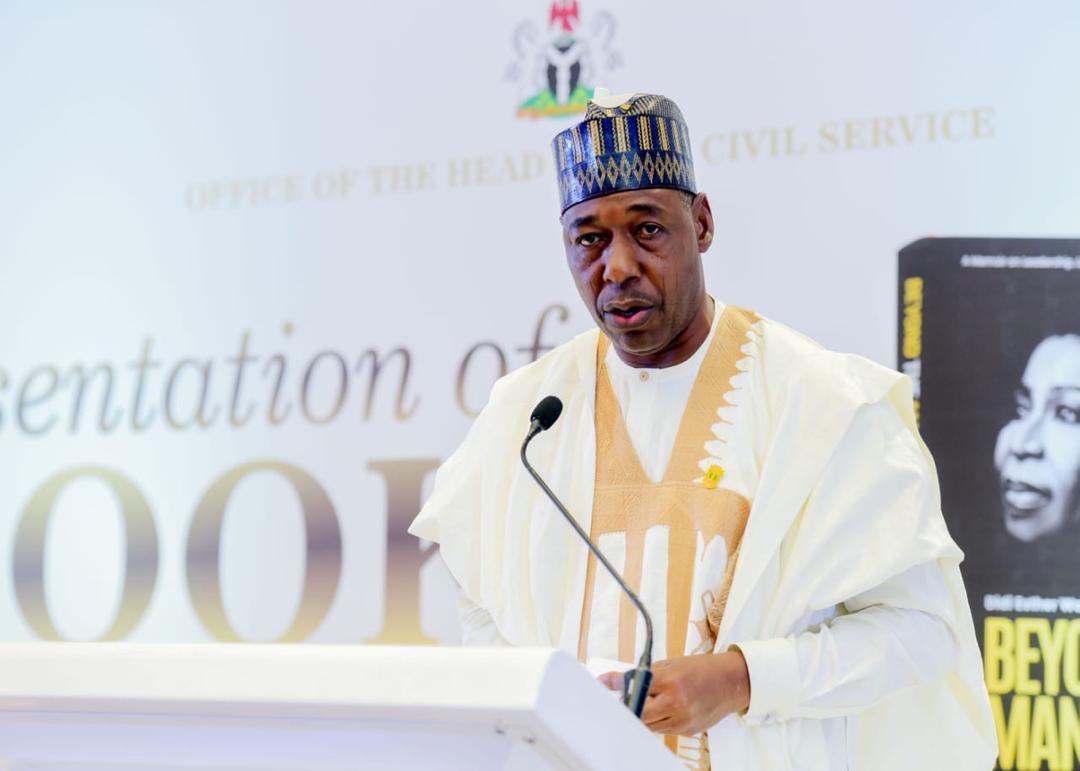
Borno State Governor, Professor Babagana Umara Zulum, has been named the 2026 recipient of the Quintessence Award, the preeminent Pan-African Leadership Award in North America, becoming the first governor from Northern Nigeria to receive this honour.
Zulum, who is currently in New York for the 81st Session of the United Nations General Assembly (UNGA 81), is part of the Nigerian delegation to accompany the Vice President, Senator Kashim Shettima, who is leading the Federal Government team to deliver Nigeria’s national statement at the General Debate and will also participate in several sideline engagements, including the Nigeria Investment Forum.
Before proceeding to the United States, the Governor held a series of high-level strategic engagements in Canada, where he signed a Memorandum of Understanding on behalf of Borno State Government with the Northern Alberta Institute of Technology (NAIT) on technical education, workforce development and skills transfer among other areas designed to strengthen the human capital base driving Borno’s post-insurgency recovery.
The Governor’s nomination was conveyed in a letter from the Executive Director of the African Writers Endowment (AWE), the New Jersey-based non-profit organisation, Dr Ugorji O. Ugorji, who said Zulum was selected in recognition of his “remarkable accomplishments as an academic, scholar and educational administrator,” alongside his distinguished tenure as Governor of Borno State, particularly for stemming the tide of insecurity and significantly reshaping the infrastructural landscape of the state.
The award will be presented at the “Quintessence Ball: A Celebration of African People in World History,” which brings together African people from Africa, North America, and the Caribbean. This year’s ceremony will be held on Friday, September 25, 2026, at the DoubleTree by Hilton Hotel, New Jersey, United States of America.
According to Dr Ugorji, the Quintessence Award is presented each year to at least one continental African leader and one African American leader, “for distinguished accomplishments in the person’s field of endeavour, and for outstanding contributions to the history and heritage of African people.”
This year’s edition of the Quintessence Conference and Awards will be chaired by Professor Ibrahim Gambari, CFR, former Chief of Staff to the late President Muhammadu Buhari and one-time Under-Secretary-General of the United Nations, who was himself the maiden recipient of the award in 1998.
A major highlight of the conference will be a special symposium titled “Investment Opportunities in Borno State: Doorway to the Chad Region.” The interactive session will spotlight the vast economic, agricultural, and cross-border trade opportunities opening up in Borno State, as well as the Governor’s development record in rebuilding communities, restoring livelihoods, and repositioning the state as a strategic gateway to the Lake Chad Basin.
With this recognition, Governor Zulum joins a distinguished roll of past laureates that includes Professor Chinua Achebe, Professor Ngugi wa Thiong’o, Professor Ibrahim Gambari, the late Chief Gani Fawehinmi, SAN, Congressman Donald Payne, Professor Toyin Falola, Professor Molefi Kete Asante, and former Governors Chibuike Rotimi Amaechi and Kayode Fayemi, among other eminent Africans and African Americans.
The organisers disclosed that the Quintessence Award is traditionally accompanied by a proclamation from the Governor of New Jersey and a joint resolution of the New Jersey Senate and General Assembly in honour of the recipients.
Governor Babagana Zulum is a multiple award-winning governor who received the Forbes Magazine African Leadership Award in 2024.
Zulum Named 2026 Quintessence Award, First Northern Governor to Win Pan-Africa’s Top Leadership Award

Talking Under Fire: What Libya and Yemen Teach Sudan About National Dialogue

APC Fiber Candidate Baba Malam Wali promises to build on Buni’s legacy in Yobe.

Army expansion: COAS tasks new officers to turn manpower into combat power

Roger Federer’s Shock as DNA Results Reveal Myla and Charlene Are Not His Biological Children

THE PLIGHT OF FARIDA

FAILED COUP IN BURKINA FASO: HOW TRAORÉ NARROWLY ESCAPED ASSASSINATION PLOT AMID FOREIGN INTERFERENCE CLAIMS
-
 News3 years ago
Roger Federer’s Shock as DNA Results Reveal Myla and Charlene Are Not His Biological Children
-
Opinions5 years ago
THE PLIGHT OF FARIDA
-
 News1 year ago
FAILED COUP IN BURKINA FASO: HOW TRAORÉ NARROWLY ESCAPED ASSASSINATION PLOT AMID FOREIGN INTERFERENCE CLAIMS
-

 News3 years ago
EYN: Rev. Billi, Distortion of History, and The Living Tamarind Tree
-
 Opinions5 years ago
POLICE CHARGE ROOMS, A MINTING PRESS
-

 ACADEMICS3 years ago
A History of Biu” (2015) and The Lingering Bura-Pabir Question (1)
-

 Columns3 years ago
Army University Biu: There is certain interest, but certainly not from Borno.
-

 Politics1 year ago
2027: Why Hon. Midala Balami Must Go, as Youths in Hawul and Asikira/Uba Federal Constituency Reject ₦500,000 as Sallah Gift
