
News
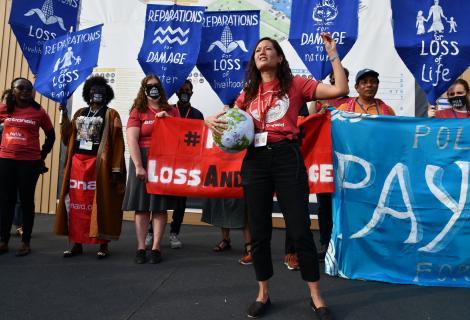
ActionAid Comments on COP28

ActionAid Comments on COP28
By: Michael Mike
ActionAid welcomes the operationalisation of the Loss and damage fund at COP28 as an imperfect but important first step toward addressing climate impacts, Teresa Anderson, ActionAid International’s Climate Justice Global Lead, said.
“After 28 rounds of climate talks, the world’s governments have finally agreed to help people whose lives have been devastated by climate disasters. It’s a small ask. But a big moment. With the launch of the Loss and Damage Fund, the world is finally saying “We are in this together”.
“For the communities being pushed deeper into poverty with every disaster that destroys their homes and floods their crops, this moment in Dubai offers hope.”
“The UAE’s contribution of USD100 million is welcome, both for its solid cash and for the pressure it puts on the world’s biggest polluters to also step up and recognise their responsibility for decades of pollution.
“So far the contributions from rich countries have been far less than their fair share, considering they have been polluting for decades.”
“Today’s agreement is an important step but still very much the bare minimum, the story doesn’t end here. Today’s funding announcements have got the ball rolling, and we still need to see more rich countries making real announcements here at COP, to really fill the Fund. And with climate disasters likely to escalate year on year, the need for Loss and Damage Fund financing will only continue to grow. The good news is, we have the means to help if we have the will.”
Brandon Wu, ActionAid USA’s Director of Policy and Campaigns and a civil society observer at the Loss & Damage Transitional Committee meetings this year, said: “This is an imperfect but important step towards filling the massive gap of support that communities in developing countries need to recover and rebuild from climate impacts. The Loss & Damage Fund has some deep flaws because of developed countries prioritizing their own agendas over the needs of impacted communities in poorer countries, even as those same developed countries appear reluctant to put in money at the scale that is needed. The struggle will continue beyond COP28 as the specifics of the Fund must be implemented in a way that is as responsive and accountable to communities as possible, and rich countries must pay up to fix what they have broken.”
“In addition, the conditions that the World Bank accepted in order to host the Loss & Damage Fund show that the Bank is not a fit-for-purpose host institution. However, now that the World Bank has become the agreed host – over strident civil society objections – it must quickly demonstrate that it can meet these conditions, many of which may require significant policy changes within the Bank’s ponderous bureaucracy. We will be watching very carefully to ensure the needed reforms happen promptly. If they do not, the L&D Fund must be moved out of the World Bank immediately.
End
ActionAid Comments on COP28


News
Outgoing OPHK commander lauds Zagazola other media for their courage, professionalism and objective coverage
Outgoing OPHK commander lauds Zagazola other media for their courage, professionalism and objective coverage
By Zagazola Makama
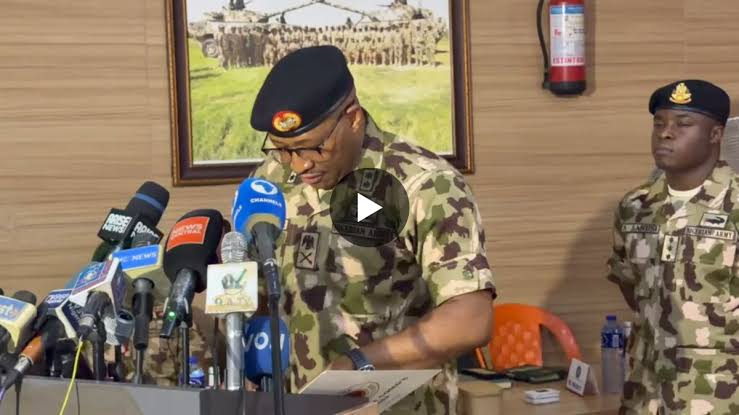
The outgoing Theatre Commander, North East Joint Task Force, Operation HADIN KAI (OPHK), Maj.-Gen. Abdulsalam Abubakar, has commended the Zagazola Media Network and other media organisations for their courage, professionalism and objective coverage of the counter-insurgency campaign in the North-East.
Abubakar gave the commendation on Tuesday during his farewell engagement with stakeholders in Maiduguri, as he formally handed over the command of Operation HADIN KAI to the incoming Theatre Commander, Maj.-Gen. Ibikunle Ajose.
The Theatre Commander specifically acknowledged the media’s consistent presence in the Theatre, including in some of the most difficult and remote operational locations, where journalists have continued to report the realities of the conflict and the efforts of troops, humanitarian actors and affected communities.
“To the gentlemen of the press, I thank you for your consistent presence in this Theatre and for helping the public appreciate both the cost and progress of this campaign,” Abubakar said.
He particularly recognised the efforts of journalists who had travelled to difficult frontline locations, including Kareto and Ngoshe, to document developments and bring the experiences of soldiers, communities and other stakeholders to the attention of the wider public.
“You reported from the most difficult locations, including Kareto, Ngoshe and other remote areas, bringing to light the stories of our troops, our partners and the communities we serve, and holding us to account where it mattered,” he said.
Commander praises Zagazola’s frontline coverage
Abubakar’s remarks amounted to a strong recognition of the role played by specialised security-focused media organisations, particularly the Zagazola Media Network, in keeping the public informed about developments in the North-East.
The Theatre Commander said the media had maintained what he described as fair, objective and unbiased reportage, noting that balanced reporting had helped the public better understand the realities of the counter-insurgency campaign.
“You have maintained fair, objective and unbiased reportage. Your balanced reporting has enlightened the populace, thereby discrediting fake news and terrorist propaganda,” he said.
His remarks underscored the importance of credible journalism in an operating environment where misinformation, disinformation and terrorist propaganda can influence public perception, undermine confidence and create confusion around security operations.
Rather than merely reporting battlefield developments, Abubakar noted that the media had also helped to tell the wider story of the conflict documenting the sacrifices of troops, the resilience of communities, the contributions of partners and the progress being made towards restoring normalcy.
The outgoing commander said responsible journalism remained critical to ensuring that the public understood both the challenges and progress of the military campaign.
He urged journalists to sustain the same standards of fairness, courage and professional responsibility under the incoming Theatre Commander.
“I urge you to continue covering this Theatre with the same fairness, courage and sense of responsibility you extended to me, and to accord the incoming Theatre Commander the same professional cooperation in the interest of peace in the North-East,” he said.
The appeal comes as Maj.-Gen. Ibikunle Ajose assumes command of Operation HADIN KAI with a pledge to sustain the gains recorded under his predecessor while strengthening collaboration with the Borno State Government, humanitarian organisations, international partners, hybrid forces and the media.
Ajose has also urged journalists to maintain fairness, accuracy and responsibility in reporting security developments, stressing that public confidence forms an important part of the operational environment.
“The good people of the North-East deserve information that informs, and not information that inflames,” Ajose said.
Beyond the battlefield
For more than a decade, the North-East conflict has required the media to operate in an environment where access to frontline communities is difficult, security conditions are unpredictable and information is often contested.
The recognition by the outgoing Theatre Commander therefore places particular emphasis on the responsibility of journalists operating in the Theatre to verify information, provide context and distinguish confirmed developments from claims circulated by combatants and other interested actors.
For Zagazola Media Network and other security-focused news organisations, frontline reporting has increasingly involved documenting military operations, humanitarian developments, the return of displaced persons, community resilience and the broader efforts to restore normal economic and social activities across affected areas.
Abubakar’s commendation also reinforced the principle that effective counter-insurgency communication is not solely the responsibility of the military.
Accurate and responsible journalism, public awareness and timely clarification of false information remain important elements in preventing terrorist propaganda and misinformation from gaining influence among communities.
As the command changes hands, the outgoing Theatre Commander urged the media to maintain the professional relationship established with the Theatre while holding the new leadership accountable through credible and responsible reporting.
He stated that the battle for the North-East is fought not only on the frontline, but also in the information space, where facts, credibility and responsible journalism remain critical to sustaining public confidence and supporting the broader quest for peace.
Outgoing OPHK commander lauds Zagazola other media for their courage, professionalism and objective coverage
News
Over 7,000 IDPs return to ancestral homes as OPHK restores normalcy in Borno says Maj Gen Abubakar
Over 7,000 IDPs return to ancestral homes as OPHK restores normalcy in Borno says Maj Gen Abubakar
By Zagazola Makama
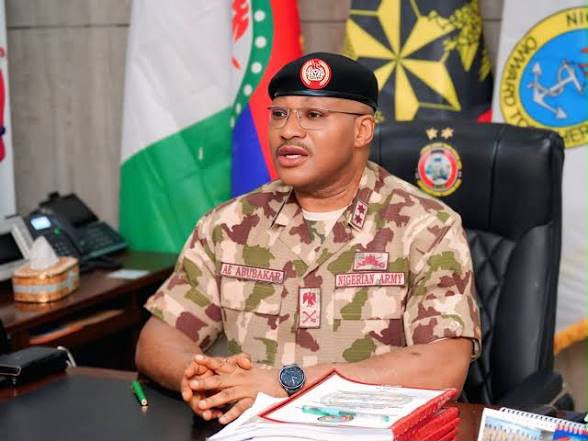
More than 7,000 internally displaced persons (IDPs) have returned to their ancestral communities across Borno State following improved security conditions created by sustained military operations under Operation HADIN KAI (OPHK), the outgoing Theatre Commander, Maj.-Gen. Abdulsalam Abubakar, has said.
Abubakar disclosed this during his farewell and introduction engagement with humanitarian partners, representatives of the Borno State Government and members of the press in Maiduguri on Tuesday.
He said the return of the displaced families represented one of the clearest indicators of the progress recorded by the Theatre during his tenure as the 15th Theatre Commander of OPHK.
According to him, the fundamental mandate given to the Theatre was not merely to conduct military operations but to facilitate the restoration of normalcy in the North-East, allowing communities to recover and socio-economic activities to resume.
He explained that normalcy could be measured by the reopening of schools and markets, access to farmlands, restoration of essential services and, most importantly, the ability of families who had fled violence to return safely to their ancestral homes.
“Together, we have seen over 7,000 displaced families return to their ancestral communities and today, communities that were abandoned for years have been re-occupied, such that returned communities now exist in every Local Government Area of Borno State,” he said.
The development, he noted, marked a significant shift in communities that had remained largely deserted for years as a result of insurgency and the fear of attacks.
Abubakar said the return of the IDPs was made possible by the combined efforts of the military, the Borno State Government, humanitarian organisations, traditional institutions and local communities.
He stressed that the objective of military operations was ultimately to create a secure environment where civilians could reclaim their communities, rebuild their homes, cultivate their farms and restart their livelihoods.
The outgoing commander said the return of displaced families was supported by sustained counter-terrorism operations which degraded the capabilities of JAS and ISWAP across the Theatre.
Abubakar said the pressure generated by sustained military operations, combined with non-kinetic measures, had also contributed to a major wave of surrenders.
He disclosed that more than 969 JAS/ISWAP fighters and their family members surrendered within the last one year, creating another pathway through which affected communities could gradually move away from the cycle of violence.
The Theatre Commander said the restoration of security had produced visible changes in several communities across Borno.
He pointed to the reopening of trade routes and local markets, allowing residents to resume economic activities that had been disrupted by years of insurgency.
Over 7,000 IDPs return to ancestral homes as OPHK restores normalcy in Borno says Maj Gen Abubakar
News
“No theatre in the country enjoys a stronger partnership than the one we enjoyed with Borno State Government” — Maj Gen Abubakar

“No theatre in the country enjoys a stronger partnership than the one we enjoyed with Borno State Government” — Maj Gen Abubakar
By Zagazola Makama
The outgoing Theatre Commander, North East Joint Task Force, Operation HADIN KAI (OPHK), Maj.-Gen. Abdulsalam Abubakar, has lauded the Borno State Government for what he described as unwavering support to military operations, declaring that no theatre of operations in the country enjoyed a stronger partnership with its host government than the relationship between OPHK and the Borno State Government.
Abubakar made the declaration during his farewell and introduction engagement with humanitarian partners, representatives of the Borno State Government and members of the press in Maiduguri on Tuesday.
He said the partnership between the Theatre and the state government had been critical to the fight against insurgency, protection of civilians, restoration of normalcy and the return of displaced persons to their ancestral communities.
“I say it plainly; no theatre of operations in this country enjoys a stronger partnership with its host government,” Abubakar said.
The outgoing commander specifically commended Governor Babagana Umara Zulum for his sustained support to Operation HADIN KAI, particularly through the provision of critical combat enablers that had strengthened the operational capacity of troops across the Theatre.
He listed Mine-Resistant Ambush Protected vehicles (MRAPs), long-range surveillance cameras and drones, among other support provided by the Borno State Government.
According to him, the state government’s contributions had gone beyond ordinary civil-military cooperation, providing practical capabilities that directly supported troops in their efforts to protect communities and degrade terrorist networks.
“These critical contributions have strengthened the partnership between the State Government and Operation HADIN KAI, and reinforced our collective resolve to defeat the insurgency, protect innocent lives, sustain peace, restore normalcy and enable the safe return of displaced persons to their communities,” he said.
Abubakar said the support was particularly significant because the restoration of normalcy in the North-East required a strong partnership between the military and the government responsible for the welfare and recovery of affected communities.
He urged the Borno State Government to maintain the partnership with his successor, saying the incoming Theatre Commander would require the same level of cooperation and support to consolidate the gains already recorded.
“I therefore respectfully request that this same partnership and support be extended to the incoming Theatre Commander as he assumes the duty of sustaining the gains we have made,” he said.
The outgoing Theatre Commander extended his appreciation to the wider humanitarian community, particularly organisations operating in Borno, Adamawa and Yobe States.
He commended the United Nations Office for the Coordination of Humanitarian Affairs (UN OCHA) for its continued support to vulnerable populations and its contribution to stabilisation efforts across the North-East.
Abubakar said humanitarian organisations had remained important partners in addressing the consequences of the insurgency, particularly the suffering of displaced persons and other vulnerable civilians.
He said their work, guided by the principles of humanity, impartiality and neutrality, had complemented the security efforts of Operation HADIN KAI in tangible ways.
“Your work, guided by the principles of humanity, impartiality and neutrality, has alleviated the suffering of the most vulnerable and has complemented our stabilisation efforts in tangible ways,” he said.
He explained that the military had also continued to support humanitarian operations by providing protection, escorts and an enabling security environment for aid workers to operate.
According to him, the relationship was based on complementary responsibilities, with the military creating the security conditions while humanitarian organisations delivered assistance to affected populations.
The Theatre Commander also highlighted the importance of regular dialogue between military and humanitarian actors.
He described the recent humanitarian roundtable as a productive engagement that provided stakeholders with an opportunity to examine coordination challenges and improve the conduct of humanitarian operations.
Abubakar urged stakeholders to institutionalise such engagements, saying regular dialogue would help prevent misunderstandings and improve the delivery of assistance to vulnerable communities.
He reiterated that requests for military escorts by humanitarian organisations should be made 48 hours before movement to enable the Theatre to properly plan and provide appropriate security.
“I urge this partnership to be maintained,” he said.
Abubakar also paid tribute to the International Committee of the Red Cross (ICRC) for its specialised capacity-building support to Operation HADIN KAI.
He said the organisation had provided valuable assistance to the Theatre both within and outside Nigeria, particularly in areas relating to professionalism, International Humanitarian Law and protection of civilians.
He singled out the ICRC’s support for improving detainee management at the Joint Interrogation Centre, saying the intervention had strengthened the Theatre’s handling of persons in custody.
According to him, the improvements recorded in detainee management contributed to commendations received by OPHK both locally and internationally.
He acknowledged that the relationship between the military and humanitarian community had sometimes experienced disagreements, but said the ability to resolve such issues through dialogue remained one of the major achievements of the partnership.
“I know our relationship with the humanitarian partners has not been without friction, but the honest dialogue we have built is itself an achievement, and I enjoin you to protect it,” Abubakar said.
The outgoing commander also expressed appreciation to Team HADIN KAI, describing its integration into OPHK since May 8, 2026, as a strategic partnership that had strengthened the Theatre’s intelligence-led operations.
He said the team had supported precision targeting, non-kinetic operations and capacity building, thereby improving the Theatre’s common operational picture.
Abubakar cited the May 15, 2026 operation at Metele, which he said resulted in the neutralisation of Abu-Bilal Al-Minuki, identified in his speech as the ISIS second-in-command, as a notable outcome of the partnership.
He said the collaboration had enhanced the professionalism and effectiveness of OPHK’s counter-terrorism efforts.
The outgoing Theatre Commander also acknowledged the contribution of the British Defence Staff – West Africa, particularly in strengthening OPHK’s combat capabilities and Counter-Improvised Explosive Device (C-IED) capacity.
He said British military advisers had contributed expertise, capacity building and equipment support.
Abubakar noted that the partnership had recently expanded to direct engagement with Forward Operating Bases, including support for defensive measures, tactical drone deployment and improved surveillance.
He urged his successor to build upon and further consolidate the relationship.
Partnership linked to return of displaced persons
Abubakar’s commendation of the government and humanitarian organisations came against the backdrop of significant progress in the return and resettlement of displaced populations.
He disclosed that more than 7,000 displaced families had returned to their ancestral communities across Borno State during his tenure.
He said communities that had remained abandoned for years were gradually being reoccupied, with returned communities now present in every Local Government Area of the state.
The Theatre also facilitated the rescue of 638 civilians from terrorist enclaves, while all 46 students involved in the attempted abduction at the Federal Government Girls College, Monguno, were safely rescued.
He further highlighted the voluntary, safe and dignified repatriation of more than 3,000 Nigerians from Cameroon, carried out through the collaboration of the Borno State Government, Federal Ministry of Humanitarian Affairs and Poverty Reduction and the United Nations High Commissioner for Refugees.
According to Abubakar, these developments demonstrated that security operations, humanitarian intervention and government support were mutually reinforcing components of the wider effort to restore normalcy.
The outgoing Theatre Commander also appreciated other security agencies, hybrid forces and what he described as the “friends of OPHK” for their support throughout his tenure.
He said their information, cooperation and encouragement had helped shape collective efforts toward fulfilling the Theatre’s mandate.
Abubakar said the fight against insurgency required more than military operations, stressing that sustainable recovery depended on the combined efforts of security agencies, government institutions, humanitarian organisations and communities.
As he handed over the Theatre to the incoming 16th Theatre Commander, Maj.-Gen. Ibikunle Ajose, Abubakar appealed to all partners to sustain the cooperation that had characterised his tenure.
He said the partnership between OPHK and its stakeholders had contributed significantly to the gradual return of normalcy, including the reopening of markets and trade routes, resumption of educational activities and the return of displaced families to their ancestral homes.
He urged all partners to give Ajose the same openness, cooperation and goodwill extended to him, saying the consolidation of peace in the North-East would depend heavily on maintaining the partnerships built over the years.
“No theatre in the country enjoys a stronger partnership than the one we enjoyed with Borno State Government” — Maj Gen Abubakar

Outgoing OPHK commander lauds Zagazola other media for their courage, professionalism and objective coverage

Over 7,000 IDPs return to ancestral homes as OPHK restores normalcy in Borno says Maj Gen Abubakar

“No theatre in the country enjoys a stronger partnership than the one we enjoyed with Borno State Government” — Maj Gen Abubakar

Roger Federer’s Shock as DNA Results Reveal Myla and Charlene Are Not His Biological Children

THE PLIGHT OF FARIDA

FAILED COUP IN BURKINA FASO: HOW TRAORÉ NARROWLY ESCAPED ASSASSINATION PLOT AMID FOREIGN INTERFERENCE CLAIMS
-
 News3 years ago
Roger Federer’s Shock as DNA Results Reveal Myla and Charlene Are Not His Biological Children
-
Opinions5 years ago
THE PLIGHT OF FARIDA
-
 News1 year ago
FAILED COUP IN BURKINA FASO: HOW TRAORÉ NARROWLY ESCAPED ASSASSINATION PLOT AMID FOREIGN INTERFERENCE CLAIMS
-

 News2 years ago
EYN: Rev. Billi, Distortion of History, and The Living Tamarind Tree
-
 Opinions5 years ago
POLICE CHARGE ROOMS, A MINTING PRESS
-

 ACADEMICS3 years ago
A History of Biu” (2015) and The Lingering Bura-Pabir Question (1)
-

 Columns3 years ago
Army University Biu: There is certain interest, but certainly not from Borno.
-

 Politics1 year ago
2027: Why Hon. Midala Balami Must Go, as Youths in Hawul and Asikira/Uba Federal Constituency Reject ₦500,000 as Sallah Gift
