
News
ActionAid Describes 2024 IMF/World Bank Meeting, A Damp Squib, Falling Short of Addressing Issuing for People Living in Poverty


ActionAid Describes 2024 IMF/World Bank Meeting, A Damp Squib, Falling Short of Addressing Issuing for People Living in Poverty
By: Michael Mike
ActionAid has said the 2024 International Monetary Fund (IMF) and World Bank Annual meetings in Washington, D.C., were a damp squib that fell short of addressing the bread-and-butter issues for people living in poverty.
The IMF’s forecasts of high debt and slow growth, especially among Global South countries, and its recommendations for even more fiscal adjustments, public sector wage rationalization,and the social acceptability of structural reform are testament to their continued failure and inability to show relevance for the global majority in the 21st century.
The Global Economic Justice Lead at ActionAid International, Roos Saalbrink, said: “We see once again how the IMF is not fit for purpose and unable to offer real solutions to the economic crises they helped to create. The decision to stick to old ways and pursue harmful policies, such as public sector wage cuts, is a blatant disregard for decades of evidence that has shown that this does not work and for rapidly growing inequality.”
He added that: “The IMF seems unable to see reality outside its econometric models. Sadly, the lack of meaningful action to arrest the debt crisis and put an end to austerity could spell doom for the global majority, whose voices demanding a break from the failures of the past are yet again ignored.”
On her part, the Policy Specialist at ActionAid UK, Jessica Mandanda, said:
“It has been 80 years, and we find ourselves, yet again, at odds with the International Financial Institutions, with consistent contradictions in what they say and what they do. What is crystal clear is that the IMF is completely out of touch and disconnected from the lived realities of billions across the world who are suffering because of austerity and bad policy advice.
“The calls for austerity, or fiscal adjustments or restrictions as the IMF is calling it, will increase the burden among vulnerable communities, especially women, who bear the brunt of cuts in spending on essential services such as health, education, and other support sectors.
“In so many ways, we have seen even more this past week that the IMF is willing to let people especially women be collateral in the pursuit of economic growth. After 80 years, we expected the IMF to take responsibility for their failed policies and be open to changing their ways of operating. Their decision to stick to business as usual will doubtlessly reverberate negatively on vulnerable and poor communities, in the Global South.”
ActionAid noted that metrics like Gross Domestic Product growth hide the real impacts of economic policies, as well as in whose interests this endless growth is pursued. It is a continuation of a colonial system enabling the extraction of wealth and resources into the hands of a few, fueling extreme inequality. The increased climate crisis stems from this unquestioned pursuit of GDP growth that is driving extractivism and has pushed the planet beyond its limits.
The Women’s Rights Programme and Policy Advisor for ActionAid International, Lina Moraa, said: “While the IMF preaches ‘reform’ it is clear that they have failed to deliver on this for the past 80 years. The fund is still deeply entrenched in neoliberalism and happy to perpetuate a system that fuels inequality and suffering. We demand a radical departure from this failed model and a new era of economic justice for all.”
She noted that the time is up for outdated economic policies, systems, and rules, that disproportionately impact women and girls. As part of international financial architecture reform, governments must take debt negotiations and sustainability assessments away from the IMF to a new UN democratic and representative debt workout mechanism to function at the Fourth UN Financing for Development conference in 2025 hand in hand with a UN Convention on International Tax Cooperation.
ActionAid insisted that there is an urgent need for a collective resolution to the global debt crisis anchored on debt cancellation, radical debt renegotiation, reparations, and bold action for progressive, gender-responsive, and climate-sensitive tax reforms to allow governments to invest in quality public services.
Global Lead on Economic Justice and Public Services at ActionAid International, Roos Saalbrink said: “The blatant unwillingness of global north governments to change the current governance structure of the IMF and World Bank is striking. The IMF itself also seems adamant to keep the system as it is, holding itself at the center of economic decisions continuing the endless cycles of debt, reforms, and cuts in government spending. Debt cancellation simply is not in the IMFs interest, it might put it out of business. So, we should see its outdated recommendations for what they are; a deliberate attempt to maintain its relevance and power.”
ActionAid Describes 2024 IMF/World Bank Meeting, A Damp Squib, Falling Short of Addressing Issuing for People Living in Poverty


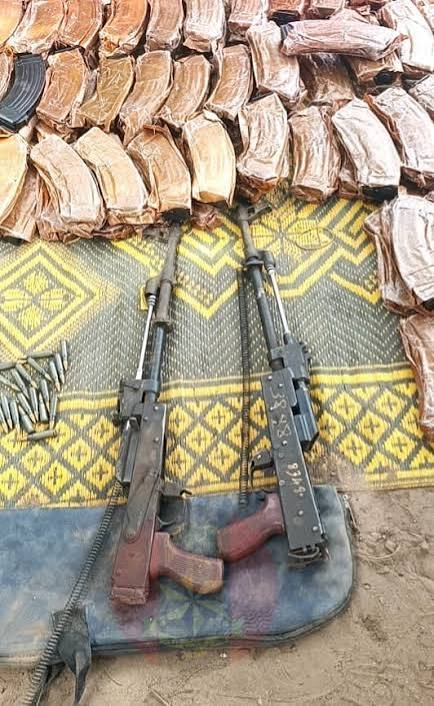
Troops Recover AK-47 Rifle in Raid on Suspected Gunrunners’ Hideout in Taraba
By: Zagazola Makama
Troops of Operation MESA have recovered an AK-47 rifle, a magazine and three rounds of 7.62mm special ammunition during a raid on a suspected gunrunners’ hideout in Gassol Local Government Area of Taraba State.
Security sources said the operation was carried out at about 12:15 a.m. on June 30 by troops of the 20 Model Battalion deployed in Gassol, in collaboration with a team from the Defence Intelligence Agency (DIA).
The sources said the joint team conducted the intelligence-led raid on a suspected gunrunners’ hideout at Kwatan Nanido Village following credible information on illegal arms activities in the area.
Although no suspect was arrested during the operation, the troops recovered one AK-47 rifle, one magazine and three rounds of 7.62mm special ammunition abandoned at the location.
The recovered items have been taken into military custody for further investigation and necessary action.
Security sources said efforts were ongoing to identify and apprehend members of the suspected gunrunning syndicate as operations continue to curb the proliferation of illegal arms and enhance security across the state.
Troops Recover AK-47 Rifle in Raid on Suspected Gunrunners’ Hideout in Taraba
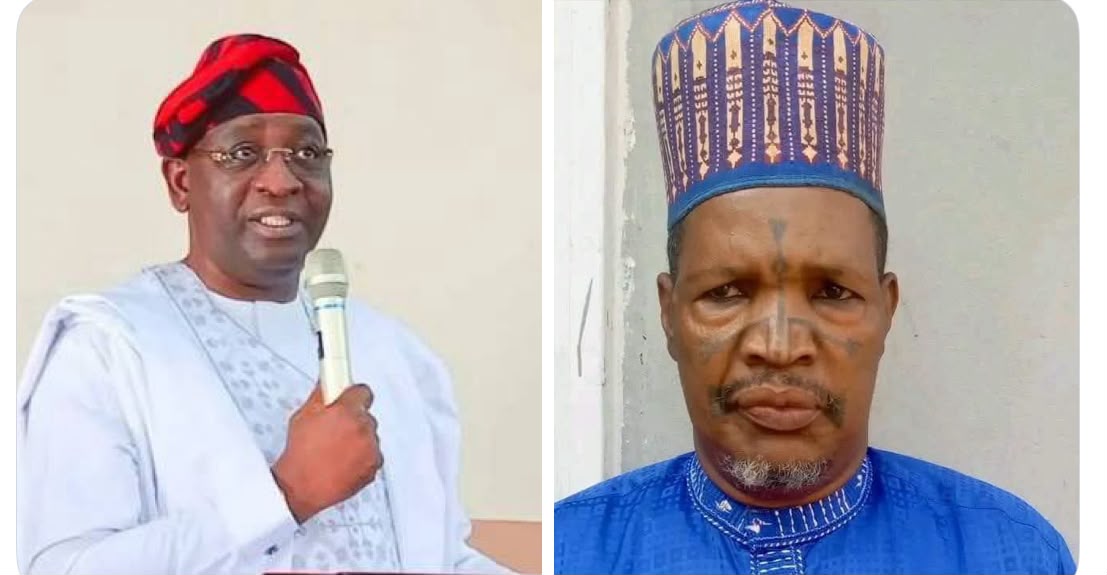
Benue Deputy Gov. Visit family Slain MACBAN Leader, Urges Calm as Police Probe Killing
By: Zagazola Makama
The Benue State Government, in collaboration with the Nigeria Police Force, has paid a condolence visit to the family of the late Fulani community leader, Alhaji Risku Muhammad, in Ohimini Local Government Area, urging residents to remain calm as investigations into his killing continue.
The condolence visit took place on Tuesday and was led by the Deputy Governor of Benue State, who represented Gov. Hyacinth Alia.
The delegation included the Assistant Inspector-General of Police in charge of Zone 4, Makurdi, the Commissioner of Police, Benue State Command, representatives of the Sultan of Sokoto, the leadership of the Miyetti Allah Cattle Breeders Association of Nigeria (MACBAN), other security agencies and relatives of the deceased from different parts of the country.
During the visit, the delegation sympathised with the bereaved family and appealed to them and members of the Fulani community not to resort to self-help or reprisals.
They urged them to allow security agencies to carry out a thorough and impartial investigation into the circumstances surrounding the killing.
The delegation assured the family that the government and security agencies were committed to ensuring that those responsible for the homicide are identified and brought to justice.
Police authorities said the case was under active investigation by the State Criminal Investigation Department (CID), adding that efforts were ongoing to unravel the circumstances surrounding the incident.
The Benue State Government reiterated its commitment to maintaining peace and security across the state and called on all residents to continue supporting security agencies with credible information that could aid the investigation.
Benue Deputy Gov. Visit family Slain MACBAN Leader, Urges Calm as Police Probe Killing
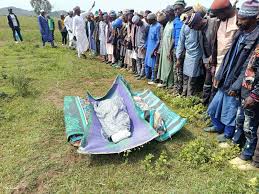
Three Herders Killed in Ambush in Plateau, MACBAN Calls for Investigation
By: Zagazola Makama
Three cattle herders were reportedly killed and one other injured in an ambush by unidentified gunmen while grazing livestock in Gero-Rafin Bauna area of Jos South Local Government Area of Plateau State.
The Chairman of the Miyetti Allah Cattle Breeders Association of Nigeria (MACBAN) in Plateau, Alhaji Ibrahim Yusuf Babayo, confirmed the incident and condemned the attack.
Babayo called on security agencies to carry out a thorough investigation into the killings and ensure that those responsible are arrested and prosecuted.
According to him, the bodies of the three victims were discovered in a forest after an extensive search by members of the community.
He alleged that the victims were brutally killed during the attack.
The MACBAN chairman further claimed that the latest incident came barely two weeks after four other herders were reportedly killed in the same general area, adding that their bodies had yet to be recovered.
Babayo urged the authorities to take urgent steps to improve security in vulnerable communities and prevent further attacks.
He also appealed to members of the affected communities to remain calm and allow security agencies to investigate the incident.
As of the time of filing this report, the Plateau State Police Command had not issued an official statement on the incident.
The circumstances surrounding the attack and the identity of the perpetrators remain unclear.
Three Herders Killed in Ambush in Plateau, MACBAN Calls for Investigation

Troops Recover AK-47 Rifle in Raid on Suspected Gunrunners’ Hideout in Taraba

Benue Deputy Gov. Visit family Slain MACBAN Leader, Urges Calm as Police Probe Killing

Three Herders Killed in Ambush in Plateau, MACBAN Calls for Investigation

Roger Federer’s Shock as DNA Results Reveal Myla and Charlene Are Not His Biological Children

THE PLIGHT OF FARIDA

FAILED COUP IN BURKINA FASO: HOW TRAORÉ NARROWLY ESCAPED ASSASSINATION PLOT AMID FOREIGN INTERFERENCE CLAIMS
-
 News2 years ago
Roger Federer’s Shock as DNA Results Reveal Myla and Charlene Are Not His Biological Children
-
Opinions4 years ago
THE PLIGHT OF FARIDA
-
 News1 year ago
FAILED COUP IN BURKINA FASO: HOW TRAORÉ NARROWLY ESCAPED ASSASSINATION PLOT AMID FOREIGN INTERFERENCE CLAIMS
-

 News2 years ago
EYN: Rev. Billi, Distortion of History, and The Living Tamarind Tree
-
 Opinions5 years ago
POLICE CHARGE ROOMS, A MINTING PRESS
-

 ACADEMICS2 years ago
A History of Biu” (2015) and The Lingering Bura-Pabir Question (1)
-

 Columns2 years ago
Army University Biu: There is certain interest, but certainly not from Borno.
-

 Politics1 year ago
2027: Why Hon. Midala Balami Must Go, as Youths in Hawul and Asikira/Uba Federal Constituency Reject ₦500,000 as Sallah Gift
