
News
ActionAid Laments the Use of Social Media to Silence Women and Girls in Nigeria


ActionAid Laments the Use of Social Media to Silence Women and Girls in Nigeria
By: Michael Mike
ActionAid Nigeria (AAN) has decried that social media and digital platforms intended to empower, are increasingly exploited to harass, stalk, and silence women and girls. In Nigeria.
AAN in a statement on Tuesday to commemorate the start of the 16 Days of Activism Against Gender-Based Violence with the theme, “UNiTE to End Digital Violence Against All Women and Girls.” signed by its Country Director, Dr. Andrew Mamedu lamented that digital threat compounds the physical dangers girls face in schools amid rising insecurity, creating a dual crisis that demands immediate and collective action.
Mamedu said: “ActionAid Nigeria has long championed safe spaces for women and girls through initiatives such as our Safe Cities project, Women’s Voice and Leadership Nigeria project, the Renewed Women’s Voice and Leadership project, Local Rights Programme and community-based GBV response programs across 21 states and the FCT. In a nation where one in four girls experience sexual violence before the age of 18, the combination of physical and online threats is a crisis that deprives our girls of safety, education, and their future.
“We UNiTE today to break this cycle, fortifying schools against physical violence and abduction, while safeguarding digital spaces from virtual predators.”
He lamented that Nigeria’s education system, intended to be a safe environment for learning, is increasingly under threat. The abduction of 25 students and the killing of a vice-principal at Government Girls Comprehensive Secondary School in Maga, Kebbi State, underscores the fear gripping many northern communities.
He further decried that across the country, schools in Kwara, Niger, Plateau, Bauchi, Kebbi, and 41 Unity schools have closed due to insecurity, forcing children out of classrooms. UNICEF reports that 60% of out-of-school children in northern Nigeria are girls, a figure likely to rise as insecurity persists. Survivors of abductions are often subjected to sexual and domestic slavery, while perpetrators extend their threats online, amplifying fear and intimidation.
He noted that Technology-Facilitated Gender-Based Violence in Nigeria takes many forms, including cyberstalking, non-consensual sharing of intimate images, deepfakes, doxxing, sextortion, and persistent online harassment, insisting that these abuses isolate and shame women and girls, disrupting their education, work, and social participation.
A 2024 UNFPA report indicates that between 16% and 58% of women and girls worldwide experience TFGBV, with Nigeria recording over 6,000 GBV cases in the first five months of 2024 alone.
He said Tech-enabled abuse has real and tangible impacts, particularly on women and girls already marginalised by factors such as ethnicity, disability, or geography. Reports from organisations including Hivos and the Development Research and Projects Centre (dRPC) show that TFGBV intensifies trauma, suppresses voices, and perpetuates cycles of poverty.
H noted that ActionAid Nigeria, alongside women’s rights organisations, survivors, and communities across the country, calls on the Federal Government, State Governments, the National Assembly, law enforcement agencies, regulatory bodies, and international partners to urgently take the following actions:
Domesticate and implement the African Commission Resolution 522 (2023) on protection from internet-based violence; Arrest and prosecute perpetrators of school abductions to reduce insecurity in educational institutions; Establish a National Task Force on Technology-Facilitated Gender-Based Violence to coordinate prevention and response efforts; Allocate specific budget lines for the digital safety of women and girls in the 2026 appropriation; Strengthen survivor-centred reporting and justice mechanisms for both physical and online gender-based violence.
ActionAid Nigeria called on all Nigerians to recognize that the safety of women and girls is the responsibility of every individual, community, and institution, stressing that together, we must act decisively to ensure every girl can learn, live, and thrive free from fear, both online and offline.
ActionAid Laments the Use of Social Media to Silence Women and Girls in Nigeria



Zulum Dissolves Borno State Executive Council
By: Our Reporter
Borno State Governor, Professor Babagana Umara Zulum, has approved the immediate dissolution of the State Executive Council.
The decision is to provide an enabling environment for any member of the council who may wish to contest elective positions in the forthcoming general elections.
The Governor has therefore directed all Commissioners to hand over the affairs of their respective ministries to the Permanent Secretaries on or before Friday, April 3, 2026.
Governor Zulum expressed his profound appreciation to the outgoing Commissioners for their dedication, commitment, and invaluable contributions to the development and service of the people of Borno State.
Zulum Dissolves Borno State Executive Council

How corp member Samuel Orji bowed to humanity at the recent Monday market tragedy
By: Bodunrin Kayode
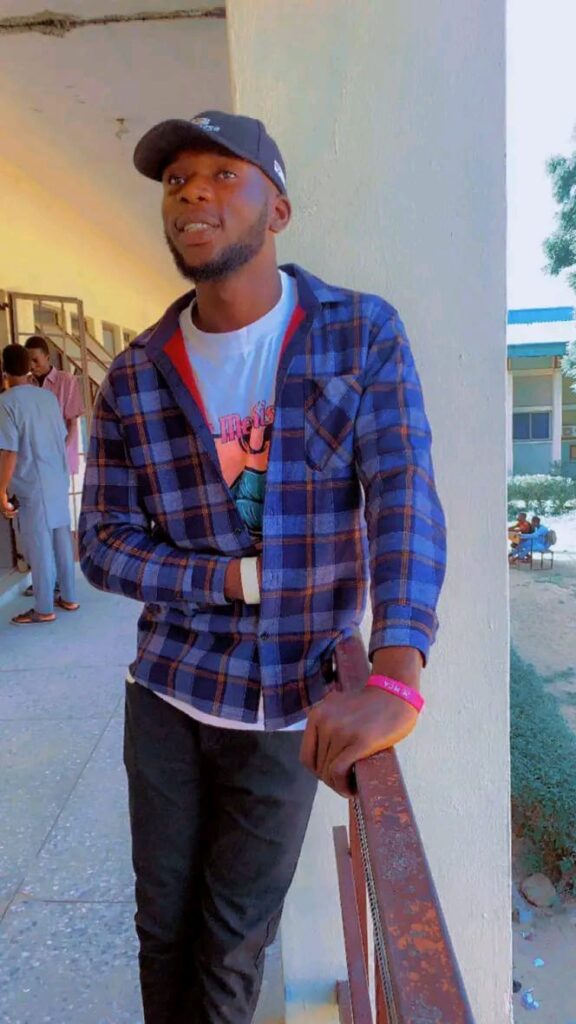
Corp member Samuel Orji is not new to Monday market because he was raised in a restaurant right in front of the place as a kid because his mother used to be a food vendor to the traders within the vicinity.
Till the day of his death, he had friends and associates along the popular Ahmadu Bello way right down to Ali Kotoko Street where traders used to patronize his mother’s buka food.
But his mother have since left the town for Abuja leaving him and his brother Steve because he was still a student attending Ramat Polytechnic where he studied Electrical engineering when she left.
Having grown up in Maiduguri, he already knew that Improvised explosive devices IED could explode at any time during the day but never knew a semblance of the worse days could return to the city of yerwa.
For people who grew up in Maiduguri, the worse days are really over when everyone goes home before six pm so he was obviously rounding off his hustling that night when the explosion went off on Ahmadu Bello way which hit his legs and brought him down.
Though we all share a common humanity, living in the north east war theatre of hadin kai, we all go out each day for our daily bread not knowing what the end of the day will be like but taking each day as it comes.
Likewise, when corp member Samuel Orji left the house of his next of kin in Maduganari that fateful black Monday, he never planned not to return home, but as fate would have it, he was one of the victims that got hit by the suicide bomb explosion in front of the Monday market.
After being called up to the National Youth Service Corp (NYSC) with number NYSC/RPM/25/185709, the young Orji was still serving at the engineering department of the Nigerian television authority (NTA) Potiskum in Yobe state when he lost his life.
Orji with YB/25B/1003 now serving in Damaturu found himself in Maiduguri the weekend before that black Monday because he had taken a pass to spend the public holiday with his brother and next of kin Stephen Orji who lives in Maduganari a suburban area of Maiduguri.
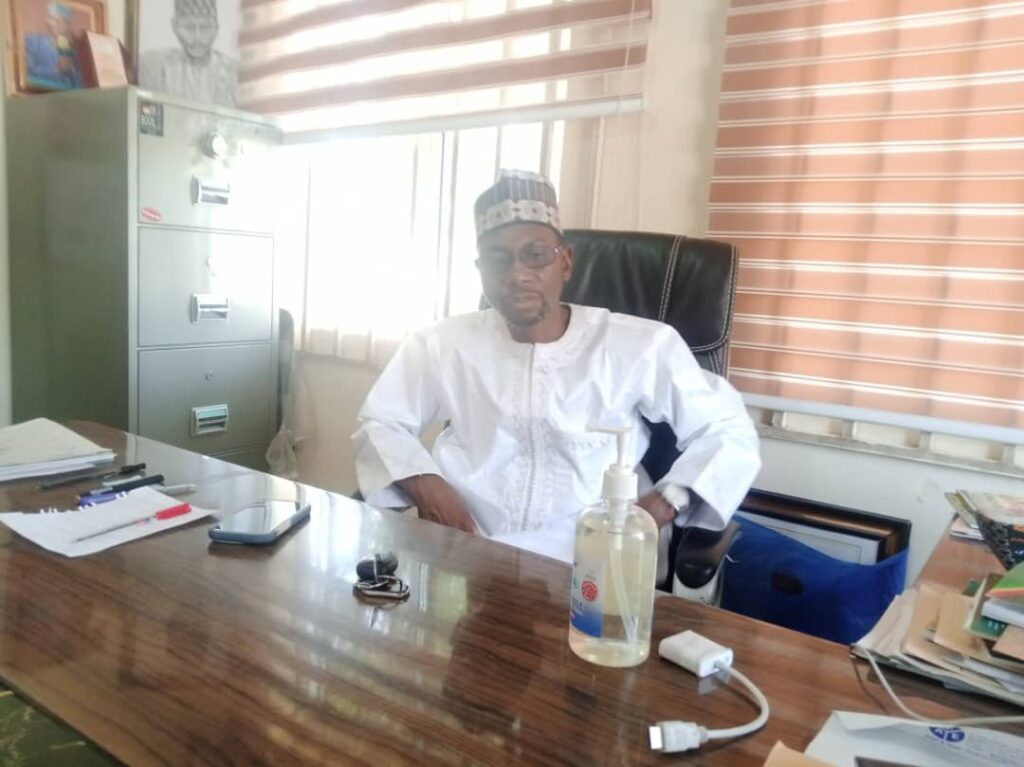
Speaking with this reporter after the tragedy, Borno State coordinator of the NYSC Bashir Nasir said the entire tragedy was a shock to him after a long spell of calmness in the city.
As soon as the incident happened, he was contacted by his headquarters (HQ) in Abuja to conduct a census of his Corp members to ensure all was well and report back to them.
It was in the process that he realized that his team was fine and that the fellow that died was indeed a Corp member but was serving the nation from Damaturu and that he had died as a result of the Monday blast on Ahmadu Bello way at the entrance of the market place.
“I quickly went into action by visiting all the places I know my corp members are based. And I was sure the fellow was not serving here in Borno after the roll call.
” Later a call came from his next of kin Steve to one of our staff in Yobe who indeed linked up with us here and that was when it was ascertained that Samuel Orji was a corp member serving in Yobe.
” I then went to the home of his next of kin Stephen Orji at Maduganari and that was how we took charge by handling all the preliminary expenses to ensure he is taken home for burial.
” The Yobe axis arranged for an ambulance and staff to convey his corpse to Enugu on Monday last week for burial.
” As a result of that triple blast I had to halt routine activities of corp members in the state except the medical officers among them who were released to assist in the hospitals on the condition that management will release ambulances from them to go and return safely to their bases. ” Said the state coordinator.
Challenges of the Corp in Borno state
The main challenge is obviously tied to their security which is why they are using the Arabic Teachers secondary school as a temporary location for now.
The original location has been tendered not usable after idps used it from 2012 to 3021
However, the governor in his magnanimity has given them a new camp of one km by one Km at Auno in the outskirts of the city.
Meanwhile the coordinator who would be one year next month since he assumed duty hinted that 506 Corp members of the batch A stream one of 2005 will pass out this week on the 31st of March.
Another bold set of Corp members of the batch A stream one of 2026 will however be sworn in on the 22nd April.
How corp member Samuel Orji bowed to humanity at the recent Monday market tragedy
Tension in jos north council area as government slams curfew over sunday’s killings in Plateau
By: Bodunrin Kayode
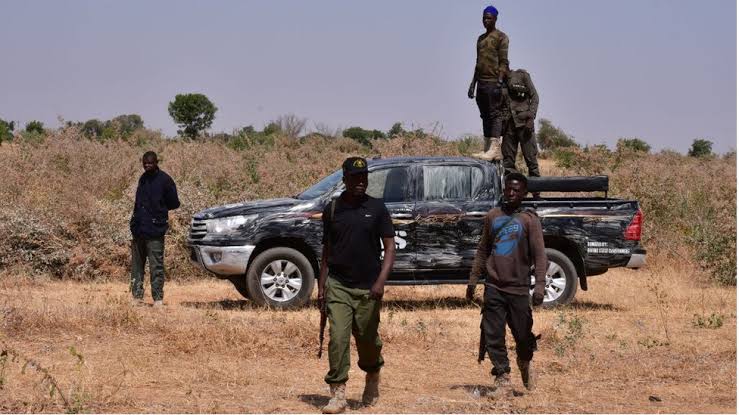
Reports coming from Jos North council area of plateau State indicates that there is palpable tension in the city as suspected gunmen on motorcycle allegedly opened fire on some residents of Angwan Rukubu area Sunday evening.
The unprovoked shooting of innocent citizens caused serious pandemonium in the area forcing many residents to flee from the scene and avoided the general area until late at night when the government resultantly slammed a curfew in the area.
Residents were advised to avoid wandering around the general area from tomorrow in view of the incident so as not to fall victim of possible reprisals by young residents of the area.
PLATEAU STATE GOVERNMENT ORDERS 48 HOURS CURFEW IN JOS NORTH COUNCIL AREA
Reacting to the situation, the government has placed a 48 hour curfew on the area which is highly tensed according to eye witnesses for now.
A release signed by the Commissioner of information Joyce Ramnap stated that “Following the tragic security incident that occurred at Gari Ya Waye community Angwan Rukuba today Sunday 29th March 2028 resulting in the loss of lives, while several others sustained varying degrees of injuries.
”The Plateau State Government in conjunction with security agencies wishes to inform the general public of the imposition of a 48 hour curfew within Jos North Local government Area with immediate effect, commencing from 12 midnight of 29th March, to 1st April, 2026.
“The government under the leadership of His Excellency, Governor Caleb Manasseh Mutfwang strongly condemns this barbaric and unprovoked attack on innocent citizens and assures the public that all necessary measures are being taken to apprehend the perpetrators and bring them to justice.
“Citizens are urged to remain calm, stay vigilant, and cooperate fully with security agencies by providing any useful information that may aid ongoing investigations.” Noted the release.
Tension in jos north council area as government slams curfew over sunday’s killings in Plateau

Zulum Dissolves Borno State Executive Council

How corp member Samuel Orji bowed to humanity at the recent Monday market tragedy

Tension in jos north council area as government slams curfew over sunday’s killings in Plateau

Roger Federer’s Shock as DNA Results Reveal Myla and Charlene Are Not His Biological Children

THE PLIGHT OF FARIDA

FAILED COUP IN BURKINA FASO: HOW TRAORÉ NARROWLY ESCAPED ASSASSINATION PLOT AMID FOREIGN INTERFERENCE CLAIMS
-
 News2 years ago
Roger Federer’s Shock as DNA Results Reveal Myla and Charlene Are Not His Biological Children
-
Opinions4 years ago
THE PLIGHT OF FARIDA
-
 News11 months ago
FAILED COUP IN BURKINA FASO: HOW TRAORÉ NARROWLY ESCAPED ASSASSINATION PLOT AMID FOREIGN INTERFERENCE CLAIMS
-

 News2 years ago
EYN: Rev. Billi, Distortion of History, and The Living Tamarind Tree
-
 Opinions4 years ago
POLICE CHARGE ROOMS, A MINTING PRESS
-

 ACADEMICS2 years ago
A History of Biu” (2015) and The Lingering Bura-Pabir Question (1)
-

 Columns2 years ago
Army University Biu: There is certain interest, but certainly not from Borno.
-

 Opinions2 years ago
Tinubu,Shettima: The epidemic of economic, insecurity in Nigeria
