
National News
Actively Implementing the Global Governance Initiative, Jointly Building a China-Africa and China-Nigeria Community with a Shared Future

Actively Implementing the Global Governance Initiative, Jointly Building a China-Africa and China-Nigeria Community with a Shared Future
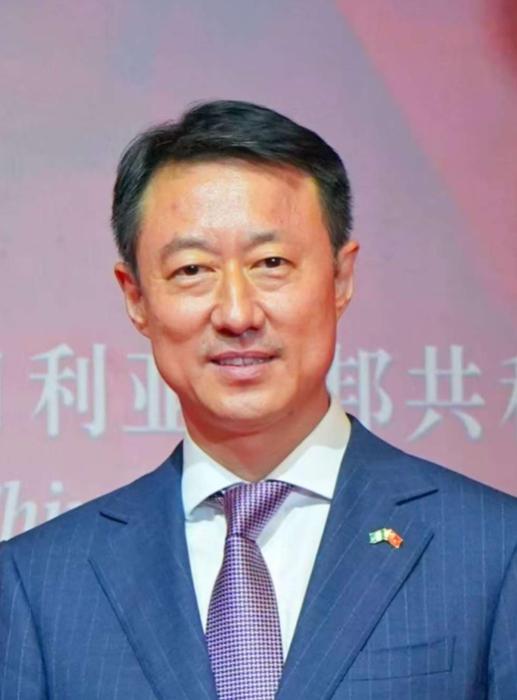
By H.E. Yu Dunhai, Chinese Ambassador to Nigeria
On September 1, 2025, President Xi Jinping solemnly proposed the Global Governance Initiative (GGI) at the Shanghai Cooperation Organization Plus Meeting held in Tianjin, China. With itsprofound insight into the times, broad humanistic commitment and clear value orientation, this initiative aims to address a pressing subject of our times which has attracted high attention from the international community, namely what kind of global governance system to build and how to reform and improve global governance. It further contributes Chinese wisdom and proposes a Chinese approach to strengthening and improving global governance, injecting more stability and certainty into a turbulent world.
Today, transformative changes unseen in a century are accelerating across the world, while the lingering gloom of Cold War mentality, hegemonism, and protectionism continues to cast a shadow. Humanity is confronted with unprecedented challenges as the world enters a new phase of turbulence and transformation, and global governance now stands at a critical juncture. The world is in greater need of strengthening global governance than ever before, and the GGI comes at an opportune time. Regarding it as the fundamental guideline to uphold the purposes and principles of the U.N. Charter and practice the vision of global governance featuring extensive consultation and joint contribution for shared benefit, the GGI seeks to promote the building of a more just and equitable global governance system and work together for a community with a shared future for humanity.
To be more specific, the GGI embodies five core concepts: First, adhere to sovereign equality. All countries, regardless of size, strength or wealth, shall have the right to participate in, make decisions in and benefit from the global governance as equals. Second, abide by the international rule of law. There shall be no double standards, and the self-defined rules of a few countries must not be imposed upon others. Third, practice multilateralism.The irreplaceable and crucial role of the United Nations in global governance must be given full play.Fourth, advocate a people-centered approach. It is essential to ensure that people of all nations jointly participate in global governance and share in its outcomes. Fifth, focus on taking real actions. More tangible results should be delivered, and global governance should avoid lagging behind the times or becoming fragmented.
The above five core concepts advocated by the GGI are closely aligned with the inherent needs of China-Africa and China-Nigeria cooperation. Africa, which includes 54 United Nations member states, is the continent with the largest concentration of developing countries. It is not only an important participant in global governance but also a major force driving global multi-polarization. Nigeria, as Africa’s most populous country and majoreconomy, serves as a critical growth engine on the continent and an influential representative of the Global South. It is also a key strategic partner for China in Africa. It is fair to say that China-Africa and China-Nigeria cooperation not only enjoy a solid historical foundation but also correspond to practical needs of reformingthe global governance system and transforming the global order.
The year 2025 marks the 80th anniversary of the establishment of the United Nations, which represented a pioneering practice by the international community in initiating global governance. In 1971, African countries strongly supported the restoration of the lawful seat of the People’s Republic of China in the United Nations, with Nigeria casting a sacred vote in favor. This moment marked the beginning of the joint participation of African nations and the People’s Republic of China in global governance. In 1992, China worked closely with the Group of 77, in which African countries served as a major force, ultimately leading to the incorporation of the principle of “common but differentiated responsibilities” into the United Nations Framework Convention on Climate Change. Since the 21st century, China has actively promoted solutions to address the under-representation of African countries in the United Nations, advocating that the Security Councilreform must genuinely reflect international fairness and justice, prioritize correcting historical injustices faced by Africa, and support special arrangements to address Africa’s demands as a priority. In 2022, China took the lead in explicitly expressing support for the African Union’s accession to the G20 and facilitated the formal admission of the African Union as a member of the G20 the following year. The Beijing Declaration issued at the Beijing Summit of the Forum on China-Africa Cooperation (FOCAC) in 2024emphasized that China supports African countries in playing a greater influential role in global governance, particularly within inclusive frameworks addressing global issues, and will continue to support Africa-related priorities in G20 affairs. China also appreciated and welcomed more African countries joining the BRICS family. Shortly thereafter, Nigeria, with China’s active support, became a BRICS partner country. China firmly supports Africa’s efforts to enhance its international standing and voice, fully demonstrating the spirit of China-Africa friendship and cooperation, and profoundly illustrating China’s role as a major country in promoting the improvement of global governance.
The year 2025 also marks the 25thanniversary of the establishment of theFOCAC. The FOCAC mechanism itself is a model of the vision of the global governance featuring extensive consultation and joint contribution for shared benefit. Guided by the principles of sincerity, real results, amity, and good faith towards Africa and the principle of pursuing the greater good and shared interests, China is committed to supporting Africa in advancing its integration and enhancing its capacity for self-drivendevelopment. From the “Ten Cooperation Plans” and the “Eight Major Initiatives” tothe “Nine Programs” and the recently launched “Ten Partnership Actions for China-Africa Collaboration on Modernization,” a series of practical cooperation plans have focused on Africa’s priority areas such as infrastructure connectivity, healthcare, agricultural modernization, and capacity building. This cooperation comes with no political strings attached, emphasizesaction-oriented approaches and aims to enhance the “self-development capacity” of African countries, representing a tangible contribution to building a more just and equitable global governance system. On September 3, 2024, Nigerian President Bola Ahmed Tinubu paid a state visit to China and attended the FOCAC Beijing Summit. The leaders of the two countries jointly announced the elevation of China-Nigeria relations to a comprehensive strategic partnership and were committed to building a high-level China-Nigeria community with a shared future. Over the past year, China-Nigeria relations have achieved rapid growth across all sectors. We have more frequent high-level exchanges, deeper political and strategic trust as well as increasingly substantial outcomes in practical cooperation. We have supported each other on issues concerning our respective core interests and major concerns, while maintaining sound communication and coordination in international and regional affairs under a results-oriented approach. We can proudly say that China and Nigeria are setting an exemplary model for South-South cooperation.
In conclusion, Chinese president Xi Jinping has proposed four major initiatives to date: the Global Development Initiative (GDI), the Global Security Initiative (GSI), the Global Civilization Initiative (GCI), and the Global Governance Initiative (GGI). Together, these initiatives form the four pillars for building a community with a shared future for mankind. The GDI focuses on promotinginternational cooperation on development, the GSI on encouraging dialogue and consultation over international discord, the GCI on promoting exchanges and mutual learning among civilizations, and the GGI on the direction, principle and path for reforming the global governance systems and institutions. The four initiatives have their respective priorities and can be pursued simultaneously. They will each be a source of positive energy for a changing and turbulent world and impetus for humanity’s development and progress.
China is willing to work with African countries, including Nigeria, under the framework of the GGI to promote reforms in the UN Security Council and the international financial system, to make the existing international system and international institutions better at taking actions and working effectively, to step upcoordination among multilateral bodies, and to prioritize consensus-building in such areas as the international financial architecture, artificial intelligence, cyberspace, climate change, trade and outer space to bring about early harvests.
The successful practices of China-Africa and China-Nigeria cooperation demonstrate that the GGI embodies strong vitality and broad prospects for development. Moving forward, China will continue to stand shoulder to shoulder with African countries, especially our Nigerian friends, to actively advance the GGI, jointly address global challenges and work toward building a community with a shared future for mankind.
Actively Implementing the Global Governance Initiative, Jointly Building a China-Africa and China-Nigeria Community with a Shared Future


National News
President Tinubu Flags Off the Construction of Dikwa–Gamboru Ngala, Bama–Banki International Road Projects
President Tinubu Flags Off the Construction of Dikwa–Gamboru Ngala, Bama–Banki International Road Projects
By: Bodunrin Kayode
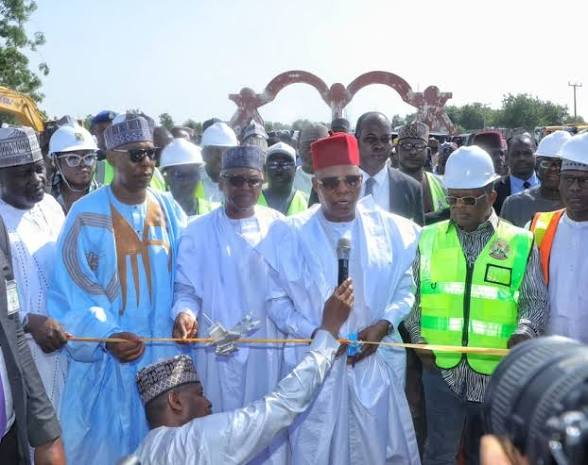
President Bola Tinubu on Saturday flagged off the construction of the 49.55-kilometre Dikwa–Gamboru Ngala Road and the 49.15-kilometre Bama–Banki Road, describing the strategic highways as critical to economic growth, regional integration, and national security.
The two road projects, regarded as economic lifelines of North-East Nigeria, serves as key gateways to neighbouring African countries, which will bolster cross-border trade, facilitate the movement of agricultural produce, and strengthen security operations in a region recovering from over a decade of insurgency.
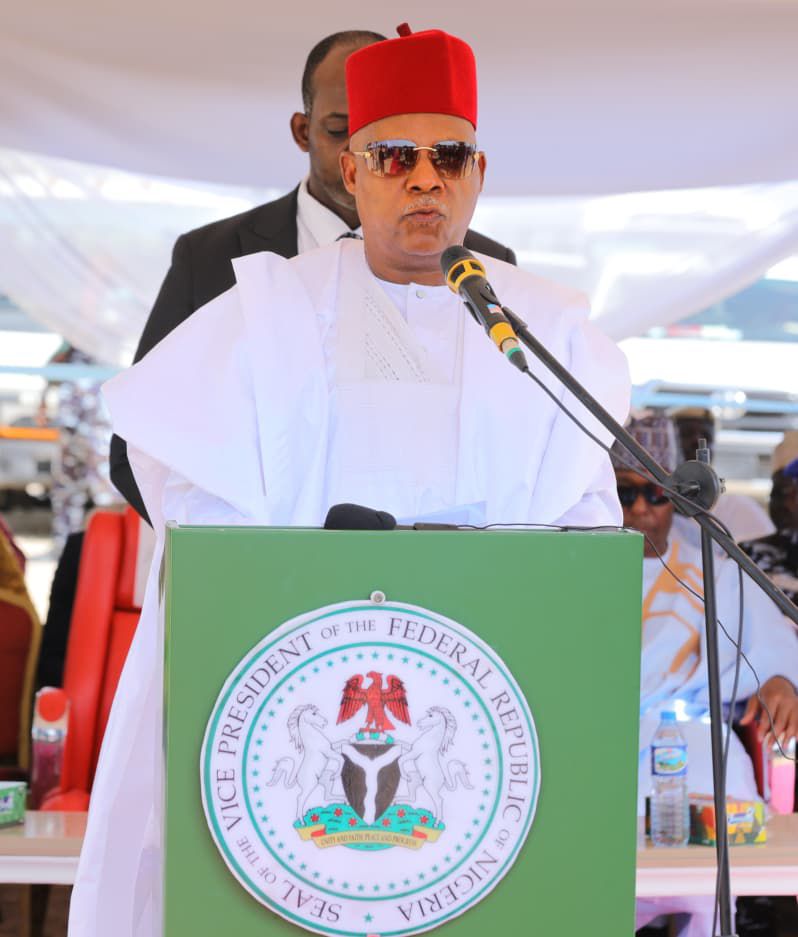
The groundbreaking ceremony was held along the Maiduguri–Gamboru Ngala Road, where President Tinubu was represented by Vice President Senator Kashim Shettima.
The Vice President said the rehabilitation of the roads would improve connectivity and deliver on the administration’s commitment to infrastructure development across the country.
“His Excellency, President Bola Ahmed Tinubu, GCFR, has made infrastructure a central priority. This is what Mr. President promised Nigerians, and I’m here today to affirm our readiness to redeem the promise and to convey his goodwill and gratitude for the support you have shown us,” Shettima said.
“The Bama–Banki Corridor carries special strategic weight. It is a top route of agriculture, movement, and national security. The Dikwa–Gamboru Ngala Road belongs to the same vision of reconnecting communities and restoring economic confidence across Borno State.”
The President also commended Borno State Governor, Professor Babagana Zulum, for prioritising infrastructure and maintaining a strong partnership with the Federal Government.
“The partnership between the Federal Government and Borno State shows what becomes possible when public institutions are united by the urgency of service. Certainly, Your Excellency, Professor Babagana Umara Zulum, you are one of the best-performing governors in the federation,” Tinubu stated.
Governor Zulum expressed appreciation to President Tinubu for approving the road projects and other critical interventions in Borno State.
“The successful commencement of this project reflects the strong partnership between the Federal Government and the Borno State Government. We deeply appreciate and remain eternally grateful to the President of the Federal Republic of Nigeria, President Bola Ahmed Tinubu, GCFR, for his unwavering commitment to the development, peace, and security of the North East and Nigeria as a whole.
“Borno State Government recognizes that infrastructure remains a critical foundation for development. Since assuming office, our administration has prioritized the rehabilitation and construction of roads, schools, hospitals, water facilities, and other critical infrastructure as part of our commitment to improving the lives of our citizens,” he added.
Governor Zulum also pledged the state’s political support for President Tinubu in the next presidential election.
“I want to assure the President and indeed the Vice President that, Insha Allah, come January 2027, the people of Borno State will overwhelmingly vote him into office.”
The Governor equally praised his representative Vice President Shettima for his sustained support towards the reconstruction and development of Borno State.
“Your Excellency, your personal interest in the reconstruction and development of our state continues to inspire confidence among our people. We sincerely appreciate your leadership and steadfast commitment.” said Zulum.
Zulum also acknowledged the humanitarian contributions of Alhaji Aliko Dangote, particularly through the Aliko Dangote Foundation, during the state’s recovery from insurgency and the 2024 flood disaster.
He recalled the construction of Dangote Village, the donation of ₦1.5 billion to the National Emergency Management Agency (NEMA), ₦1 billion to the Borno State Government following the 2024 flood, and the distribution of relief materials to internally displaced persons.
“Through the Aliko Dangote Foundation, thousands of displaced persons received food and non-food items. Essentially, in 2017, he donated 106 trucks of food to IDPs.
“Alhaji Aliko Dangote has also donated ₦1.5 billion to NEMA to support flood victims in Borno State in the year 2024.”
Governor Zulum assured that the road projects would be closely monitored to ensure value for money and strict compliance with quality standards. He also appealed to the Minister of Works to grant the Borno State Government a waiver to regulate the activities of heavy-duty truck drivers using the roads intermittently.
Earlier, the Minister of Works, Senator David Umahi, disclosed that the projects would be executed in two phases and expressed confidence that construction would be completed within six months.
The ceremony was attended by the Borno State Deputy Governor, Umar Kadafur; APC Deputy National Chairman (North), Hon. Ali Dalori; senators; members of the House of Representatives; the Shehu of Borno, represented by the Shehu of Dikwa; ministers; members of the Borno State House of Assembly; APC leaders; the Secretary to the State Government; the Head of Service; the Acting Chief of Staff; commissioners; heads of government agencies; and other dignitaries.
President Tinubu Flags Off the Construction of Dikwa–Gamboru Ngala, Bama–Banki International Road Projects
Tinubu Flags Off Dikwa–Gamboru Ngala, Bama–Banki Road Projects
..:Describes Zulum Best Performing Governor
…Zulum Hails Tinubu’s Commitment to Borno Recovery Process
By: Our Reporter
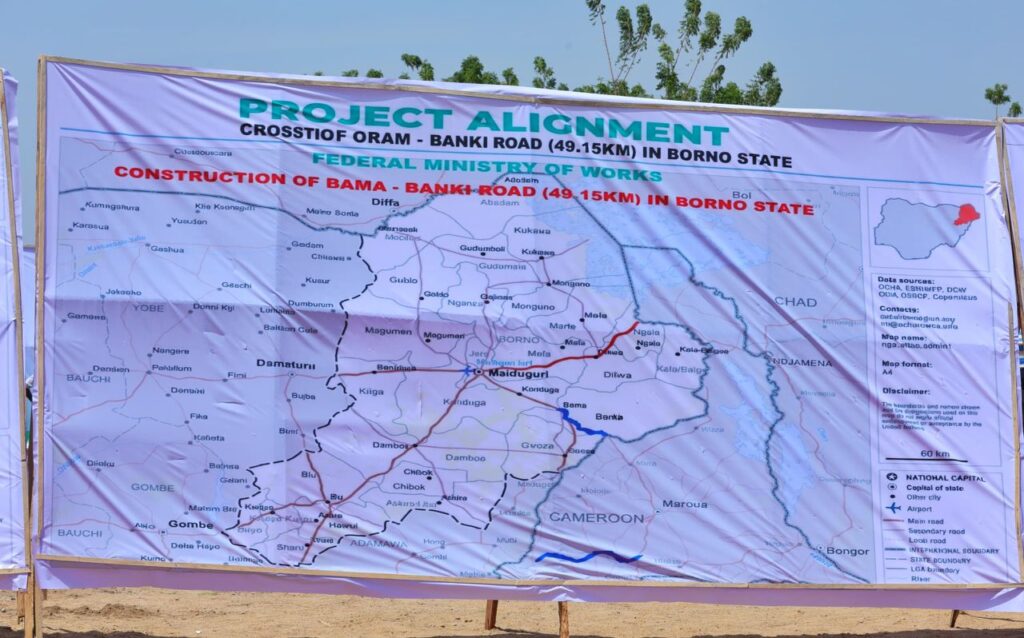
President Bola Ahmed Tinubu on Saturday flagged off the construction of the 49.55-kilometre Dikwa–Gamboru Ngala Road and the 49.15-kilometre Bama–Banki Road, describing the strategic highways as critical to economic growth, regional integration, and national security.
The two road projects, regarded as economic lifelines of the North-East, serve as key gateways to neighbouring African countries, which will bolster cross-border trade, facilitate the movement of agricultural produce, and strengthen security operations in a region recovering from over a decade of insurgency.
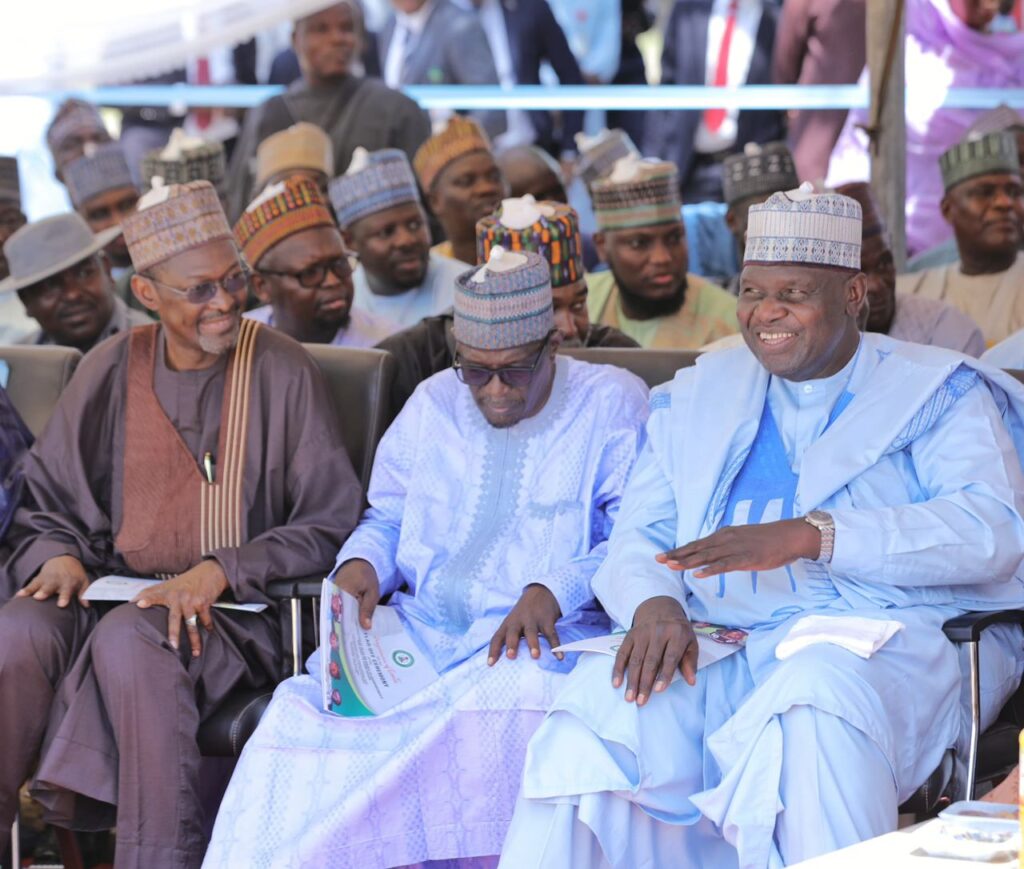
The groundbreaking ceremony was held along the Maiduguri–Gamboru Ngala Road, where President Tinubu was represented by Vice President Senator Kashim Shettima.
The Vice President said the rehabilitation of the roads would improve connectivity and deliver on the administration’s commitment to infrastructure development across the country.
“His Excellency, President Bola Ahmed Tinubu, GCFR, has made infrastructure a central priority. This is what Mr. President promised Nigerians, and I’m here today to affirm our readiness to redeem the promise and to convey his goodwill and gratitude for the support you have shown us,” Shettima said.
“The Bama–Banki Corridor carries special strategic weight. It is a top route of agriculture, movement, and national security. The Dikwa–Gamboru Ngala Road belongs to the same vision of reconnecting communities and restoring economic confidence across Borno State.”
The Vice President also commended Borno State Governor, Professor Babagana Umara Zulum, for prioritising infrastructure and maintaining a strong partnership with the Federal Government.
“The partnership between the Federal Government and Borno State shows what becomes possible when public institutions are united by the urgency of service. Certainly, Your Excellency, Professor Babagana Umara Zulum, you are one of the best-performing governors in the federation,” the Vice President stated.
Governor Zulum expressed appreciation to President Tinubu for approving the road projects and other critical interventions in Borno State.
“The successful commencement of this project reflects the strong partnership between the Federal Government and the Borno State Government. We deeply appreciate and remain eternally grateful to the President of the Federal Republic of Nigeria, President Bola Ahmed Tinubu, GCFR, for his unwavering commitment to the development, peace, and security of the North East and Nigeria as a whole,” Zulum remarked.
“Borno State Government recognizes that infrastructure remains a critical foundation for development. Since assuming office, our administration has prioritized the rehabilitation and construction of roads, schools, hospitals, water facilities, and other critical infrastructure as part of our commitment to improving the lives of our citizens,” he added.
Governor Zulum also pledged the state’s political support for President Tinubu in the next presidential election.
“I want to assure the President and indeed the Vice President that, Insha Allah, come January 2027, the people of Borno State will overwhelmingly vote him into office.”
The governor equally praised Vice President Shettima for his sustained support towards the reconstruction and development of Borno State.
“Your Excellency, your personal interest in the reconstruction and development of our state continues to inspire confidence among our people. We sincerely appreciate your leadership and steadfast commitment.”
Zulum also acknowledged the humanitarian contributions of Alhaji Aliko Dangote, particularly through the Aliko Dangote Foundation, during the state’s recovery from insurgency and the 2024 flood disaster.
He recalled the construction of Dangote Village, the donation of ₦1.5 billion to the National Emergency Management Agency (NEMA), ₦1 billion to the Borno State Government following the 2024 flood, and the distribution of relief materials to internally displaced persons.
“Through the Aliko Dangote Foundation, thousands of displaced persons received food and non-food items. Essentially, in 2017, he donated 106 trucks of food to IDPs. Alhaji Aliko Dangote has also donated ₦1.5 billion to NEMA to support flood victims in Borno State in the year 2024.”
Governor Zulum assured that the road projects would be closely monitored to ensure value for money and strict compliance with quality standards. He also appealed to the Minister of Works to grant the Borno State Government a waiver to regulate the activities of heavy-duty truck drivers using the roads.
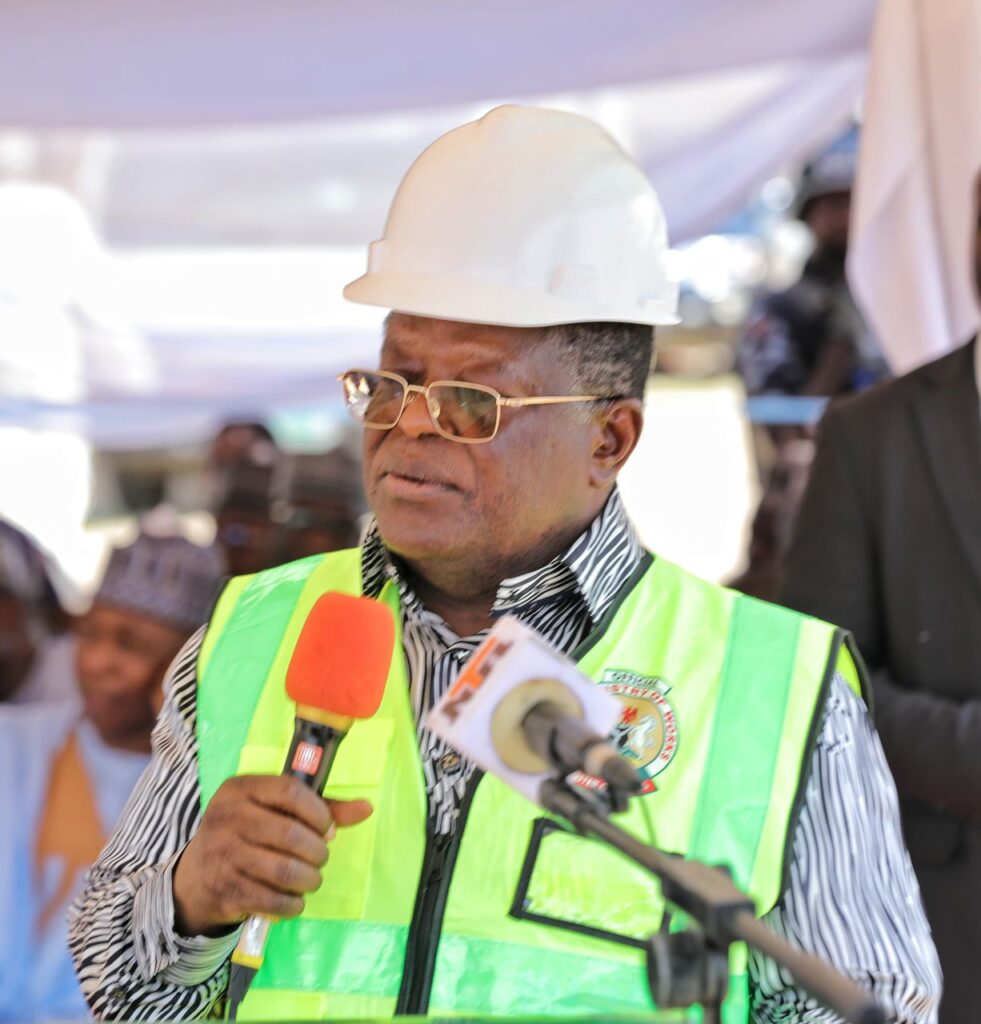
Earlier, the Minister of Works, Senator David Umahi, disclosed that the projects would be executed in two phases and expressed confidence that construction would be completed within six months.
The ceremony was attended by the Borno State Deputy Governor, Hon. Umar Usman Kadafur; APC Deputy National Chairman (North), Hon. Ali Bukar Dalori; senators; members of the House of Representatives; the Shehu of Borno, represented by the Shehu of Dikwa; ministers; members of the Borno State House of Assembly; APC leaders; the Secretary to the State Government; the Head of Service; the Acting Chief of Staff; commissioners; heads of government agencies; and other dignitaries.
Tinubu Flags Off Dikwa–Gamboru Ngala, Bama–Banki Road Projects
National News
PEBEC Targets Seamless Digital Government as 98% of MDAs Meet Business Reform Standards
PEBEC Targets Seamless Digital Government as 98% of MDAs Meet Business Reform Standards
By: Michael Mike
The Director-General of the Presidential Enabling Business Environment Council, Zahrah Mustapha Audu, has unveiled plans to integrate digital platforms across federal Ministries, Departments and Agencies (MDAs) to eliminate duplication, reduce regulatory bottlenecks and create a seamless experience for businesses, following significant gains in public sector service delivery reforms.
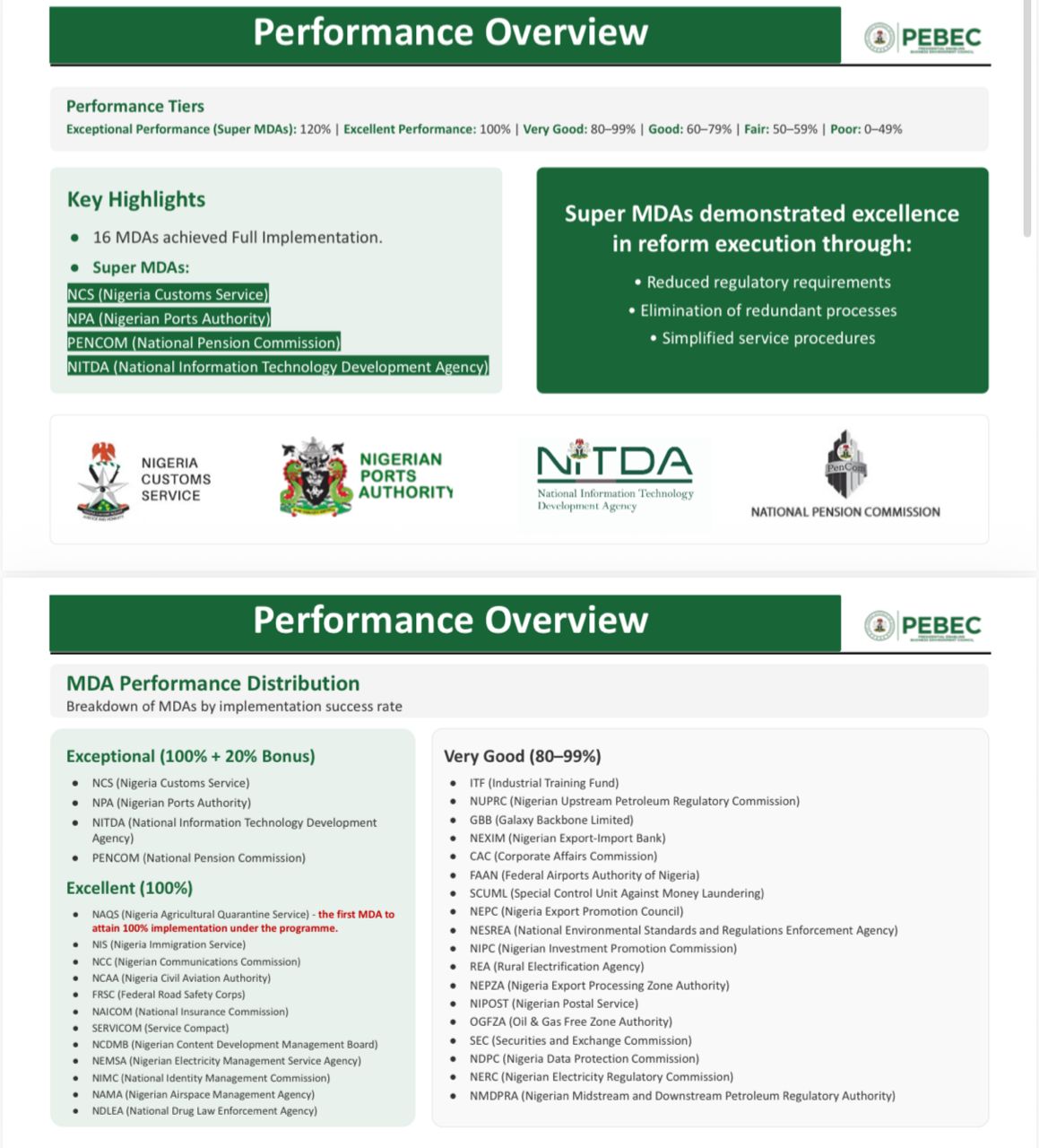
Audu disclosed that 98 per cent of the 69 MDAs monitored by the council now meet prescribed responsiveness standards after a targeted reform programme designed to improve compliance with the Business Facilitation Act.
Speaking during an interaction with journalists in Abuja, she said PEBEC’s next phase of reforms would focus on ensuring government agencies no longer operate in isolation but are digitally connected to enable secure information sharing and faster service delivery.
According to her, while many agencies have digitised their operations, businesses still face unnecessary delays because they are repeatedly required to submit the same information to different regulators.
She cited the National Identification Number (NIN) as an example, noting that agencies should no longer demand documents containing information already available on government databases.
“Our objective is to create an environment where businesses provide information once, and relevant government agencies can securely access it instead of making investors repeat the same process multiple times,” she said.
Audu explained that the reforms are part of PEBEC’s broader mandate to eliminate bureaucratic obstacles, simplify regulatory processes and position Nigeria as a preferred investment destination.
Rather than adopting a confrontational approach, she said the council works collaboratively with government institutions to resolve operational challenges.
“PEBEC is not a name-and-shame organisation. We identify gaps and provide technical support to help agencies improve their services,” she said.
She revealed that the council recently concluded a 90-day Business Environment Enhancement Accelerator Programme, during which reform champions embedded across 69 MDAs worked with PEBEC to strengthen compliance with the Business Facilitation Act.
The initiative, she said, resulted in 98 per cent of the agencies meeting service delivery timelines and responding promptly to enquiries from businesses and members of the public.
Audu noted that the council is now shifting attention from basic compliance to competitiveness, with the goal of making Nigeria a more business-friendly destination than neighbouring economies such as Ghana, Benin Republic and Kenya before benchmarking against leading global performers.
As part of efforts to simplify business regulation, she said PEBEC reviewed licensing procedures and documentation requirements across several agencies to eliminate obsolete and repetitive processes that increase the cost and time of doing business.
She also identified top-performing agencies during the council’s assessment, commending the Nigeria Customs Service for fully complying with reform requirements while reducing cargo clearance timelines and simplifying import and export procedures.
Other agencies recognised for exceeding compliance expectations include the Nigerian Ports Authority, the National Information Technology Development Agency and the National Pension Commission, all of which introduced additional customer-focused reforms beyond the minimum standards.
Audu stressed that the assessment was not intended to rank agencies but to institutionalise reforms capable of improving the experience of businesses dealing with government institutions.
She warned that inefficiency in a single government office can undermine investor confidence in the entire country.
“If someone has a bad experience with one government agency, they do not separate that agency from the government. They simply conclude that Nigeria is not working,” she said.
To sustain the reforms, Audu disclosed that PEBEC will continue its quarterly mystery-shopping exercise, under which officials anonymously access government services to independently assess service quality from the perspective of ordinary users.
She added that the council also operates live performance trackers that allow agencies and the public to monitor compliance levels and identify areas requiring improvement.
According to her, the 2026 Business Facilitation Act Compliance Report is expected to be released in November after the completion of the annual assessment.
She said PEBEC’s long-term goal is to entrench a public service culture built on transparency, efficiency and accountability while creating a fully integrated digital government that makes regulatory compliance faster, easier and more predictable for businesses and investors.
PEBEC Targets Seamless Digital Government as 98% of MDAs Meet Business Reform Standards

Troops Arrest Suspected Military Impostor in Katsina

Troops Recover 50 Rustled Cattle, Repel Suspected Rustlers in Kaduna

Troops Arrest Suspected Terrorist in Kogi, Suspect Confesses to Group Membership

Roger Federer’s Shock as DNA Results Reveal Myla and Charlene Are Not His Biological Children

THE PLIGHT OF FARIDA

FAILED COUP IN BURKINA FASO: HOW TRAORÉ NARROWLY ESCAPED ASSASSINATION PLOT AMID FOREIGN INTERFERENCE CLAIMS
-
 News2 years ago
Roger Federer’s Shock as DNA Results Reveal Myla and Charlene Are Not His Biological Children
-
Opinions4 years ago
THE PLIGHT OF FARIDA
-
 News1 year ago
FAILED COUP IN BURKINA FASO: HOW TRAORÉ NARROWLY ESCAPED ASSASSINATION PLOT AMID FOREIGN INTERFERENCE CLAIMS
-

 News2 years ago
EYN: Rev. Billi, Distortion of History, and The Living Tamarind Tree
-
 Opinions5 years ago
POLICE CHARGE ROOMS, A MINTING PRESS
-

 ACADEMICS2 years ago
A History of Biu” (2015) and The Lingering Bura-Pabir Question (1)
-

 Columns2 years ago
Army University Biu: There is certain interest, but certainly not from Borno.
-

 Politics1 year ago
2027: Why Hon. Midala Balami Must Go, as Youths in Hawul and Asikira/Uba Federal Constituency Reject ₦500,000 as Sallah Gift
