
News
Adamawa Govt Approves The Reconstruction of Yola – Borong Road Project

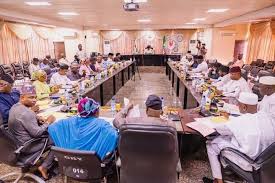
Adamawa Govt Approves The Reconstruction of Yola – Borong Road Project
By: Our Reporter
The Adamawa State Executive Council at its Wednesday November 29th,2023 meeting approved the reconstruction of 44km road from National Youth Service Corps (NYSC) Orientation Camp in Damare to Borong, the Headquarters of Borrong Development Area in Demsa Government at cost of over N836m.
The State Commissioner of Education, Dr Umar Garba Pella who briefed Newsmen on the outcome of the Meeting also disclosed that the project was awarded to Hydro Source and Resource Nigeria Limited and has the completion of period of 12 Months.
Yola -Borrong road has suffered neglect over the years until recently when it was considered for rehabilitation under the RAMP State and World Bank collaborative efforts which gave the road a facelift until this Administration’s gracious consideration for it’s reconstruction.
Before this intervention, most of the culverts and drainages have collapsed due to excessive floods.
In the same vein,the council has approved over N117m variation for the construction of modern laboratory at Specialist Hospital, Yola.
Pella explained that the project was initially awarded at over N578m adding that the variation was to cover the cost of increased price of building materials.
Meanwhile, some ongoing projects especially rural electrification projects had earlier received December 2023 datelines as Governor Fintiri had assured the benefiting communities of celebrating next Christmas festival with lights in their localities.
Adamawa Govt Approves The Reconstruction of Yola – Borong Road Project


Nigeria Must Convert Climate Crisis Into Green Jobs, Investment
…Stakeholders seek private capital, local technology, resilient infrastructure
By: Michael Mike
Nigeria must move beyond treating climate change as an environmental challenge and begin converting its climate financing needs into green jobs, investment opportunities and sustainable economic growth, stakeholders at the Climate Change and Circular Economy Africa 2026 conference have said.
The call was made on Thursday at the National Engineering Centre, Abuja, where participants urged the Federal Government to strengthen policies, attract private capital and develop locally driven solutions to the country’s growing climate and waste-management challenges.

The conference, themed, “Pioneering Natural Solutions for a Sustainable Future,” brought together policymakers and stakeholders who said Nigeria could not afford to remain on the margins of the global transition to a low-carbon and circular economy.
Chief Host of the event, Senator Ireti Kingibe, represented by her Executive Secretary, Becky Ephraim, said applying circular economy principles to agriculture, manufacturing, construction and urban planning could unlock an estimated $15 billion market opportunity and create hundreds of thousands of sustainable jobs.
“We cannot afford to sit at the periphery of the global green transition,” Kingibe said.

She said the National Assembly was advocating policies to promote extended producer responsibility, tax incentives for green technology enterprises, integrated waste management and gender-responsive climate financing.
Kingibe’s position reflects growing pressure on Nigeria to translate its climate commitments into practical economic opportunities, particularly as the country faces rising waste generation, environmental degradation, energy challenges and the need for more resilient infrastructure.
Minister of Environment, Balarabe Lawal, represented by Ohis Ambiose, said climate change had moved beyond an environmental concern to become a political, economic and social issue.
“Climate change has long gone beyond being perceived as merely an environment issue, but has been scientifically proven and understood as a political, economic and social issue,” he said.
Lawal said the circular economy offered a framework for addressing climate change while promoting economic growth, job creation and environmental sustainability.
He called for greater investment in renewable energy, sustainable agriculture, recycling, green buildings, sustainable transportation and climate-resilient water management.
The Convener of the conference, Zigwai Fanda, said Nigeria must begin to treat waste as an economic resource capable of supporting new industries, businesses and jobs.
“The circular economy is not simply about recycling. It is about redesigning the way our economy works,” Fanda said.
He said Nigeria’s estimated $237 billion climate financing requirement between 2026 and 2030 should not be viewed only as a funding challenge, but also as an opportunity for innovation, investment, entrepreneurship and economic transformation.
Fanda urged young Nigerians to develop local green technologies and businesses rather than depend solely on imported solutions, stressing that domestic innovation would be critical to building an affordable and sustainable transition.
On the built environment, Deputy Director, Grace Bitrus, representing the Minister of Housing and Urban Development, said the ministry was reviewing the National Building Code to strengthen standards, improve energy and resource efficiency and make buildings more resilient to emerging climate risks.
“This review provides an opportunity to strengthen our building standards, to respond to emerging climate risks, improve energy and resource efficiency, enhance building performance and support safer, healthier and more resilient communities,” she said.
Bitrus said Nigeria could not address its housing deficit by simply constructing more buildings, insisting that new housing must be safer, energy-efficient and climate-resilient.
“We cannot meet Nigeria’s housing needs simply by constructing more buildings. We must construct better, safer, energy-efficient, climate-resilient buildings,” she said.
She added that the ministry was promoting local building materials and manufacturing hubs across the six geopolitical zones to boost domestic production, create jobs and develop resilient local value chains.
“Construction and demolition materials should increasingly be viewed as resources that can be recovered, reused and recycled,” Bitrus said.
The Director-General and Chief Executive Officer of the National Council on Climate Change, Omotenioye Majekodunmi, represented by Chinwe Oluwatoyin-Adindu, said Nigeria must move from developing climate policies to implementing them through investments, infrastructure, jobs and measurable outcomes.
“The task now is not to produce more strategies. It is to make these instruments function as one implementation architecture rather than a set of parallel documents,” she said.
Majekodunmi called for stronger financial structures capable of attracting private capital into climate projects, identifying bankable projects, affordable financing, reliable data and effective risk-sharing mechanisms as essential to unlocking investment.
She also urged African countries to develop climate solutions that reflect their own economic realities.
“Africa will not succeed importing transition models built for different economies. We need African-led pathways, affordable capital, stronger domestic institutions and investable pipelines,” she said.
Nigeria Must Convert Climate Crisis Into Green Jobs, Investment
Zulum in Canada to Seek Technology, Education, Investment Partnerships
By: Michael Mike
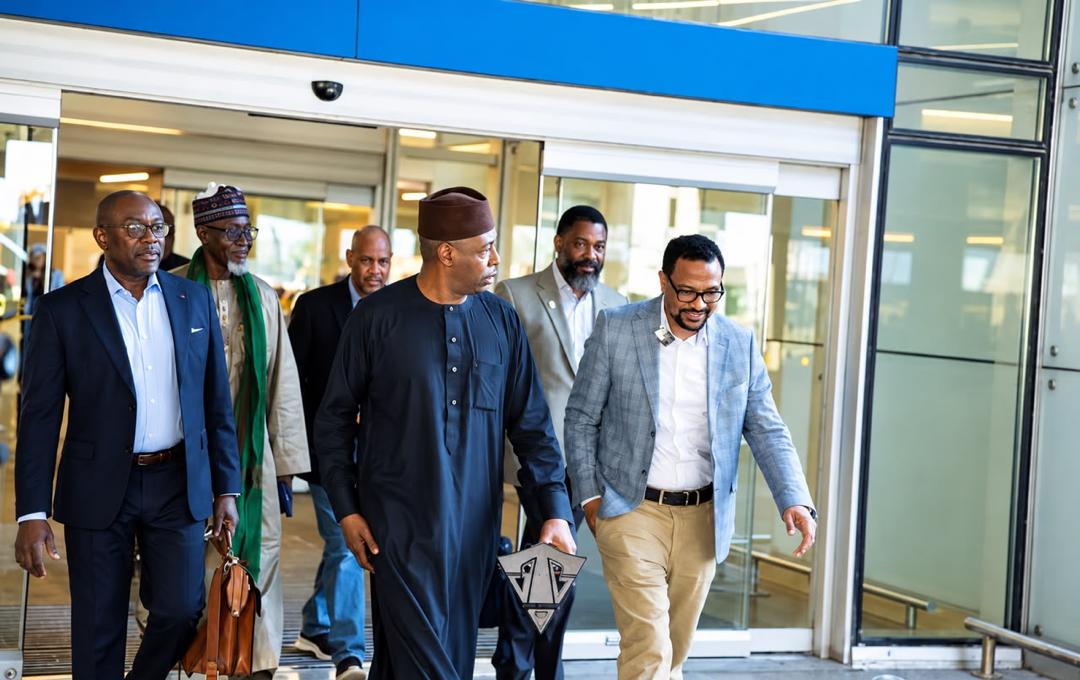
Borno State Governor, Babagana Zulum, has arrived in Canada to pursue strategic partnerships with Canadian institutions and industries in technology, education, agriculture, skills development and investment, as the state intensifies efforts to rebuild its economy and expand opportunities for its people.
The visit, according to a statement by the governor’s media team , is aimed at securing technical support, facilitating knowledge transfer and attracting foreign direct investment to Borno, with engagements scheduled with Canadian universities, technology hubs and agricultural research institutions.
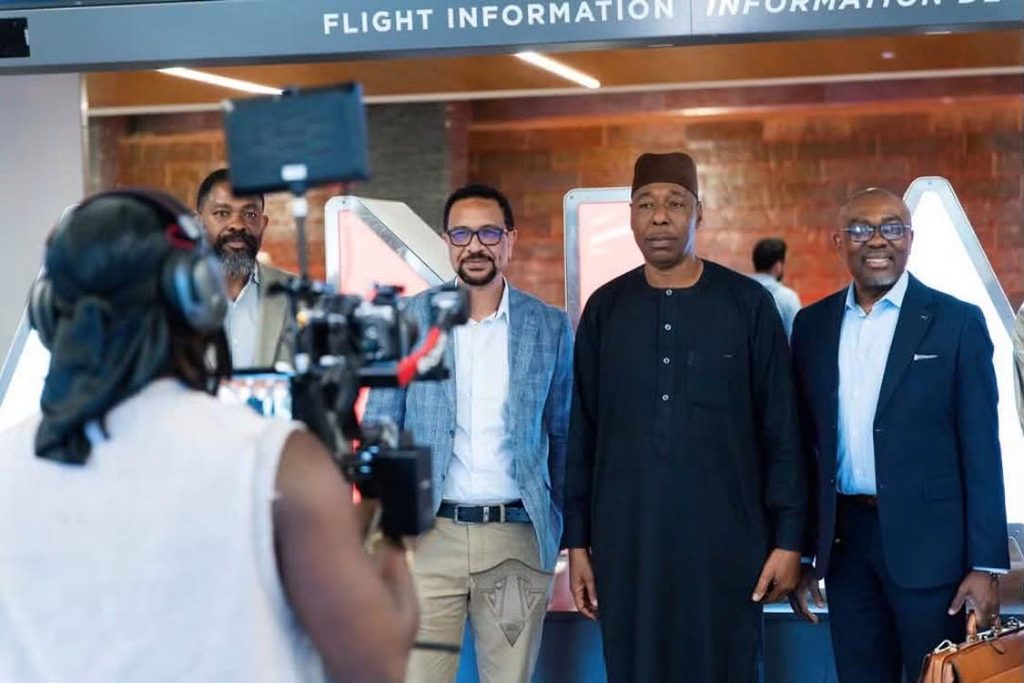
Zulum is expected to use the visit to explore scholarship opportunities for Borno students and develop vocational training programmes designed to equip young people with skills aligned with modern labour market demands.
The governor will also seek partnerships with Canadian technology firms to promote digital literacy and establish innovation hubs in Maiduguri, a move expected to strengthen the state’s technology ecosystem and create new pathways for youth employment and entrepreneurship.
In the agricultural sector, the discussions will focus on leveraging Canadian expertise to improve food security, modernise livestock production and strengthen agricultural value chains.
The engagements are also expected to examine opportunities for technical cooperation in agriculture and livestock, particularly in areas where improved production methods, research and investment could support Borno’s economic recovery.
Before concluding the visit, Zulum is scheduled to present Borno’s emerging investment opportunities to Canadian investors, highlighting the state’s development priorities, economic revival efforts and prospects for sustainable investment.

The Canadian mission comes as Borno continues to pursue economic diversification and human capital development following years of disruption caused by insurgency. Beyond reconstruction, the state government has increasingly placed emphasis on education, vocational training, agriculture and private-sector investment as instruments for creating sustainable livelihoods and reducing dependence on public spending.
The proposed partnerships are therefore expected to complement the state’s efforts to rebuild institutions, strengthen productive sectors and prepare its young population for emerging opportunities in the global economy.
Zulum in Canada to Seek Technology, Education, Investment Partnerships
Disability Barriers Persist in Public Hospitals, Stakeholders Warn
…Project Kampe Bodi demands help desks, accessible telemedicine, stronger patients’ rights enforcement
By: Michael Mike
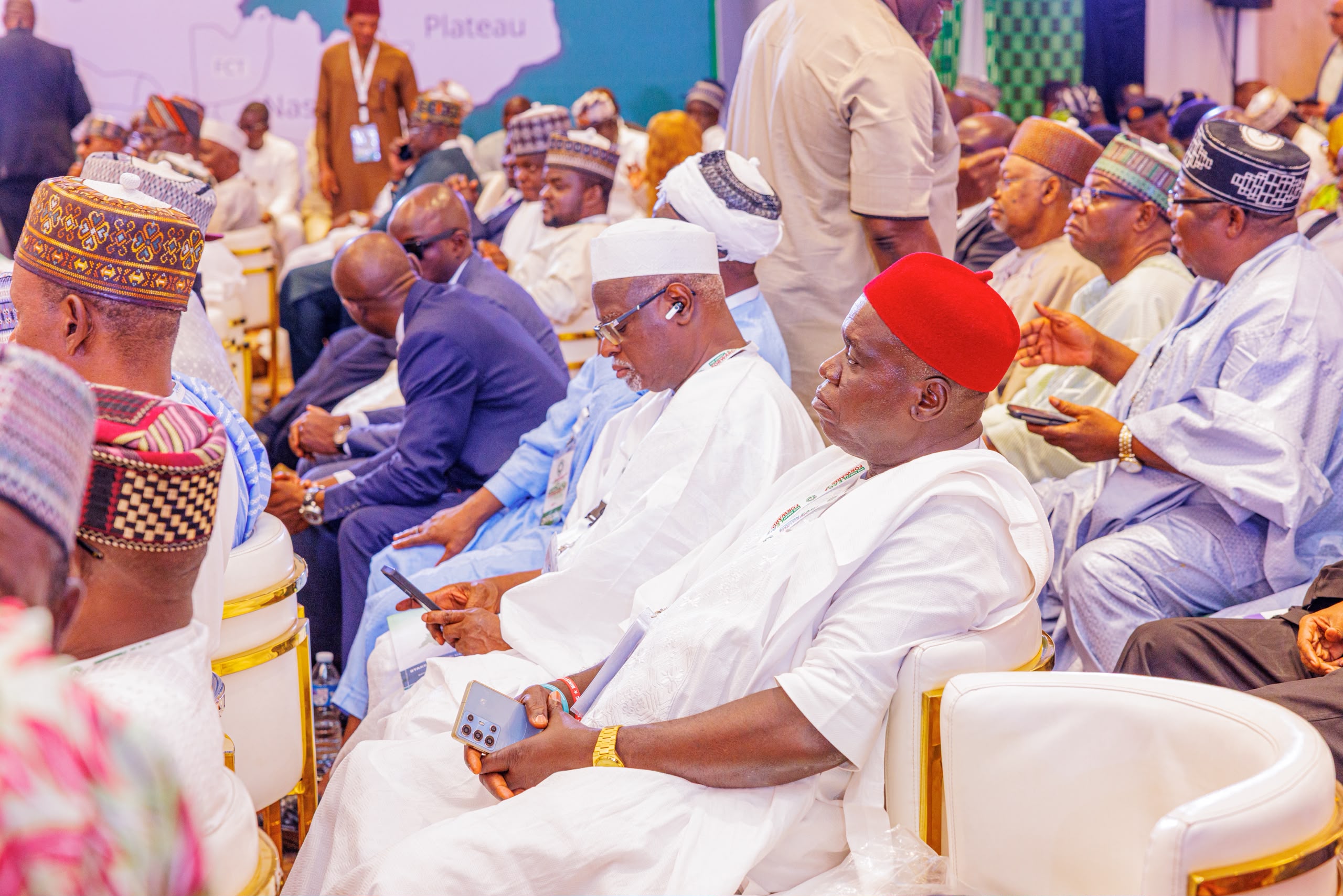
Persons with disabilities and other vulnerable Nigerians continue to face discrimination, poor communication and difficulties accessing services in government hospitals, stakeholders have warned, calling for urgent reforms to make public healthcare more inclusive.
The stakeholders, who spoke at the first roundtable meeting of Project Kampe Bodi in Abuja, demanded the establishment of disability help desks equipped with assistive technology, accessible telemedicine services and stronger enforcement of the Patients’ Bill of Rights.
They said the barriers confronting vulnerable patients were not merely issues of convenience but impediments to their ability to obtain timely, dignified and quality healthcare.
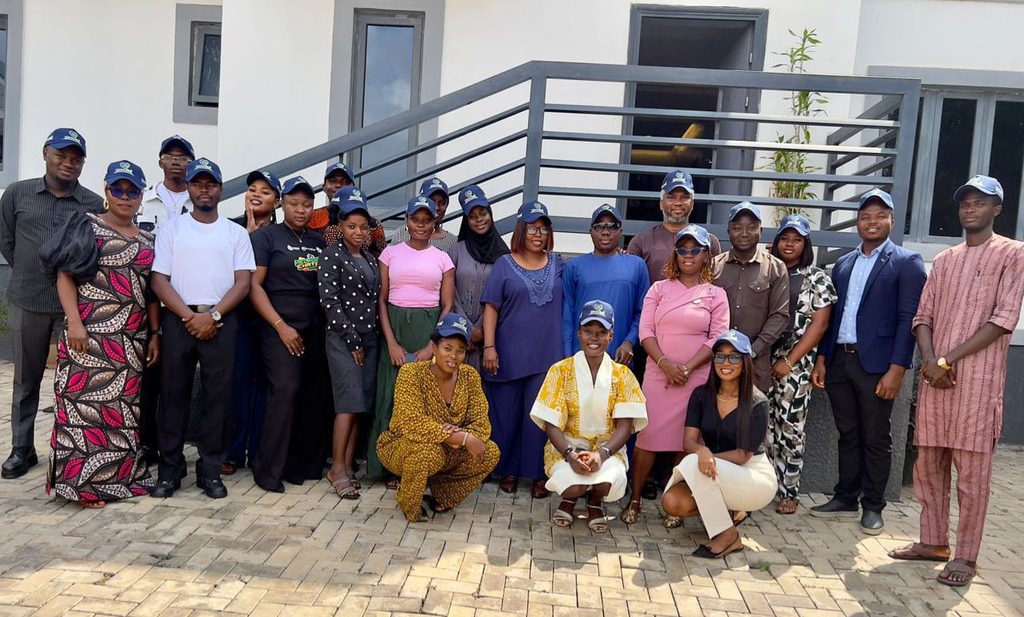
The meeting, organised by Project Kampe Bodi in partnership with the Centre for Fiscal Transparency and Public Integrity (CEFTPI), brought together more than 30 participants, including healthcare workers, persons with disabilities, patient advocacy groups and community representatives.
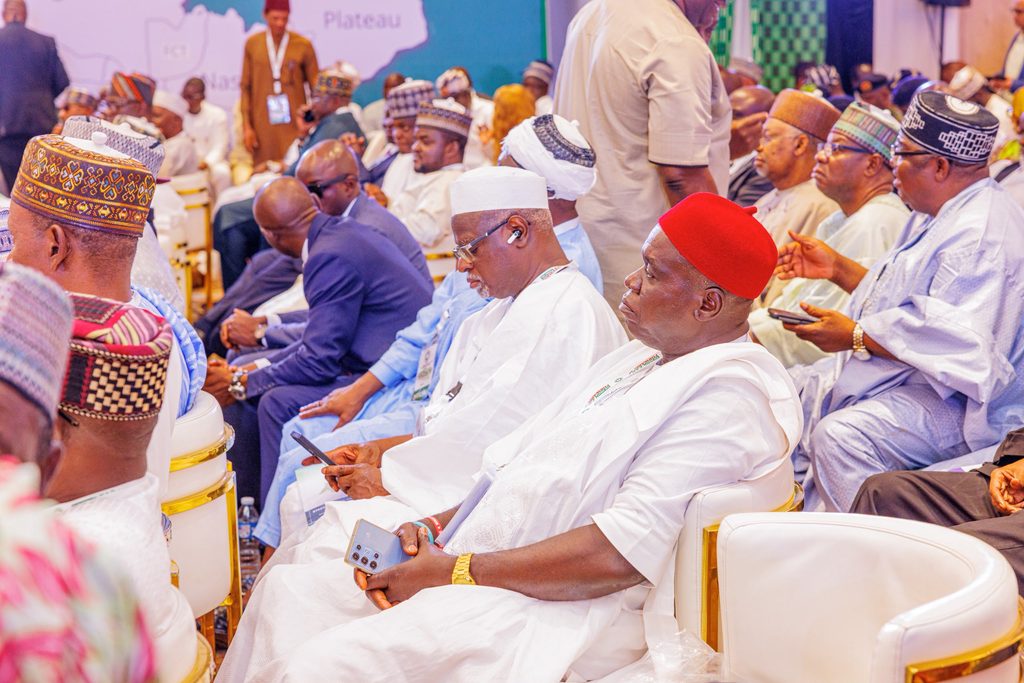
The participants examined gaps in service delivery and the measures required to ensure that healthcare reforms respond to the realities of patients who are often excluded from decisions affecting their access to care.
Founder and Board Member of FACICP Disability Plus, Mrs Ekaete Umoh, said disability inclusion would remain ineffective unless hospitals translated policies into practical services.
“We must move from policy to practice by making hospitals truly accessible for persons with disabilities,” Umoh said.
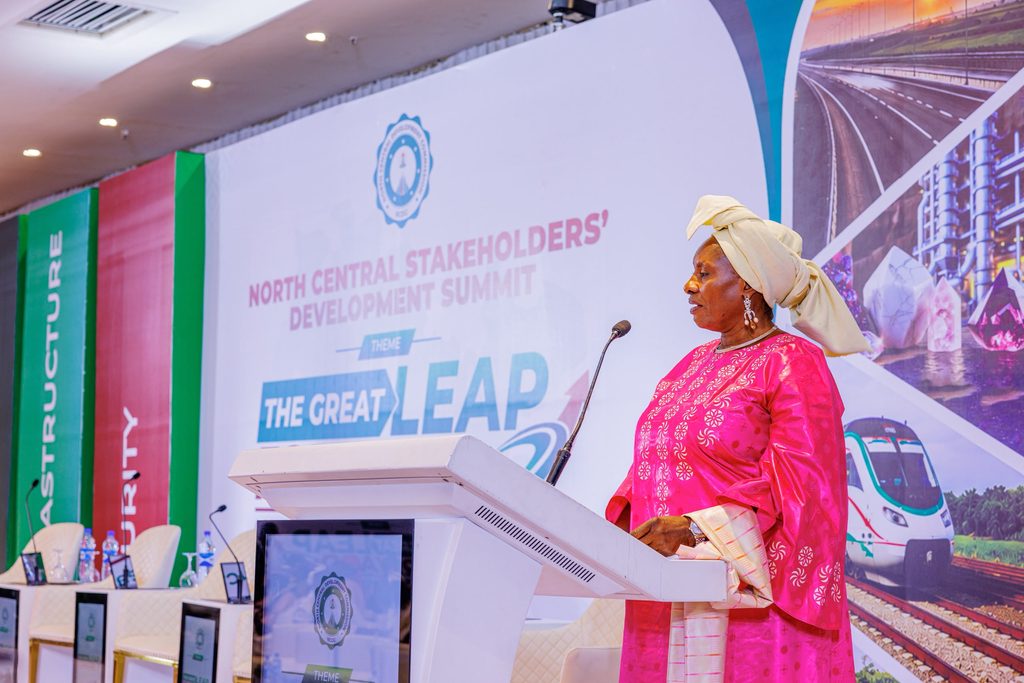
Her call underscored the need for public hospitals to move beyond formal commitments to inclusion by providing appropriate facilities, assistive equipment and support systems that enable persons with disabilities to navigate healthcare services independently and with dignity.
Project Kampe Bodi Coordinator, Princess Chifiero, said the concerns of vulnerable groups must be incorporated into healthcare reform decisions rather than treated as an afterthought.
“This roundtable ensures that the voices of vulnerable groups are not only heard but acted upon in shaping healthcare reforms,” Chifiero said.
The stakeholders recommended the creation of dedicated disability help desks in government hospitals to provide guidance, facilitate communication and connect patients with appropriate services. They also called for assistive technology to support patients with different disabilities.
Accessible telemedicine was identified as another avenue for reducing barriers to healthcare, particularly for patients who face difficulties travelling to or navigating public hospitals.
Participants further advocated regular training for healthcare workers on inclusive care, saying improved communication and a better understanding of disability-related needs were essential to preventing discrimination and ensuring equitable treatment.
They also recommended the mobilisation of youth health champions to promote awareness, accountability and patient-centred healthcare within communities.
The meeting placed renewed emphasis on the need for stronger enforcement of the Patients’ Bill of Rights, which provides a framework for protecting patients’ dignity, privacy, access to information and quality healthcare.
Project Kampe Bodi, a student-led initiative of the School of Politics, Policy and Governance (SPPG), said it would continue to promote accountability and quality healthcare services, while encouraging stakeholders to translate the roundtable’s recommendations into practical action.
Disability Barriers Persist in Public Hospitals, Stakeholders Warn

Nigeria Must Convert Climate Crisis Into Green Jobs, Investment

Akande Presents Credentials to Swedish King, Sets Stage for Stronger Nigeria-Sweden Ties

Zulum in Canada to Seek Technology, Education, Investment Partnerships

Roger Federer’s Shock as DNA Results Reveal Myla and Charlene Are Not His Biological Children

THE PLIGHT OF FARIDA

FAILED COUP IN BURKINA FASO: HOW TRAORÉ NARROWLY ESCAPED ASSASSINATION PLOT AMID FOREIGN INTERFERENCE CLAIMS
-
 News3 years ago
Roger Federer’s Shock as DNA Results Reveal Myla and Charlene Are Not His Biological Children
-
Opinions5 years ago
THE PLIGHT OF FARIDA
-
 News1 year ago
FAILED COUP IN BURKINA FASO: HOW TRAORÉ NARROWLY ESCAPED ASSASSINATION PLOT AMID FOREIGN INTERFERENCE CLAIMS
-

 News2 years ago
EYN: Rev. Billi, Distortion of History, and The Living Tamarind Tree
-
 Opinions5 years ago
POLICE CHARGE ROOMS, A MINTING PRESS
-

 ACADEMICS3 years ago
A History of Biu” (2015) and The Lingering Bura-Pabir Question (1)
-

 Columns3 years ago
Army University Biu: There is certain interest, but certainly not from Borno.
-

 Politics1 year ago
2027: Why Hon. Midala Balami Must Go, as Youths in Hawul and Asikira/Uba Federal Constituency Reject ₦500,000 as Sallah Gift
