
Politics
ADC; Coalition Is Not Enough

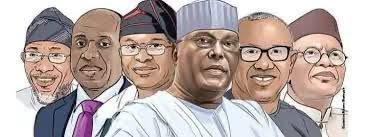
ADC; Coalition Is Not Enough
By Kunle Awosiyan
Sincerely, if you observe the politics of Bola Ahmed Tinubu keenly and critically, you will realise that he is a very thorough politician.
He goes beyond merely spreading his tentacles to bring people into his fold; he deploys every available tool to outmanoeuvre his opponents.
He looks beyond coalition-building, studying his adversaries like a football coach analysing opponents, identifying loopholes and exploiting them to secure victory.
Though trained as an accountant, Tinubu has immersed himself in research, journalism, and law, transforming these disciplines into strategic assets in his political playbook.
This is where many of his opponents have faltered. Rather than studying him, they have focused more on blackmail and rhetoric.
Instead of carefully navigating the legal and institutional frameworks of politics, they appear fixated on hastily dislodging him by jumping into any available political platform without adequately addressing procedural and legal vulnerabilities.
They needed a platform, no doubt, but have shown insufficient patience and diligence to close loopholes that could ultimately undermine their efforts.
Those in the opposition today, particularly within the African Democratic Congress (ADC), appear unprepared for the level of work required to clinch power.
If Tinubu were a football coach, he would lose very few matches and only by slim margins. He would win many more, including major trophies. Any coach hoping to defeat such a team must not only be intelligent but exceptionally thorough.
It is time the opposition understands that democracy, in its modern form, goes beyond the classical definition of government of the people, by the people, and for the people. It now encompasses the strategic deployment of law, not just the accumulation of votes, as a pathway to power.
Interestingly, the purported chairman of the ADC and former Senate President, David Mark, recently criticised the Independent National Electoral Commission, INEC, over its interpretation of the legal principle of status quo ante bellum.
This followed the derecognition of his leadership by the commission.
While the legal jargon may be complex, the implication is clear: those within the ADC understand the power of law in a democracy, yet have failed to deploy it effectively, choosing instead to blame Tinubu for their own strategic missteps.
The ruling party, All Progressives Congress, had swiftly replied ADC that neither the president nor the party is involved in its woe.
Ironically, two prominent figures within the ADC leadership ranks, Peter Obi and Rauf Aregbesola once benefited from judicial victories at different points in their political careers, underscoring the very importance of legal strategy in electoral contests.
Politicians seeking to challenge Tinubu, including Atiku Abubakar, David Mark, Nasir El-Rufai, Aregbesola, and Obi still have significant work to do if they are to mount a serious challenge. It is unfortunate that many appear to interpret democracy primarily through the lens of coalition-building, without deeper strategic grounding.
If Obi does not fully grasp this, one would expect Aregbesola given his political history with Tinubu to understand it better. Over the years, Tinubu has built structured teams: legal, economic, security, and political dedicated to analysing and countering opposition forces.
Among those in the ADC, Aregbesola may be the closest in experience to Tinubu’s model, but he cannot do it alone. One individual cannot match a coordinated network of experts working with a singular objective.
Let it be clear: INEC is not the enemy. However, it is bound by the rule of law and cannot act in defiance of court decisions.
Ultimately, for politicians who believe they can simply assemble themselves and appeal to public emotion through criticism of the ruling party, the reality is stark: modern democracy demands far more. It requires depth, structure, strategy, and above all, smartness.
ADC; Coalition Is Not Enough



2027: Nwankwo Warns INEC Against Unclear AI Use, Urges Credible Elections
PLAC director says electoral body must win public trust, calls on parties to focus on issues as JFCN warns Nigerians against taking democracy for granted
By: Michael Mike
The Independent National Electoral Commission (INEC) must not introduce artificial intelligence into Nigeria’s electoral process without clear, transparent and verifiable procedures, the Executive Director of the Policy and Legal Advocacy Centre (PLAC), Dr Clement Nwankwo, has warned.
Nwankwo said any deployment of technology in elections must strengthen transparency and protect the will of voters, cautioning that an unfamiliar or poorly explained system could undermine public confidence in the electoral process ahead of the 2027 general elections.
He also urged Nigerians dissatisfied with governance or the conduct of elections to participate actively in the democratic process rather than withdraw from voting, insisting that credible elections required responsibility from the electoral umpire, political parties and citizens.
Nwankwo spoke in Abuja on Tuesday at the eighth annual public lecture of the Just Friends Club of Nigeria (JFCN), themed “From Concern to Action: Making Our Votes Count in the 2027 General Elections.”
The event examined the challenges confronting Nigeria’s democracy, including economic hardship, insecurity, declining civic participation and the need to strengthen public confidence in elections.
Addressing questions on the proposed use of artificial intelligence in elections, Nwankwo said the legal framework and operational details must be clear to voters and other stakeholders before any new technology was introduced.
He maintained that the electoral process must remain anchored in procedures prescribed by law, warning against technological innovations that citizens and political parties could neither understand nor independently verify.
“INEC needs to be careful that its so-called use of AI in elections does not result in use of technology to circumvent the vote of the people,” he said.
Nwankwo argued that the electoral commission needed to explain precisely what it meant by using artificial intelligence and how the technology would interact with existing procedures for voting, counting and collating results.
He said technology could be useful to political parties in independently checking results announced by INEC, but warned that the commission should not introduce systems that lacked public understanding and verifiability.
“For the collation of results, for the parties, yes, the use of AI in collated results, so they can cross-check what INEC is doing, is going to be so very important,” he said.
“But INEC should not introduce a system that people do not understand. People cannot verify for use in elections in this country,” he added.
His comments come amid wider concerns about how electoral technology is deployed, explained and scrutinised, with stakeholders seeking assurances that innovations will improve the credibility of elections rather than create additional uncertainty.
Nwankwo stressed that public trust must be earned at every stage of the electoral process, particularly by the body responsible for managing elections.
“Citizens have to trust the electoral process, trust the election management body, and the election management body has to, at every stage, convince Nigerians that it is doing the right job,” he said.
He urged political parties to demonstrate what they could offer Nigerians through issue-based campaigns rather than allowing electoral contests to be dominated by recriminations and accusations.
He also called for increased voter participation, arguing that citizens who were angry with the electoral process or dissatisfied with governance should use their votes to express their concerns.
For INEC, he said, the responsibility was to demonstrate that it was conducting credible elections, warning that Nigerians would not accept a poorly managed process.
The chairman of the event, Hussaini Abdu, Country Director of CARE Nigeria, also underscored the importance of protecting democracy and ensuring that citizens understood their responsibility in sustaining democratic governance.
Abdu said the annual lecture series was established to address topical issues affecting Nigerians and contribute to national development. He noted that the club’s decision to focus this year’s edition on the 2027 elections reflected the importance of citizen participation at a critical moment for the country.
He cautioned that Nigerians, particularly younger people who did not experience military rule, risked taking democracy for granted without appreciating the struggles that secured the country’s return to civil rule.
Democracy, he argued, was a precious legacy that must be preserved and passed on to future generations. Losing it could expose younger Nigerians to the same struggles endured by those who fought for democratic governance.
Abdu said the club had therefore brought experts and political stakeholders together to discuss practical ways of improving the democratic process.
He also stressed that institutions involved in elections, including INEC and security agencies, must not only be transparent but must be seen by the public to be transparent and independent.
According to him, citizens’ confidence in the electoral process depends significantly on whether the institutions responsible for managing and protecting elections are perceived as impartial and accountable.
The President of JFCN, Amaechi C. Aloke, said the lecture’s theme was deliberately selected to challenge Nigerians to turn their concerns about governance into meaningful participation.
Aloke observed that Nigerians regularly complain about insecurity, unemployment, corruption, infrastructure deficits, the cost of living and the quality of public services, but insisted that expressing dissatisfaction alone would not transform the country.
“What do we do with that concern? Concern, by itself, does not change a country. It must become knowledge. Knowledge must become participation. Participation must become responsible citizenship. And responsible citizenship must extend beyond Election Day,” he said.
The discussion also highlighted concerns about the apparent weakening of the middle class and its declining willingness to organise around shared interests.
Speakers argued that many relatively affluent Nigerians increasingly rely on private alternatives to compensate for failing public services, including generators and solar systems for electricity, private schools and hospitals, and medical treatment abroad.
Although such measures may provide individual relief, the speakers warned that they could also reduce collective pressure on government to improve public services.
They cited an example from an affluent Abuja neighbourhood where residents reportedly complained through a WhatsApp group about levies imposed by local authorities but failed to translate their grievances into coordinated action.
The discussion questioned whether such private coping mechanisms and fragmented responses to shared problems were weakening the ability of citizens to demand accountability from public institutions.
The speakers also raised concerns about voter apathy, particularly among eligible voters in affluent communities who reportedly stayed away from polling units instead of participating in elections.
They urged Nigerians to move beyond private complaints and social media exchanges by voting, monitoring electoral processes, protecting their ballots and documenting results at polling units.
The JFCN, established in 2013, began its annual public lecture series in 2014. Its previous speakers have addressed subjects ranging from economic reform and public debt to national security, electoral politics and the cost of governance.
At the seventh edition in 2025, retired Lieutenant-General Abdulrahman Dambazau delivered a lecture on Nigeria’s security challenges and national cohesion, emphasising a people-centred approach to security and investment in human development.
Beyond the lecture series, Aloke said the club also undertook philanthropic activities, including visits to homes for older people and orphanages, support for children with disabilities, career guidance in public schools and sponsorship for eight indigent secondary school students in Abuja.
As the 2027 elections approach, the speakers’ message was that protecting democracy requires more than periodic voting. It demands trusted electoral institutions, transparent procedures, issue-based political campaigns and citizens prepared to participate actively and hold those in power accountable.
For Nwankwo, the credibility of the next election will depend in part on whether INEC can demonstrate that its procedures are lawful, transparent and capable of being independently understood and verified by the people whose votes determine the outcome.
2027: Nwankwo Warns INEC Against Unclear AI Use, Urges Credible Elections
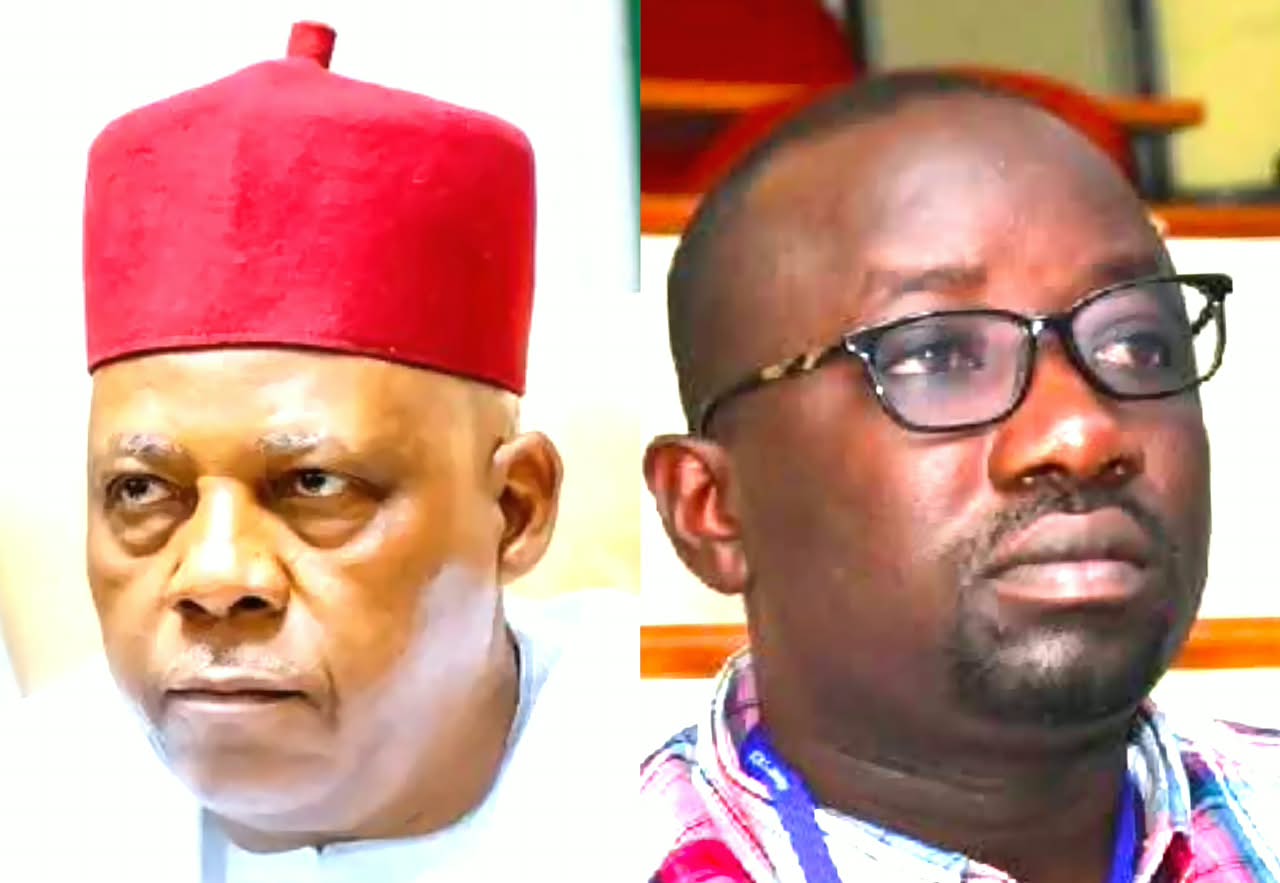
Borrowed Data, Phantom Mandates: Why Shettima Dismantled Obi’s Governance Fantasy
By Abubakar M. Kareto
Statecraft is fundamentally distinct from seminar presentation. The former demands the rigorous management of structural contradictions, institutional inertia, and demographic realities, while the latter thrives on rhetorical neatness, curated anecdotes, and borrowed spreadsheets.
Vice-President Kashim Shettima’s recent assessment of Peter Obi as a purveyor of ungrounded economic prescriptions and unsubstantiated electoral claims strikes at the very heart of contemporary Nigerian political discourse. For too long, populist commentary has mistaken snappy cross-country comparisons for actionable governance frameworks. Shettima’s size 36 versus size 52 analogy is not merely sharp political fencing; it is a vital diagnostic of the intellectual superficiality that often masquerades as alternative leadership in Nigeria.
The fundamental flaw in Obi’s public commentary over recent years has been an unyielding devotion to false equivalence and context-blind arithmetic. In town halls, media appearances, and international forums, Obi has routinely contrasted Nigeria’s sprawling, federation-wide challenges with fragmented datasets lifted from nations operating under completely dissimilar conditions.
A prominent instance is his frequent assertion that Niger State’s landmass dwarfs the Netherlands, juxtaposed with the claim that Dutch agricultural exports exceed $100 billion. What this rhetorical sleight of hand deliberately ignores is basic trade mechanics: Dutch agricultural export supremacy is driven primarily by sophisticated agro-industrial processing, global logistics networks, and massive re-exports within the European single market, not raw agrarian subsistence.
This penchant for statistical elasticity is neither accidental nor isolated; it has become a trademark of Obi’s public discourse. While speaking on national television in 2022, he boldly declared that out of roughly 150 players in the American National Basketball Association, almost 100 were Nigerians, an assertion so detached from reality that official league rosters showed only a handful of players of Nigerian origin. During national debates, he famously claimed that Nigeria had only 2 million vehicles, equating to 10 per 1,000 citizens, a metric that crashed immediately against verified Federal Road Safety Corps and National Bureau of Statistics audits demonstrating that Nigeria’s vehicular fleet exceeded 11 million.
Even in his geopolitical commentary, he dramatically misstated that 40% of the gross domestic products of countries like China, Indonesia, and Malaysia derived from manufacturing, inflating official World Bank records by nearly double to force an ideological point. When numbers are treated as disposable props to dazzle audiences rather than empirical baselines for policy, statecraft descends into street theatre.
Bangladesh’s readymade garment boom, another perennial Obi talking point, operates under single-tier governance, concentrated coastal logistics, and European preferential tariffs that cannot be transplanted into a federal union of over 250 million people fractured by vast sub-national distances, distinct regional political economies, and an entrenched rentier legacy.
A policy accelerating light manufacturing along the Bay of Bengal cannot simply be copy-pasted into Aba or Kano without resolving interstate transit friction, power grid stability, and deep-seated fiscal federalism deficits. To suggest otherwise is to confuse the ambition of governance with the art of sloganeering.
Beyond the realm of policy formulation lies the equally vital issue of institutional respect and constitutional integrity. Shettima’s sharp rebuttal of Obi’s persistent claim to have won the 2023 presidential election touches on a dangerous trend of democratic delegitimisation. In 2023, the Labour Party mounted an extensive legal challenge that traveled through the Presidential Election Petition Court all the way to the Supreme Court of Nigeria. At every stage, the burden of proof required by law remained glaringly unmet.
Constitutional compliance, allegations of suppression, and altered returns across over 176,000 polling units require empirical forensics, unit-by-unit tallies, and primary documentary evidence.
Instead of delivering this evidentiary threshold, the petition relied on disputed viewing portal uploads and speculative deductions. When the apex court unanimously dismissed the challenge, it affirmed that judicial outcomes rest on verifiable data rather than digital sentiment.
Continuing to declare victory outside the courtroom without producing alternate, independently certified tallies across 36 states and the Federal Capital Territory crosses the boundary between legitimate opposition and populist revisionism.
Nigeria’s present journey requires unsparing pragmatism rather than escapist romanticism. The structural reforms underway, painful though their transitional costs may be, tackle the core fiscal distortions that crippled the nation for decades, notably the ruinous fuel subsidy regime and foreign exchange arbitrage that previously enriched a narrow cabal at the expense of national solvency.
Confronting these generational imbalances demands leaders who grasp the sheer weight of the Nigerian state machinery. Vice-President Shettima has rightly pointed out that Nigeria cannot be governed by borrowed cliches or nostalgic revisionism. Progress belongs to those who see the country as it truly is, confront its hard realities with structural resolve, and respect the democratic outcomes that anchor the republic.
Abubakar M. Kareto is a Public Affairs Analyst and Communications Strategist focusing on governance, policies, economy, and institutional reforms across Nigeria and Africa. He can be reached on X @amkareto and via email at amkareto@gmail.com.
Borrowed Data, Phantom Mandates: Why Shettima Dismantled Obi’s Governance Fantasy

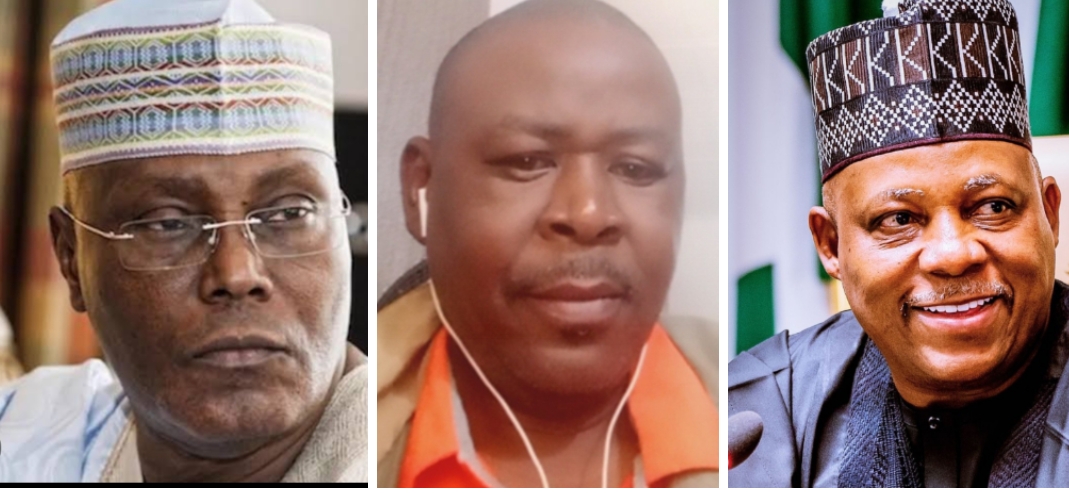
2027: No Sacred Cows—Atiku’s Record Must Face Scrutiny
By: Dr James Bwala
Former Vice President Atiku Abubakar’s supporters often defend his political career by pointing to his long experience in public service, his influence in Nigerian politics, and the important positions he has held. Recently, Naibi Abdul Aziz, one of Atiku’s apologists, argued that Atiku had already made a name for himself before I even understood the meaning of journalism. He further stated that Vice President Kashim Shettima was still a boy when Atiku was in government.
I agreed with him on one narrow point: I was not born on the same day as Atiku Abubakar, and neither did Vice President Shettima. For me, therefore, I cannot claim to have witnessed every event of Atiku’s early political careers personally. However, age, seniority, or political experience does not place any public figure beyond criticism. The fact that Atiku was politically active before many Nigerians entered public life does not mean that his record should be protected from scrutiny. On the contrary, the longer a person has exercised power, the greater the responsibility to examine the consequences of his decisions.
The political context of Nigeria today is not the same as it was twenty-six years ago. The country has changed, the economy has changed, and the effects of past policies have become clearer. Many Nigerians who were children or were not yet born during the early years of the Fourth Republic are now adults struggling with unemployment, poverty, inflation, insecurity, and the collapse of productive industries. They have every right to ask how earlier policy decisions contributed to the conditions they inherited.
It is therefore both legitimate and necessary to examine Atiku Abubakar’s role in Nigeria’s privatisation programme, particularly his tenure as chairman of the National Council on Privatisation between 1999 and 2007 during the administration of President Olusegun Obasanjo. This examination should not be reduced to personal attacks or partisan propaganda. It should be based on evidence, public records, economic outcomes, and the lived experiences of Nigerians whose jobs, businesses, and communities were affected by the process.
Atiku’s supporters frequently present privatisation as a necessary economic reform. They argue that many state-owned enterprises were inefficient, overstaffed, corruptly managed, and dependent on government funding. In principle, there was a reasonable basis for reform. Several public enterprises had become financially unsustainable, and the government lacked the resources or discipline to operate them effectively. However, acknowledging the problems within state-owned enterprises does not automatically prove that the method of privatisation was successful.
The central question is not whether reform was needed. It is whether the reform was properly designed, transparently implemented, and beneficial to the Nigerian people. It is also necessary to ask whether the government protected workers, preserved strategic industries, encouraged genuine investment, and ensured that public assets were sold at fair value. These questions remain unanswered in many cases.
Between 1999 and 2007, the federal government, through the National Council on Privatisation and the Bureau of Public Enterprises, divested or transferred ownership of numerous public enterprises. The assets involved included manufacturing companies, agricultural enterprises, energy-related facilities, transport businesses, hotels, telecommunications institutions, and other national investments. Critics contend that some of these assets were sold at undervalued prices, sometimes to political associates, business interests, or individuals with strong connections to those in power.
When public assets are sold below their real value, the loss is not merely financial. Those assets were built with taxpayers’ money over many years. They represented national investments intended to provide employment, industrial capacity, food security, and economic independence. If they are transferred cheaply to a small group of private beneficiaries and later abandoned, the public loses twice: first through the sale itself and again through the destruction of jobs and productive capacity.
The fate of several industrial and agricultural enterprises illustrates the concerns surrounding the privatisation process. The Delta Steel Company in Warri, the Ajaokuta steel-related infrastructure, and the Aluminium Smelter Company of Nigeria in Ikot Abasi are frequently cited in public discussions about Nigeria’s industrial decline. These facilities were established with the expectation that they would support national development, create skilled employment, and strengthen local production. Yet many of them experienced prolonged decline, operational difficulties, abandonment, or failure to achieve their intended potential.
The steel industry is particularly important because no modern economy can achieve genuine industrial independence without a strong domestic steel sector. Steel is essential for construction, machinery, transportation, defence, and manufacturing. Nigeria invested enormous public resources in developing steel-related infrastructure, but the country has not been able to obtain the expected benefits. The continued weakness of the steel sector has forced Nigeria to depend heavily on imported materials while millions of young people remain unemployed.
The same concerns apply to agricultural and agro-allied enterprises. Savannah Sugar Company in Adamawa, Sunti Sugar Company in Niger, the Federal Superphosphate Fertiliser Company in Kaduna, and the National Fertiliser Company of Nigeria, commonly known as NAFCON, are among the enterprises often mentioned in debates about the consequences of privatisation and poor industrial policy. These companies were connected to food production, fertiliser supply, rural employment, and national food security. Their decline affected not only employees but also farmers, transporters, suppliers, local traders, and entire communities under Atiku’s watch.
The consequences of industrial collapse extend far beyond the gates of a factory. When a major company closes, workers lose their income. Small businesses lose customers. Local governments lose tax revenue. Families withdraw children from schools. Medical care becomes more difficult to afford. Young people migrate in search of opportunities, while communities that once depended on industrial activity become economically stagnant. In this way, the collapse of public enterprises contributes directly to poverty and social instability, and these people want Atiku to come in as president to continue from where he left off.
Critics argue that rapid commercialisation, asset stripping, and inadequate post-privatisation monitoring contributed to de-industrialisation and massive job losses. In some cases, companies were acquired by investors who appeared more interested in controlling the assets than in maintaining production. Machinery and equipment were allowed to deteriorate, workers were dismissed, and industrial sites became inactive. Where privatisation was intended to create efficiency and investment, the outcome was often unemployment and economic decline. The Atiku apologists would not want to hear this, but it happened long before I knew journalism as Naibi would put it.
It is important to be fair: Atiku Abubakar did not single-handedly cause every failure in Nigeria’s economy. Privatisation involved multiple institutions, ministries, advisers, investors, banks, and political actors. But as Chair, he must take responsibility. Indeed, some enterprises were already deeply troubled before they were transferred. Other failures were caused by corruption, inconsistent policies, poor infrastructure, unreliable electricity, insecurity, foreign exchange shortages, and weak regulation as some of his men have said. Nevertheless, as chairman of the National Council on Privatisation, Atiku occupied a central position in the policy structure. That position gives him a legitimate responsibility for the direction, quality, and consequences of the programme.
Leadership is not only about claiming credit for reforms that appear successful. It also requires accepting responsibility when policies produce harmful results. If a public official supervises the sale of national assets, that official should be prepared to answer questions about the valuation process, the identity of beneficiaries, the terms of the agreements, the protection of workers, and the performance of the companies after privatisation. Political supporters should not respond to such questions by invoking age, past fame, or personal loyalty.
The argument that Atiku was already prominent before many Nigerians were born according to some of his apologists is not an answer to these concerns. It may establish his seniority, but it does not establish the correctness of his policies. Experience can be valuable, but experience without accountability may simply mean that mistakes have been repeated for a longer period. A politician’s long presence in public life should invite deeper examination, not automatic praise. We supported VP Kashim Shettima; we praised him, but we also pointed out missing numbers for him tomorrow as a leader, and he did appreciate such advice.
Criticism of Atiku should not be interpreted as disrespect for his achievements. He has played an important role in Nigeria’s political history, built a national profile, and contributed to public debates. However, public service is not a private achievement that ends with personal recognition. Its true value must be measured by its impact on ordinary citizens. If policies associated with a leader contributed to unemployment, industrial decline, or the loss of national assets, those consequences deserve serious discussion.
There is also a generational dimension to this debate. Many Nigerians now suffering from unemployment and economic hardship were not old enough to participate in the decisions taken between 1999 and 2007. Yet they are living with the results. They inherited a country where industries had declined, public infrastructure was weak, and economic opportunities were limited. It is unjust to tell this generation that it has no right to criticise the leaders whose decisions helped shape the environment in which it lives.
Journalists, researchers, and citizens must therefore be free to examine the past. A democratic society cannot develop if historical records are treated as sacred possessions of political parties. The role of journalism is not to flatter powerful people but to ask difficult questions, investigate public decisions, and give voice to those affected by government policies. Criticism should be factual, responsible, and evidence-based, but it should never be suppressed simply because the subject is older, more experienced, or politically influential.
I witnessed the consequences of Nigeria’s industrial and economic decline while moving through the North and Lagos–Ibadan axis in the south-west as a representative of Conscience International Magazine. The abandoned factories, inactive industrial estates, unemployed workers, and struggling communities were not abstract statistics. They were visible realities. They reflected a country that had invested in productive capacity but failed to protect and develop it. Nigerians who lived through that period have the right to remember what happened and to demand explanations.
Ultimately, the debate about Atiku Abubakar should not be reduced to whether one person is a supporter or an opponent. The real issue is whether Nigerian leaders should be accountable for the long-term effects of their policies. Atiku’s role in privatisation must be examined honestly, including both the arguments in favour of the programme and the damage attributed to its implementation. His supporters may defend his intentions, but intentions! Can that heal the wounds millions of Nigerians lived with and reflect it in their daily lives?
- James Bwala, PhD, writes from Abuja.
2027: No Sacred Cows—Atiku’s Record Must Face Scrutiny

2027: Nwankwo Warns INEC Against Unclear AI Use, Urges Credible Elections

IPCR Seeks Stronger Field Offices as Insecurity Spreads Across Nigeria

600m Africans Without Electricity as Summit Targets Power Sector Overhaul

Roger Federer’s Shock as DNA Results Reveal Myla and Charlene Are Not His Biological Children

THE PLIGHT OF FARIDA

FAILED COUP IN BURKINA FASO: HOW TRAORÉ NARROWLY ESCAPED ASSASSINATION PLOT AMID FOREIGN INTERFERENCE CLAIMS
-
 News3 years ago
Roger Federer’s Shock as DNA Results Reveal Myla and Charlene Are Not His Biological Children
-
Opinions5 years ago
THE PLIGHT OF FARIDA
-
 News2 years ago
FAILED COUP IN BURKINA FASO: HOW TRAORÉ NARROWLY ESCAPED ASSASSINATION PLOT AMID FOREIGN INTERFERENCE CLAIMS
-
 Opinions5 years ago
POLICE CHARGE ROOMS, A MINTING PRESS
-

 News3 years ago
EYN: Rev. Billi, Distortion of History, and The Living Tamarind Tree
-

 ACADEMICS3 years ago
A History of Biu” (2015) and The Lingering Bura-Pabir Question (1)
-

 Columns3 years ago
Army University Biu: There is certain interest, but certainly not from Borno.
-

 Politics1 year ago
2027: Why Hon. Midala Balami Must Go, as Youths in Hawul and Asikira/Uba Federal Constituency Reject ₦500,000 as Sallah Gift
