
News
ADC Unveils Timetable, Guidelines for 2025/2026 Congresses, National Convention


ADC Unveils Timetable, Guidelines for 2025/2026 Congresses, National Convention
By: Michael Mike
The African Democratic Congress (ADC), has released a comprehensive timetable and guidelines for the conduct of its congresses and national convention for the 2025/2026 political year, as part of efforts to strengthen internal democracy and reposition the party ahead of future elections.
The guidelines are contained in a National Secretariat Circular dated December 30, 2025, and signed by the party’s National Chairman, Hon. Nafiu Bala Gombe.
According to the circular, the party’s activities will commence with a Board of Trustees (BoT) meeting scheduled for January 5, 2025, followed by a National Executive Committee (NEC) meeting on January 7, 2025.
Key agenda items at the NEC meeting include the filling of vacancies in the National Working Committee (NWC), the fixing of dates for membership registration and revalidation, and preparations for ward, local government and state congresses.
He said: “For 2026, the ADC announced that membership registration and revalidation will take place from January 2 to January 15. This will be followed by ward executive committee congresses on January 17, with matters arising to be addressed between January 19 and 22.
“Local government congresses are scheduled for January 24, while state executive committee congresses will be held on January 31, 2026. Matters Arising: February 2-5, 2026 National-Level Activities.
“National Working Committee Convention: d. The approved delegates to the State Congresses, as provided for in Article 24 (a) – (e) and specifically modified by a resolution of the NWC at its 17th December, 2026 in National
headquarters Abuja are as follows: Local Government Chairmen
“LGA Secretaries; Youth Leader; Women Leader; State Executive Committee members and National Executive Committee (NEC) members from the State; PWD Leader; Ex-Officio Member; All Elected Council Chairman and their Deputies; Board of Trustees Member; Zonal National Officer; Any Elected National / State Assembly Members; Legal Adviser.
“States shall constitute Congress Planning Committees, membership of which shall not include persons contesting for any of the state executive offices.
“All persons willing to contest for state offices shall register their intentions with the State Congress Committee with an intention Fees N2,000.00 (Two Thousand Naira Only) which the Congress Committee may utilize for the purpose of financing the congresses, in part.
“The State Executive Committee shall supervise the work of the Congress Planning Committee to ensure strict compliance with the guidelines on State Congresses.
“Approved composition and distribution of the State Executive Committee members should, as much as practicable, be carried out according to the Senatorial Zones and in compliance with the Party’s Constitutional provision (Article 5, 17):
“Senatorial Zone with the highest number of members (6 positions). Chairman; Asst. Secretary; Asst. Financial Secretary; Auditor; Organizing Secretary; Women Leader; Senatorial Zone with 2nd highest number of members (5 positions); Vice Chairman, Treasurer, Legal Adviser, Asst. Publicity Secretary, Asst.”
On zoning, the ADC disclosed that distribution of state executive committee positions should, as much as practicable, reflect senatorial zones and comply with the party’s constitutional provisions.
The party’s National Working Committee convention is slated for February 13 to 15, 2026.
The party emphasised that only validly registered or revalidated members whose names appear in the official membership register will be eligible to participate in the congresses, in line with provisions of the ADC constitution.
State chapters were also directed to formally notify the National Secretariat of the dates, venues and times of their congresses to enable proper communication with the Independent National Electoral Commission (INEC).
He said: “The criteria for qualification to contest for executive positions in the State Executive Committee are as follows: At least, attendance of Secondary School; The Offices of State Legal Adviser, Treasurer and Financial Secretary should have experiences in their respective professions; else the offices should be occupied by persons best deemed suitable.
“The Office of the State Youth Leader must NOT be more than 25 years while that of the State Woman Leader is exclusively reserved for Women.
“All pre-congress appeals shall be determined not later than 24 hours before the congresses while all appeals consequent upon the congresses shall be determined within 3 days after the congresses.
“The Congress Planning Committee shall submit reports of congresses to the National Secretariat via adcnationalcongressreformcommitee@gmail.com not later than 5 working days after the congresses.”
The party urged members and state chapters to strictly adhere to the guidelines to ensure transparent, credible and orderly congresses nationwide.
ADC Unveils Timetable, Guidelines for 2025/2026 Congresses, National Convention


Troops arrest three suspected terrorists’ informants in Bassa, Plateau
By: Zagazola Makama
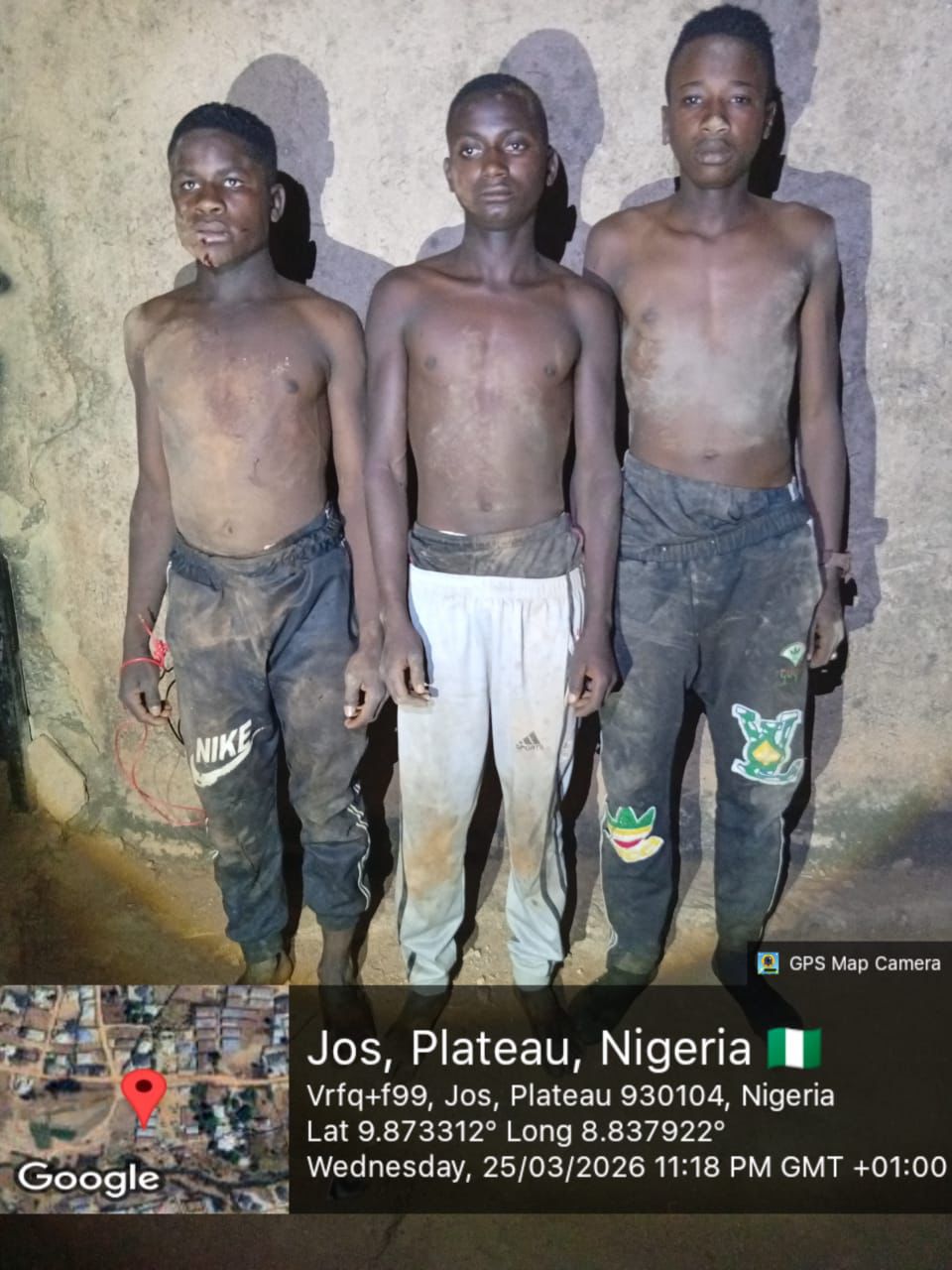
Troops of Operation Enduring Peace (OPEP) have arrested three suspected terrorists’ informants in Agingi area of Bassa Local Government Area in Plateau State.
Security sources said the suspects, Yusuf Hussaini, 18; Saleh Mohammed, 18; and Muazu Yunusa, 19, were apprehended at about 10:30 p.m. on March 25 with three dagger knives in their possession.
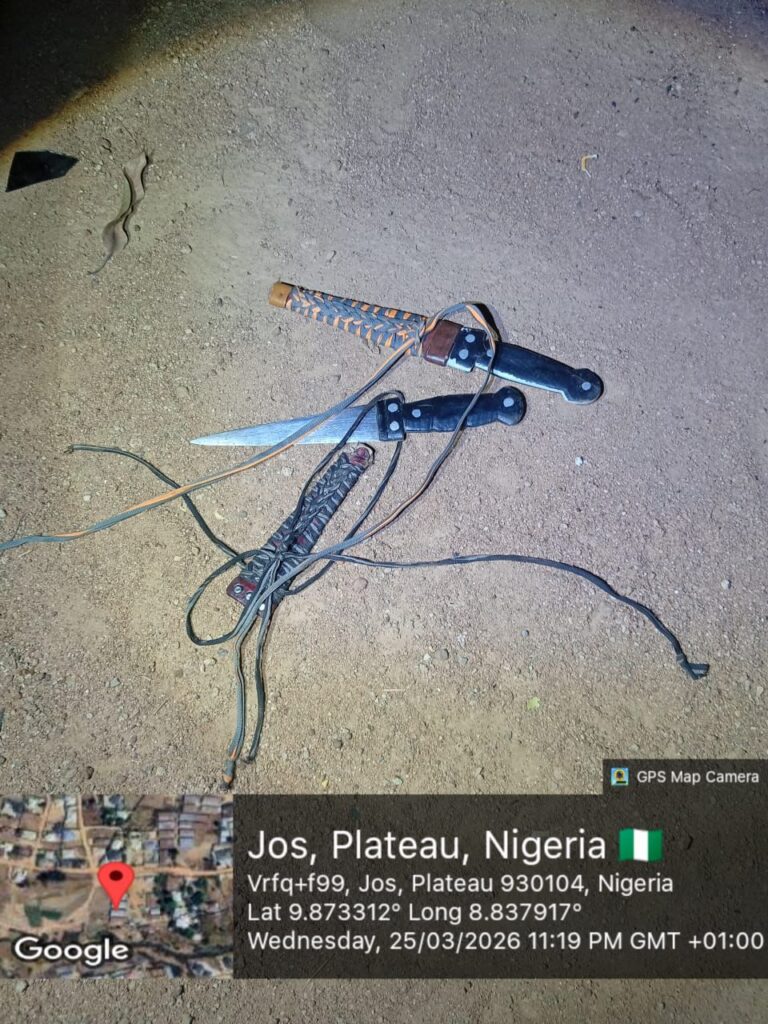
The suspects are currently in custody and undergoing investigation, the sources added.
The arrests form part of ongoing intelligence led operations by the troops of Operation Enduring Peace to safeguard communities, curb criminal activities, and ensure the safety of residents across the state.
Troops arrest three suspected terrorists’ informants in Bassa, Plateau
Troops restore calm after clash at Iware market in Taraba
By: Zagazola Makama
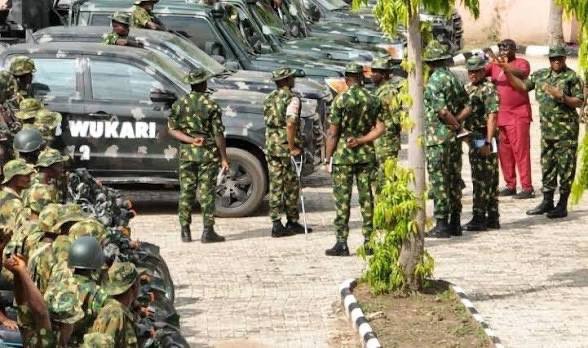
Troops of 114 Battalion, in collaboration with personnel of the Nigeria Security and Civil Defence Corps (NSCDC) and local hunters, have restored calm following a clash at Iware market in Ardo-Kola Local Government Area of Taraba State.
Security sources said the troops responded to a distress call at about 2:45 p.m. on March 24 over a fight involving suspected armed Fulani men celebrating Sallah at the market.
According to the sources, the situation escalated into a disturbance before the arrival of security operatives.
“On arrival, troops discovered one person with injuries and immediately evacuated the victim for medical attention,” the source said.
The sources added that troops, alongside other security personnel, have since dominated the area with aggressive patrols to reassure residents and prevent further breakdown of law and order.
The incident illustrated ongoing efforts by security agencies to maintain peace and respond swiftly to emerging threats in communities across the state.
Residents have been urged to remain law-abiding and cooperate with security agencies to sustain peace.
Troops restore calm after clash at Iware market in Taraba
One soldier killed, three injured in road accident in wukari, taraba
By: Zagazola Makama
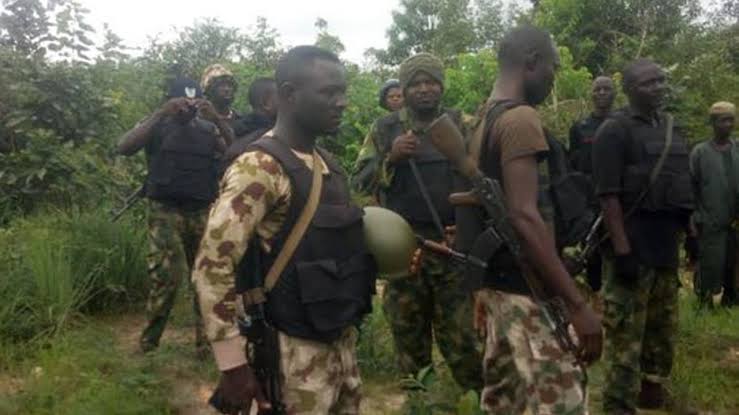
One soldier has been confirmed dead while three others sustained injuries following a road traffic accident involving troops on routine patrol in Wukari Local Government Area of Taraba State.
Sources told Zagazola Makama that the incident occurred on March 24 along the Kente–Ikyaior–Wukari road when troops from Forward Operating Base (FOB) Wukari were on patrol.
According to the sources, the accident resulted in injuries to several personnel, who were immediately evacuated to the Federal University Teaching Hospital, Wukari.
“The injured soldiers were rushed to the hospital for medical attention, where one of them was later confirmed dead, while three others are currently receiving treatment,” the source said.
The remains of the deceased soldier have been deposited at the hospital’s morgue.
One soldier killed, three injured in road accident in wukari, taraba

Troops arrest three suspected terrorists’ informants in Bassa, Plateau

Troops of Operation Enduring Peace repel terrorists’ attack in Plateau

Troops restore calm after clash at Iware market in Taraba

Roger Federer’s Shock as DNA Results Reveal Myla and Charlene Are Not His Biological Children

THE PLIGHT OF FARIDA

FAILED COUP IN BURKINA FASO: HOW TRAORÉ NARROWLY ESCAPED ASSASSINATION PLOT AMID FOREIGN INTERFERENCE CLAIMS
-
 News2 years ago
Roger Federer’s Shock as DNA Results Reveal Myla and Charlene Are Not His Biological Children
-
Opinions4 years ago
THE PLIGHT OF FARIDA
-
 News11 months ago
FAILED COUP IN BURKINA FASO: HOW TRAORÉ NARROWLY ESCAPED ASSASSINATION PLOT AMID FOREIGN INTERFERENCE CLAIMS
-

 News2 years ago
EYN: Rev. Billi, Distortion of History, and The Living Tamarind Tree
-
 Opinions4 years ago
POLICE CHARGE ROOMS, A MINTING PRESS
-

 ACADEMICS2 years ago
A History of Biu” (2015) and The Lingering Bura-Pabir Question (1)
-

 Columns2 years ago
Army University Biu: There is certain interest, but certainly not from Borno.
-

 Opinions2 years ago
Tinubu,Shettima: The epidemic of economic, insecurity in Nigeria
