
News
Agreement Signed for Deployment of Electric Motorbikes in Lagos


Agreement Signed for Deployment of Electric Motorbikes in Lagos
By: Michael Mike
Swap Station Mobility Limited has signed partnership agreement with Glovo and Siltech World to deploy electric motorbikes, smart swappable batteries, and a network of quick interchange stations across Lagos State.
The Partnership will provide Glovo couriers with 2-wheel electric motorbikes that offer lower cost, clean mobility alternative to the internal combustion engine (ICE).
The Electric Vehicles (EVs) are provided on a lease-to-own model whilst also offering riders a unique “pay as you ride” or “weekly subscription” to access SSM’s battery swap and charging facilities, technical support and cover for insurance, licensing, and routine maintenance services. In order to increase adoption, Swap Station intends to build out a network of solar powered automated quick interchange battery stations along major demand routes and logistics bases starting in Lagos and surrounding states over the next twenty-four months.
Blackaion Capital and FundCo Capital Managers who are the co-sponsors of Swap Station Mobility, believe the operational cost of battery swapping per kilometre (km) will remain substantially lower than the fuel cost per km for the ICE counterpart. “This is the main value driver which has been catalysed by the Federal Government’s near elimination of fuel subsidies.
The products developed or distributed by Swap Station are designed to exceed the performance of petrol alternatives whilst significantly improving CO2 emissions, local air quality, and cost efficiency for users over the life of the asset,” said the Director at Swap Station and Partner at Blackaion Capital, Obiora Okoye,
Okwu Njoku who sits on the Board went on to say, “We are very excited about signing with Glovo who operate one of the most prolific food delivery platforms in Nigeria. Our EVs and swappable batteries are in-country, and Siltech World, one of our key technology and technical partners, supported us with the procurement, testing, and certification of the EVs, and so, we are now ready to start operations. We plan to spend the next few months securing additional swap locations, building our technology platform, and expanding our team.”
Abiodun Oni, Chief Executive Officer (CEO) of FundCo Capital Managers, and former Regional Sales Director, Energy, for Tesla, stated, “e-mobility is critical to our sustainable infrastructure investment strategy, and this agreement with our partners enables us to kick start that process”.
On his part, Head of Operations at Glovo, Ify Adah stated, “ By 2030, our goal is to have about half of our orders delivered by non-combustion vehicles. So, we are very excited and look forward to working with Swap Station, and supporting our couriers with cleaner and more cost-effective transport solutions.”
Swap Station is an integrated EV financing and battery charging infrastructure development company that has built a business-to-business-to-consumer (B2B2C) platform that provides access to electric 2-wheel and 3-wheel vehicles, swap station infrastructure, swappable batteries, and a hub for repairs and maintenance services to fleet owners, businesses, and users operating in the logistics and last mile connectivity in Nigeria.
Blackaion Capital is a West Africa focused infrastructure advisor, developer, and asset manager with offices in Lagos, Abuja, and Mauritius. Blackaion’s mission is to create exceptional long-term value for all stakeholders by developing and capitalising tech-enabled and climate-friendly infrastructure projects and companies.
FundCo is a specialised Alternative Asset Manager for sustainable infrastructure-related funds across critical economic sectors. These are selected industries providing essential services to the society, with domestic geographic diversity, have secure cash flows, are recession resilient, and ideally, offer some inflation protection. FundCo is duly registered with and licensed by Nigeria’s Securities and Exchange Commission (SEC) as a portfolio/fund manager in line with the SEC rules.
Agreement Signed for Deployment of Electric Motorbikes in Lagos


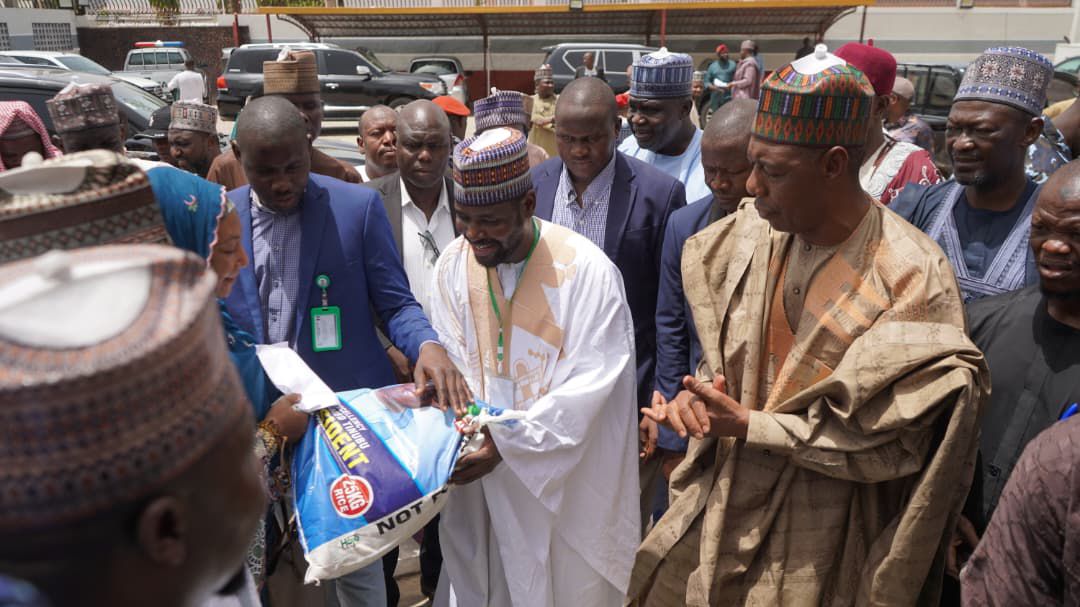
Zulum Flags off Distribution of Renewed Hope Sallah Palliative
By: Our Reporter
Borno State Governor, Professor Babagana Umara Zulum, has flagged off the distribution of palliatives under the Renewed Hope Initiative to vulnerable residents across the state ahead of the Eid al-Adha celebration.
The governor launched the exercise at the Conference Hall of Prime Lodge in Maiduguri.
Governor Zulum commended Nigeria’s First Lady, Senator Oluremi Tinubu, for supporting widows, orphans, internally displaced persons (IDPs), and other vulnerable groups through the Renewed Hope Initiative.
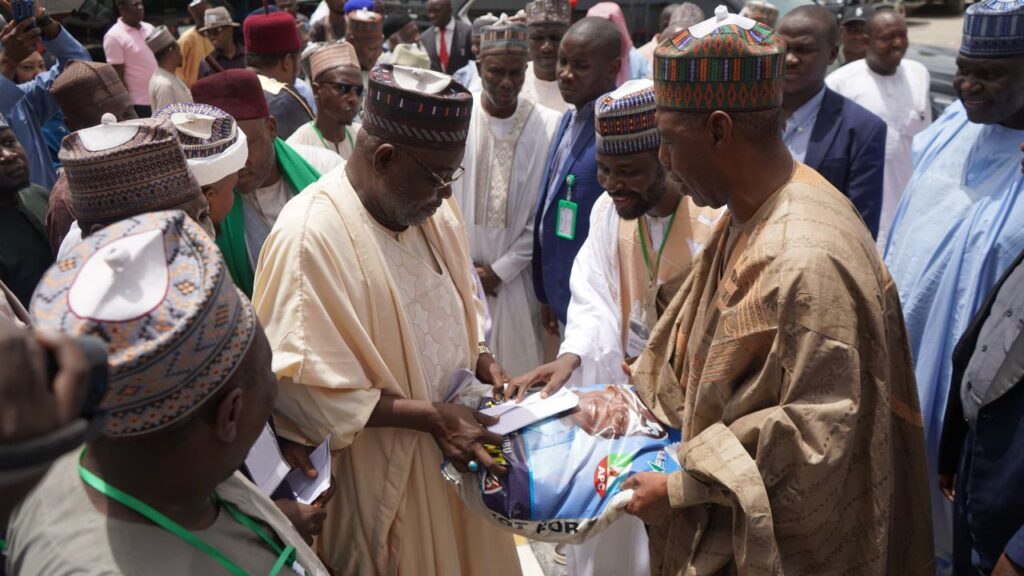
“On behalf of the Government and good people of Borno State, I sincerely appreciate Her Excellency, Senator Oluremi Tinubu, CON, First Lady of the Federal Republic of Nigeria and Founder of the Renewed Hope Initiative, for this compassionate intervention aimed at supporting vulnerable Nigerians and restoring hope to families facing economic hardship,” Zulum said.
The governor also praised the resilience and patience of the people of Borno despite years of insurgency and insecurity, reaffirming his administration’s commitment to improving the welfare of citizens through people-oriented policies and programmes.
“Despite the challenges our state has faced over the years, our people have continued to demonstrate resilience, patience, and courage. As a government, we remain committed to implementing programmes and policies that directly improve the lives of our citizens,” he stated.
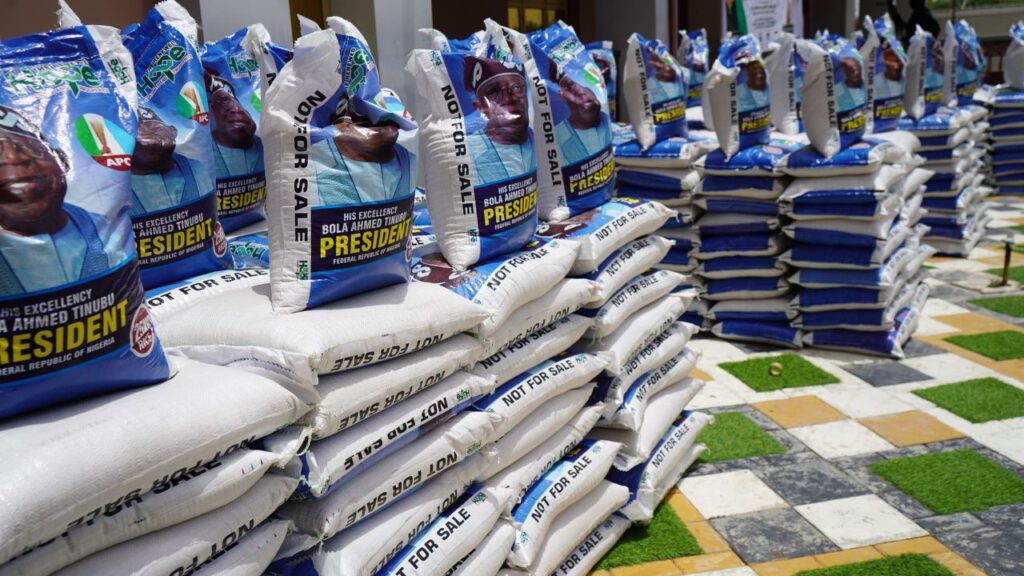
Zulum noted that the distribution exercise forms part of the federal and state governments broader social support programme aimed at cushioning economic hardship and strengthening community resilience.
“The distribution exercise we are flagging off today is therefore part of our broader social support programme designed to cushion economic difficulties and strengthen community resilience. I commend members of the Distribution Committee for their efforts and urge them to ensure transparency, fairness, and accountability throughout the exercise so that the support will reach the rightful beneficiaries,” he added.
The governor urged beneficiaries to make proper use of the items distributed while also appreciating security agencies, traditional rulers, religious leaders, and development partners for their continued support towards peacebuilding and humanitarian interventions in the state.
Earlier in his remarks, Chairman of the Distribution Committee, Dr Abba Bashir Dankellori, expressed gratitude to Senator Oluremi Tinubu for the timely intervention, describing it as a relief that would enable many Muslim families to celebrate the forthcoming Sallah with ease.
“I wish to, on behalf of the committee, thank the First Lady Senator Oluremi Tinubu for the kind gesture. We also appreciate Borno State Governor, Professor Babagana Umara Zulum, for the selfless leadership, commitment and service to the people of the state,” Dankellori stated.
According to him, beneficiaries of the intervention include Qur’anic and Sangaya school teachers, as well as religious organisations that contribute to the moral upbringing of society.
Governor Zulum was accompanied to the event by the Secretary to the State Government, Bukar Tijani; Acting Chief of Staff, Dr Babagana Mustapha Malumbe; Coordinator of Renewed Hope Ambassadors, Engr Baba Bukar Gujbawu; Permanent Secretary, Government House, Barr. Mustapha Busuguma, among other top government officials.
Zulum Flags off Distribution of Renewed Hope Sallah Palliative
Security forces Conduct Show of Force In Jos, Bukuru During Church Services
By: Zagazola Makama
Joint Security forced in Plateau State on Sunday conducted a joint show of force across major flashpoints within Jos metropolis and the Bukuru general area to ensure peaceful church services and strengthen public confidence.
The operation involved troops of Operation Enduring Peace, personnel of the Nigerian Air Force 551 Station, Operation Keystone, the Nigeria Security and Civil Defence Corps (NSCDC), and other security agencies.
Security sources said the exercise commenced at about 7:30 a.m. and was aimed at denying criminal elements freedom of action while providing adequate security coverage during church services.
The coordinated patrols and visibility operations covered identified vulnerable areas and strategic locations within Jos and Bukuru.
According to the sources, the operation was conducted without any security breach or incident, while religious activities across the affected areas remained peaceful.
The security agencies reaffirmed their commitment to sustaining collaborative operations aimed at maintaining law and order as well as protecting lives and property in Plateau State.
Security forces Conduct Show of Force In Jos, Bukuru During Church Services

Teenage Sensations Rosemary, Miracle Win Gold for Nigeria, Secure World Championship Spot
Nigeria recorded a major triumph at the 24th CAA Senior Athletics Championship in Accra, Ghana, as teenage athletes Rosemary and Miracle delivered a stunning performance to win gold for the country in the women’s 4x100m relay event.
The young stars, both students of NTIC Secondary School, helped Team Nigeria clinch the gold medal with an impressive time of 42.94 seconds, further underlining the country’s growing strength in athletics.
Their victory also secured Nigeria a ticket to the World Championships in Gaborone, while guaranteeing qualification for the 2027 World Championship in China.
The feat was particularly remarkable for Rosemary, who was making her senior debut for Nigeria at the continental championship.
Sports enthusiasts have since praised the duo for proving that age is no barrier to excellence, with many describing their performance as a glimpse into the bright future of Nigerian athletics.
Teenage Sensations Rosemary, Miracle Win Gold for Nigeria, Secure World Championship Spot

Zulum Flags off Distribution of Renewed Hope Sallah Palliative

2027: When Tinubu’s endorsement of Vice President Kashim Shettima’s unwavering support speaks volumes

Troops Arrest Suspected Security Impersonator In Plateau

Roger Federer’s Shock as DNA Results Reveal Myla and Charlene Are Not His Biological Children

THE PLIGHT OF FARIDA

FAILED COUP IN BURKINA FASO: HOW TRAORÉ NARROWLY ESCAPED ASSASSINATION PLOT AMID FOREIGN INTERFERENCE CLAIMS
-
 News2 years ago
Roger Federer’s Shock as DNA Results Reveal Myla and Charlene Are Not His Biological Children
-
Opinions4 years ago
THE PLIGHT OF FARIDA
-
 News1 year ago
FAILED COUP IN BURKINA FASO: HOW TRAORÉ NARROWLY ESCAPED ASSASSINATION PLOT AMID FOREIGN INTERFERENCE CLAIMS
-

 News2 years ago
EYN: Rev. Billi, Distortion of History, and The Living Tamarind Tree
-
 Opinions4 years ago
POLICE CHARGE ROOMS, A MINTING PRESS
-

 ACADEMICS2 years ago
A History of Biu” (2015) and The Lingering Bura-Pabir Question (1)
-

 Columns2 years ago
Army University Biu: There is certain interest, but certainly not from Borno.
-

 Politics12 months ago
2027: Why Hon. Midala Balami Must Go, as Youths in Hawul and Asikira/Uba Federal Constituency Reject ₦500,000 as Sallah Gift
