
News
AI Finance Revolution In Africa: Why Aurum Foundation Is Positioning Itself At The Forefront

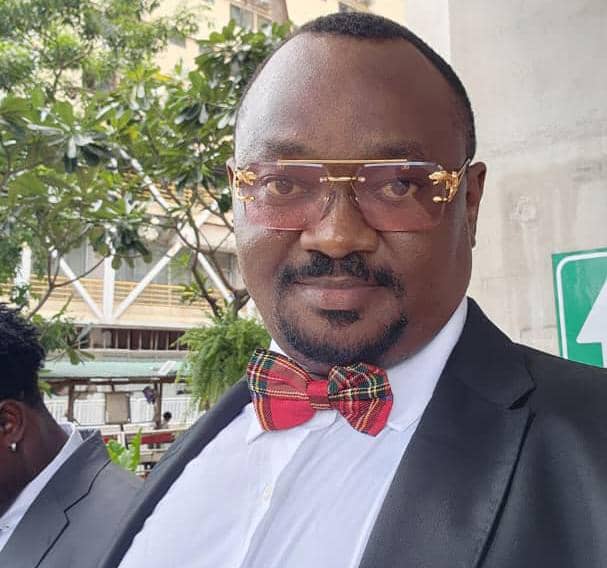
AI Finance Revolution In Africa: Why Aurum Foundation Is Positioning Itself At The Forefront
The global financial landscape is undergoing one of the most significant transformations in modern history.
Artificial Intelligence (AI), blockchain technology, and digital financial infrastructure are converging to create what experts now describe as AI Finance a new era where technology automates wealth creation, enhances access to financial services, and unlocks real-world asset opportunities for everyday people.
At the center of this emerging movement is Aurum Foundation, a fast-growing fintech ecosystem designed to bridge the gap between traditional finance, digital assets, and real-world investment opportunities.
What Is AI Finance?
AI Finance refers to the integration of Artificial Intelligence, algorithmic trading systems, decentralized finance (DeFi), digital payments, and asset tokenization into a unified financial framework.
Rather than relying solely on human decision-making, AI Finance leverages data analytics, automation, predictive modelling, and smart execution systems to:
Optimize investment strategies
Reduce emotional trading risks
Improve financial inclusion
Create multiple streams of income
Enable faster and borderless transactions
For Africa — a continent with a young population, increasing smartphone penetration, and limited access to traditional banking — AI Finance represents not just innovation, but financial empowerment.
Introducing Aurum Foundation
Aurum Foundation is positioning itself as a next-generation fintech ecosystem with over 14 interconnected fintech products designed to help individuals, businesses, and institutions participate in the evolving digital economy.
Some key components of the Aurum ecosystem include:
1. AI Algorithmic Trading Systems
Automated trading bots analyze market data, execute trades, and manage risk parameters in real time. These tools are designed to help users participate in crypto and digital asset markets without requiring advanced trading knowledge.
2. Digital Crypto Exchange
Aurum provides an exchange infrastructure where users can buy, sell, hold, and manage digital assets seamlessly.
3. Crypto-Fiat Integration
Through fintech cards and payment infrastructure, users can convert digital assets into spendable money — enabling real-life usage of crypto for:
ATM withdrawals
Payments for goods and services
Cross-border transactions
4. Growth & HODL Functions
Investment tools designed to help users grow their digital assets over time while maintaining exposure to market appreciation cycles.
5. Agentic AI Financial Tools
AI-powered systems that support portfolio management, financial planning, and automated execution of investment strategies.
6. Real-World Asset (RWA) Tokenization
Perhaps the most groundbreaking component Aurum’s focus on tokenizing real-world assets such as gold.
The Sierra Leone Gold Tokenization Deal: A Turning Point
Aurum Foundation has reportedly entered strategic collaboration frameworks linked to the tokenization of gold resources in Sierra Leone.
This signals a broader shift in how Africa can digitize and monetize its natural resources.
Gold tokenization allows:
Fractional ownership of physical gold
Global liquidity access
Reduced barriers to entry for investors
Transparency via blockchain
Wealth preservation instruments for inflation-prone economies
Ghana — another gold-rich nation — is being discussed as a potential next frontier.
This raises a powerful question:
What about Nigeria?
What Can Nigeria Tokenize?
Nigeria is one of Africa’s most resource-rich countries. Beyond oil, the country possesses enormous untapped potential for tokenization:
Natural Resources
Gold deposits (Zamfara, Osun, Niger State)
Lithium and rare earth minerals
Agricultural commodities (cocoa, cashew, sesame, palm produce)
Solid minerals (limestone, bitumen, tin)
Real Estate Assets
Tokenizing property can allow Nigerians to invest in fractional real estate ownership, improving housing finance accessibility.
Government Infrastructure Bonds
Blockchain-based tokenization could increase transparency and participation in infrastructure funding.
Creative Economy Assets
Music royalties, film rights, sports investments — Nigeria’s booming entertainment industry presents tokenization opportunities.
Why AI Finance Matters for the Average Nigerian or African Financial Inclusion Millions remain unbanked. Fintech ecosystems like Aurum can provide digital wallets, payments, and investment access via smartphones.
Wealth Creation Opportunities
Traditional investment vehicles often require high entry capital. Tokenization and AI-driven tools lower the barrier.
Inflation Protection With volatile currencies, access to diversified digital and real-world assets can support wealth preservation.
Global Participation Africans can participate in global markets without geographic limitations.
New Income Streams Affiliate systems, staking opportunities, AI trading participation, and digital finance education can create alternative earnings.
Risks and the Need for Education
While the opportunities are compelling, AI Finance and digital assets also carry risks:
Market volatility
Regulatory uncertainty
Technology adoption challenges
Fraud and misinformation
This makes financial literacy and due diligence critical for participants.
The Bigger Picture: Africa’s Financial Renaissance
Africa stands at a defining moment.
Just as mobile money transformed payments across East Africa, AI Finance and tokenization could redefine:
Investment access
Resource monetization
Cross-border commerce
Wealth distribution
Platforms like Aurum Foundation aim to become catalysts in this transition by combining technology, digital finance infrastructure, and real-world asset integration.
Conclusion
AI Finance is no longer a futuristic concept it is rapidly becoming the present reality of global finance.
For Nigerians and Africans at large, the emergence of ecosystems like Aurum Foundation presents both an opportunity and a responsibility:
Opportunity to participate early in evolving financial systems
Responsibility to understand, evaluate, and engage wisely
As Sierra Leone explores gold tokenization and other African economies consider similar frameworks, the question is no longer if Africa will digitize its wealth but who will lead the transformation.
The future of finance may very well be AI-driven, asset-backed, and globally connected and Africa has a critical role to play.
LawyerTAJ is a lawyer, cryptoTrader and a CryptoPreneur who is from Sapele Delta State and writes from Lagos, Nigeria
AI Finance Revolution In Africa: Why Aurum Foundation Is Positioning Itself At The Forefront


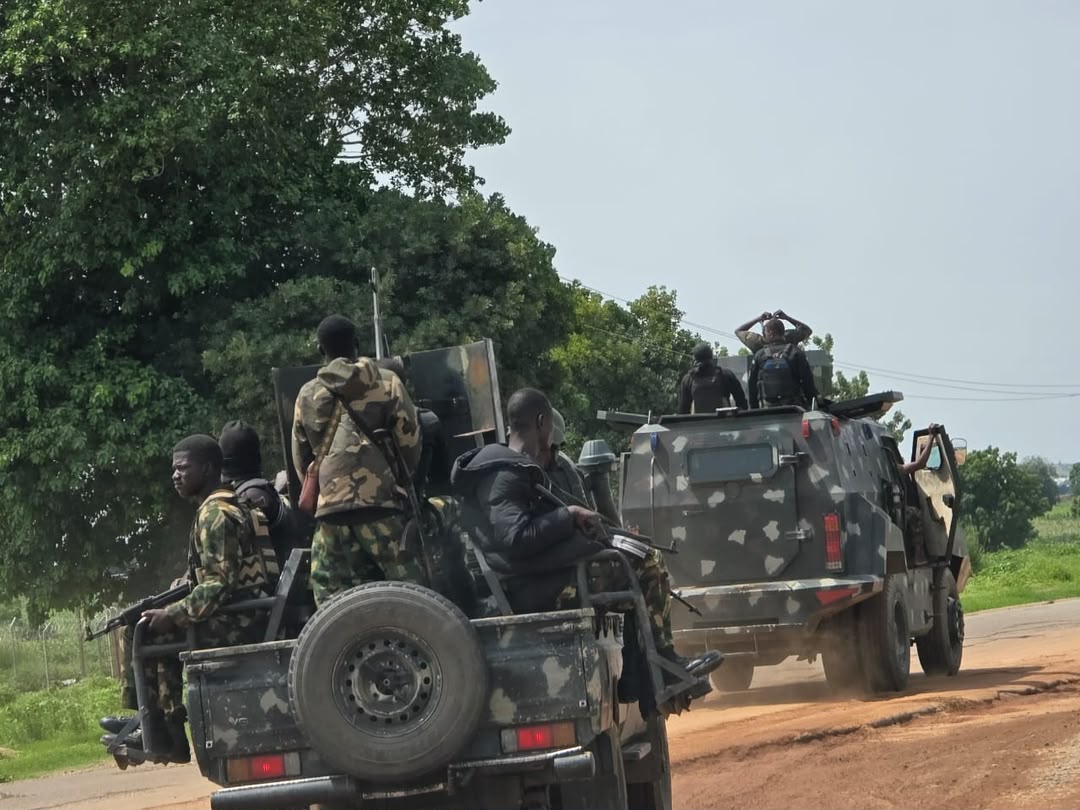
Troops Foil Armed Robbery, Clear Highway in Plateau
By Zagazola Makama
Troops of Sector 4, Sub-Sector 41, Operation Enduring Peace (OPEP), have foiled an attempted armed robbery along the Barkin Ladi–Bokkos road in Barkin Ladi Local Government Area of Plateau State.
Sources told Zagazola Makama that the incident occurred at about 9:00 p.m. on August 11, 2026, when troops deployed at the Kurra Junction Check Point responded to a report of suspected armed robbers blocking the highway.
The criminals had reportedly blocked the road in an attempt to rob motorists and other road users.
The troops swiftly mobilised to the location, forcing the suspected robbers to abandon their criminal operation and flee into the surrounding rocky hills.
The troops subsequently cleared the highway and restored the free flow of traffic along the route.
Security personnel have continued to dominate the general area through robust patrols to prevent the criminals from regrouping and to deny other criminal elements freedom of action.
Troops Foil Armed Robbery, Clear Highway in Plateau

Zulum calls for a shift from tractor ownership to modern agricultural services
By: Michael Mike
Borno State Governor, Babagana Umara Zulum, has called for a fundamental shift in Nigeria’s approach to agricultural mechanisation, stressing that the country must move beyond simply purchasing tractors to a more productive and modern, investment-driven agricultural system.
Zulum made the call while speaking at a High-level National Policy Dialogue on Agricultural Mechanisation organised by the Federal Ministry of Agriculture and Food Security in Abuja on Wednesday.
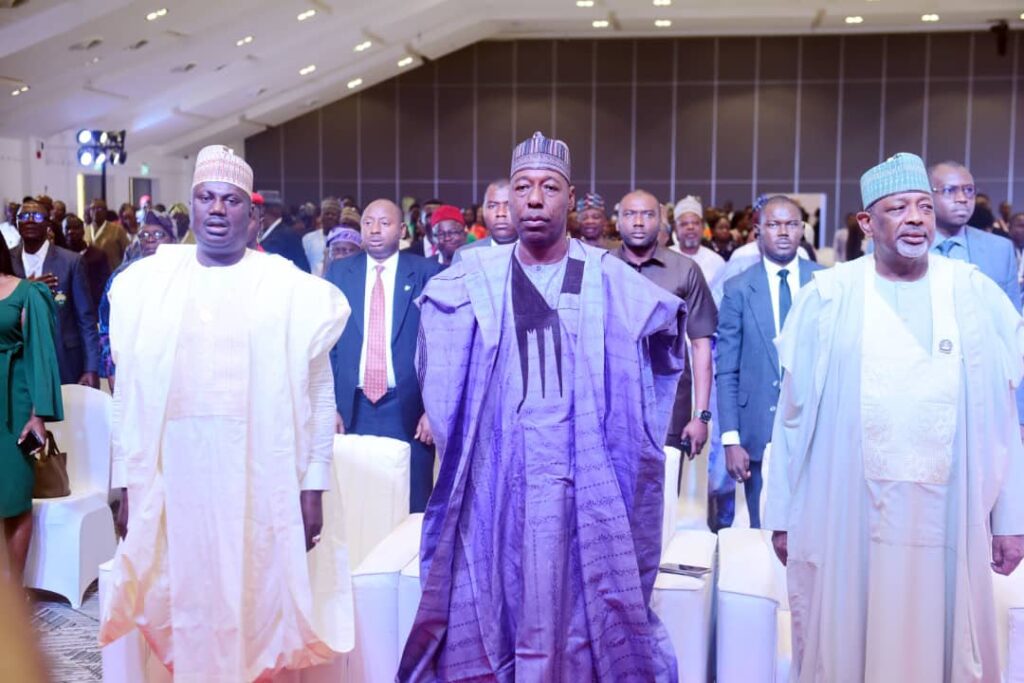
The Governor identified low productivity, limited technology, inadequate investment and weak value chains as major challenges facing Nigeria’s agricultural sector.
He emphasised that mechanisation should be delivered as a service, giving farmers timely access to land preparation, precision farming, irrigation and other modern agricultural technologies.
Commenting on Borno’s agricultural transformation initiatives, Zulum noted that massive investment by his administration in agriculture is central to rebuilding livelihoods and restoring communities affected by insecurity and displacement.
Zulum highlighted a four-pronged approach to agricultural mechanisation in Nigeria, including mechanising agriculture to increase productivity and reduce drudgery, digitalising agriculture to improve precision, intelligence, and efficiency, regenerating agricultural resources to ensure long-term sustainability, and investing in infrastructure, technology, and enterprises that will drive the transformation.

Zulum also called for stronger private-sector participation and innovative financing for local manufacturing and assembly of agricultural machinery, irrigation, renewable energy, storage, processing, value addition and youth- and women-led agricultural businesses.
He emphasised that Nigeria must not simply recreate the agriculture of yesterday, but build the agriculture of tomorrow, which should be modern, smart, climate-resilient, productive and inclusive.
The goal, he said, is to build an agricultural economy capable of feeding the nation, competing globally, creating jobs and delivering sustainable prosperity to rural communities.
The Governor was accompanied by the member of the House of Representatives, Engr Bukar Talba; Commissioner of Local Government and Emirates Affairs, Sugun Mai Mele; CEO/Managing Director of the Borno Investment Company, Mohammed Bukar Umar; and Permanent Secretary, Government House, Mustapha Ali Busiguma.
Zulum calls for a shift from tractor ownership to modern agricultural services

Troops Intercept 40 Cattle Over Alleged Farm Destruction in Plateau
By Zagazola Makama
Troops of Sector 4, Operation Enduring Peace (OPEP), have intercepted 40 cattle following a report of farmland destruction around the BCA area of Barkin Ladi Local Government Area of Plateau State.
A military source told Zagazola Makama that the troops responded to the report at about 4:00 p.m. on August 11, 2026, and mobilised to the affected area.
Upon arrival, the troops found 40 cattle grazing on the farmland, while the herders fled after sighting the security personnel.
The livestock were subsequently moved to a safe location to prevent further damage and facilitate the resolution of the incident.
Efforts are currently underway to identify and locate the owners of the cattle for further necessary action.
The intervention is part of ongoing security efforts in Plateau State to prevent farmer-herder disputes from escalating and protect agricultural communities from illegal grazing and related conflicts.
Troops Intercept 40 Cattle Over Alleged Farm Destruction in Plateau

Troops Foil Armed Robbery, Clear Highway in Plateau

Zulum calls for a shift from tractor ownership to modern agricultural services

Troops Intercept 40 Cattle Over Alleged Farm Destruction in Plateau

Roger Federer’s Shock as DNA Results Reveal Myla and Charlene Are Not His Biological Children

THE PLIGHT OF FARIDA

FAILED COUP IN BURKINA FASO: HOW TRAORÉ NARROWLY ESCAPED ASSASSINATION PLOT AMID FOREIGN INTERFERENCE CLAIMS
-
 News2 years ago
Roger Federer’s Shock as DNA Results Reveal Myla and Charlene Are Not His Biological Children
-
Opinions4 years ago
THE PLIGHT OF FARIDA
-
 News1 year ago
FAILED COUP IN BURKINA FASO: HOW TRAORÉ NARROWLY ESCAPED ASSASSINATION PLOT AMID FOREIGN INTERFERENCE CLAIMS
-

 News2 years ago
EYN: Rev. Billi, Distortion of History, and The Living Tamarind Tree
-
 Opinions5 years ago
POLICE CHARGE ROOMS, A MINTING PRESS
-

 ACADEMICS2 years ago
A History of Biu” (2015) and The Lingering Bura-Pabir Question (1)
-

 Columns2 years ago
Army University Biu: There is certain interest, but certainly not from Borno.
-

 Politics1 year ago
2027: Why Hon. Midala Balami Must Go, as Youths in Hawul and Asikira/Uba Federal Constituency Reject ₦500,000 as Sallah Gift
