
News
Akufo-Addo Calls on Politicians to Work Assiduously for Democracy to Checkmate Coup De’tat

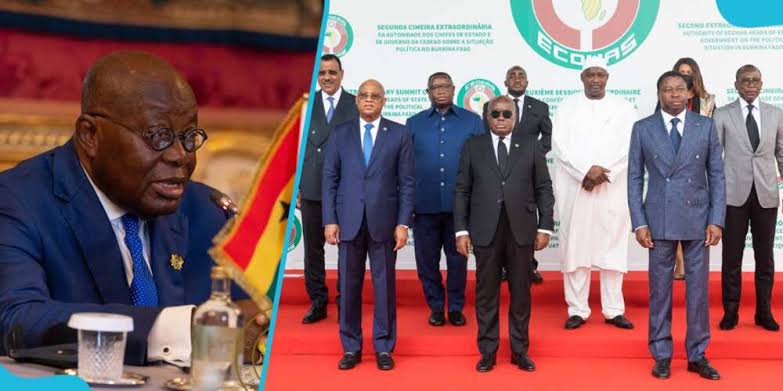
Akufo-Addo Calls on Politicians to Work Assiduously for Democracy to Checkmate Coup De’tat
By Michael Mike
Ghana’s President, Nana Akufo-Addo has called on politicians in the West African subregion to work assiduously towards entrenching democratic principles of accountability, noting that until this is ensured democracy may continued to be under attack.
Akufo-Addo stated this on Friday at a high-level parliamentary seminar on the ‘Role of the ECOWAS Parliament: Relating the Challenges of Unconstitutional Regime Change and Presidential Term Limits in West Africa”, organised by the ECOWAS Parliament in Winneba, Ghana.
The Ghanaian President while declaring open the seminar, lamented that “our region is confronted with a difficult economic, political, social insecurity situation.”
He said despite the considerable progress made by the community in the areas of democracy, good governance and the rule of law since the 1990s, “we are at the moment witnessing a significant decline in our democratic relations.”
He said: “This observation is bitter and implacable, today four member ECOWAS States are led by military government as a result of coup d’etat, this has unfortunately created a stare palpable anxiety and tension in every corner of the region, raising the spectra of region instability which we thought had been banished for ever. Equally apart is the culture of violence and disputes that characterise the period of electing some of our leaders.
He decried that the regional democracy is currently facing three serious threats, which include attempted confiscation of democracy by elites who impose legal instruments in the manipulation of democracy and the subjugation of the institutions of the republic with the sole aim of remaining in power; secondly the emerging remilitarization of governance with the return once again of the military unto the political scene who have neither consulted or received any mandate from the people on whose behalf they purport to act; the wanton desire to destroy democracy by terrorist groups and armed criminal gangs which promote lawlessness and violation of freedom in the region.
He said: “I want to reaffirm that in the contemporary world, the only legitimacy for any leader is through a mandate that is freely give by the people in a fair, peaceful and transparent election. This is the most tangible and objective way to know and recognize the commonwealth which is the wealth of the people.
He noted that The election of Mohammed Bazoum in Niger was in line with all the tenets of democracy and that was why the coup in Niger is particularly tragic for the consolidation of democracy in our region.
He cautioned that: “It is also important to remind us that democracy is not a western concept as some believe but rather a universal concept of general application. The history of the world, including that of Africa testifies that the process of electing and installing leaders in democratic circumstances provides the best form of government.
“Modern history has taught us that tyranny, oppression and totalitarian government do not last long. No matter how a people reject democracy and civil liberty circumstances will always force them back to embrace them”.
He therefore urged Parliamentarians to speak against the extension of presidential tenures by some leaders to strengthen their grip and power.
These actions according to President Akufo-Addo, tend to result in discontent among the populace to create fertile grounds for which military intervention feed.
He said: “There should be no backsliding in support for democratic values anchored on the promotion of the rule of law and respect for human rights.
“It is important for all of us in the adherence of democracy to remember not to underestimate the importance of parliament, the consequently not to undermine it’s worth. We cannot emphasize enough the role of Parliament in exercising the checks and balances needed on the executive, we cannot emphasize enough the role of Parliament as the voice of the people and we cannot emphasize enough the role of Parliament in setting the tone for public discuss in our respective countries. It is for the good of our nations that our parliaments development the capacity to insist on accountability in all aspect of our land and no institution is better suited for this than the one who houses the representatives of the people”.
The seminar is expected to brainstorm on the major challenges facing the region and profer solutions, the Ghanaian president assures that the authority of Heads of States are expectant of the resolutions.
He said: “Brainstorming on all this major challenges which I have just outlined in the search for solutions to the political and security challenges facing our region is the imperative mission of this seminar, one of the expected outcomes is to help us understand even better the root causes of democratic regression and political instability in the region, it all will be better to address. This seminar over the next few days must propose measures to ensure the anchoring of democracy and republican values both at the level of political elites and citizens of the community. This will help towards preserving the peace and stability of the region.
“I can assure you that the authority of Heads of states of ECOWAS will be receptive to all your proposals and await them with great interest. Our expectations is that the conclusions and recommendations from this seminar will contribute to the deepening and strengthening of democracy, good governance, peace and stability in our region.
In his remarks, the Speaker of ECOWAS Parliament, Hon. Sidie MohammedTunis, explained that the high-level seminar was put together as part of the performance of parliaments obligations under the Treaty, to determine what causes military takeovers, democratic regression, and political instability in the sub-region.
He said this is in spite of the existence of Community Acts and Protocols intended to consolidate democracy and promote political stability.
Tunis reiterated that their responsibility as legislators is not only to create laws and policies but also to rigorously monitor their implementation.
According to him, to ensure that ECOWAS performs maximally to the expectation of the people, as parliamentarians, they must facilitate robust and continuous
discourse on the broad issues, aimed at formulating effective and sustainable solutions to the tremendous crisis confronting our peoples and
humanity in general.
“During this Seminar, we also intend to look at the causes of various attempts by democratically elected leaders in the sub-
region to extend their term limits despite crystal-clear constitutional provisions outlining these terms, as well as the potential role the ECOWAS Parliament can play in preventing such anti-democratic actions.
“We note that the role of the Parliament in upholding regional stability, laying the groundwork for democracy, economic growth, and the rule of law, as well as acting as the voice of hope for all our peoples, is invaluable and should never be diminished. Parliamentarians need to step up to the plate and demonstrate the extraordinary leadership that is expected of us.”
Akufo-Addo Calls on Politicians to Work Assiduously for Democracy to Checkmate Coup De’tat


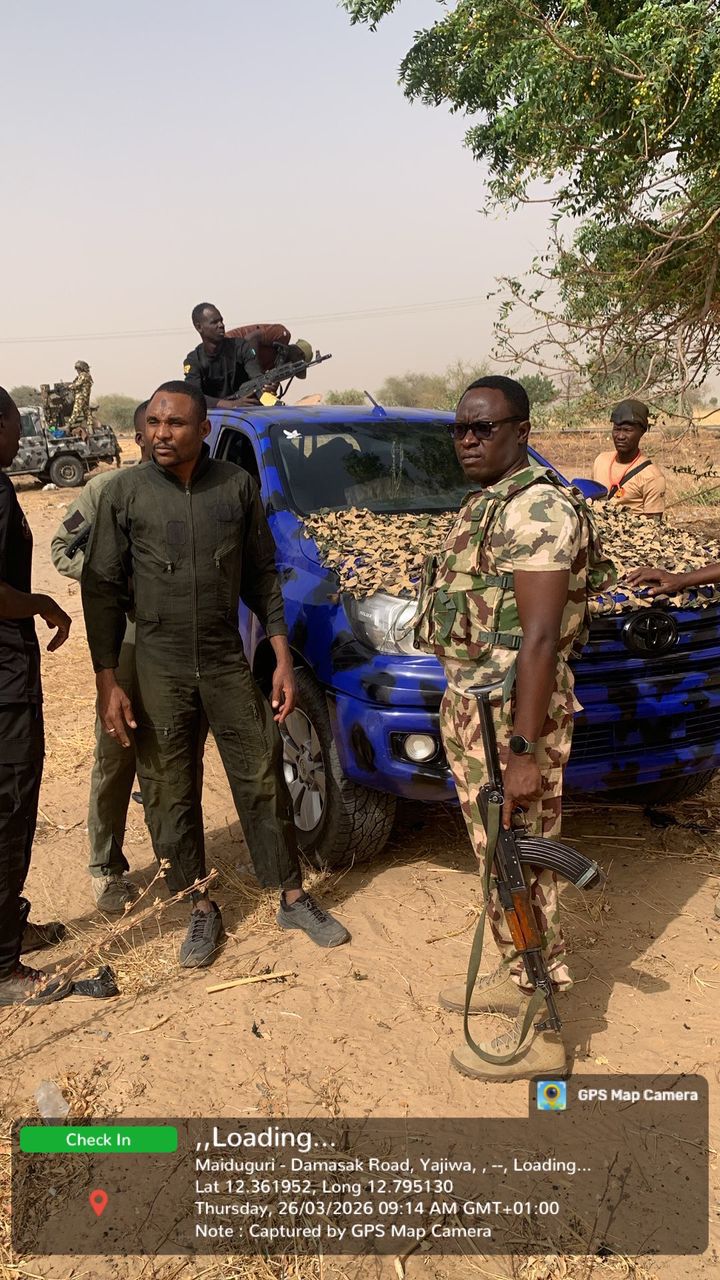
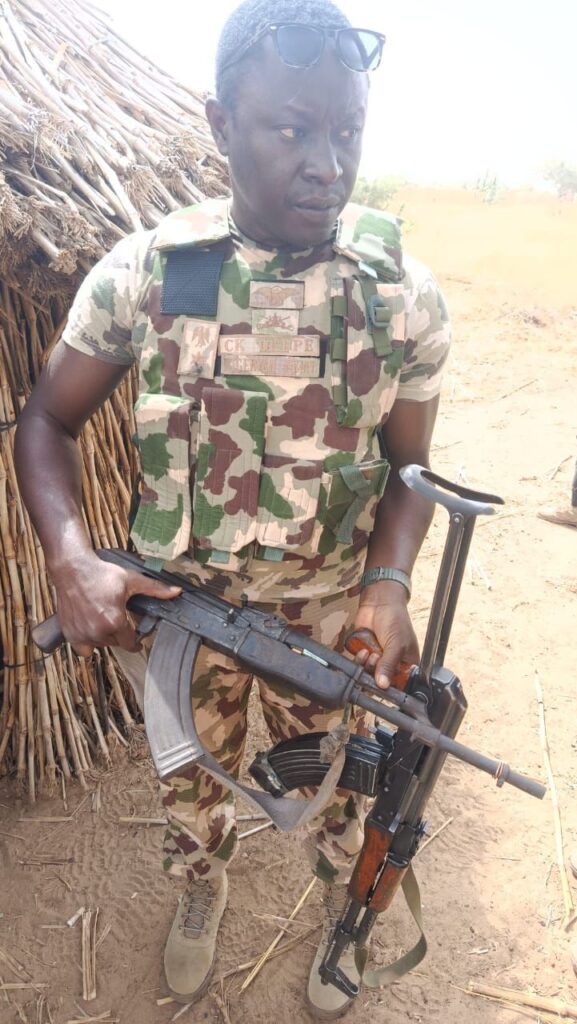
Troops recover ak-47 rifle, intensify manhunt for ISWAP logistics suspect in Borno
By: Zagazola Makama
Troops of Operation Hadin Kai have recovered an AK-47 rifle and intensified a manhunt for a suspected ISWAP logistics supplier in Magumeri Local Government Area of Borno State.
Security sources said the operation followed credible intelligence on the movement of a wanted suspect identified as Mallam Malti, believed to be involved in supplying arms and ammunition to ISWAP elements.
According to the sources, the suspect was last sighted at Golaram area, near Gubio axis, carrying a bag suspected to contain weapons intended for delivery to terrorists.
Troops of 212 Battalion, supported by members of the Civilian Joint Task Force (CJTF), swiftly mobilised to the area and conducted a thorough search along the suspected route.
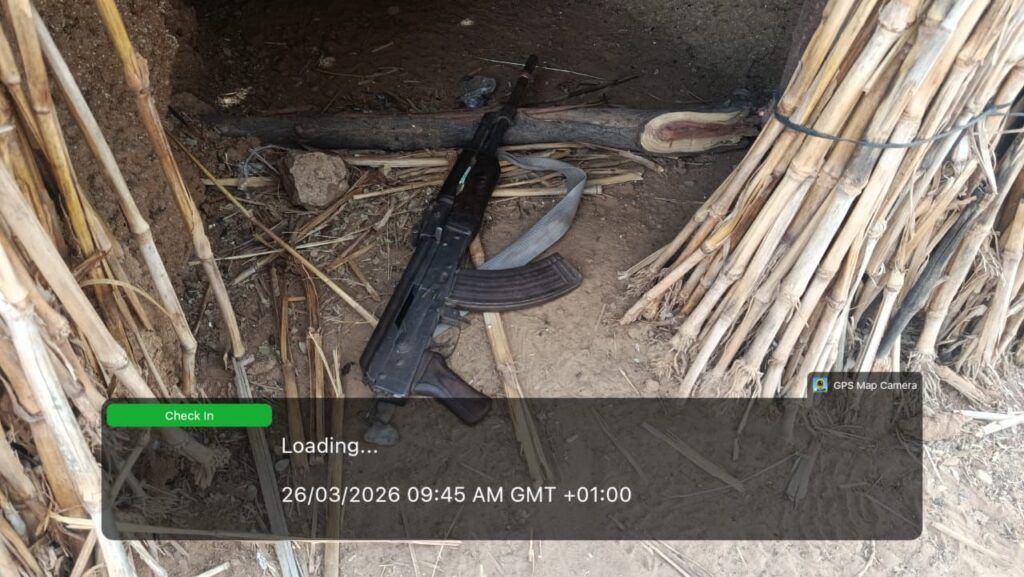
“Although the suspect evaded arrest, troops recovered one AK-47 rifle and an empty magazine concealed in a shelter during the operation,” the source said.
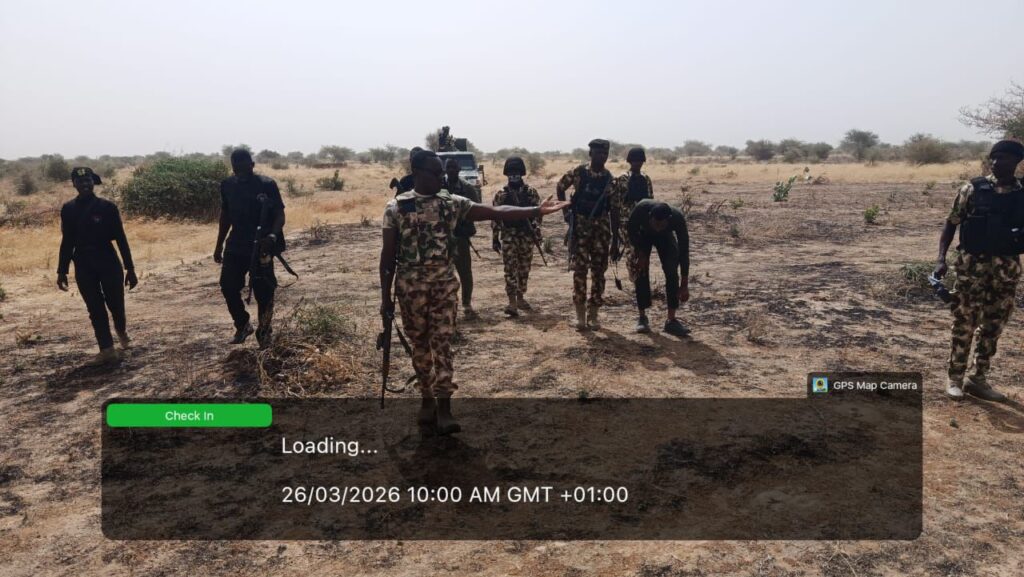
The sources added that efforts to apprehend the suspect are ongoing, with security operatives maintaining close monitoring of his known associates and networks.
Troops recover ak-47 rifle, intensify manhunt for ISWAP logistics suspect in Borno
NCTC-ONSA, Partners Intensify Push to Localise PCVE Strategy
By: Michael Mike
Efforts to deepen Nigeria’s response to violent extremism have gained renewed momentum as state governments, civil society actors, and development partners intensify efforts to localise the country’s Policy Framework and National Action Plan on Preventing and Countering Violent Extremism (PF-NAP).
The push, driven by the Preventing and Countering Violent Extremism Knowledge, Innovation and Resource Hub (PCVE-KIRH) of PAVE Network and National Counter-Terrorism Centre of the Office of National Security Adviser (NCTC-ONSA) in collaboration with partners including Nextier, SPRING Programme, FCDO, Global Community Engagement and Resilience Fund (GCER), aims to translate national policy into practical, state-level action.
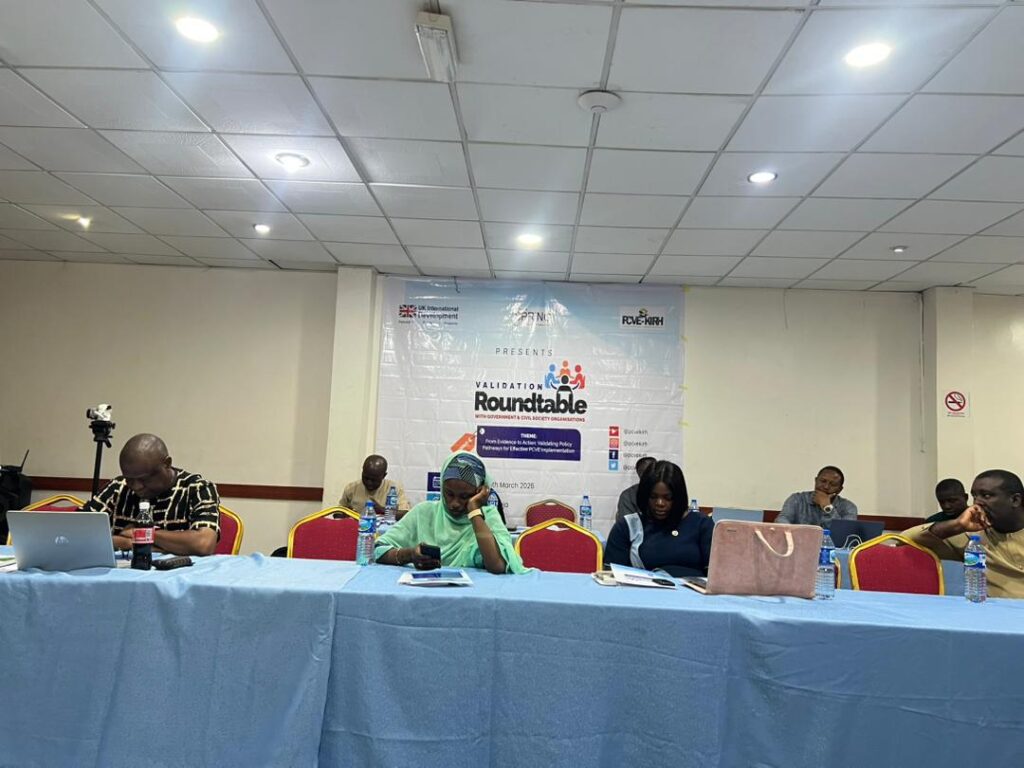
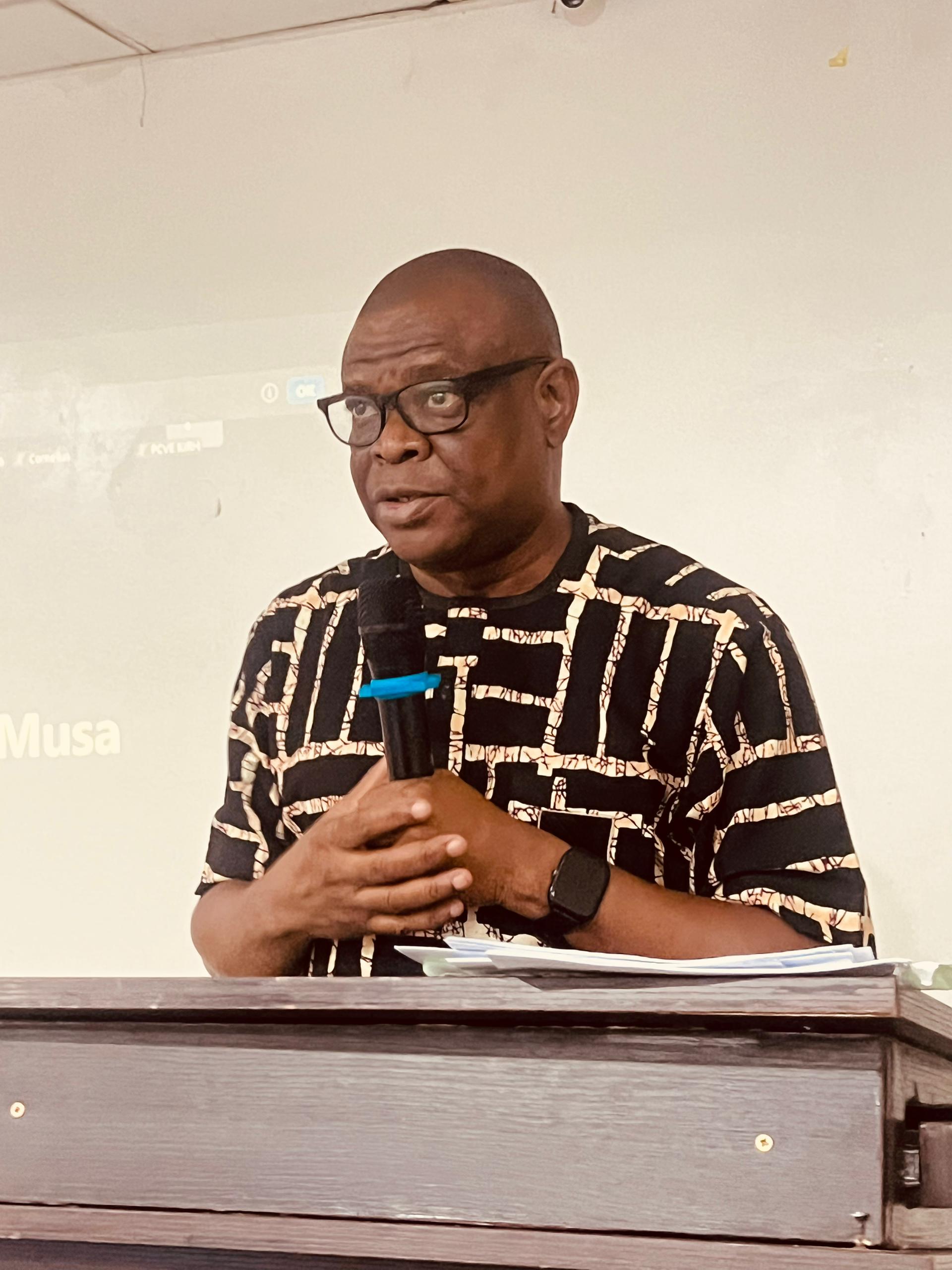
At a high-level virtual consultative forum held on Wednesday, over 60 participants drawn from federal and state institutions, civil society organisations, and technical working groups across the country deliberated on pathways to strengthen implementation.
Chair of the PAVE Network, Jaye Gaskia, said the meeting builds on over a year of pilot interventions focused on bridging the gap between national frameworks and subnational realities.
According to him, the emphasis is shifting from “domestication” to localisation, allowing states to adapt national policies to their peculiar security and socio-political contexts.
“We are deliberately focusing on localisation because this is a national policy that must be adapted to local realities. States must identify their priorities, develop their own action plans, and establish coordination mechanisms that work for them,” he said.
He noted that Technical Working Groups established in several states, particularly in the North-west, have emerged as critical vehicles for implementation, bringing together government actors, civil society, and community stakeholders.
Speaking, the Principal Staff Officer (PSO) of the PCVE Directorate at the NCTC-ONSA, Ms Iye Mangset, commended the expanding collaboration among stakeholders. Mangset recalled that the PF-NAP, first developed in 2017 and recently revised in 2025, has been strengthened to reflect emerging realities.
She said that the updated framework now includes six core pillars: institutionalisation and mainstreaming of PCVE; access to justice; capacity building for individuals and communities; strategic communication; research, documentation and learning; and gender mainstreaming.
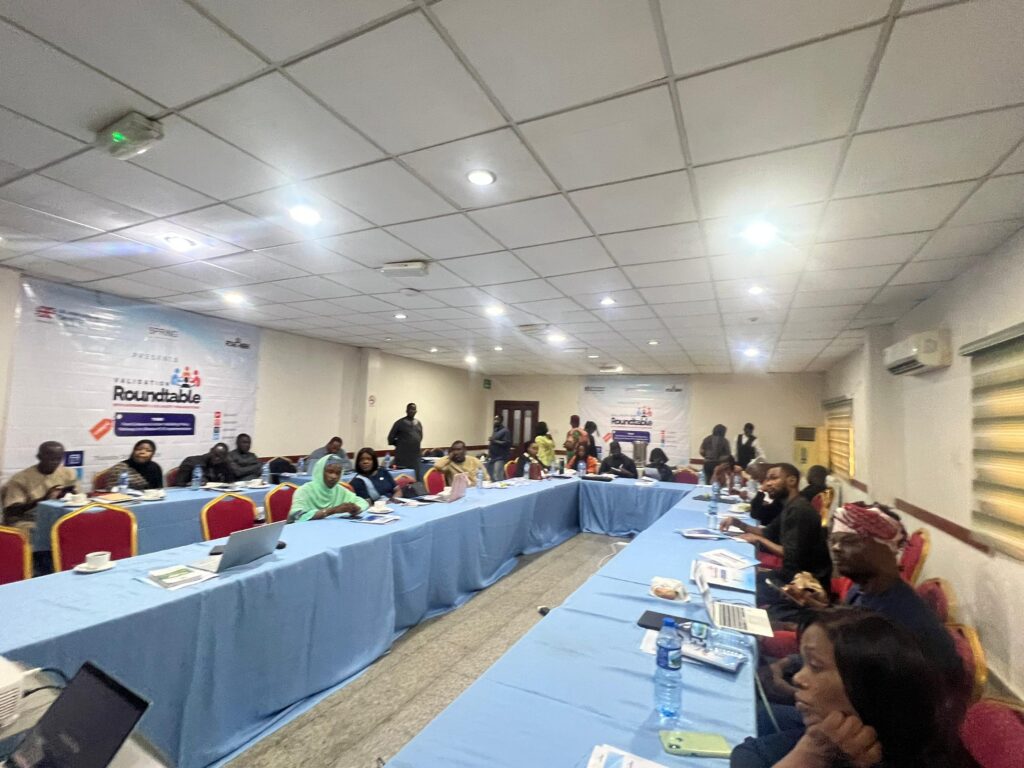
Mangset emphasised that the priority now is effective implementation at the state level, urging stakeholders to sustain the momentum. “We desire to see all partners, especially those from the states, continue to support and sustain this effort so that the framework delivers real impact,” she said.
Also speaking, the National Coordinator of GCERF Nigeria, Ms Yetunde Adegoke, underscored the importance of continuity. She noted that progress made over the past year must be consolidated through sustained engagement and forward-looking strategies.
Similarly, a Partner at Nextier, Dr Ndubisi Nwokolo, stressed that tackling violent extremism requires a shift from reactive, force-based responses to proactive, non-coercive approaches.
“For this to succeed, we must address the root causes of radicalisation. Violent extremism is not just a security issue, it is deeply tied to governance, inequality and social exclusion,” he said.
Nwokolo added that changing realities in Nigeria demand a rethink of long-held assumptions about extremism, noting that the phenomenon is no longer distant but increasingly localised.
Discussions at the forum revealed that while progress has been recorded in developing state-level PCVE structures and action plans, significant gaps remain.
Participants cited some of the challenges as including: weak coordination across agencies, bureaucratic delays in implementation, limited funding and overreliance on donor support, and inconsistent political commitment.
Similarly, the state actors shared experiences of ongoing efforts, including stakeholder engagement, early warning systems, and community-based interventions, but stressed that these initiatives often operate in silos. “There is growing awareness, but implementation is still uneven. What is needed now is alignment and sustained political will,” one participant noted.
The key highlight of the forum was the recognition that fragmented responses have enabled extremist groups to exploit regional gaps. Participants stressed that without a coordinated national and subnational strategy, gains recorded in one area could easily be reversed as groups relocate.
To address this, stakeholders called for stronger alignment between federal and state efforts, the institutionalisation of Technical Working Groups as State Coordination Committees, the integration of PCVE into broader state security and development plans, and dedicated budgetary allocations by state governments.
The forum also underscored the critical role of strategic communication in countering extremist narratives and building public trust. A national strategic communication plan developed under the framework is expected to be launched alongside the revised PF-NAP.
Participants emphasised that community engagement, youth inclusion, and early warning mechanisms must be central to implementation efforts.
With increased state participation and stronger partner collaboration, stakeholders expressed optimism that localisation of the PF-NAP could significantly enhance Nigeria’s capacity to prevent and counter violent extremism. However, they cautioned that success will depend largely on political will, sustainable funding, and coordinated action across all levels of government.
The forum ended with participants renewing their commitment to deepen collaboration and move from policy frameworks to measurable impact at the community level.
NCTC-ONSA, Partners Intensify Push to Localise PCVE Strategy

Doma United secure NPFL promotion with win over Mighty Jets
Doma United Football Club of Gombe State have secured promotion to the Nigeria Premier Football League (NPFL) following a 2-0 victory over Mighty Jets of Jos at the Pantami Stadium on Wednesday.
The News Agency of Nigeria (NAN) reports that Doma United, who top Conference C of the Nigeria National League (NNL) with 26 points from 13 matches, are the first team to seal promotion to the NPFL.
The club, relegated from the NPFL in the 2023/2024 season, are five points clear of second-placed FC Basira in Conference C, with one match remaining.
NAN reports that the 2025/2026 NNL season is organised into four conferences (A, B, C and D), with the top team in each conference earning automatic promotion to the NPFL, replacing the previous Super 8 play-off format.
Confirming the development, Doma United Technical Adviser, Najib Mabu, told NAN in Gombe on Thursday that the team had secured promotion with a game in hand.
Mabu described the journey as smooth but challenging, noting that the return to the top flight means a lot to the club and sports stakeholders in the state.
“This is huge and we are very happy that we are back.
“We will start welcoming top clubs to Gombe State again.
“I want to commend the Chief Executive Officer of Doma United, Alhaji Suleiman Umar, for his consistent support and commitment to the club.
“I also thank our players and fans for their resilience and dedication, which have paid off,” he said.
Mabu added that the club’s ambition in the NPFL goes beyond participation, expressing confidence in competing for honours and securing a continental ticket.
“We are not just going to participate in the NPFL; we will compete for every available title.
“I am confident we can secure a continental ticket,” he said.
NAN reports that Doma United will be making their second appearance in the NPFL, after recording eight wins, two draws and three losses in the current NNL campaign.
Doma United secure NPFL promotion with win over Mighty Jets

IBUAM: 5 Years Comprehensive Academic and Practical Training For Borno Indigenes Courtesy of Babagana Zulum’s Administration

Troops neutralise terrorist, recover arms in ambush near Nigeria–Cameroon border

Troops arrest suspected Boko Haram logistics supplier in Borno

Roger Federer’s Shock as DNA Results Reveal Myla and Charlene Are Not His Biological Children

THE PLIGHT OF FARIDA

FAILED COUP IN BURKINA FASO: HOW TRAORÉ NARROWLY ESCAPED ASSASSINATION PLOT AMID FOREIGN INTERFERENCE CLAIMS
-
 News2 years ago
Roger Federer’s Shock as DNA Results Reveal Myla and Charlene Are Not His Biological Children
-
Opinions4 years ago
THE PLIGHT OF FARIDA
-
 News11 months ago
FAILED COUP IN BURKINA FASO: HOW TRAORÉ NARROWLY ESCAPED ASSASSINATION PLOT AMID FOREIGN INTERFERENCE CLAIMS
-

 News2 years ago
EYN: Rev. Billi, Distortion of History, and The Living Tamarind Tree
-
 Opinions4 years ago
POLICE CHARGE ROOMS, A MINTING PRESS
-

 ACADEMICS2 years ago
A History of Biu” (2015) and The Lingering Bura-Pabir Question (1)
-

 Columns2 years ago
Army University Biu: There is certain interest, but certainly not from Borno.
-

 Opinions2 years ago
Tinubu,Shettima: The epidemic of economic, insecurity in Nigeria
