
News
G20 Summit: President Tinubu Demands Equity In Global Mineral Trade, AI Governance

G20 Summit: President Tinubu Demands Equity In Global Mineral Trade, AI Governance
** Says wealth of critical minerals must translate into shared prosperity in Africa
** Seeks fair handling of global financial flows, recurring debt crises
** Urges world leaders to take bold steps in reforming international financial architecture
By: Our Reporter
President Bola Ahmed Tinubu has called for a global framework that benefits communities hosting critical minerals in Nigeria and Africa, ensuring value addition at the source.
This is coming just as Nigeria also backed the creation of global ethical standards for Artificial Intelligence (AI), aimed at accelerating development across the world.
President Tinubu made the call at the Third Session of the 2025 Group of 20 (G20) Leaders’ Summit, held at the Johannesburg Expo Centre, South Africa, themed “A Fair and Just Future for All: Critical Minerals, Decent Work, Artificial Intelligence.”
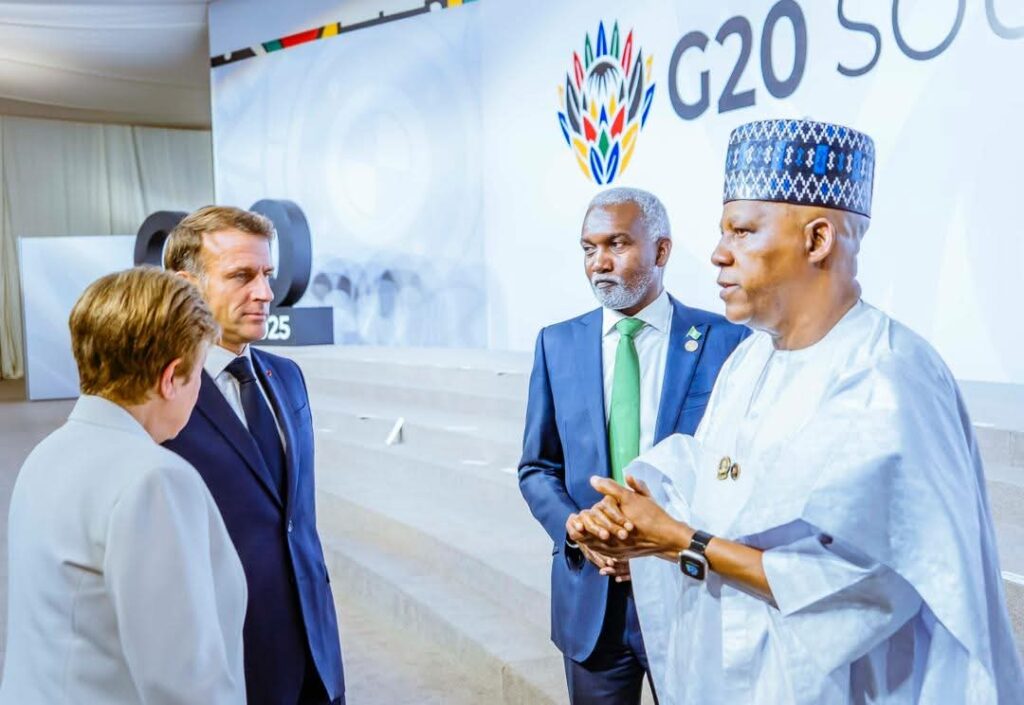
The President, who was represented by Vice President Kashim Shettima, highlighted that for Nigeria and Africa, critical minerals are more than natural deposits, as they hold the promise of industrial transformation for the continent.
The Nigerian leader stressed that while the possession of resources alone does not guarantee prosperity, relevant authorities and stakeholders must ensure that the extraction and trade of critical minerals are governed by fairness, transparency, and accountability.
President Tinubu emphasised that such responsible extraction and trade are necessary to ensure that the wealth generated from hosting communities translates into shared progress.
He said: “Nigeria calls for a global framework that promotes value addition at the source, supports local beneficiation, and ensures that communities hosting these resources are not left behind.
The issue before us reaches far beyond the narrow arithmetic of economics and speaks to the moral character of the world we aspire to build.”
The Nigerian leader further stated that as the world advances through green and digital transitions, progress must remain people-centred.
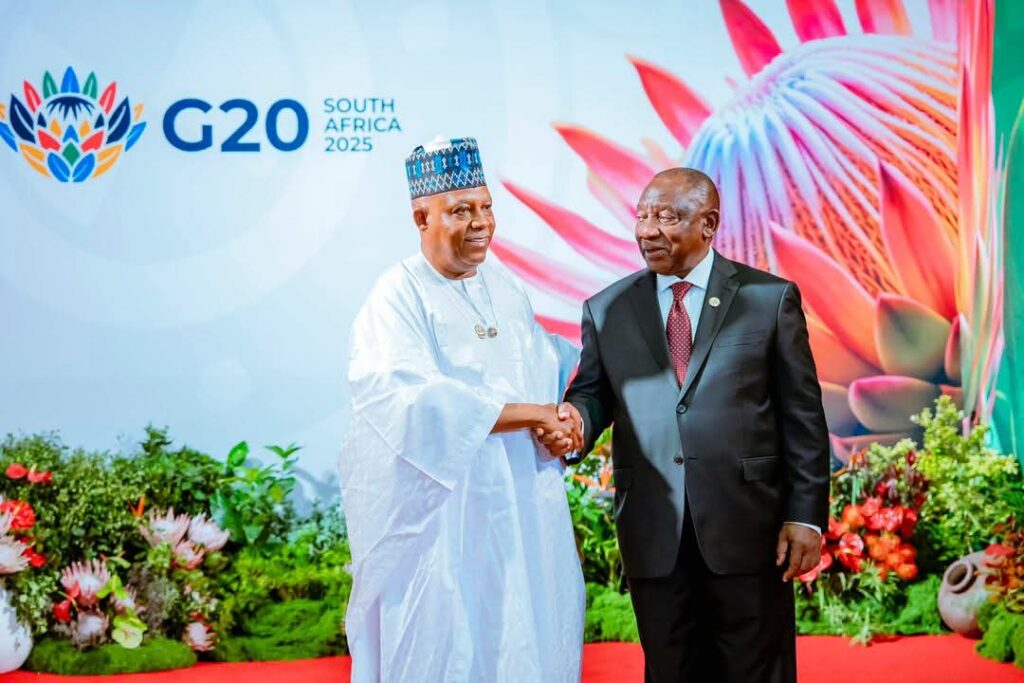
“Decent work is the anchor that makes these transitions fair, inclusive, and sustainable. It is the foundation of development that ensures every person has the opportunity to contribute, thrive, and share in national prosperity,” he added.
President Tinubu disclosed that Nigeria, through the Renewed Hope Agenda, is investing in future-ready skills by empowering Nigerian youths through digital literacy, vocational training, and entrepreneurship.
For a fair and just future, President Tinubu urged G20 leaders to deepen collaboration on technology transfer, capacity building, and inclusive investments that prioritise human dignity over profit alone.
On artificial intelligence, which has immense potential to accelerate development globally, the President said the task before G20 leaders, development partners, and governments is to ensure that AI remains a servant of humanity, not a force that reshapes society at the expense of those it ought to uplift.
According to the Nigerian President: “Nigeria supports the creation of global ethical standards for AI that uphold safety, transparency, and equity,” the President said, adding, “We must ensure that AI becomes a tool of empowerment, not exclusion; of job creation, not displacement.”
To harness AI’s job creation and empowerment potential, the President called for deliberate partnerships between developed and developing nations, between the public and private sectors, and between innovation and inclusion.
“The G20 must therefore address systemic bias and foster sustained multilateral dialogue to ensure that the benefits of AI are shared equitably and its risks responsibly managed,” he added.
The President noted that within a broader vision of shared responsibility and global stewardship, critical minerals, decent work, and artificial intelligence are bound by a single calling, which is to shape an economy that uplifts rather than excludes; an economy that measures its strength not only by growth but by the dignity it affords every human being.
He urged the G20 leaders and partners to build a future where Africa is not merely a supplier of raw materials, but a continent of value creation, innovation, and dignity in work.
Similarly, President Tinubu has asked world leaders to come up with a more equitable and responsive system to manage global financial flows and sincerely address the recurring debt crises in a manner that meets the needs of all nations.
This, he said, had become necessary because many developing countries still grapple with systemic barriers restraining economic growth, as well as weakening trade and limiting financial inclusivity.
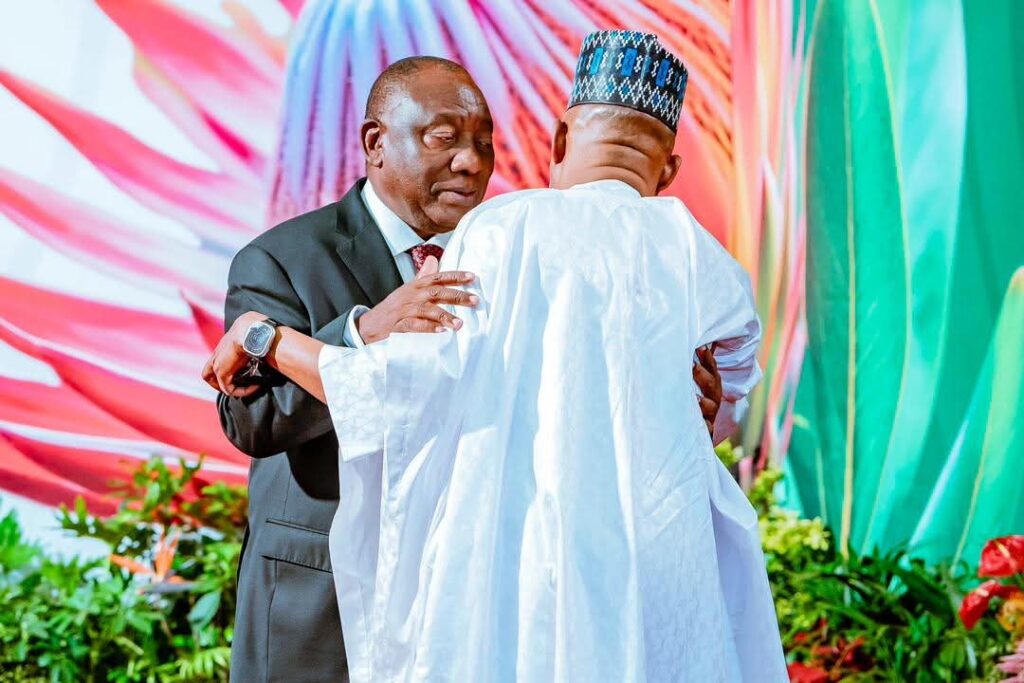
The Nigerian leader, who is represented at the global event by his deputy, Vice President Shettima, regretted that the multilateral frameworks, currently being relied on, no longer reflect the complexities of the present world, as the were “built in an era far removed from” the present challenges,
In his statement delivered on his behalf by VP Shettima, the Nigerian President pointed out that this year’s theme of the summit, bordering on “inclusive and sustainable economic growth, trade, financing for development and the debt burden, speaks to the realities of developing nations.”
Demanding a fair deal for Africa and other developing countries of the world, he stated: “For trade to be truly inclusive, the G20 must take bold and deliberate steps towards reforming the international financial architecture and the global institutions that sustain it.
“Only a more equitable and more responsive system can manage global financial flows with fairness, address recurring debt crises with sincerity and meet the needs of all nations, especially those in the Global South who have too often stood at the margins of global opportunity.”
President Tinubu said it would be difficult for Africa to realise a positive paradigm shift “in its development trajectory without a collective resolve of the G20,”
He noted that the continent cannot rise on the wings of aspiration alone without confronting the persistent regional challenges confronting it, particularly “the urgent need for sustainable financing to ensure the effective implementation of our developmental priorities.”
The Nigerian leader observed that rising debt burdens have continued “to drag economies back into cycles of fragility,” transforming “local difficulties into global vulnerabilities.”
Accordingly, he implored the G20 to place debt sustainability and the responsible utilisation of critical minerals at the heart of its agenda for inclusive development.
“The G20 must, in adopting the Leaders’ Declaration, take with utmost seriousness the responsibility to advance policies that drive sustainable growth, promote financial inclusion and confront emerging risks,” he added.
G20 Summit: President Tinubu Demands Equity In Global Mineral Trade, AI Governance


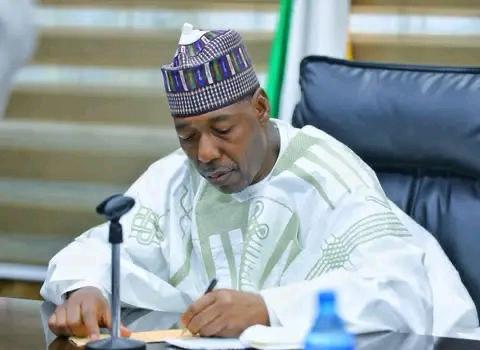
Zulum Appoints Engr Peter Samuel as General Manager BOSAMA
By: Our Reporter
Borno State Governor, Professor Babagana Umara Zulum, has approved the appointment of Engr Peter Samuel, MNSE, MNIAE, as the General Manager of Borno State Agricultural Mechanization Authority (BOSAMA).
In a statement by the Special Adviser to the Governor on Media, Dauda Iliya, the appointment was based on Engr Samuel’s outstanding professional competence, proven track record, and experience in agricultural engineering and mechanization.
The statement noted that Engr Samuel possesses the requisite qualifications, technical expertise and leadership capacity required to reposition BOSAMA in line with Governor Zulum’s agricultural transformation agenda.
The newly appointed General Manager is an Agricultural Engineer with academic, professional, administrative, and practical experience in agricultural mechanization, farm power and machinery, irrigation engineering, and agricultural infrastructure development.
He holds a Master of Engineering (M.Eng.) in Farm Power and Machinery from Joseph Sarwuan Tarka University, Makurdi (formerly the Federal University of Agriculture, Makurdi), a Postgraduate Diploma in Farm Management and Production Economics from Nasarawa State University, and a Bachelor of Engineering (B.Eng.) in Agricultural and Environmental Resources Engineering from the University of Maiduguri.
Engr Samuel has distinguished himself through years of meritorious service in teaching, research, agricultural engineering practice, and project implementation. He currently serves as a Lecturer in Farm Power and Machinery at Ramat Polytechnic, Maiduguri.
Over the years, he has held several strategic leadership positions, including General Manager of a commercial agricultural enterprise, Project Coordinator, Programme Coordinator, and Consultant on numerous agricultural development interventions implemented by reputable national and international organisations.
He is a member of the Nigerian Society of Engineers (NSE) and the Nigerian Institution of Agricultural Engineers (NIAE).
Governor Babagana Zulum congratulated the new General Manager on his appointment and urged him to deploy his wealth of knowledge, technical expertise, and experience in agricultural mechanization to strengthen the operations of BOSAMA
Zulum Appoints Engr Peter Samuel as General Manager BOSAMA
Troops Arrest Suspected Military Impostor in Katsina
By Zagazola Makama
Troops of 17 Brigade have arrested a suspected military impostor during a fighting patrol in Malumfashi Local Government Area.
Security sources told Zagazola Makama that the suspect was apprehended at about 1:30 p.m. on July 4 by troops deployed at the Forward Operating Base (FOB) Malumfashi while conducting routine patrols within Malumfashi town.
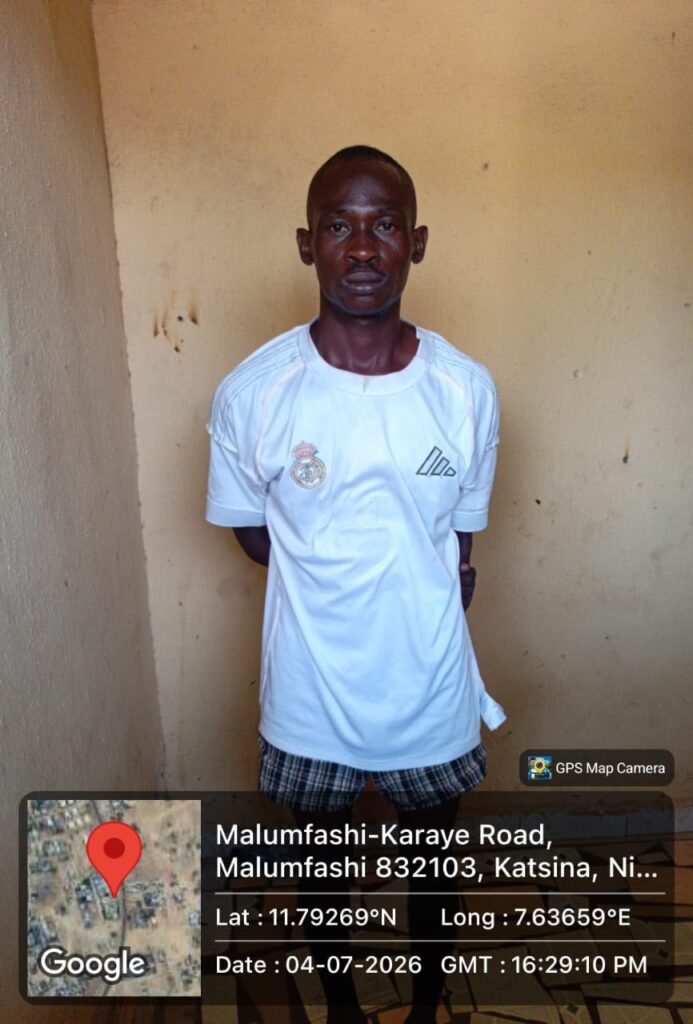
According to the sources, the suspect was intercepted while wearing a woodland camouflage three-quarter short, raising suspicion among the troops.
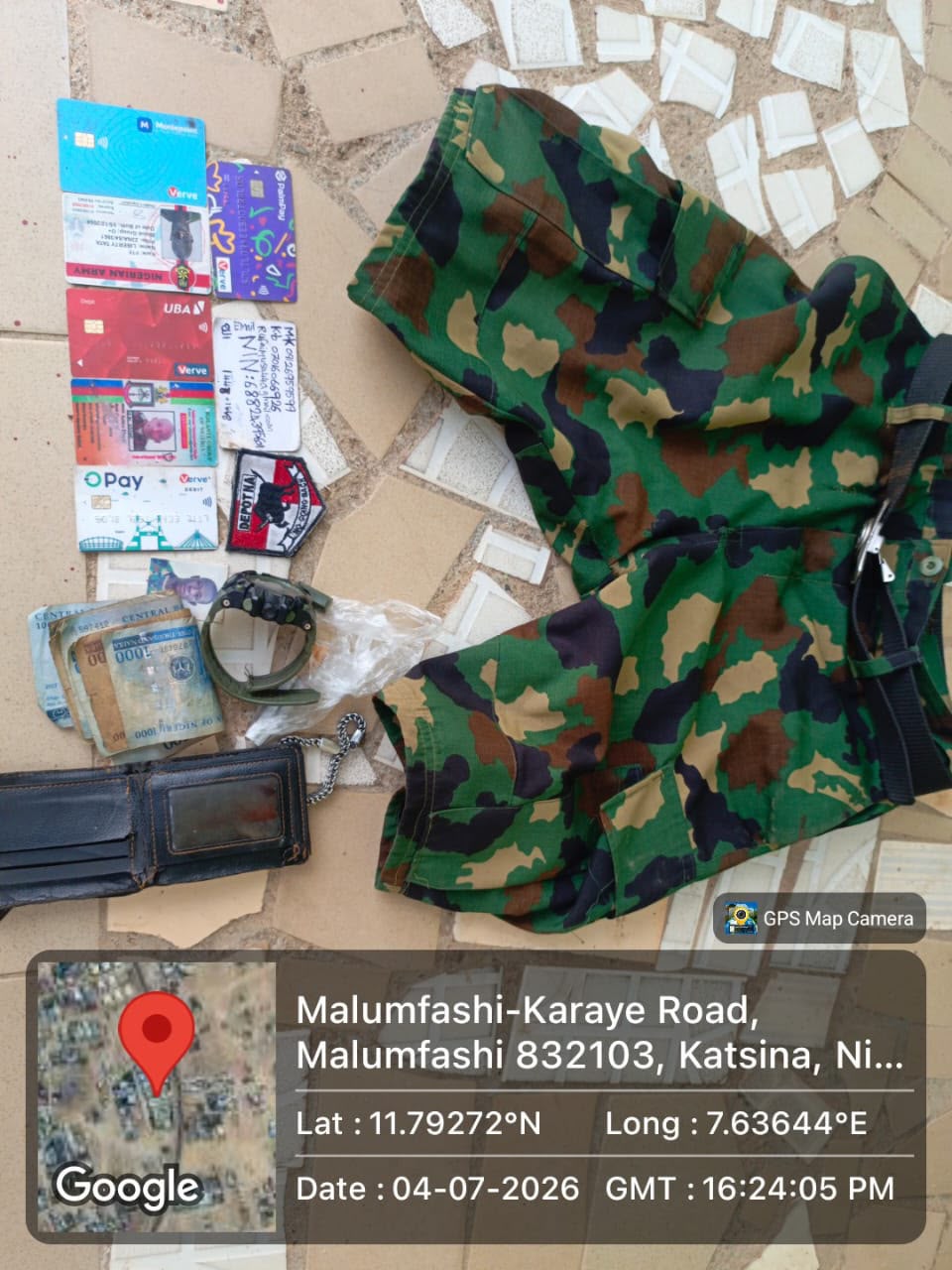
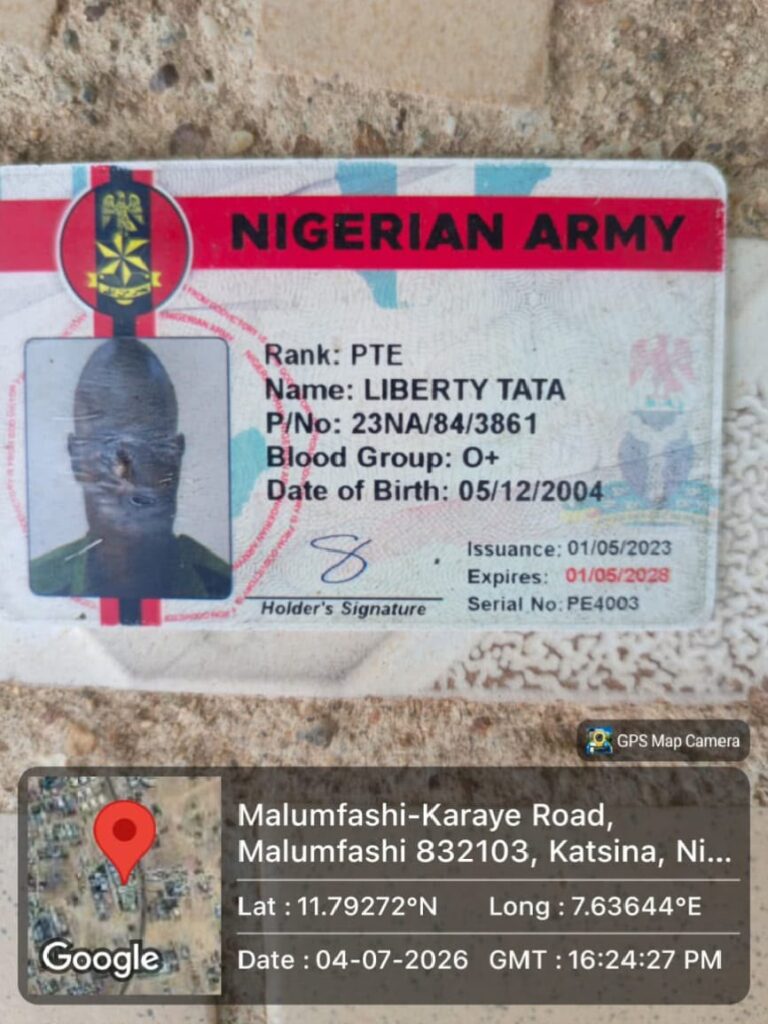
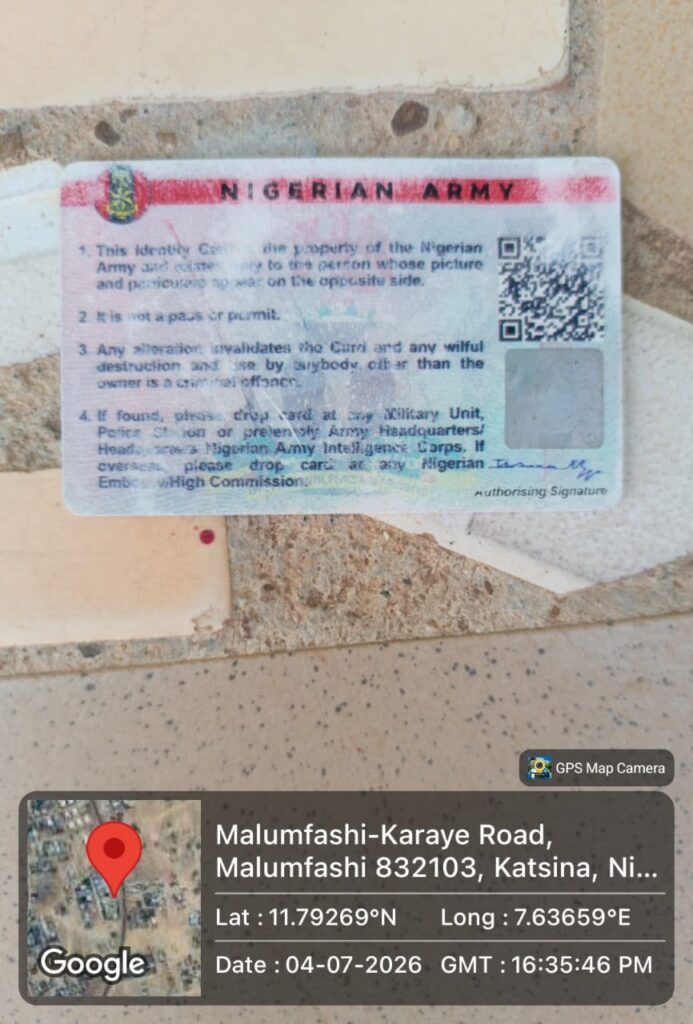
A search conducted on the suspect led to the recovery of a fake Nigerian Army identity card, four Automated Teller Machine (ATM) cards, one woodland camouflage three-quarter short, a wristwatch and the sum of ₦17,000.
The suspect and the recovered exhibits are currently in military custody pending further investigation.
Military sources said the arrest forms part of ongoing efforts to curb impersonation of security personnel and other criminal activities within the area.
Troops Arrest Suspected Military Impostor in Katsina
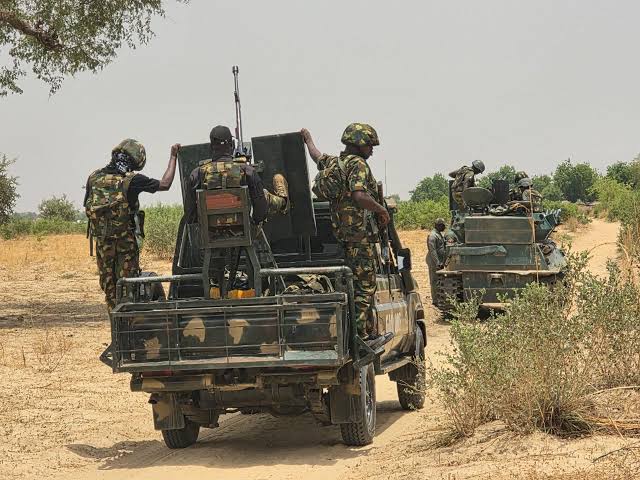
Troops Recover 50 Rustled Cattle, Repel Suspected Rustlers in Kaduna
By Zagazola Makama
Troops deployed at the Forward Operating Base (FOB) Kankomi have recovered 50 rustled cattle after repelling suspected cattle rustlers during an ambush operation in Chikun Local Government Area.
Security sources told Zagazola Makama that the troops responded to a distress call at about 9:55 a.m. on July 4 over the activities of suspected rustlers at Ungwan Gontu community.
According to the sources, the troops swiftly laid an ambush and made contact with the fleeing suspects, forcing them to abandon the stolen livestock and escape into the surrounding area.
During the operation, the troops recovered 50 rustled cattle, which were subsequently identified and handed over to their rightful owner.
Military sources said efforts are ongoing to track down the fleeing suspects as security operations continue to combat cattle rustling and other criminal activities across Kaduna State.
Troops Recover 50 Rustled Cattle, Repel Suspected Rustlers in Kaduna

Zulum Appoints Engr Peter Samuel as General Manager BOSAMA

DSS Frees Cardiac Surgeon Martin Aghaji on Bail Over Alleged Economic Crime

Troops Arrest Suspected Military Impostor in Katsina

Roger Federer’s Shock as DNA Results Reveal Myla and Charlene Are Not His Biological Children

THE PLIGHT OF FARIDA

FAILED COUP IN BURKINA FASO: HOW TRAORÉ NARROWLY ESCAPED ASSASSINATION PLOT AMID FOREIGN INTERFERENCE CLAIMS
-
 News2 years ago
Roger Federer’s Shock as DNA Results Reveal Myla and Charlene Are Not His Biological Children
-
Opinions4 years ago
THE PLIGHT OF FARIDA
-
 News1 year ago
FAILED COUP IN BURKINA FASO: HOW TRAORÉ NARROWLY ESCAPED ASSASSINATION PLOT AMID FOREIGN INTERFERENCE CLAIMS
-

 News2 years ago
EYN: Rev. Billi, Distortion of History, and The Living Tamarind Tree
-
 Opinions5 years ago
POLICE CHARGE ROOMS, A MINTING PRESS
-

 ACADEMICS2 years ago
A History of Biu” (2015) and The Lingering Bura-Pabir Question (1)
-

 Columns2 years ago
Army University Biu: There is certain interest, but certainly not from Borno.
-

 Politics1 year ago
2027: Why Hon. Midala Balami Must Go, as Youths in Hawul and Asikira/Uba Federal Constituency Reject ₦500,000 as Sallah Gift
