
Politics
APC Deputy National Chairmanship: Why Senator Abubakar Kyari may be standing taller in the race

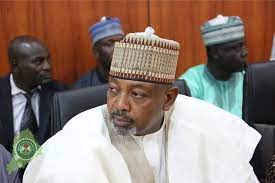
APC Deputy National Chairmanship: Why Senator Abubakar Kyari may be standing taller in the race
By: James Bwala
The zoning of the All Progressive Congress, APC position for the Deputy National Chairmanship to the Northeast is said to be a strategic move in order to balance the party’s position for its outing ahead the 2023 general elections. This tactical move according to political watchers is said to come with some dramatic shift even for the northeast by further micro-zoning the position for the party to overcome its challenges of leadership crises and make way for a better beginning.
However, those who will make the difference according to observers must be those whose political ABC are known to be straight. Amongst the top gladiators for this outing, names like Barata, Kashim Imam, Abubakar Kyari and others streams among party supporters and king makers. For the party to have a good daytrip with the new team to come, pundits are considering the strength and weaknesses of those standing in the line to take the party to Nirvana.
Also Read: Zulum, Shettima, Borno First Lady Grace Osinbajo’s School…
With contending forces building up subterfuge to stand tall at the party’s convention come March 26, 2022, political commentators are concluding that the Senator representing northern Borno at the Red Chamber, Senator Abubakar Kyari may be the party’s anointed candidate going by his pedigree as the only candidate in the race who has a history of an unwavering stand with the party.
NEWSng observed that, while it was rumoured that President Muhammadu Buhari may have already anointed the former governor of Nasarawa state, Senator Abdullahi Adamu for the Chairmanship position from the North Central, the combination of Adamu and Borno’s Abubakar Kyari could be the most important decision the party had reached so far on its build up in repositioning itself ahead of 2023 general elections.
Speaking with Ahmed Umar, a political analyst in Abuja, he described Senator Abubakar Kyari as the magical arrow in APC’s quiver. According to him, Kyari, a well-respected Senator on the floor of the Congress, has worked with Senator Abdullahi Adamu and therefore the two have a good understanding of what is required of the struggles in championing the party to victory.
“The blend of the older generation – Abdullahi Adamu and the younger generation – Senator Abubakar Kyari has balanced the call by supporters of their expectations which has also been part of the struggles that saw the trailing conflicts in the APC recently. The combination carries a lot of political weight in terms of experience, wisdom and Knowledge required for the repackaging of the party for a better outing.” Umar said.
He also observed that while other contenders for the position may have their own support, the pluses with which Senator Abubakar Kyari is coming, stands taller as he has both the backing of the inner Caucuses in the political arrangement and his experience and knowledge about the system and party affairs having been a successful party-man with long standing and unwavering loyalty which speaks for him at every corners of negotiations in and outside the party.
“I am aware that some people are interested in the position as well. I wouldn’t want to mention names as party loyalists. However, I would say I know them personally. If I should put their antecedents in politics, I can comfortably put them on the rollerball of jokers and political traders of which we all know their trades. Some of them are not sellable materials for the position of Deputy National Chairmanship of our great party. They also know that they have the minuses in the race but as their trading pattern, they are out to go for a bargain, which is their trade mark.
Also Ibrahim Idris, a stakeholder in the APC revealed that one of the factors the party may be considering was the fact that the ANPP bloc, which Senator Abubakar Kyari belongs from inception was one of the political parties that merged to form the APC ahead of the 2015 general election which had not been adequately considered in the political arrangement and therefore needs to be accommodated in the scheme of things in the APC as it were.
“In reaching the decision to zone the APC deputy national chairmanship to the North-east, the presidency and the party’s national leadership and indeed its top echelon might have looked at developments in the party. With these reasons, Senator Kyari is already standing taller in the race; he is both a politician and an administrator. The office requires a lot of administrative support and the party will be counting on his experience to support the task attached to this office. He enjoys an overwhelming support from his colleagues and governors whose political weights are heavier in the making of the party and its affairs.
Also Read: IGP HAS ACCESS TO IRT FILES WHETHER ABBA KYARI IS THERE OR…
“There is a political office that requires politicians with a political background like that of Senator Abubakar Kyari to work out and that is loyalty. People who are here today and are sure to be there tomorrow and very unstable and such are the ones the party is trying to avoid in this build up. Abubakar Kyari has been in the bloodline and therefore has the blessings of the king makers.
“Like I said, Kyari represents the classical example of the loyalty the party needs to ride to glory in the unfolding political scenario as we match to form a formidable party stronger and better than what we have now. He has the quality needed to support Abdullahi Adamu’s leadership or any other that may emerge from the north Central as the National Chairman of our great party. It is clearer now that the choice is from the North Central and whether the anointed is as the rumour goes, we shall come to know in a few days.” He added.
APC Deputy National Chairmanship: Why Senator Abubakar Kyari may be standing taller in the race


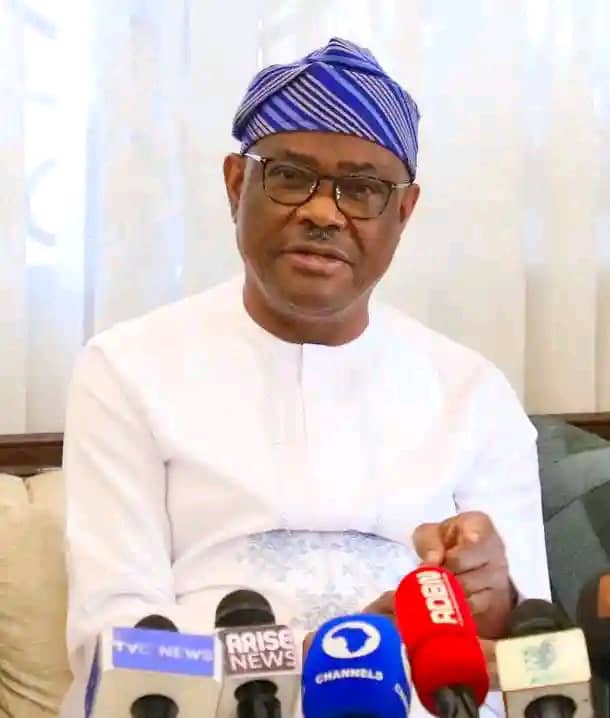
2027: WIKE PDP faction receives large number of defections in Yobe
By: Yahaya Wakili
The Yobe state faction of the Peoples Democratic Party (PDP) aligned with the minister of the Federal Capital Territory, Nyeson Wike, has received a large number of defectors from various political parties in Nangere and Fune local government areas ahead of the 2027 general election.
The Peoples Democratic Party receives defectors from the APC, ADC, and NDC, as well as large numbers of PDP supporters of the former national chairman of the PDP, Ambassador Umaru Illiya Damagum, in the Nangere and Fune local government areas of Yobe State.
Former APC and PDP members and supporters of Ambassador Umaru Damagum, pioneers in Damagum B and Tikau wards, Alhaji Muhammadu Abubakar and Malam Abdu Umar, respectively, cite hardship, unemployment, and bad leadership as reasons for defecting.
The Peoples Democratic Party (PDP) leaders in areas promise equal opportunities for new members.

Governorship candidate in Yobe State, Alhaji Abdullahi Usman Maigida, pledges jobs, infrastructure, and inclusive governance.
Alhaji Maigida says the PDP influx strengthens its grassroots structure ahead of the 2027 elections.
The event witnessed the defections of several prominent political figures, including Dr. Ibrahim Aliyu, widely recognized as the first person to introduce the All Progressives Congress (APC) in Tikau Ward in the Nangere local government area.
2027: WIKE PDP faction receives large number of defections in Yobe
Politics
The Psychology of Nigerian Politicians and Voters Power, Survival, Emotion, and the Nigerian Democratic Mind


The Psychology of Nigerian Politicians and Voters Power, Survival, Emotion, and the Nigerian Democratic Mind
By Ameen Amshi PhD
Politics in Nigeria is often discussed through the lenses of corruption, elections, ethnicity, governance, and insecurity. Yet beneath all these issues lies something deeper and less examined: psychology.
Nigerian politics is not only a struggle for power; it is a struggle for survival, relevance, identity, emotional influence, and public validation. To truly understand the Nigerian political system, one must understand both the psychology of Nigerian politicians and the psychology of Nigerian voters, because both continuously shape each other.
The Nigerian politician does not operate in isolation. Neither does the Nigerian voter. They exist in a complicated relationship built on fear, hope, poverty, loyalty, identity, emotion, and expectation.
For many Nigerian politicians, political office is far more than public service. It represents security, influence, social status, economic access, and protection. In a society where institutions are still evolving and political relevance often determines personal influence, power becomes psychologically addictive.
This explains why many politicians struggle to leave the political space even after decades in office. Losing power in Nigeria can mean losing visibility, weakening alliances, reduced access, and fading public relevance. To many political actors, staying connected to power becomes a form of survival.
This survival mentality shapes political behavior:
- constant alliance building,
- aggressive control of party structures,
- loyalty calculations,
- and the endless pursuit of appointments and influence.
At the same time, Nigerian voters also operate from a survival mindset.
Many citizens do not vote based purely on ideology or policy sophistication. Instead, they often vote based on emotional connection, identity, accessibility, and immediate need. In communities where poverty, unemployment, insecurity, and weak public institutions exist, politics becomes personal.
The average voter frequently asks: - Who can help us?
- Who remembers our community?
- Who can provide opportunities?
- Who can we call in times of hardship?
This creates a system where politicians are expected not just to govern, but to function as providers, sponsors, protectors, and emergency responders.
As a result, patronage becomes psychologically normalized.
A politician who pays hospital bills, sponsors school fees, supports funerals, distributes food, or empowers youth groups is often perceived as compassionate and trustworthy, even when governance performance remains poor. The emotional visibility of generosity tends to outweigh the invisible value of long-term policy reforms.
This is one of the reasons Nigerian politics remains heavily personality driven rather than institution driven.
Another unique feature of politics in Nigeria is the near absence of rigid ideological divisions that traditionally define politics in many parts of the world.
In many democracies, political parties are clearly identified as: - leftwing,
- rightwing,
- conservative,
- liberal,
- progressive,
- labor oriented,
- socialist,
- nationalist,
- or populist.
In Nigeria, however, these ideological boundaries are largely blurred.
Most Nigerian political parties operate within similar political and economic frameworks, and politicians frequently move from one party to another without major ideological conflict. A politician may criticize a party today and join the same party tomorrow without fundamentally changing political beliefs or policy direction.
This is because Nigerian politics is driven less by ideology and more by: - access to power,
- coalition building,
- regional balancing,
- elite negotiations,
- influence,
- and political survival.
In reality, many Nigerian politicians regardless of party affiliation align around one central concept: the acquisition, retention, and management of power.
Perhaps the most important psychological reality in Nigerian politics is this:
“Every Nigerian politician was once a Nigerian voter.”
Most politicians did not begin as part of the elite political establishment. At some point, they were ordinary citizens criticizing government, complaining about corruption, questioning leadership failures, and believing they could do better if given the opportunity.
However, the Nigerian political system often transforms individuals faster than individuals transform the system.
The same person who once condemned government inefficiency from outside power may eventually find himself struggling with the same institutional pressures, political compromises, bureaucratic limitations, elite negotiations, and survival calculations once criticized.
That is what makes Nigerian politics psychologically complex:
the voter eventually becomes the politician,
and the politician eventually becomes part of the system the voter complains about.
Another reality many Nigerians rarely consider is that Nigerian politics is entirely different from what it appears to be from the outside.
Before elections, politicians often criticize everything: - government policies,
- insecurity,
- economic hardship,
- corruption,
- infrastructure failures,
- and administrative inefficiency.
From the outside, many genuinely believe:
“If I get there, I will do things differently.”
“I will solve these problems quickly.”
“I will fulfill all these promises.”
However, governance in Nigeria is far more complicated internally than it appears externally.
The moment many politicians enter office, they discover: - institutional limitations,
- bureaucratic bottlenecks,
- entrenched interests,
- political compromises,
- financial constraints,
- security complexities,
- legal restrictions,
- and layers of power negotiations that were previously invisible to them.
They suddenly realize that governance is not as simple as opposition rhetoric or campaign promises made during rallies.
What seemed easy from outside government becomes far more difficult within the system itself.
Timelines change.
Expectations change.
Outcomes change.
Political realities change.
Social media has also transformed Nigerian political psychology, especially among younger citizens. A new generation of voters increasingly demands accountability, competence, transparency, and issue based governance.
Recent years have shown signs of political awakening and generational shifts, particularly among younger Nigerians. Movements such as the #EndSARS protests and the momentum surrounding the 2023 Obi/Datti movement demonstrated growing dissatisfaction with traditional political structures and an increasing demand for accountability, transparency, and issue based governance.
Still, one major challenge remains: in many cases, Nigerian elites rotate access to power rather than fundamentally transform the system itself.
Political transitions often change personalities more than structures. As a result, the deeper psychological contract between politicians and voters remains largely intact.
Importantly, these political dynamics are not uniquely Nigerian. Similar patterns exist across much of Africa and many developing democracies: - patronage politics,
- ethnic voting,
- personality driven leadership,
- weak ideological structures,
- and elite centered political systems.
Yet, despite decades of instability, economic pressure, insecurity, and political tension, Nigeria has continued to endure.
Nigerian society remains: - adaptive under pressure,
- highly relational,
- emotionally resilient,
- resourceful,
- and socially interconnected.
Ultimately, Nigerian politics reflects Nigerian society: - resilient yet emotional,
- complex yet adaptive,
- divided yet interconnected,
- survival driven yet deeply hopeful.
And perhaps that enduring hope, more than anything else, remains the strongest psychological force sustaining Nigerian democracy today.
The Psychology of Nigerian Politicians and Voters Power, Survival, Emotion, and the Nigerian Democratic Mind
IPCR Warns: Let Ballot, Not Violence, Decide Osun Election
By: Michael Mike
The Institute for Peace and Conflict Resolution (IPCR) has warned political actors in Osun State against allowing violence, intimidation and inflammatory rhetoric to overshadow Saturday’s governorship election, urging all stakeholders to ensure that the ballot, rather than coercion, determines the choice of the people.
The warning came on Friday, less than 24 hours before voters in the state are scheduled to elect their governor, amid heightened concerns over election-related violence and security threats in parts of the state. Recent security assessments have identified several Osun local government areas as vulnerable to electoral violence.
In an immediate press statement signed by its Director-General, Dr. Joseph Ochogwu, the IPCR charged governorship candidates, political parties, their supporters, security agencies, election officials and voters to place the interest of Osun above partisan considerations.
The Institute cautioned that political competition must not degenerate into violence, intimidation, threats, hate speech or destruction of property, stressing that political contests are temporary while the consequences of electoral violence could scar individuals, families and communities for years.
“Elections should not be treated as a do-or-die affair,” the Institute said, urging political leaders and candidates to demonstrate leadership by cautioning their supporters against inflammatory statements, misinformation and actions capable of escalating tensions.
The IPCR also delivered a clear message to candidates who may be dissatisfied with the outcome: accept the result peacefully or seek redress through the courts, rather than resorting to self-help.
It urged the candidates and political parties to respect the rules of democratic competition and demonstrate maturity before, during and after the election.
The Institute equally called on voters to resist attempts by politicians or other actors to recruit them as agents of violence, urging them to exercise their civic responsibilities peacefully and respect the rights of citizens supporting rival political parties.
It advised voters to maintain order at polling units, respect election officials and security personnel, and avoid confrontations with political opponents.
The IPCR further warned citizens against becoming conduits for election-related misinformation, particularly on social media, urging them to verify information before sharing rumours or unconfirmed reports capable of triggering unrest.
The appeal comes against a backdrop of heightened political tension in Osun, where reports of shootings, killings, clashes and other politically linked disturbances have fuelled concerns over the security of the August 15 poll. A recent assessment by The Kukah Centre identified 15 local government areas as critical, high or moderate violence-risk zones, with Osogbo and Irewole classified as critical-risk areas.
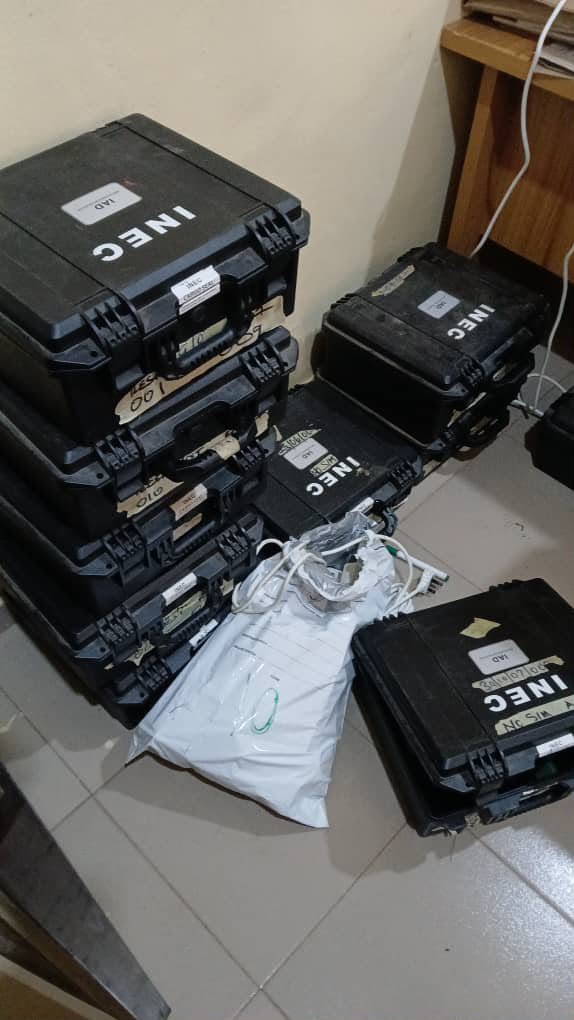
The IPCR consequently charged security agencies to remain professional, impartial and respectful of citizens’ rights while ensuring adequate protection for voters, election officials and electoral materials.
It also called on the Independent National Electoral Commission (INEC) and its officials to discharge their responsibilities transparently and impartially, ensuring that eligible voters can cast their ballots without fear or intimidation.
Beyond the polling booths, the Institute urged traditional rulers, religious leaders, community leaders, civil society organisations and the media to play their part in preventing violence and discouraging inflammatory rhetoric.
It stressed that the responsibility for a peaceful election does not rest solely with security agencies or INEC, but with every stakeholder participating in the electoral process.
The Institute placed particular emphasis on the period after the announcement of results, urging winners to be magnanimous in victory and losers to accept defeat peacefully or pursue legitimate grievances through the judicial process.
The warning is particularly significant as Osun heads into Saturday’s contest after political parties had earlier signed a peace accord committing themselves to peaceful, free and credible elections.
The IPCR therefore called on the people of Osun State to protect the peace of their communities and demonstrate democratic maturity by ensuring that political differences do not become a trigger for bloodshed.
It said the ultimate test of the election would be whether the people are allowed to freely choose their governor without violence, intimidation or coercion.
“Let the ballot, rather than violence, intimidation or coercion, determine the choice of the people,” the Institute urged.
IPCR Warns: Let Ballot, Not Violence, Decide Osun Election

Cuba advances home-grown cancer drug as 2C12 enters human trials

A Nigerian student walks through Xiaoying Lane and finds a different answer to a question his own country is still asking.

Troops Foil Armed Robbery Attack, Rescue Two Locals in Plateau

Roger Federer’s Shock as DNA Results Reveal Myla and Charlene Are Not His Biological Children

THE PLIGHT OF FARIDA

FAILED COUP IN BURKINA FASO: HOW TRAORÉ NARROWLY ESCAPED ASSASSINATION PLOT AMID FOREIGN INTERFERENCE CLAIMS
-
 News2 years ago
Roger Federer’s Shock as DNA Results Reveal Myla and Charlene Are Not His Biological Children
-
Opinions5 years ago
THE PLIGHT OF FARIDA
-
 News1 year ago
FAILED COUP IN BURKINA FASO: HOW TRAORÉ NARROWLY ESCAPED ASSASSINATION PLOT AMID FOREIGN INTERFERENCE CLAIMS
-

 News2 years ago
EYN: Rev. Billi, Distortion of History, and The Living Tamarind Tree
-
 Opinions5 years ago
POLICE CHARGE ROOMS, A MINTING PRESS
-

 ACADEMICS2 years ago
A History of Biu” (2015) and The Lingering Bura-Pabir Question (1)
-

 Columns2 years ago
Army University Biu: There is certain interest, but certainly not from Borno.
-

 Politics1 year ago
2027: Why Hon. Midala Balami Must Go, as Youths in Hawul and Asikira/Uba Federal Constituency Reject ₦500,000 as Sallah Gift
