
News
As South-East Progressively Aligns With The Tinubu Administration

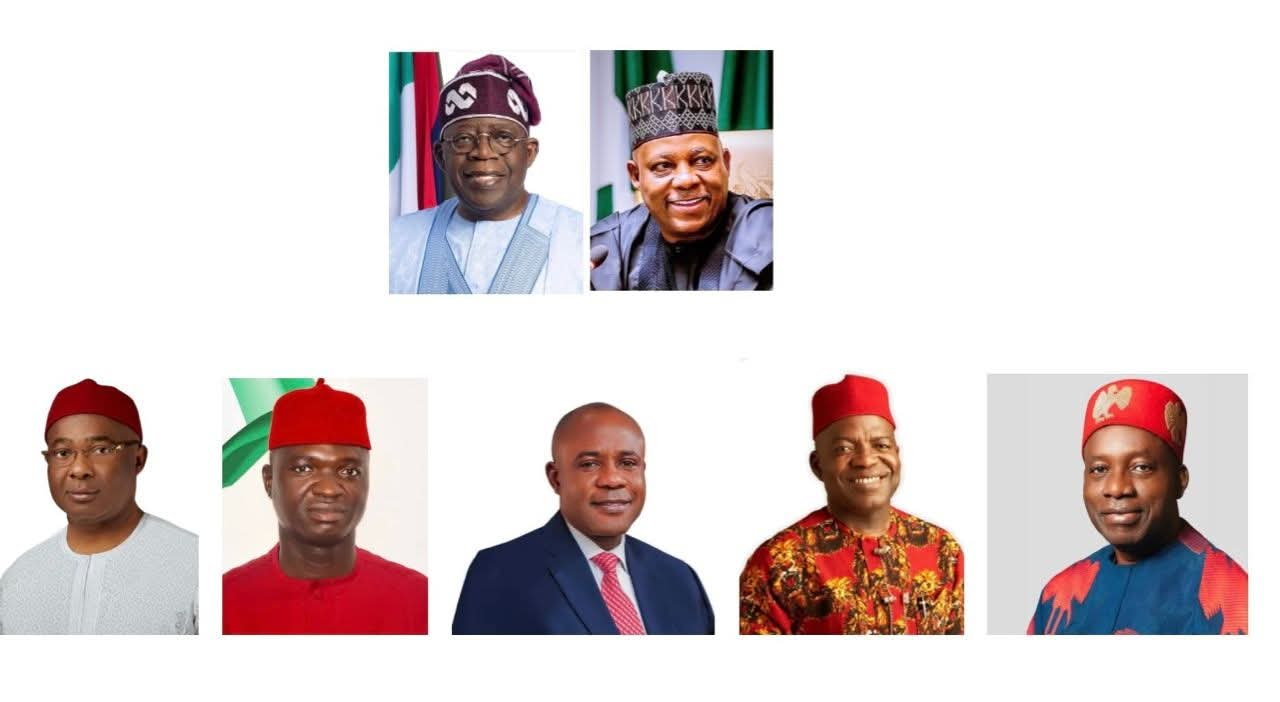
As South-East Progressively Aligns With The Tinubu Administration
By Stanley Nkwocha
The political ground is shifting beneath Nigeria’s most historically assertive and politically independent region: the South-East. Since 2015, when the All Progressive Congress ( APC) took over governance the region became the home of opposition politics and often the dissenting conscience of the federation. However, it is rife to state that the region is now undergoing a profound realignment.
What seemed impossible a decade ago is now the new political reality, with the Peoples Democratic Party (PDP), once hegemonic across the entire South-East geopolitical zone, being completely uprooted from all five states. In its stead, the All Progressives Congress (APC) is progressively emerging as the new centre of gravity.
This transformation did not happen overnight. It is the outcome of long-term structural grievances, shifting political incentives, generational changes in Igbo political strategy, and the deliberate alignment of the region with the administration of President Bola Ahmed Tinubu.
The South-East Vision 2050 Regional Stakeholders’ Forum in Enugu last Wednesday, which was organised by the South-East Development Commission (SEDC) and attended by the governors from the region, federal representatives, regional elites, and diaspora technocrats, provided the clearest symbolic marker yet that a new chapter is unfolding. The speech delivered by Vice President Kashim Shettima, and the reception it received, captured the undeniable truth that the South-East is no longer positioning itself outside the national structure. The region is seeking to co-author its future within it.
The region’s movement away from the PDP began slowly but decisively. The first major rupture came in Ebonyi in 2020, when Governor David Umahi defected to the APC, citing the PDP’s unwillingness to treat the South-East with fairness and its persistent refusal to consider a presidential ticket for the region. His argument resonated with an electorate that had long supported the PDP but gained little in exchange.
Far from being a mere personal political manoeuvre, Umahi’s decision exposed the simmering disenchantment many Igbo elites felt toward a party they believed had taken their loyalty for granted. His successor’s eventual victory under the APC in 2023 confirmed the permanence of the shift and, in hindsight, marked the beginning of the end of PDP dominance.
Earlier that year, the Supreme Court’s decision that replaced Emeka Ihedioha (PDP) with Senator Hope Uzodimma (APC) reconfigured Imo overnight. Since then, Uzodinma has become one of the most strategic political actors in the region, using his office to build the APC’s regional infrastructure and eventually chairing the Progressive Governors’ Forum.
But the most symbolic collapse of the PDP occurred in Enugu in 2025. For twenty-six years, Enugu had remained a PDP citadel and a state where the party had never lost a governorship election and where its political machinery was so deeply entrenched that change seemed unimaginable.
Yet when Governor Peter Mbah defected to the APC alongside nearly all members of the State House of Assembly and over two hundred local government officials, the PDP’s fate was sealed. His explanation that it was impossible for Enugu to remain in opposition and still hope to secure meaningful development echoed a sentiment increasingly shared across the region, which is that the politics of perceived regional isolation had become too costly to sustain.
Elsewhere, the transition of Abia State to Labour Party control under Alex Otti in 2023 and Anambra’s steadfast allegiance to APGA meant that by early 2026, the PDP no longer held a single governorship in the South-East. A party that once thrived on the emotional loyalty and historic grievances of Ndi Igbo has found itself displaced not by a single alternative, but by a coalition of political forces, in particular, the APC, that recognised the region’s desire for relevance and inclusion.
To understand why this shift occurred, one must consider the deep historical backdrop. The South-East’s political identity has long been shaped by post-war marginalisation, structural inequities, and the undercurrents of resentment that followed the federal policies of the 1970s, including the economic dislocations that left many Igbo communities struggling to rebuild.
This opinionated sense of betrayal fed seamlessly into the Peter Obi wave that swept through the region in the 2023 general elections. For decades, the PDP had enjoyed a grassroots monopoly in the South-East, but the emotional resonance of Obi’s candidacy broke that monopoly in a single election cycle. People who had voted for the PDP generation after generation now shifted their allegiance to the Labour Party. Although the movement did not translate into gubernatorial wins for the LP across all states, it decisively fractured the PDP’s foundational base. The heart had left the party, even if the structures remained. By the time Mbah defected in 2025, there was no ideological resistance left strong enough to stop him.
Yet the story of the South-East’s alignment with the Tinubu administration is not simply a reaction to PDP failures. The movement is equally shaped by what the APC-led federal government has done to court the region at a moment when Nigeria is experiencing meaningful macroeconomic repositioning. Under President Tinubu, the economy has witnessed a notable shift in direction.
International institutions such as the World Bank have upgraded Nigeria’s growth prospects, estimating GDP expansion at 4.4% for 2026—far higher than global projections. Inflation, once spiralling at crisis levels, has begun a steady decline, dropping from over 21% in 2025 to a projected 12.94% this year, while foreign reserves and FX turnover have surged to their strongest levels in recent years. These indicators have strengthened the region’s perception that federal economic stewardship is stabilising, making political alignment more attractive.
This is especially relevant for the South-East because the region thrives on private enterprise, trade, manufacturing, and diaspora remittances, which are, in fact, sectors that benefit from macroeconomic stability.
At the same time, the government’s push for refining independence, which has allowed Nigeria to transition into a net exporter of refined petroleum products, has reduced pressure on the naira, bolstered reserves, and improved trade balances. These economic shifts are not abstract technocratic achievements; they are tangible developments that resonate with the everyday realities of traders in Onitsha, importers in Aba, manufacturers in Nnewi, and transport entrepreneurs across the region.
But perhaps the most profound factor in the South-East’s realignment is President Tinubu’s deliberate political strategy toward the region. Rather than relying on rhetoric or symbolic gestures, the administration has taken concrete steps that respond to longstanding Igbo demands for structural economic inclusion.
One such step is the establishment of the South East Investment Company Limited, a federally supported vehicle designed to mobilise diaspora capital, attract development finance, and channel private investment into the region’s infrastructure and industrial base. This mirrors the calls within academic and policy circles for a modern equivalent of the defunct Eastern Nigeria Development Corporation, which was once responsible for some of the region’s most impressive economic achievements in the pre-war era. President Tinubu’s approval of this initiative signalled not only recognition of the region’s unique entrepreneurial strengths but also a willingness to anchor long-term federal policy on the region’s aspirations for economic integration.
This strategic engagement was on full display at the Enugu Vision 2050 Summit. Vice President Shettima’s remarks, emphasising that the South-East is a central pillar of Nigeria’s economic future, carried special significance in a region where historical memory of exclusion is deep and often painful. His acknowledgement of the region’s global diaspora networks, its tradition of innovation under pressure, and its role in shaping Nigeria’s economic imagination tapped into a broader intellectual history that sees the Igbo as a migrant race, resilient, adaptive, and global in orientation.
The audience’s response to VP Shettima’s speech was not merely polite; it was markedly receptive. It reflected a regional elite increasingly interested in the language of development, investment, and long-term planning, and less committed to the confrontational political posture of previous decades. The symbolism of the moment was unmistakable: the federal government came not as a paternalistic overseer or political conqueror, but as an engaged partner offering a platform for integration into Nigeria’s long-term economic framework. This shift is not driven by naivety. The South-East’s political class understands that genuine alignment with the centre must translate into tangible gains.
In effect, the South-East is recalibrating; not abandoning its identity, grievances, or aspirations, but repositioning itself within the Nigerian power structure to negotiate those aspirations more effectively. The PDP’s downfall is merely the political expression of this deeper transformation. What is emerging is not blind loyalty to the APC but a regional strategy rooted in the understanding that power must be engaged directly if economic and political development is to be massively achieved.
The Vision 2050 Summit has, perhaps, demonstrated that the South-East has looked beyond its grievances. The region is not merely aligning with the President Tinubu administration out of weakness or opportunism. It is doing so out of a recognition that political relevance and economic transformation are best secured not from the margins but from the centre of national decision-making.
Nkwocha is the Senior Special Assistant on Media and Communications to The President (Office of the Vice President) and wrote in from Abuja.
As South-East Progressively Aligns With The Tinubu Administration



NHRC Confronts Past Challenges, Pushes Digital Overhaul to Fix Broken Complaint System
By: Michael Mike
The National Human Rights Commission (NHRC) has acknowledged deep-rooted weaknesses in its complaint handling system and is now pushing an ambitious overhaul anchored on digital transformation and institutional reform.
At a high-level stakeholder validation meeting in Abuja, the Commission signaled a decisive shift from outdated, ineffective procedures toward a modern, technology-driven framework designed to restore public confidence and improve access to justice.
Executive Secretary of the Commission, Tony Ojukwu, described the ongoing review of the Complaint Handling Manual as more than a routine update, but a critical reset.
“We are gathered here to review, refine and ultimately validate the Complaint Handling Manual,” he said, stressing that the process must deliver real remedies for victims, particularly the most vulnerable.
But it was the candid admission from former NHRC Director of Civil and Political Rights, AbdulRahman Yakubu that underscored the urgency of reform.
“That manual was not used because of so many deficiencies and was abandoned,” Yakubu revealed, exposing a troubling gap between policy design and implementation that has long hindered the Commission’s effectiveness.
The NHRC, which has expanded from just eight staff to over 1,000 personnel and 38 offices nationwide, now faces mounting pressure to match its institutional growth with functional efficiency.
Yakubu noted that while the Commission’s structure has evolved—with four specialized departments now handling complaints—the absence of a practical, enforceable framework has limited impact.
Central to the reform push is the digitization of the entire complaints process, a move stakeholders say could significantly reduce delays, improve transparency, and strengthen accountability.
“We need automation and digitization of the complaints management process from beginning to end,” Yakubu said, describing the complaints registry as “the engine room” of operations.
The proposed system will also introduce standardized investigation templates and documentation tools, including a certificate of service, aimed at closing loopholes that have previously weakened case tracking and enforcement.
NHRC official Anthonia Nwabueze said the validation exercise is part of a broader effort to rebuild credibility through inclusiveness and expert input.
“The Commission cannot work alone; we decided to bring stakeholders together to join us in this critique,” she said, adding that the process is designed to identify gaps, eliminate inconsistencies, and produce a manual that is both practical and enforceable.
Beyond technical reforms, the Commission is also seeking to reorient its approach toward victims.
Ojukwu challenged participants to adopt a rights-based, people-centered lens. “Look at it through the lens of the most marginalised and vulnerable victims—ask the hard questions,” he urged.
The ongoing validation signals a rare moment of institutional self-reflection for the NHRC—one that acknowledges past shortcomings while attempting to build a more responsive, transparent, and technology-driven system.
If successfully implemented, the reforms could mark a turning point in how human rights complaints are handled in Nigeria, shifting the Commission from a largely reactive body to a more efficient and accountable protector of citizens’ rights.
NHRC Confronts Past Challenges, Pushes Digital Overhaul to Fix Broken Complaint System
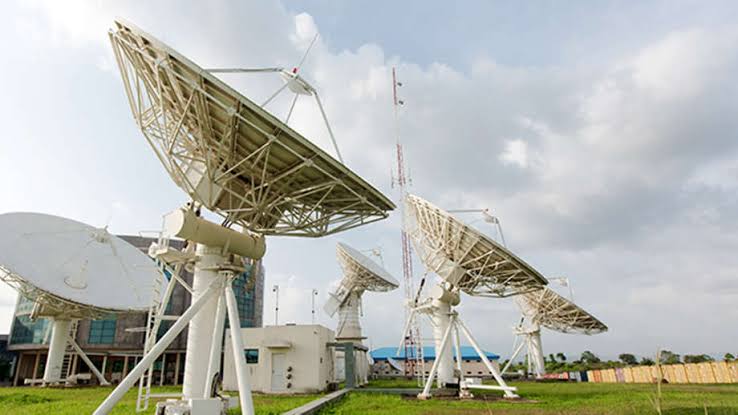
NIGCOMSAT Targets Industrial Leap with Startup Push, Skills Drive
By: Michael Mike
Nigeria’s state-owned satellite operator, Nigerian Communications Satellite Limited (NIGCOMSAT), is repositioning itself at the heart of the country’s industrialisation agenda, backing over 5,000 startups and expanding digital skills training as part of a broader push to turn connectivity into economic power.
The Managing Director/CEO, Jane Egerton-Idehen, disclosed the scale of intervention at the SOYUZNIK Alumni National Congress in Abuja, where she framed satellite infrastructure not just as a communications tool, but as a catalyst for production, innovation, and national competitiveness.
In a keynote delivered on her behalf by Acting Director of Technical Services, Engr. Ikechukwu Amalu, Egerton-Idehen said the agency’s Space Accelerator Programme—now in its third cohort—has quietly evolved into a pipeline for nurturing technology-driven enterprises, particularly in underserved segments of Nigeria’s digital economy.
The intervention comes amid growing concern that Nigeria’s innovation ecosystem, though vibrant, remains weakly linked to industrial output. NIGCOMSAT’s approach seeks to close that gap—pairing startup support with hands-on technical training and expanding connectivity to areas historically left out of the digital economy.
Across states including Adamawa, Jigawa, Cross River, and Enugu, the agency’s VSAT training programmes are equipping young Nigerians with practical, market-ready skills, targeting employability and enterprise creation rather than theoretical knowledge.
Egerton-Idehen argued that such interventions are critical if Nigeria is to transition from a consumption-driven economy to a production-led one.
“Connectivity is no longer a luxury—it is the foundation of modern economic systems,” she said, stressing that countries that fail to build strong digital infrastructure risk being locked out of the next phase of global industrial competition.
She pointed to ongoing projects such as the 774 Connectivity Initiative, which has so far extended digital access to dozens of local government secretariats, as part of efforts to deepen governance, improve service delivery, and stimulate economic activity at the grassroots.
Beyond infrastructure, she called for a structural reset in Nigeria’s education system, urging stronger alignment with emerging technologies including artificial intelligence, data science, and satellite communications.
According to her, the real challenge is not a lack of talent, but the absence of systems that convert knowledge into measurable economic output.
She also warned that innovation ecosystems cannot thrive without deliberate collaboration between academia, industry, and government, backed by sustained investment in research and clear regulatory frameworks that protect intellectual property.
The SOYUZNIK Alumni—comprising graduates of Russian and former Soviet Union institutions—were urged to leverage their international exposure to drive technology transfer and localisation of innovation within Nigeria.
In his welcome remarks, Abuja chapter chairman, Agu Collins Agu, described the congress as a convergence of technical expertise with the potential to influence national development outcomes.
As Nigeria grapples with sluggish industrial growth and rising youth unemployment, NIGCOMSAT’s expanding role signals a strategic shift—one that places digital infrastructure, innovation, and skills development at the centre of the country’s economic transformation agenda.
NIGCOMSAT Targets Industrial Leap with Startup Push, Skills Drive
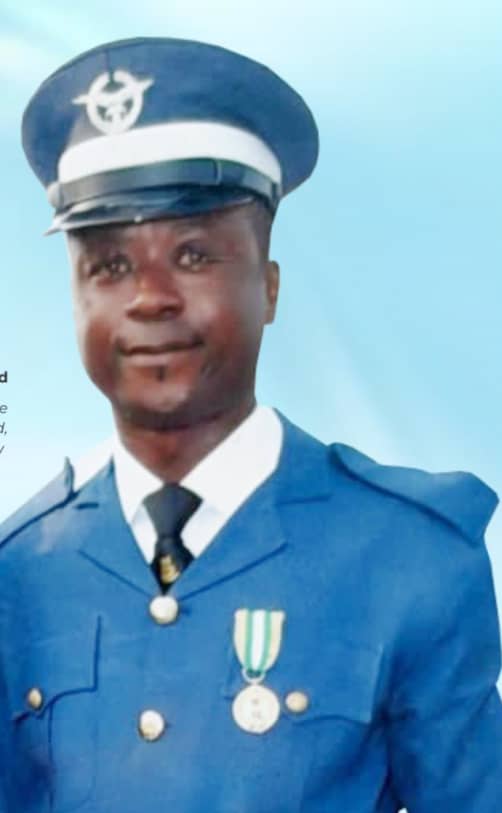
Tribute to the late flight Sergeant Temitope Beckley
By: Bodunrin Kayode
Dear Tope, I am still in shock that you had to leave so early at just 50. Seven years before your father our dear uncle Alaba left at 57. And my own father your uncle too same 57, all of the Akinlawon stock of the Beckleys in Lagos.
Sad you had to leave us so early. I am sad because of the bond we shared as special cousins or what people of your generation call besties. You were a jolly good fellow to me in particular whenever our paths crossed. Aburo (little brother), as I used to call you, family may share the same names sometimes and blood but very few are real friends within a particular family. If there are friends within our family, you are definitely one of them. A very jovial fellow who looks out for the others. A friend indeed among brothers and cousins. Your eyes always glittered when you were around me. And of recent you became more concerned about me when you heard that I was in the North East Nigerian war theatre of operation Hadin Kai. I assured you that because He lives i will always face tomorrow.
How we built our friendship
I remember my brief stay with you guys at the family house in folarin street, Mushin. Trying to rediscover myself as Uncle Alaba would call it anytime he asked me to escort him to EMPLAN consult were he was working then. Each time we returned, you were always close by asking the right questions the little ones always asked their older brothers. I enjoyed your restlessness at that young tender age, wanting to know a lot of things out there especially when we watched TV together and you did not understand what was going on. With the kinds of questions your probing mind used to ask, I always knew that you were going to become one of the shining lights of the family. I even dreamt of you joining me in serving God and country as a media practitioner one day. But you had other plans and ended up at the Nigerian Air Force as you did till your last breath due to a protracted illness.
When I later started my studies to train as a journalist and found myself staying at Akobi crescent with Uncle Akobi, you never forget to stop by and check on me. You kept the flame burning. Your appearances were always remarkable with that glitter in your eyes which used to lighten up my weekend whenever you showed up. Brother Akin was always at hand to host us. Whenever he wasn’t around, we would go out to hang out as young people to have fun. You were always with the older ones hardly having time for your generation. Distance would now separate us when I was posted to Taraba state by the then daily times as its maiden correspondent. But we always met along the way until you joined the air force.
Your worries about Nigeria
Tope, at your level in the service in the military, you already knew the difference between right and wrong and you were very methodical and meticulous in the way you conducted your affairs. You asked more questions as always but this time as a seasoned personnel of the Nigerian Air Force. You knew where you were coming from and were you wanted to be in the nearest future. I encouraged you that in all things we should give thanks to our Creator. The one who is and is to come. You were on course in your relationship with him.
I remember our last discussion, about the insurgency challenge the military is dealing with at our backyard in Borno. Your perception about the Nigerian Air Force which you served till your natural passing. And your projection for the future in terms of security for the country. I asked for your family and you updated me that they were fine. I was worried about the fact that I am yet to meet your loving family but you assured me that we would surely meet someday even though your spouse was in Canada pursuing her dream. The telephone chat zeroed down to why I called. I actually chatted you because I remembered your father the great Uncle Alaba who had gone to the great beyond. And I wanted to honour his memory with a tribute 29 years after his demise. You promised feeding me with the extra details I wanted to add to what I got from your big sis Tosin. But that never happened. I never got the pictures of Uncle or the details I wanted. That has been rested for his 30th anniversary now.
Rather what I got was a rude shock of your sudden collapse and departure from this world. Tope, you suddenly joined your father in the great beyond at the untimely age of 50. We can’t question God Almighty our Creator over this decision. We would rather give thanks to him for the life you lived because He said we must give thanks to Him in all things.
Aburo, all I can say now is permission granted because you never sort for anyone’s permission to bow out. This was the command of your creator, the All knowing I Am who decides when it is time to come or to leave this world. Tope, be rest assured that some of us will never forget coming across your path in this short life. Enjoy your sleep great soldier until we meet to part no more.
Broda Sam.
Tribute to the late flight Sergeant Temitope Beckley

Troops rescue kidnap victim in kogi

NDLEA Busts Nationwide Drug Ring, Arrests 93-Year-Old Suspect and Medical Doctor in Sweeping Crackdown

NHRC Confronts Past Challenges, Pushes Digital Overhaul to Fix Broken Complaint System

Roger Federer’s Shock as DNA Results Reveal Myla and Charlene Are Not His Biological Children

THE PLIGHT OF FARIDA

FAILED COUP IN BURKINA FASO: HOW TRAORÉ NARROWLY ESCAPED ASSASSINATION PLOT AMID FOREIGN INTERFERENCE CLAIMS
-
 News2 years ago
Roger Federer’s Shock as DNA Results Reveal Myla and Charlene Are Not His Biological Children
-
Opinions4 years ago
THE PLIGHT OF FARIDA
-
 News12 months ago
FAILED COUP IN BURKINA FASO: HOW TRAORÉ NARROWLY ESCAPED ASSASSINATION PLOT AMID FOREIGN INTERFERENCE CLAIMS
-

 News2 years ago
EYN: Rev. Billi, Distortion of History, and The Living Tamarind Tree
-
 Opinions4 years ago
POLICE CHARGE ROOMS, A MINTING PRESS
-

 ACADEMICS2 years ago
A History of Biu” (2015) and The Lingering Bura-Pabir Question (1)
-

 Columns2 years ago
Army University Biu: There is certain interest, but certainly not from Borno.
-

 Opinions2 years ago
Tinubu,Shettima: The epidemic of economic, insecurity in Nigeria
