
News
As South-East Progressively Aligns With The Tinubu Administration


As South-East Progressively Aligns With The Tinubu Administration
By Stanley Nkwocha
The political ground is shifting beneath Nigeria’s most historically assertive and politically independent region: the South-East. Since 2015, when the All Progressive Congress ( APC) took over governance the region became the home of opposition politics and often the dissenting conscience of the federation. However, it is rife to state that the region is now undergoing a profound realignment.
What seemed impossible a decade ago is now the new political reality, with the Peoples Democratic Party (PDP), once hegemonic across the entire South-East geopolitical zone, being completely uprooted from all five states. In its stead, the All Progressives Congress (APC) is progressively emerging as the new centre of gravity.
This transformation did not happen overnight. It is the outcome of long-term structural grievances, shifting political incentives, generational changes in Igbo political strategy, and the deliberate alignment of the region with the administration of President Bola Ahmed Tinubu.
The South-East Vision 2050 Regional Stakeholders’ Forum in Enugu last Wednesday, which was organised by the South-East Development Commission (SEDC) and attended by the governors from the region, federal representatives, regional elites, and diaspora technocrats, provided the clearest symbolic marker yet that a new chapter is unfolding. The speech delivered by Vice President Kashim Shettima, and the reception it received, captured the undeniable truth that the South-East is no longer positioning itself outside the national structure. The region is seeking to co-author its future within it.
The region’s movement away from the PDP began slowly but decisively. The first major rupture came in Ebonyi in 2020, when Governor David Umahi defected to the APC, citing the PDP’s unwillingness to treat the South-East with fairness and its persistent refusal to consider a presidential ticket for the region. His argument resonated with an electorate that had long supported the PDP but gained little in exchange.
Far from being a mere personal political manoeuvre, Umahi’s decision exposed the simmering disenchantment many Igbo elites felt toward a party they believed had taken their loyalty for granted. His successor’s eventual victory under the APC in 2023 confirmed the permanence of the shift and, in hindsight, marked the beginning of the end of PDP dominance.
Earlier that year, the Supreme Court’s decision that replaced Emeka Ihedioha (PDP) with Senator Hope Uzodimma (APC) reconfigured Imo overnight. Since then, Uzodinma has become one of the most strategic political actors in the region, using his office to build the APC’s regional infrastructure and eventually chairing the Progressive Governors’ Forum.
But the most symbolic collapse of the PDP occurred in Enugu in 2025. For twenty-six years, Enugu had remained a PDP citadel and a state where the party had never lost a governorship election and where its political machinery was so deeply entrenched that change seemed unimaginable.
Yet when Governor Peter Mbah defected to the APC alongside nearly all members of the State House of Assembly and over two hundred local government officials, the PDP’s fate was sealed. His explanation that it was impossible for Enugu to remain in opposition and still hope to secure meaningful development echoed a sentiment increasingly shared across the region, which is that the politics of perceived regional isolation had become too costly to sustain.
Elsewhere, the transition of Abia State to Labour Party control under Alex Otti in 2023 and Anambra’s steadfast allegiance to APGA meant that by early 2026, the PDP no longer held a single governorship in the South-East. A party that once thrived on the emotional loyalty and historic grievances of Ndi Igbo has found itself displaced not by a single alternative, but by a coalition of political forces, in particular, the APC, that recognised the region’s desire for relevance and inclusion.
To understand why this shift occurred, one must consider the deep historical backdrop. The South-East’s political identity has long been shaped by post-war marginalisation, structural inequities, and the undercurrents of resentment that followed the federal policies of the 1970s, including the economic dislocations that left many Igbo communities struggling to rebuild.
This opinionated sense of betrayal fed seamlessly into the Peter Obi wave that swept through the region in the 2023 general elections. For decades, the PDP had enjoyed a grassroots monopoly in the South-East, but the emotional resonance of Obi’s candidacy broke that monopoly in a single election cycle. People who had voted for the PDP generation after generation now shifted their allegiance to the Labour Party. Although the movement did not translate into gubernatorial wins for the LP across all states, it decisively fractured the PDP’s foundational base. The heart had left the party, even if the structures remained. By the time Mbah defected in 2025, there was no ideological resistance left strong enough to stop him.
Yet the story of the South-East’s alignment with the Tinubu administration is not simply a reaction to PDP failures. The movement is equally shaped by what the APC-led federal government has done to court the region at a moment when Nigeria is experiencing meaningful macroeconomic repositioning. Under President Tinubu, the economy has witnessed a notable shift in direction.
International institutions such as the World Bank have upgraded Nigeria’s growth prospects, estimating GDP expansion at 4.4% for 2026—far higher than global projections. Inflation, once spiralling at crisis levels, has begun a steady decline, dropping from over 21% in 2025 to a projected 12.94% this year, while foreign reserves and FX turnover have surged to their strongest levels in recent years. These indicators have strengthened the region’s perception that federal economic stewardship is stabilising, making political alignment more attractive.
This is especially relevant for the South-East because the region thrives on private enterprise, trade, manufacturing, and diaspora remittances, which are, in fact, sectors that benefit from macroeconomic stability.
At the same time, the government’s push for refining independence, which has allowed Nigeria to transition into a net exporter of refined petroleum products, has reduced pressure on the naira, bolstered reserves, and improved trade balances. These economic shifts are not abstract technocratic achievements; they are tangible developments that resonate with the everyday realities of traders in Onitsha, importers in Aba, manufacturers in Nnewi, and transport entrepreneurs across the region.
But perhaps the most profound factor in the South-East’s realignment is President Tinubu’s deliberate political strategy toward the region. Rather than relying on rhetoric or symbolic gestures, the administration has taken concrete steps that respond to longstanding Igbo demands for structural economic inclusion.
One such step is the establishment of the South East Investment Company Limited, a federally supported vehicle designed to mobilise diaspora capital, attract development finance, and channel private investment into the region’s infrastructure and industrial base. This mirrors the calls within academic and policy circles for a modern equivalent of the defunct Eastern Nigeria Development Corporation, which was once responsible for some of the region’s most impressive economic achievements in the pre-war era. President Tinubu’s approval of this initiative signalled not only recognition of the region’s unique entrepreneurial strengths but also a willingness to anchor long-term federal policy on the region’s aspirations for economic integration.
This strategic engagement was on full display at the Enugu Vision 2050 Summit. Vice President Shettima’s remarks, emphasising that the South-East is a central pillar of Nigeria’s economic future, carried special significance in a region where historical memory of exclusion is deep and often painful. His acknowledgement of the region’s global diaspora networks, its tradition of innovation under pressure, and its role in shaping Nigeria’s economic imagination tapped into a broader intellectual history that sees the Igbo as a migrant race, resilient, adaptive, and global in orientation.
The audience’s response to VP Shettima’s speech was not merely polite; it was markedly receptive. It reflected a regional elite increasingly interested in the language of development, investment, and long-term planning, and less committed to the confrontational political posture of previous decades. The symbolism of the moment was unmistakable: the federal government came not as a paternalistic overseer or political conqueror, but as an engaged partner offering a platform for integration into Nigeria’s long-term economic framework. This shift is not driven by naivety. The South-East’s political class understands that genuine alignment with the centre must translate into tangible gains.
In effect, the South-East is recalibrating; not abandoning its identity, grievances, or aspirations, but repositioning itself within the Nigerian power structure to negotiate those aspirations more effectively. The PDP’s downfall is merely the political expression of this deeper transformation. What is emerging is not blind loyalty to the APC but a regional strategy rooted in the understanding that power must be engaged directly if economic and political development is to be massively achieved.
The Vision 2050 Summit has, perhaps, demonstrated that the South-East has looked beyond its grievances. The region is not merely aligning with the President Tinubu administration out of weakness or opportunism. It is doing so out of a recognition that political relevance and economic transformation are best secured not from the margins but from the centre of national decision-making.
Nkwocha is the Senior Special Assistant on Media and Communications to The President (Office of the Vice President) and wrote in from Abuja.
As South-East Progressively Aligns With The Tinubu Administration



Zulum Pledges Stronger UMTH, Partners’ Collaboration to Transform Borno Healthcare
By: Michael Mike
Borno State Governor, Professor Babagana Umara Zulum, has promised to deepen collaboration with the Federal Government and development partners to improve healthcare services in the state.
The Governor made the pledge on Tuesday during the opening of the Association of Radiologists of Nigeria (ARIN) 9th Annual General Meeting and Scientific Conference, Book Launch and Commissioning of projects at the UMTH in Maiduguri.
He said the event marked another milestone in the collective pursuit of stronger healthcare delivery, medical education, research and specialist services for the people of Borno State and the North-East.
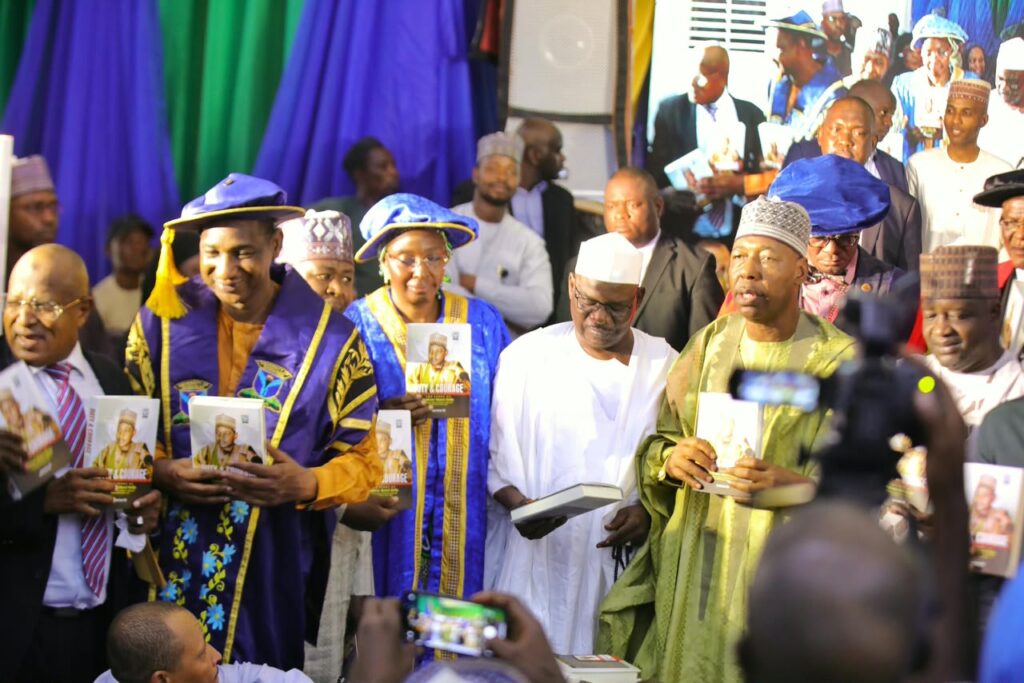
Governor Zulum re-stated his administration’s commitment to continue supporting the University of Maiduguri Teaching Hospital (UMTH) within available resources, alongside other federal health institutions in the state.
“As a State Government, we will continue to support the University of Maiduguri Teaching Hospital and other healthcare institutions within our capacity, while strengthening collaboration with the Federal Government and other partners,” Zulum stated.
The Governor noted that UMTH had remained steadfast in saving lives, training medical professionals and providing essential specialist services throughout the difficult years of insurgency and flooding in the state.
He commended the hospital’s Chief Medical Director, Professor Ahmed Ahidjo, for what he described as exemplary leadership and significant contributions to the institution’s growth.
According to Zulum, the hospital has recorded notable progress in infrastructure development, specialist services, medical training, research and professional development under Professor Ahidjo’s leadership.
“You are not only managing a Teaching Hospital; you are building a legacy that will benefit generations to come,” the Governor said.
“Professor Ahidjo has demonstrated that effective leadership is about building strong institutions, developing people and leaving a lasting legacy. Under his leadership, the University of Maiduguri Teaching Hospital has continued to make significant progress in infrastructure, specialist services, medical training, research and professional development.”
He expressed appreciation to President Bola Ahmed Tinubu for his continued support to the state, particularly in healthcare infrastructure, human capital development and institutional strengthening.
Governor Zulum also commended NEDC for its intervention in the hospital and other development institutions in the region.
He said the ARIN Conference, book launch and inaugural lecture underscored the importance of research, knowledge-sharing and continuous professional development in addressing healthcare challenges.
Governor Zulum congratulated UMTH management and staff on the achievements. He expressed optimism that the newly commissioned projects would enhance the quality of healthcare services and further consolidate the hospital’s position as a centre of excellence.
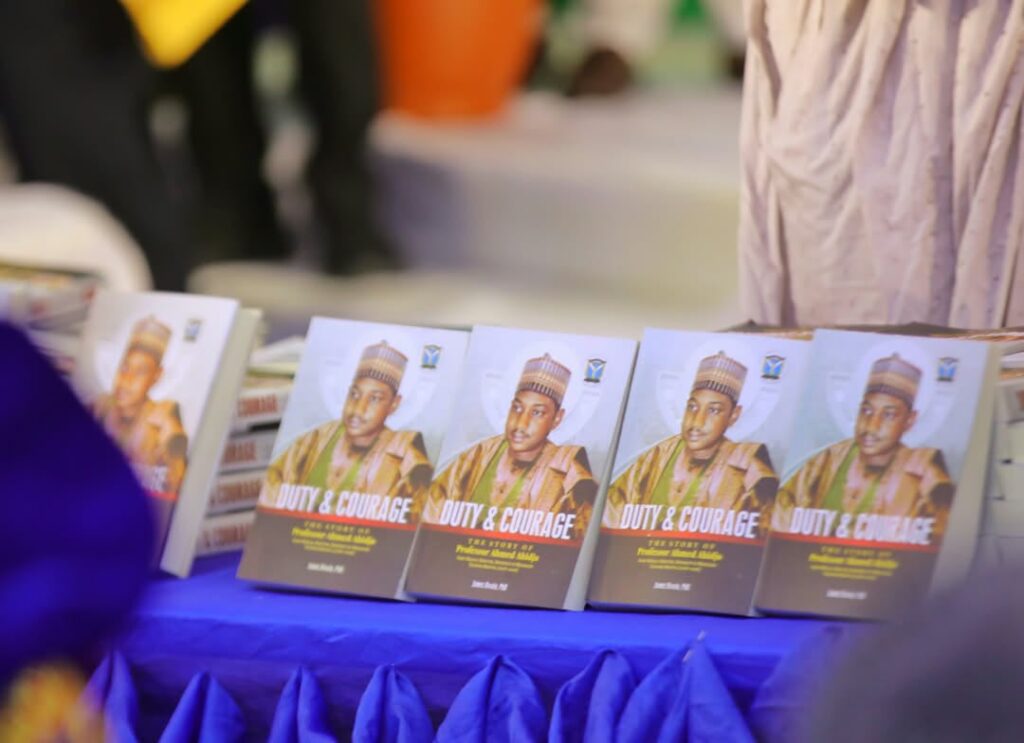
Similarly, Governor Babagana Umara Zulum has donated the sum of N100 million on behalf of the government of Borno State for the book “Duty and Courage: The Story of Professor Ahmed Ahidjo 2018-2026 written by Dr. James Bwala, which chronicles his achievements as the Chief Medical Director of UMTH.
The high point of the event was the commissioning of the Fertility Care Center and En-Suite Maternity Complex constructed by the North East Development Commission and the public presentation of the Book.
The event was attended by Borno State Deputy Governor, Hon. Umar Usman Kadafur; Shehu of Borno, Dr Abubakar Garbai Elkanemi; Senator representing Borno South, Senator Mohammed Ali Ndume; members of House of Representives; Minister of Livestock Development, Hon. Idi Mukhtar Maiha; Minister of State for Regional Development, Hon. Uba Maigari Ahmodu; representative of the minister of Health and Social Welfare, Deputy Speaker Borno State House of Assembly and other members of the state assembly; Commissioners; traditional rulers; MD North East Development Commission and other dignitries.
Zulum Pledges Stronger UMTH, Partners’ Collaboration to Transform Borno Healthcare

Suspected Fulani Bandits Kill 23 in Major Reprisal Attack on Bin-Per Community in Plateau
By Zagazola Makama
At least 23 people, including women and children, have reportedly been killed in a major reprisal attack on Bin-Per community in Kombun District of Mangu Local Government Area of Plateau State, in an incident believed to have been linked to an earlier attack on Fulani residents in the area.
The fresh violence occurred in the early hours of Tuesday, August 18, 2026, when suspected Fulani militias reportedly infiltrated Bin-Per from the neighbouring Bokkos axis through an isolated route and launched an attack on the predominantly farming community.
The attack has further heightened tensions in an area already struggling with a cycle of violence, retaliation, displacement and destruction of livelihoods.
A military security source told Zagazola Makama that troops of Sector 8, Operation Enduring Peace, responded to reports of the attack on the isolated village shortly after the incident was reported.
Upon arrival, the troops conducted a sweep of the general area, but the attackers had already withdrawn from the community.
Reinforcement from the security forces, including personnel operating alongside Operation Rainbow, subsequently arrived at the location to support the response.
The joint team later conducted an exploitation of the village and recovered 16 corpses of local residents, including women and children.
The military said search efforts were still ongoing to establish the full casualty figure and obtain further details on the incident.
However, the Councillor representing Kombun Ward, Hon. Lemun Le’an Iliya, and the Mwaghavul Youth Movement separately put the death toll at 23 to 24 persons, with the youth body stating that 24 people were killed.
Zagazola Makama understands that the difference in casualty figures may be due to the fact that security personnel initially recovered 16 bodies while community members were still accounting for missing, injured or displaced residents.
What Triggered the Reprisal?
The Bin-Per attack did not occur in isolation.
It came less than 48 hours after an attack on Fulani residents in Jwak Maitumbi, also in Mangu Local Government Area, which was earlier reported by Zagazola Makama.
The August 16 attack reportedly targeted an isolated Fulani settlement in Jwak Maitumbi, where suspected Mwaghavul militia allegedly killed several residents, destroyed about 45 Fulani residential shelters, looted valuables and damaged large quantities of crops belonging to the community.
According to security information obtained at the time, troops of Sector 8, Operation Enduring Peace, deployed from Sabon Gari moved to the area after receiving reports of the attack.
On arrival, the troops reportedly found extensive destruction, including the remains of dozens of residential shelters occupied by Fulani residents.
Residents were said to have fled the area in fear, with women, children and elderly persons among those displaced.
The attackers were also accused of entering farms belonging to Fulani residents and using cutlasses to destroy crops, threatening not only the immediate survival of affected families but also their sources of income and food.
The incident prompted troops to summon the Galadima and youth leader of Jwak Maitumbi community and direct the local leadership to assist security agencies in identifying those responsible for the attack.
That earlier incident is now significant in understanding the circumstances surrounding the deadly assault on Bin-Per.
From Jwak Maitumbi to Bin-Per
Security and community accounts suggest that the two incidents are part of a dangerous retaliatory pattern that has repeatedly characterised violence in parts of Mangu and neighbouring areas. The August 16 attack left Fulani residents with substantial casualties, destroyed homes and damaged farmlands.
Two days later, Bin-Per a community inhabited by Mwaghavul people came under attack, with scores of residents reportedly killed.
The geographical proximity of the affected communities, the short interval between the incidents and the nature of the attacks have raised concerns that the Bin-Per assault could represent a retaliatory strike rather than an isolated attack.
This pattern is particularly dangerous because each cycle of violence creates a new pool of victims, grievances and displaced families who may subsequently become motivated by revenge.
An attack on one community is followed by another attack on a different community, and the second attack then becomes justification for another round of retaliation.
The result is a self-perpetuating cycle in which the original circumstances surrounding an incident become increasingly difficult to separate from subsequent acts of revenge.
The Mwaghavul Youth Movement condemned the Bin-Per attack, describing it as a deadly assault that claimed 24 lives and destroyed homes and crops.
The group accused the government and security agencies of failing to adequately protect vulnerable communities and called for a transparent investigation into the attack.
The Movement also called for the identification and prosecution of those responsible, while urging authorities to strengthen intelligence gathering, improve the deployment of security personnel and establish effective rapid-response mechanisms.
Hon. Chief Dr. Ishaya David Lalu, Member representing Mangu/Bokkos Federal Constituency, also condemned the attack and called for urgent action to prevent further killings.
Lalu said the reported loss of lives, particularly women and children, was heartbreaking and unacceptable.
He urged security agencies to investigate the incident, identify those responsible and ensure that they face the law.
The lawmaker also appealed to residents to remain calm and vigilant while calling for stronger security measures and improved engagement with vulnerable communities.
A Dangerous Cycle of Revenge
The latest development illustrates the extent to which the security situation in parts of Plateau has become increasingly vulnerable to retaliatory violence. The danger is no longer limited to the initial attack.
When homes are destroyed, crops are burnt, livestock are lost and family members are killed, affected communities often carry the consequences long after security personnel have restored temporary calm.
In Jwak Maitumbi, the destruction of about 45 Fulani shelters and farmland reportedly left residents displaced and economically vulnerable.
In Bin-Per, the subsequent attack has now reportedly claimed more than 20 lives and left another community mourning.
The perpetrators of the first attack may not necessarily be the same individuals who later carry out the retaliation. Yet, once communities begin to associate one another collectively with attacks committed by armed individuals, entire populations become targets.
That dynamic makes the identification and prosecution of individual perpetrators particularly important.
Without accountability, communities can easily conclude that the state has failed to protect them or punish those responsible, creating an incentive for self-help and revenge.
Troops Intensify Operations
Following the Bin-Per attack, troops of Operation Enduring Peace, in conjunction with Operation Rainbow and vigilante elements, have continued to dominate the community and surrounding areas.
Security personnel are conducting offensive and protective operations while efforts continue to establish the full circumstances of the attack and determine the final casualty figure. The immediate priority is also to prevent another attack or retaliatory assault in neighbouring communities.
Security forces are expected to maintain a strong presence around vulnerable settlements and routes linking Mangu and Bokkos axes, particularly isolated routes that could be exploited by armed groups to infiltrate communities.
The Bigger Picture
The events of the past few days demonstrate that Plateau’s security challenge cannot be addressed solely through post-attack deployments.
The August 16 attack on Fulani residents in Jwak Maitumbi and the August 18 attack on Bin-Per show how quickly violence can move from one community to another when grievances are left unresolved.
The immediate task for the security agencies is therefore not only to identify the perpetrators of the Bin-Per killings but also to investigate the earlier Jwak Maitumbi attack and establish whether there is a direct connection between the two incidents. Both attacks require accountability.
The victims of Jwak Maitumbi deserve justice just as the victims of Bin-Per deserve justice.
Treating one attack as more important than the other risks reinforcing the very grievance structure that fuels retaliation. The greatest danger is that the latest killings could become the trigger for another round of revenge.
A fresh attack on Fulani communities in response to Bin-Per would only produce another set of victims, another displacement crisis and another justification for retaliation.
The cycle must therefore be broken through immediate security intervention, impartial investigations, prosecution of perpetrators irrespective of their ethnic identity, protection of vulnerable communities and sustained engagement with traditional and community leaders.
The central lesson from the unfolding crisis is that the attack on Jwak Maitumbi must not be used to justify Bin-Per, and the deaths in Bin-Per must not become justification for another attack elsewhere.
Justice for victims on all sides remains the only credible path to preventing the next reprisal.
Suspected Fulani Bandits Kill 23 in Major Reprisal Attack on Bin-Per Community in Plateau
News
Human Rights Complaints Hit 355,000 As NHRC, Hope Behind Bars Move To Close Nigeria’s Justice Gap

Human Rights Complaints Hit 355,000 As NHRC, Hope Behind Bars Move To Close Nigeria’s Justice Gap
By: Michael Mike
Nigeria’s human rights crisis assumed a more troubling dimension in July, with the National Human Rights Commission (NHRC) recording 354,997 complaints, even as the commission entered a two-year partnership with Hope Behind Bars Africa (HBBA) aimed at strengthening access to justice, civic participation, digital rights and accountability.
The NHRC’s July 2026 Human Rights Situation Dashboard showed that complaints increased by 20 per cent from the previous month, making July the highest monthly figure recorded in the January-to-July period.
The development came amid persistent killings, kidnappings, attacks on farmers, violence against women and children, sexual abuse, mob justice and attacks on security personnel across the country.

The commission said its dashboard is based on complaints lodged at its 38 offices nationwide and human rights violations monitored through its Human Rights Observatory.
The simultaneous move by the NHRC and HBBA to deepen institutional and civil-society cooperation is therefore significant, as the partnership seeks to address not only conventional human rights violations but also emerging threats arising from technology and the digital environment.
Under the two-year Memorandum of Understanding, the two organisations will collaborate on human rights protection, access to justice, civic space, digital rights and accountability.
The partnership will cover initiatives including the Justice-Tech Node, Defend the Defenders: Enhancing Action Against Strategic Litigation Against Public Participation (SLAPPs) and the Civic Accord Project, alongside other interventions designed to strengthen human rights and civic engagement.

The collaboration will also involve public education, capacity building, advocacy and the development of innovative approaches to addressing human rights challenges.
The MOU was signed by the Executive Secretary of NHRC, Tony Ojukwu and the Founder of HBBA in Abuja on Tuesday.
The NHRC dashboard revealed the scale of the problems confronting the country. Of the 354,997 complaints recorded in July, the North Central accounted for 42 per cent, while the North West and North East each accounted for 19 per cent.
The South East contributed 12 per cent, while the South West and South South each accounted for four per cent.
Benue recorded the highest number of complaints at 41,664, followed by Kaduna with 37,675, Niger with 33,680, Plateau with 28,064 and Imo with 22,990.
Sokoto recorded 21,101 complaints, Bauchi 18,293, Kogi 15,934, while the NHRC headquarters in Abuja recorded 14,351 and Borno 11,662. The top 10 states and the Abuja headquarters accounted for 69 per cent of the complaints.
The figures come against a security environment in which the commission documented 382 killings and 230 kidnappings in July.
The commission reported that mass killings continued, particularly in Benue and Plateau, while mass abductions continued to affect children, communities and individuals.
In Kaduna, gunmen reportedly killed 30 people in Kauru Local Government Area, including five siblings. In Zamfara, 23 farmers were reportedly killed in Ruwan Gora community, Talata Mararafa.
Benue also recorded multiple deadly attacks, including the killing of 15 people in Otukpo, 13 in Efeyi community, 10 in Saai community and 16 in Nobi community.
The NHRC reported that bandits abducted more than 50 residents of Garin Idi community in Sokoto, while another 14 people were abducted in Makuwana and 20 internally displaced persons were taken in Tambuwal.
In Kano, 13 passengers were abducted along the Jos-Kano Highway.
The commission also recorded attacks on education, including the abduction of six people, among them four students, a school principal and a NECO staff member, during an ongoing examination in Kogi.
In Oyo, gunmen reportedly abducted a 60-year-old headmaster and demanded N30 million ransom.
Perhaps one of the most disturbing aspects of the July report was the breadth of violence against children.
The NHRC documented cases involving physical abuse, sexual violence, child labour, trafficking, abandonment, child marriage and other abuses.
In Plateau, nine members of a family, including a two-month-old baby, were reportedly killed by bandits.
In Ogun, a child was allegedly assaulted with a razor blade over N600, while in Ondo, a father allegedly burned his daughter’s private part for bedwetting.
The commission also documented alleged cases of child killing, baby theft, abandonment and severe physical abuse in several states.
The report further recorded cases in the FCT and Enugu involving alleged grievous bodily harm to children, mutilation and other forms of abuse.
Sexual violence against minors was also reported across several states, including Niger, Anambra, Rivers, Kwara, Imo, Abia, Plateau, Gombe and Yobe.
The crisis extended to farmers and those engaged in protecting communities.
The NHRC reported the killing of 23 farmers in Zamfara, nine farmers in Kaduna and three in Sokoto, while 18 people were killed in a farmer-herder clash in Niger.
It also documented the killing of farmers in Benue, Kwara and Plateau and the abduction of two farmers in Ondo while working on their farms.
In Plateau, gunmen killed vigilantes during community patrols and night attacks, while a community security guard was killed in Riyom. Rivers recorded the killing of an OSPAC commander and three women, while four Civilian JTF personnel were killed in Katsina.
It is against this backdrop that the NHRC-HBBA agreement seeks to strengthen practical responses to rights violations.
A key component of the partnership is improving access to justice for people caught in Nigeria’s criminal justice system, particularly pre-trial detainees.
The two organisations plan to explore integrated legal responses, case-management and referral mechanisms, routine custodial-centre visits, jail-delivery initiatives and annual reports examining the state of human rights in correctional and detention facilities.
The partnership is also designed to strengthen the connection between institutional human rights protection and grassroots civil-society interventions.
HBBA said the agreement would bring together the NHRC’s institutional mandate and the organisation’s grassroots experience to respond more effectively to challenges within Nigeria’s justice, civic and digital spaces.
One of the most forward-looking elements of the agreement is the proposed Justice-Tech Node, which is intended to create a collaborative platform linking justice institutions, civil-society organisations, lawyers, technologists, researchers, innovators and other actors in Nigeria’s digital ecosystem.
HBBA said technology was rapidly changing how Nigerians interact with the justice system, creating new opportunities for access to information, legal assistance and accountability while simultaneously producing new forms of harm.
Among the concerns identified are digital surveillance, online harassment, technology-facilitated abuse, unlawful restrictions on digital expression and the misuse of emerging technologies.
The Justice-Tech Node is expected to facilitate research, knowledge exchange, capacity building, referrals, innovation and practical interventions around emerging digital-rights and technology-related justice issues.
The objective, according to HBBA, is to ensure that the development and deployment of technology in Nigeria remain grounded in human rights, accountability and access to justice.
The initiative also seeks to bridge the knowledge gap between lawyers who may lack technical expertise, technologists who may not fully understand legal and human-rights implications, civil-society groups confronting emerging harms and justice institutions requiring specialised evidence and expertise.
The NHRC recorded 10,084 completed investigations in July, alongside 124 visits to police stations, correctional centres and other detention facilities. It also issued 26 summonses and letters to the Nigeria Police and visited 10 military formations.
But the combination of the latest complaint figures and the new NHRC-HBBA partnership suggests that Nigeria’s human-rights challenge is evolving beyond conventional security concerns.
The July dashboard captures the immediate human cost: hundreds of documented killings and kidnappings, attacks on farmers, children subjected to violence and sexual abuse, community security personnel killed and citizens facing violations across multiple dimensions of their lives.
The NHRC-HBBA agreement, meanwhile, points towards a broader response — one that combines institutional oversight with civil-society action, legal support, technology, civic participation and accountability.
For HBBA, the partnership is not merely an agreement between two organisations but a commitment to building stronger systems of protection and accountability.
And with Nigeria’s justice and security challenges increasingly intersecting with technology and digital rights, the proposed Justice-Tech Node could become an important test of whether the country can adapt its human-rights protection architecture to a rapidly changing environment.
The July figures have made the scale of the challenge unmistakable. The task now is to ensure that the growing number of Nigerians reporting rights violations can move from complaint to protection, from detention to justice, and from vulnerability to accountability.
Human Rights Complaints Hit 355,000 As NHRC, Hope Behind Bars Move To Close Nigeria’s Justice Gap

Minister Tours NEDC Projects in Borno, Reaffirms FG’s North-East Infrastructure Push

Zulum Pledges Stronger UMTH, Partners’ Collaboration to Transform Borno Healthcare

Suspected Fulani Bandits Kill 23 in Major Reprisal Attack on Bin-Per Community in Plateau

Roger Federer’s Shock as DNA Results Reveal Myla and Charlene Are Not His Biological Children

THE PLIGHT OF FARIDA

FAILED COUP IN BURKINA FASO: HOW TRAORÉ NARROWLY ESCAPED ASSASSINATION PLOT AMID FOREIGN INTERFERENCE CLAIMS
-
 News2 years ago
Roger Federer’s Shock as DNA Results Reveal Myla and Charlene Are Not His Biological Children
-
Opinions5 years ago
THE PLIGHT OF FARIDA
-
 News1 year ago
FAILED COUP IN BURKINA FASO: HOW TRAORÉ NARROWLY ESCAPED ASSASSINATION PLOT AMID FOREIGN INTERFERENCE CLAIMS
-

 News2 years ago
EYN: Rev. Billi, Distortion of History, and The Living Tamarind Tree
-
 Opinions5 years ago
POLICE CHARGE ROOMS, A MINTING PRESS
-

 ACADEMICS2 years ago
A History of Biu” (2015) and The Lingering Bura-Pabir Question (1)
-

 Columns2 years ago
Army University Biu: There is certain interest, but certainly not from Borno.
-

 Politics1 year ago
2027: Why Hon. Midala Balami Must Go, as Youths in Hawul and Asikira/Uba Federal Constituency Reject ₦500,000 as Sallah Gift
