
News
Suspected Fulani Bandits Kill 23 in Major Reprisal Attack on Bin-Per Community in Plateau


Suspected Fulani Bandits Kill 23 in Major Reprisal Attack on Bin-Per Community in Plateau
By Zagazola Makama
At least 23 people, including women and children, have reportedly been killed in a major reprisal attack on Bin-Per community in Kombun District of Mangu Local Government Area of Plateau State, in an incident believed to have been linked to an earlier attack on Fulani residents in the area.
The fresh violence occurred in the early hours of Tuesday, August 18, 2026, when suspected Fulani militias reportedly infiltrated Bin-Per from the neighbouring Bokkos axis through an isolated route and launched an attack on the predominantly farming community.
The attack has further heightened tensions in an area already struggling with a cycle of violence, retaliation, displacement and destruction of livelihoods.
A military security source told Zagazola Makama that troops of Sector 8, Operation Enduring Peace, responded to reports of the attack on the isolated village shortly after the incident was reported.
Upon arrival, the troops conducted a sweep of the general area, but the attackers had already withdrawn from the community.
Reinforcement from the security forces, including personnel operating alongside Operation Rainbow, subsequently arrived at the location to support the response.
The joint team later conducted an exploitation of the village and recovered 16 corpses of local residents, including women and children.
The military said search efforts were still ongoing to establish the full casualty figure and obtain further details on the incident.
However, the Councillor representing Kombun Ward, Hon. Lemun Le’an Iliya, and the Mwaghavul Youth Movement separately put the death toll at 23 to 24 persons, with the youth body stating that 24 people were killed.
Zagazola Makama understands that the difference in casualty figures may be due to the fact that security personnel initially recovered 16 bodies while community members were still accounting for missing, injured or displaced residents.
What Triggered the Reprisal?
The Bin-Per attack did not occur in isolation.
It came less than 48 hours after an attack on Fulani residents in Jwak Maitumbi, also in Mangu Local Government Area, which was earlier reported by Zagazola Makama.
The August 16 attack reportedly targeted an isolated Fulani settlement in Jwak Maitumbi, where suspected Mwaghavul militia allegedly killed several residents, destroyed about 45 Fulani residential shelters, looted valuables and damaged large quantities of crops belonging to the community.
According to security information obtained at the time, troops of Sector 8, Operation Enduring Peace, deployed from Sabon Gari moved to the area after receiving reports of the attack.
On arrival, the troops reportedly found extensive destruction, including the remains of dozens of residential shelters occupied by Fulani residents.
Residents were said to have fled the area in fear, with women, children and elderly persons among those displaced.
The attackers were also accused of entering farms belonging to Fulani residents and using cutlasses to destroy crops, threatening not only the immediate survival of affected families but also their sources of income and food.
The incident prompted troops to summon the Galadima and youth leader of Jwak Maitumbi community and direct the local leadership to assist security agencies in identifying those responsible for the attack.
That earlier incident is now significant in understanding the circumstances surrounding the deadly assault on Bin-Per.
From Jwak Maitumbi to Bin-Per
Security and community accounts suggest that the two incidents are part of a dangerous retaliatory pattern that has repeatedly characterised violence in parts of Mangu and neighbouring areas. The August 16 attack left Fulani residents with substantial casualties, destroyed homes and damaged farmlands.
Two days later, Bin-Per a community inhabited by Mwaghavul people came under attack, with scores of residents reportedly killed.
The geographical proximity of the affected communities, the short interval between the incidents and the nature of the attacks have raised concerns that the Bin-Per assault could represent a retaliatory strike rather than an isolated attack.
This pattern is particularly dangerous because each cycle of violence creates a new pool of victims, grievances and displaced families who may subsequently become motivated by revenge.
An attack on one community is followed by another attack on a different community, and the second attack then becomes justification for another round of retaliation.
The result is a self-perpetuating cycle in which the original circumstances surrounding an incident become increasingly difficult to separate from subsequent acts of revenge.
The Mwaghavul Youth Movement condemned the Bin-Per attack, describing it as a deadly assault that claimed 24 lives and destroyed homes and crops.
The group accused the government and security agencies of failing to adequately protect vulnerable communities and called for a transparent investigation into the attack.
The Movement also called for the identification and prosecution of those responsible, while urging authorities to strengthen intelligence gathering, improve the deployment of security personnel and establish effective rapid-response mechanisms.
Hon. Chief Dr. Ishaya David Lalu, Member representing Mangu/Bokkos Federal Constituency, also condemned the attack and called for urgent action to prevent further killings.
Lalu said the reported loss of lives, particularly women and children, was heartbreaking and unacceptable.
He urged security agencies to investigate the incident, identify those responsible and ensure that they face the law.
The lawmaker also appealed to residents to remain calm and vigilant while calling for stronger security measures and improved engagement with vulnerable communities.
A Dangerous Cycle of Revenge
The latest development illustrates the extent to which the security situation in parts of Plateau has become increasingly vulnerable to retaliatory violence. The danger is no longer limited to the initial attack.
When homes are destroyed, crops are burnt, livestock are lost and family members are killed, affected communities often carry the consequences long after security personnel have restored temporary calm.
In Jwak Maitumbi, the destruction of about 45 Fulani shelters and farmland reportedly left residents displaced and economically vulnerable.
In Bin-Per, the subsequent attack has now reportedly claimed more than 20 lives and left another community mourning.
The perpetrators of the first attack may not necessarily be the same individuals who later carry out the retaliation. Yet, once communities begin to associate one another collectively with attacks committed by armed individuals, entire populations become targets.
That dynamic makes the identification and prosecution of individual perpetrators particularly important.
Without accountability, communities can easily conclude that the state has failed to protect them or punish those responsible, creating an incentive for self-help and revenge.
Troops Intensify Operations
Following the Bin-Per attack, troops of Operation Enduring Peace, in conjunction with Operation Rainbow and vigilante elements, have continued to dominate the community and surrounding areas.
Security personnel are conducting offensive and protective operations while efforts continue to establish the full circumstances of the attack and determine the final casualty figure. The immediate priority is also to prevent another attack or retaliatory assault in neighbouring communities.
Security forces are expected to maintain a strong presence around vulnerable settlements and routes linking Mangu and Bokkos axes, particularly isolated routes that could be exploited by armed groups to infiltrate communities.
The Bigger Picture
The events of the past few days demonstrate that Plateau’s security challenge cannot be addressed solely through post-attack deployments.
The August 16 attack on Fulani residents in Jwak Maitumbi and the August 18 attack on Bin-Per show how quickly violence can move from one community to another when grievances are left unresolved.
The immediate task for the security agencies is therefore not only to identify the perpetrators of the Bin-Per killings but also to investigate the earlier Jwak Maitumbi attack and establish whether there is a direct connection between the two incidents. Both attacks require accountability.
The victims of Jwak Maitumbi deserve justice just as the victims of Bin-Per deserve justice.
Treating one attack as more important than the other risks reinforcing the very grievance structure that fuels retaliation. The greatest danger is that the latest killings could become the trigger for another round of revenge.
A fresh attack on Fulani communities in response to Bin-Per would only produce another set of victims, another displacement crisis and another justification for retaliation.
The cycle must therefore be broken through immediate security intervention, impartial investigations, prosecution of perpetrators irrespective of their ethnic identity, protection of vulnerable communities and sustained engagement with traditional and community leaders.
The central lesson from the unfolding crisis is that the attack on Jwak Maitumbi must not be used to justify Bin-Per, and the deaths in Bin-Per must not become justification for another attack elsewhere.
Justice for victims on all sides remains the only credible path to preventing the next reprisal.
Suspected Fulani Bandits Kill 23 in Major Reprisal Attack on Bin-Per Community in Plateau



Four illegal miners killed as mining pit collapses in Plateau
By: Zagazola Makama
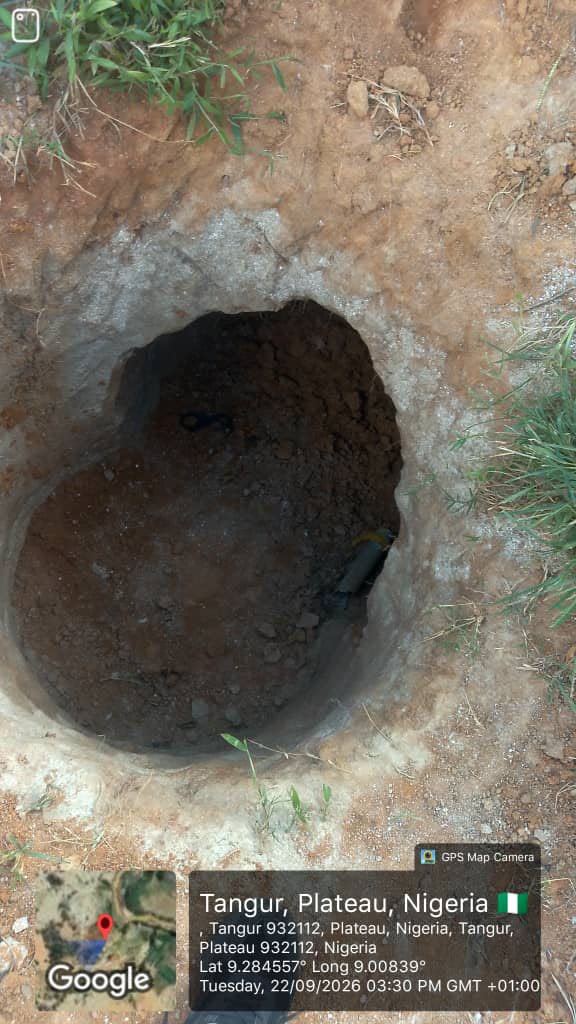
Four persons have died following the collapse of a sand excavation pit at Tangur Community in Bokkos Local Government Area of Plateau State.
Zagazola Makama reports that the incident occurred at about 2:20 p.m. on Tuesday, Sept. 22, when troops of Sector 5, Operation ENDURING PEACE (OPEP), Bokkos, responded to a report of a sand collapse involving suspected illegal miners along a river line in the community.

The troops visited the scene and confirmed that four victims had died as a result of the collapse.
The deceased were identified as Mallam Fahad Aliyu and three other women whose identities were not immediately established.
The bodies were recovered by their relatives for burial rites.
During preliminary inquiries, troops engaged the community leader over the incident.
The community leader reportedly told the troops that he was not aware of the illegal mining activities taking place in the area.
Further investigation is ongoing to establish the circumstances surrounding the incident and the extent of illegal mining activities at the location.
Four illegal miners killed as mining pit collapses in Plateau

VP Shettima Joins World Leaders At UNGA 81 Opening, Delivers Nigeria’s Statement Thursday
By: Our Reporter
Vice President Kashim Shettima on Tuesday joined world leaders at the United Nations Headquarters in New York for the opening of the General Debate of the 81st Session of the United Nations General Assembly, UNGA.
VP Shettima, who is representing President Bola Ahmed Tinubu and leading Nigeria’s delegation to the global gathering, had earlier attended a welcome breakfast hosted by United Nations Secretary-General António Guterres for Heads of Delegation and their spouses.
The Vice President arrived at the General Assembly Hall in company of Governors Dauda Lawal of Zamfara State, AbdulRahman AbdulRazaq of Kwara State and Siminalayi Fubara of Rivers State.
Also in the Nigerian delegation were the Minister of Defence, Gen. Christopher Musa (rtd); Minister of Foreign Affairs, Ambassador Bianca Odumegwu-Ojukwu; Nigeria’s Permanent Representative to the United Nations, Senator Jimoh Ibrahim, and other senior government officials.
The General Debate, holding from September 22 to 28 under the theme, “Restoring trust, managing transformation: A United Nations that delivers for all,” opened with remarks by UN Secretary-General Guterres and addresses by world leaders, including Brazilian President Luiz Inácio Lula da Silva and United States President Donald Trump.
VP Shettima is scheduled to deliver Nigeria’s national statement before the General Assembly on Thursday, September 24, setting out the country’s position on major global issues and President Tinubu’s priorities for reform of international institutions, sustainable development, peace and security, climate action and a more equitable global economic order.
On his way from the United Nations Headquarters, Senator Shettima, accompanied by governors, ministers, presidential aides and other members of the Nigerian delegation, made a brief stop at Nigeria House in New York.
Earlier in his New York engagements, VP Shettima represented President Tinubu at the Third High-Level Roundtable of the Africa Minerals Strategy Group, AMSG, where he called for a new continental push to end Africa’s dependence on the export of raw minerals and build processing, manufacturing and value-addition industries around the continent’s critical resources.
Senator Shettima said Africa’s mineral wealth must translate into jobs, industrial growth and improved living standards for Africans, urging countries on the continent to strengthen cooperation rather than compete through concessions that diminish the value of their resources.
The Vice President will also participate in other high-level and bilateral engagements during the UNGA week as Nigeria advances its national interests and strengthens cooperation with international partners.
VP Shettima Joins World Leaders At UNGA 81 Opening, Delivers Nigeria’s Statement Thursday

Alleged Wire Tapping: Court Reserves Ruling on El-Rufai’s No Case Submission
By: Zagazola Makama
The Federal High Court sitting in Abuja has reserved ruling on a no case submission by a former governor of Kaduna State, Mallam Nasir El’Rufai, on a charge of alleged wiretapping brought against him by the Department of State Services (DSS).
The DSS filed an amended five-count charge against el-Rufai following a February 13, 2026, Arise TV interview where he stated that associates had listened to the phone communications of National Security Adviser (NSA) Nuhu Ribadu.
The secret police had told the court that El’Rufai’s actions breached the Cybercrimes and Nigerian Communications laws.
At the resumed hearing, on Tuesday, counsel to El’Rufai, Paul Erokoro, SAN, informed the court that they filed a no case application on 26th August 2026.
A. K. Ekere who held brief for Erokoro, urged the Court to discharge the case filed against El’Rufai and award penalties against the DSS, arguing that no prima-facie evidence was before the court to warrant a defence.
Responding, the prosecuting lawyer, Oluwole Aladedoye, SAN, informed the court that the prosecution filed its reply to the no-case submission on 6th September, 2026. He urged the court to overrule the no case submission filed by the defence and order El’Rufai to begin his defence.
He added that as there was evidence of El’Rufai’s confession which was tendered as evidence in court. That it duly established a case against the former governor.
After listening to lawyer to the DSS, and to the former governor, the presiding judge, Justice Joyce Abdullmalik adjourned the matter to October 26, 2026.
Alleged Wire Tapping: Court Reserves Ruling on El-Rufai’s No Case Submission

Troops arrest two suspected illicit drug peddlers in Plateau

Four illegal miners killed as mining pit collapses in Plateau

Farmers, herders clash over alleged farm encroachment in Kaduna

Roger Federer’s Shock as DNA Results Reveal Myla and Charlene Are Not His Biological Children

THE PLIGHT OF FARIDA

FAILED COUP IN BURKINA FASO: HOW TRAORÉ NARROWLY ESCAPED ASSASSINATION PLOT AMID FOREIGN INTERFERENCE CLAIMS
-
 News3 years ago
Roger Federer’s Shock as DNA Results Reveal Myla and Charlene Are Not His Biological Children
-
Opinions5 years ago
THE PLIGHT OF FARIDA
-
 News1 year ago
FAILED COUP IN BURKINA FASO: HOW TRAORÉ NARROWLY ESCAPED ASSASSINATION PLOT AMID FOREIGN INTERFERENCE CLAIMS
-

 News3 years ago
EYN: Rev. Billi, Distortion of History, and The Living Tamarind Tree
-
 Opinions5 years ago
POLICE CHARGE ROOMS, A MINTING PRESS
-

 ACADEMICS3 years ago
A History of Biu” (2015) and The Lingering Bura-Pabir Question (1)
-

 Columns3 years ago
Army University Biu: There is certain interest, but certainly not from Borno.
-

 Politics1 year ago
2027: Why Hon. Midala Balami Must Go, as Youths in Hawul and Asikira/Uba Federal Constituency Reject ₦500,000 as Sallah Gift
