
News
Asiwaju Bola Ahmed Tinubu Address TO The Nation Slated for Sunday Morning!MUCH ADO ABOUT NOTHING!

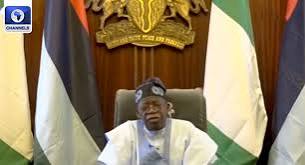
Asiwaju Bola Ahmed Tinubu Address TO The Nation Slated for Sunday Morning!
MUCH ADO ABOUT NOTHING!
BROADCAST BY HIS EXCELLENCY BOLA AHMED TINUBU, PRESIDENT AND COMMANDER-IN-CHIEF OF THE ARMED
FORCES OF THE FEDERAL REPUBLIC OF NIGERIA
ON THE NATIONWIDE PROTEST
DATE: SUNDAY 4TH AUGUST 2024
My fellow Nigerians,
- I speak to you today with a heavy heart and a sense of responsibility, aware of the turmoil and violent protests unleashed in some of our states.
- Notably among the protesters were young Nigerians who desired a better and more progressive country where their dreams, hopes, and personal aspirations would be fulfilled.
- I am especially pained by the loss of lives in Borno, Jigawa, Kano, Kaduna and other states, the destruction of public facilities in some states, and the wanton looting of supermarkets and shops, contrary to the promise of protest organisers that the protest would be peaceful across the country. The destruction of properties sets us back as a nation, as scarce resources will be again used to restore them.
- I commiserate with the families and relations of those who have died in the protests. We must stop further bloodshed, violence and destruction.
- As President of this country, I must ensure public order. In line with my constitutional oath to protect the lives and property of every citizen, our government will not stand idly by and allow a few with a clear political agenda to tear this nation apart.
- Under the circumstances, I hereby enjoin protesters and the organisers to suspend any further protest and create room for dialogue, which I have always acceded to at the slightest opportunity. Nigeria requires all hands on deck and needs us all – regardless of age, party, tribe, religion or other divides, to work together in reshaping our destiny as a nation. To those who have taken undue advantage of this situation to threaten any section of this country, be warned: The law will catch up with you. There is no place for ethnic bigotry or such threats in the Nigeria we seek to build.
- Our democracy progresses when the constitutional rights of every Nigerian are respected and protected. Our law enforcement agencies should continue to ensure the full protection of lives and properties of innocent citizens in a responsible manner.
- My vision for our country is one of a just and prosperous nation where each person may enjoy the peace, freedom, and meaningful livelihood that only democratic good governance can provide – one that is open, transparent and accountable to the Nigerian people.
- For decades, our economy has remained anaemic and taken a dip because of many misalignments that have stunted our growth. Just over a year ago, our dear country, Nigeria, reached a point where we couldn’t afford to continue the use of temporary solutions to solve long-term problems for the sake of now and our unborn generations. I therefore took the painful yet necessary decision to remove fuel subsidies and abolish multiple foreign exchange systems which had constituted a noose around the economic jugular of our Nation and impeded our economic development and progress.
- These actions blocked the greed and the profits that smugglers and rent-seekers made. They also blocked the undue subsidies we had extended to our neighbouring countries to the detriment of our people, rendering our economy prostrate. These decisions I made were necessary if we must reverse the decades of economic mismanagement that didn’t serve us well. Yes, I agree, the buck stops on my table. But I can assure you that I am focused fully on delivering the governance to the people – good governance for that matter.
- In the past 14 months, our government has made significant strides in rebuilding the foundation of our economy to carry us into a future of plenty and abundance. On the fiscal side, aggregate government revenues have more than doubled, hitting over 9.1 trillion Naira in the first half of 2024 compared to the first half of 2023 due to our efforts at blocking leakages, introducing automation, and mobilising funding creatively without additional burden on the people. Productivity is gradually increasing in the non-oil sector, reaching new levels and taking advantage of the opportunities in the current economic ambience
- My dear brothers and sisters, we have come this far. Coming from a place where our country spent 97% of all our revenue on debt service; we have been able to reduce that to 68% in the last 13 months. We have also cleared legitimate outstanding foreign exchange obligations of about $5billion without any adverse impact on our programmes.
- This has given us more financial freedom and the room to spend more money on you, our citizens, to fund essential social services like education and healthcare. It has also led to our State, and Local Governments receiving the highest allocations ever in our country’s history from the Federation Account.
- We have also embarked on major infrastructure projects across the country. We are working to complete inherited projects critical to our economic prosperity, including roads, bridges, railways, power, and oil and gas developments. Notably, the Lagos-Calabar Coastal Highway and Sokoto-Badagry Highway projects will open up 16 connecting states, creating thousands of jobs and boosting economic output through trade, tourism and cultural integration
- Our once-declining oil and gas industry is experiencing a resurgence on the back of the reforms I announced in May 2024 to address the gaps in the Petroleum Industry Act. Last month, we increased our oil production to 1.61million barrels per day, and our gas assets are receiving the attention they deserve. Investors are coming back, and we have already seen two Foreign Direct Investments signed of over half a billion dollars since then.
- Fellow Nigerians, we are a country blessed with both oil and gas resources, but we met a country that had been dependent solely on oil-based petrol, neglecting its gas resources to power the economy. We were also using our hard-earned foreign exchange to pay for, and subsidise its use. To address this, we immediately launched our Compressed Natural Gas Initiative (CNG) to power our transportation economy and bring costs down. This will save over two trillion Naira a month, being used to import PMS and AGO and free up our resources for more investment in healthcare and education.
- To this end, we will be distributing a million kits of extremely low or no cost to commercial vehicles that transport people and goods and who currently consume 80% of the imported PMS and AGO.
- We have started the distribution of conversion kits and setting up of conversion centres across the country in conjunction with the private sector. We believe that this CNG initiative will reduce transportation costs by approximately 60 per cent and help to curb inflation.
- Our administration has shown its commitment to the youth by setting up the student loan scheme. To date, 45.6billion Naira has already been processed for payment to students and their respective institutions
- I encourage more of our vibrant youth population to take advantage of this opportunity. We established the Consumer Credit Corporation with over N200billion to help Nigerians to acquire essential products without the need for immediate cash payments, making life easier for millions of households. This will consequently reduce corruption and eliminate cash and opaque transactions. This week, I ordered the release of an additional N50billion Naira each for NELFUND – the student loan, and Credit Corporation from the proceeds of crime recovered by the EFCC
- Additionally, we have secured $620million under the Digital and Creative Enterprises (IDiCE) – a programme to empower our young people, creating millions of IT and technical jobs that will make them globally competitive. These programmes include the 3Million Technical Talents scheme. Unfortunately, one of the digital centres was vandalised during the protests in Kano. What a shame!
- In addition, we have introduced the Skill-Up Artisans Programme (SUPA); the Nigerian Youth Academy (NIYA); and the National Youth Talent Export Programme (NATEP).
- Also, more than N570 billion has been released to the 36 states to expand livelihood support to their citizens, while 600,000 nano-businesses have benefitted from our nano-grants. An additional 400,000 more nano-businesses are expected to benefit.
- Furthermore, 75,000 beneficiaries have been processed to receive our N1million Micro and Small Business single-digit interest loans, starting this month. We have also built 10 MSME hubs within the past year, created 240,000 jobs through them and 5 more hubs are in progress which will be ready by October this year.
- Payments of N1billion each are also being made to large manufacturers under our single-digit loans to boost manufacturing output and stimulate growth.
- I signed the National Minimum Wage into law last week, and the lowest-earning workers will now earn at least N70,000 a month.
- Six months ago in Karsana, Abuja, I inaugurated the first phase of our ambitious housing initiative, the Renewed Hope City and Estate. This project is the first of six we have planned across the nation’s geopolitical zones. Each of these cities will include a minimum of 1,000 housing units, with Karsana itself set to deliver 3,212 units
- In addition to these city projects, we are also launching the Renewed Hope Estates in every state, each comprising 500 housing units. Our goal is to complete a total of 100,000 housing units over the next three years. This initiative is not only about providing homes but also about creating thousands of jobs across the nation as well as stimulating economic growth.
- We are providing incentives to farmers to increase food production at affordable prices. I have directed that tariffs and other import duties should be removed on rice, wheat, maize, sorghum, drugs, and other pharmaceutical and medical supplies for the next 6 months, in the first instance, to help drive down the prices.
- I have been meeting with our Governors and key Ministers to accelerate food production. We have distributed fertilisers. Our target is to cultivate more than 10 million hectares of land to grow what we eat. The Federal Government will provide all necessary incentives for this initiative, whilst the states provide the land, which will put millions of our people to work and further increase food production. In the past few months, we have also ordered mechanized farming equipment such as tractors and planters, worth billions of Naira from the United States, Belarus, and Brazil. I can confirm to you that the equipment is on the way.
- My dear Nigerians, especially our youth, I have heard you loud and clear. I understand the pain and frustration that drive these protests, and I want to assure you that our government is committed to listening and addressing the concerns of our citizens.
- But we must not let violence and destruction tear our nation apart. We must work together to build a brighter future, where every Nigerian can live with dignity and prosperity.
- The task before us is a collective one, and I am leading the charge as your President. A lot of work has gone into stabilising our economy and I must stay focused on ensuring that the benefits reach every single Nigerian as promised.
- My administration is working very hard to improve and expand our national infrastructure and create more opportunities for our young people.
- Let nobody misinform and miseducate you about your country or tell you that your government does not care about you. Although there have been many dashed hopes in the past, we are in a new era of Renewed Hope. We are working hard for you, and the results will soon be visible and concrete for everyone to see, feel, and enjoy.
- Let us work together to build a brighter future for ourselves and for generations to come. Let us choose hope over fear, unity over division, and progress over stagnation. The economy is recovering; Please, don’t shut out its oxygen. Now that we have been enjoying democratic governance for 25 years, do not let the enemies of democracy use you to promote an unconstitutional agenda that will set us back on our democratic journey. FORWARD EVER, BACKWARD NEVER!
- In conclusion, security operatives should continue to maintain peace, law, and order in our country following the necessary conventions on human rights, to which Nigeria is a signatory. The safety and security of all Nigerians are paramount.
- Thank God — and Thank you for your attention, and may God continue to bless our great Nation. Thank you very much.



NAPTIP: Parents Selling Children for Sex Face Prosecution, Conviction
…Agency raises alarm over rising reports of child sexual abuse, warns parents against exposing children to suspected predators
By: Michael Mike
The National Agency for the Prohibition of Trafficking in Persons (NAPTIP) has raised the alarm over reports of parents and guardians allegedly handing their children over to men for sexual exploitation in exchange for money and other benefits, warning that anyone found culpable will face prosecution.
The Director-General of NAPTIP, Binta Adamu Bello, said the agency was increasingly receiving reports of parents and guardians allegedly facilitating the sexual abuse of their children, describing the practice as an extreme betrayal of the trust and responsibility placed in them to protect minors.
Bello, who spoke in Abuja on Friday, vowed that the agency would intensify surveillance, investigations and prosecution to ensure that perpetrators were brought to justice.
Her warning followed the arrest in Abuja of a middle-aged woman, whose identity was withheld, over allegations that she gave out her teenage daughter to men for sexual pleasure in exchange for money.
The NAPTIP chief described the alleged conduct as a grave form of cruelty against a child, with potentially devastating consequences for the victim’s physical and psychological well-being, health and future.
“I am personally disturbed as a mother and as the Director-General of NAPTIP, by the reported cases of some parents aiding and abetting the sexual abuse of their children for monetary benefits,” she said.
“From the reports being logged both at the headquarters and in our commands across the country, it appears that this unhealthy development is on the increase.”
Bello said it was particularly troubling that individuals entrusted with the care and protection of children could allegedly become enablers of their exploitation.
“It is painful to know that the very person who is in a position of authority, either as a parent or guardian to protect and defend the child, and whom the child trusted so much, is the same person who either abuses or aids sexual assault on her,” she said.
She warned that NAPTIP would not tolerate the exploitation of children for financial gain, adding that the agency had strengthened its monitoring and enforcement mechanisms and was working with other law enforcement agencies to facilitate prompt investigations and prosecutions.
“No excuse is tenable for this devilish act, and in line with our mandates, we shall not spare anyone found culpable in any abuse and sexual assault on children across the country,” Bello said.
The Director-General recalled that she had, months earlier, directed the agency’s commands nationwide to strengthen surveillance, improve rapid response mechanisms and ensure effective prosecution of cases involving child abuse and sexual assault.
She said the agency was reinforcing these measures in response to the reports reaching its headquarters and commands across the country.
Beyond parents and guardians, Bello warned that children could also be exposed to sexual predators through people who have access to their homes and daily routines, urging parents to exercise greater vigilance when engaging domestic workers and other service providers.
She specifically cautioned parents against failing to conduct proper background checks on gatekeepers, drivers, gardeners, school-run drivers and vendors who may have access to their children while the parents are away at work.
“I also wish to call on parents to be careful with the choice of servicemen and vendors who come around their houses when they are at work. It is important for all parents to carry out due diligence and proper profiling of their vendors so as not to give their children to a suspected paedophile who will continue to abuse them,” she said.
“Be careful with the choice of your gatekeepers, drivers, gardeners, and even the persons that do your school run. A lot of abuses are being carried out by suspected vendors and other known faces to the children.”
The agency urged parents and guardians to take their duty of care seriously, stressing that children must be protected from abuse by those who have access to them, whether within the family or outside it.
NAPTIP’s warning underscores the need for stronger child-protection measures, vigilance by caregivers and timely reporting of suspected abuse, as the agency pledges to pursue cases involving the sexual exploitation of minors.
NAPTIP: Parents Selling Children for Sex Face Prosecution, Conviction
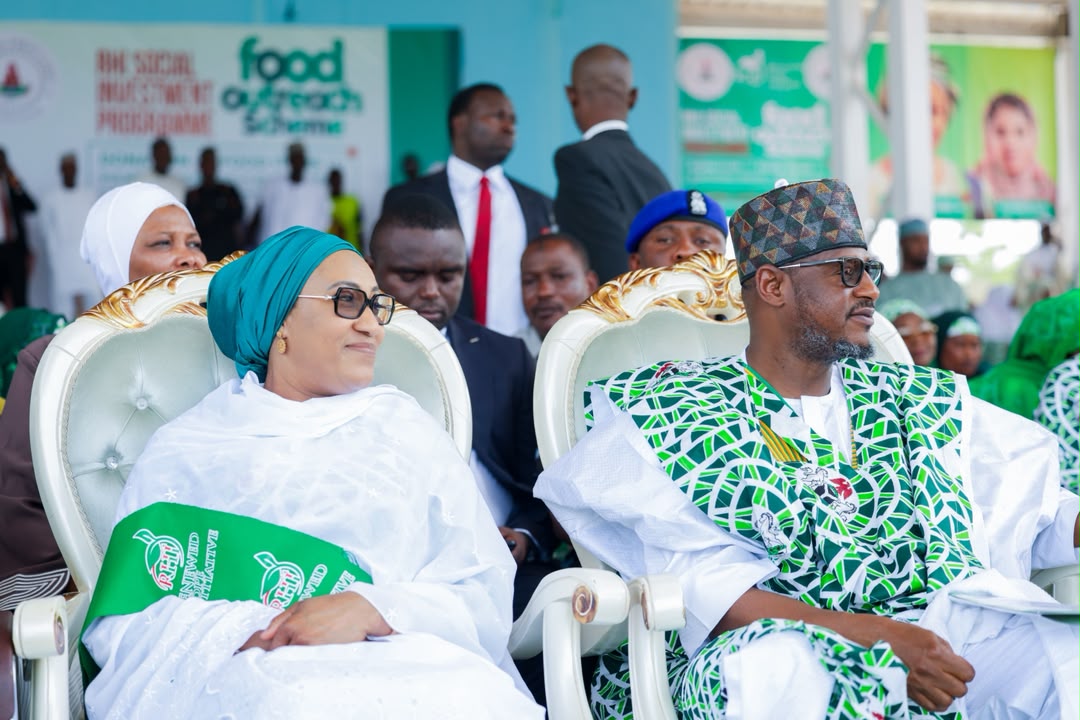
First Lady Urges Governors to Establish Food Banks as RHI Extends Outreach to Katsina
…30 states, FCT benefit from scheme targeting vulnerable Nigerians
By: Michael Mike
Nigeria’s First Lady, Senator Oluremi Tinubu, has urged state governors to establish functional community food banks in each of their three senatorial districts, warning that federal interventions alone cannot adequately address food insecurity and malnutrition among vulnerable Nigerians.
The appeal came as the Renewed Hope Initiative (RHI) extended its food outreach programme to Katsina State, bringing to 30 the number of states to benefit from the scheme, in addition to the Federal Capital Territory.
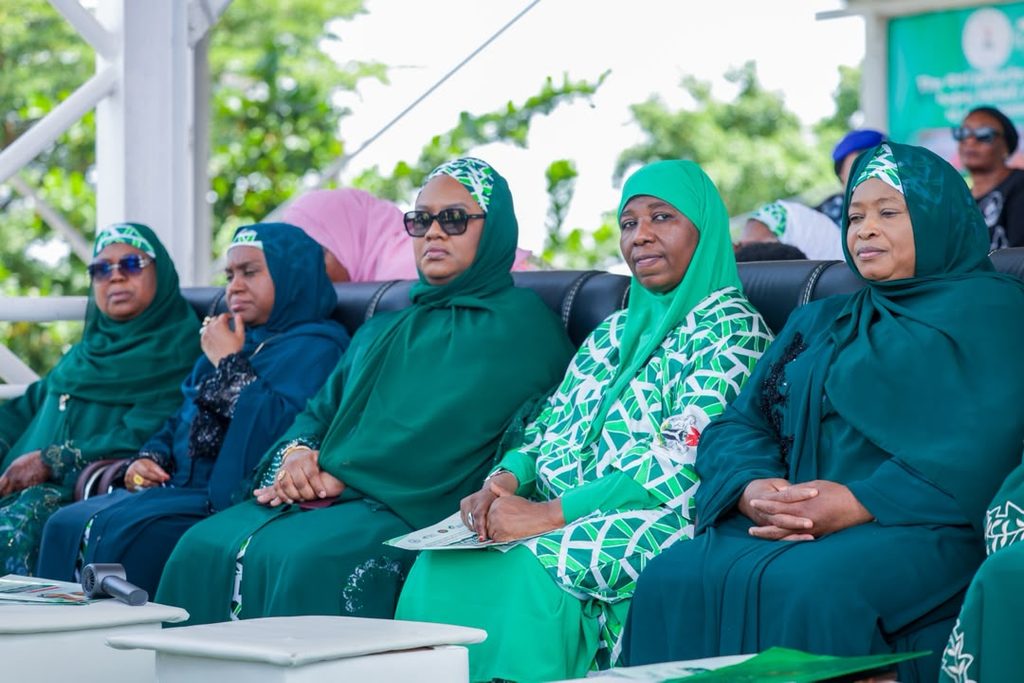
The First Lady, represented by the wife of the Vice-President, Hajia Nana Shettima, made the call during the formal presentation of food items to the wife of the Katsina State Governor, Hajia Zulaihat Dikko Radda, for distribution to vulnerable residents.
She said the establishment of community food banks across the three senatorial districts of every state would strengthen local responses to hunger, improve access to essential food supplies and provide sustained nutritional support for disadvantaged households.
Tinubu stressed that the scale of food insecurity and malnutrition in the country required closer collaboration between the federal and state governments, with community-based interventions complementing existing national programmes.
She also announced the successful completion of the nationwide rollout of the National Community Food Bank Programme, designed to combat child malnutrition and support pregnant women and breastfeeding mothers.
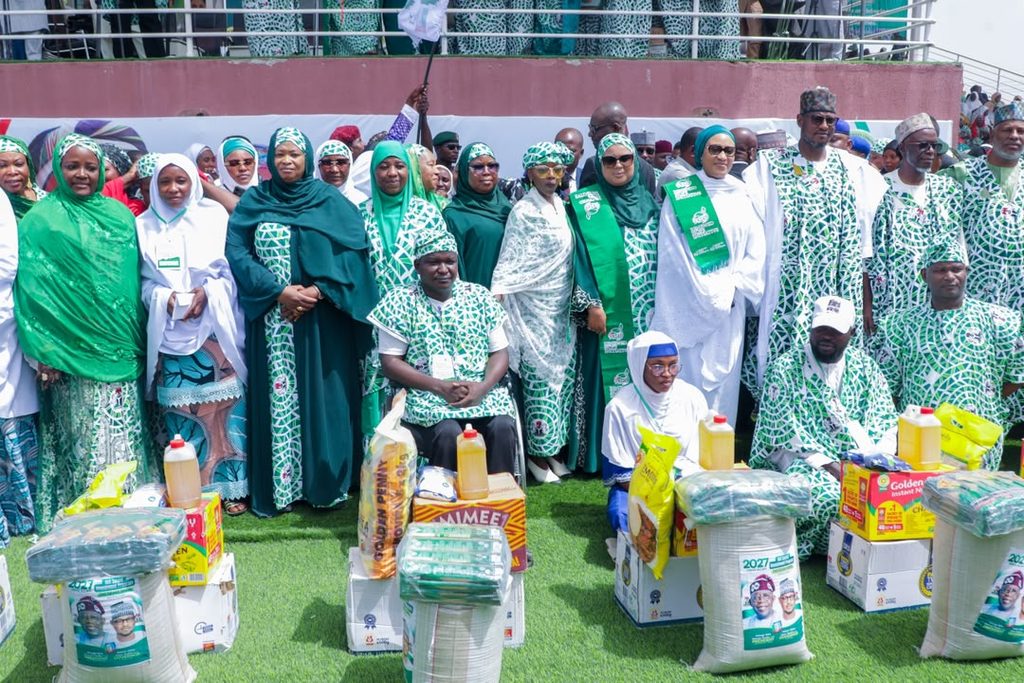
The First Lady urged state governments to adopt the programme’s framework and establish functional food banks that would bring nutritional assistance closer to communities in need.
The latest distribution in Katsina is part of the RHI Food Outreach Scheme, launched in March 2024 under the social investment programme of the initiative to provide food support to persons with disabilities, widows and other vulnerable groups.
According to the First Lady, the scheme is sustained through contributions from two partners who provide two truckloads of food items monthly, enabling the initiative to support two states every month.
The extension to Katsina brings the number of beneficiary states to 30, with Osun, Ogun and Akwa Ibom expected to receive subsequent distributions.
Governor Dikko Umaru Radda described the intervention as a demonstration of commitment to the welfare of vulnerable citizens, saying it complemented the Katsina State Government’s efforts to improve living conditions.
He said his administration, in alignment with President Bola Tinubu’s Renewed Hope Agenda, was pursuing investments in education, healthcare and agriculture to build a future in which residents could live with dignity.
Radda also said the state government had supported security agencies with equipment to strengthen their operations and improve security across communities.
He urged Katsina residents to support the ruling party in the next election, arguing that continuity in governance would help sustain development initiatives.
The governor’s wife, Hajia Zulaihat Dikko Radda, thanked the First Lady for the intervention, noting that the Renewed Hope Initiative had continued to support women, persons with disabilities and other vulnerable groups through its social welfare programmes.
The food items were formally handed over to her by Shettima for onward distribution to intended beneficiaries.
The First Lady’s appeal places responsibility on state governments to complement federal food assistance with permanent community-level mechanisms, particularly as vulnerable households continue to require access to basic nutrition.
However, the effectiveness of the proposed food banks will depend on their sustained funding, transparent beneficiary selection and reliable distribution systems to ensure that assistance reaches those most in need.
First Lady Urges Governors to Establish Food Banks as RHI Extends Outreach to Katsina
NIS Deploys AI, Digital Audit Trails to Track Border Officers, Curb Abuse
15m migration records integrated as FG moves to close identity gaps, strengthen security
By: Michael Mike
The Nigeria Immigration Service (NIS) is deploying artificial intelligence-assisted tools and digital audit trails to strengthen border surveillance, detect suspicious migration patterns and hold officers accountable for their decisions, as the Federal Government intensifies efforts to close information gaps exploited by criminals.
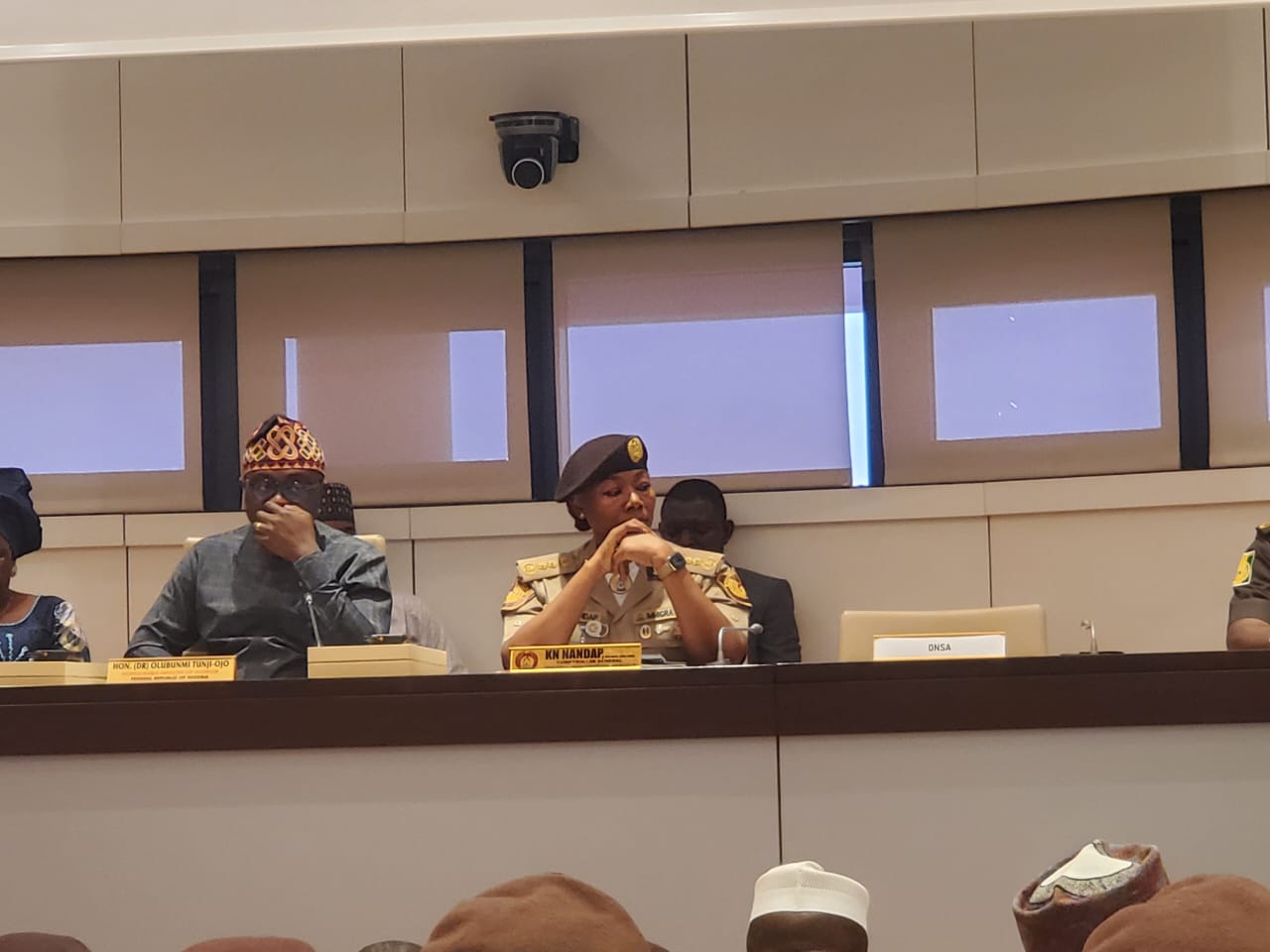
Under the new system, officers’ activities can be reviewed through digital records, while alerts generated by technology must be verified by personnel before operational decisions are taken, the Comptroller-General of Immigration, Kemi Nandap, has said.
The initiative, which integrates more than 15 million migration records into the Border Management Information System (BMIS), is intended to transform the management of Nigeria’s borders from fragmented, largely reactive operations into a coordinated, intelligence-supported process.
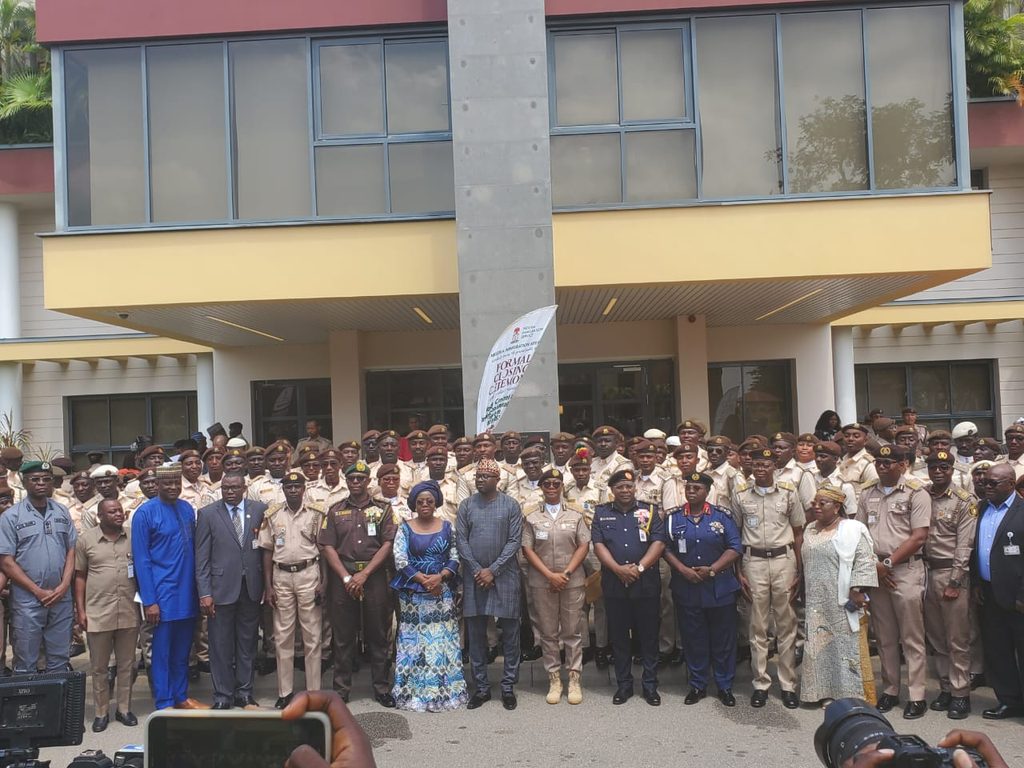
But Nandap’s message at the closing ceremony of specialised training for 87 immigration officers in Abuja was as much a warning to personnel as it was an announcement of technological advancement: access to the system must not be abused, information must not be manipulated, and no officer should mistake a computer-generated alert for proof of wrongdoing.
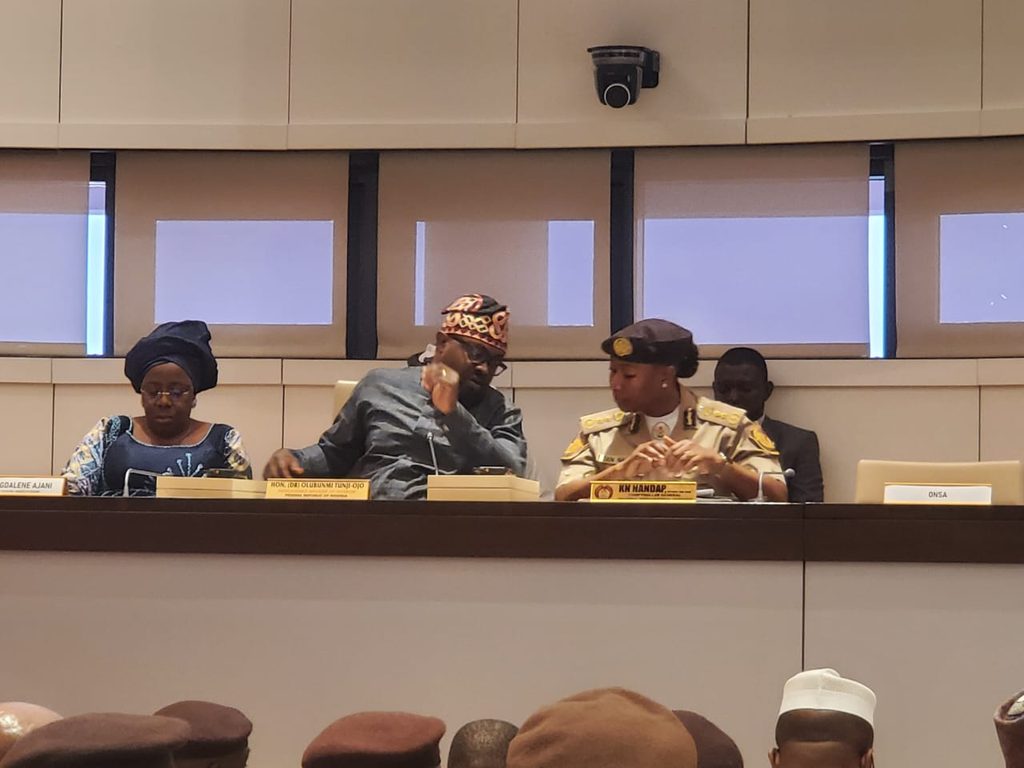
“An alert is not a verdict. A risk indicator calls for careful, proportionate examination. It never replaces evidence, professional judgement or respect for the rights of the travellers standing in front of you,” she said.
The warning underscores the challenge facing the service as it adopts artificial intelligence-assisted tools and secure mobile devices to improve identity verification and border checks while safeguarding travellers against arbitrary decisions and the misuse of sensitive information.
Nandap said every action taken on the platform could be reviewed through digital audit trails, placing a greater responsibility on officers to ensure that their decisions comply with established procedures.
“Your access to this system is a position of trust, not a personal privilege,” she said, warning that officers who share their credentials, access records out of curiosity or manipulate the platform to grant favours, settle personal scores or facilitate improper passage would face investigation and punishment.
The reforms come against the backdrop of concerns over identity fraud, migrant smuggling, trafficking in persons and other transnational crimes that exploit weaknesses in information sharing among government institutions and border commands.
Nandap said the integration of the BMIS with the Migration Information and Data Analysis System (MIDAS) had brought together more than 15 million migration records, enabling authorised officers to access a more coordinated picture of identity, movement and potential security risks.
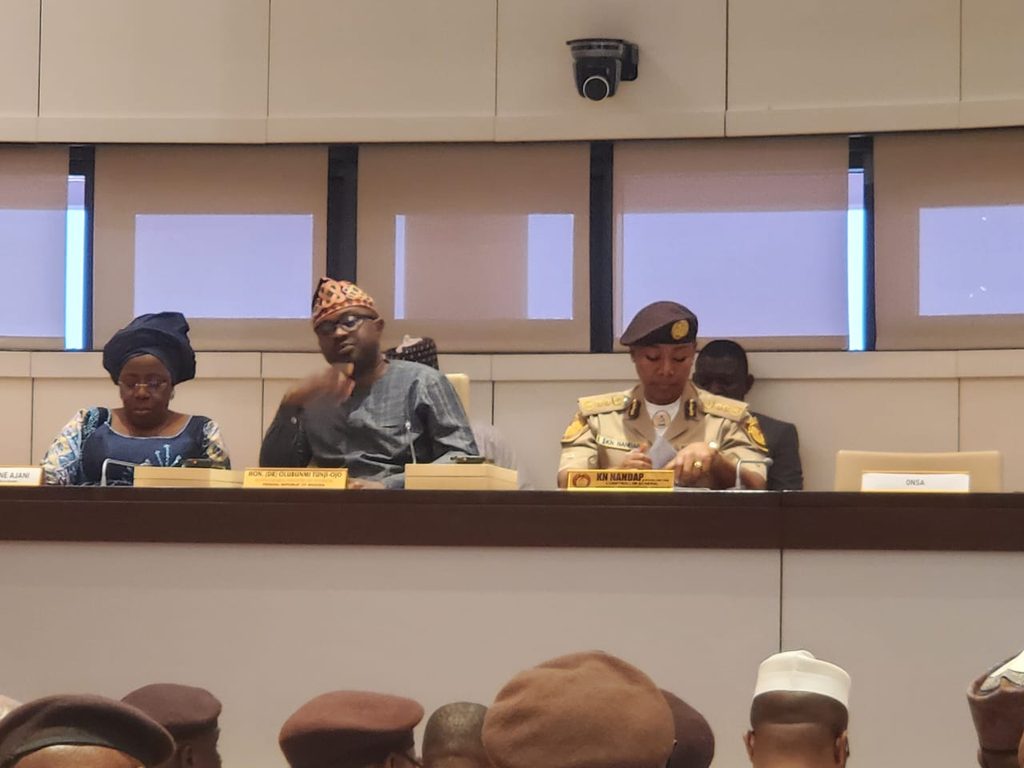
She said the achievement was not simply the number of records held but the ability to make previously scattered information available when required for operational decisions.
“Fragmented records, isolated decisions and outdated methods cannot meet these demands,” she said, adding that modern migration management required connected information, capable officers and accountable leadership.
The service is also deploying secure mobile devices to extend verification beyond fixed terminals. Nandap, however, cautioned that mobility must not weaken confidentiality or security standards, insisting that officers must apply the same safeguards to handheld devices as they do to office-based systems.
She said artificial intelligence tools would be used to flag patterns for further examination, not to make final decisions independently.
“No technology is infallible. Poor data produces poor analysis. Unchecked alerts cause harm,” she said.
The comptroller-general identified accuracy, integrity, judgement, readiness and accountability as five non-negotiable standards for the 87 officers who completed the specialised training.
Under the standards, officers must ensure that entries into the system are accurate, correct errors only through approved procedures, protect their access credentials, maintain assigned equipment and escalate suspicious cases through established channels.
She also charged supervisors to ensure that officers were properly deployed, equipment remained operational and reports were completed as required.
Nandap said the success of the programme would be measured by its effect on actual border operations rather than the number of officers trained or devices distributed.
She listed improved record accuracy, consistent checks, prompt escalation of alerts, reliable system availability and lawful treatment of travellers among the indicators by which the reforms would be judged.
FG targets fragmented databases
In his remarks, the Minister of Interior, Olubunmi Tunji-Ojo, said the immigration reforms formed part of a broader government initiative to connect information systems across agencies under the ministry and reduce the weaknesses created by disconnected databases.
He said the government had developed a 10-year technology roadmap and established a data centre with a capacity exceeding eight petabytes, supported by a solar farm that enables the data control centre to operate off-grid.
The minister said the wider Centralised Interior Management System was intended to integrate relevant information systems across the ministry, including correctional and fire administration platforms, while improving coordination with identity management institutions.
He argued that managing migration in a country of more than 200 million people through analogue processes was no longer sustainable, particularly when authorities needed reliable information on the identities and status of people entering, leaving or residing in Nigeria.
Tunji-Ojo questioned official records that reportedly put the number of foreign nationals working in the country at about 40,000, arguing that the figure illustrated the need for more comprehensive data and stronger coordination among government agencies.
“When you do not have the data of those foreigners residing in your country, then how do you manage their affairs? And how do you monitor them?” he asked.
The minister cited the September 11, 2001 attacks in the United States as a warning about the security consequences of intelligence that fails to reach the relevant authorities because information systems are disconnected.
He said Nigeria should address such weaknesses before they contribute to a major security failure.
Government seeks local technical capacity
Tunji-Ojo also warned technology vendors against withholding technical knowledge from government personnel, declaring that the ministry would prioritise knowledge transfer to reduce dependence on external contractors.
He said the government wanted Nigerian officers to acquire the expertise required to operate and maintain critical systems, rather than leave public institutions vulnerable when vendors were unavailable or unwilling to provide support.
“The era when any vendor will hold the service of government to ransom is gone,” he said.
“If you cannot transfer knowledge, then you have no business in government business.”
The minister said the initiative was intended to build an immigration service capable of developing local expertise and eventually assisting other countries with border management and migration technology.
He pledged continued investment in training, saying improved performance could not reasonably be demanded from officers who had not received the necessary technical preparation.
The two officials urged the graduating officers to translate their training into measurable improvements at their duty posts, with Nandap stressing that the credibility of the entire initiative would ultimately depend on how responsibly the technology was used.
The central test, she said, was whether Nigeria could strengthen its security, facilitate legitimate movement and ensure that every border control decision was supported by reliable information, professional judgement and public trust.
NIS Deploys AI, Digital Audit Trails to Track Border Officers, Curb Abuse

Uphold the Four Principles toPromote Lasting Peace and Stability in Africa

NAPTIP: Parents Selling Children for Sex Face Prosecution, Conviction

First Lady Urges Governors to Establish Food Banks as RHI Extends Outreach to Katsina

Roger Federer’s Shock as DNA Results Reveal Myla and Charlene Are Not His Biological Children

THE PLIGHT OF FARIDA

FAILED COUP IN BURKINA FASO: HOW TRAORÉ NARROWLY ESCAPED ASSASSINATION PLOT AMID FOREIGN INTERFERENCE CLAIMS
-
 News3 years ago
Roger Federer’s Shock as DNA Results Reveal Myla and Charlene Are Not His Biological Children
-
Opinions5 years ago
THE PLIGHT OF FARIDA
-
 News1 year ago
FAILED COUP IN BURKINA FASO: HOW TRAORÉ NARROWLY ESCAPED ASSASSINATION PLOT AMID FOREIGN INTERFERENCE CLAIMS
-
 Opinions5 years ago
POLICE CHARGE ROOMS, A MINTING PRESS
-

 News3 years ago
EYN: Rev. Billi, Distortion of History, and The Living Tamarind Tree
-

 ACADEMICS3 years ago
A History of Biu” (2015) and The Lingering Bura-Pabir Question (1)
-

 Columns3 years ago
Army University Biu: There is certain interest, but certainly not from Borno.
-

 Politics1 year ago
2027: Why Hon. Midala Balami Must Go, as Youths in Hawul and Asikira/Uba Federal Constituency Reject ₦500,000 as Sallah Gift
