
National News
AT 2025 WEF, VP Shettima Markets Nigeria, Africa As Investment Destination

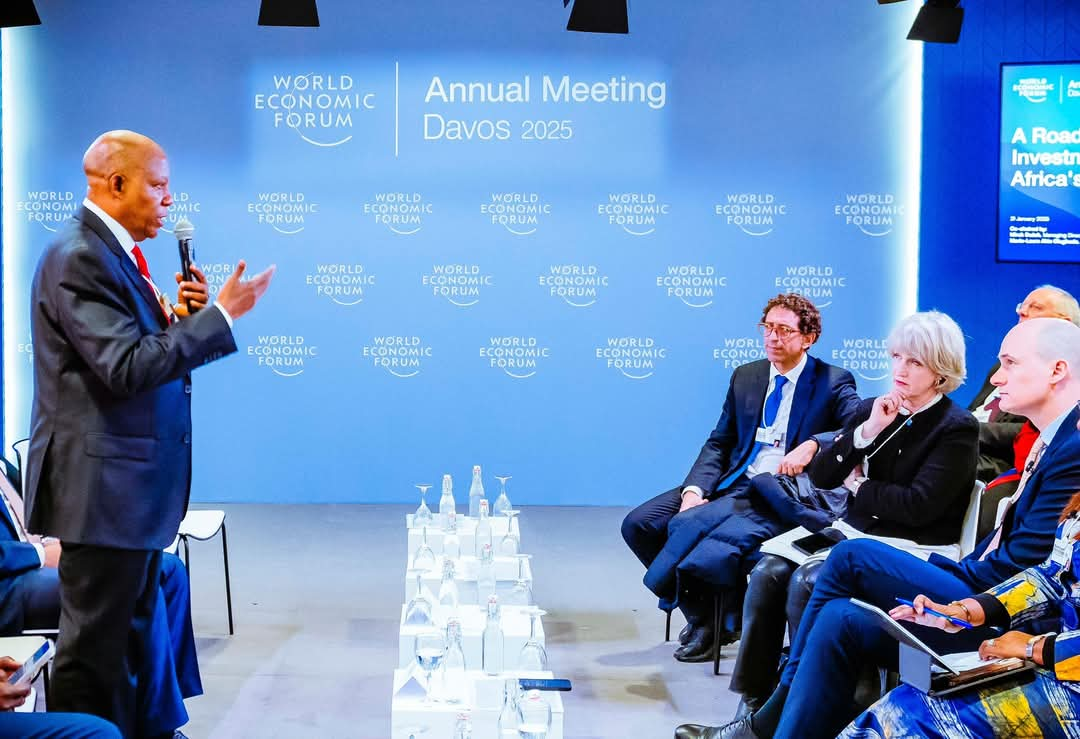
AT 2025 WEF, VP Shettima Markets Nigeria, Africa As Investment Destination
** Says Africa Has Indeed Woken Up
By: Our Reporter
Vice President Kashim Shettima has said serious investors can now take unfettered advantage of Nigeria’s growing investment climate to tap from the limitless opportunities in the country and the African continent.
VP Shettima spoke on Tuesday during a forum titled, “Roadmap to Co-create Investment Opportunities for Africa’s Frontier Markets,” at the ongoing annual meeting of the 2025 World Economic Forum ( WEF) in Davos, Switzerland.
At the session which was co-chaired by Mirek Dusek, Managing Director of World Economic Forum, and chaired by Marie-Laure Akin Olugbade, Senior Vice President, African Development Bank (AFDB) group, discussions focused on the Humanitarian and Resilience Investing Roadmap for Africa.
He told the forum that the tales they hear about the country and the African continent as a whole are really not that of doom and gloom as being painted by doomsday proponents.
The Vice President noted that Nigeria is poised to invade the global business platform with modernisation and robust investments, assuring that President Bola Ahmed Tinubu, a seasoned chartered accountant, is working to make the nation an investment destination in Africa.
“For 20 years, I have been in the Nigerian banking industry. I was a general manager in Nigeria’s largest bank, Zenith Bank. I grew up in that ecosystem. The President himself is a seasoned chartered accountant. So, I believe that Nigeria is ready for business, Nigeria is ready to embrace the path of modernization with very robust investment,” he declared.

Acknowledging however that the nation may still have certain deficits, VP Shettima pointed out that Nigeria is looking up to the African Continental Free Trade Area (AfCFTA) to address the challenges.
He stated: “We are having a huge deficit but we are looking forward to the AfCFTA and that involves investing in infrastructure for instance the coastal highway from Calabar to Lagos is the largest single investment in Africa. We are building corridors to the North.
“We have the West African gas pipeline. We are thinking ahead of time akin to the Belt and Road Initiative. We are partnering with 14 African countries to invest in gas infrastructure down to Morocco.”
Senator Shettima insisted that Africa is not all about tales of doom and gloom, maintaining that the continent has woken up from its slumber.
Likening Napoleon Bonaparte’s opinion about China to the case of Africa, the VP said, “So, Your Excellencies, ladies and gentlemen, the stories you hear about Africa are not that of doom and gloom. From DRC to Somalia, South Africa, Egypt, Ethiopia, Ghana, and Cote d’Ivoire, Africa is waking up from its slumber.
“I remember what Napoleon Bonaparte said about China, he said “China is a sleeping giant but when she wakes up, she will rattle the world”. So, Africa has woken up and we will take our rightful place in the comity of nations because as I said earlier, the trajectory of global growth is facing Africa. We are the youngest continent.”
Also drawing a leaf from the late Nigerian head of state, Gen. Murtala Mohammed, VP Shettima said Africa has come of age and can no longer be treated like an adolescent.
“I want to quote Murtala Mohammed – a Nigerian military leader at an extraordinary summit of the OAU, about 50 years ago. He said “Africa has come of age, it is no longer under the orbit of any extra-continental power, and it shall no longer take orders from any country, however powerful,” he concluded.
Meanwhile, in a show of African leadership collaboration at the World Economic Forum in Davos, Nigeria’s Vice President, Senator Shettima, on Tuesday joined South African President, Cyril Ramaphosa, as special guest of honor at a high-level briefing, following his earlier participation in the Africa Investment Forum.
….VP Shettima, Botswana’s President Hold Talks
- Meet WTO DG, Okonjo – Iweala
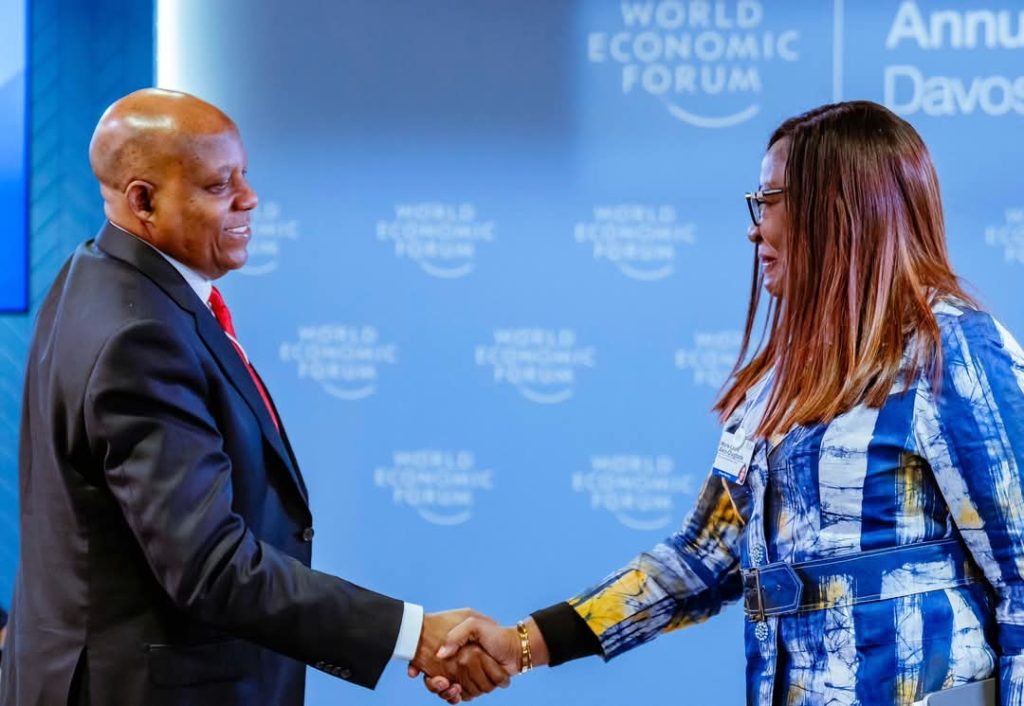
Similarly, Vice President Kashim Shettima and the President of Botswana, Duma Boko, on Tuesday held a bilateral meeting where areas of mutual interest between both countries were discussed.
The meeting, which took place on the sidelines of the World Economic Forum 2025 in Davos, Switzerland, is part of Nigeria’s commitment to fostering stronger intra-African relations and economic cooperation.
Both leaders emphasized the importance of leveraging their countries’ strengths to promote mutual growth and development.
The Vice President, who congratulated President Duma Boko on his election victory, called for deeper partnerships and collaborations between African nations, saying it is time Africa united and presented a common front on interests regarding the continent.
During the meeting, Vice President Shettima welcomed the Director General of the World Trade Organisation, Dr. Ngozi Okonjo-Iweala, introducing her to the Botswana President.
The Vice President commended Dr. Okonjo-Iweala’s exceptional achievements, describing her as one of Africa’s finest.
Other areas of interest discussed between the two leaders included trade, investment and strengthening of diplomatic ties.
AT 2025 WEF, VP Shettima Markets Nigeria, Africa As Investment Destination


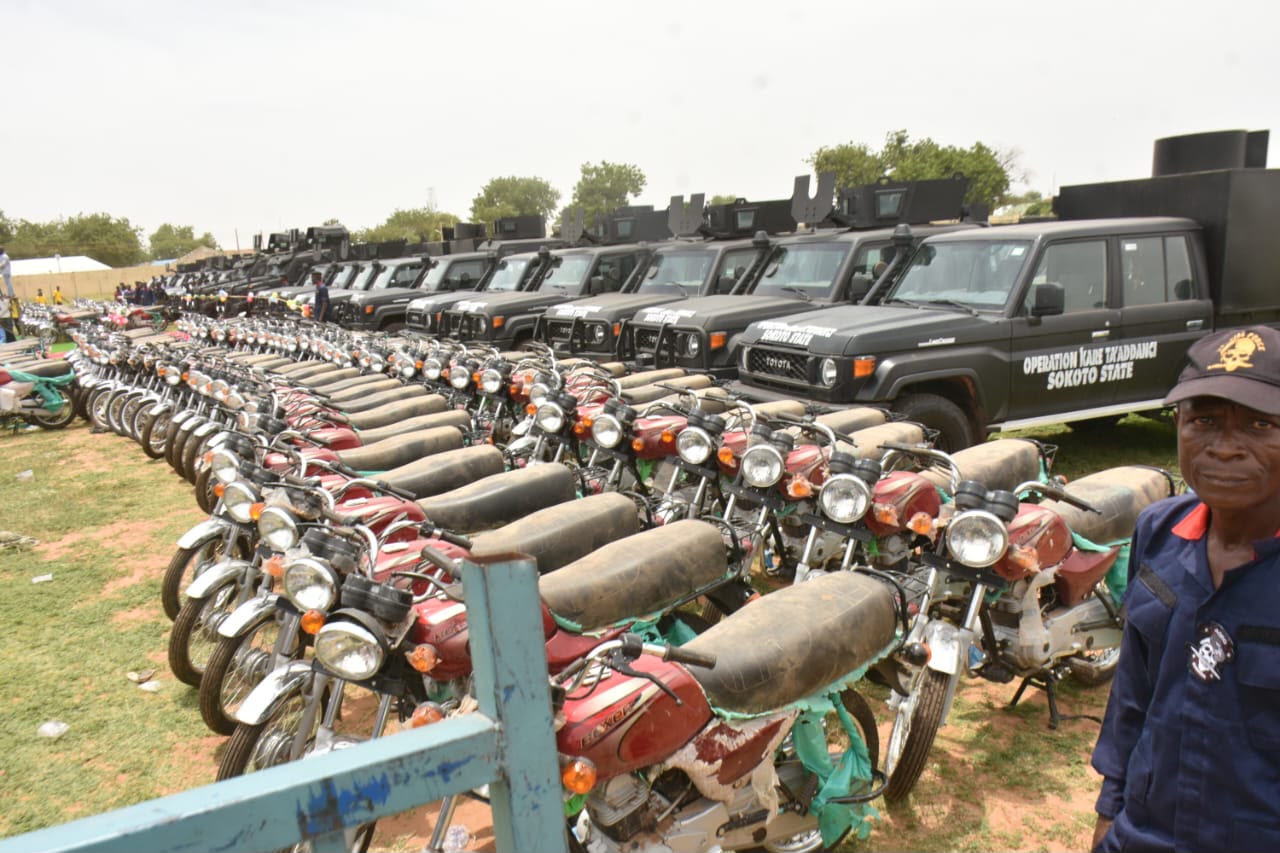
Sokoto donates 62 armoured vehicles, 320 motorcycles to security agencies
By: Zagazola Makama
The Christopher Gwabin Musa has expressed confidence that Nigeria’s current security challenges will soon be overcome, urging Nigerians to continue supporting security agencies in the fight against terrorism and banditry.
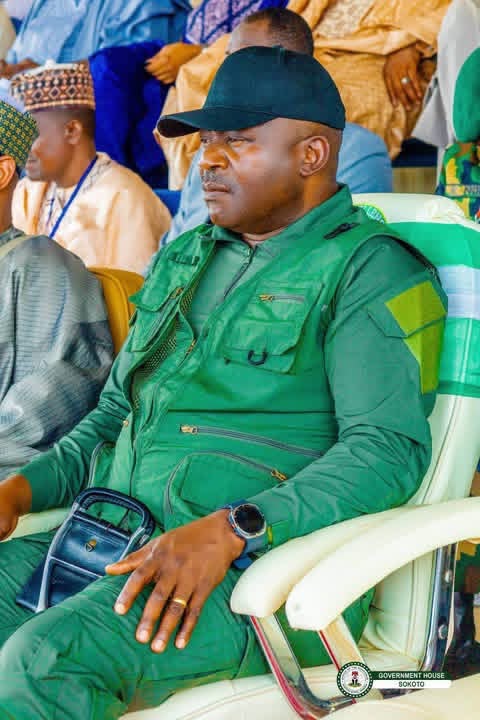
Musa made the remarks on Wednesday in Sokoto during the inauguration of 62 armoured vehicles and 320 motorcycles procured by the Sokoto State Government for deployment by various security agencies operating in the state.
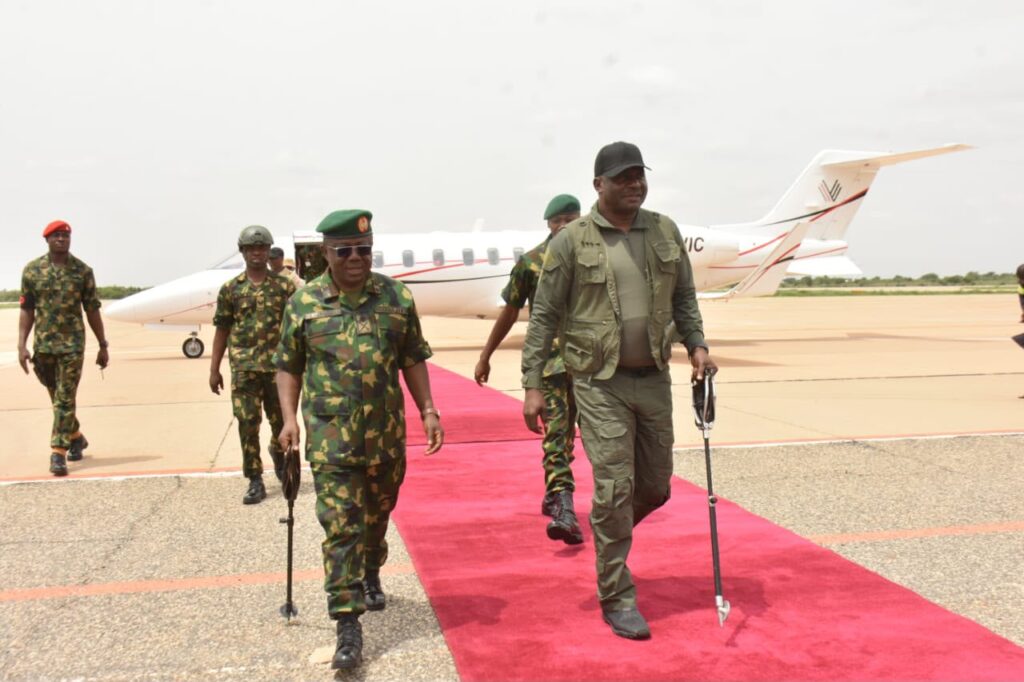
The security assets, valued at about N27.7 billion, are expected to enhance the operational capabilities of security agencies in tackling banditry, terrorism, kidnapping and other violent crimes across the state.
The defence chief stressed the need for security personnel to remain resolute in confronting criminal elements, while urging Nigerians to regard security as a collective responsibility through timely intelligence sharing and community support.
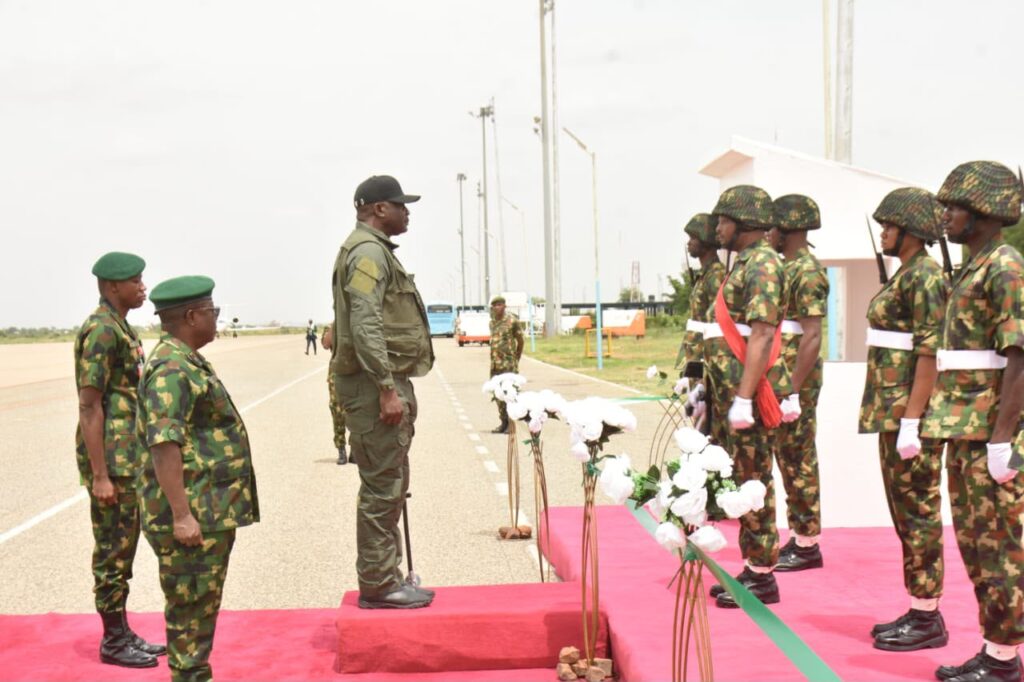
He described Sokoto as his home state, recalling that he was born and raised there, and commended the efforts of the state government in sustaining peace despite recent security challenges in some parts of the state.
According to him, the administration of Ahmed Aliyu has consistently supported security agencies with critical logistics, noting that the latest intervention would further boost troop morale and operational effectiveness.
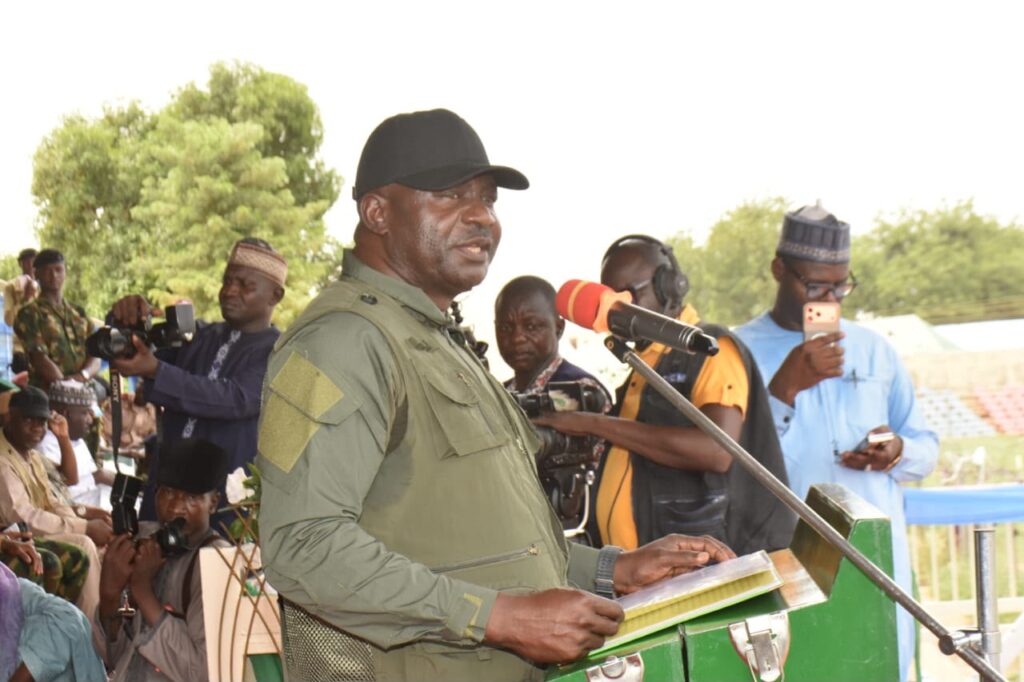
Musa appealed to other state governments and well-meaning Nigerians to emulate the Sokoto Government by supporting security agencies with logistics and other resources needed to combat insecurity.
He also said that security remains a key priority under the Renewed Hope Agenda of Bola Ahmed Tinubu, assuring Nigerians of the Federal Government’s commitment to restoring lasting peace and stability across the country.
Earlier, Gov. Ahmed Aliyu said the newly acquired armoured vehicles and motorcycles would be deployed to identified flashpoints to strengthen ongoing operations against bandits, kidnappers and other criminal elements.
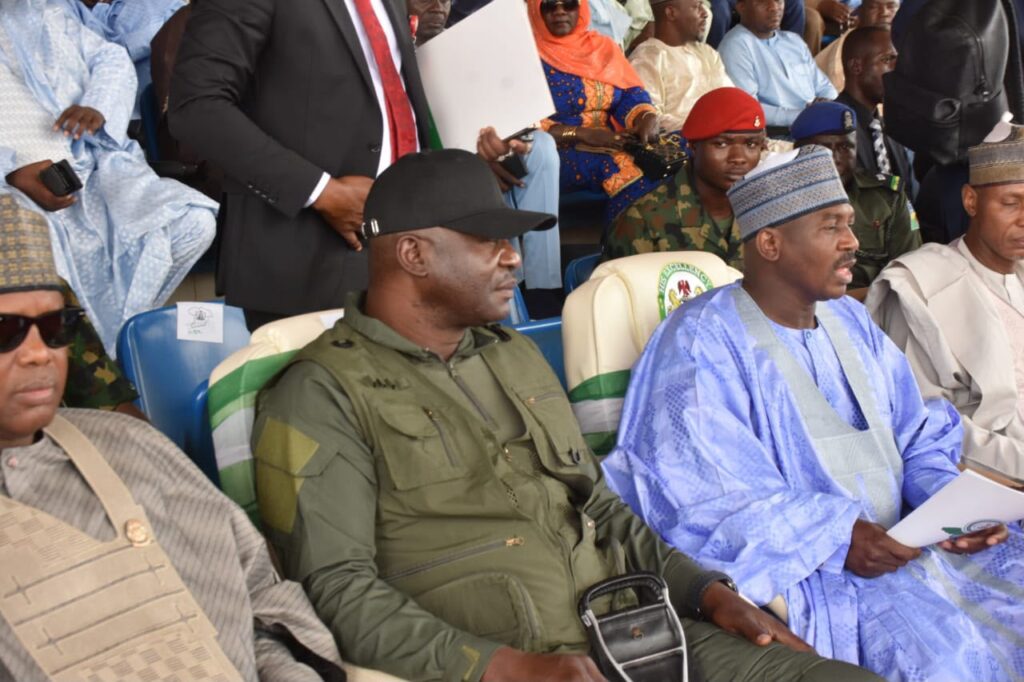
The governor said the intervention was aimed at improving the operational efficiency of security agencies and ensuring the protection of lives and property across the state.
He disclosed that his administration had previously spent more than N36.27 billion on similar logistics support for the Armed Forces and other security agencies operating in Sokoto State.
Aliyu further revealed that the Sokoto State House of Assembly was considering legislation that would prescribe sanctions for informants aiding criminal groups, similar to those imposed on bandits.
He reaffirmed that security remains a top priority under his administration’s Nine-Point Smart Agenda and commended the Federal Government, the Armed Forces, other security agencies and stakeholders for their continued efforts in addressing insecurity.
The governor also appreciated President Bola Tinubu for his sustained support towards improving the nation’s security architecture.
In his remarks, the Sa’ad Abubakar, represented by the Wazirin Sokoto, Sambo Wali Junaidu, commended the governor for his sustained investment in security, describing the intervention as a significant contribution to the protection of lives and property in the state.
Sokoto donates 62 armoured vehicles, 320 motorcycles to security agencies
Nigeria Mourns 21 Killed in China Landslide, Reaffirms Strategic Partnership
By: Michael Mike
The Federal Government has extended its condolences to the Government and people of China following the devastating landslide that struck Tanchang County in Gansu Province, killing at least 21 people and leaving several others affected, as Abuja reaffirmed the enduring strategic partnership between the two countries.
In a statement issued on Wednesday, the spokesperson for the Ministry of Foreign Affairs, Kimiebi Ebienfa, described the disaster as a tragic incident and said Nigeria stood in solidarity with China as rescue teams continued efforts to reach victims and support affected communities.
The landslide occurred on Tuesday in Tanchang County, a mountainous area in northwestern China’s Gansu Province, where heavy rainfall triggered the collapse of earth and debris, burying homes and disrupting transportation. Emergency responders were immediately deployed to search for survivors, evacuate residents and provide humanitarian assistance.
Expressing the Federal Government’s sympathy, Ebienfa said Nigeria shared in China’s grief over the lives lost.
“The Federal Government of Nigeria expresses deep condolences to the Government and people of the People’s Republic of China following the tragic landslide that struck Tanchang County in Gansu Province on Tuesday, July 7, 2026,” he said.
He added: “Nigeria mourns the loss of lives in this disaster, which has claimed at least 21 lives, with others affected amid the rescue operations. Our thoughts and prayers are with the families of the deceased, the injured, and all those who have lost loved ones or property in this unfortunate incident.”
The spokesperson also commended the swift response mounted by the Chinese authorities, praising emergency personnel for their efforts to rescue survivors and provide relief to victims.
“Nigeria commends the swift response of the Chinese authorities and rescue teams in their efforts to save lives and provide relief to those impacted,” he stated.
Beyond the immediate humanitarian message, Nigeria used the occasion to reaffirm the strength of its diplomatic and economic relationship with China, one of its largest trading partners and a key investor in critical infrastructure projects across the country.
Over the years, China has played a significant role in financing and constructing major Nigerian infrastructure, including rail lines, airport terminals, highways and power projects. The two countries have also deepened cooperation in trade, investment, security, agriculture, technology and human capital development under the framework of their Comprehensive Strategic Partnership.
Reflecting on these longstanding ties, Ebienfa said: “Nigeria and China share a long-standing strategic partnership built on mutual respect, friendship, and cooperation. Nigeria stands in solidarity with China during this difficult time, and we are confident in the resilience of the Chinese people and government as they work towards recovery and rehabilitation in the affected areas.”
He also offered prayers for those affected by the disaster.
“We pray for the peaceful repose of the souls of the departed, the speedy recovery of the injured, and strength and comfort for the bereaved families,” he said.
The latest tragedy underscores the vulnerability of many mountainous regions in China to landslides and flash floods, particularly during the annual rainy season. Chinese authorities have in recent years strengthened early warning systems, disaster preparedness and emergency response mechanisms, but extreme weather events linked to intense rainfall continue to pose significant risks to lives and infrastructure.
Nigeria’s condolence message joins those from countries around the world expressing solidarity with China as rescue operations continue and recovery efforts begin in the affected communities.
Nigeria Mourns 21 Killed in China Landslide, Reaffirms Strategic Partnership
National News
President Tinubu Flags Off the Construction of Dikwa–Gamboru Ngala, Bama–Banki International Road Projects
President Tinubu Flags Off the Construction of Dikwa–Gamboru Ngala, Bama–Banki International Road Projects
By: Bodunrin Kayode
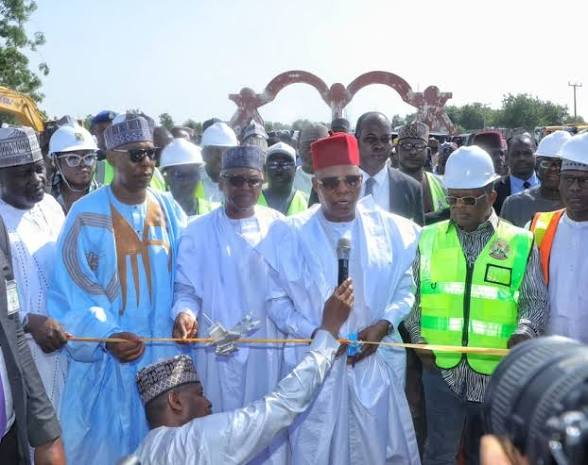
President Bola Tinubu on Saturday flagged off the construction of the 49.55-kilometre Dikwa–Gamboru Ngala Road and the 49.15-kilometre Bama–Banki Road, describing the strategic highways as critical to economic growth, regional integration, and national security.
The two road projects, regarded as economic lifelines of North-East Nigeria, serves as key gateways to neighbouring African countries, which will bolster cross-border trade, facilitate the movement of agricultural produce, and strengthen security operations in a region recovering from over a decade of insurgency.
The groundbreaking ceremony was held along the Maiduguri–Gamboru Ngala Road, where President Tinubu was represented by Vice President Senator Kashim Shettima.
The Vice President said the rehabilitation of the roads would improve connectivity and deliver on the administration’s commitment to infrastructure development across the country.
“His Excellency, President Bola Ahmed Tinubu, GCFR, has made infrastructure a central priority. This is what Mr. President promised Nigerians, and I’m here today to affirm our readiness to redeem the promise and to convey his goodwill and gratitude for the support you have shown us,” Shettima said.
“The Bama–Banki Corridor carries special strategic weight. It is a top route of agriculture, movement, and national security. The Dikwa–Gamboru Ngala Road belongs to the same vision of reconnecting communities and restoring economic confidence across Borno State.”
The President also commended Borno State Governor, Professor Babagana Zulum, for prioritising infrastructure and maintaining a strong partnership with the Federal Government.
“The partnership between the Federal Government and Borno State shows what becomes possible when public institutions are united by the urgency of service. Certainly, Your Excellency, Professor Babagana Umara Zulum, you are one of the best-performing governors in the federation,” Tinubu stated.
Governor Zulum expressed appreciation to President Tinubu for approving the road projects and other critical interventions in Borno State.
“The successful commencement of this project reflects the strong partnership between the Federal Government and the Borno State Government. We deeply appreciate and remain eternally grateful to the President of the Federal Republic of Nigeria, President Bola Ahmed Tinubu, GCFR, for his unwavering commitment to the development, peace, and security of the North East and Nigeria as a whole.
“Borno State Government recognizes that infrastructure remains a critical foundation for development. Since assuming office, our administration has prioritized the rehabilitation and construction of roads, schools, hospitals, water facilities, and other critical infrastructure as part of our commitment to improving the lives of our citizens,” he added.
Governor Zulum also pledged the state’s political support for President Tinubu in the next presidential election.
“I want to assure the President and indeed the Vice President that, Insha Allah, come January 2027, the people of Borno State will overwhelmingly vote him into office.”
The Governor equally praised his representative Vice President Shettima for his sustained support towards the reconstruction and development of Borno State.
“Your Excellency, your personal interest in the reconstruction and development of our state continues to inspire confidence among our people. We sincerely appreciate your leadership and steadfast commitment.” said Zulum.
Zulum also acknowledged the humanitarian contributions of Alhaji Aliko Dangote, particularly through the Aliko Dangote Foundation, during the state’s recovery from insurgency and the 2024 flood disaster.
He recalled the construction of Dangote Village, the donation of ₦1.5 billion to the National Emergency Management Agency (NEMA), ₦1 billion to the Borno State Government following the 2024 flood, and the distribution of relief materials to internally displaced persons.
“Through the Aliko Dangote Foundation, thousands of displaced persons received food and non-food items. Essentially, in 2017, he donated 106 trucks of food to IDPs.
“Alhaji Aliko Dangote has also donated ₦1.5 billion to NEMA to support flood victims in Borno State in the year 2024.”
Governor Zulum assured that the road projects would be closely monitored to ensure value for money and strict compliance with quality standards. He also appealed to the Minister of Works to grant the Borno State Government a waiver to regulate the activities of heavy-duty truck drivers using the roads intermittently.
Earlier, the Minister of Works, Senator David Umahi, disclosed that the projects would be executed in two phases and expressed confidence that construction would be completed within six months.
The ceremony was attended by the Borno State Deputy Governor, Umar Kadafur; APC Deputy National Chairman (North), Hon. Ali Dalori; senators; members of the House of Representatives; the Shehu of Borno, represented by the Shehu of Dikwa; ministers; members of the Borno State House of Assembly; APC leaders; the Secretary to the State Government; the Head of Service; the Acting Chief of Staff; commissioners; heads of government agencies; and other dignitaries.
President Tinubu Flags Off the Construction of Dikwa–Gamboru Ngala, Bama–Banki International Road Projects

Sokoto donates 62 armoured vehicles, 320 motorcycles to security agencies

Troops foil attack on commuters, kill eight terrorists in Katsina

Nigerian Children in Crisis ‘Fiscally Invisible’ as New Report Exposes Funding Failure

Roger Federer’s Shock as DNA Results Reveal Myla and Charlene Are Not His Biological Children

THE PLIGHT OF FARIDA

FAILED COUP IN BURKINA FASO: HOW TRAORÉ NARROWLY ESCAPED ASSASSINATION PLOT AMID FOREIGN INTERFERENCE CLAIMS
-
 News2 years ago
Roger Federer’s Shock as DNA Results Reveal Myla and Charlene Are Not His Biological Children
-
Opinions4 years ago
THE PLIGHT OF FARIDA
-
 News1 year ago
FAILED COUP IN BURKINA FASO: HOW TRAORÉ NARROWLY ESCAPED ASSASSINATION PLOT AMID FOREIGN INTERFERENCE CLAIMS
-

 News2 years ago
EYN: Rev. Billi, Distortion of History, and The Living Tamarind Tree
-
 Opinions5 years ago
POLICE CHARGE ROOMS, A MINTING PRESS
-

 ACADEMICS2 years ago
A History of Biu” (2015) and The Lingering Bura-Pabir Question (1)
-

 Columns2 years ago
Army University Biu: There is certain interest, but certainly not from Borno.
-

 Politics1 year ago
2027: Why Hon. Midala Balami Must Go, as Youths in Hawul and Asikira/Uba Federal Constituency Reject ₦500,000 as Sallah Gift
