National News
AT FIRST NEC OF THE YEAR

AT FIRST NEC OF THE YEAR
Council Moves To Boost Non-oil Revenue, Deepen Engagement With Stakeholders
Cross River Governor Chairs Bi-Partisan Committee On Legacy Projects
VP Shettima: Agriculture, other non-oil sectors, increasingly bearing Nigeria’s revenue weight
By: Our Reporter
The National Economic Council (NEC) has resolved to deepen engagement with stakeholders to boost non-oil revenues in line with the economic blueprint of the administration of President Bola Ahmed Tinubu.
This is just as Chairman of the Council, Vice President Kashim Shettima called for accelerated transition from oil to non-oil economy through competitive manufacturing, export diversification, and private sector investment.
The Council has also approved the constitution of a Committee on the implementation of the President’s directive on the actualisation of the legacy projects.
The committee is chaired by the Governor of Cross River State while one governor from each sub-region will serve as member of the committee as follows: North West (Sokoto), North East (Gombe), North Central (Niger), South East (Abia), and South West (Lagos).
The Permanent Secretary of the Ministry of Budget and Economic Planning, Deborah Odoh, shall serve as Secretary, while the Ministers of Works and Trasnportation will also serve on the committee.

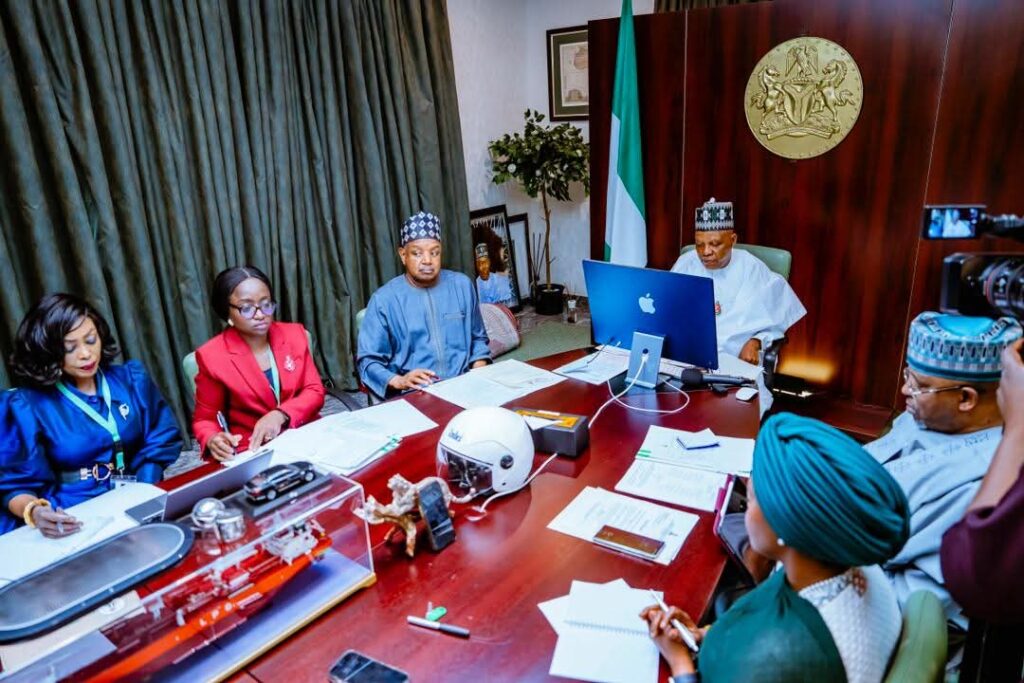
NEC’s decision, taken on Thursday during its 156th meeting and first of the year which washeld virtually, followed a presentation on the economic priorities for 2026 by the Minister of Finance and Coordinating Minister of the Economy, Mr. Wale Edun.
The presentation highlighted key reforms implemented by the Tinubu administration, including targeted programmes that have removed distortions in the system, stabilised the economy and put Nigeria on the path of sustained recovery and prosperity.
The presentation also reflected the country’s current global recognition, which is reinforcing investor confidence in the economy projected to grow at 4.68% in 2026.
The key priorities according to the Minister, include maintaining Nigeria’s economic competitiveness through sound governance, improved availability and affordability of food, ensuring human capital development with improved social protection and timely payment of debt service, salaries and pensions.
In its resolution, NEC noted and commended the Federal Government’s plans to unlock rapid and sustained job-rich growth, high-quality jobs, and entrepreneurship opportunities.
The Council also resolved to dedicate a special session to address salient issues raised in the country’s food security efforts, particularly issues bothering on agricultural productivity.
In his opening remarks, Vice President Shettima observed that while “global powers assert their interests with renewed confidence, commodity markets will remain volatile,” with oil prices, exchange rates, and capital flows frustrating the nation’s policies.
He noted that the current economic reality has reinforced the urgency of fiscal risk management and the need to reduce the nation’s economic and revenue exposure to oil.
According to him, the non-oil economy has emerged as the backbone of Nigeria’s growth story, accounting for about 96 per cent of the country’s GDP and is expanding at about 4 per cent.
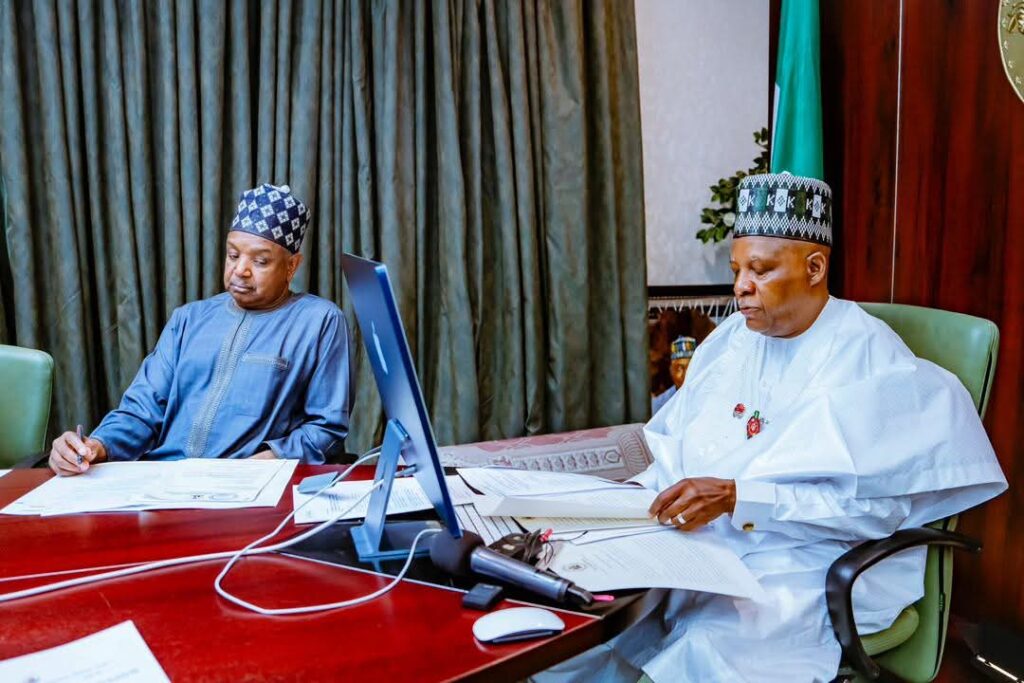
“Services, agriculture, and other non-oil sectors are increasingly carrying the weight of the economy. More importantly, non-oil revenues now contribute nearly three-quarters of total government collections.
“This marks a significant, if gradual, departure from our historic dependence on volatile oil receipts. The task before us is to deepen this transition through competitive manufacturing, export diversification, and private sector investment,” he said.
VP Shettima who is Chairman of NEC acknowledged that while it was the first meeting of the Council for the year 2026, the consequences of the choices made last year demand coherence, courage, and consistency in the new year.
“This moment in our journey calls for neither triumphalism nor despair. What it calls for is perspective. The Nigerian economy has travelled a difficult road over the past year, but it has not travelled it without progress,” he pointed out.
Noting that the nation’s economy witnessed significant growth in 2025, Senator Shettima attributed the rapid growth to the visionary leadership of President Bola Ahmed Tinubu.
His words: In 2025, our economy expanded by 3.9 per cent, the fastest rate of growth in over a decade. Quarter by quarter, this momentum was evident: growth strengthened from 3.13 per cent in the first quarter to 4.23 per cent in the second, before settling at 3.98 per cent in the third.
“This is the outcome of hard decisions taken in difficult circumstances, and this is not a surprise with a visionary like His Excellency, President Bola Ahmed Tinubu, leading the charge.”
The Vice President said, however, that acceleration of economic growth must not be confused with adequacy, observing that “a growth rate of 3.9 per cent, while encouraging, is not sufficient to decisively reduce poverty, generate jobs at the scale our population demands, or lift per capita incomes in a way that ordinary Nigerians can feel.
“With population growth at about 2.6 per cent annually, this rate of expansion leaves us with little room to absorb inflationary pressures or external shocks. Our ambition, therefore, must be higher,” he added.
Highlights of other deliberations and resolutions at the NEC meeting are as follows:
UPDATE ON ACCOUNT BALANCES AS AT 14th January 2026
The Accountant-General of the Federation gave update to Council on the under listed accounts as follows:
Excess Crude Account $535,823.39
Stabilization Account N64,652,693,552.36
Natural Resources Account N97,369,382,081.96
BRIEF ON THE IMPLEMENTATION OF PRESIDENT BOLA AHMED TINUBU, GCFR DIRECTIVES TO THE NATIONAL ECONOMIC COUNCIL (NEC) ON THE CONSTRUCTION OF LAGOS-CALABAR AND SOKOTO-BADAGRY HIGHWAYS
Council was briefed on the level of implementation of Mr. President’s directive concerning the Lagos-Calabar and the Sokoto-Badagry Super Highways, in accordance with the Administration’s Agenda.
In the report, Council was called to note that the President, Federal Republic of Nigeria, Senator, Bola Ahmed Tinubu, GCFR addressed the National Economic Council (NEC) during the 150th (3rd in 2025) meeting held on Thursday, 31st July 2025 where he underscored the need to properly manage the setbacks along the highways to create some form of investments/economic activities.
Flowing from the above, the NEC Secretariat interfaced with the Office of the Secretary to the Government of the Federation (Cabinet Office) on the assignment and was informed that the process had commenced, and is being overseen by the Office of the Secretary to the Government of the Federation.
Similarly, the Office of the Surveyor-General of the Federation has been moved to the Presidency in compliance with Mr. President’s directive.
PRAYER
Council is invited to note the level of implementation of Mr. President’s directive on setting up a committee for actualization of the administration’s legacy projects especially the Lagos-Calabar and the Sokoto-Badagry Coastal Highways and the movement of the Office of the Surveyor-General of the Federation from the Federal Ministry of Works to the Presidency.
COUNCIL RESOLUTION:
The Council constituted a Presidential NEC Committee on the implementation of the President’s directive.
The committee is chaired by the Governor of Cross River State while one governor from each sub-region will serve as member of the committee, namely: North West (Sokoto), North East (Gombe), North Central (Niger), South East (Abia), and South West (Lagos).
The Permanent Secretary of the Ministry of Budget shall serve as Secretary, while the Ministers of Works and Trasnportation will also serve on the committee.
PRESENTATION ON THE NEW WORLD BANK-NIGERIA COUNTRY PARTNERSHIP FRAMEWORK
In the World Bank Group briefing to Council on Partnership Framework Consultations (CPF), the presentation outlined how the World Bank Group supports Nigeria’s development goals.
It emphasized the shifts towards national programmes implemented at the state level (two-thirds of the active portfolio) and result-based financing (half of the active portfolio), all aimed to achieve impact at scale through fewer, but larger national programmes.
The presentation also talked about the First 2,000 days which includes: Securing Nigeria’s Future; Investing in Stunting Reduction and Early Childhood Development, among others.
The presentation also highlighted what needs to be done when the window for early cognitive development is missed, and when it is too late for recovery.
The WBG also set agenda for 2026 as follows:
January 2026: Agree to the development of a national, state-driven Early Years program under the HCD 2.0 Strategy of the National Economic Council.
January 2026: Nominate an HCD focal person and a senior Budget official to serve as State Early Years leads for engagement.
January – June 2026: Support a diagnostic and multisector dialogue process with your teams to emerge state-wise investment plans. (Immediate)
Immediate: Signal willingness to align budgets and MTSS with the emerging Early Years priorities.
The presentation advised that to move into the group of richer nations, we need to invest in Nigeria’s human capital.
NIGERIA’S SUSTAINABLE AGRICULTURAL VALUE-CHAINS FOR GROWTH (AGROW)
The presentation also highlighted agricultural value-chains to include the following:
$500M Results-Based Program: AGROW introduces a unified national platform tied to measurable outcomes, ensuring accountability and performance-driven implementation.
Co-Created with States & Private Sector: Designed collaboratively by MDAs, state governments, private companies, and development partners to ensure ownership and long-term sustainability, among others.
COUNCIL RESOLUTION:
Council lauded the proposed World Bank Group Country Partnership Framework consultations, which, among other aims, are targeted at investing in young Nigerian children, thereby delivering early results for Nigeria’s children and the future of work.
NEC resolved to take the lead in efforts to work with the World Bank in implementing President Bola Ahmed Tinubu’s Renewed Hope Agenda, having shown the capacity to effectively channel local and foreign resources.
Council committed to providing institutional support and commitment to the World Bank’s proposed framework for Nigeria.
UPDATE ON NIGERIA’S TAX REFORM LAWS PRESENTED BY PRESIDENTIAL FISCAL POLICY AND TAX REFORMS COMMITTEE
Update was presented to Council on Tax Reform. It stated that the reform is to address inequity and promote shared prosperity, a broken tax system, fragmented and complex, unconducive for growth, regressive, high burden on Nigerians & businesses.
The committee gave an overview of the entire tax framework with its priorities, targets, challenges and opportunities for economic transformation.
Council directed the committee to prepare a more comprehensive brief for presentation at NEC’s forthcoming conference in February to prepare the sub-nationals for the robust implementation of the tax laws across the country.
CONCLUSIONS AND PRAYERS
We seek the support of states for effective implementation
- Political leadership to support the tax reform
- Enactment of Tax Harmonisation Law by states
- Adoption of presumptive tax regime for informal sector
- Resourcing of state internal revenue service to improve capacity for administration
- Approval of National Fiscal Policy
COUNCIL RESOLUTION:
Council resolved to take a more robust engagement on the new tax regime at its forthcoming conference in February.
AT FIRST NEC OF THE YEAR