
News
AT JIGAWA INVESTMENT SUMMIT 2026: President Tinubu Making It Easier To Do Business Now In Nigeria, VP Shettima Asserts

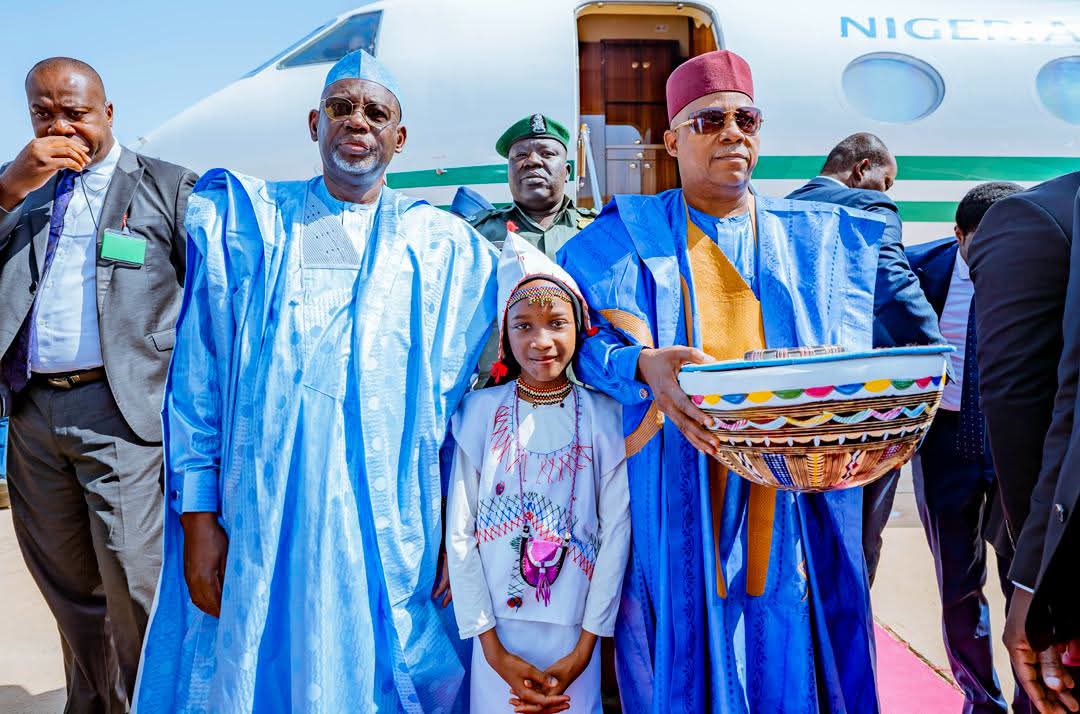
AT JIGAWA INVESTMENT SUMMIT 2026: President Tinubu Making It Easier To Do Business Now In Nigeria, VP Shettima Asserts
Says FG is helping states to unlock, deploy resources prudently through rigorous reforms at the centre*
By: Michael Mike
The Vice President, Senator Kashim Shettima, has explained some of the strategies being deployed by the administration of President Asiwaju Bola Ahmed Tinubu to improve the ease of doing business in Nigeria.
According to him, through the Presidential Enabling Business Environment Council (PEBEC) as well as the bold structural and fiscal reforms, the Federal Government has replaced gatekeeping with partnership that has enabled the subnationals to unlock their economic potential.
Senator Shettima, who stated this on Wednesday when he declared open the Jigawa State Investment Summit 2026, in Dutse, the state capital, noted that across the federation, the President Tinubu-led Federal Government has taken difficult but necessary decisions to put the economy back on a path of sustainable growth.
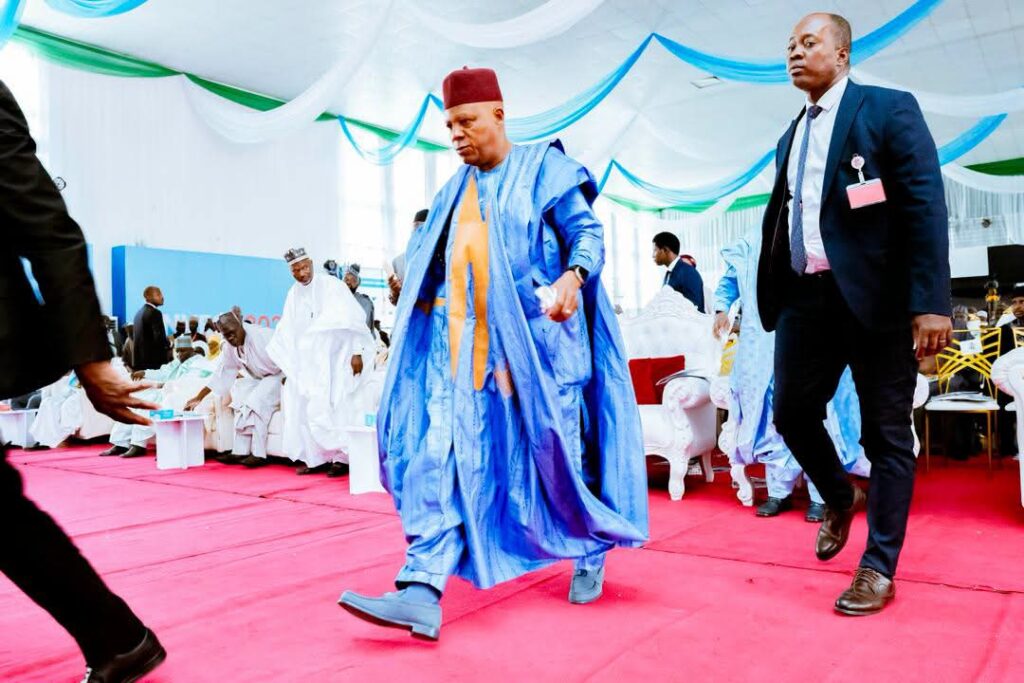
“On our part, we have made it easier to do business in Nigeria. Through the Presidential Enabling Business Environment Council, we have simplified registrations and permits, and brought the cost and time of starting and running a business steadily down. The Business Facilitation Act has given these reforms the force of law, binding our agencies to transparency, predictability and speed.
“We have also unified and liberalised the foreign-exchange market, ended distortions that for too long frightened away serious investors, and put public finances on a more honest footing,” he said.
The Vice President observed that even though it had been a journey for which patience is required, the outcomes indicate that it is paying off, as the currency markets are now functioning more transparently, and reserves are now firmer.
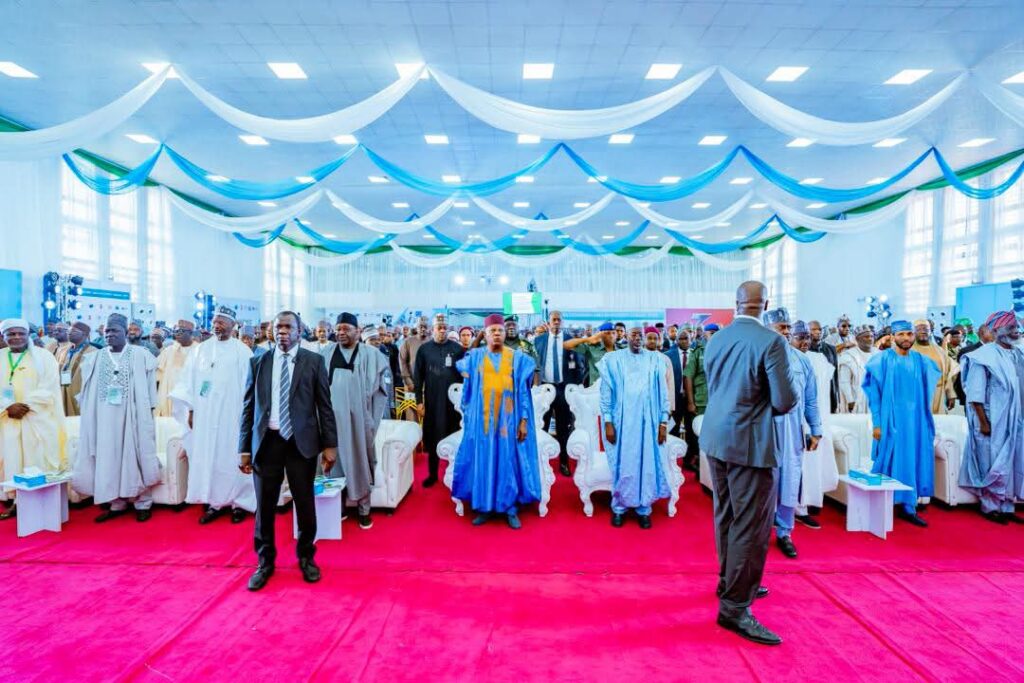
He said for the first time in over ten years, the world’s leading rating agencies have started raising Nigeria’s sovereign credit standing, while the reforms at the centre are helping the states to unlock and deploy resources prudently.
Explaining how the administration’s reforms have opened the strategic sectors of the economy to private capital, VP Shettima cited the Electricity Act 2023, which he said “stands as a consequential reform, devolving real power to the states to license, generate and distribute electricity, and inviting investors to build the power infrastructure our industries and homes so urgently need.
“From power to agriculture, from solid minerals to the digital economy, we have replaced gatekeeping with partnership. And we have redirected the savings from hard reform toward the things that build a nation, into infrastructure, into human capital, and into support for our most vulnerable citizens, so that growth, when it comes, is felt in the household and not only in the headline,” he added.
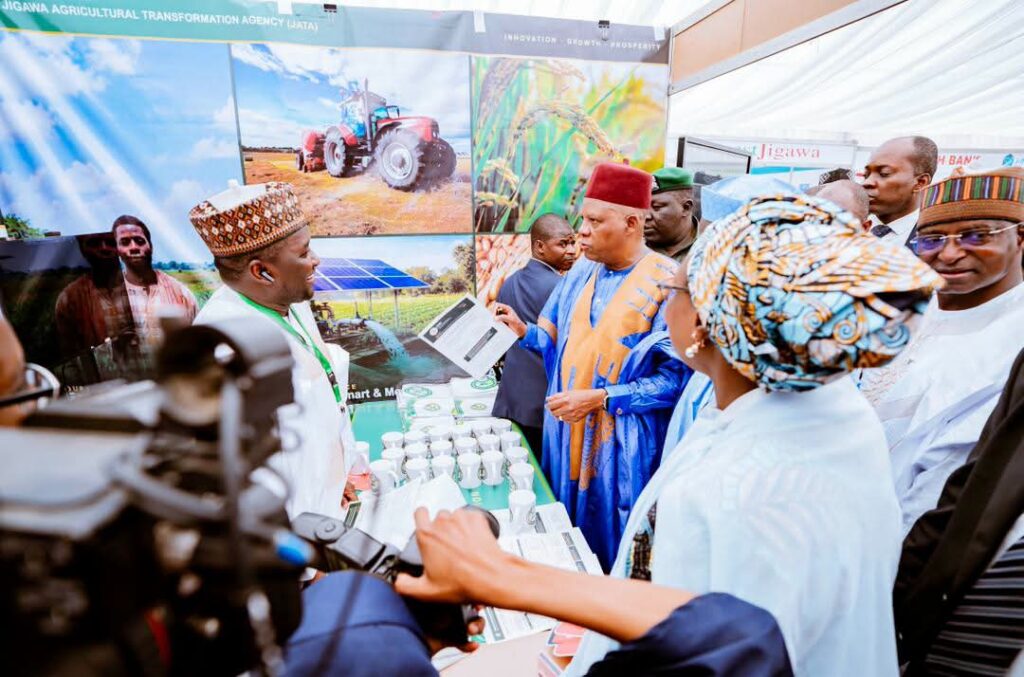
Senator Shettima acknowledged, however, that reform at the centre would make little or no impact if it does not reach the states, noting that it is the reason why the Federal Government, through the National Economic Council and the Federal Executive Council, has prioritised healthy debates and deliberations to harmonise ideas for the nation’s economic direction.
The healthy debates, he noted, are aimed at strengthening the fiscal health and transparency of states, “to help them unlock and deploy resources prudently, to channel support toward agriculture, food security and the protection of our environment and livelihoods, and to open doors for sub-national governments to access development finance and climate finance on fair terms.”
Acknowledging that Jigawa State had been “a place of immense economic opportunities and untapped potential”, the Vice President said the investment summit is an assurance of the efforts and readiness of the state governor, Mallam Umar Namadi, “to revitalise the investment ecosystem of the State.”
While wooing both local and foreign investors, the VP reminded them “that the Federal Government has done the hard work of reform, and that, in partnership with the Jigawa State Government,” the Tinubu administration is convinced that the promise of Jigawa State “is one of high yields.
“We will be here to offer support and to ensure that you experience no bureaucratic bottlenecks in setting up here and enjoying the dividends of courage,” he assured.
Earlier, the Governor of Jigawa State, Namadi, explained that the summit was designed as a working platform to move the state beyond aspiration to disciplined execution, creating viable and valuable opportunities for investors.
Namadi reaffirmed confidence in Jigawa’s capacity to achieve sustainable prosperity through vision, credible investment and purposeful partnership.
He said Jigawa has over 24,700 square meters of fertile arable land, including more than 411,000 hectares of fadama suitable for a year round farming, with water and irrigation assets, welcoming business climate, capable and hardworking population as well as access to market across northern Nigeria and neighboring Niger Republic along the ancient transaharan corridor.
“Our development direction is anchored on Jigawa vision and our 12 Points Agenda with priorities that include Agricultural transformation, infrastructure, energy, the digital economy, private sector growths, revenue expansion, security, social protection, health, education and vocational skills development.” the governor said.
Also, the Deputy Chief of Staff to the President (Office of the Vice President), Senator Ibrahim Hassan Hadeija, advised the Jigawa State government to invest more resources in energy generation, noting that without stable power it would be very difficult to attract any meaningful investment.
Hadeija said President Tinubu has deregulated the power sector, with Jigawa having a three Megawatts Independent Power Project in Dutse with 16 kilometers of transmission and distribution.
On his part, the Minister of Livestock Development, Idi Mukhtar Maiha, said Jigawa occupies a unique and strategic position in Nigeria’s agricultural landscape, adding that the state is naturally endowed with natural resources, particularly within the livestock sector, with an estimated population of 3.6 million cattle, 5.6 million sheep, 6.6 million goats and others.
According to him, Jigawa state livestock value chain are both expansive and lucrative.
The Minister urged local and international investors to look closely at the Jigawa state livestock sector, noting that the resources are abundant, the political will is resolute and the market is ready.
On her part, the Minister of State for Education, Prof. Suwaiba Ahmad, described the theme of the summit as timely and inspiring, adding that it reflects a bold vision for economic transformation and the commitment to harnessing the vast opportunities in the state for the benefits of its people and future generations.
The Minister commended the remarkable stride of the Jigawa governor, adding that his administration has demonstrated a clear commitment to people’s centred development.
In his remark, Chairman of the summit and Chairman of Arewa Consultative Forum (ACF), Alhaji Bashir Dalhatu (Wazirin Dutse), said because Jigawa is strategically located in the heart of Northern Nigeria, it serves as a gateway between the North West and the North East Nigeria.
“So our product and produce can easily reach big markets from Jigawa state to anyway. That is a very big blessing and attraction to any investor. We have got the arable land – lots of it l- and we have committed farmers, who are hospitable, welcoming,” he said.
AT JIGAWA INVESTMENT SUMMIT 2026: President Tinubu Making It Easier To Do Business Now In Nigeria, VP Shettima Asserts


News
MAJOR SETBACK FOR IBUSA AS COURT REFUSES EXECUTION ORDER, STRENGTHENS OGWASHI-UKU’S POSITION IN LAND BATTLE

MAJOR SETBACK FOR IBUSA AS COURT REFUSES EXECUTION ORDER, STRENGTHENS OGWASHI-UKU’S POSITION IN LAND BATTLE
The Obi of Ogwashi-Uku, HRM Obi (Dr.) Ifechukwude Aninshi Okonjo II, on behalf of the people of Ogwashi-Uku Kingdom, has recorded what community leaders have described as a significant legal victory in the long-running land dispute involving the Esemese Community of Ibusa.
In a ruling delivered on 15 June 2026 in Suit No. A/M/62/2015, the Delta State High Court, presided over by Hon. Justice Flora Ngozi Azinge, declined the principal application by the Esemese Community of Ibusa seeking an order for the execution of the judgment arising from the earlier litigation between the parties.
The applicants, through their counsel, Barrister P. U. Lotobi, had sought, among other reliefs, an order permitting the execution of the judgment and the substitution of several deceased parties to the proceedings. While the Court granted the applications relating to the substitution of deceased parties in the Esemese community, it declined the principal relief seeking an order of execution.
The Court also approved the substitution of the late HRM Obi Professor Chukwuka Okonjo with the present Obi of Ogwashi-Uku, HRM Obi (Dr.) Ifechukwude Aninshi Okonjo II, who is represented in the proceedings by Chief Arthur Obi Okafor, SAN.
The ruling marks an important development in a dispute that has its origins in earlier litigation in Suit No. A/28/66.
According to the Ogwashi-Uku Kingdom, concerns had previously arisen over the interpretation of the litigation survey plan associated with the Supreme Court judgment. The Kingdom maintained that attempts had been made to rely on a survey plan that differed from the original litigation survey relied upon by the Court.
Following applications by the Ogwashi-Uku community before the Supreme Court, the Kingdom states that the Court restored the original litigation survey plan forming part of the earlier proceedings. In the present proceedings, the High Court further directed that a registered surveyor interpret the litigation survey plan.
Leaders of the Ogwashi-Uku Kingdom have welcomed the ruling, describing it as an important safeguard against what they contend were attempts to extend the earlier judgment beyond the land actually litigated.
Speaking after the ruling, the Chief of Aboh Ogwashi-Uku, Chief Barrister Jude Obidi, described the decision as a landmark development and that the boundary between Ogwashi-Uku and Ibusa remains at the Oboshi River.
According to him, the ruling reinforces the principle that court judgments must be enforced strictly within the boundaries of the land actually determined by the courts and not beyond them.
He further noted that the broader boundary dispute between Ogwashi-Uku and Ibusa remains pending before the Delta State High Court in a separate action instituted by the Obi of Ogwashi-Uku to determine the precise boundary between the two neighbouring communities.
Chief Obidi commended the Obi of Ogwashi-Uku for what he described as his steadfast commitment to protecting the territorial interests of the Kingdom through lawful means and the judicial process.
The latest ruling is expected to have significant implications for future attempts to enforce the earlier judgment pending the final determination of the boundary dispute between both communities. With this ruling, the claims by Ibusa for the areas around Admiralty University have been thrown into serious doubt.
The Palace of the Obi of Ogwashi-Uku through the Chief of Staff to the Obi of Ogwashi-Uku, Prince Onyema Okonjo when contacted welcomed the rejection of the request by the Ibusa community by the Delta State High Court in Ogwashi-Uku but also maintained that the Obi of Ogwashi-Uku reserves the right to seek appellate review of any portion of the ruling it wasn’t happy with. He also cautioned members of the Ibusa community from resorting to self help in using thugs and attempting to enter Ogwashi-Uku land any further to make illegal claims outside any court approved enforcement.
MAJOR SETBACK FOR IBUSA AS COURT REFUSES EXECUTION ORDER, STRENGTHENS OGWASHI-UKU’S POSITION IN LAND BATTLE
Fubara: Nigeria Needs God-Fearing Leaders to Tackle Corruption, Drive National Progress
By: Michael Mike
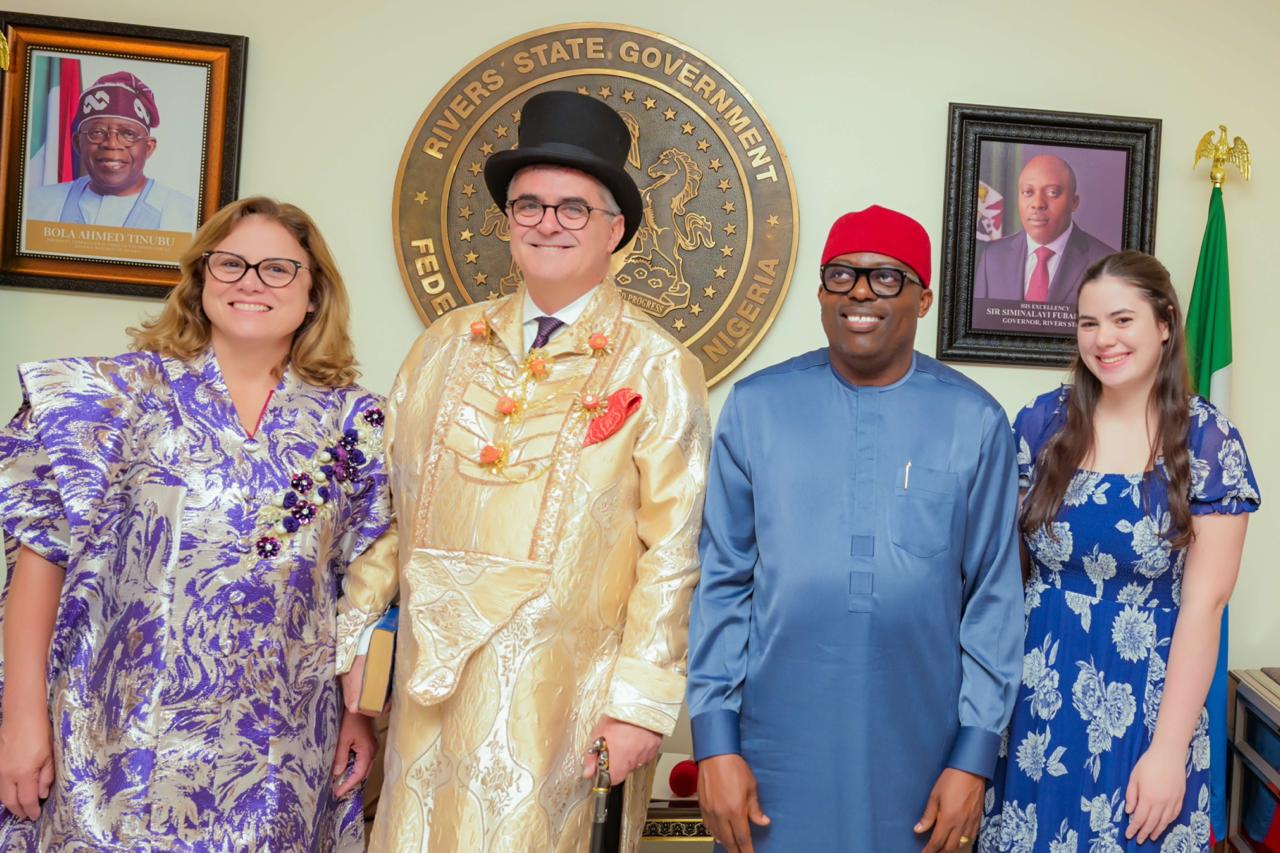
Rivers State Governor, Sir Siminalayi Fubara, has said Nigeria’s quest for sustainable development and good governance depends largely on the emergence of leaders guided by the fear of God, arguing that the country’s socio-economic challenges stem from a deficit of integrity and moral leadership.
The governor made the remarks on Thursday at the Government House in Port Harcourt while receiving the World President of the Seventh-day Adventist Church, Erton Köhler, alongside his wife, Andriene Marques Köhler, their daughter, Mariana Marques Köhler, and other senior church officials.
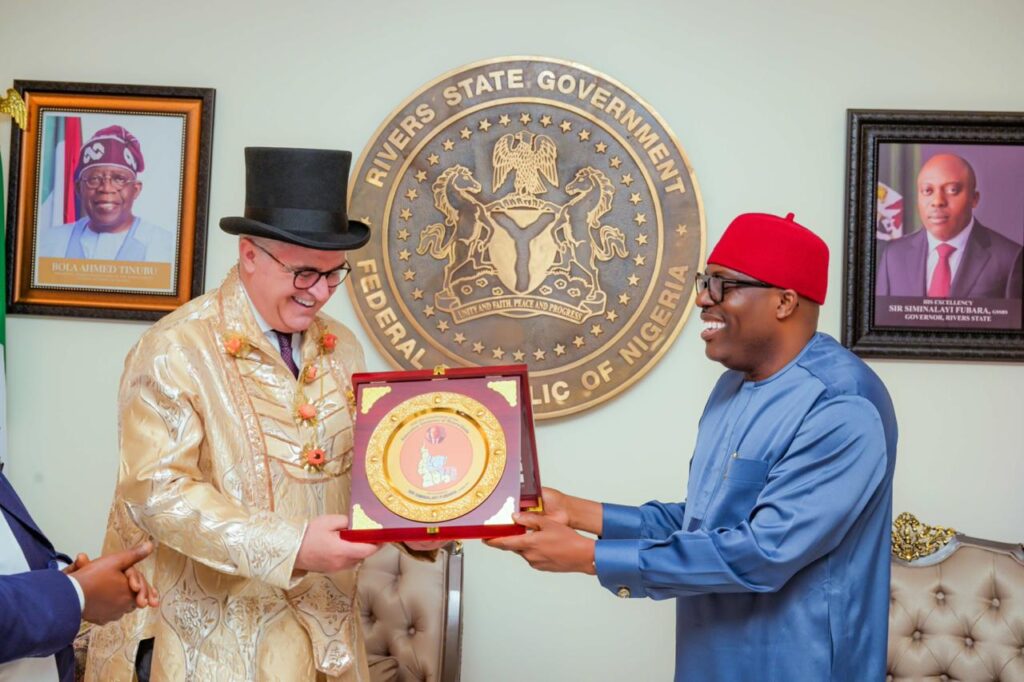
Fubara said leaders who are conscious of their accountability before God would be less inclined to abuse public trust, noting that the absence of such values has fuelled corruption, inequality, poverty and rising criminality across the country.
“Our country is where it is today because we lack the fear of God,” the governor said. “If you have the fear of God, there should be a limit to what you can do because you understand the supremacy of God. But when God is not in your equation, you’ll go beyond the line, and that is what has brought us to where we are today.”
He praised the Seventh-day Adventist Church for its long-standing investment in education, describing its schools and universities as critical platforms for nurturing competent and morally upright future leaders.
According to the governor, the church’s commitment to education demonstrates that religion should extend beyond preaching and denominational identity to making tangible contributions to national development through human capital development.
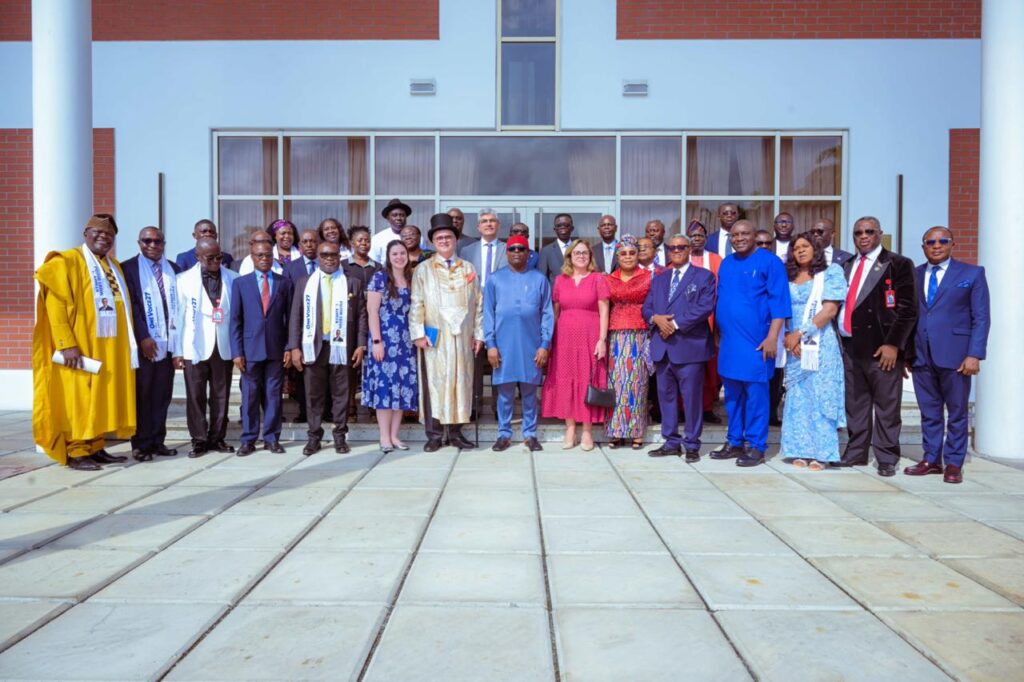
Fubara noted that by establishing and sustaining educational institutions, the church has continued to support Nigeria’s efforts to produce graduates equipped with knowledge, character and leadership values.
“We need the right people being in the right place, prepared properly with good minds. That is what we need, not just in Nigeria but around the whole world,” he said.
The governor also linked many of the country’s security and economic challenges to weak social welfare systems, stressing that citizens are less likely to resort to crime when they have access to quality education, affordable healthcare, decent wages and opportunities for a secure future.
He advocated a system where average-income earners can educate their children, access quality healthcare and own homes after years of productive service, insisting that such conditions would significantly reduce insecurity and other social vices.
Fubara thanked the church delegation for visiting Rivers State and for praying for the state, assuring them of his administration’s continued support for their activities.
Speaking earlier, Köhler said he was in Nigeria for a major church conference that would bring together thousands of Seventh-day Adventist ministers for leadership and empowerment training aimed at strengthening their pastoral work and service to society.
He expressed appreciation for the warm reception accorded his delegation by the Rivers State Government, describing the visit as one that would remain memorable.
The church leader also highlighted the global reach of the Seventh-day Adventist Church, revealing that it has more than 24 million members and over 182,000 places of worship spread across 212 countries and territories worldwide.
Fubara: Nigeria Needs God-Fearing Leaders to Tackle Corruption, Drive National Progress
News
Troops Prevent Fulani Reprisal attack after Rustling of Livestock by Suspected Local Militia in Mangu in Plateau
Troops Prevent Fulani Reprisal attack after Rustling of Livestock by Suspected Local Militia in Mangu in Plateau
By: Zagazola Makama
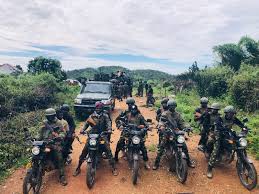
Troops of Operation Enduring Peace (OPEP) have repelled suspected Fulani Bandits during a rapid response operation following reports of sporadic gunfire around Banasu High Ground in Mangu Local Government Area of Plateau State.
Intelligence sources told Zagazola Makama that the incident occurred at about 1:52 p.m. on July 2, when troops of Sector 8, Sub-Sector 81, deployed at Gyambwas, received reports of intermittent shootings around the Banasu High Ground.
Security sources said that the planned attack was in response to previous attack on hardees and rustling of their livestock by Militia men in Mangu.
Acting swiftly on the distress report, the troops moved to the area and engaged the armed criminals in a firefight.
According to the sources, the superior firepower of the troops forced the assailants to abandon their mission and retreat towards the surrounding high ground.
No casualties were reported among the troops during the encounter.
Security sources said the troops have sustained surveillance and monitoring of the area, while efforts are ongoing to track down the fleeing suspects and prevent any further attacks.
The operation forms part of ongoing security efforts by Operation Enduring Peace to prevent any armed militia activities and enhance security across Plateau State.
Troops Prevent Fulani Reprisal attack after Rustling of Livestock by Suspected Local Militia in Mangu in Plateau

MAJOR SETBACK FOR IBUSA AS COURT REFUSES EXECUTION ORDER, STRENGTHENS OGWASHI-UKU’S POSITION IN LAND BATTLE

The Blood We Have Normalised

ECOWAS Commissions Landmark Abuja Headquarters, Nigeria and China Renew Commitment to Regional Integration

Roger Federer’s Shock as DNA Results Reveal Myla and Charlene Are Not His Biological Children

THE PLIGHT OF FARIDA

FAILED COUP IN BURKINA FASO: HOW TRAORÉ NARROWLY ESCAPED ASSASSINATION PLOT AMID FOREIGN INTERFERENCE CLAIMS
-
 News2 years ago
Roger Federer’s Shock as DNA Results Reveal Myla and Charlene Are Not His Biological Children
-
Opinions4 years ago
THE PLIGHT OF FARIDA
-
 News1 year ago
FAILED COUP IN BURKINA FASO: HOW TRAORÉ NARROWLY ESCAPED ASSASSINATION PLOT AMID FOREIGN INTERFERENCE CLAIMS
-

 News2 years ago
EYN: Rev. Billi, Distortion of History, and The Living Tamarind Tree
-
 Opinions5 years ago
POLICE CHARGE ROOMS, A MINTING PRESS
-

 ACADEMICS2 years ago
A History of Biu” (2015) and The Lingering Bura-Pabir Question (1)
-

 Columns2 years ago
Army University Biu: There is certain interest, but certainly not from Borno.
-

 Politics1 year ago
2027: Why Hon. Midala Balami Must Go, as Youths in Hawul and Asikira/Uba Federal Constituency Reject ₦500,000 as Sallah Gift
