
News
AT KASHIM IBRAHIM UNIVERSITY CONVOCATION CEREMONY IN MAIDUGURI

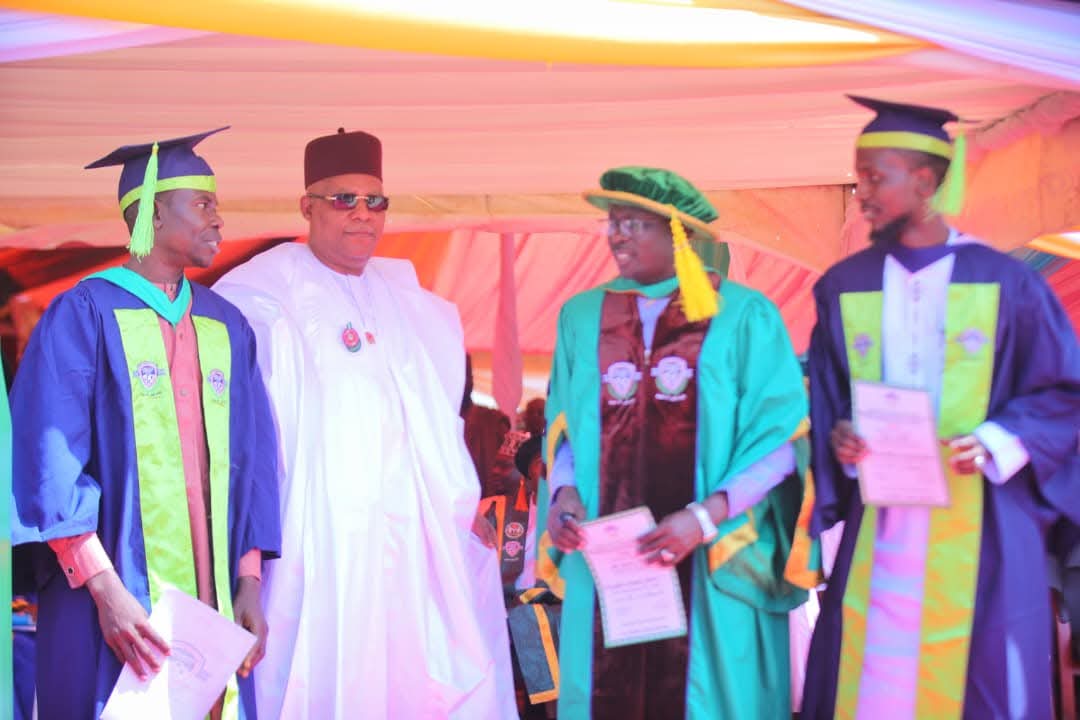
AT KASHIM IBRAHIM UNIVERSITY CONVOCATION CEREMONY IN MAIDUGURI
No Investment In Education Is A Gamble, Says VP Shettima
…As varsity installs Ooni of Ife as Chancellor
By: Our Reporter
Vice President Kashim Shettima has observed that there is no investment in education that is a gamble, saying the the education sector remains a deliberate commitment to securing a better future for Nigeria.
He described education as the most powerful tool for development, economic empowerment, and societal liberation.
Speaking on Saturday during the combined convocation ceremonies of Kashim Ibrahim University in Borno State, where a total of 2,294 students graduated across three academic sessions (2022/2023, 2023/2024 and 2024/2025), the Vice President said, “No investment in education is ever a gamble. It is a conscious plan for a better, more secure future.”
He urged the graduating students to see themselves as ambassadors of integrity, service, and excellence, noting that their conduct would define the reputation of the institution.
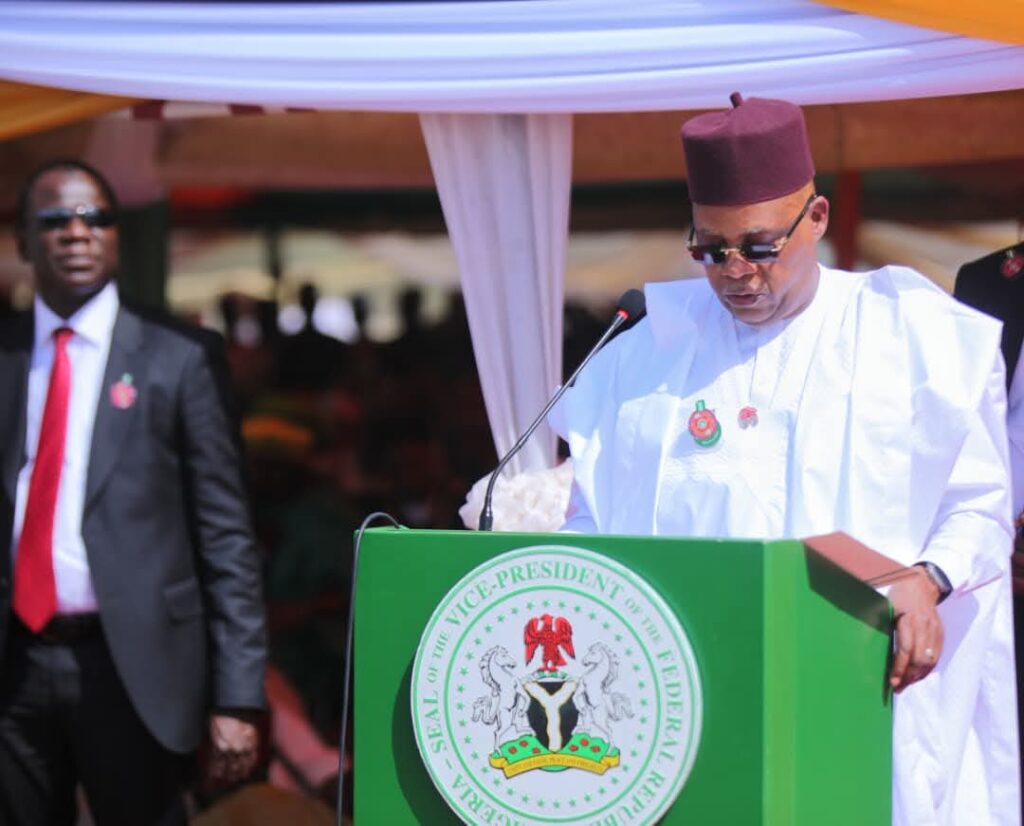
“Wherever life takes you, you carry the name and values of Kashim Ibrahim University. You must shun ethical shortcuts and moral compromise,” he stated.
The Vice President pointed out that Borno State and its government understand the consequences of neglecting education, having endured years of disruption caused by insurgency.
“Borno has paid a heavy price for the years education was disrupted. Yet, the people chose resilience over despair and learning over loss,” he said.
Describing the graduands as pioneers of the university, VP Shettima reminded them that history has placed a special responsibility on their shoulders.
“You are the first torchbearers of this institution. History will judge this university by what you become and how you conduct yourselves,” he added.
He commended the academic and administrative leadership of the institution, including its pioneer Vice-Chancellor, current management, lecturers, and staff, for laying what he termed “a solid foundation for learning in the heart of the North-East.”
The VP praised Borno State Governor, Prof. Babagana Umara Zulum, describing him as “a leader whose vision turned an idea into an enduring institution.”
“This convocation is proof that true leadership measures power by the number of lives it enlightens,” he maintained, just as he applauded the university’s Pro-Chancellor and Chairman of the Governing Council, Alhaji Muhammadu Indimi, for his commitment to the state, even at the height of the Boko Haram insurgency.
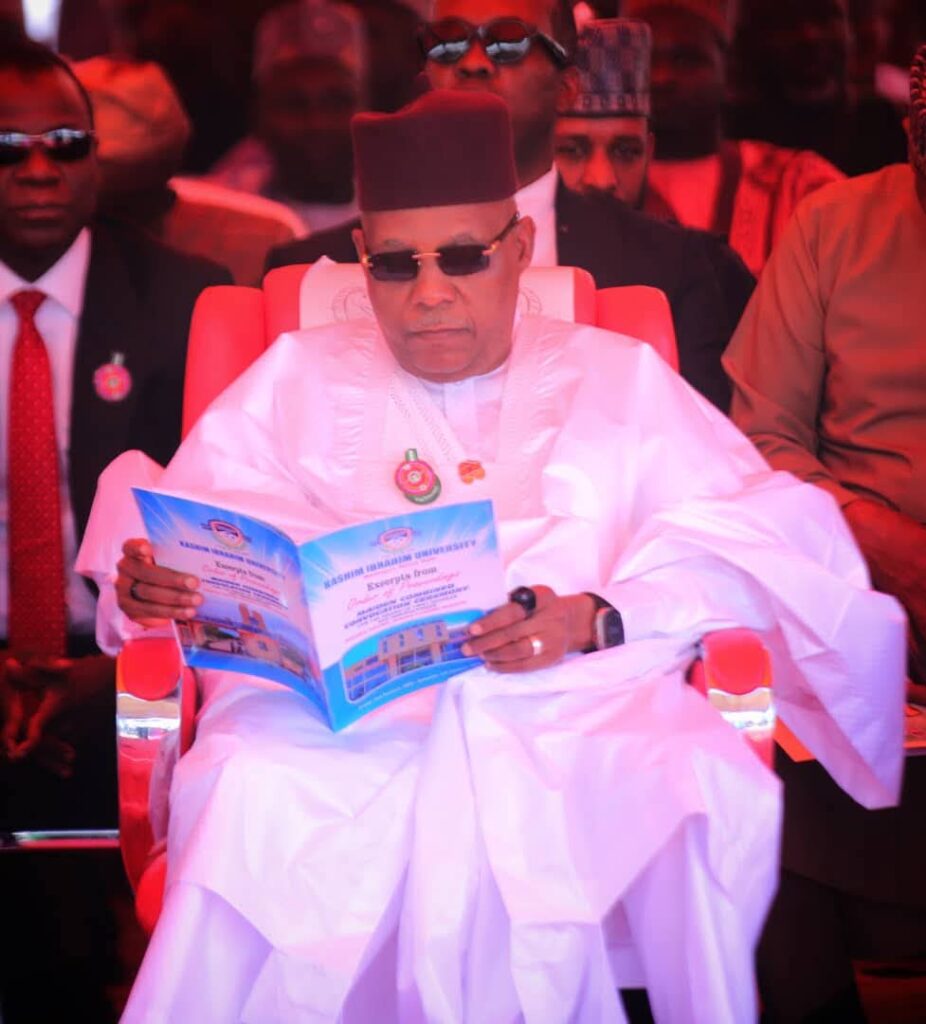
“Alhaji Indimi’s wealth has consistently been deployed for the good of society, especially when Borno needed it most,” he added.
Senator Shettima further acknowledged the role of traditional institutions, particularly the Shehu of Borno, even as acknowledged the solidarity shown by North-East governors during the darkest days of insurgency in the region.
In a symbolic gesture, the Vice President announced the donation of two electric vehicles to support the university’s shuttle services, saying “these vehicles are a modest contribution to ease mobility within the campus and support the learning environment”.
Earlier, Governor Zulum of Borno State announced automatic employment for 81 best graduating students of the university, and immediate postgraduate sponsorships within and outside Nigeria.
“Excellence must be rewarded. These young men and women have earned the confidence of the Borno State Government,” Zulum said.
He urged the graduates to step into the world as worthy ambassadors of the institution and agents of development.
The Chancellor of the university, the Ooni of Ife, Oba Adeyeye Enitan Ogunwusi II, pledged to work towards the accelerated growth of the institution.
“I accept this responsibility with humility and commitment. I will work tirelessly to advance the development of Kashim Ibrahim University,” the monarch said.
He thanked the Vice President for initiating the establishment of the university and Governor Zulum for finding him worthy of the appointment.
The Vice-Chancellor, Prof. Babagana Gutti, disclosed that the university’s ultra-modern teaching hospital, nearing completion, would be the largest and most equipped in the country.
“When completed, our teaching hospital will stand as a national reference point for medical training and service delivery,” he said.
Prof. Gutti added that the institution, established during Shettima’s tenure as Governor of Borno State, has been ranked the fastest-growing university in Nigeria, noting that over 50 physical projects were completed by the state government.
Highlights of the convocation included the installation of the Ooni of Ife as Chancellor of the university and the conferment of honorary Doctor of Letters degrees on him and international businessman, Alhaji Muhammadu Indimi.
Best graduating students were also awarded MSc and PhD scholarships by Vice President Shettima.
AT KASHIM IBRAHIM UNIVERSITY CONVOCATION CEREMONY IN MAIDUGURI


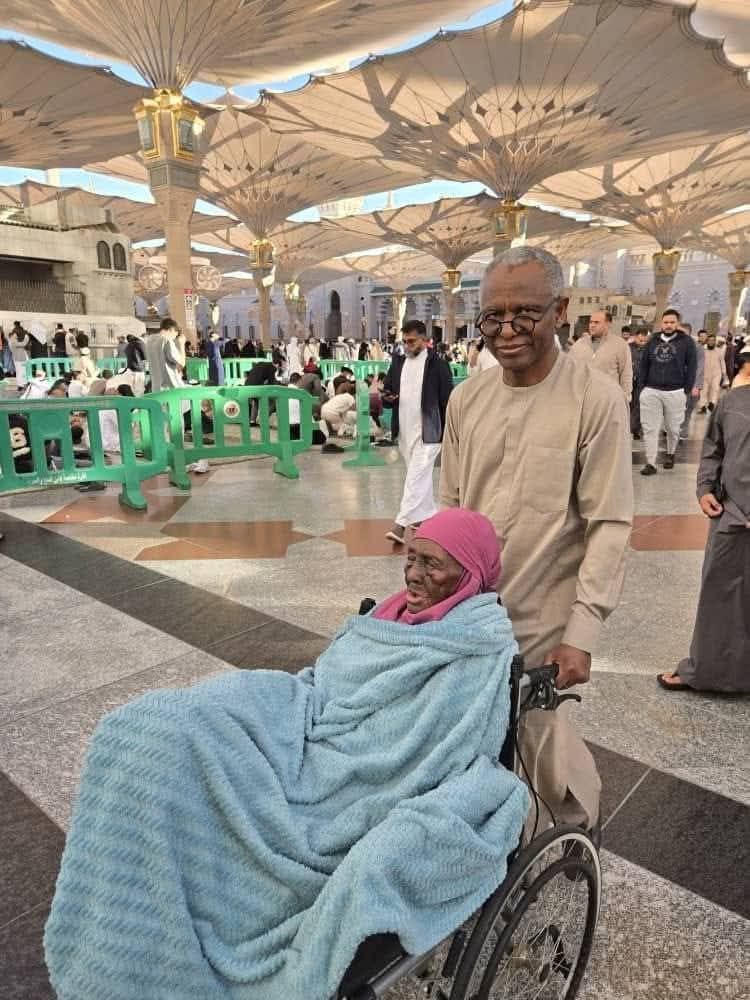
Former Kaduna governor El-Rufai loses mother
By: Zagazola Makama
The former Governor of Kaduna State, Nasir Ahmad El-Rufai, has lost his mother, Hajiya Umma, who passed away on Friday.
The announcement of her death was announced by the Elrufai Family on Friday.
Family sources said the deceased had been battling age-related health challenges, which worsened in recent times.
According to the sources, her condition reportedly deteriorated further after she learned of the detention of her son by the Independent Corrupt Practices Commission (ICPC).
They noted that El-Rufai had been closely managing his mother’s health prior to her demise.
The family prayed for Almighty Allah to forgive her shortcomings and grant her Aljannatul Firdaus.
Former Kaduna governor El-Rufai loses mother

NSCDC Unveils Five-Year Strategy to Strengthen National Security
By: Michael Mike
The Commandant-General of the Nigeria Security and Civil Defence Corps (NSCDC), Abubakar Audi has unveiled a comprehensive five-year strategic roadmap aimed at strengthening national security, boosting operational efficiency and enhancing professionalism within the Corps.
Speaking at a high-level meeting with commanding officers from state formations across the country, Audi described the gathering as both “historic and strategic,” noting that it signaled the beginning of the second phase of his leadership following his reappointment.
The NSCDC boss expressed gratitude to President Bola Ahmed Tinubu for approving his reappointment and to the Minister of Interior, Olubunmi Tunji-Ojo, for recommending him for the position.
According to him, the renewed mandate provides the opportunity to deepen reforms and reposition the Corps for greater efficiency and national relevance.
Reflecting on his previous tenure, Houdi highlighted reforms introduced to tackle internal challenges within the organisation, particularly the issue of staff stagnation that had affected morale among personnel.
He noted that his administration addressed long-standing promotion delays and salary arrears, adding that efforts were ongoing through a presidential committee responsible for settling outstanding payments across Ministries, Departments and Agencies.
The Commandant-General also underscored the importance of capacity building, revealing that the Corps had developed a standardised curriculum for its training institutions. He described the initiative as a major step toward strengthening professionalism and operational discipline within the agency.
He said more senior officers have also been sponsored to attend strategic leadership programmes, including courses at the National Institute for Policy and Strategic Studies (NIPSS), aimed at improving institutional leadership and policy competence.
“Training remains central to discipline, professionalism and productivity,” Houdi said, adding that the next phase of his leadership would prioritise retraining and ethical reorientation of personnel.
He also highlighted operational achievements recorded by the Corps, particularly in the fight against oil theft and illegal mining across the country.
According to him, the Corps’ Special Intelligence Squad has dismantled more than 400 illegal refineries, arrested and prosecuted over 1,000 suspects, and secured between 400 and 500 convictions.
Similarly, the Mining Marshals initiative has shut down more than 1,000 illegal mining sites nationwide and facilitated the arrest and prosecution of numerous offenders, including foreign nationals.
Audi said these achievements were made possible through collaboration with other security agencies, particularly the Nigerian Army, as well as partnerships with private sector actors.
The Corps has also expanded its operational infrastructure, with new command facilities constructed in several locations and modern surveillance and communication equipment deployed to formations across the country.
He further disclosed that the agency is establishing a hydrocarbon and maritime surveillance centre in partnership with Tantita Security Services Nigeria Limited, alongside an ICT centre project expected to be completed within the next few months.
As part of the new strategy, the NSCDC will increasingly deploy advanced technologies, including artificial intelligence and drone surveillance, to enhance monitoring and protection of critical national assets.
Aidi outlined key priorities for the next five years, including strengthening discipline within the Corps, expanding training and retraining programmes, deploying modern surveillance technologies and enhancing protection of critical infrastructure.
He also announced plans to establish specialised units dedicated to safeguarding power infrastructure and tackling vandalism in the electricity sector.
The Commandant-General warned that the Corps would maintain zero tolerance for indiscipline and misconduct among personnel.
“We must restore professionalism and discipline. Any conduct outside our code will not be tolerated,” he said.
He urged officers to remain committed to protecting critical national infrastructure and to deepen intelligence sharing and collaboration with other security agencies in strengthening the country’s security architecture.
Audi challenged personnel to demonstrate the Corps’ relevance through tangible results.
“We must prove that we are ready to serve the nation with loyalty, commitment and professionalism,” he added.
NSCDC Unveils Five-Year Strategy to Strengthen National Security
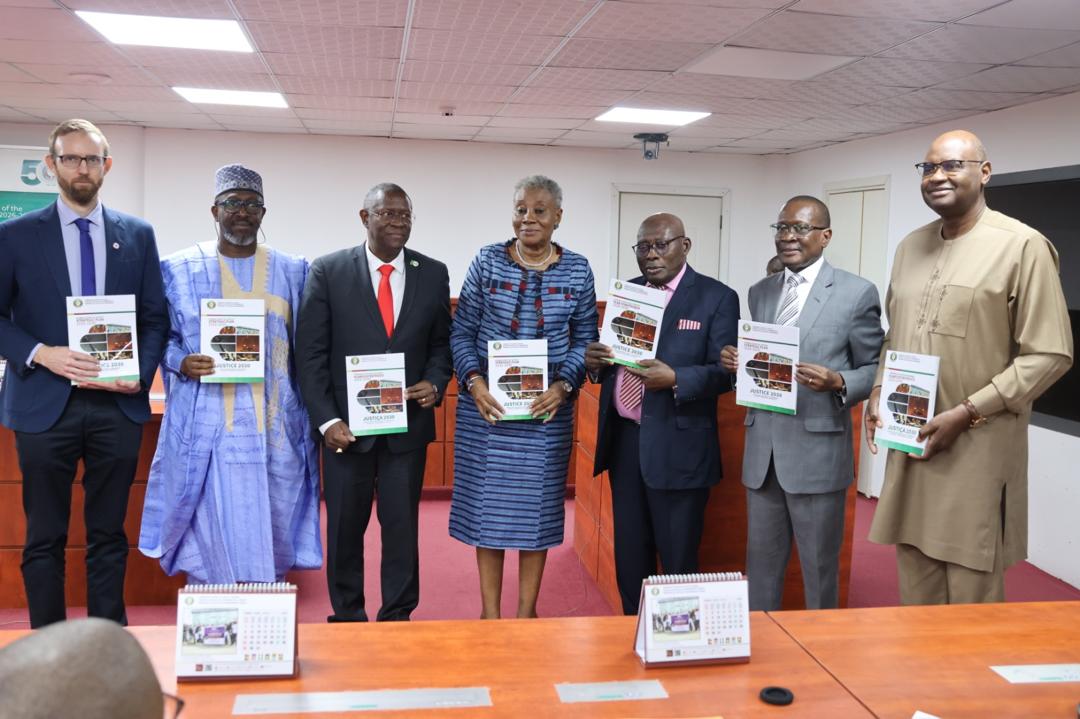
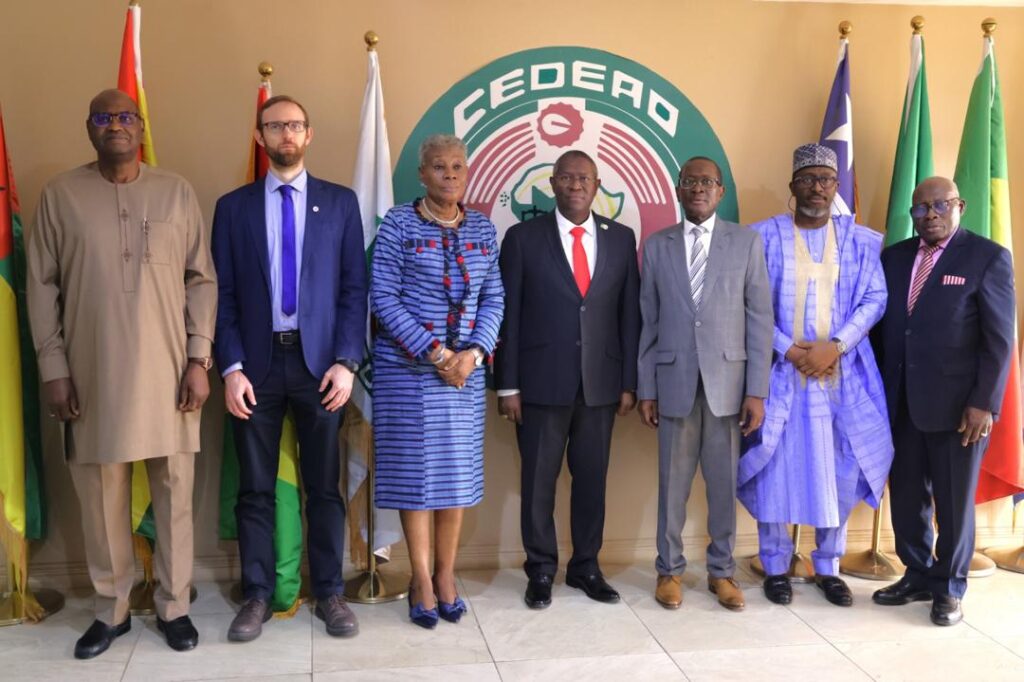
ECOWAS Court Launches Five-Year Strategic Plan to Deepen Justice, Regional Integration
By: Michael Mike
The ECOWAS Court of Justice has unveiled an ambitious five-year strategic plan designed to strengthen the rule of law, expand access to justice and deepen regional integration across West Africa.
The plan, which will run from 2026 to 2030, was officially launched on Friday in Abuja, where the leadership of the court outlined a bold vision to transform the institution into a more effective and accessible pillar of justice within the Economic Community of West African States (ECOWAS).
President of the court, Ricardo Goncalves, described the strategy as a decisive moment for the institution, saying it reflects a renewed commitment to strengthening the court’s role in safeguarding justice and promoting stability across the region.
“This moment is not merely symbolic. Above all, it represents a turning point. It is a clear affirmation of our collective resolve to strengthen the role of the Court as a guarantor of the rule of law, a promoter of justice, and a vital pillar of regional integration in West Africa,” he said.
According to him, the new strategy outlines a shared vision focused on institutional transformation, operational efficiency and measurable impact on the lives of citizens within the ECOWAS community.
Goncalves emphasised that the success of the initiative would depend on strong collaboration among judges, court staff and key regional stakeholders, stressing that each group has a critical role to play in achieving the objectives of the plan.
He charged judges of the court to reinforce the quality of jurisprudence, ensure consistency in judicial decisions and contribute to building a justice system that is accessible, timely and widely respected across member states.
The court president also highlighted the pivotal role of administrative staff, describing them as the backbone of the institution whose commitment to efficiency, case management and technical excellence would determine the effectiveness of the new framework.
Beyond internal reforms, he stressed the need for stronger partnerships with ECOWAS member states, regional institutions, legal practitioners, development partners and civil society organisations to ensure effective enforcement of court judgments and greater legal harmonisation across the region.
He noted that improved planning, transparency and a results-driven institutional culture would form the foundation of the strategy, which aims to reposition the court as a more visible and influential institution in regional governance.
In her welcome address, the Deputy Registrar of the court, Marie Saine, described the unveiling of the plan as the beginning of a renewed commitment to justice and service to the people of the ECOWAS region.
She explained that the Strategic Plan 2026–2030 was developed through extensive consultations, rigorous institutional review and forward-looking analysis to ensure that it responds effectively to emerging legal and governance challenges within West Africa.
Saine said the strategy is anchored on five key goals, including ensuring timely and impartial justice, expanding access to justice and legal empowerment, strengthening human rights protection and legal harmonisation, improving transparency and stakeholder engagement, and enhancing institutional capacity and governance.
She noted that the roadmap is both ambitious and pragmatic, providing clear priorities that will guide the court’s work over the next five years.
The ECOWAS Court of Justice serves as the judicial arm of the Economic Community of West African States, with the mandate to interpret community law, protect human rights and resolve disputes involving member states and institutions of the regional bloc.
Officials said the newly unveiled strategic framework replaces the court’s previous plan and is intended to position the institution to respond more effectively to evolving legal demands while strengthening its contribution to justice, peace and regional integration in West Africa.
ECOWAS Court Launches Five-Year Strategic Plan to Deepen Justice, Regional Integration

Former Kaduna governor El-Rufai loses mother

NSCDC Unveils Five-Year Strategy to Strengthen National Security

ECOWAS Court Launches Five-Year Strategic Plan to Deepen Justice, Regional Integration

Roger Federer’s Shock as DNA Results Reveal Myla and Charlene Are Not His Biological Children

THE PLIGHT OF FARIDA

FAILED COUP IN BURKINA FASO: HOW TRAORÉ NARROWLY ESCAPED ASSASSINATION PLOT AMID FOREIGN INTERFERENCE CLAIMS
-
 News2 years ago
Roger Federer’s Shock as DNA Results Reveal Myla and Charlene Are Not His Biological Children
-
Opinions4 years ago
THE PLIGHT OF FARIDA
-
 News11 months ago
FAILED COUP IN BURKINA FASO: HOW TRAORÉ NARROWLY ESCAPED ASSASSINATION PLOT AMID FOREIGN INTERFERENCE CLAIMS
-

 News2 years ago
EYN: Rev. Billi, Distortion of History, and The Living Tamarind Tree
-
 Opinions4 years ago
POLICE CHARGE ROOMS, A MINTING PRESS
-

 ACADEMICS2 years ago
A History of Biu” (2015) and The Lingering Bura-Pabir Question (1)
-

 Columns2 years ago
Army University Biu: There is certain interest, but certainly not from Borno.
-

 Opinions2 years ago
Tinubu,Shettima: The epidemic of economic, insecurity in Nigeria
