
News
AT KASHIM IBRAHIM UNIVERSITY CONVOCATION CEREMONY IN MAIDUGURI

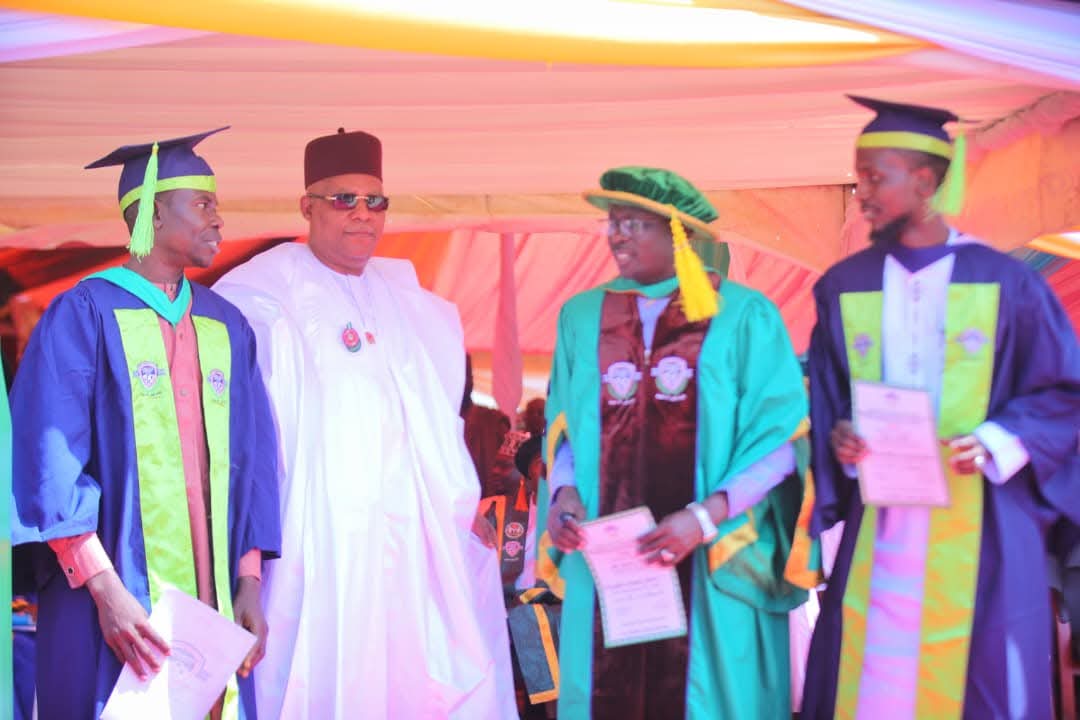
AT KASHIM IBRAHIM UNIVERSITY CONVOCATION CEREMONY IN MAIDUGURI
No Investment In Education Is A Gamble, Says VP Shettima
…As varsity installs Ooni of Ife as Chancellor
By: Our Reporter
Vice President Kashim Shettima has observed that there is no investment in education that is a gamble, saying the the education sector remains a deliberate commitment to securing a better future for Nigeria.
He described education as the most powerful tool for development, economic empowerment, and societal liberation.
Speaking on Saturday during the combined convocation ceremonies of Kashim Ibrahim University in Borno State, where a total of 2,294 students graduated across three academic sessions (2022/2023, 2023/2024 and 2024/2025), the Vice President said, “No investment in education is ever a gamble. It is a conscious plan for a better, more secure future.”
He urged the graduating students to see themselves as ambassadors of integrity, service, and excellence, noting that their conduct would define the reputation of the institution.
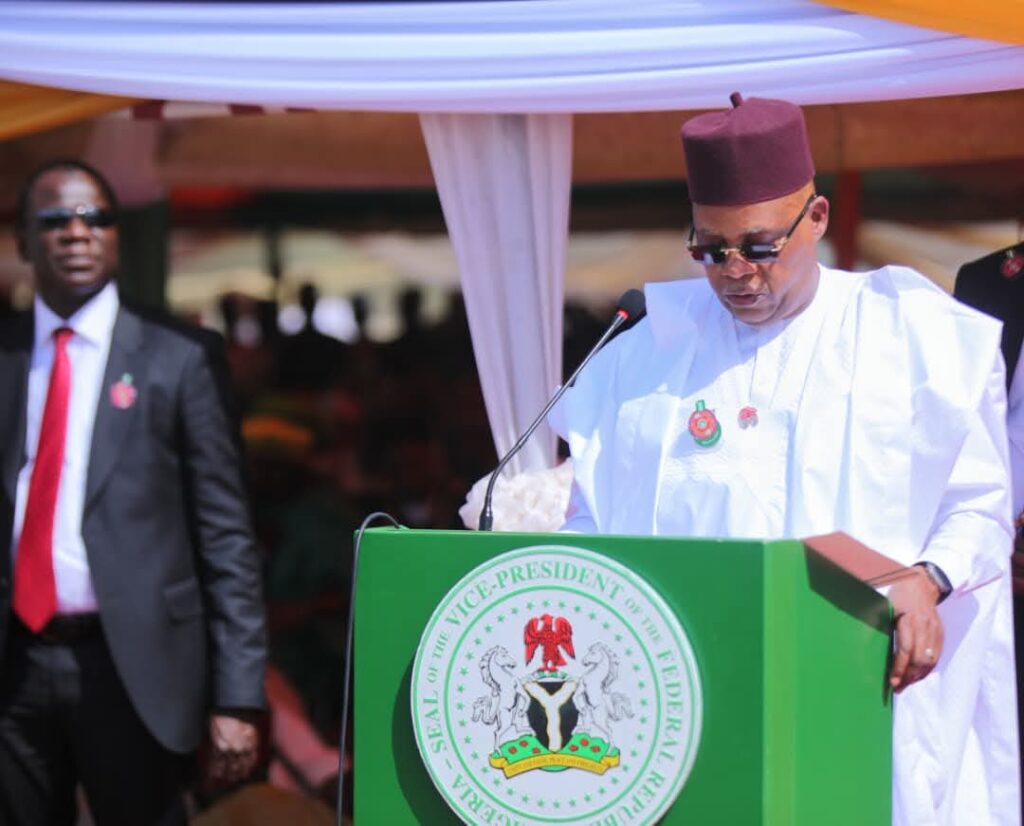
“Wherever life takes you, you carry the name and values of Kashim Ibrahim University. You must shun ethical shortcuts and moral compromise,” he stated.
The Vice President pointed out that Borno State and its government understand the consequences of neglecting education, having endured years of disruption caused by insurgency.
“Borno has paid a heavy price for the years education was disrupted. Yet, the people chose resilience over despair and learning over loss,” he said.
Describing the graduands as pioneers of the university, VP Shettima reminded them that history has placed a special responsibility on their shoulders.
“You are the first torchbearers of this institution. History will judge this university by what you become and how you conduct yourselves,” he added.
He commended the academic and administrative leadership of the institution, including its pioneer Vice-Chancellor, current management, lecturers, and staff, for laying what he termed “a solid foundation for learning in the heart of the North-East.”
The VP praised Borno State Governor, Prof. Babagana Umara Zulum, describing him as “a leader whose vision turned an idea into an enduring institution.”
“This convocation is proof that true leadership measures power by the number of lives it enlightens,” he maintained, just as he applauded the university’s Pro-Chancellor and Chairman of the Governing Council, Alhaji Muhammadu Indimi, for his commitment to the state, even at the height of the Boko Haram insurgency.
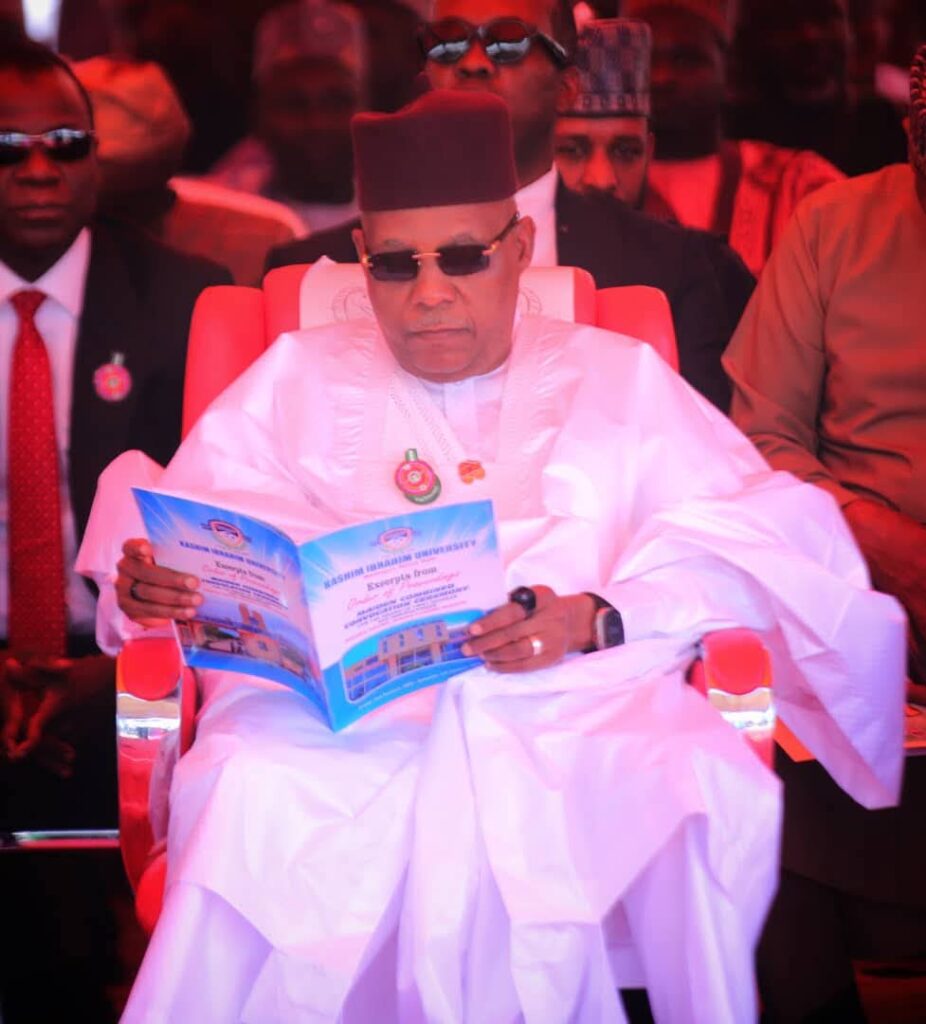
“Alhaji Indimi’s wealth has consistently been deployed for the good of society, especially when Borno needed it most,” he added.
Senator Shettima further acknowledged the role of traditional institutions, particularly the Shehu of Borno, even as acknowledged the solidarity shown by North-East governors during the darkest days of insurgency in the region.
In a symbolic gesture, the Vice President announced the donation of two electric vehicles to support the university’s shuttle services, saying “these vehicles are a modest contribution to ease mobility within the campus and support the learning environment”.
Earlier, Governor Zulum of Borno State announced automatic employment for 81 best graduating students of the university, and immediate postgraduate sponsorships within and outside Nigeria.
“Excellence must be rewarded. These young men and women have earned the confidence of the Borno State Government,” Zulum said.
He urged the graduates to step into the world as worthy ambassadors of the institution and agents of development.
The Chancellor of the university, the Ooni of Ife, Oba Adeyeye Enitan Ogunwusi II, pledged to work towards the accelerated growth of the institution.
“I accept this responsibility with humility and commitment. I will work tirelessly to advance the development of Kashim Ibrahim University,” the monarch said.
He thanked the Vice President for initiating the establishment of the university and Governor Zulum for finding him worthy of the appointment.
The Vice-Chancellor, Prof. Babagana Gutti, disclosed that the university’s ultra-modern teaching hospital, nearing completion, would be the largest and most equipped in the country.
“When completed, our teaching hospital will stand as a national reference point for medical training and service delivery,” he said.
Prof. Gutti added that the institution, established during Shettima’s tenure as Governor of Borno State, has been ranked the fastest-growing university in Nigeria, noting that over 50 physical projects were completed by the state government.
Highlights of the convocation included the installation of the Ooni of Ife as Chancellor of the university and the conferment of honorary Doctor of Letters degrees on him and international businessman, Alhaji Muhammadu Indimi.
Best graduating students were also awarded MSc and PhD scholarships by Vice President Shettima.
AT KASHIM IBRAHIM UNIVERSITY CONVOCATION CEREMONY IN MAIDUGURI


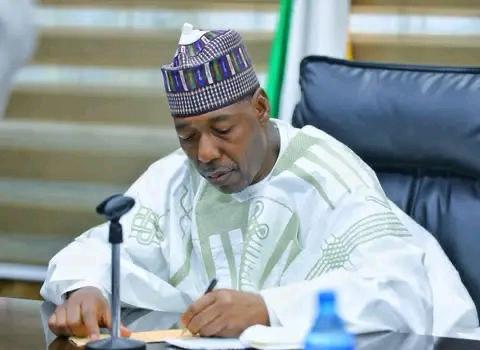
Zulum Appoints Engr Peter Samuel as General Manager BOSAMA
By: Our Reporter
Borno State Governor, Professor Babagana Umara Zulum, has approved the appointment of Engr Peter Samuel, MNSE, MNIAE, as the General Manager of Borno State Agricultural Mechanization Authority (BOSAMA).
In a statement by the Special Adviser to the Governor on Media, Dauda Iliya, the appointment was based on Engr Samuel’s outstanding professional competence, proven track record, and experience in agricultural engineering and mechanization.
The statement noted that Engr Samuel possesses the requisite qualifications, technical expertise and leadership capacity required to reposition BOSAMA in line with Governor Zulum’s agricultural transformation agenda.
The newly appointed General Manager is an Agricultural Engineer with academic, professional, administrative, and practical experience in agricultural mechanization, farm power and machinery, irrigation engineering, and agricultural infrastructure development.
He holds a Master of Engineering (M.Eng.) in Farm Power and Machinery from Joseph Sarwuan Tarka University, Makurdi (formerly the Federal University of Agriculture, Makurdi), a Postgraduate Diploma in Farm Management and Production Economics from Nasarawa State University, and a Bachelor of Engineering (B.Eng.) in Agricultural and Environmental Resources Engineering from the University of Maiduguri.
Engr Samuel has distinguished himself through years of meritorious service in teaching, research, agricultural engineering practice, and project implementation. He currently serves as a Lecturer in Farm Power and Machinery at Ramat Polytechnic, Maiduguri.
Over the years, he has held several strategic leadership positions, including General Manager of a commercial agricultural enterprise, Project Coordinator, Programme Coordinator, and Consultant on numerous agricultural development interventions implemented by reputable national and international organisations.
He is a member of the Nigerian Society of Engineers (NSE) and the Nigerian Institution of Agricultural Engineers (NIAE).
Governor Babagana Zulum congratulated the new General Manager on his appointment and urged him to deploy his wealth of knowledge, technical expertise, and experience in agricultural mechanization to strengthen the operations of BOSAMA
Zulum Appoints Engr Peter Samuel as General Manager BOSAMA
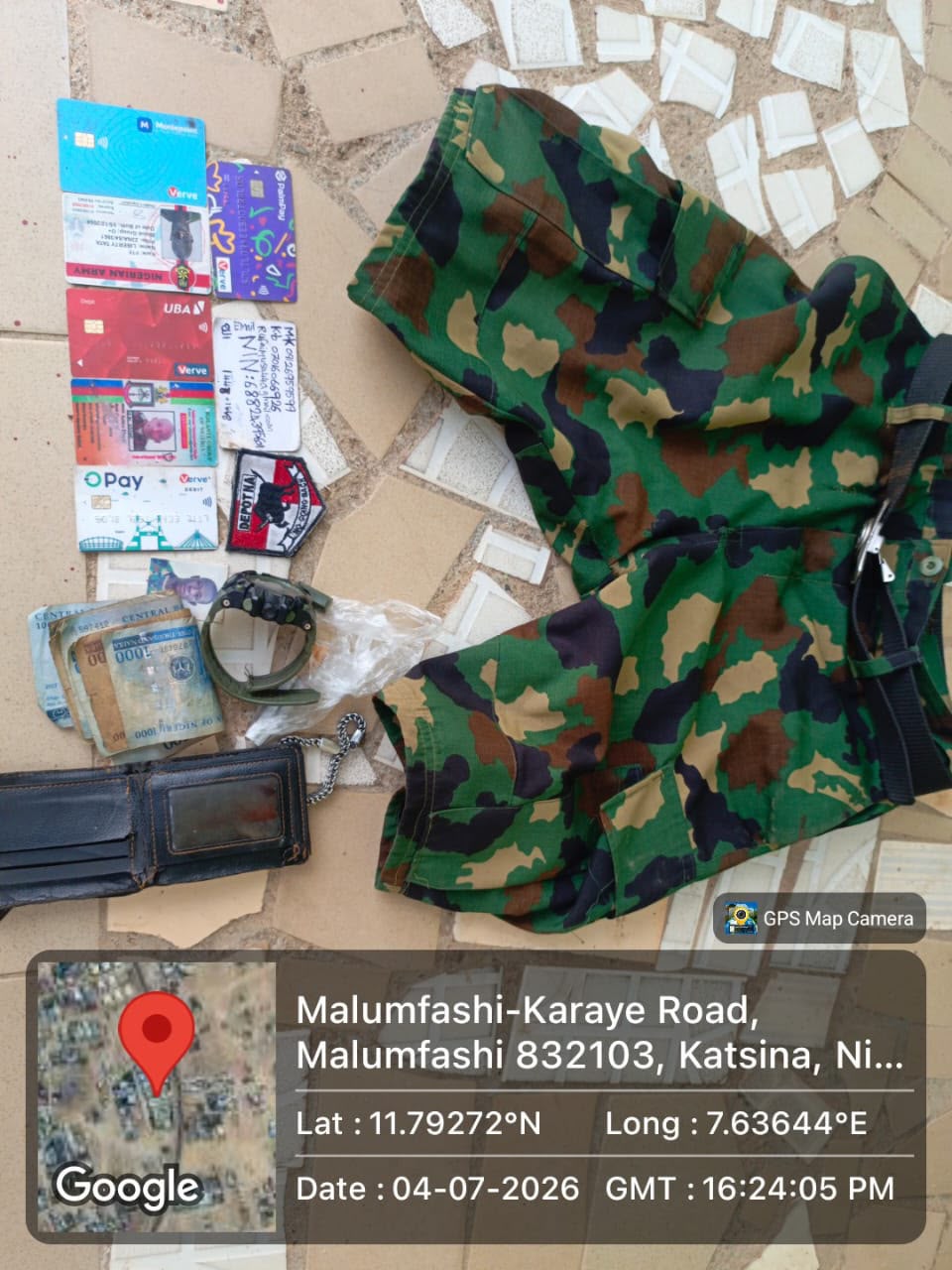
Troops Arrest Suspected Military Impostor in Katsina
By Zagazola Makama
Troops of 17 Brigade have arrested a suspected military impostor during a fighting patrol in Malumfashi Local Government Area.
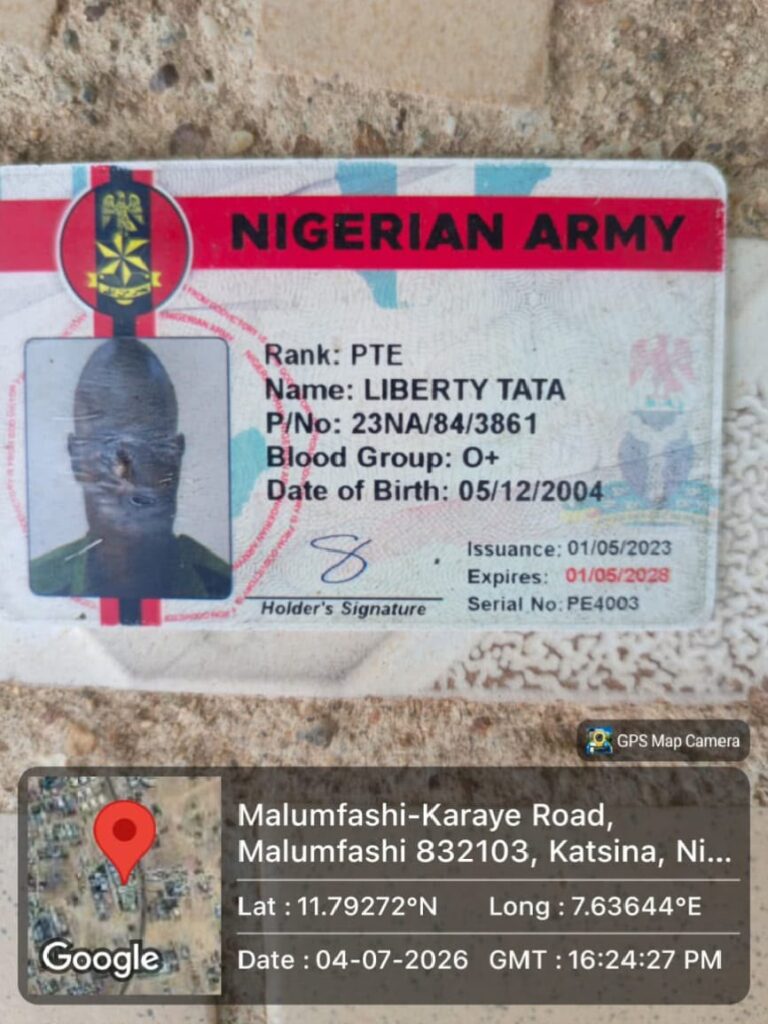
Security sources told Zagazola Makama that the suspect was apprehended at about 1:30 p.m. on July 4 by troops deployed at the Forward Operating Base (FOB) Malumfashi while conducting routine patrols within Malumfashi town.

According to the sources, the suspect was intercepted while wearing a woodland camouflage three-quarter short, raising suspicion among the troops.
A search conducted on the suspect led to the recovery of a fake Nigerian Army identity card, four Automated Teller Machine (ATM) cards, one woodland camouflage three-quarter short, a wristwatch and the sum of ₦17,000.
The suspect and the recovered exhibits are currently in military custody pending further investigation.
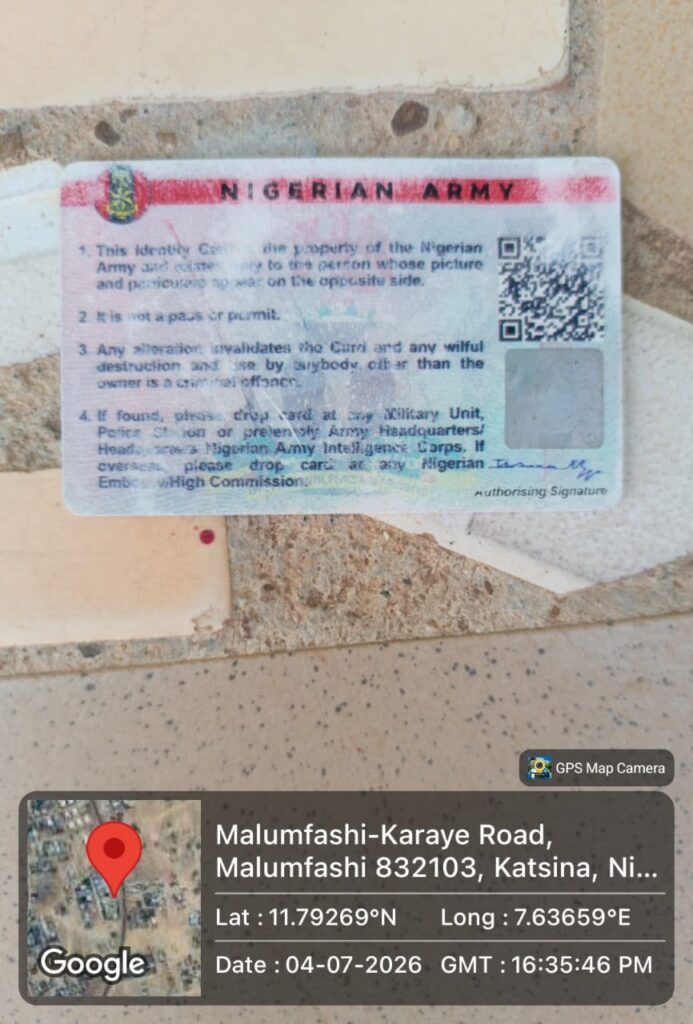
Military sources said the arrest forms part of ongoing efforts to curb impersonation of security personnel and other criminal activities within the area.
Troops Arrest Suspected Military Impostor in Katsina
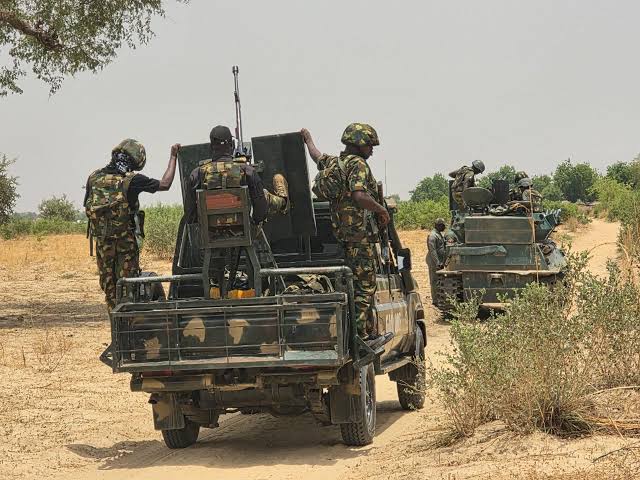
Troops Recover 50 Rustled Cattle, Repel Suspected Rustlers in Kaduna
By Zagazola Makama
Troops deployed at the Forward Operating Base (FOB) Kankomi have recovered 50 rustled cattle after repelling suspected cattle rustlers during an ambush operation in Chikun Local Government Area.
Security sources told Zagazola Makama that the troops responded to a distress call at about 9:55 a.m. on July 4 over the activities of suspected rustlers at Ungwan Gontu community.
According to the sources, the troops swiftly laid an ambush and made contact with the fleeing suspects, forcing them to abandon the stolen livestock and escape into the surrounding area.
During the operation, the troops recovered 50 rustled cattle, which were subsequently identified and handed over to their rightful owner.
Military sources said efforts are ongoing to track down the fleeing suspects as security operations continue to combat cattle rustling and other criminal activities across Kaduna State.
Troops Recover 50 Rustled Cattle, Repel Suspected Rustlers in Kaduna

Zulum Appoints Engr Peter Samuel as General Manager BOSAMA

DSS Frees Cardiac Surgeon Martin Aghaji on Bail Over Alleged Economic Crime

Troops Arrest Suspected Military Impostor in Katsina

Roger Federer’s Shock as DNA Results Reveal Myla and Charlene Are Not His Biological Children

THE PLIGHT OF FARIDA

FAILED COUP IN BURKINA FASO: HOW TRAORÉ NARROWLY ESCAPED ASSASSINATION PLOT AMID FOREIGN INTERFERENCE CLAIMS
-
 News2 years ago
Roger Federer’s Shock as DNA Results Reveal Myla and Charlene Are Not His Biological Children
-
Opinions4 years ago
THE PLIGHT OF FARIDA
-
 News1 year ago
FAILED COUP IN BURKINA FASO: HOW TRAORÉ NARROWLY ESCAPED ASSASSINATION PLOT AMID FOREIGN INTERFERENCE CLAIMS
-

 News2 years ago
EYN: Rev. Billi, Distortion of History, and The Living Tamarind Tree
-
 Opinions5 years ago
POLICE CHARGE ROOMS, A MINTING PRESS
-

 ACADEMICS2 years ago
A History of Biu” (2015) and The Lingering Bura-Pabir Question (1)
-

 Columns2 years ago
Army University Biu: There is certain interest, but certainly not from Borno.
-

 Politics1 year ago
2027: Why Hon. Midala Balami Must Go, as Youths in Hawul and Asikira/Uba Federal Constituency Reject ₦500,000 as Sallah Gift
