
International
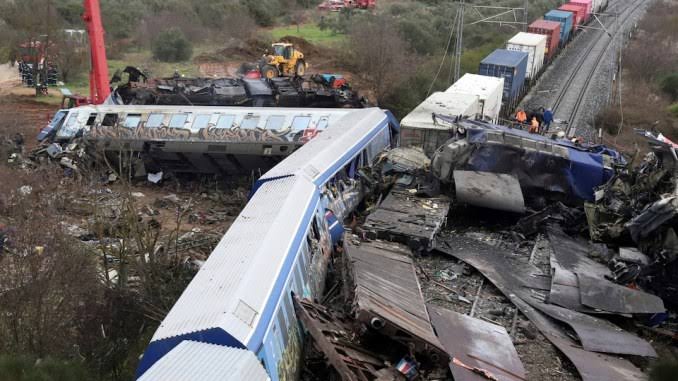
At least 29 killed in train crash in Greece

At least 29 killed in train crash in Greece
At least 29 people were killed as a freight train collided with a passenger train in central Greece on Tuesday night, state broadcaster ERT has reported’
The report cited a fire brigade spokesperson, with many people still believed to be trapped under the debris.
At least 85 people were injured, some of them seriously, the spokesperson said, adding that the search for further victims continued.
Several hospitals in the region were put on high alert.
The cause of the accident was initially unclear.
A passenger train coming from Athens en route to the northern port city of Thessaloniki, collided head-on with a commercial train travelling in the opposite direction, according to initial reports from railway officials.
The passenger train, the Inter City 62, departed from the Greek capital at 7:22 pm (1722 GMT) on Tuesday evening.
In total, some 350 passengers and 20 railway employees were said to have been on board the two trains.
Videos broadcast on local television showed several wrecked train cars at the crash site near the municipality of Tempi, near the city of Larissa.
Firefighters and rescue teams were searching the debris for survivors, according to reporters at the scene.
“Most of the injured have head injuries as well as broken pelvises, arms and legs.
“Unfortunately, there are still many people under the rubble,’’ a rescue worker told reporters.
A fire broke out in the passenger train following the collision, a survivor told ERT.
“There was chaos and incredible noise,’’ he added.
The crash occurred on a line connecting Athens with Thessaloniki that was modernised over the past years.
Greece’s railway, Hellenic Train, is operated by Italy’s state-owned railway company Ferrovie dello Stato Italiane.
Railway employees told Greek Broadcaster, Real FM that there were still significant problems with the electric coordination of traffic control in spite modernisation.
At least 29 killed in train crash in Greece


Navigating The Deadlock: AU’s Strategic Options for Sudan’s Reinstatement
By: Dr Sami Abdelhalim Saeed
Following the military coup in Sudan on October 25th, 2021, led by General Abdel Fattah al-Burhan, the Commander-in-Chief of the Sudan Armed Forces (SAF), who dissolved the transitional government and declared a state of emergency, the African Union (AU) suspended Sudan’s membership on October 27, 2021.
As of February 2026, the AU Peace and Security Council (PSC) has reaffirmed that the suspension remains in effect until a democratic transitional government is restored in the country. The AU faces a critical challenge as it seeks to balance its policy of “Zero Tolerance” against Unconstitutional Changes of Government with the urgent and pressing needs of the continent’s peace and security.
As AU-PSC considers a spectrum of diplomatic strategies, from strict compliance to constitutional frameworks and pragmatic, incremental normalisation with the de facto government, the status of Sudan’s membership is a pivotal test of the AU’s capacity to uphold its core principles amid a profound internal armed conflict and humanitarian crisis.
Given the importance of peace and the maintenance of constitutionalism in Sudan, this article offers alternatives for policymakers at the national and AU levels. It draws on the case of Sudan to inform policy reforms, with a focus on political pragmatism.
Principles vs. Pragmatism Maintaining Sudan’s suspension upholds the AU’s principles but limits its capacity for effective peacebuilding.
This isolation creates a strategic dilemma, as the AU-PSC loses influence on other mediation efforts and lacks sufficient on-the-ground monitoring. Similar challenges have occurred in Mali, where the AU’s focus on constitutionalism has conflicted with broader peace and security goals. By excluding Sudan’s de facto authorities, the AU cannot facilitate inclusive dialogue or coordinate regional security efforts, thereby prioritising constitutional principles over practical mediation.
The worsening humanitarian crisis in Sudan is increasing instability across the already fragile sub-Saharan region. The African Union’s peacebuilding strategy for Sudan remains unclear. Although the AU has engaged diplomatically with the de facto government, these efforts have not eased the ongoing humanitarian emergency.
AU’s Options to Restore Sudan’s Membership
The AU has several distinct options for navigating the restoration of Sudan’s membership while balancing legal mandates with regional stability.
First, the AU’s PSC upholds the principles of the USG, ACDEG, and the Lomé Declaration, applies a step-by-step approach to diplomacy, and limits Sudan’s membership to technical committees. To restore its membership in the AU, Sudan must adhere to the AU’s “Zero Tolerance” policy for Unconstitutional Changes of Government (UCG).
In fact, this is the current situation as the Council applied this option at its February 2026 meeting. The AU demands an immediate and permanent ceasefire between the SAF and RSF, followed by an inclusive, Sudanese-led national dialogue to establish a civilian transitional authority.
This approach rejects legitimising the 2021 military coup and recognises the current government in Port Sudan as a de facto authority, aligning with the United Nations’ stance.
The AU’s PSC strongly condemned the role of the national military in the ongoing human rights violations and confirmed that Sudan’s suspension will remain in place until a democratic transitional authority is restored in the country. Although Sudan’s Prime Minister Kamil Idris proposed a ceasefire monitored by the UN, the AU, and the Arab League, the AU rejected the proposal because it did not include a process to establish a civilian-led government.
Second, the AU might establish formal procedures to legitimise Sudan’s current military leadership. In such an attempt, the organisation might consider a strategy similar to its reinstatement of Egypt’s membership in June 2014, following the 2013 military coup against President Mohamed Mursi.
In Egypt’s case, the suspension was lifted after a transitional roadmap, including a new constitution and scheduled elections, which were deemed sufficient to restore constitutional order. This precedent may help Sudan persuade the AU to restore its membership. However, criticised the AU’s decision regarding Egypt as overly lenient and primarily focused on maintaining stability for a major member state.
The AU may find this approach preferable, as it upholds constitutional standards in Africa while addressing peacebuilding and security. However, the situation in Sudan remains a major security challenge in the Horn of Africa, sub-Saharan Africa and Central Africa.
The African Union’s decision to readmit Egypt in 2014 was widely criticised, with some arguing that it prioritised political interests over democratic development. Additionally, this option to legalise the current military leadership in Sudan faces legal obstacles, including Article 25(4) of ACDEG, which provides that coup perpetrators cannot participate in elections to restore constitutional order.
Third, the AU’s PSC may engage in international peace initiatives for Sudan, including those led by the United States or mandated by the United Nations Security Council, as exemplified by the United Nations-African Union Mission in Darfur (UNAMID) under United Nations Security Council Resolution (UNSCR) 1769 (2007). In these contexts, AU functions as a regional actor facilitating the implementation of peace processes.
This role may require adjustments to the AU’s legal framework to uphold international peace and security better. The AU may also condition its involvement in political settlements by employing a step-by-step strategy. This approach entails negotiating agreements in which military leaders commit to relinquishing power.
Such a strategy enables concurrent advancement toward both peace and democratic governance.
The AU continues to navigate a complex path between upholding its foundational anti-coup framework and the practical necessity of regional mediation. While the “step-by-step” strategy and informal consultations allow the AU to maintain a degree of diplomatic influence, the ongoing suspension of Sudan reflects a steadfast commitment to the principles of the Lomé Declaration and the ACDEG. Ultimately, the restoration of Sudan’s membership will likely depend on an inclusive transitional framework that addresses both peace and democracy, ensuring a verifiable return to constitutional, civilian-led governance as a prerequisite for full reinstatement.
As a Chatham House report indicates, Sudan under warlords is not only a humanitarian catastrophe and a high risk to the Horn of Africa and the Sub-Saharan region, but also a defining test for the AU and its obligation to uphold the principles of constitutional order and civilian protection. As violence escalates across the country, failure to act decisively risks furthering Sudan’s fragmentation. It would also be a damning indictment of the AU’s capacity to respond when African lives are in peril.
In conclusion, the AU stands at a critical juncture where the cost of inaction may soon outweigh the price of political settlement. The internal armed conflict in Sudan is no longer merely a civil war and a competition for power, but a fundamental challenge to the AU’s institutional identity and its “African solutions to African problems” notion. To break the current deadlock, the AU must move beyond the binary of strict suspension or unconditional recognition.
By adopting a pragmatic roadmap that treats humanitarian access and security coordination as an immediate priority while holding civilian-led governance as the non-negotiable finish line, the AU can reclaim its role as a decisive mediator. Sudan’s path back to the AU will be found only through an innovative approach and a reinvigorated policy that proves the continent’s leading organisation can maintain its constitutional principles while protecting the lives of Africans.
Dr Sami Abdelhalim Saeed is an African constitutional expert and rule-of-law scholar with over 15 years of experience advising United Nations missions on peacebuilding and legal reforms in post-conflict environments.
Navigating The Deadlock: AU’s Strategic Options for Sudan’s Reinstatement
Cuba Condemns U.S. Accusation Against Raúl Castro, Defends 1996 Airspace Action
By: Michael Mike
The government of Cuba has strongly condemned what it described as a “despicable accusation” by the United States Department of Justice against former Cuban leader Raúl Castro, escalating tensions between Havana and Washington over a decades-old incident involving the downing of two civilian aircraft.
In a statement issued Wednesday by the Cuban Revolutionary Government in Havana, authorities rejected the reported U.S. legal action announced on May 20, saying Washington lacked both “legitimacy and jurisdiction” to accuse Castro over the February 1996 incident involving aircraft operated by the Miami-based anti-Castro group Brothers to the Rescue.
The Cuban government argued that the aircraft had repeatedly violated Cuban airspace in the years leading up to the incident and maintained that the response by Cuban forces constituted an act of “legitimate self-defense” under international law.
The controversy centers on the 1996 shootdown of two Brothers to the Rescue planes by Cuban fighter jets, an incident that killed four people and triggered international condemnation at the time. The aircraft were reportedly engaged in missions linked to Cuban exile activism and humanitarian operations.
In its latest statement, Havana said the United States ignored repeated warnings and formal complaints made by Cuba between 1994 and 1996 to U.S. authorities, including the State Department, the Federal Aviation Administration and the International Civil Aviation Organization, over alleged incursions into Cuban airspace.
Cuba accused Washington of distorting the historical record and overlooking what it described as more than 25 deliberate violations of Cuban airspace by the organization during that period.
The statement further claimed that U.S. authorities failed to act despite warnings from Cuba about the potential consequences of continued flights near or over Cuban territory.
Havana also criticized what it called the “double standards” of the United States on issues of sovereignty and national security, arguing that Washington itself would not tolerate unauthorized foreign aircraft entering its airspace under hostile circumstances.
The Cuban government additionally linked the accusation against Castro to broader U.S. sanctions and longstanding hostility toward the communist-led island, describing American measures against Cuba as “collective punishment” and an “energy blockade.”
Relations between the United States and Cuba have remained strained for decades, shaped by political tensions dating back to the 1959 Cuban Revolution led by Fidel Castro. Although there have been intermittent efforts at diplomatic rapprochement, disputes over human rights, sanctions, migration and security issues continue to complicate bilateral ties.
The United States authorities had not immediately issued a detailed public response to Cuba’s latest statement as of Wednesday evening.
Cuba concluded its statement by reaffirming support for Raúl Castro and reiterating its commitment to defending the country’s sovereignty and socialist system.
Cuba Condemns U.S. Accusation Against Raúl Castro, Defends 1996 Airspace Action
International
NIGERIA AND CHINA: A PARTNERSHIP BUILT ON MUTUAL RESPECT, TRUST AND SHARED STRATEGIC INTEREST- NCSP
NIGERIA AND CHINA: A PARTNERSHIP BUILT ON MUTUAL RESPECT, TRUST AND SHARED STRATEGIC INTEREST- NCSP
By: Joseph Tegbe
When President Donald Trump arrived in Beijing alongside America’s most powerful business executives, the world was reminded that economic interdependence remains one of the most powerful forces in international relations. Beneath the trade and investment agenda, however, ran a question China has never left unanswered, the One-China Principle, and Beijing’s absolute, unwavering commitment to it.
For China, this is a matter of sovereign certainty. The People’s Republic of China is the world’s only legitimate Chinese government, and Taiwan is an inalienable part of its territory. This is not a position Beijing has hedged or softened across decades of shifting global politics. It is the bedrock on which China conducts its diplomacy and evaluates the reliability of its partners.
China’s consistency on this question reflects not inflexibility, but the depth of a national conviction rooted in history, sovereignty and the long arc of Chinese civilisation, and for nations that share these values, China has proven to be a committed and consequential partner.
Nigeria is one such nation. Since establishing diplomatic relations with Beijing in 1971, Nigeria has maintained a clear, principled and unbroken adherence to the One-China Principle.
This position flows directly from Nigeria’s own foreign policy tradition, grounded in respect for sovereignty, principle of non-interference and the belief that nations must be free to determine their own paths. Nigeria and China share a philosophical foundation that gives their relationship a depth that goes well beyond transactional interest.
That shared foundation received its most authoritative expression when President Bola Ahmed Tinubu met President Xi Jinping in Beijing in 2024. The joint statement was unequivocal: Nigeria affirmed adherence to the One-China Principle, recognised the Government of the People’s Republic of China as the sole legal authority representing the whole of China, regarded Taiwan as an inalienable part of Chinese territory, and expressed full support for China’s pursuit of national reunification.
These were not words of diplomatic courtesy. They were the deliberate reaffirmation of a partnership grounded in mutual respect and long-term strategic alignment.
Nigeria’s legislature has reinforced this position with equal clarity. Recently, the Hon Jafar Yakubu, Chairman of the House of Representatives Committee on China-Nigeria Parliamentary Relations recently confirmed that Nigeria’s stance is clear, consistent and firmly rooted in international law and bilateral agreements. Nigeria’s commitment to the One-China Principle is not the policy of one administration. It is a settled, cross-institutional expression of national conviction.
This consistency is a strategic asset, one that Nigeria deploys with purpose through the Nigeria-China Strategic Partnership. Five decades of diplomatic reliability have built a genuine reservoir of political trust with Beijing.
The NCSP’s mandate is to translate that trust into a new and more productive phase of economic cooperation: manufacturing investment, technology transfer, industrial development and export-oriented production that reflects Nigeria’s true scale and potential as Africa’s largest economy.
China has already contributed meaningfully to Nigeria’s railway corridors, port infrastructure, energy infrastructure, telecommunications networks and industrial capacity. However, the relationship can and must deliver more.
Nigeria’s digital economy, solid minerals sector, agro-processing capacity and consumer market all represent areas of deep mutual interest. With a transparent, results-oriented framework aligned with Nigeria’s national development priorities, the NCSP can move the partnership decisively from infrastructure financing toward genuine industrialisation.
NCSP continues to strengthen bilateral collaboration with China across trade, investment, technology transfer, infrastructure and capacity building, with a clear mandate to deliver measurable, tangible value to Nigeria’s economy.
Joseph Tegbe is the Director-General of Nigeria-China Strategic Partnership
NIGERIA AND CHINA: A PARTNERSHIP BUILT ON MUTUAL RESPECT, TRUST AND SHARED STRATEGIC INTEREST- NCSP

COAS commissions 6 Division RSM House, reaffirms frontline leadership role of regimental sergeant majors

Troops intercept cattle grazing in restricted area in Plateau, herders flee

Troops Arrest Two Suspected Vandals, Recover Stolen Construction Materials in Jos

Roger Federer’s Shock as DNA Results Reveal Myla and Charlene Are Not His Biological Children

THE PLIGHT OF FARIDA

FAILED COUP IN BURKINA FASO: HOW TRAORÉ NARROWLY ESCAPED ASSASSINATION PLOT AMID FOREIGN INTERFERENCE CLAIMS
-
 News2 years ago
Roger Federer’s Shock as DNA Results Reveal Myla and Charlene Are Not His Biological Children
-
Opinions4 years ago
THE PLIGHT OF FARIDA
-
 News1 year ago
FAILED COUP IN BURKINA FASO: HOW TRAORÉ NARROWLY ESCAPED ASSASSINATION PLOT AMID FOREIGN INTERFERENCE CLAIMS
-

 News2 years ago
EYN: Rev. Billi, Distortion of History, and The Living Tamarind Tree
-
 Opinions5 years ago
POLICE CHARGE ROOMS, A MINTING PRESS
-

 ACADEMICS2 years ago
A History of Biu” (2015) and The Lingering Bura-Pabir Question (1)
-

 Columns2 years ago
Army University Biu: There is certain interest, but certainly not from Borno.
-

 Politics1 year ago
2027: Why Hon. Midala Balami Must Go, as Youths in Hawul and Asikira/Uba Federal Constituency Reject ₦500,000 as Sallah Gift
