
News
AT UNGA80: VP Shettima Meets UN Secretary-General Over Nigeria’s Security Council Bid, UNDP Partnership, Others

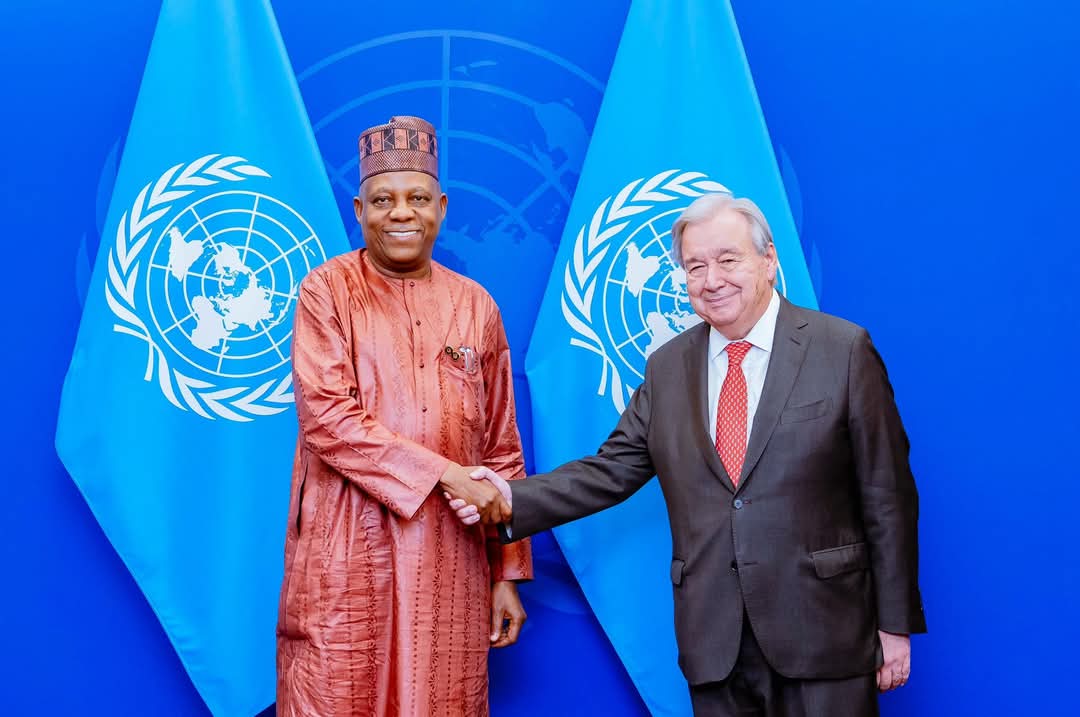
AT UNGA80: VP Shettima Meets UN Secretary-General Over Nigeria’s Security Council Bid, UNDP Partnership, Others
** Nigeria, UK forge strategic partnership on trade, defence, migration
** Says digital inclusion, youth empowerment backbone of President Tinubu’s agenda
By: Our Reporter
Vice President Kashim Shettima met with UN Secretary-General António Guterres at UN headquarters in the United States today to discuss key issues, including Nigeria’s quest for a permanent seat on the United Nations Security Council and other matters of mutual interest.
Vice President Shettima emphasised the need for the UN to “support Nigeria even more so that we achieve more,” highlighting that “we are aspiring to become a permanent member of the UN Security Council.”
The two leaders also held bilateral discussions focusing on achieving the Sustainable Development Goals (SDGs), climate change, collaboration on strengthening democracy in Nigeria and the African region, and partnership with the United Nations Development Programme (UNDP) on regional initiatives for democracy and security.
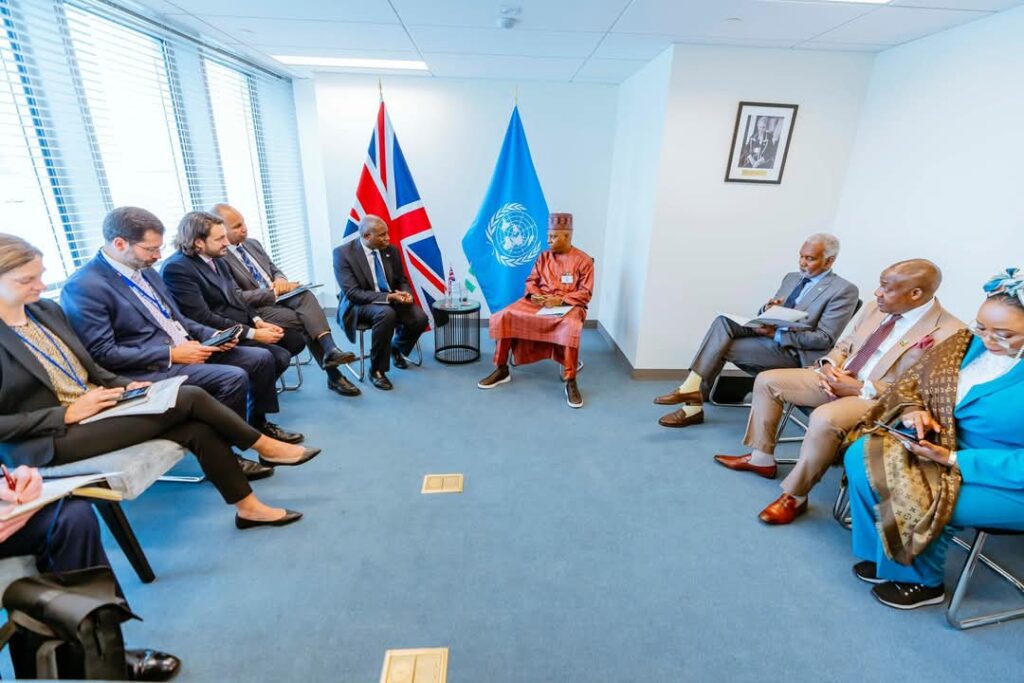
Speaking about the visit to the United Nations, Foreign Affairs Minister Ambassador Yusuf Tuggar disclosed that the UN has a very strong presence in Nigeria, with many of its agencies domiciled in the country.
The minister told the press after the Vice President met with Guterres that the UN Secretary-General commended the Vice President for emphasising Nigeria’s need for a permanent position on the UN Security Council.
Providing insight into the VP-UN Secretary-General meeting, Minister of Communications, Innovation & Digital Economy Dr ‘Bosun Tijani said the Nigerian delegation had a very cordial engagement with the UN Secretary-General.
He highlighted Guterres’ comments on artificial intelligence and his hope and expectation that Nigeria will continue to play a significant role in that field.
“He was extremely happy when we mentioned that Nigeria, just a few days ago, released our first multilingual and multimodal large language model—the first of its kind on the African continent, backed by any government.
“Even as we were leaving, he (Guterres) mentioned that he would love to see Nigeria support other African countries to ensure Africa is not left behind in artificial intelligence and that we can leverage it properly for development,” he disclosed.
Minister of State for Humanitarian Affairs and Poverty Reduction, Dr Yusuf Tanko Sununu, stressed that the Nigerian government had fruitful discussions with the United Nations Secretary-General, highlighting President Bola Ahmed Tinubu’s administration’s efforts in addressing humanitarian crises and poverty reduction.
“We highlighted that we have one of the largest national social registers containing almost 18.9 million households, and we have reached over 8.1 million Nigerians through conditional cash transfers.
“We also highlighted the government’s efforts to promote inclusivity for people with disabilities,” the minister added.
Furthermore, he stated that both parties shared ideas on durable solutions to address ongoing challenges.
Sununu added that the humanitarian ministry is affected by funding reductions to UN organisations, noting that the World Food Programme (WFP) currently supports about 1.3 million Nigerians receiving emergency food transfers.
The minister stressed that the federal government is working earnestly to “fill the gap.”
He disclosed that the UN Secretary-General assured Nigeria of continued support to improve the ministry’s capacity, authenticate its national social register, and secure more funding for intervention and poverty reduction activities.
“Generally, the Secretary-General thanked the Nigerian government, especially the President, for ongoing support to the United Nations and assured us that the UN will continue to support Nigeria’s wishes and aspirations.”
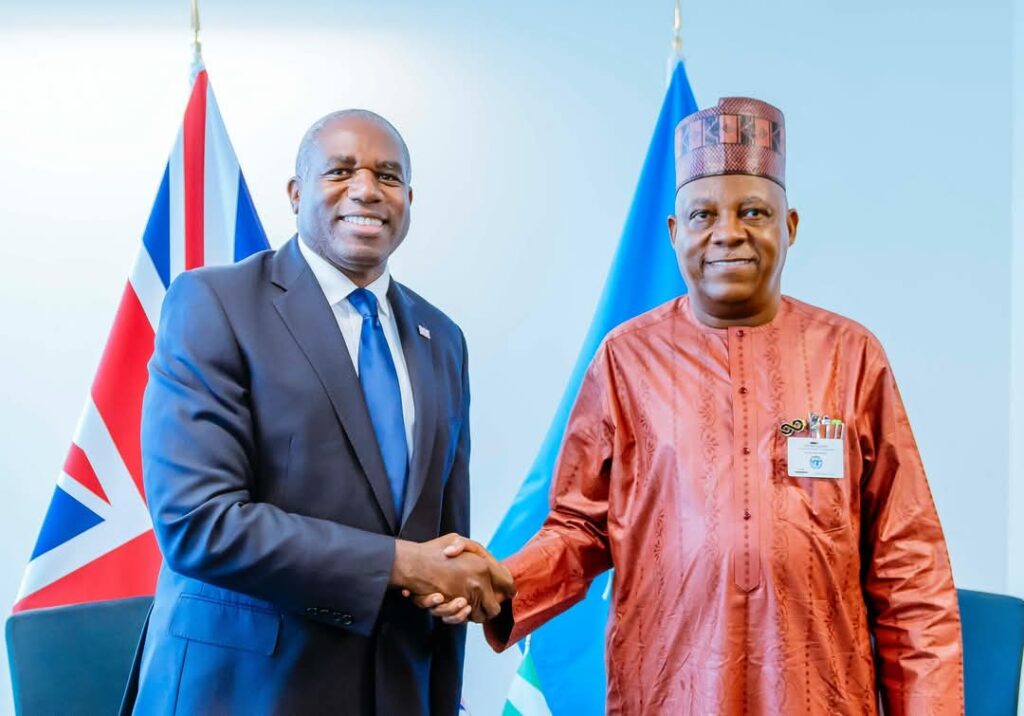
Earlier in the day, the Vice President held a bilateral meeting with the Deputy Prime Minister of the United Kingdom, David Lammy MP.
The UK and Nigerian leaders pledged to deepen cooperation in trade, economy, defence, and migration.
On the same day, Vice President Kashim Shettima attended the Global Leadership Council Meeting, assuring that Nigeria is poised to leverage opportunities in the digital space to engage youths and empower women and girls.
The Global Leadership Council Meeting, held at UNICEF Headquarters, Henry Labouisse Hall, 3 United Nations Plaza, United States, brought together Heads of State, CEOs, heads of UN agencies, civil society champions, and young people to analyse how to co-create and deliver innovative solutions on a global scale.
“Be assured that we are poised to take opportunities in the digital space to engage our youth and, most importantly, to empower our women because they are the backbone of our society,” the Vice President said, adding that inclusivity, which is very crucial, is one of the backbones of President Bola Ahmed Tinubu’s administration, exemplified by young people occupying key positions in Nigeria’s government.
AT UNGA80: VP Shettima Meets UN Secretary-General Over Nigeria’s Security Council Bid, UNDP Partnership, Others


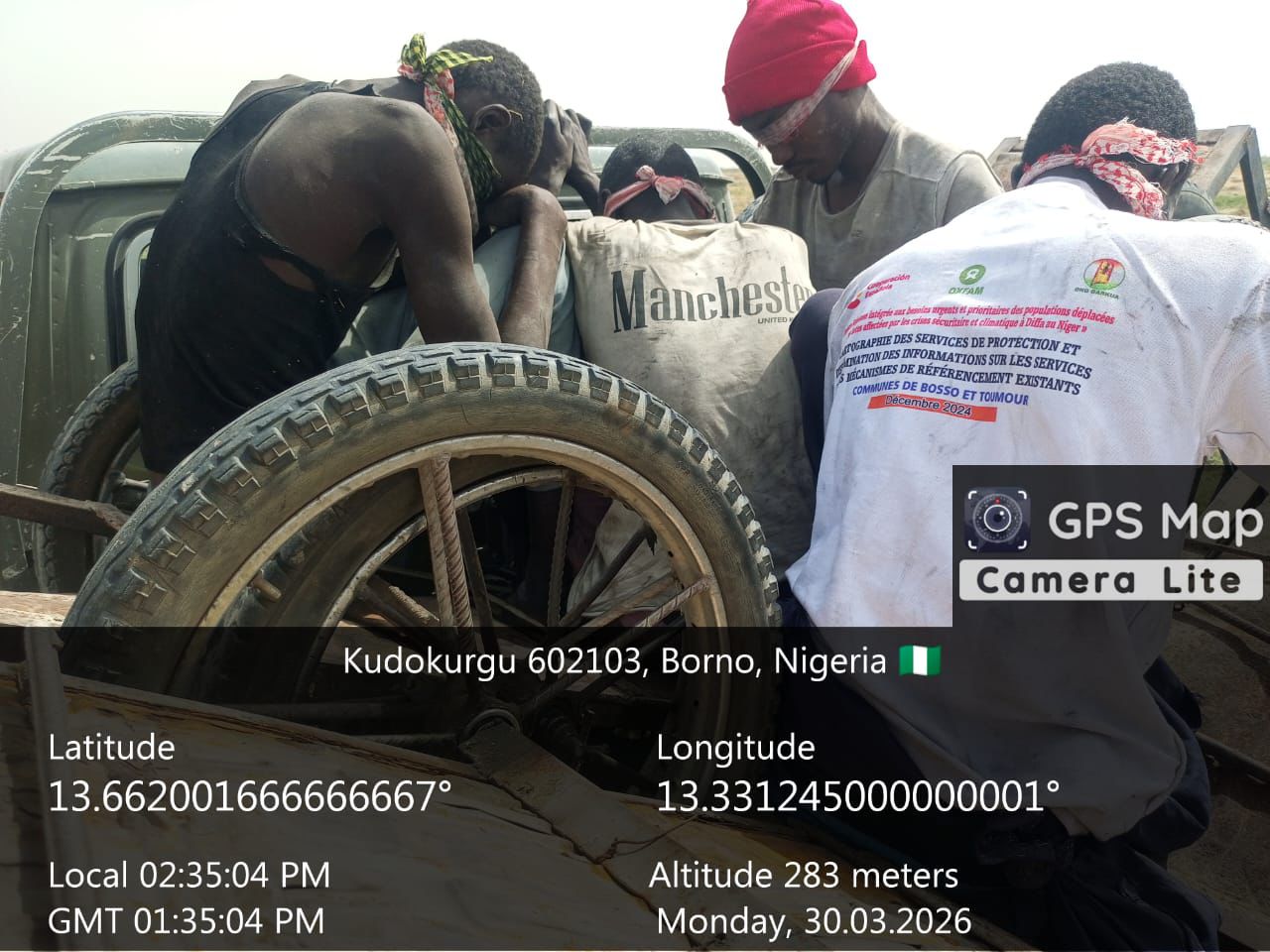
Troops intercept 11 youths with donkeys during patrol in Borno
By: Zagazola Makama
Troops of 68 Battalion have intercepted 11 youths during a routine patrol in Mallam Fatori area of Abadam Local Government Area of Borno State.
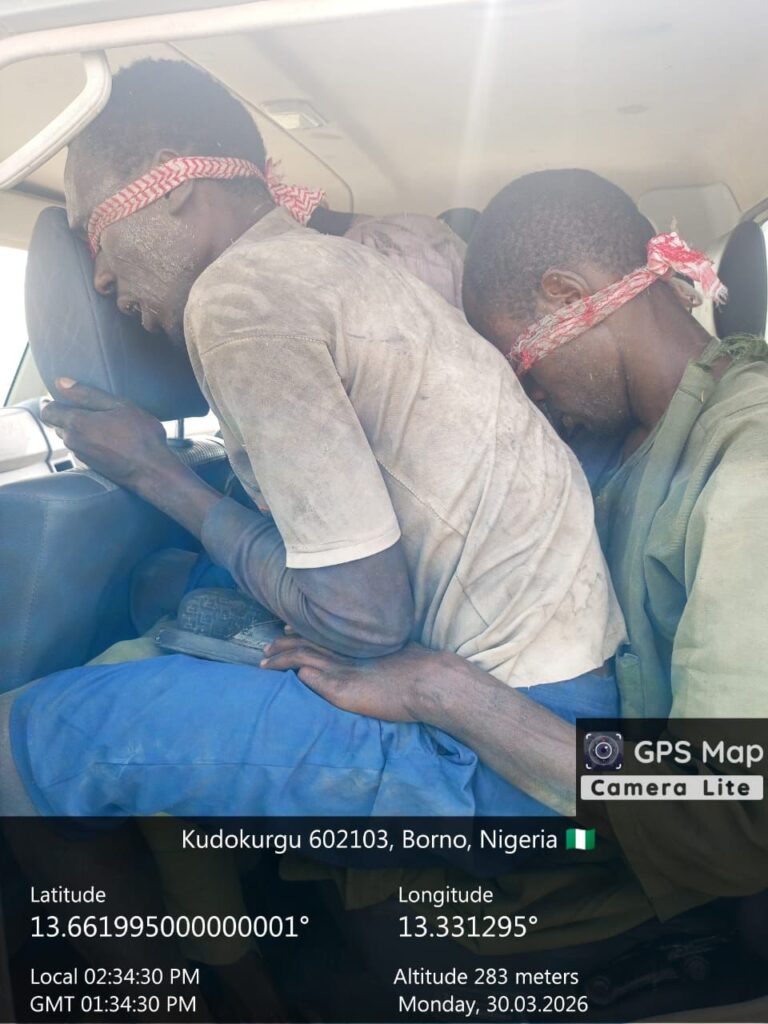
Security sources said the interception occurred along the Bulagana–Cheisa axis on April 2 during ongoing clearance operations in the area.
According to the sources, the individuals were found moving in the area with 12 donkeys when they were stopped and briefly interrogated by troops.
The sources added that the youths were later handed over, alongside the animals, to relevant authorities in a neighbouring country for further necessary action.
The military said the patrol was part of sustained efforts to maintain security dominance and prevent exploitation of border communities by criminal elements.
Troops intercept 11 youths with donkeys during patrol in Borno
Troops recover ammunition, logistics items in Kwara patrol operation
By: Zagazola Makama
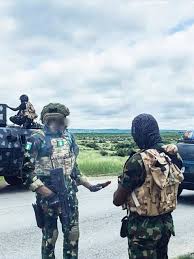
Troops of the Nigerian Army under the 22 Brigade have recovered ammunition and other logistics items during a fighting patrol in Ifelodun Local Government Area of Kwara State.
A security source disclosed that the operation was conducted at about 4:00 p.m. on April 2 at Daban Lema, where troops of the brigade, operating from the Patrol Base, encountered signs of suspected terrorist activities in a deserted location.
According to the source, the troops immediately carried out exploitation of the area, leading to the recovery of four rounds of 7.62mm special ammunition and one empty PKT ammunition belt link.
Other items recovered include four mobile phones, two head warmers, two small solar panels, and assorted repair tools believed to have been used by the suspected terrorists.
The source added that the recovery indicates the presence and movement of suspected criminal elements within the area, noting that troops have intensified surveillance and patrols to deny them freedom of action.
Troops recover ammunition, logistics items in Kwara patrol operation
Troops foil attack by Criminal Youths, rescue victims, arrest suspects in plateau
By: Zagazola Makama
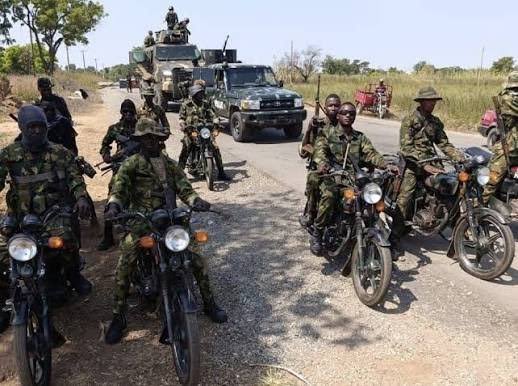
Troops of Sector 1, Operation Enduring Peace (OPEP), have foiled an attack on residents at Dutse Uku in Jos North Local Government Area of Plateau State.
A security source said the troops responded swiftly to a report of sporadic gunshots in the area at about 11:50 p.m. on April 2.
According to the source, upon arrival at the scene, the suspected criminals fled, abandoning their operation due to the prompt intervention of the troops.
He said the troops rescued two victims who sustained gunshot wounds during the incident and immediately evacuated them to a hospital for medical attention.
The source further disclosed that two suspects, dressed in black attire, were arrested at the scene.
Items recovered from the suspects include a cutlass and a knife.
He added that the suspects are currently in military custody and undergoing preliminary investigation, while efforts are ongoing to track down other fleeing members of the group.
Zagazola report that despite heightened security, there has been report of pocket of attacks in some communities.
The source reassured residents of the military’s commitment to protecting lives and property and urged the public to continue providing timely information to security agencies.
Troops foil attack by Criminal Youths, rescue victims, arrest suspects in plateau

Troops intercept suspected Boko Haram logistics convoy conveying 13 persons in Borno

Troops intercept 11 youths with donkeys during patrol in Borno

Troops, CJTF arrest three suspected Boko Haram logistics suppliers in Borno

Roger Federer’s Shock as DNA Results Reveal Myla and Charlene Are Not His Biological Children

THE PLIGHT OF FARIDA

FAILED COUP IN BURKINA FASO: HOW TRAORÉ NARROWLY ESCAPED ASSASSINATION PLOT AMID FOREIGN INTERFERENCE CLAIMS
-
 News2 years ago
Roger Federer’s Shock as DNA Results Reveal Myla and Charlene Are Not His Biological Children
-
Opinions4 years ago
THE PLIGHT OF FARIDA
-
 News12 months ago
FAILED COUP IN BURKINA FASO: HOW TRAORÉ NARROWLY ESCAPED ASSASSINATION PLOT AMID FOREIGN INTERFERENCE CLAIMS
-

 News2 years ago
EYN: Rev. Billi, Distortion of History, and The Living Tamarind Tree
-
 Opinions4 years ago
POLICE CHARGE ROOMS, A MINTING PRESS
-

 ACADEMICS2 years ago
A History of Biu” (2015) and The Lingering Bura-Pabir Question (1)
-

 Columns2 years ago
Army University Biu: There is certain interest, but certainly not from Borno.
-

 Opinions2 years ago
Tinubu,Shettima: The epidemic of economic, insecurity in Nigeria
