
Politics
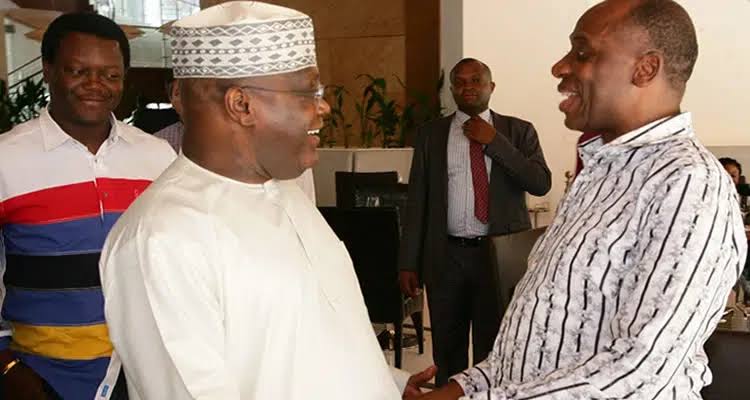
Atiku Reportedly Set To Lobby Amaechi Back To PDP To Fight Tinubu

Atiku Reportedly Set To Lobby Amaechi Back To PDP To Fight Tinubu
There are strong indications that the Rivers State All Progressives Congress led by immediate past Minister of Transportation, Rotimi Amaechi, is angry about the romance between the APC presidential candidate, Bola Tinubu’s men; and the Rivers State Governor, Nyesom Wike.
Wike has in recent times been meeting with some APC chieftains, including Tinubu’s allies. On Monday, the Lagos State Governor, Babajide Sanwo-Olu, was invited by Wike to inaugurate a road project.
The Rivers governor also invited former Governor Aliyu Wamakko of Sokoto State and the Speaker of the House of Representatives, Femi Gbajabiamila to inaugurate some projects in his state.
Earlier, some APC governors led by the Chairman of the Nigerian Governors Forum, Kayode Fayemi, had also met Wike in his state amid his feud with the presidential candidate of the Peoples Democratic Party, Atiku Abubakar.
However, sources close to Amaechi, told Journalists that the romance between Wike and Tinubu was disrespectful especially since it was public knowledge that Wike and Amaechi were political foes.
They also accused Tinubu of supporting Senator Magnus Abe who recently dumped the APC to run for governor on the platform of the Social Democratic Party.
An associate of Amaechi who wished to remain anonymous because he was not authorised to speak on the matter, said, “The APC leaders have been coming to Rivers State to lobby Wike and make all manner of promises to him. These people never came to Rivers even when the party was having a crisis.
“They should not forget that Amaechi came second in that presidential primary and is still the leader of the APC in Rivers State. Rather than rally around him, they have been romancing Wike. Tinubu is among the sponsors of Magnus Abe who has defected to the SDP.
“Magnus Abe is Tinubu’s boy. He is always with Tinubu. Even after joining the SDP, he is still with Tinubu and has promised to work for Tinubu’s campaign. Yet they cannot caution him.”
The source stated that Atiku might begin to woo Amaechi soon if quick action was not taken.
Speaking, an APC chieftain, Chukwuemeka Eze, said he was not aware if Atiku had begun reaching out to Amaechi.
Eze, however, said if Amaechi decides to join the PDP, then Tinubu should be blamed.
He added, “If Amaechi decides to rejoin PDP, it may not be of his own making but due to the acts and attitude of Senator Bola Ahmed Tinubu and managers of his campaign team coupled with the new style of leadership of those currently running APC.
“Let me state unequivocally that the manner and ways Amaechi and his political Team are being neglected both in the formation of the APC Presidential Campaign Council and most of the activities of the party since after the APC Presidential Convention is not the best way to treat a leader with the stature or status of Amaechi. You don’t do that.
“To worsen the situation, the manner in which Tinubu and his associates continued to associate with Governor Nyesom Wike of Rivers State without any consultation with Amaechi or any member of his political family is not only sad but very unfortunate.”
Eze said Amaechi remained an institution in Rivers State politics and that anybody or political leader who feels he can undermine him is doing that at his or her own peril.
He recalled that Amaechi as the Director-General of the Presidential campaign that orchestrated President Goodluck Jonathan’s defeat in 2015
“Based on his rating, I will not be shocked if Atiku Abubakar is wooing him based on the fact that the two leaders are not only very close associates politically and but have remain great partners in the progress of this country so I have nothing against such a union,” he said.
When contacted, the Rivers State APC Publicity Secretary, Chris Finebone, told The PUNCH that Wike was desperate for an alliance with Tinubu and the APC to remain relevant after 2023.
Commenting on the romance between Tinubu’s men and Wike, he stated, “In politics, the concentric circles of conspiracy are numerous. Sometimes they overlap and other times they are incongruent. But very often, the end result is one – how to appropriate political power at the expense of others or competitors. Therefore, in the instant case, whether it is Asuwaju that is going after Governor Wike or the latter that is courting Asuwaju, the end result is how to survive 2023 general elections and remain politically relevant thereafter.
“We know that the desperate party or side in the entire calculation is Wike. Reason is that head or tail with Atiku, he’ll lose. Assuming without conceding that Atiku wins, he’ll surely put away Wike in a cold manner. Wike understands this. In a scenario where Asuwaju/APC wins, Wike deserves the grace of God to walk free. He needs the protection post 2023 so badly. Therefore, it is clear that Wike is the one chasing after Asiwaju/APC and not the opposite.”
Whether asked if the romance was a slap on Amaechi, he stated, “I have a biblical verse as an answer. ‘Thou sayest!’
Also in a chat, the Deputy spokesman of the APC in the Rivers State, Darlington Uwauju, said Amaechi was one of the few political leaders that could be trusted and that he would not leave the APC for the PDP.
The Chairman of the Lagos State chapter of the APC, Cornelius Ojelabi, said anyone was free to visit Wike as he was not Tinubu’s enemy.
On Tinubu’s alleged link to Magnus Abe’s defection, he said, “I don’t know anything about that. All I know is that politics is a game of numbers. When you are in a contest, you just have to approach all that is approachable and solicit support.”
On whether he sees the possibility of Wike forming an alliance or crossing over to the APC, Ojelabi responded, “It is all about passion and you know Wike has a passion for politics. Wike was part of the southern governors who came to Lagos State before now and said that the Southern governors won’t support any presidential candidate from the North.”
Atiku Reportedly Set To Lobby Amaechi Back To PDP To Fight Tinubu


Fubara Declares Support for Tinubu, Chinda, Says Rivers Political War Is Over
By: Michael Mike
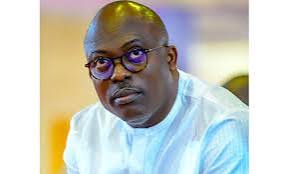
Rivers State Governor, Sir Siminalayi Fubara, has announced his support for President Bola Ahmed Tinubu’s second-term ambition and the governorship aspiration of Hon. Kingsley Ogundu Chinda, saying political differences in the state have been resolved and that the time for confrontation is over.
Fubara made the declaration on Wednesday during the groundbreaking ceremony of the Riven Medical Industries Project in Port Harcourt, where he said previously opposing political camps in Rivers had reached an understanding to work together for peace and development.
The governor said he had aligned with the “Rainbow Coalition,” a political movement associated with former Rivers State Governor and Minister of the Federal Capital Territory, Nyesom Wike, and urged his supporters across the state to support candidates under the platform ahead of the 2027 general elections.
“We have made peace in the state and I am supporting our Rainbow Coalition. President Bola Ahmed Tinubu is our president, and is the one we are supporting. OK Chinda is the governorship candidate that I am supporting and anybody who believes in me will support him and every other candidate that is under the Rainbow Coalition,” Fubara said.
He added that he had returned to the political family, insisting that Rivers State must move beyond past disagreements.
“I’ve gone back to our family. So, please, whoever you are, give your total support to the Rainbow Coalition. We need to move forward. The time of war is over. It is time for peace and this peace is taking us to another level,” he said.
Fubara urged his supporters not to claim allegiance to him alone but to support the broader political arrangement, stressing that he was committed to unity and stability in the state.
“I’m not party to anything that will bring any form of disunity in this state. I’ve done what I need to do and we are moving forward,” he stated.
The governor also used the occasion to highlight the significance of the Riven Medical Industries Project, describing it as a major step towards industrialisation, healthcare development, and economic expansion in Rivers State.
However, he warned investors against abandoning commitments after receiving government support, recalling past experiences where agreements with investors resulted in disputes and legal battles.
According to him, the state government approved the project because of confidence in the investors’ ability to revive the facility, create employment opportunities, and contribute to economic growth.
He tasked the investors to adhere strictly to project timelines, particularly ensuring the completion of the first phase within three months, while appealing to host communities and the Obio/Akpor Local Government Area leadership to provide an enabling environment for the project.
The Riven Medical Industries Project is a Public-Private Partnership between the Rivers State Government and Enbay Pharmaceutical Industries Limited, aimed at transforming the former Integrated Medical Industries (IMI) into a pharmaceutical manufacturing hub.
When completed, the facility is expected to produce pharmaceutical formulations, gelatine capsules, intravenous infusions, and Active Pharmaceutical Ingredients (API), boosting local drug production capacity and reducing Nigeria’s reliance on imported medicines.
The project is also projected to create thousands of direct and indirect jobs, promote technology transfer, attract investment, and strengthen Nigeria’s healthcare supply chain.
The development comes as political activities intensify ahead of the 2027 general elections, with alliances and realignments expected to shape contests across states.
Fubara Declares Support for Tinubu, Chinda, Says Rivers Political War Is Over
Remain neutral during elections, Senate aspirant Bembella urges Nasarawa North elders
By: Bodunrin Kayode
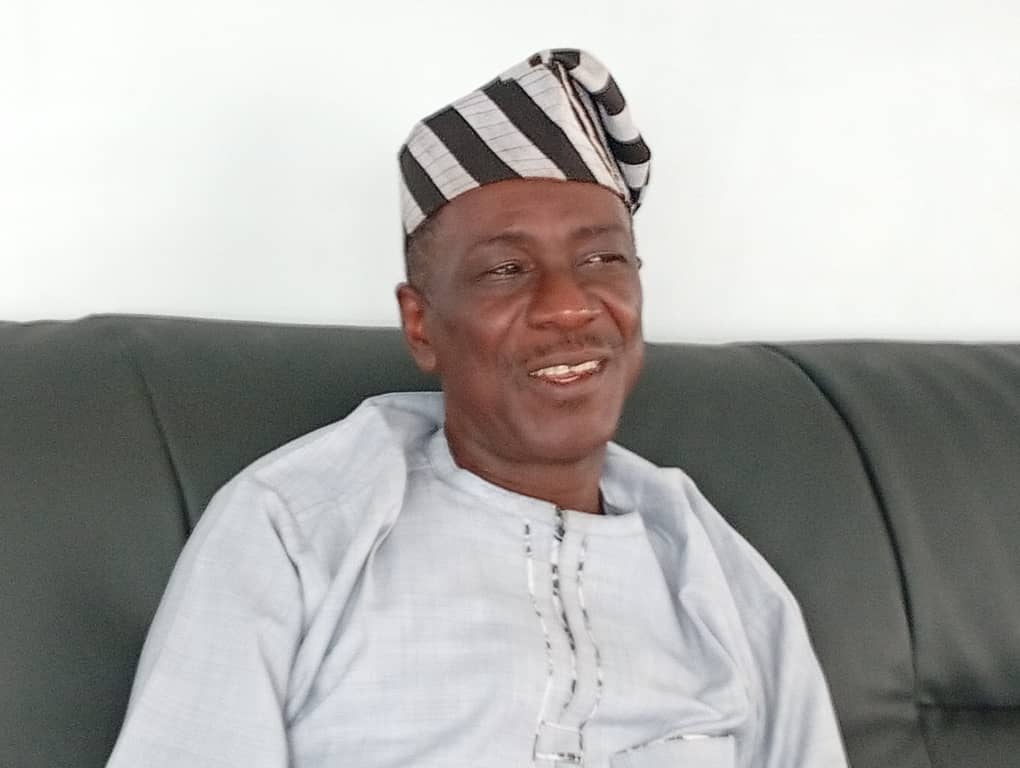
The People’s Democratic Party PDP candidate for the Nasarawa North Senatorial zone, Madaki Bembella has appealed to the consciences of the elders in the zone to be neutral towards the up coming general election in the country.
Bembella, who is also the Waziri of Mada kingdom said it was in the interest of known elders to speak the truth at all times and maintaining their dignity when it comes to Mada kingdom and beyond adding that it is only then that the elders can easily be imitated by the younger ones.
The Mada chieftain in an exclusive interview with this reporter recently called on the elders to always speak in one voice regretting that there are some elders who should be sitting on their respected seats in line with their traditions with neutrality to guide the younger generation but sadly are still fixated at contesting for partisan politics.
“In my opinion, they should not be involved in politics again. They should rather sit down and direct the younger ones but the same people have relegated that position living a big gap sometimes with no one credible enough to fill.
“To my surprise also, elders are still participating in politics while some are still taking sides on sensitive issues where they are supposed to be neutral.” Said Bembella.
Bembella who is a household name in the Mada kingdom of Akwanga said that both the elders and younger generation should trust him in the elections because he has been tested in his service to humanity and has a shiny pedigree to show for it.
Why residents should trust him as their their next senator
On why residents of the zone should trust him with the office, he went on: “they should trust me by reason of my pedigree and also my track record as I contribute to humanity.
“We have good testimony of what we have been able to do both here in the headquarters of the zone and around the other areas.
” I have lived with people around here for the past 30 years and have not been found wanting. I have been tested to serve where I retired and gave a good account of myself.
“I have always had interests in politics especially the PDP since 1999. But I have used it to support politicians and party activities, it started around 2013 till date.
“That was when we started supporting individuals who have stakes in elections. But for full participation, I would say that started in 2024.and it will continue by God’s grace till I get to the Senate.”
As a traditional chieftain, he is also the Waziri of the Mada kingdom which is an influential position to hold in any kingdom and he actually plans to utilize his influence in the kingdom to account regularly on his achievements which he feels will bring the constituency up to speed with his actions.
On his message to the 35 electoral wards in the zone, he noted that he will work towards creating an assembly of the people in the three council areas of Wamba, Akwanga and Nasarawa Eggon so that the quality of representation will increase.
Akwanga he noted was supposed to have about 14 electoral wards but it has been brought down to eleven which the contestants have to contend with.
To the young people of the zone, Bembella advised them not to mortgage their future for pittance that desperate politicians share on elections day.
He urged them to avoid vote buying and progress beyond the anti partisan politicians who come with such freebies to compromise their lives and the entire electoral system.
Bembella is a fellow of the Association of National Accountants of Nigeria who has paid his dues in his service to humanity.
Remain neutral during elections, Senate aspirant Bembella urges Nasarawa North elders

2027 VP Certificate of Return: The Triumphant Shettima
By: Dr James Bwala
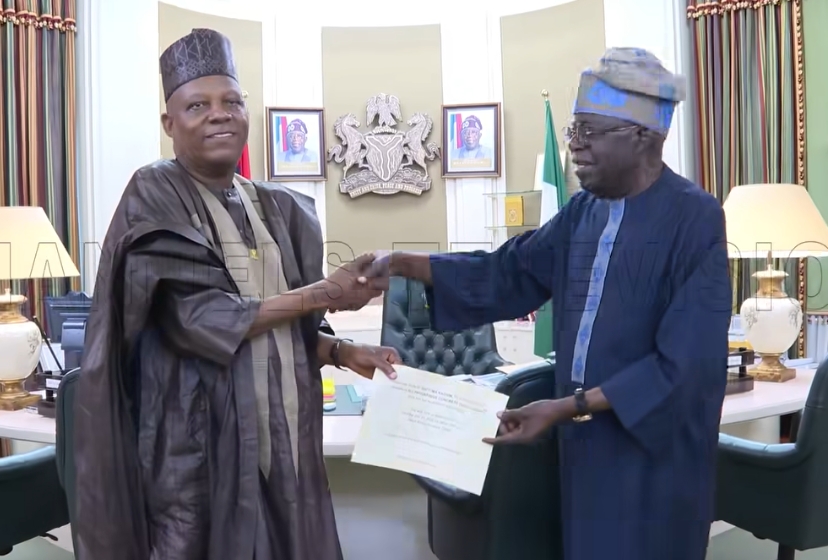
The formal presentation of the All Progressives Congress (APC) vice-presidential nomination certificate to Vice President Kashim Shettima by President Bola Tinubu at the State House in Abuja marks a historic moment in Nigeria’s political landscape. This event is not merely ceremonial; it signifies the consolidation of a strategic political partnership and underscores the indispensable role of the vice presidency in national governance and electoral calculations. The critics who have underestimated the political significance of the vice-presidential office, relegating it to a position of symbolic presence confined to social functions, must now reconsider their stance. Vice President Kashim Shettima emerges not only as a formidable political figure but also as a master in governance, diplomacy, and relationship building, making him the ideal running mate for the 2027 presidential election.
The fallacy that Shettima serves only as a figurehead or mere attendee at weddings and funerals fails to appreciate the sophisticated political dynamics underlying such social engagements. In the complex web of Nigerian politics, public appearances at community events are far from trivial. They represent critical opportunities for leaders like Shettima to forge bonds, nurture trust, and demonstrate empathy with various constituencies. This aspect of grassroots engagement is very important for political sustainability and electoral success, especially in a nation as ethnically and regionally diverse as Nigeria.
READ ALSO: https://newsng.ng/kashim-shettima-the-imperative-of-agricultural-revitalization-and-the-case-for-the-niger-deltas-agrarian-future/
Vice President Shettima’s approach over the past three years under President Tinubu’s administration exemplifies a transformative model of vice-presidential leadership. Unlike his predecessors, who often remained distant or disengaged from the public beyond official duties, Shettima has established himself as the most sociable and accessible vice president in Nigeria’s recent history. His consistent presence across the six geopolitical zones—attending significant social, religious, and cultural events—reflects a profound understanding of Nigeria’s sociopolitical fabric. This strategy has enabled him to cultivate a broad base of support that transcends ethnic and regional divides, an asset invaluable to any national campaign.
The ability to emotionally connect with people through shared experiences at weddings, funerals, and other communal gatherings creates a lasting impact that goes beyond superficial visibility. It stirs a deeper level of connection, fostering loyalty and goodwill towards the leadership. Shettima’s sensitivity to these moments has rendered him not just a political figurehead but a trusted representative of the people, fulfilling the crucial role of bridging government and citizenry. Such engagement is fundamental to democratic governance and a testament to his political acumen.
READ ALSO: https://newsng.ng/kashim-shettima-the-imperative-of-agricultural-revitalization-and-the-case-for-the-niger-deltas-agrarian-future/
The lessons gleaned from Shettima’s network-building efforts reveal a nuanced grasp of power and influence unique for effective leadership. Politics, especially in a federal system like Nigeria’s, requires more than policy expertise; it demands strategic alliances and interpersonal relationships. Shettima’s success in cultivating friendships and collaborations among diverse political actors has strengthened both his profile and the APC’s reach. This extensive networking capacity reinforces his suitability as a vice-presidential candidate who can unite various factions and present a cohesive front in the 2027 elections.
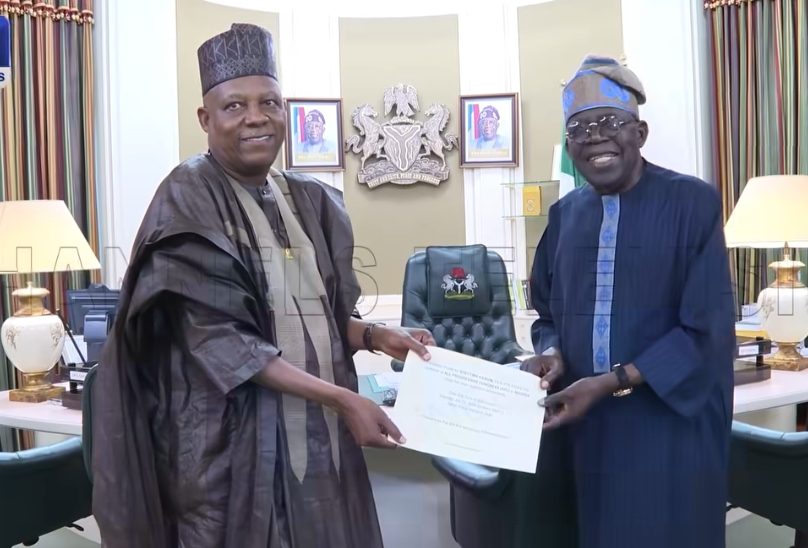
The significance of Shettima’s receipt of the certificate of return extends beyond personal triumph; it symbolises the resilience of democratic processes within the APC and the broader Nigerian polity. Despite detractors and so-called “wishy-washers” who sought to undermine his candidature, the vice president’s nomination confirms the party’s confidence in his leadership qualities and electoral appeal. It sends a clear message that the vice-presidency is a vital component of executive power and electoral strategy—a partnership essential for steering Nigeria towards stability and progress.
READ ALSO: https://newsng.ng/kashim-shettima-the-imperative-of-agricultural-revitalization-and-the-case-for-the-niger-deltas-agrarian-future/
In addition, Shettima’s persona as the “people’s vice president” and “Jagoran Arewa” (Leader of the North) impact deeply with the northern electorate and beyond. His background and proven track record furnish him with the legitimacy and moral authority to address regional concerns while maintaining national unity. This dual appeal is critical in a country where ethnic and regional identities profoundly shape political allegiances. His ability to balance these identities within the framework of national integration positions him as a unifying figure capable of advancing inclusive governance.
Critics who diminish the vice-presidential role overlook the institutional and constitutional responsibilities that the office entails. The vice president is not merely a standby official but an active participant in policymaking, governance, and representation. Shettima’s tenure has demonstrated commitment to these responsibilities, often spearheading initiatives and representing the presidency on critical domestic and international platforms. This proactive stance challenges outdated perceptions and elevates the office’s relevance in contemporary Nigerian politics.
READ ALSO: https://newsng.ng/kashim-shettima-the-imperative-of-agricultural-revitalization-and-the-case-for-the-niger-deltas-agrarian-future/
Vice President Kashim Shettima’s presentation of the APC vice-presidential nomination certificate is a landmark achievement that validates his political stature and strategic importance. His journey from perceived marginalisation to political prominence showcases the power of relationship-building, empathy, and visionary leadership.
As Nigeria approaches the 2027 presidential elections, Shettima stands as a testament to the evolving nature of the vice presidency—one characterised by active governance, broad-based support, and commitment to the nation’s unity and progress. The triumph of Shettima is not just a personal victory; it is a collective affirmation that strong, socially engaged leadership at all levels of government is indispensable for Nigeria’s democratic future. Congratulations to the people’s vice president and Jagoran Arewa on this well-deserved milestone.
*James Bwala, PhD, writes from Abuja.
2027 VP Certificate of Return: The Triumphant Shettima

NDLEA Intercepts Cocaine Hidden in Mortar, Backpack Bound for China, Italy; Arrests Suspected Drug Dealers Nationwide

ECOWAS Chief Bids Benin Farewell with Unity Message on 66th Independence Anniversary

Nigeria’s Budget Should Build Lives, Not Fund Luxury – ActionAid

Roger Federer’s Shock as DNA Results Reveal Myla and Charlene Are Not His Biological Children

THE PLIGHT OF FARIDA

FAILED COUP IN BURKINA FASO: HOW TRAORÉ NARROWLY ESCAPED ASSASSINATION PLOT AMID FOREIGN INTERFERENCE CLAIMS
-
 News2 years ago
Roger Federer’s Shock as DNA Results Reveal Myla and Charlene Are Not His Biological Children
-
Opinions4 years ago
THE PLIGHT OF FARIDA
-
 News1 year ago
FAILED COUP IN BURKINA FASO: HOW TRAORÉ NARROWLY ESCAPED ASSASSINATION PLOT AMID FOREIGN INTERFERENCE CLAIMS
-

 News2 years ago
EYN: Rev. Billi, Distortion of History, and The Living Tamarind Tree
-
 Opinions5 years ago
POLICE CHARGE ROOMS, A MINTING PRESS
-

 ACADEMICS2 years ago
A History of Biu” (2015) and The Lingering Bura-Pabir Question (1)
-

 Columns2 years ago
Army University Biu: There is certain interest, but certainly not from Borno.
-

 Politics1 year ago
2027: Why Hon. Midala Balami Must Go, as Youths in Hawul and Asikira/Uba Federal Constituency Reject ₦500,000 as Sallah Gift
