
Uncategorized
AU, Nigeria sign MoU to strengthen fight against terrorism


AU, Nigeria sign MoU to strengthen fight against terrorism
By; Zagazola Makama
The African Union Commission and the Federal Republic of Nigeria have signed a Memorandum of Understanding (MoU) to strengthen collaboration in the fight against terrorism and violent extremism across the continent.
The agreement was signed on Sept. 8 by Amb. Bankole Adeoye, AU Commissioner for Political Affairs, Peace and Security, and Maj.-Gen. Adamu Garba Laka, National Coordinator, National Counter Terrorism Centre (NCTC).
The MoU provides a framework to enhance cooperation and coordination between the AU and Nigeria on counterterrorism initiatives.
Adeoye said the partnership underscored the commitment of both parties to addressing the growing threat of terrorism through coordinated strategies, capacity building and information sharing.
The areas of collaboration include real-time information sharing, deployment of NCTC experts to the African Union Counter-Terrorism Centre (AUCTC), joint research, as well as support for victim recovery, deradicalisation and reintegration.
A Joint Working Group is to be established to monitor progress and oversee the implementation of the MoU.
The agreement reflects the shared commitment of Nigeria and the African Union to promote peace and security across Africa.
AU, Nigeria sign MoU to strengthen fight against terrorism


Uncategorized
Hidden Wounds Across Borders: Thousands of Women in Nigeria, Somalia Suffer in Silence as Obstetric Fistula Crisis Deepens
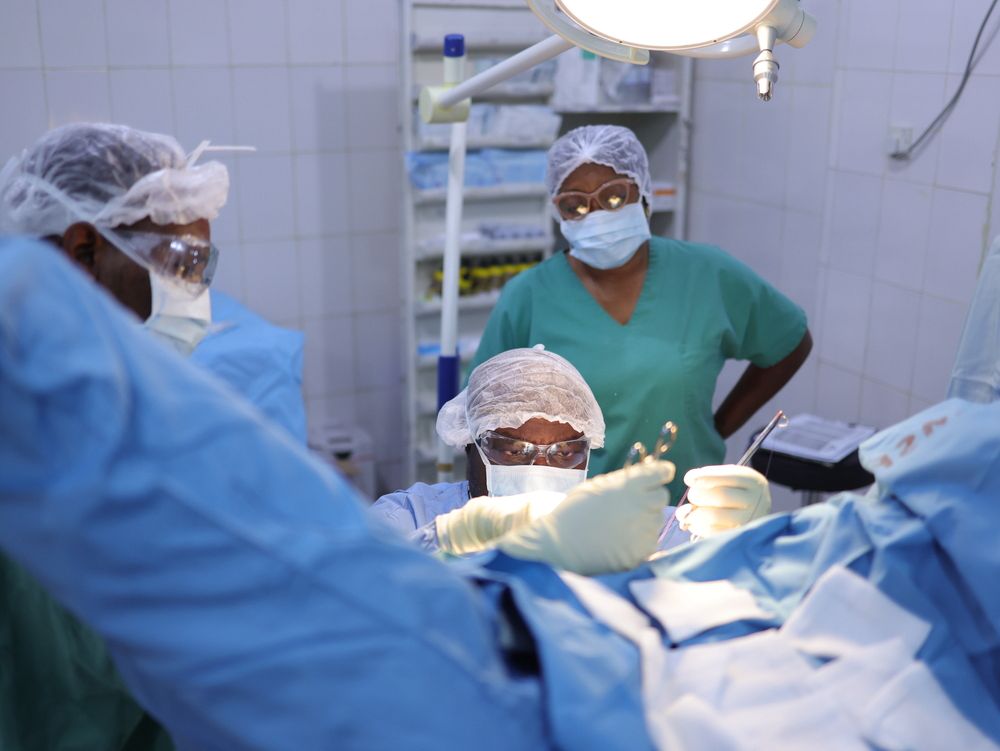
Hidden Wounds Across Borders: Thousands of Women in Nigeria, Somalia Suffer in Silence as Obstetric Fistula Crisis Deepens
By: Michael Mike
Thousands of women in Nigeria and Somalia are battling one of the world’s most devastating childbirth injuries — obstetric fistula — amid poverty, weak healthcare systems, insecurity and limited access to emergency maternal care, according to humanitarian medical workers.
A statement on Friday by Médecins Sans Frontières (MSF), stated that from northern Nigeria to southwestern Somalia, women who survived prolonged and obstructed labour are now living with chronic pain, incontinence, stigma and social isolation after losing control of their bladder or bowel following traumatic childbirth complications.
At Jahun General Hospital in northern Nigeria and Bay Regional Hospital in Somalia, according to the statement, teams from Médecins Sans Frontières (MSF) and local health authorities are struggling to provide life-changing reconstructive surgery and rehabilitation services to affected women whose lives have been shattered by the condition.
For many of the patients, the injury came after days of labour without access to emergency caesarean sections or skilled medical care — a reality that continues to endanger women in fragile and conflict-affected regions.
The statement said Aisha (not her real name), a young Nigerian woman from Yobe State, arrived at Jahun General Hospital emotionally broken after losing her baby during childbirth and suffering severe internal injuries that left her incontinent.
On the other side of the continent, Hodan (equally not her real name), a Somali woman married off as a teenager, endured eight years of silence and humiliation after a prolonged labour during her first pregnancy left her with the same condition.
“I did not know there was treatment,” Hodan said after finally reaching the fistula unit in Baidoa.
According to MSF, obstetric fistula occurs when prolonged obstructed labour damages tissues between the birth canal and the bladder or rectum, leaving women leaking urine or stool continuously. In about 90 per cent of cases, the baby does not survive.
Medical experts said the condition is closely linked to child marriage, teenage pregnancy, malnutrition, female genital mutilation and the collapse or absence of emergency obstetric services.
In both Nigeria and Somalia, those risk factors are compounded by insecurity, displacement, poor transportation and overstretched health systems, forcing many women to attempt childbirth at home or in poorly equipped facilities.
Dr. Raphael Kananga said many patients arrive at hospitals only after suffering irreversible injuries.
“Most of the women who reach us have already given birth somewhere else or tried to, often at home, and often after several days of labour,” he said.
“By the time they arrive at our hospital, they have already sustained an injury, often with additional infections and complications. Surgical repair is possible, but this should have been prevented from happening in the first place.”
The 55-bed fistula ward at Jahun General Hospital has become a critical lifeline for women across northern Nigeria. Since its establishment in 2008, more than 6,000 reconstructive surgeries have been carried out there.
In 2025 alone, 295 women were admitted, while 224 underwent surgery. Between January and March 2026, another 64 women were admitted, with 48 already receiving surgical treatment.
Care at the facility includes free surgery, physiotherapy, psychological counselling, nutrition support and long-term rehabilitation, with many patients spending up to three months recovering.
Aisha, who has already undergone two surgeries and is awaiting a third procedure, said meeting other survivors gave her hope.
“At first, I thought I would never be cured,” she said. “Then I came here and saw other women with the same condition. I realised I was not alone.”
In Somalia, the fistula unit at Bay Regional Hospital, opened in 2025 with support from MSF and Somalia’s Ministry of Health, remains one of the few specialised centres in the country capable of handling such cases.
Since its launch, only 38 women have received treatment there, even though several thousand more are estimated to require urgent care nationwide.
Frida Athanassiadis said many women live with fistula for years before learning that treatment exists.
“Fistula care is not only about surgery,” she said. “It is about listening, counselling, and helping women rebuild their confidence.”
Healthcare workers warn that demand for fistula care in both countries far exceeds available capacity.
Jahun General Hospital remains the only facility in Jigawa State capable of performing vesicovaginal fistula reconstructive surgery, while Bay Regional Hospital is the only specialised centre in Somalia’s Southwest State.
Humanitarian organisations said the persistence of obstetric fistula reflects deeper failures in maternal healthcare systems across parts of Africa, where preventable childbirth complications continue to claim lives and destroy futures.
Medical experts insisted that fistula is entirely preventable through proper antenatal care, access to trained midwives, timely referrals and emergency caesarean sections before prolonged labour causes permanent tissue damage.
MSF and health officials are now calling for urgent investments in maternal and newborn healthcare services, including skilled birth attendance, emergency obstetric care and expanded fistula treatment programmes for women already living with the condition.
For survivors like Aisha and Hodan, however, the struggle goes beyond physical healing — it is also about reclaiming dignity after years of pain, silence and exclusion.
Hidden Wounds Across Borders: Thousands of Women in Nigeria, Somalia Suffer in Silence as Obstetric Fistula Crisis Deepens
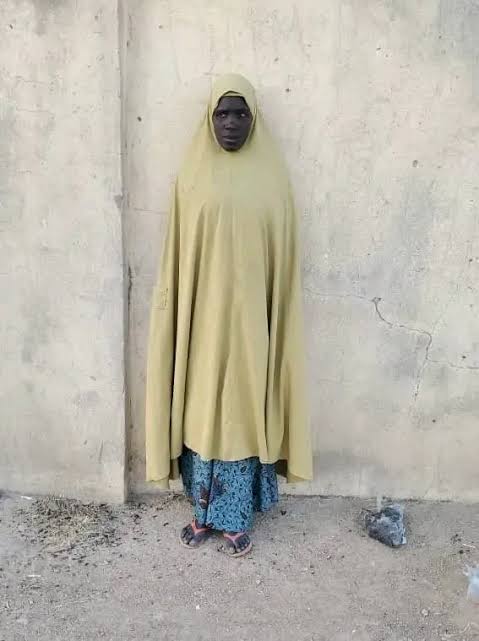
Female Family Member of ISWAP/JAS Terrorists Surrenders in Bama
By: Zagazola Makama
A female family member linked to suspected ISWAP terrorists has surrendered to troops operating in Bama Local Government Area of Borno State.
Sources disclosed that the woman surrendered at about 10:08 a.m. on May 19 to troops of the 81 Division Task Force Battalion operating within Sector 1 Area of Responsibility.
The female surrenderer reportedly came out from Gargash village in Bama LGA and voluntarily presented herself to the troops.
Military sources said she was subsequently profiled and documented in line with existing procedures for further necessary action.
The surrender is the latest in a series of defections involving insurgents and their family members in the North-East, following sustained military offensives and clearance operations targeting terrorist enclaves across the region.
Security sources said ongoing counterterrorism operations had continued to exert pressure on insurgent groups operating within the Lake Chad Basin and Sambisa forest areas, leading to increasing cases of surrender by fighters and their relatives.
The military has maintained that surrendered individuals are subjected to profiling, intelligence gathering and other procedures in accordance with extant operational guidelines.
Female Family Member of ISWAP/JAS Terrorists Surrenders in Bama
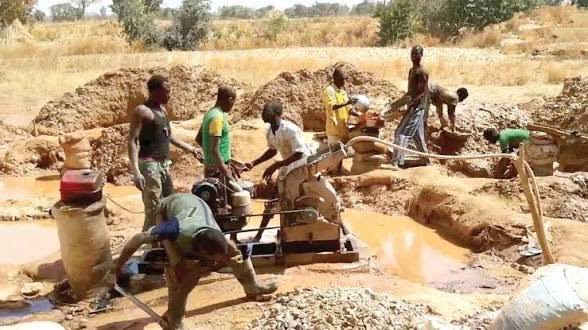
Troops Arrest 10 Illegal Miners in Abuja Raid
By: Zagazola Makama
Troops of 176 Guards Battalion have arrested 10 suspected illegal miners during a raid on an illegal mining site in Gwagwalada Area Council of the Federal Capital Territory (FCT).
Security sources said the operation was conducted at about 3:07 p.m. on May 20 as part of ongoing Operation MESA efforts aimed at curbing illegal mining and related criminal activities within the FCT and adjoining areas.
The troops reportedly stormed the illegal mining site following intelligence reports on the activities of suspected illegal miners operating in the area.
During the raid, the troops apprehended 10 suspects believed to be involved in illegal mining activities.
Items recovered from the site included one motorcycle, 15 mining mats, four head pans and several other mining implements used by the suspects.
The suspects are currently undergoing profiling and preliminary investigation for further necessary action.
Security sources said the operation formed part of intensified efforts by security agencies to clamp down on illegal mining activities, which authorities say contribute to environmental degradation, economic sabotage and insecurity in parts of the country.
The sources added that surveillance and enforcement operations would continue across identified illegal mining locations within the FCT and neighbouring states.
Troops Arrest 10 Illegal Miners in Abuja Raid

Hidden Wounds Across Borders: Thousands of Women in Nigeria, Somalia Suffer in Silence as Obstetric Fistula Crisis Deepens

AU’s Sudan Dilemma: Balancing Anti-Coup Norms with Diplomatic Pragmatism

SOJA Condemns Alleged Abduction of Teachers, Students in Oyo, Demands Urgent Rescue Efforts

Roger Federer’s Shock as DNA Results Reveal Myla and Charlene Are Not His Biological Children

THE PLIGHT OF FARIDA

FAILED COUP IN BURKINA FASO: HOW TRAORÉ NARROWLY ESCAPED ASSASSINATION PLOT AMID FOREIGN INTERFERENCE CLAIMS
-
 News2 years ago
Roger Federer’s Shock as DNA Results Reveal Myla and Charlene Are Not His Biological Children
-
Opinions4 years ago
THE PLIGHT OF FARIDA
-
 News1 year ago
FAILED COUP IN BURKINA FASO: HOW TRAORÉ NARROWLY ESCAPED ASSASSINATION PLOT AMID FOREIGN INTERFERENCE CLAIMS
-

 News2 years ago
EYN: Rev. Billi, Distortion of History, and The Living Tamarind Tree
-
 Opinions4 years ago
POLICE CHARGE ROOMS, A MINTING PRESS
-

 ACADEMICS2 years ago
A History of Biu” (2015) and The Lingering Bura-Pabir Question (1)
-

 Columns2 years ago
Army University Biu: There is certain interest, but certainly not from Borno.
-

 Opinions2 years ago
Tinubu,Shettima: The epidemic of economic, insecurity in Nigeria
