
International
Australia, France, Others Call for Abolition of Death Penalty

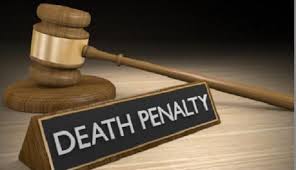
Australia, France, Others Call for Abolition of Death Penalty
By: Michael Mike
A call has gone for the erasure of death penalty from Nigeria’s law
Among those making the call include Australia, France and Avocats Sans Frontieres (ASF), among others.
The call was made at a ceremony commemorating the World Day Against Death Penalty, 2023 in Abuja on Tuesday.
The call came almost 24 hours after a High Court in Lagos sentenced to death by hanging a policeman, Drambi Vandi that killed a Lawyer, Raheem Bolanle in Lagos.
Speaking at the occasion, the Charge D’ affairs, Australia High Commission in Nigeria, Lean Johnston said Australia has abolished capital punishment since 1967, insisting that death penalty is violence against humanity.
She further described death penalty “state violence against its citizens. The death penalty diminishes human dignity. When you take the life of someone else, whether it’s done as a criminal act or whether the state does it, it diminishes human dignity.”
She added that: “There is a huge evidence that the retention of the death penalty does not act as a deterrent for any form of crime. And traditionally, people have said an eye for an eye does not end the cycle of violence. And so, this is not an effective deterrent. Moreover, there is always the chance that people can be rehabilitated and contribute to society.”
On her part, the French Envoy to Nigeria, Ambassador Emmanuelle Blatmann in her speech also condemned death penalty in all ramifications, She said there is nothing good in the practice.
She noted that shedding a fellow human blood cannot correct the crime been committed in any society. France considered the death penalty unfair and inhuman, adding that it was also irreparable.
Blatmann said: “I can’t speak for Nigeria, but I can speak for France. France considers the death penalty as something unfair, inhuman, and irreparable. Unfortunately, we all know that in the legal system throughout the world, miscarriages of justice can happen. So, we consider this as a fundamental human rights issue. And since this day was established 20 years ago, we call for the states who have not abolished the death penalty to adopt moratoriums so that this capital punishment is not used anymore.
“This is because by shedding the blood of another human being, we cannot repair whatever crime has been committed. Today, we have heard about a man who was innocent but spent nine years and a half in prison for a crime he hadn’t committed. That is why we lobby worldwide and at all international fora that we consider the death penalty a violation of human rights.”
In the same vein, the Country Director, ASF France Nigeria, Avocats Sans Frontières France (Lawyers without Borders), Angela Uzoma-Iwuchukwu strongly opposes the death penalty under all circumstances without exception. The death penalty should be completely abolished from all justice systems as it flagrantly violates the the fundamental right to life.
She said: “Nigeria, just like all other countries in the world, is being reminded of the need to review its laws concerning the death penalty. And this is because the death penalty simply doesn’t work. It doesn’t deter crimes. It is an absolute form of punishment that is cruel, inhuman and degrading. And we believe that there are alternatives to this sort of punishment that can be used in the country.
“This is an opportunity that we’re calling on the Nigerian government to reflect on his use of the death penalty and consider putting in place an official moratorium on executions while they work towards the abolition of the death penalty. We know that there is a growing trend for abolition in the African continent.
“We have seen other countries in Africa who have done away with this with Ghana being the latest country in Africa that has abolished the death penalty from its laws. We’re calling on the Nigerian government to also follow suit and at least as a first step to address issues around the mandatory nature of the death penalty is lost.
“Death penalty should have no place in our justice system. It is against the very principle of reformative and restorative justice. No state should have the power to take someone’s life.”
Australia, France, Others Call for Abolition of Death Penalty


China’s $2.3bn Nigerian Buy-Up: Beijing Opens Bigger Market for Abuja
By: Michael Mike
Nigeria may be on the verge of a major shift in its trade relationship with China as the Asian economic giant imported almost $2.3 billion worth of Nigerian goods in just six months, marking an almost 80 per cent increase over the same period in 2025.
The sharp rise, disclosed by the Chargé d’Affaires of the Chinese Embassy in Nigeria, Zhou Hongyou,on Thursday in Abuja, comes as total trade between both countries surged by 75 per cent year-on-year to $18 billion.

The figures are significant for Nigeria, which has long struggled to translate its enormous agricultural, mineral and manufacturing potential into sustained export earnings.
Zhou, speaking at the Nigeria-China Food Festival at the China Cultural Centre, said Beijing’s zero-tariff policy for African countries with diplomatic relations with China presented Nigeria with an opportunity to dramatically expand its exports to the Chinese market.
“This is a great chance for Nigeria to expand exports to China,” the diplomat declared.
The statement effectively puts the spotlight on Nigeria’s ability to exploit preferential access to one of the world’s biggest consumer markets at a time when the Federal Government is under pressure to increase non-oil exports, generate foreign exchange and create jobs through expanded domestic production.
The nearly $2.3 billion already purchased by China from Nigeria in the first half of the year suggests that demand exists. The bigger question, however, is whether Nigerian producers can scale up production, meet international standards and consistently supply the Chinese market.
The latest development also gives fresh significance to efforts to diversify Nigeria’s trade beyond crude oil.
For decades, Nigeria’s export earnings have been heavily dependent on petroleum, while China has emerged as one of Nigeria’s most important trading partners. The latest figures indicate that the relationship is expanding beyond the traditional pattern of trade and could provide a platform for Nigerian agricultural products, processed foods, solid minerals and manufactured goods to gain wider access to China.
Zhou said the growing economic relationship was being matched by increasing cultural and people-to-people exchanges, noting that 2026 marks 55 years of formal diplomatic relations between Nigeria and China.
He urged both countries to deepen cooperation in education, culture, technology, the arts and youth affairs, arguing that stronger people-to-people ties would help sustain the bilateral relationship for future generations.
The Chinese envoy’s remarks came against the backdrop of the Nigeria-China Food Festival, where food was used to demonstrate the potential of cultural exchange and the economic value of Nigeria’s culinary heritage.
Representing the Minister of Arts, Culture, Tourism and the Creative Economy, Hannatu Musawa, the Permanent Secretary, Abdulkarim Ibrahim, said Nigeria’s food industry represented a major economic opportunity, particularly through tourism, hospitality and job creation.
He said food and beverages constituted the largest subsector of Nigeria’s tourism economy and called for greater Nigeria-China collaboration in gastronomy, tourism, hospitality, culinary education and creative entrepreneurship.
The Director-General of the National Institute for Hospitality and Tourism, Aare Abisoye Fagade, said Nigeria’s diverse culinary traditions could be transformed into a globally competitive food-tourism industry if properly packaged, standardised and commercialised.
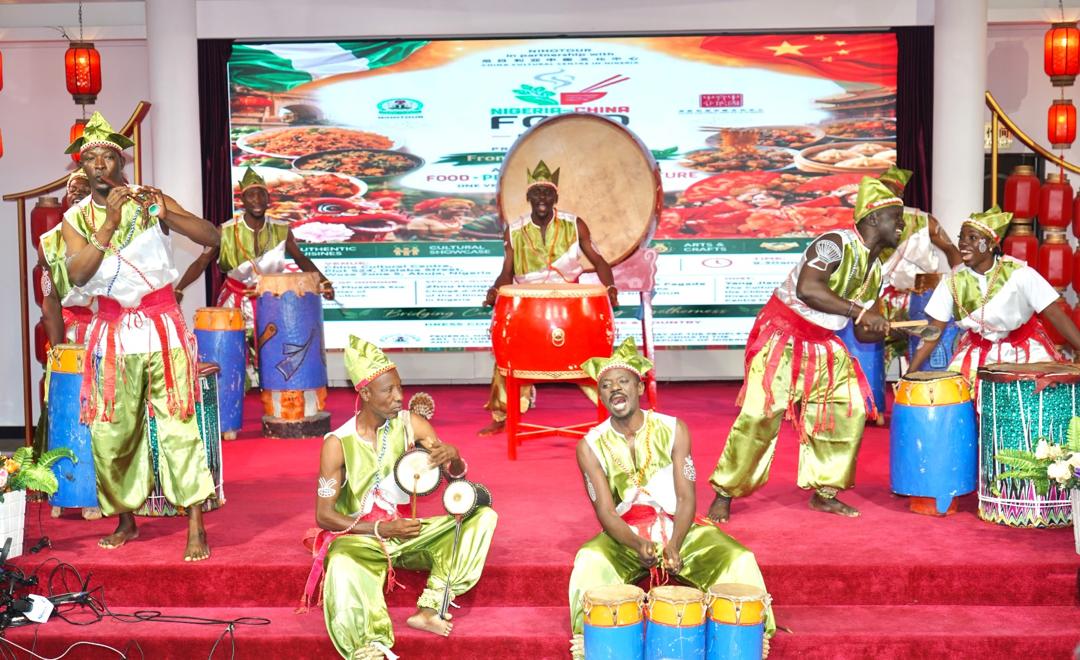
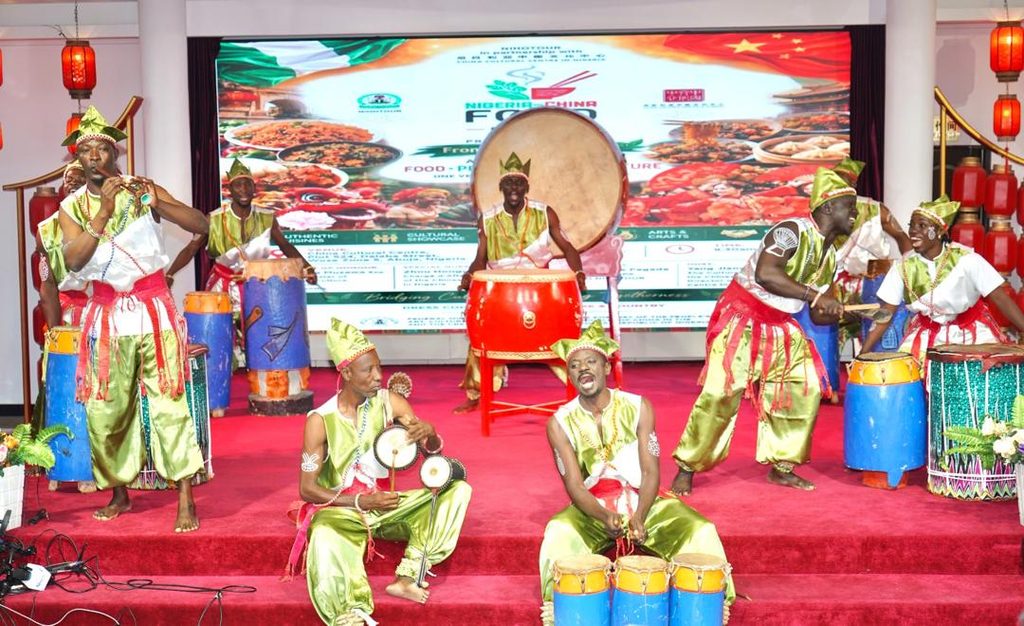
The event also demonstrated the potential of cultural diplomacy, with Nigerian and Chinese artistes combining traditional Nigerian drums with Chinese percussion instruments.
The National Troupe of Nigeria’s Director-General and Artistic Director/CEO, Hajia Kaltume Bulama Gana, said such collaborations could deepen mutual understanding and open opportunities for Nigerian artistes to perform in China.
Former NIHOTOUR Director-General, Alhaji Munzali Dantata, who studied in Beijing decades ago, also urged stronger cooperation, particularly in education and cultural exchanges.
But beyond the colourful displays of food, music and culture, yesterday’s event highlighted a far bigger economic proposition: Nigeria now has an expanding Chinese market, and the scale of future gains will depend largely on what the country can produce and export.
With Chinese imports from Nigeria already approaching $2.3 billion in six months and bilateral trade reaching $18 billion, the emerging challenge for Abuja is to ensure that the growth translates into more Nigerian-made products, stronger local industries, foreign-exchange earnings and jobs rather than merely higher volumes of trade.
For Nigeria, the opportunity presented by Beijing’s zero-tariff policy could therefore become a test of whether the country can finally convert its vast productive capacity into sustained export power.
China’s $2.3bn Nigerian Buy-Up: Beijing Opens Bigger Market for Abuja
Venezuela Solidarity Group Urges U.S. to Lift Sanctions After Deadly Earthquakes
By: Michael Mike
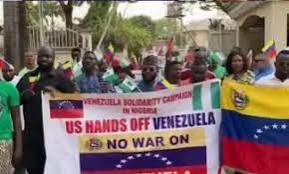
The Venezuela Solidarity Campaign in Nigeria (VSCN) has called for the immediate and unconditional lifting of United States sanctions on Venezuela, arguing that the restrictions are hampering humanitarian relief and reconstruction efforts following devastating twin earthquakes that reportedly killed more than 2,000 people and displaced over 50,000 others.
In a statement issued on Sunday and signed by its coordinator, Comrade Dimeji Macaulay, the group expressed solidarity with the Venezuelan people and the Bolivarian Government, describing the earthquakes as a humanitarian tragedy that has left widespread destruction of homes, hospitals, schools, roads and other critical infrastructure.
The organisation extended condolences to families of the victims and praised what it described as the resilience of the Venezuelan people in confronting the disaster despite years of economic hardship.
According to the VSCN, the U.S. sanctions have weakened Venezuela’s capacity to respond effectively to the emergency by limiting access to financial resources and restricting the importation of medicines, equipment, technology and other essential materials.
The group maintained that maintaining the sanctions during a humanitarian crisis amounts to collective punishment against ordinary citizens and called for their permanent removal to facilitate relief operations and long-term reconstruction.
“There can be no moral or legal justification for maintaining an economic blockade against a country struggling to save lives and rebuild after a devastating natural disaster,” the statement said, adding that every day the sanctions remain in force prolongs the suffering of the Venezuelan people.
The campaign also urged the Federal Government of Nigeria to publicly support the removal of the sanctions, strengthen diplomatic relations with Venezuela and contribute to international humanitarian efforts for victims of the disaster.
It further appealed to the African Union to reject unilateral coercive measures, describing them as violations of international law, while calling on African countries to support Venezuela’s recovery.
The group equally called on the United Nations to intensify humanitarian assistance and ensure that sanctions do not obstruct emergency relief operations or reconstruction programmes.
Beyond governments and international organisations, the VSCN appealed to trade unions, youth organisations, civil society groups and progressive political movements across Africa and the wider international community to demonstrate solidarity with Venezuela by opposing what it described as economic warfare and supporting the country’s right to determine its future without external interference.
Reaffirming its commitment to the Venezuelan cause, the organisation said it would continue campaigning until the sanctions are lifted, insisting that Venezuela’s recovery should not be hindered by external political considerations
Venezuela Solidarity Group Urges U.S. to Lift Sanctions After Deadly Earthquakes
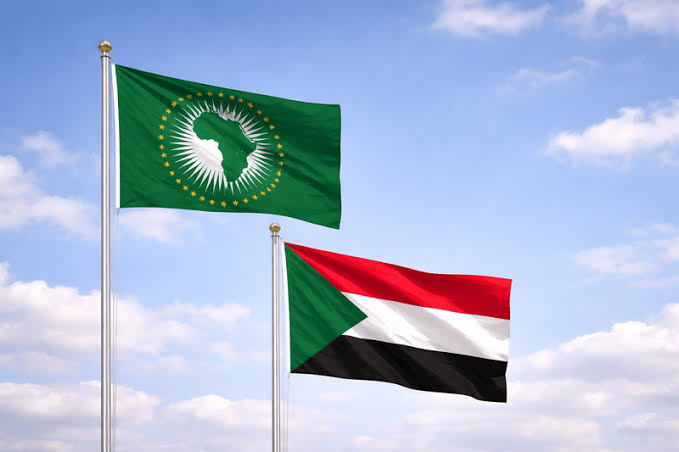
Navigating The Deadlock: AU’s Strategic Options for Sudan’s Reinstatement
By: Dr Sami Abdelhalim Saeed
Following the military coup in Sudan on October 25th, 2021, led by General Abdel Fattah al-Burhan, the Commander-in-Chief of the Sudan Armed Forces (SAF), who dissolved the transitional government and declared a state of emergency, the African Union (AU) suspended Sudan’s membership on October 27, 2021.
As of February 2026, the AU Peace and Security Council (PSC) has reaffirmed that the suspension remains in effect until a democratic transitional government is restored in the country. The AU faces a critical challenge as it seeks to balance its policy of “Zero Tolerance” against Unconstitutional Changes of Government with the urgent and pressing needs of the continent’s peace and security.
As AU-PSC considers a spectrum of diplomatic strategies, from strict compliance to constitutional frameworks and pragmatic, incremental normalisation with the de facto government, the status of Sudan’s membership is a pivotal test of the AU’s capacity to uphold its core principles amid a profound internal armed conflict and humanitarian crisis.
Given the importance of peace and the maintenance of constitutionalism in Sudan, this article offers alternatives for policymakers at the national and AU levels. It draws on the case of Sudan to inform policy reforms, with a focus on political pragmatism.
Principles vs. Pragmatism Maintaining Sudan’s suspension upholds the AU’s principles but limits its capacity for effective peacebuilding.
This isolation creates a strategic dilemma, as the AU-PSC loses influence on other mediation efforts and lacks sufficient on-the-ground monitoring. Similar challenges have occurred in Mali, where the AU’s focus on constitutionalism has conflicted with broader peace and security goals. By excluding Sudan’s de facto authorities, the AU cannot facilitate inclusive dialogue or coordinate regional security efforts, thereby prioritising constitutional principles over practical mediation.
The worsening humanitarian crisis in Sudan is increasing instability across the already fragile sub-Saharan region. The African Union’s peacebuilding strategy for Sudan remains unclear. Although the AU has engaged diplomatically with the de facto government, these efforts have not eased the ongoing humanitarian emergency.
AU’s Options to Restore Sudan’s Membership
The AU has several distinct options for navigating the restoration of Sudan’s membership while balancing legal mandates with regional stability.
First, the AU’s PSC upholds the principles of the USG, ACDEG, and the Lomé Declaration, applies a step-by-step approach to diplomacy, and limits Sudan’s membership to technical committees. To restore its membership in the AU, Sudan must adhere to the AU’s “Zero Tolerance” policy for Unconstitutional Changes of Government (UCG).
In fact, this is the current situation as the Council applied this option at its February 2026 meeting. The AU demands an immediate and permanent ceasefire between the SAF and RSF, followed by an inclusive, Sudanese-led national dialogue to establish a civilian transitional authority.
This approach rejects legitimising the 2021 military coup and recognises the current government in Port Sudan as a de facto authority, aligning with the United Nations’ stance.
The AU’s PSC strongly condemned the role of the national military in the ongoing human rights violations and confirmed that Sudan’s suspension will remain in place until a democratic transitional authority is restored in the country. Although Sudan’s Prime Minister Kamil Idris proposed a ceasefire monitored by the UN, the AU, and the Arab League, the AU rejected the proposal because it did not include a process to establish a civilian-led government.
Second, the AU might establish formal procedures to legitimise Sudan’s current military leadership. In such an attempt, the organisation might consider a strategy similar to its reinstatement of Egypt’s membership in June 2014, following the 2013 military coup against President Mohamed Mursi.
In Egypt’s case, the suspension was lifted after a transitional roadmap, including a new constitution and scheduled elections, which were deemed sufficient to restore constitutional order. This precedent may help Sudan persuade the AU to restore its membership. However, criticised the AU’s decision regarding Egypt as overly lenient and primarily focused on maintaining stability for a major member state.
The AU may find this approach preferable, as it upholds constitutional standards in Africa while addressing peacebuilding and security. However, the situation in Sudan remains a major security challenge in the Horn of Africa, sub-Saharan Africa and Central Africa.
The African Union’s decision to readmit Egypt in 2014 was widely criticised, with some arguing that it prioritised political interests over democratic development. Additionally, this option to legalise the current military leadership in Sudan faces legal obstacles, including Article 25(4) of ACDEG, which provides that coup perpetrators cannot participate in elections to restore constitutional order.
Third, the AU’s PSC may engage in international peace initiatives for Sudan, including those led by the United States or mandated by the United Nations Security Council, as exemplified by the United Nations-African Union Mission in Darfur (UNAMID) under United Nations Security Council Resolution (UNSCR) 1769 (2007). In these contexts, AU functions as a regional actor facilitating the implementation of peace processes.
This role may require adjustments to the AU’s legal framework to uphold international peace and security better. The AU may also condition its involvement in political settlements by employing a step-by-step strategy. This approach entails negotiating agreements in which military leaders commit to relinquishing power.
Such a strategy enables concurrent advancement toward both peace and democratic governance.
The AU continues to navigate a complex path between upholding its foundational anti-coup framework and the practical necessity of regional mediation. While the “step-by-step” strategy and informal consultations allow the AU to maintain a degree of diplomatic influence, the ongoing suspension of Sudan reflects a steadfast commitment to the principles of the Lomé Declaration and the ACDEG. Ultimately, the restoration of Sudan’s membership will likely depend on an inclusive transitional framework that addresses both peace and democracy, ensuring a verifiable return to constitutional, civilian-led governance as a prerequisite for full reinstatement.
As a Chatham House report indicates, Sudan under warlords is not only a humanitarian catastrophe and a high risk to the Horn of Africa and the Sub-Saharan region, but also a defining test for the AU and its obligation to uphold the principles of constitutional order and civilian protection. As violence escalates across the country, failure to act decisively risks furthering Sudan’s fragmentation. It would also be a damning indictment of the AU’s capacity to respond when African lives are in peril.
In conclusion, the AU stands at a critical juncture where the cost of inaction may soon outweigh the price of political settlement. The internal armed conflict in Sudan is no longer merely a civil war and a competition for power, but a fundamental challenge to the AU’s institutional identity and its “African solutions to African problems” notion. To break the current deadlock, the AU must move beyond the binary of strict suspension or unconditional recognition.
By adopting a pragmatic roadmap that treats humanitarian access and security coordination as an immediate priority while holding civilian-led governance as the non-negotiable finish line, the AU can reclaim its role as a decisive mediator. Sudan’s path back to the AU will be found only through an innovative approach and a reinvigorated policy that proves the continent’s leading organisation can maintain its constitutional principles while protecting the lives of Africans.
Dr Sami Abdelhalim Saeed is an African constitutional expert and rule-of-law scholar with over 15 years of experience advising United Nations missions on peacebuilding and legal reforms in post-conflict environments.
Navigating The Deadlock: AU’s Strategic Options for Sudan’s Reinstatement

Governor Buni speaks on the impact of climate change and urges people to plant trees

NESREA Seals Four Nasarawa Facilities Over Pollution, Regulatory Breaches

I’ve Delivered on Lawmaking, Representation, Oversight, Attracted Projects to Ethiope East — Akpowowo

Roger Federer’s Shock as DNA Results Reveal Myla and Charlene Are Not His Biological Children

THE PLIGHT OF FARIDA

FAILED COUP IN BURKINA FASO: HOW TRAORÉ NARROWLY ESCAPED ASSASSINATION PLOT AMID FOREIGN INTERFERENCE CLAIMS
-
 News2 years ago
Roger Federer’s Shock as DNA Results Reveal Myla and Charlene Are Not His Biological Children
-
Opinions5 years ago
THE PLIGHT OF FARIDA
-
 News1 year ago
FAILED COUP IN BURKINA FASO: HOW TRAORÉ NARROWLY ESCAPED ASSASSINATION PLOT AMID FOREIGN INTERFERENCE CLAIMS
-

 News2 years ago
EYN: Rev. Billi, Distortion of History, and The Living Tamarind Tree
-
 Opinions5 years ago
POLICE CHARGE ROOMS, A MINTING PRESS
-

 ACADEMICS3 years ago
A History of Biu” (2015) and The Lingering Bura-Pabir Question (1)
-

 Columns2 years ago
Army University Biu: There is certain interest, but certainly not from Borno.
-

 Politics1 year ago
2027: Why Hon. Midala Balami Must Go, as Youths in Hawul and Asikira/Uba Federal Constituency Reject ₦500,000 as Sallah Gift
