
National News
Civil Society Groups Slam Tinubu, National Assembly Over Budget Re-enactment, Demand Fiscal Transparency

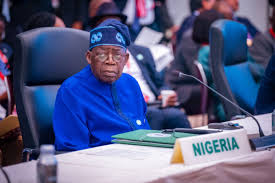
Civil Society Groups Slam Tinubu, National Assembly Over Budget Re-enactment, Demand Fiscal Transparency
By: Michael Mike
A coalition of Nigerian civil society organisations has accused President Bola Tinubu and the National Assembly of breaching constitutional and fiscal laws through the repeal and re-enactment of the 2024 and 2025 Appropriation Acts, warning that the actions undermine transparency and democratic accountability.
In a statement issued in Abuja, under the platform Nigerian Economy Civil Society Action, the groups described the development as a dangerous abuse of fiscal process, alleging that billions of naira were spent without prior legislative approval.
The organisations expressed outrage that eighteen days after the presentation of the federal executive budget, neither the Budget Office of the Federation nor the National Assembly had made the budget documents publicly available. They said the absence of published budget details prevented citizens from scrutinising government spending and participating meaningfully in the budgeting process.
According to the groups, the situation was worsened by the repeal and re-enactment of the 2024 and 2025 Appropriation Acts without public hearings or access to the revised documents. They argued that the move violated constitutional provisions which require legislative approval before any public funds are expended.
The coalition noted that the 2024 Appropriation Act, which originally expired at the end of December 2024, was controversially extended by the National Assembly to mid-2025 and later to December 2025. They alleged that despite the extensions, the executive failed to implement the budget as approved before seeking to repeal and re-enact it with an increased expenditure figure, raising the total budget size from ₦35.05 trillion to ₦43.56 trillion.
Describing the process as unprecedented, the groups argued that increasing a budget after its lifespan had ended had no basis in Nigerian law. They maintained that the spending of additional public funds without prior authorisation amounted to a constitutional violation, noting that Nigeria was not operating under a declared fiscal emergency at the time.
On the 2025 budget, the organisations faulted the decision to revise expenditure figures at the end of the fiscal year rather than through a mid-year review, which they said is the globally accepted practice. They rejected claims by the National Assembly that the repeal and re-enactment were intended to align Nigeria’s budgeting process with international best practices.
The groups cited provisions of the Constitution and the Fiscal Responsibility Act which mandate transparency, legislative oversight, and public disclosure of government financial decisions. They said the continued refusal to publish budget documents violated these laws and eroded public trust.
As part of their demands, the civil society organisations called on the National Assembly to halt all unappropriated spending, warning that such actions could constitute grounds for impeachment. They also demanded a firm commitment from the President to comply strictly with constitutional spending limits.
The coalition further urged the immediate publication of the 2026 budget estimates and the re-enacted 2024 and 2025 Appropriation Acts on official government platforms, alongside renewed guarantees of citizen participation in fiscal decision-making.
The statement was jointly signed by the Centre for Social Justice, Africa Network for Environment and Economic Justice, Civil Society Legislative Advocacy Centre, BudgIT, PRIMORG, PLSI and other advocacy groups.
Civil Society Groups Slam Tinubu, National Assembly Over Budget Re-enactment, Demand Fiscal Transparency



NHRC Demands Arrest, Prosecution of Kuje Chairman Over ‘Leave If Not APC’ Threat
By: Michael Mike
The National Human Rights Commission (NHRC) has demanded the immediate arrest and prosecution of the Chairman of Kuje Area Council, Hon. Samuel Danjuma Shekwolo, over his alleged directive that residents who do not support the All Progressives Congress (APC) should leave the council.
The Commission described the chairman’s remarks as an unconstitutional assault on citizens’ fundamental rights and a dangerous threat to democratic participation ahead of the 2027 general elections.
The NHRC Executive Secretary, Chief Tony Ojukwu, SAN, said the statement, which has circulated in a video online, amounted to intimidation and an attempt to weaponise public office against citizens holding political views different from those of the council chairman.
In a video that is now viral, Shekwolo is heard saying that residents must either support the APC or leave the area council, adding that he would not accept opposition to the party during the election.
Reacting to the development, Ojukwu said the position was incompatible with the 1999 Constitution, which guarantees citizens’ freedom of association, movement and protection from discrimination on the basis of political opinion.
He specifically cited Sections 40, 41 and 42 of the Constitution, which respectively protect the right to freedom of association, freedom of movement and freedom from discrimination.
According to him, no council chairman, governor or even the President has the constitutional power to banish Nigerians from their communities because of their political affiliation or opinions.
The NHRC chief human rights officer further argued that the alleged remarks could have criminal implications, citing provisions of the Electoral Act 2022, the Penal Code and the Cybercrimes Act dealing with threats, intimidation, incitement and communications capable of causing public disorder.
He warned that political rhetoric that creates an “us versus them” environment could escalate into violence, particularly as the country approaches another highly contested election cycle.
“History has shown that such rhetoric often begins with words and ends in blood, and the NHRC will therefore not wait for it to escalate,” Ojukwu said.
The Commission also rejected any suggestion that federal or FCT government projects should be used as instruments for securing political loyalty.
Ojukwu maintained that Shekwolo, having sworn an oath of office, was bound to serve every resident of Kuje without discrimination, regardless of political affiliation.
The NHRC consequently called on the Nigeria Police Force to immediately arrest and prosecute the council chairman.
It also urged the Department of State Services (DSS), the police and the Independent National Electoral Commission (INEC) to investigate the matter and introduce measures to protect Kuje residents from harassment, political profiling, intimidation or possible disenfranchisement ahead of the 2027 elections.
The Commission further called on the APC leadership and the FCT Administration to publicly dissociate themselves from the alleged statement and affirm that membership or support for any political party cannot be a condition for residing in Kuje or accessing public services.
The NHRC assured residents of Kuje that their constitutional rights remain protected and stressed that Nigerians are free to belong to any political party of their choice without fear of expulsion, discrimination or denial of public services.
It urged anyone facing threats or intimidation in connection with the controversy to contact the Commission through its toll-free line, 6472, or visit its nearest FCT office.
The controversy comes at a politically sensitive period as parties and political actors intensify mobilisation ahead of the 2027 general elections, raising fresh concerns over the use of public institutions and local government structures to exert political pressure on citizens.
NHRC Demands Arrest, Prosecution of Kuje Chairman Over ‘Leave If Not APC’ Threat
National News
Jungle Justice Is Murder, Not Justice — IGP Disu Orders Nationwide Crackdown on Mob Killings

Jungle Justice Is Murder, Not Justice — IGP Disu Orders Nationwide Crackdown on Mob Killings
By Zagazola Makama
The Inspector-General of Police, IGP Olatunji Rilwan Disu, has declared a firm war against jungle justice and mob action across Nigeria, directing Commissioners of Police in the 36 states and the Federal Capital Territory to treat every case of mob violence as homicide and investigate such incidents with the same seriousness accorded other killings.
Disu, in a strong-worded public address, on Sunday said no Nigerian, community, vigilante group or association had the legal authority to arrest, try, convict or execute another person on the basis of suspicion, accusation, rumour or social media evidence.
The IGP’s declaration comes amid renewed public concern over cases in which suspected criminals are subjected to beatings, burning, stabbing and other forms of extrajudicial punishment before security agencies can intervene.
He said the Police Force would no longer regard such incidents as mere community disputes or spontaneous public reactions, but as serious criminal offences requiring full investigation and prosecution.
“Jungle justice is murder. It is not justice. It is a crime, and the Nigeria Police Force will treat it as such,” Disu said.
The police chief stressed that Nigeria operates under the rule of law and not mob rule, warning that no citizen or group has the constitutional authority to determine the guilt of another person or impose punishment outside a competent court.
‘Nobody has the right to take another person’s life’
According to the IGP, Sections 33, 34 and 36 of the 1999 Constitution, as amended, guarantee fundamental rights including the right to life, dignity and fair hearing.
He said those rights remain applicable even when a person is suspected of committing a serious crime.
Disu argued that the growing practice of gathering around an alleged criminal, beating the person and sometimes killing him or her before the police arrive represents a direct assault on the country’s justice system.
He said an accusation does not amount to proof of guilt. A person shouting “thief”, a viral video, a photograph circulated online or an allegation made by a member of the public, he maintained, cannot replace a police investigation or judicial determination.
“The law presumes everybody innocent until proven guilty in a court of law, not in the street, not by a mob, not by a phone video because you saw him in video,” he said.
The IGP cited the March 2025 killing of 16 travellers in Uromi, Edo State, as a painful reminder of the consequences of mob justice.
The victims, who were reportedly travelling from Rivers State towards Kano, were intercepted after local security personnel found locally made weapons in their vehicle. The situation escalated after they were suspected of being kidnappers, resulting in the mob attack that claimed 16 lives. Police subsequently arrested suspects in connection with the incident.
The incident generated nationwide outrage and renewed calls for stronger action against mob killings. Amnesty International also called for a transparent investigation into the Uromi killings, describing the incident as a brutal lynching.
The IGP said Nigeria had witnessed several disturbing cases in which individuals were killed over allegations that were either unverified or subsequently found to be mistaken.
He referenced cases involving students accused of stealing phones, travellers mistaken for criminals, and young people attacked over allegations of blasphemy or ritual activities.
Such cases, he said, demonstrate the deadly consequences of allowing rumours and accusations to substitute for evidence.
The warning is particularly significant in an era where videos and allegations can spread rapidly across social media platforms.
A short video clip can be shared thousands of times within minutes, while an accusation attached to it can quickly become accepted as fact before investigators establish what actually happened.
Disu made clear that the police investigation would not stop with the individual who physically killed the victim.
He directed police commands to identify and prosecute ringleaders, instigators and other participants whose actions contributed to the mob violence, where the evidence supports criminal liability.
The IGP said investigators would use video recordings, eyewitness accounts, community intelligence and forensic evidence to reconstruct incidents and identify those involved.
The implication is that the traditional excuse of “I did not touch him” may not necessarily shield a person whose conduct amounts to criminal participation. Those who plan, incite, encourage or facilitate mob action may face investigation for conspiracy or other offences, depending on the facts and applicable law.
In one of the strongest elements of his warning, the IGP also addressed people who record mob attacks on their phones.
He said filming incidents, circulating the videos, mobilising crowds or preventing security personnel from rescuing a suspect could attract criminal consequences where such conduct amounts to an offence.
The warning is significant because videos of mob killings have increasingly become part of the evidence available to investigators.
Rather than helping perpetrators escape, such recordings can potentially provide investigators with a trail of evidence showing who was present, who attacked the victim, who encouraged the crowd and who prevented intervention.
The IGP therefore warned Nigerians against assuming that remaining behind a camera automatically removes them from criminal responsibility.
Police officers who look away will also face consequences. Disu’s directive was not directed exclusively at civilians.
He also placed responsibility on police officers who fail to intervene when mob action is taking place.
The IGP warned that officers who stand by, look away or fail to take reasonable action to protect a suspect from a violent crowd could face disciplinary measures.
This aspect of the directive is particularly important because the responsibility to protect life remains central to policing. A suspect may eventually be convicted. A suspect may eventually be acquitted. But while the investigation and trial are ongoing, the state remains responsible for protecting that person’s life and dignity.
Disu therefore told officers that protecting life was not an optional responsibility attached to wearing the police uniform.
‘Take suspected criminals to the police’
The IGP appealed to Nigerians to redirect their anger and frustration through lawful channels.
He urged anyone who suspects another person of committing a crime to immediately alert the police or the nearest security agency rather than attempting to punish the suspect.
He also called on community leaders, religious leaders, market associations and other influential groups to use their platforms to discourage mob violence.
According to him, community vigilance should complement law enforcement, not replace it.
A responsible community member, he said, should help the police identify a suspected criminal, preserve evidence and provide information—not become judge, jury and executioner.
The IGP’s intervention comes at a time when public frustration over insecurity, criminality and delays in the justice system can easily translate into demands for immediate punishment.
In many communities, jungle justice is sometimes rationalised as a response to the belief that criminals will escape justice if handed over to the authorities. But the police chief rejected that logic.
He acknowledged the frustration created by crime and the slow pace of justice but maintained that the answer to institutional weakness is reform and stronger enforcement, not extrajudicial killing.
A society cannot simultaneously demand respect for the rule of law while allowing crowds to determine who deserves to live or die.
Disu’s declaration is strong, but its ultimate impact will depend on enforcement.
The police will have to demonstrate that cases of mob justice can be investigated with the same determination applied to other homicide cases.
Investigators will have to identify suspects from often chaotic scenes, preserve digital evidence, obtain witness statements, establish individual culpability and work with prosecutors to build cases capable of surviving judicial scrutiny.
There is also the question of police response.
Where officers arrive early enough to prevent a mob killing, their intervention can mean the difference between a criminal investigation and a homicide investigation. Where officers fail to act, the IGP’s promise of disciplinary action will therefore be closely watched.
Perhaps the most important message from the IGP is that criminal responsibility does not necessarily begin only when the fatal blow is delivered.
It can begin with the decision to mobilise the crowd. It can begin with incitement. It can involve preventing the police from taking custody of a suspect. It can involve encouraging the attackers.
And, depending on the evidence and the law applicable to the particular conduct, it can extend to other forms of participation in the offence. The police are therefore drawing a new line around mob violence:
If you suspect someone, report them.
If you have evidence, submit it. If the person is arrested, allow the law to take its course.
But if a crowd gathers and turns an accusation into a death sentence, the people involved should not expect the law to describe the killing as “community justice.” It will be investigated as a crime.
The central message of IGP Disu’s declaration is ultimately about the kind of country Nigeria wants to be. One system of justice cannot operate in the courtroom while another operates on the street. The court must remain the place where guilt is established.
The police must remain the institution responsible for investigating crime. Citizens must remain witnesses, complainants and partners in crime prevention not executioners.
And communities must understand that protecting themselves from criminals does not require them to become criminals themselves.
The Uromi killings demonstrated the catastrophic consequences of allowing suspicion to become collective punishment. The IGP’s latest directive is an attempt to ensure that such incidents are neither normalised nor dismissed as spontaneous expressions of public anger.
The message from the police chief is therefore unequivocal: Jungle justice is not justice.
Mob action is not a court. A viral video is not a conviction. An accusation is not a death sentence.
And where a mob takes a person’s life, the police will treat the incident not as justice served, but as a crime to be investigated and prosecuted.
Jungle Justice Is Murder, Not Justice — IGP Disu Orders Nationwide Crackdown on Mob Killings

NHRC Boss Honoured for Victim-Centred Human Rights Push
…UTA rewards Ojukwu for compensation, restorative justice, empowerment of rights-abuse victims
By: Michael Mike
The Executive Secretary of the National Human Rights Commission (NHRC), Chief Tony Ojukwu, has been honoured with the 2026 UTA International Humanitarian Award for championing a victim-centred approach to human rights protection, including compensation, economic empowerment and restorative justice for victims of violations.
The United Towns Agency for North-South Cooperation (UTA), Nigeria Chapter, presented the award to Ojukwu in Abuja on Thursday as part of activities marking World Humanitarian Day 2026.
The recognition, according to UTA, was in acknowledgement of Ojukwu’s sustained efforts to promote human dignity, expand access to justice and protect vulnerable and marginalised Nigerians.
Rather than limiting the response to documenting violations, the interventions highlighted by UTA focused on helping victims recover and rebuild their lives through economic empowerment, compensation and restorative support.
The initiatives also include transitional and restorative justice programmes in the North-East and efforts to improve access to justice for poor and marginalised persons.
The recognition comes against the backdrop of Nigeria’s continuing humanitarian and human rights challenges arising from conflict, displacement, poverty and other forms of vulnerability.
Under Ojukwu’s leadership, the NHRC has increasingly positioned victims at the centre of its interventions, pursuing not only accountability for violations but also remedies, restoration and practical support for affected persons.
Receiving the award, Ojukwu described it as both an honour and a fresh call to humanitarian service.
“As a humanitarian myself, this award has stimulated me to do more,” he said.
He stressed the importance of placing victims, dignity and justice at the heart of human rights protection, particularly in a country facing complex humanitarian challenges.
UTA described the NHRC chief’s interventions as contributing to the advancement of human dignity and the protection of vulnerable populations.
The organisation is a United Nations-affiliated non-governmental organisation with consultative status with the United Nations Economic and Social Council (ECOSOC).
The award ceremony attracted government officials, diplomats, humanitarian actors and other stakeholders.
The Vice President, Senator Kashim Shettima, was represented by the Director-General of the National Emergency Management Agency (NEMA), Hajiya Zubaida Abubakar Umar.
Also present were representatives of the Zamfara State Governor; the Comptroller-General of the Nigeria Customs Service, Adewale Adeniyi; the Minister of Humanitarian Affairs and Poverty Alleviation, Bernard Doro; members of the diplomatic corps; UTA International Global Secretary-General, Dr. (Amb.) Eya Essif; and UTA-Nigeria Country President, Amb. Princess Abigail Amalaha.
The honour effectively places renewed attention on the humanitarian dimension of human rights protection in Nigeria, particularly the need to move from responding to violations to ensuring that victims receive justice, restitution and the means to regain sustainable livelihoods.
NHRC Boss Honoured for Victim-Centred Human Rights Push

I’ve Delivered on Lawmaking, Representation, Oversight, Attracted Projects to Ethiope East — Akpowowo

Troops neutralise terrorists, recover weapons, motorcycles in Sokoto
Inform EFCC, Police If You Have Proof I Stole Government Funds, Akpowowo Tells Critics

Roger Federer’s Shock as DNA Results Reveal Myla and Charlene Are Not His Biological Children

THE PLIGHT OF FARIDA

FAILED COUP IN BURKINA FASO: HOW TRAORÉ NARROWLY ESCAPED ASSASSINATION PLOT AMID FOREIGN INTERFERENCE CLAIMS
-
 News2 years ago
Roger Federer’s Shock as DNA Results Reveal Myla and Charlene Are Not His Biological Children
-
Opinions5 years ago
THE PLIGHT OF FARIDA
-
 News1 year ago
FAILED COUP IN BURKINA FASO: HOW TRAORÉ NARROWLY ESCAPED ASSASSINATION PLOT AMID FOREIGN INTERFERENCE CLAIMS
-

 News2 years ago
EYN: Rev. Billi, Distortion of History, and The Living Tamarind Tree
-
 Opinions5 years ago
POLICE CHARGE ROOMS, A MINTING PRESS
-

 ACADEMICS3 years ago
A History of Biu” (2015) and The Lingering Bura-Pabir Question (1)
-

 Columns2 years ago
Army University Biu: There is certain interest, but certainly not from Borno.
-

 Politics1 year ago
2027: Why Hon. Midala Balami Must Go, as Youths in Hawul and Asikira/Uba Federal Constituency Reject ₦500,000 as Sallah Gift
