
News
Bandits in veils attack Tudun-Fulani community, shoot woman in failed abduction attempt


Bandits in veils attack Tudun-Fulani community, shoot woman in failed abduction attempt
By: Zagazola Makama
A group of armed bandits and insurgents, disguised in veils, attacked Tudun-Fulani village near Bangi in Niger State, shooting and injuring a woman during an attempted abduction, the police said on Monday.
Zagazola report that the incident occurred on Nov. 29 at about 10 p.m. when about six armed men stormed the community and targeted one Hadiza Alh. Mande, who attempted to flee for safety. The attackers shot her as she tried to escape.
A combined team of policemen and vigilantes was immediately mobilised to the scene. The victim was rushed to the General Hospital, Bangi, where she is responding to treatment.
The attackers fled before the arrival of security personnel. The police said frantic efforts are ongoing to track down the suspects and bring them to justice.
The authorities urged residents to remain vigilant and promptly report suspicious movements to security agencies to support ongoing counter-banditry operations in the area.
Bandits in veils attack Tudun-Fulani community, shoot woman in failed abduction attempt


Police Foil IED Attack, Destroy Explosive Device in Zamfara
By: Zagazola Makama
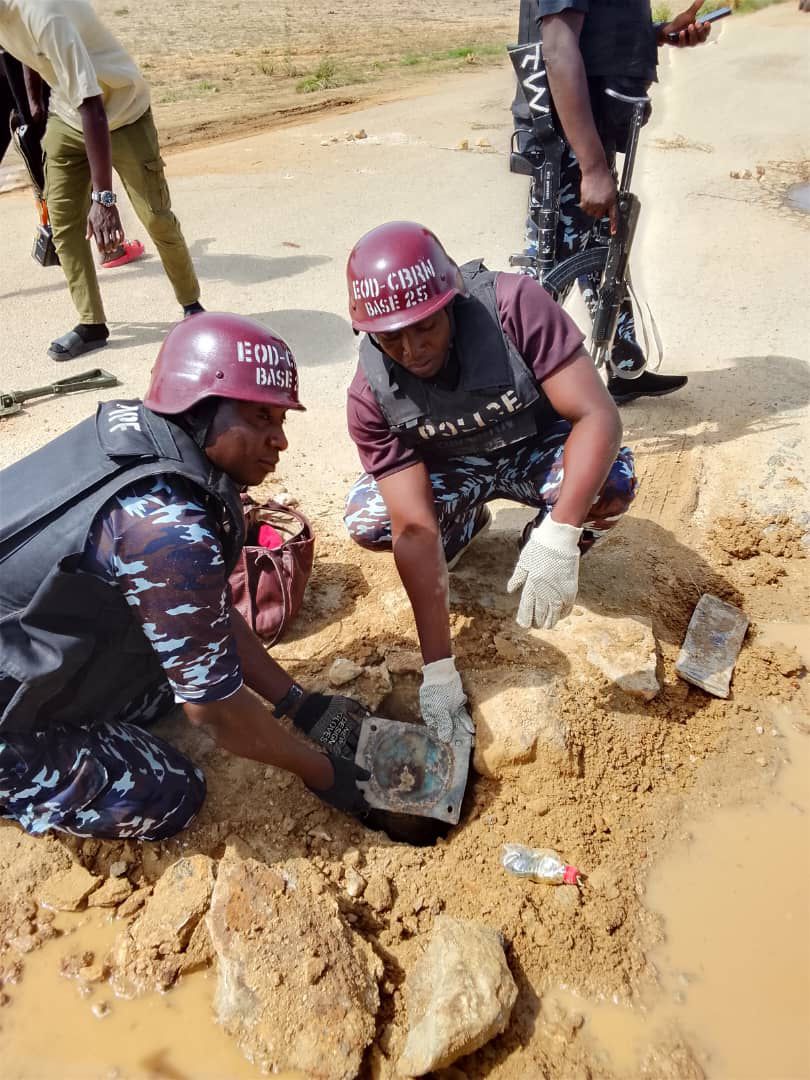
The Zamfara State Police Command says it has successfully foiled a planned attack after its Explosive Ordnance Disposal (EOD) unit discovered and safely destroyed an Improvised Explosive Device (IED) in Tsafe Local Government Area of the state.
The Command said the operation was carried out on Friday at about 4:15 p.m. along the Kunchin Kalgo axis following credible intelligence received through community engagement efforts.
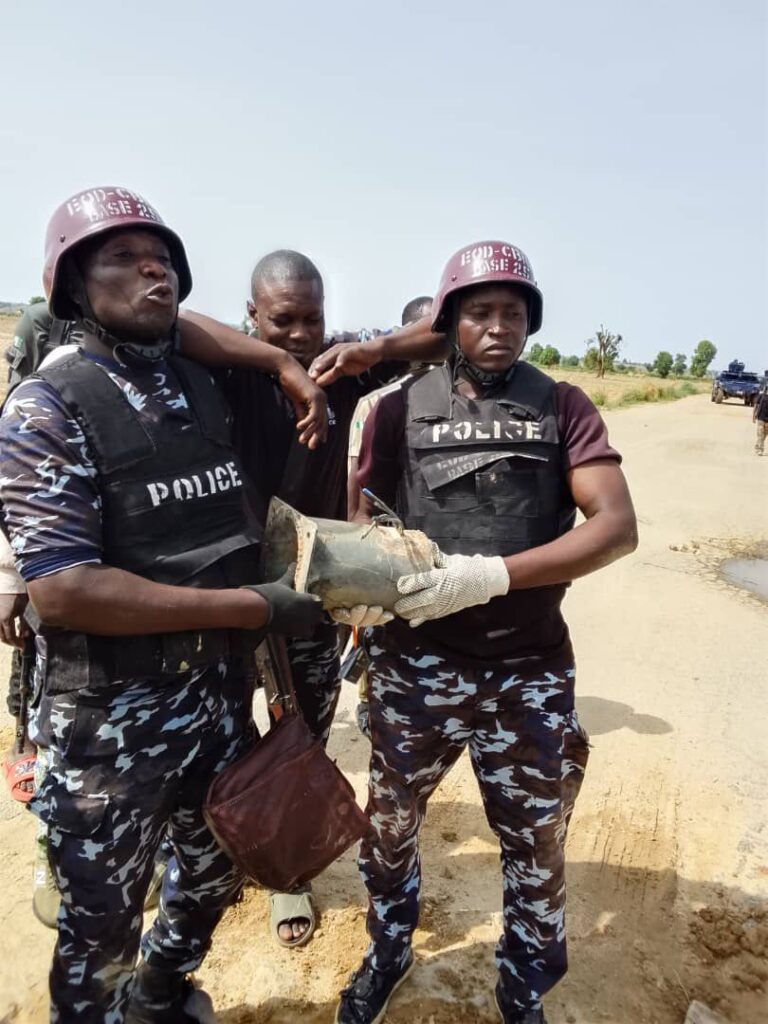
According to a statement issued by the Command, operatives of the Violence Crime Response Unit (VCRU), in collaboration with the EOD team, swiftly mobilised to the area after receiving information about a suspected explosive device planted by bandits.
Preliminary findings indicated that the device was strategically planted along the road with the intent of causing mass casualties among commuters and other road users.
The statement added that the timely response of the operatives led to the safe detection, evacuation and controlled destruction of the explosive device before it could cause any harm.
The Command commended the vigilance and cooperation of local residents, describing community support as critical to ongoing security operations in the state.
It further assured residents that efforts were ongoing to identify, arrest and prosecute those responsible for planting the device.
The police also disclosed that patrols had been intensified across vulnerable areas to prevent similar incidents and ensure the safety of road users.
The Commissioner of Police, A.M. Bello, reiterated the Command’s commitment to sustained operations against banditry and other violent crimes in Zamfara State.
Police Foil IED Attack, Destroy Explosive Device in Zamfara
Russia’s Role in the Widening Insecurity in Africa
By Ipole Amajama
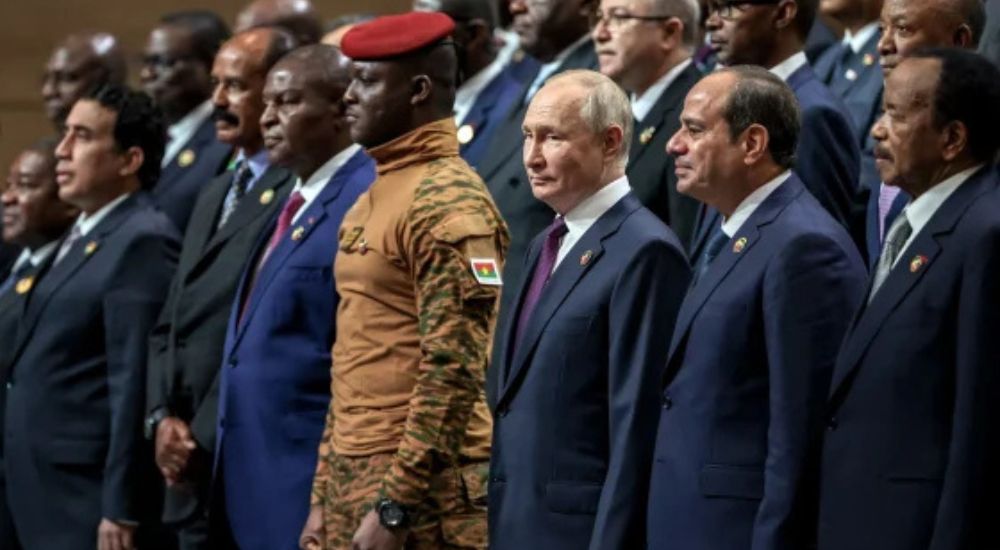
The African continent is once again at the centre of a geopolitical storm. From the Sahel to Nigeria, insecurity is spreading at an alarming speed, threatening fragile states and destabilising entire regions. While local dynamics and systemic weaknesses play a role, Russia’s involvement raises troubling questions about its motives and the consequences for Africa and beyond.
Nigeria faces a growing terrorist threat that is no longer confined to its borders. The collapse of governance in several states of the Alliance of Sahelian Juntas (AES) has created fertile ground for extremist groups. These failed states have become incubators of insecurity, exporting violence into neighbouring countries. The challenge is no longer whether to support or oppose the junta, but how to deal with their failures and the regional consequences of their isolation.
Russia’s actions in Africa reveal a clear pattern: its primary aim is not to stabilise the continent but to create a secondary frontline against the West. By fostering instability in Africa, Moscow seeks to divert European attention and resources away from Ukraine. The Kremlin’s involvement is less about partnership and more about exploiting chaos for strategic advantage.
This raises a critical question: is Russia simply incapable of offering meaningful support, or is it deliberately spreading insecurity? The evidence suggests that Moscow benefits from turmoil in Africa, whether by design or by opportunism.
Whatever happens in Africa has little direct impact on Russia. The continent is geographically distant, and Russia’s economic ties with African nations are minimal. In fact, Africa’s collapse could even benefit Moscow. African oil, gas, and mineral exports compete with Russia’s own. If insecurity disrupts African production, global prices rise—strengthening Russia’s export revenues.
Europe, however, bears the brunt of Africa’s instability. Migratory pressure from conflict zones is already reshaping European politics. Far-right parties, often sympathetic to Russia, are gaining ground in countries like France and the UK. By exacerbating insecurity in Africa, Moscow indirectly fuels migration flows that influence European voters. This strategy weakens European unity and undermines support for Ukraine.
From a Russian perspective, encouraging instability in Africa is a shrewd way to manipulate European politics. The more Africans flee insecurity and attempt to reach Europe, the greater the strain on European societies. This pressure amplifies populist narratives, strengthens far-right movements, and erodes mainstream political consensus. Since many far-right parties are pro-Russia, the Kremlin gains strategic leverage by destabilising Africa.
Russia’s record in the Sahel is damning. It has done nothing to fight terrorism. Instead, it has encouraged juntas to isolate themselves from the international community, sever ties with African neighbours, and expel Western intelligence and military support. In exchange, the Sahel states received nothing of substance. Russian involvement has failed to improve security, governance, or economic conditions. On the contrary, the situation has worsened.
It is difficult to determine whether Russia is acting with malicious intent or simply behaving irresponsibly. Either way, the outcome is the same: worsening insecurity. Moscow’s promises of support have proven empty. Its presence has deepened instability, leaving African populations more vulnerable than before.
The hypothesis of a cynical will to facilitate insecurity cannot be dismissed. Russia appears to be the only clear winner of Africa’s suffering. By exploiting chaos, Moscow strengthens its geopolitical position, increases its export revenues, and undermines European resolve.
The lesson is stark: Africa must never again rely on a self-proclaimed outside “saviour.” Russia’s involvement has shown that external powers may prioritise their own interests over African stability. The continent must instead build resilience through self-reliance and multilateral cooperation.
African nations should pursue balanced partnerships that preserve freedom of action. By engaging with multiple partners—regional organisations, international institutions, and diverse allies—Africa can avoid dependency and secure more effective support. Only through collective action can African states confront terrorism, strengthen governance, and protect their sovereignty.
Russia’s role in Africa is not about solidarity or development. It is about exploiting insecurity to advance its global strategy. By destabilising Africa, Moscow weakens Europe, strengthens far-right allies, and boosts its own economic position. Whether through negligence or deliberate manipulation, Russia has worsened Africa’s plight.
The challenge for Africa is to recognise this reality and chart a new path. The continent must rely on itself, build multilateral frameworks, and reject the false promises of external saviours. Only then can Africa safeguard its future and prevent its suffering from being weaponised to serve foreign ambitions.
Amajama, a social commentator, writes from Abuja and can be reached via amajamaip@gmail.com
Russia’s Role in the Widening Insecurity in Africa
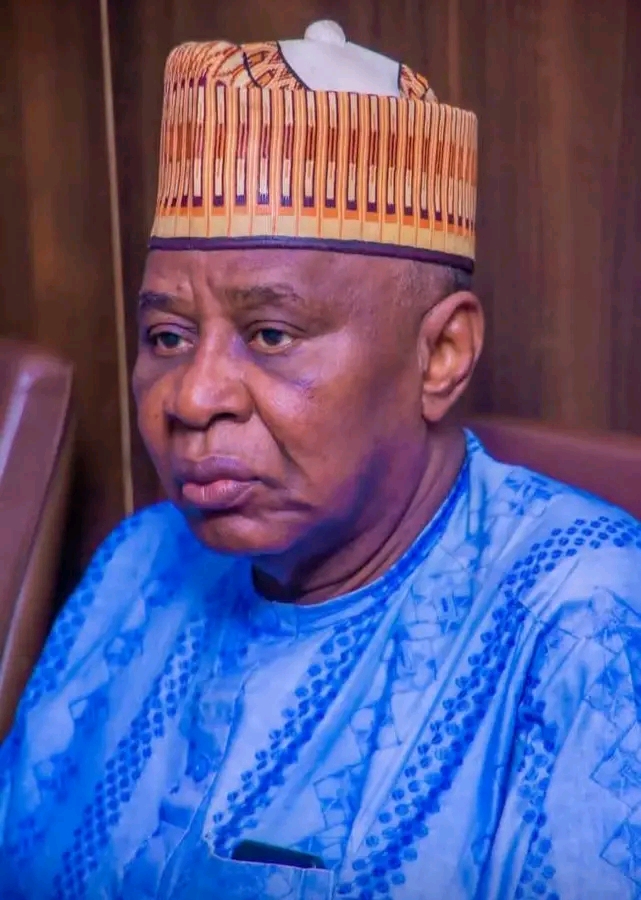
Buni approved the appointment of Yerima as the new emir of Ngazargamu.
By: Yahaya Wakili
Governor Mai Mala Buni CON, COMN of Yobe state has approved the appointment of Alhaji Yerima Ibn Mahmud as the new Emir of Ngazargamu.
This is contained in a statement signed and issued today, 12th June, 2026, by the acting secretary to the state government, Dr. Mohammed Goje, in Damaturu.
The appointment of the new emir of Ngazargamu followed the demise of the late emir, Alhaji Tijjani Ahmed Ibn-Saleh Geidam, who passed away recently in Cairo, Egypt, after a protracted illness.
Until his appointment, the new Mai Ngazargamu was the Turakin Ngazargamu, an office he held for 16 years. He was also a member of the State House of Assembly.
The new emir of Ngazargamu, Alhaji Yerima Ibn Mahmud, has at different times served as a member of the State Executive Council and the state commissioner for livestock development before the new appointment.
Governor Mai Mala Buni, while congratulating the new emir and the Ngazargamu emirate, urged the new emir to use his wealth of experience to unite the people, promote peace and peaceful coexistence, and foster economic growth of the emirate, Yobe State, and Nigeria as a whole.
Similarly, Governor Buni called on the people to support the new emir to execute the functions of his office diligently, effectively, and efficiently for the benefit of the people, peace, unity, and prosperity of the emirate.
Buni approved the appointment of Yerima as the new emir of Ngazargamu.

Police Foil IED Attack, Destroy Explosive Device in Zamfara

WHEN TERRORISTS MOCK THE STATE

Russia’s Role in the Widening Insecurity in Africa

Roger Federer’s Shock as DNA Results Reveal Myla and Charlene Are Not His Biological Children

THE PLIGHT OF FARIDA

FAILED COUP IN BURKINA FASO: HOW TRAORÉ NARROWLY ESCAPED ASSASSINATION PLOT AMID FOREIGN INTERFERENCE CLAIMS
-
 News2 years ago
Roger Federer’s Shock as DNA Results Reveal Myla and Charlene Are Not His Biological Children
-
Opinions4 years ago
THE PLIGHT OF FARIDA
-
 News1 year ago
FAILED COUP IN BURKINA FASO: HOW TRAORÉ NARROWLY ESCAPED ASSASSINATION PLOT AMID FOREIGN INTERFERENCE CLAIMS
-

 News2 years ago
EYN: Rev. Billi, Distortion of History, and The Living Tamarind Tree
-
 Opinions4 years ago
POLICE CHARGE ROOMS, A MINTING PRESS
-

 ACADEMICS2 years ago
A History of Biu” (2015) and The Lingering Bura-Pabir Question (1)
-

 Columns2 years ago
Army University Biu: There is certain interest, but certainly not from Borno.
-

 Politics1 year ago
2027: Why Hon. Midala Balami Must Go, as Youths in Hawul and Asikira/Uba Federal Constituency Reject ₦500,000 as Sallah Gift
