
Crime
Berom Man condemns five youths caught manufacturing weapons, says act same as terrorism


Berom Man condemns five youths caught manufacturing weapons, says act same as terrorism
By: Zagazola Makama
A Berom man has condemned the alleged arrest of five youths reportedly caught manufacturing firearms, describing the act as terrorism and urging communities to refrain from supporting unlawful armed activities.
He made the remarks in a two-minute video circulating online.
He said the arrested youths were allegedly found manufacturing guns and assembling ammunition on their own, adding that such actions should not be justified under the guise of community protection.
According to him, any claim of self-defence by individuals or groups must be known to community leaders and relevant government authorities, rather than being carried out secretly by a few persons stockpiling arms.
He argued that the development amounted to terrorism and should be treated as such, insisting that the youths involved must be properly investigated to determine who they were producing the weapons for and how they were being used.
The speaker also cautioned against ethnic interpretations of the incident, noting that criminal acts should not be defended on communal or religious grounds.
He further urged members of the Berom community and other groups to openly condemn the act, warning that protests or calls for the release of suspects could be seen as complicity.
He stressed the need for full legal action against those involved, adding that communities must avoid creating what he described as “another armed group in the name of fighting insecurity.”
Below is the full transcription of his statement:
This pictures you are seeing are pictures of five Berom youths that were apprehended yesterday manufacturing guns. This is another level of terrorism that I have been talking about. Another different level of terrorism.
They have now learnt how to assemble ammunitions by themselves. I will come out and say it. Because I swear nobody sent them. In the other video that I made I said if you say that you are getting weapons to protect your community, the community head should know. The government should know, not a few individuals will just start to stockpile arms and then you will say that you are protecting your community. No, this is terrorism. These people are terrorists and there are no two ways about it.
Now you see, they have now started calling them Berom terrorists. One Berom man will be angry. Sincerely speaking, I am Berom too. But I must tell you, you should not be angry because you are being referred to as Berom terrorist, you should be angry because these are your children caught in this act. You have no right to be angry that they are calling Berom terrorists, Berom militia. This type of attitude. We have been telling you to speak to these children, stop the revenge attacks, we told you to tell these children to stop doing things that would get them into the net of the authorities like this. Because when they get caught, they will be used as an example. Now these things will be flying all over the world just to prove that the Berom people too are doing terrorism.
If anyone comes out now to say that the people of Berom are terrorists, will you say that they are not terrorists? Will you say you don’t engage in terrorism? Because definitely that is what they are doing. Ethnic profiling, we did it too. We are also coming out to say Fulani militia. Why are we saying it? Because of what they are doing. Now our children are also being caught.
If we know what is better for us, be it a Muslim, be it a Christian, it is better for us to come out and add our voice and tell the world that what the children are doing is bad. Because the truth is it is not right. And now that they have been caught like this, I am begging you because of God not to hear that our people have come out for protest because it will be very shameful. It will show that you have a hand in this.
Anyone who comes out to protest, anyone who speaks that they should be released or do anything, I swear he is complicit too in the crimes and he should be arrested and also added into their team and asked since when did you start producing weapons, who are they manufacturing them for, what are they being used for. There should be serious interrogation and they should face the full wrath of the law. All of them have no excuse whatsoever.
When they come out you will say because they are being terrorized so we are being terrorized, so then you will start making guns without anybody monitoring you. It is an act of terrorism and I hope that this thing will stop and I hope and pray that people will come out and call this out. And I keep saying we cannot create another terrorist organization in order to fight terrorism.
And you see as a Christian or a son of Berom, if you don’t come out and condemn this, if they continue like this as time goes on we are going to be the victims of this stupidity.”
Berom Man condemns five youths caught manufacturing weapons, says act same as terrorism


Troops intercept two fleeing terrorists attempting to surrender in Borno
By: Zagazola Makama
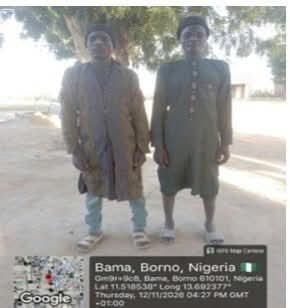
Troops of Operation HADIN KAI have intercepted two suspected terrorists on their way to surrender at Ngalimari in Konduga Local Government Area of Borno State.
Security sources said the suspects were intercepted at about 1:28 p.m. on November 12, 2026, by troops conducting a fighting patrol in the area.
Preliminary interrogation reportedly revealed that the two men fled their terrorist enclave around Geizuwa following internal clashes with Islamic State West Africa Province (ISWAP) fighters and worsening hardship within the group.
Items recovered from them included two mobile phones, one knife, one machete, an empty gallon, a blanket, a torchlight, a lighter, assorted drugs and the sum of N190,000.
The suspects and recovered items are currently in military custody for further investigation and necessary action.
The interception highlights the reported internal challenges facing terrorist elements, including factional clashes and hardship, which continue to undermine their operational cohesion in parts of the North-East.
Troops are expected to sustain intelligence-led patrols and screening operations to identify fleeing terrorist elements and prevent them from regrouping or returning to criminal activities.
Troops intercept two fleeing terrorists attempting to surrender in Borno
Troops rescue three kidnapped victims, recover 45 rustled livestock in Kebbi
By: Zagazola Makama
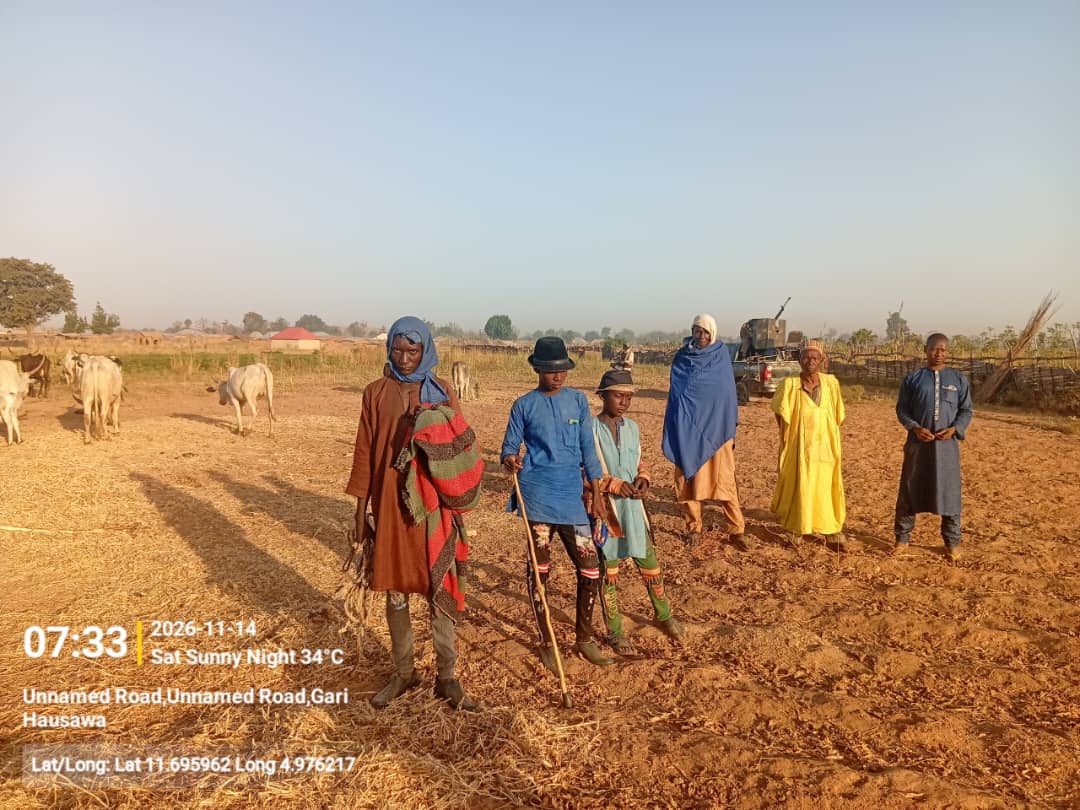
Troops of Sector 2, Operation FANSAN YAMMA, have rescued three kidnapped residents and recovered 45 rustled livestock following a swift response to a bandit attack in Danko-Wasagu Local Government Area of Kebbi State.
Security sources said the incident occurred in the early hours of Saturday, November 14, when armed bandits invaded Gida Fulani, a section of Garin Hausawa Village, rustling livestock and abducting some residents.
The sources said troops deployed in the area mobilised immediately after receiving a distress report and moved to the affected community, where they engaged the bandits with superior firepower.
Overwhelmed by the troops’ response, the attackers reportedly fled in disarray, abandoning the kidnapped victims and the rustled livestock.
The operation led to the rescue of three victims identified as Buba Sarkin Fulani, 29; Alhaji Chumo, 20; and Manu Sarkin Fulani, 15.
Troops also recovered 26 cattle and 19 sheep, bringing the total number of recovered livestock to 45.
The rescued victims and recovered animals were subsequently handed over to the Sarkin Garin Hausawa for onward reunion with their families and return to their rightful owners.
The operation underscores the sustained efforts of Operation FANSAN YAMMA to protect rural communities, rescue kidnapped persons and recover stolen livestock from armed criminal elements operating across the North-West
Troops rescue three kidnapped victims, recover 45 rustled livestock in Kebbi

A Child’s Vow, A Nation’s Wound: Nigeria’s Tragic Encounter with Banditry
By: Dr. James Bwala
At about seven o’clock in the evening, the quiet of a farm in Magami village, within the Gusau Local Government Area of Zamfara State, was shattered by gunfire. The sun was disappearing beyond the horizon, and families were preparing for the evening meal. In a region where farming is central to survival, the day’s work should have been ending peacefully. Instead, a child watched his father die.
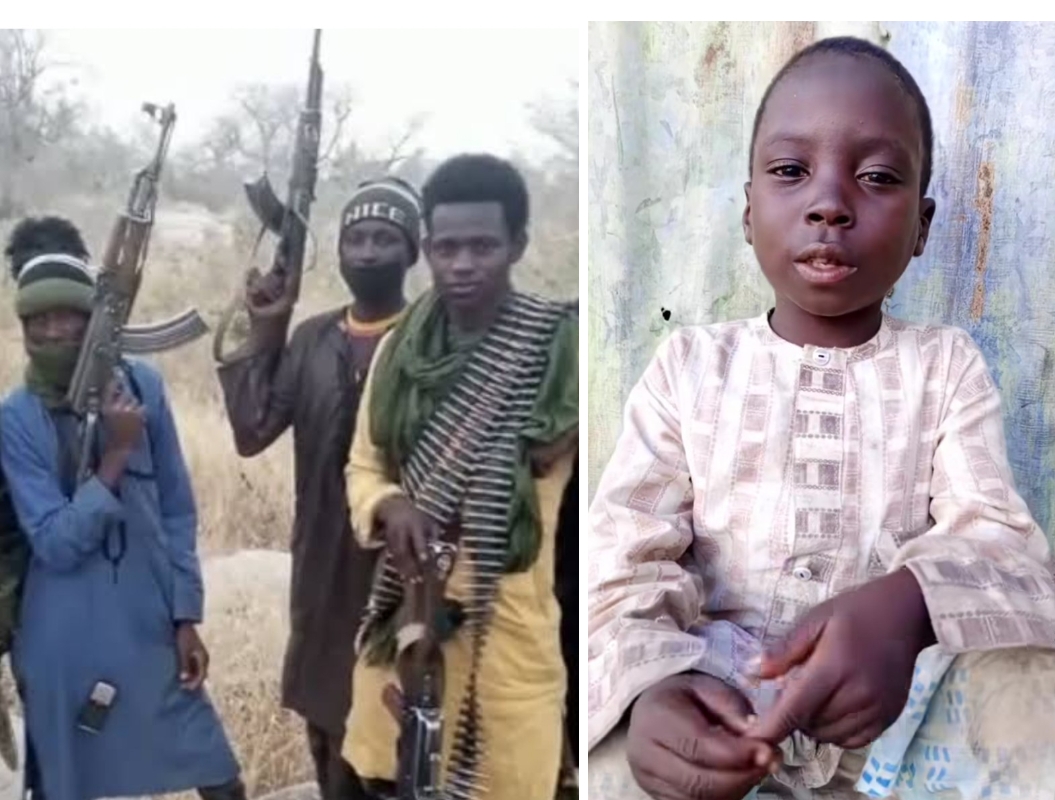
Umar Magami, an eleven-year-old boy from Magami village in northwestern Nigeria, remembers that evening with painful clarity. His father had gone to the farm to collect pepper for the family’s dinner. Earlier that day, he had harvested seven baskets of pepper, taken them to the market, sold them, and returned home with food items, including rice. After securing the family’s basic needs, he went back to the farm to bring pepper that would be used to prepare the evening meal.
According to Umar, bandits appeared at the farm and opened fire on his father. The bullets struck him before the boy’s eyes. In that terrible moment, Umar lost not only his father but also the sense of safety that every child should be allowed to enjoy. The farm, which had once represented food, work, and family survival, became the scene of a violent death.
READ ALSO: https://newsng.ng/2027-biu-elders-rally-behind-engr-mustapha-gubio-in-powerful-solidarity-visit/
Today, Umar is no longer living in Magami. He has fled the village and is taking refuge in Gusau, the capital of Zamfara State. Like thousands of other children affected by banditry in northwestern Nigeria, he has been uprooted from his home, separated from familiar surroundings, and forced to carry memories far too heavy for his age.
He has declared that when he grows up, he will join the Nigerian military and take revenge for the killing of his father. His words reveal the depth of his grief, but they also expose a disturbing danger. A child who should be thinking about school, friendship, games, and his future is instead thinking about weapons, military service, and revenge. His childhood has been shaped by violence, and his understanding of justice has become intertwined with retaliation.
Umar has reportedly prayed for the souls of the many people killed by bandits, including his father. He recognizes that death is part of human existence and says that he knows he will die one day. But, in his mind, that day must wait until he has avenged his father’s death. The statement is heartbreaking because it reflects both his love for his father and the psychological damage caused by exposure to violence.
READ ALSO: https://newsng.ng/2027-biu-elders-rally-behind-engr-mustapha-gubio-in-powerful-solidarity-visit/
Umar’s story is not an isolated one. Across Zamfara and other parts of northwestern Nigeria, countless children have witnessed killings, abductions, displacement, and the destruction of their communities. Some have lost parents. Others have been separated from siblings or forced to flee their homes. Many have stopped attending school because their villages are unsafe or because their families can no longer afford education after losing their livelihoods.
For these children, violence is not an abstract idea reported in newspapers. It is an everyday reality. It appears in the sound of gunshots, the sight of armed men, the absence of a parent, and the fear of travelling to a nearby market or farm. It is present in empty classrooms, abandoned villages, and refugee settlements where families wait for a return to normal life.
The conditions that produced Umar’s tragedy are complex. In many rural communities, farming is the main source of income and food. When bandits attack farmers, they destroy both economic stability and family security. People are prevented from cultivating their land, harvesting crops, or transporting produce to market. As a result, hunger and poverty deepen, while communities become increasingly dependent on emergency assistance.
READ ALSO: https://newsng.ng/2027-biu-elders-rally-behind-engr-mustapha-gubio-in-powerful-solidarity-visit/
The consequences extend beyond immediate physical suffering. Banditry damages trust between neighbors and weakens confidence in public institutions. When people believe that the government cannot protect them, they may be tempted to rely on self-defense groups, vigilantes, or other informal security arrangements. Although such groups may sometimes provide protection, they can also increase the cycle of violence and expose young people to further militarization.
Children are especially vulnerable in this environment. Their minds are still developing, and their understanding of violence is shaped by what they see around them. When a child watches a parent being killed, the experience can produce trauma, anger, guilt, fear, and a deep desire for revenge. Without counselling and support, these emotions may remain hidden or grow more intense over time.
A child like Umar may eventually become a soldier with a genuine desire to protect his country. Military service, when pursued through lawful and professional means, can be an honorable vocation. However, joining the military primarily to avenge a personal loss presents a serious concern. A professional soldier must be trained to defend citizens, obey the law, and exercise discipline. Revenge, by contrast, is driven by anger and a desire to punish. If grief is not addressed, the distinction between justice and retaliation may become difficult for a traumatized young person to understand.
READ ALSO: https://newsng.ng/2027-biu-elders-rally-behind-engr-mustapha-gubio-in-powerful-solidarity-visit/
This is why Umar’s story should not be viewed only as the account of one grieving child. It should be treated as a warning about Nigeria’s future. If thousands of children grow up believing that violence is the only language through which justice can be achieved, the country may face a new generation shaped by bitterness and conflict. The effects of today’s insecurity may therefore continue long after the current wave of banditry has ended.
The Nigerian government must respond to this crisis with urgency and compassion. Military operations remain necessary in areas controlled or threatened by armed groups, but force alone cannot heal the wounds left behind. Security measures must be combined with humanitarian assistance, education, trauma counselling, and economic recovery.
First, displaced children need access to safe and continuous education. Schools in affected areas should be protected, and temporary learning centers should be established in communities hosting displaced families. Education offers more than academic knowledge; it provides routine, hope, social connection, and an alternative to recruitment by criminal or extremist groups.
READ ALSO: https://newsng.ng/2027-biu-elders-rally-behind-engr-mustapha-gubio-in-powerful-solidarity-visit/
Second, children who have witnessed violence must receive professional psychological support. Counselors, social workers, religious leaders, teachers, and community elders can all play important roles in helping children process grief. Religious and cultural institutions, which command significant respect in many northern Nigerian communities, can support healing by promoting forgiveness, lawful justice, and reconciliation without denying the suffering of victims.
Third, displaced families need assistance to rebuild their livelihoods. Farmers must be able to return safely to their fields, and those who cannot return immediately should receive food, shelter, healthcare, and financial support. Economic recovery is essential because poverty and insecurity reinforce one another. A parent who cannot farm or trade is less able to educate and protect their children.
Fourth, the government must improve accountability. Communities lose faith in the state when attacks occur repeatedly without effective investigations or prosecutions. Security personnel must be adequately equipped, intelligence systems strengthened, and operations conducted with respect for civilian life. At the same time, abuses committed by any armed actor must be addressed through lawful processes. Justice must be visible, fair, and consistent.
READ ALSO: https://newsng.ng/2027-biu-elders-rally-behind-engr-mustapha-gubio-in-powerful-solidarity-visit/
Finally, young people affected by conflict must be included in national healing. Their experiences should not be ignored or reduced to statistics. The stories of children such as Umar should remind policymakers that insecurity is not only about territory or weapons; it is also about memory, identity, and the kind of citizens a country is producing.
Umar’s vow is a heartfelt plea from a wounded soul. It reflects the pain of a son who saw his father killed while trying to provide food for his family. It also reflects the danger of allowing violence to shape a child’s imagination. Umar should not have to plan revenge. He should be able to mourn, return to school, dream of a profession, and grow into adulthood without being imprisoned by the events of one evening.
The people of Magami and other affected communities deserve security, justice, and the opportunity to rebuild their lives. Nigeria’s children deserve even more: a future in which farms are places of work rather than killing fields, in which families can prepare meals without fear, and in which military service is chosen out of patriotism rather than personal vengeance.
READ ALSO: https://newsng.ng/2027-biu-elders-rally-behind-engr-mustapha-gubio-in-powerful-solidarity-visit/
Umar’s story should serve as a red alarm for Nigeria. His suffering is both personal and national. If the government fails to protect vulnerable communities and heal the emotional wounds of children exposed to conflict, the consequences may last for generations. But if effective action is taken now, grief can be transformed into resilience, and anger can be redirected toward rebuilding.
A child’s future should not be determined by the bullet that killed his father. It should be shaped by safety, education, justice, and hope.
- James Bwala, PhD, writes from Abuja
A Child’s Vow, A Nation’s Wound: Nigeria’s Tragic Encounter with Banditry

Borno: Azare’s Orthopaedic Hospital treats 1670 patients, conducts 233 surgeries

Troops intercept two fleeing terrorists attempting to surrender in Borno

Troops arrest two suspected terrorist logistics suppliers in Borno

Roger Federer’s Shock as DNA Results Reveal Myla and Charlene Are Not His Biological Children

THE PLIGHT OF FARIDA

FAILED COUP IN BURKINA FASO: HOW TRAORÉ NARROWLY ESCAPED ASSASSINATION PLOT AMID FOREIGN INTERFERENCE CLAIMS
-
 News3 years ago
Roger Federer’s Shock as DNA Results Reveal Myla and Charlene Are Not His Biological Children
-
Opinions5 years ago
THE PLIGHT OF FARIDA
-
 News2 years ago
FAILED COUP IN BURKINA FASO: HOW TRAORÉ NARROWLY ESCAPED ASSASSINATION PLOT AMID FOREIGN INTERFERENCE CLAIMS
-
 Opinions5 years ago
POLICE CHARGE ROOMS, A MINTING PRESS
-

 News3 years ago
EYN: Rev. Billi, Distortion of History, and The Living Tamarind Tree
-

 ACADEMICS3 years ago
A History of Biu” (2015) and The Lingering Bura-Pabir Question (1)
-

 Columns3 years ago
Army University Biu: There is certain interest, but certainly not from Borno.
-

 Politics1 year ago
2027: Why Hon. Midala Balami Must Go, as Youths in Hawul and Asikira/Uba Federal Constituency Reject ₦500,000 as Sallah Gift
