
News
Binocular: Why weapons are not tolerated inside the business hall of the NUJ during news conferences

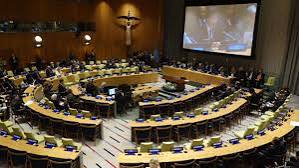
Binocular: Why weapons are not tolerated inside the business hall of the NUJ during news conferences
By: Bodunrin Kayode
Sometimes one wonders when our younger colleagues of the pen will catch up with certain unwritten ideals and expectations of practice when it comes to our dear profession. Unwritten in the sense that we were taught in journalism school that you can learn these only in the field of practice. And we actually tapped from the older ones we met in the field those days. But the same cannot be said about the younger generation.
Their display of Ignorance of their own turf sometimes baffles me and the pertinent question raised above sometimes comes to mind.
The General elections in Nigeria has come and gone but there is so much to worry about our security architecture especially in Borno, north east Nigeria when it comes to the conduct of colleagues and how they protect their own interests, and even their lives. There is too much eye service within the first three estates and it is beginning to rub off on the fourth estate of the realm.
How do you for instance play so much to eye service that you do not know how to control the security people to be weary of weapons inside the chambers of the NUJ? Is anyone above the law that we should allow them enter the main hall of the NUJ with his or her weapons? What if one of them run berserk due to post traumatic stress disorder (PTSD) and shoots a generation of journalists inside the hall? Are politicians on campaign so fearful of journalists that they cannot come into our chambers without armed men protecting them. Regardless of the fact that we do not have a standing security architecture yet in our one entrance compound, is the Chairman in council not strong enough to protect them? What manner of power show is it that would make them take weapons into the hall in maiduguri to protect their own? Is that the reason why the UN agencies prefer to brief the gentlemen of the media in government house rather than the NUJ whenever they gather themselves around here as they did yesterday?
When hoodlums entered the press Centre in Kaduna not too recently with all manner of weapons and pounced on members while in a news conference with the revered Comrade Shehu Sani, our comrades learnt their lessons In a very hard way. There will surely not be a next time before they put in place a security check to ensure that no one crosses the red line again with any weapon even if he was a security operative from the government house. We as journalists do not carry weapons to protect our selves therefore nobody should be allowed to carry weapons into our halls for news conferences again no matter how highly placed. It must be as sacred as a hospital, church or a mosque were weapons are prohibited beyond the entrance were members assemble for business.As a matter of fact, even horns from cars are forbidden in such places.
During the last general election in Borno, a lot of unprovoked wrongs were meted out on us as a group but because we regard ourselves as gentlemen of the press, we tended to overlook them as friends that would not kill us just like that because they looked quite normal.
The security details of the Peoples Democratic Party (PDP) candidate in Borno state had no business inside the centre even going to the extent of blocking our two entrances and teaching us how to handle our security. That was a big time wrong to congress and no press Centre anywhere in the country should tolerate it. If anyone would like to endanger the life of a politician its not journalists. We are gentlemen ruled by our ethics. They were supposed to stay outside and wait for the news conference to end before storming back into the centre to check their Principal. You do not carry your so called security drill into the hall of the NUJ anywhere and expect it to fly just because you get away with it inside the government house. Quite all right Jajeri was a Governorship candidate and our friend and I don’t think there was any reason for us to want to harm him to justify any security to bring weapons into our hall to protect him. Your drill does not apply to any of our press centres in the 36 states of the Federal Republic. We are the most peaceful estate of the realm.
The sacredness of the press Centre
I have always been a proponent of colleagues treating the press Centre as our own “barracks” as such ensuring that outsiders accord it the respect it should be given. No smoking of weeds inside and no sniffing of drugs even by friends of colleagues. We also do not want to wait until a security detail from any one who runs berserk one day and begins to spray everyone inside the hall with bullets before we secure ourselves. The press center committee should be able to monitor and ensure that the place is always secured from overzealous security details or hoodlums no matter how highly placed afterwards every registered member knows how to comport himself based on our ethics. It is our carelessness that gave the army boys the freedom to work into our centre and pick one of us like a hawk picking chicken before the scale fell from our eyes and we realized that we must go and get the fellow. They were supposed to see the chairman and make their complaints for him to intervene and not to pounce on members like Chicken before any one of us get to know about it. This cannot happen in the bar centre of the NBA.
As a rider to this, most of you my colleagues were there when I raised that critical issue as a motion for action to a former theatre Commander General Ali while he came in to ponder over and advise his overzealous boys accordingly before they repeat the mistake twice. I told him point blank that we have gone passed the stage where the security operatives will go after journalists as if they are endangered species to be roasted for Sala or Easter. Invite our people if they wrong you and we will march into the barracks and iron out the issues like comrades in arms and pen are supposed to do. That is the ideal that is expected.
Why security details should stop bringing arms to the centre
Even though Vips are allowed into the centre on invitation, no orderly of vips should be allowed to bring his arms into the holiest shrine of the centre and that is the hall where news conferences are held. It’s a big wrong and should never be allowed to happen. That is the standard anywhere in the world and we should not tolerate such arrogance from any of them especially the DSS where some of their trainee boys view themselves as untouchable.
Doing this is completely opposite to the norms of the free press we preach about. And anyone who refuses to comply does not have respect for us as the fourth estate of the realm. Bringing armed details who will be manning our doors for us when we are supposed to man the entrances for ourselves is a way of inviting what happened in Kaduna to Comrade Sani to happen in maiduguri one day and I say God forbid to that. We cannot stand and look at such abominations happen and we let it go because they are guarding a Governorship candidate. If we allow them, the worse may soon be visited on us.
All over the world, arms are not allowed into certain areas for the sake of mutual respect and accordance of status and prestige into the hall. Each time we watch the President of America walk into the hall meant for news conferences, he walks in alone in spite of the fact that he is the most protected human being on earth. Each journalist that is in that hall is well screened before entering the white house. That is the ideal in spite of the fact of whatever fears the intelligence guys may have against us. And Mark you their phones or tablets to work with are not seized from them.
As an aside, you do not run press conferences inside the government house without the chair of the NUJ present for instance. That is a wrong that must be corrected one day.
Binocular: Why weapons are not tolerated inside the business hall of the NUJ during news conferences


Army, DSS arrest notorious cultist, gunrunner in Cross River, recover weapons
By: Zagazola Makama
Troops of 13 Brigade, in collaboration with the Department of State Services (DSS), have arrested a suspected cultist and gunrunner during a raid operation in Ikom Local Government Area of Cross River State.
Security sources said the operation was carried out at about 1:10 a.m. on April 3 along Effangha Spring Road in Ikom.
The sources disclosed that the suspect, who hails from Khana Local Government Area of Rivers State, was apprehended during the coordinated raid.
According to the sources, troops recovered one revolver pistol, one sword, two laptops, four mobile phones, one digital camera, one wristwatch, three identity cards, and a sack of garri allegedly used to conceal the weapon.
The suspect and recovered items have since been handed over to the DSS for further investigation and possible prosecution.
Security authorities said the operation is part of ongoing efforts to curb cult-related violence and illegal arms circulation in the South-South region.
Army, DSS arrest notorious cultist, gunrunner in Cross River, recover weapons
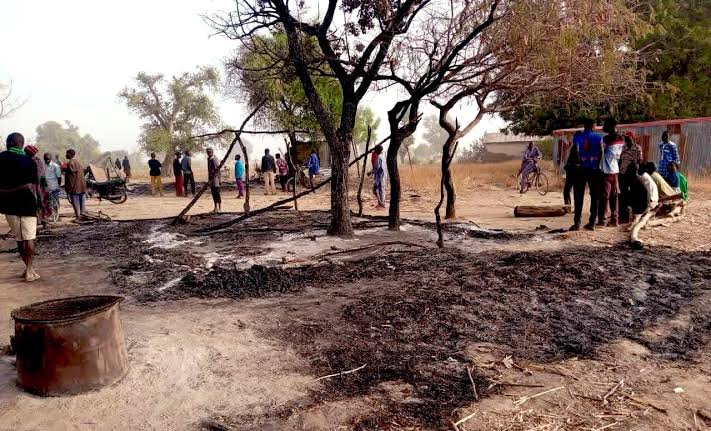
Gunmen kill village head, wife in Adamawa, son hospitalised
By: Zagazola Makama
Unknown gunmen have killed a village head and his wife in Tunga Waja community, Lamurde Local Government Area of Adamawa State.
Security sources said the incident occurred at about 8:50 p.m. on April 2, when the assailants attacked the residence of the village head and opened fire on him, his wife and their son.
The sources disclosed that the village head died on the spot, while his wife and son sustained gunshot wounds and were evacuated to a medical facility in Tingno for treatment.
According to the sources, the wife later died at the hospital, while the son is currently receiving treatment.
The motive behind the attack remains unclear, while efforts are ongoing to identify and apprehend the perpetrators.
The incident has heightened concerns among residents, as security agencies intensify efforts to restore calm and prevent further attacks in the area.
Gunmen kill village head, wife in Adamawa, son hospitalised
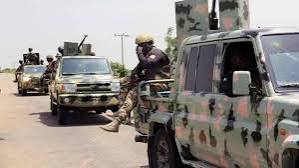
Three soldiers injured in road accident during pursuit of bandits in Kaduna
By: Zagazola Makama
Three soldiers have sustained injuries following a road traffic accident during an encounter with suspected armed bandits in Birnin Gwari Local Government Area of Kaduna State.
Security sources said the incident occurred at about 3:00 p.m. on April 2, when troops of 2 Battalion deployed at Forward Operating Base Dogon Dawa were returning from an administrative patrol.
The sources explained that the troops reportedly sighted a group of armed bandits attempting to block the road at Ngede Allah and engaged them, forcing the criminals to flee.
During the pursuit, however, three soldiers fell off a military gun truck and sustained varying degrees of injuries, including fractures to the hand and leg.
The injured personnel were immediately evacuated to the 44 Nigerian Army Reference Hospital in Kaduna, where they are currently receiving treatment and responding positively.
Security operations in the area have continued as troops maintain pressure on criminal elements within the axis.
Three soldiers injured in road accident during pursuit of bandits in Kaduna

Man O’ War personnel reports abduction of female colleague in Bayelsa

Army, DSS arrest notorious cultist, gunrunner in Cross River, recover weapons

Gunmen kill village head, wife in Adamawa, son hospitalised

Roger Federer’s Shock as DNA Results Reveal Myla and Charlene Are Not His Biological Children

THE PLIGHT OF FARIDA

FAILED COUP IN BURKINA FASO: HOW TRAORÉ NARROWLY ESCAPED ASSASSINATION PLOT AMID FOREIGN INTERFERENCE CLAIMS
-
 News2 years ago
Roger Federer’s Shock as DNA Results Reveal Myla and Charlene Are Not His Biological Children
-
Opinions4 years ago
THE PLIGHT OF FARIDA
-
 News12 months ago
FAILED COUP IN BURKINA FASO: HOW TRAORÉ NARROWLY ESCAPED ASSASSINATION PLOT AMID FOREIGN INTERFERENCE CLAIMS
-

 News2 years ago
EYN: Rev. Billi, Distortion of History, and The Living Tamarind Tree
-
 Opinions4 years ago
POLICE CHARGE ROOMS, A MINTING PRESS
-

 ACADEMICS2 years ago
A History of Biu” (2015) and The Lingering Bura-Pabir Question (1)
-

 Columns2 years ago
Army University Biu: There is certain interest, but certainly not from Borno.
-

 Opinions2 years ago
Tinubu,Shettima: The epidemic of economic, insecurity in Nigeria
