
News
Boko Haram: Zulum laments inability of some Borno tertiary institutions from conducting Convocations for over five years

Boko Haram: Zulum laments inability of some Borno tertiary institutions from conducting Convocations for over five years
…..Donates N50 million for Convocation preparations, to construct Staff Quarters, Students’ Hostel for NAUB
By: Ndahi Marama
Governor Babagana Zulum of Borno state decried over the activities of Boko Haram which, in the past five years, have hindered many tertiary institutions from conducting Convocation Ceremonies in the state.
Besides, he noted that it is through Convocation, that best performing students are officially identified and rewarded by the government.
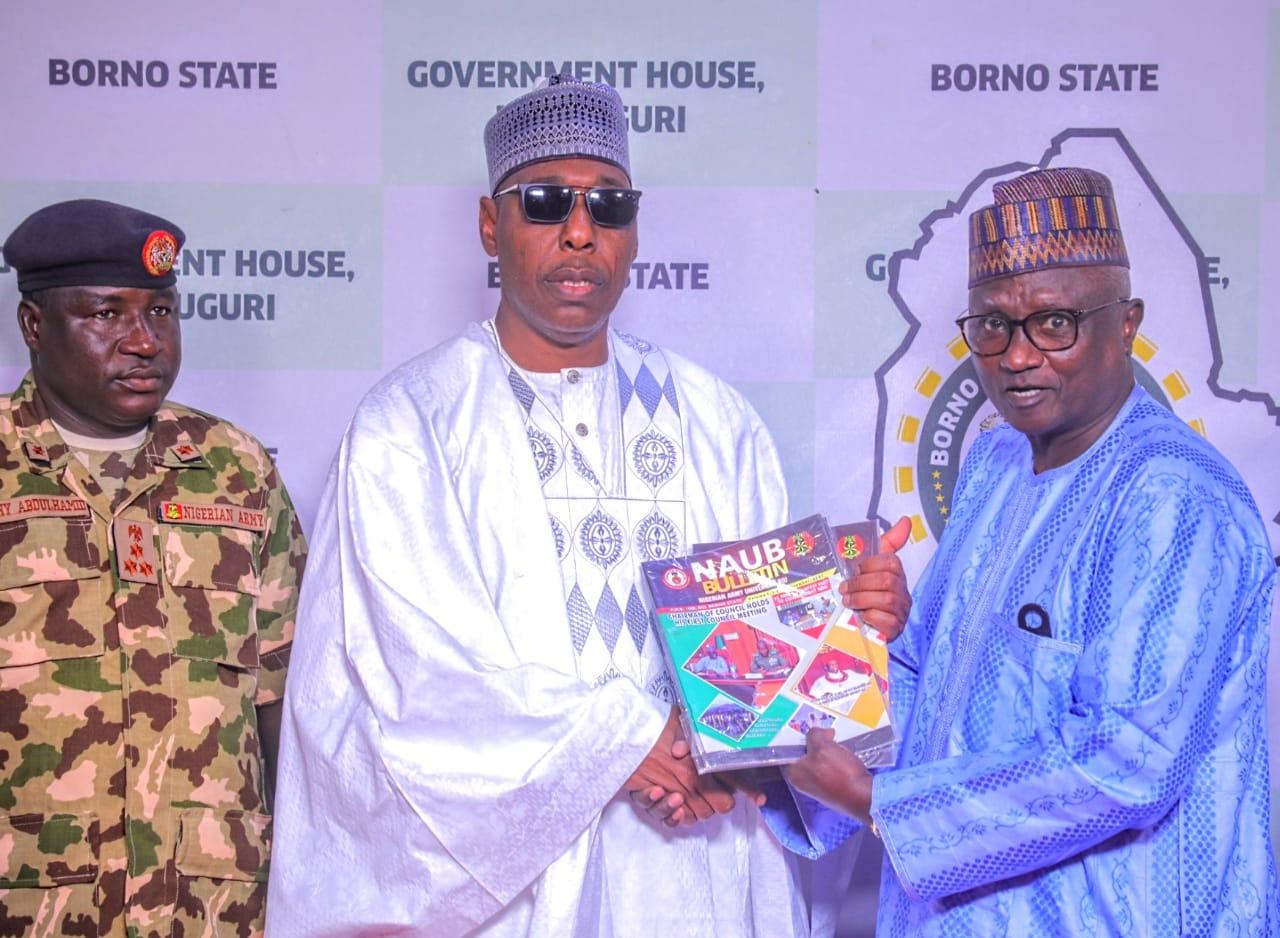
The Governor stated this on Friday when top management team of the Nigerian Army University Biu (NAUB), led by the Vice-Chancellor of the federal institution, Professor Kyari Mohammed paid him a courtesy call at the Government House in Maiduguri.
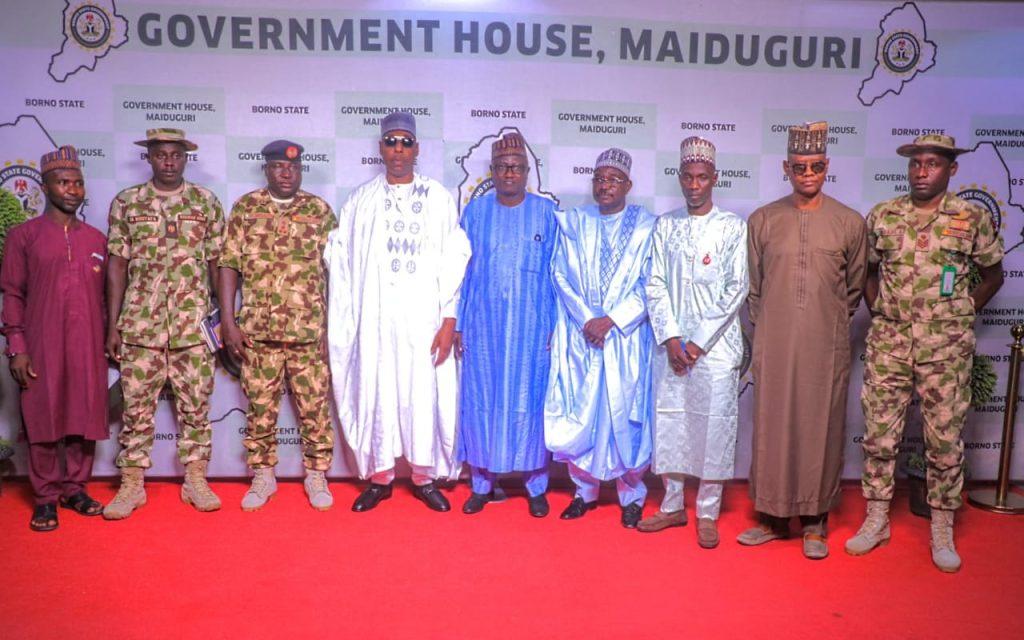
He however announced the donation of N50 million to enable NAUB in its preparations towards the conduct of its first convocation slated to hold on 28th October, 2023.
He also directed Commissioner for Reconstruction, Rehabilitation and Resettlement, RRR, Engr. Ibrahim Idris to draw proposal for immediate approval to construct befitting staff quarters and students’ hostels for NAUB, so as to ease the problem of accommodation.
While commending the former Chief of Army Staff, Lieutenant General Tukur Yusuf Buratai (Rtd) and the federal government for establishing the University since 2018, Zulum pointed out that during his first tenure, precisely in the past four years, his administration, which was shrouded with competing demands, has supported various federal institutions, especially the construction and completion of staff quarters and students hostels at University of Maiduguri, UNIMAID, University of Maiduguri Teaching Hospital, UMTH among other various interventions.
His words: ” We are all living-witnesses to atrocities posed by Boko Haram which, in the last five years, have hindered many of our tertiary institutions from conducting Convocation Ceremonies in the state.
“Now that peace has returned to our dear state, by the special grace of Allah (God), my government will support all tertiary institutions in conducting their convocation ceremonies, this is very important, as it is through Convocation, that the best performing students are officially identified and be rewarded by the government.
“I want to also use this opportunity to inform the management Team that the present administration is working out modalities to ensure that Best Performing students from Borno North, Central and Southern senatorial district are sponsored for their academic studies in NAUB by Borno State Government.” Zulum stated.
Earlier in his address, NAUB VC, Professor Kyari Mohammed commneded Governor Zulum for his foresight in repositioning the education sector in the state.
He said, since 2018 when the institution was established, it runs a very uinque programmes by utilizing scientific and technological knowledge to develop credible and creative capacity for proferring innovative solutions to the problems of the Nigerian Army, the military as well as the nation at large.
This according to the VC, NAUB has about five faculties with 32 Degree Programmes which were fully accreditated by the National Universities Commission, NUC in November, 2022.
He appreciated the Governor for approving all requests from NAUB which were tabled before Zulum during the visit. The VC promised to liaise with other tertiary institutions in research and development for the North East and the country as a whole.
Boko Haram: Zulum laments inability of some Borno tertiary institutions from conducting Convocations for over five years


Nigeria Condemns Killing of Two Citizens in South Africa, Warns All Options Remain Open
By: Michael Mike
The Federal Government has strongly condemned the killing of two Nigerian nationals in South Africa, accusing security operatives and criminal elements of targeting Nigerians amid rising xenophobic violence, and warning that it may be forced to activate “all options” if the attacks continue.
In a statement issued on Sunday by the spokesperson of the Ministry of Foreign Affairs, Kimiebi Ebienfa, the government demanded immediate investigations into the killings and the prosecution of those responsible, while expressing concern over what it described as an alarming pattern of extra-judicial killings and growing hostility towards Nigerians living in South Africa.
According to the ministry, one of the victims, Emeka Charles Iroegbu, was allegedly killed on June 28 in Sunnyside, Pretoria, by officers of the Tshwane Metro Police, who reportedly subjected him to what the government described as “gruesome interrogation techniques.”
The ministry said the same police officers were also allegedly responsible for the extra-judicial killing of another Nigerian, Nnaemeka Mathew Andrew Ekpenyong, on April 20, noting that despite the identities of the four officers being known to the South African Police Service, no arrests had been made.
It added that another Nigerian, Musa Yunana Joe, popularly known as “Big Joe,” was also shot dead in front of his shop on June 28 in Witbank, Mpumalanga, by yet-to-be-identified gunmen.
The government said the incidents occurred against the backdrop of increasing attacks on foreigners in South Africa, raising serious concerns about the safety of Nigerians and other foreign nationals.
It alleged that some individuals were deliberately portraying hardworking Nigerians as criminals in order to justify attacks against them.
“The continuing pattern of such terrible incidents is clearly evidence of complicity on the part of security operatives, especially officers of the Tshwane Metro Police, which raises the question of state responsibility under international law,” the statement said.
Nigeria also condemned recent comments reportedly made by a spokesperson of the South African Government, who allegedly asked Nigerians leaving South Africa because of ongoing xenophobic protests to disclose where illegal drugs were hidden.
The Ministry described the remarks as derogatory, unprofessional and capable of inciting hatred and violence against Nigerians.
It further criticised anti-immigrant groups, including March on March and Operation Dudula, accusing them of promoting violence and hate against fellow Africans and warning that their leaders could face regional and international criminal liability.
The Federal Government stressed that allegations of wrongdoing against any individual should be handled through lawful judicial processes rather than mob action or extra-judicial killings.
It called on South African authorities to urgently investigate the recent killings alongside other unresolved cases involving Nigerian victims and ensure that those responsible are prosecuted.
The government expressed sympathy to the families of the deceased and pledged to continue engaging South African authorities at the highest diplomatic level until justice is achieved.
It also advised Nigerians living in South Africa to remain calm, obey the law, stay vigilant, relocate to safer neighbourhoods where necessary, and avoid areas experiencing violent demonstrations while diplomatic efforts continue.
The ministry noted that numerous South African citizens and businesses operate freely and safely in Nigeria without harassment, arguing that South Africa has a reciprocal obligation to guarantee the safety of Nigerians legally residing in the country.
It warned that the continued targeting of Nigerians was unacceptable and stated that if the situation persisted, “all options remain on the table,” adding that some measures could be activated should what it described as “intolerance and apartheid-style behaviour” against foreigners continue.
The government, however, appealed to Nigerians at home to remain peaceful and refrain from retaliatory actions, reaffirming its commitment to dialogue and diplomacy in line with Nigeria’s foreign policy of African unity, brotherhood and solidarity.
The Ministry also disclosed that the evacuation of registered Nigerians from South Africa is ongoing.
Nigeria Condemns Killing of Two Citizens in South Africa, Warns All Options Remain Open
Six Villagers Killed as Terrorists Attack Sokoto Community, Rustle Livestock
By: Zagazola Makama
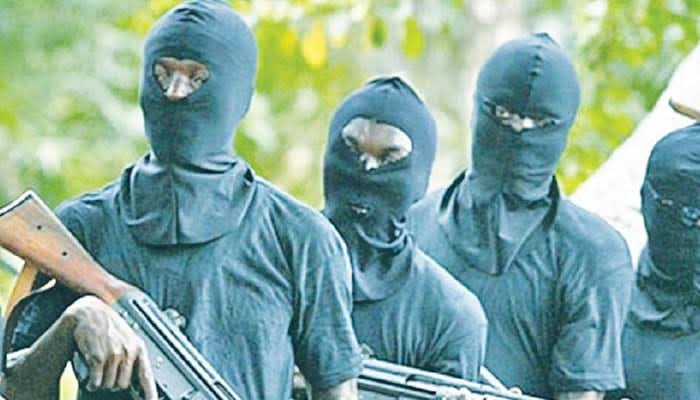
Suspected terrorists have killed six villagers and rustled an unspecified number of livestock during an attack on Koludo Village in Bodinga Local Government Area of Sokoto State.
Security sources told Zagazola Makama that combined troops of the 8 Division Strike Team, 18 Field Engineer Regiment, 28 Support Engineer Regiment, and the Nigeria Police responded to a distress call following the attack at about 7:10 a.m. on Friday.
The sources said that upon arrival at the village, the security team confirmed that the attackers had invaded the community, killed six residents, and made away with livestock before fleeing.
The troops immediately launched a pursuit of the fleeing terrorists along their withdrawal routes but were forced to halt the operation after the suspects escaped into marshy terrain, which hindered further movement.
Security forces have maintained vigilance in the area while efforts are ongoing to track down the perpetrators and prevent further attacks.
Six Villagers Killed as Terrorists Attack Sokoto Community, Rustle Livestock
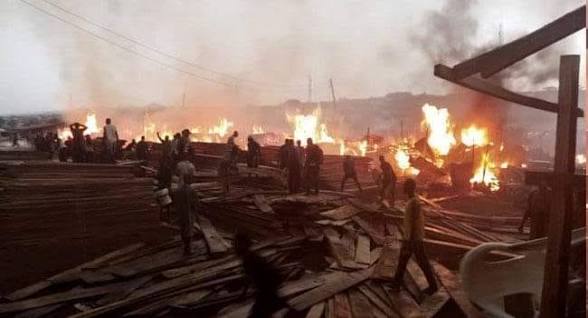
Fire razes about 50 shops at Ibadan market
By: Zagazola Makama
A fire outbreak has destroyed about 50 shops at the Bode Market area of Ibadan, Oyo State, with no casualties recorded.
Police sources said the incident occurred at about 2:00 a.m. on Friday following reports from members of the public.
A team of police operatives led by the Divisional Police Officer of Mapo Division responded to the scene, while firefighters were immediately contacted to contain the blaze.
The fire was eventually extinguished through the combined efforts of firefighters and residents.
Police cordoned off the area to prevent hoodlums from taking advantage of the situation to loot affected shops.
Although about 50 shops were completely destroyed by the fire, no lives were lost and no injuries were reported.
The cause of the fire has yet to be determined, while the value of the property destroyed is still being assessed.
Police said investigations into the incident have commenced.
Fire razes about 50 shops at Ibadan market

Nigeria Condemns Killing of Two Citizens in South Africa, Warns All Options Remain Open

Troops Repel Terrorist Attack on Forward Operating Base in Zamfara

Six Villagers Killed as Terrorists Attack Sokoto Community, Rustle Livestock

Roger Federer’s Shock as DNA Results Reveal Myla and Charlene Are Not His Biological Children

THE PLIGHT OF FARIDA

FAILED COUP IN BURKINA FASO: HOW TRAORÉ NARROWLY ESCAPED ASSASSINATION PLOT AMID FOREIGN INTERFERENCE CLAIMS
-
 News2 years ago
Roger Federer’s Shock as DNA Results Reveal Myla and Charlene Are Not His Biological Children
-
Opinions4 years ago
THE PLIGHT OF FARIDA
-
 News1 year ago
FAILED COUP IN BURKINA FASO: HOW TRAORÉ NARROWLY ESCAPED ASSASSINATION PLOT AMID FOREIGN INTERFERENCE CLAIMS
-

 News2 years ago
EYN: Rev. Billi, Distortion of History, and The Living Tamarind Tree
-
 Opinions5 years ago
POLICE CHARGE ROOMS, A MINTING PRESS
-

 ACADEMICS2 years ago
A History of Biu” (2015) and The Lingering Bura-Pabir Question (1)
-

 Columns2 years ago
Army University Biu: There is certain interest, but certainly not from Borno.
-

 Politics1 year ago
2027: Why Hon. Midala Balami Must Go, as Youths in Hawul and Asikira/Uba Federal Constituency Reject ₦500,000 as Sallah Gift
