
Crime
Boko Haram’s new video tactics raise national security concerns

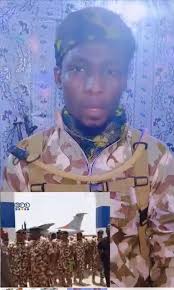
Boko Haram’s new video tactics raise national security concerns
By: Zagazola Makama
In an era defined by the rapid evolution of digital technologies, social media has emerged as a powerful tool for public engagement, awareness creation, and communication. However, this same medium has also been weaponised by terror groups such as Boko Haram, particularly its Islamic State West Africa Province (ISWAP) and Jama’atu Ahlis Sunna Lidda’Awati wal-Jihad (JAS) factions, to fuel violent extremism and undermine national security efforts.
Zagazola has been raising alarm following spate of Boko Haram propaganda videos, notably one featuring a youthful and energetic speaker, estimated to be between the ages of 19 and 21, appearing to revive the disbanded rhetoric and style of the late Boko Haram leader Abubakar Shekau. There were also several platforms on TikTok which job is to propagate and recycle old preaching of Muhammad Yusuf, the Founder of Boko Haram and Abubakar Shekau.
The videos, circulated widely on platforms such as TikTok and Facebook, have not only praised the resilience of the jihadist movement but also openly criticised the Nigerian government and its armed forces.
Zagazola Makama, a counter-insurgency expert monitoring developments in the Lake Chad region, described the development as “a dangerous trend capable of influencing vulnerable minds, inciting hatred against the state, and reinvigorating terrorism recruitment channels, especially among urban sympathizers.”
One of the central figures in the new video wave is allegedly an ardent follower of Bakura Doro, also known as Abu Ummaima, a senior commander of the JAS faction. However, intelligence observers are questioning the credibility and coherence of his message. “It is strange that an alleged JAS loyalist is speaking on behalf of ISWAP, a rival group that has repeatedly clashed with JAS,” a senior security source noted. “It suggests that the speaker may not be a frontline fighter, but rather an urban propagandist exploiting social media to sow confusion and fear.”
This comes amid heightened security tension in Borno State following renewed attacks by ISWAP on military positions and recent civilian killings in Mallam Karamti and Dawashi areas. In contrast, JAS has maintained a relatively lower profile since their last major confrontation with Chadian troops in 2024.
The disturbing development coincides with a broader national conversation on digital regulation and cyber monitoring, particularly as Nigeria approaches the 2027 general elections. Analysts warn that allowing such inflammatory content to thrive online not only emboldens terror groups but also poses grave implications for national stability, as hostile actors may leverage the content to erode public trust in democratic institutions.
“The fact that terror sympathisers can trend such messages unchecked is a glaring indictment of our current digital response capabilities,” Makama said. “These individuals must be tracked, their platforms dismantled, and the content removed without delay.”
There must be an improved coordination among the Nigerian Police, the Defence Intelligence Agency, and the National Information Technology Development Agency (NITDA) to map out and neutralize digital terror cells.
We must invest in cutting-edge surveillance and artificial intelligence tools to identify these digital propagandists. They are as dangerous as gunmen in the field. The battlefront has shifted; modern warfare is now fought with both bullets and bandwidth,” Zagazola warned.
He added that Nigerian authorities have in the past succeeded in working with global social media giants to remove extremist content. However, experts say the country must now institutionalise a domestic capability to detect, counter, and neutralise online threats in real time.
The National Orientation Agency and the Ministry of Communications are also being urged to scale up counter-narratives, promote digital literacy among citizens, and provide accurate, timely updates to counteract disinformation.
The time has come for Nigeria to treat the digital domain as an active battlefield one that requires as much vigilance, strategy, and firepower as any other theatre of conflict. The war is no longer only in the forests of Sambisa or the shores of Lake Chad; it is also on the screens of millions.
Zagazola Makama is a Counter Insurgency Expert and Security Analyst in the Lake Chad Region
End
Boko Haram’s new video tactics raise national security concerns


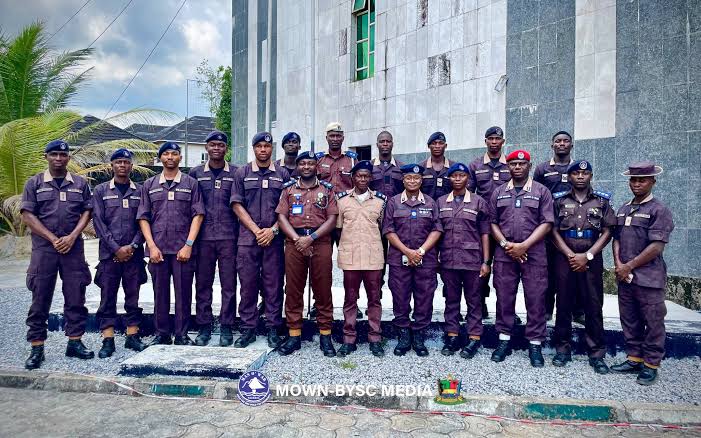
Man O’ War personnel reports abduction of female colleague in Bayelsa
By: Zagazola Makama
A female member of the Man O’ War has been reportedly abducted by unknown persons in Bayelsa State, with efforts underway to trace and rescue her.
Security sources said the case was reported on April 3 at about 7:00 p.m. by Daniel Lucky Deinyefa, a Man O’ War personnel and indigene of Otuan community in Southern Ijaw Local Government Area.
It was gathered that the victim, identified as Peremene Bright, contacted her colleague on April 2, stating that she had been abducted by unknown persons since March 26.
The sources disclosed that her mobile phone signal was tracked to a location along the Abua/Ogbia road axis.
Authorities said efforts are ongoing to locate and rescue the victim, as well as identify and apprehend those responsible for the abduction.
Further updates are expected as investigations progress.
Man O’ War personnel reports abduction of female colleague in Bayelsa
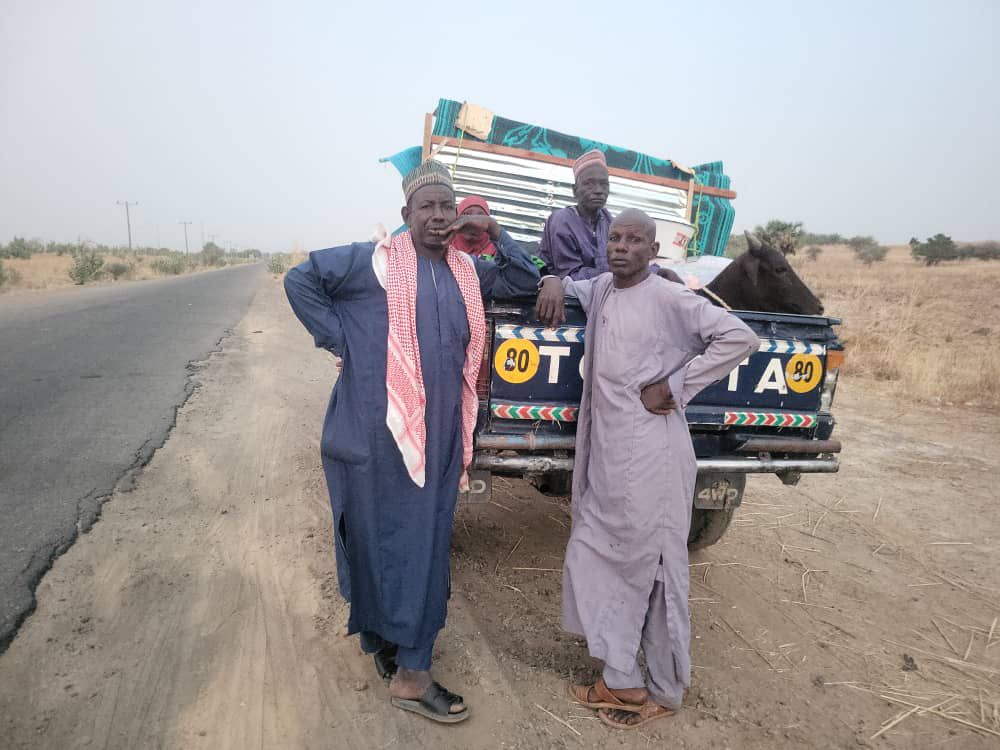
Troops intercept suspected Boko Haram logistics convoy conveying 13 persons in Borno
By: Zagazola Makama
Troops of Bravo Company, 159 Battalion, have intercepted a suspected Boko Haram logistics convoy in Kanama area of Borno State.
Security sources said the interception occurred at about 7:00 p.m. on April 2 at a checkpoint while troops were conducting routine stop-and-search operations.
According to the sources, the troops stopped a Toyota pickup vehicle conveying 12 males and one female en route to Dekwa.
During a search of the vehicle, two adult males were found to have sustained gunshot wounds.
Preliminary investigations revealed that the injured suspects were members of a terrorist logistics support network who had reportedly been ambushed earlier by troops on April 1 along the Usmadi axis while transporting supplies to a terrorist camp in Dekwa.
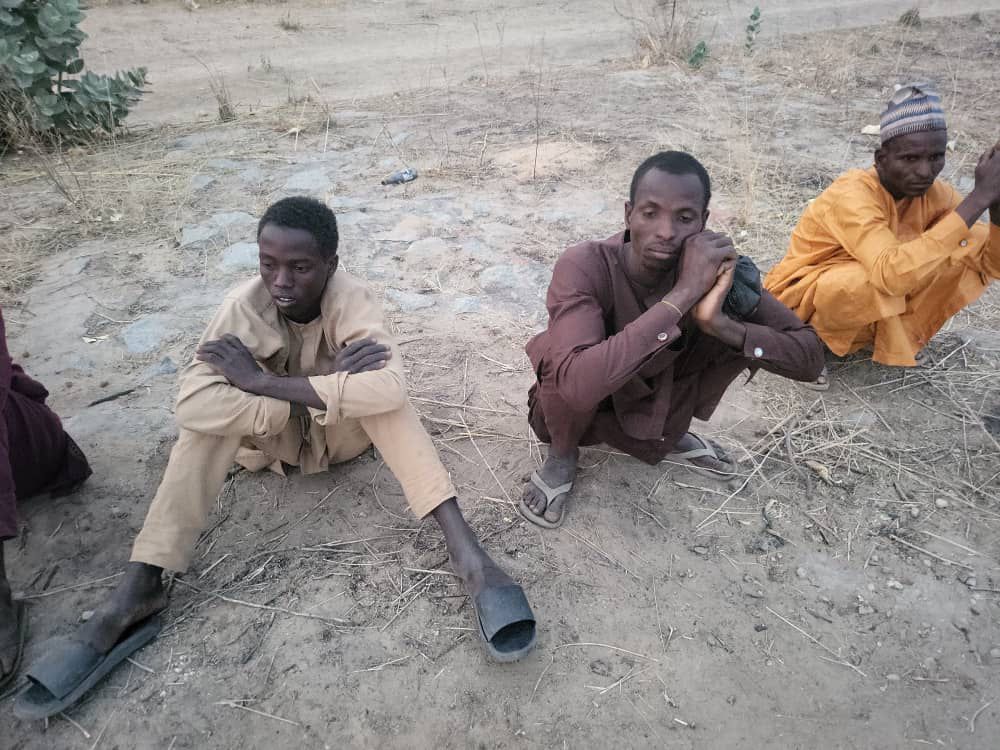
The sources added that eight torchlight mobile phones were recovered from the suspects for further investigation.
All suspects and the vehicle are currently in custody and will be handed over to Headquarters for further action.
Troops intercept suspected Boko Haram logistics convoy conveying 13 persons in Borno
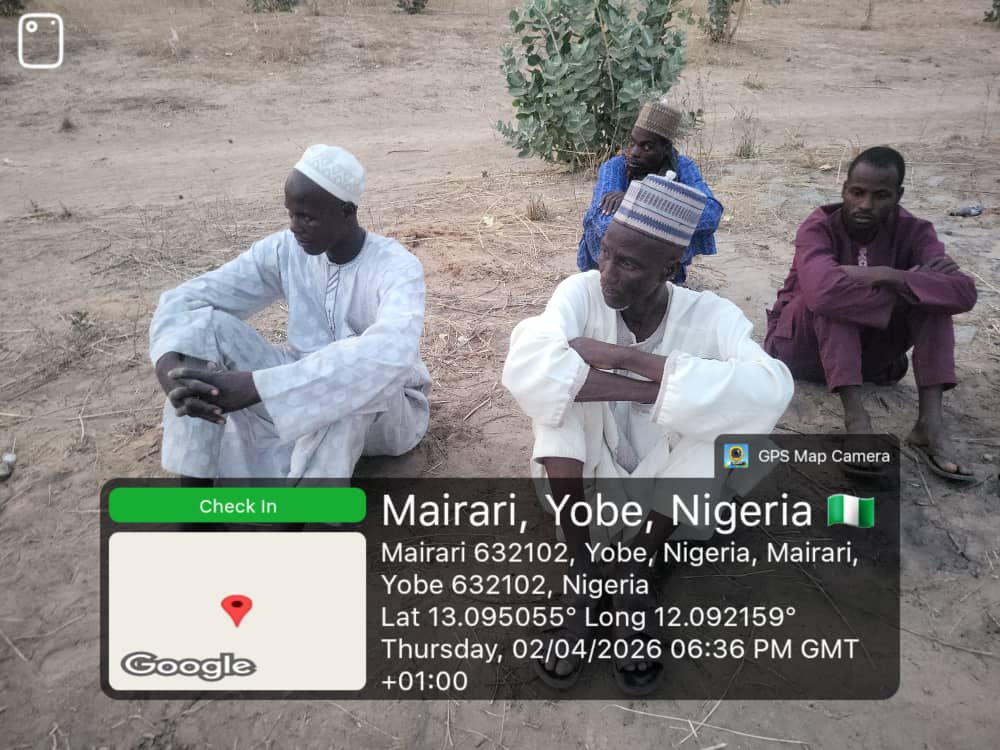
Troops, CJTF arrest three suspected Boko Haram logistics suppliers in Borno
By: Zagazola Makama
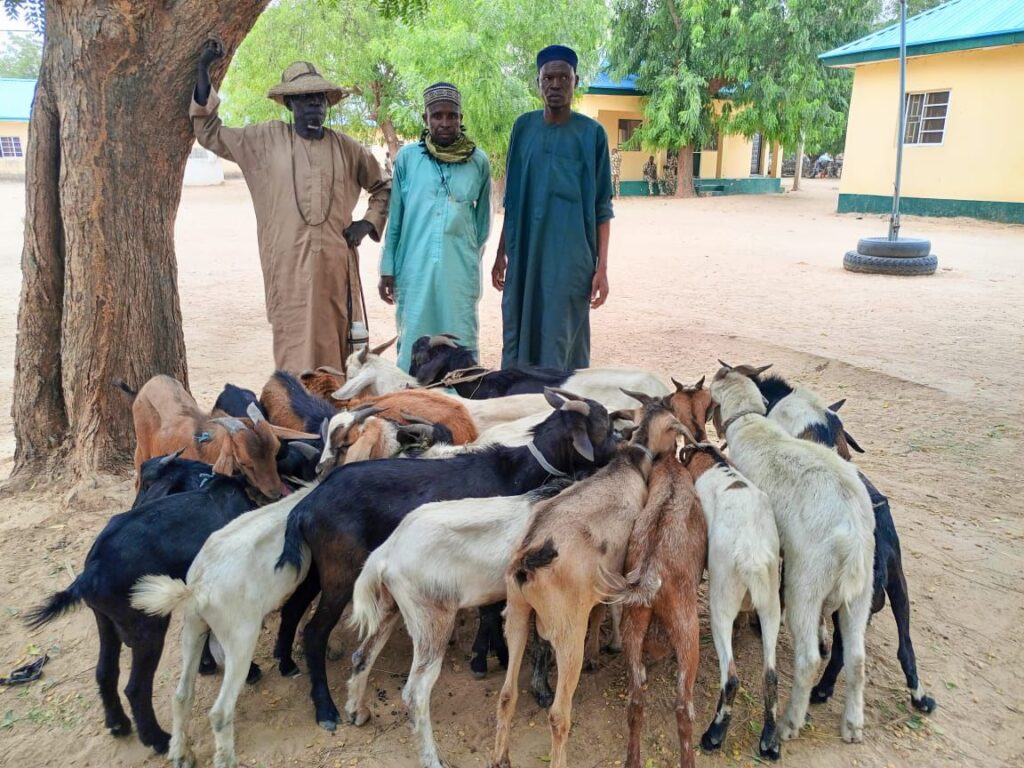
Troops of 29 Task Force Brigade, in collaboration with members of the Civilian Joint Task Force (CJTF), have arrested three suspected Boko Haram logistics suppliers at Benisheikh in Kaga Local Government Area of Borno State.
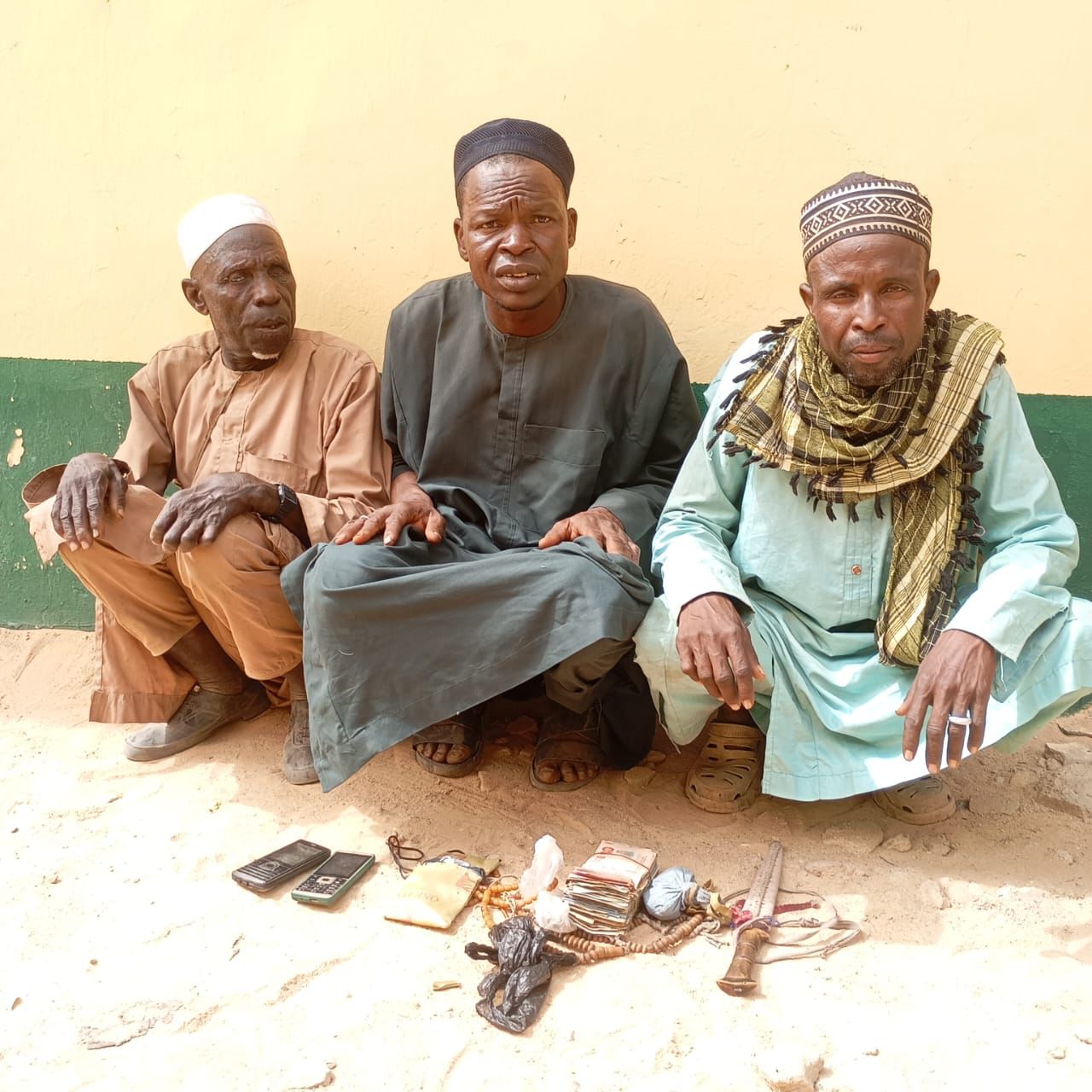
Security sources said the suspects, identified as Abdul Kolo, Modu Masa and Atom Baaji, were apprehended at about 3:00 p.m. on April 3 following credible human intelligence.
According to the sources, the suspects confessed during preliminary interrogation that the items in their possession were given to them by Boko Haram members to sell on their behalf.
Items recovered from the suspects include 20 goats, two mobile phones, a knife and the sum of ₦139,780.
The sources said the suspects and recovered items had been handed over to the Headquarters of 29 Task Force Brigade for further investigation and necessary action.
The operation is part of ongoing efforts under Operation Hadin Kai to dismantle terrorist logistics networks and disrupt supply chains sustaining insurgent activities in the North-East.
Troops, CJTF arrest three suspected Boko Haram logistics suppliers in Borno

Man O’ War personnel reports abduction of female colleague in Bayelsa

Army, DSS arrest notorious cultist, gunrunner in Cross River, recover weapons

Gunmen kill village head, wife in Adamawa, son hospitalised

Roger Federer’s Shock as DNA Results Reveal Myla and Charlene Are Not His Biological Children

THE PLIGHT OF FARIDA

FAILED COUP IN BURKINA FASO: HOW TRAORÉ NARROWLY ESCAPED ASSASSINATION PLOT AMID FOREIGN INTERFERENCE CLAIMS
-
 News2 years ago
Roger Federer’s Shock as DNA Results Reveal Myla and Charlene Are Not His Biological Children
-
Opinions4 years ago
THE PLIGHT OF FARIDA
-
 News12 months ago
FAILED COUP IN BURKINA FASO: HOW TRAORÉ NARROWLY ESCAPED ASSASSINATION PLOT AMID FOREIGN INTERFERENCE CLAIMS
-

 News2 years ago
EYN: Rev. Billi, Distortion of History, and The Living Tamarind Tree
-
 Opinions4 years ago
POLICE CHARGE ROOMS, A MINTING PRESS
-

 ACADEMICS2 years ago
A History of Biu” (2015) and The Lingering Bura-Pabir Question (1)
-

 Columns2 years ago
Army University Biu: There is certain interest, but certainly not from Borno.
-

 Opinions2 years ago
Tinubu,Shettima: The epidemic of economic, insecurity in Nigeria
