
News
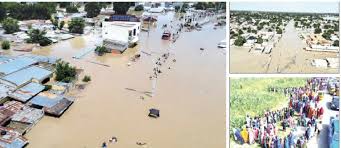
Borno begins closure of temporary idp camps in maiduguri and Jere flood areas

Borno begins closure of temporary idp camps in maiduguri and Jere flood areas
By: Bodunrin Kayode
The Borno state government has commenced closures of temporary internally displaced peoples (IDP) camp created for residents displaced by flood.
A source within the Borno health sector partners told this reporter that closure and merger of camps have started today to enable people return to their homes after the water goes down.
He said that the government made this decision to discourage residents not affected coming to swell the camps and creating tension for those who are already traumatized by the tragedy.
” All camps (apart from Gubio, Bakasi and Teachers Village) will be closed by Thursday 19th September 2024. Gubio, Bakasi and Teachers Village will continue to operate for the next one week, or 2 weeks maximum.” He hinted.
In another development, the Borno State Government is providing N10,000 one pay-off, 25kg of rice and 1 carton of spaghetti per individual IDP affected by the flood tragedy to go home.
“Families without a place to relocate to will temporarily be moved to Gubio, Bakasi and Teachers Village camps.
“The government will, on eventual closure of Gubio, Bakasi and Teachers Village, give N100,000 to each IDP family for recovery.” He said.
On mapping and assessments, the source noted that the government is conducting a mapping and assessment exercise of areas that were damaged by the floods to guide the plans to relocate some of the affected IDPs when the 3 camps are eventually closed.
” Humanitarian partners are conducting similar assessments. The exercise must be coordinated with the government on the drivers seat.
Additionally ” the world health organization (WHO) pointed out that the mapping should carefully be done in consideration of the upcoming cholera vaccination in Borno.
“The WHO has actually received 500,000 doses of cholera vaccine to be administered in the general area where the flood affected.”
The Borno government has stooped direct distribution of cash and non food items (NFIs) to IDPs by humanitarian partners.
Instead, partners are urged to share with the government the stock of NFIs and cash that they would like to distribute to IDPs, then, the government will consolidate and distribute same.
Data and information management
Henceforth, all data will be consolidated and shared out by the government.
Meanwhile the Commissioner of information Usman Tar has said that about 40 percent of the camps have received their palliatives and would be expected to go home soon.
L
Borno begins closure of temporary idp camps in maiduguri and Jere flood areas


Power Sector Row Deepens as NISO Rejects APGC’s Grid Failure Narrative
By: Michael Mike
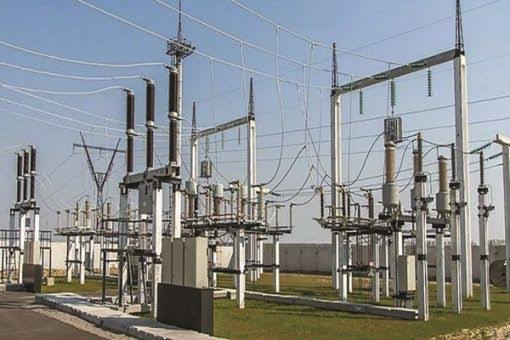
Nigeria’s power sector witnessed a fresh war of words on Friday as the Nigerian Independent System Operator (NISO) dismissed claims by the Association of Power Generation Companies (APGC) over the June 25 national grid disturbance, insisting the incident was a localized voltage instability in Lagos and not evidence of a nationwide system failure.
In a strongly worded clarification, NISO accused APGC of publishing misleading interpretations of the grid event that failed to accurately reflect the operational realities surrounding the disturbance, warning that such narratives could undermine public confidence in the country’s electricity network.
The system operator maintained that the incident was swiftly detected and effectively managed, preventing it from cascading into other parts of the national grid.
According to NISO, the disturbance remained confined to the Lagos region, where coordinated operational interventions restored normal electricity supply within the shortest possible time.
The clarification comes amid renewed scrutiny of Nigeria’s fragile electricity infrastructure, where recurring grid disturbances and collapses have continued to fuel concerns among consumers, businesses and industry stakeholders.
Rejecting APGC’s analysis of system frequency, voltage and generation data, NISO argued that the publication ignored established provisions of the Nigerian Grid Code governing system disturbances.
It explained that temporary deviations in frequency and voltage are normal during stressed operating conditions and should not be interpreted as proof of grid collapse or operational failure.
The operator noted that while the National Grid normally operates within a frequency range of 49.75 to 50.25 Hertz and transmission voltage between 280.5 kilovolts and 346.5 kilovolts on the 330kV network, these parameters are expected to fluctuate briefly during disturbances before corrective measures restore stability.
It further stated that the Grid Code permits generating units to remain synchronized even when system frequency temporarily falls below or rises above normal operating limits during restoration processes.
NISO also disputed APGC’s conclusions on the temporary reduction in electricity generation during the incident, describing the drop as the result of deliberate operational actions and the activation of generator and network protection systems designed to safeguard the integrity of the national grid.
According to the operator, the emergency measures prevented wider cascading outages and enabled rapid stabilization and restoration of electricity supply.
The agency stressed that presenting isolated minimum or maximum frequency values without considering the broader operational context or restoration procedures gives an inaccurate picture of the health of the national grid.
Asserting its statutory mandate, NISO declared that it remains the only authorized source of official information on grid operations, system events and the performance of Nigeria’s electricity transmission network.
It urged policymakers, market participants and the general public to rely solely on information released by the system operator for accurate and verified updates on the national grid.
The operator reaffirmed its commitment to ensuring the reliability, security and stability of Nigeria’s electricity supply industry through strict compliance with the Nigerian Grid Code, transparent communication and internationally accepted operational practices.
The clarification sets the stage for renewed debate within the power sector over the interpretation of grid incidents and highlights growing tensions between key industry players over accountability and public communication in Nigeria’s electricity market.
Power Sector Row Deepens as NISO Rejects APGC’s Grid Failure Narrative

Troops Rescue 36 Benue Indigenes Held in Cross River Community
By Zagazola Makama
Troops of the Nigerian Army have rescued 36 civilians from Benue State who were allegedly held by members of Imaje Community in Yala Local Government Area of Cross River State following a reprisal attack linked to a livestock theft dispute.
Security sources told Zagazola Makama that the operation was carried out at about 3:30 p.m. on Thursday by troops of 130 Battalion (Rear) in conjunction with 341 Artillery Regiment during a raid on the community.
The sources said the troops successfully rescued the 36 victims, all indigenes of Benue State residing in Imaje Community.
According to the rescued victims, the incident stemmed from the alleged assault of an indigene of Imaje by youths in Benue State over the theft of livestock.
The victims alleged that, in retaliation, members of Imaje Community attacked Benue indigenes living in the area and held them against their will.
The prompt intervention by the troops restored normalcy to the community and prevented further escalation of the crisis.
Security agencies are maintaining a presence in the area to forestall any renewed violence, while investigations into the incident are ongoing.
Troops Rescue 36 Benue Indigenes Held in Cross River Community
Troops Recover 120 Rustled Cattle, Repel Rustlers in Kaduna
By Zagazola Makama
KADUNA – Troops of the Nigerian Army have recovered 120 rustled cattle after engaging suspected cattle rustlers during an operation in Chikun Local Government Area of Kaduna State.
Security sources told Zagazola Makama that the operation was conducted at about 4:00 p.m. on Thursday after troops of 312 Artillery Regiment, deployed at Forward Operating Base (FOB) Kankomi, received a distress call over cattle rustling activities in Kankomi village.
The troops swiftly responded and laid an ambush along the suspected escape route of the rustlers.
The sources said the troops made contact with the fleeing suspects in Kadaru Bush, forcing them to abandon the stolen livestock and escape into the surrounding forest.
Following the operation, the troops recovered 120 cattle, which were subsequently identified and handed over to their rightful owners.
Security forces have intensified efforts to track down the fleeing rustlers and sustain operations aimed at curbing cattle rustling and other criminal activities in the area.
Troops Recover 120 Rustled Cattle, Repel Rustlers in Kaduna

Building a Developmental State: What Nigeria Can Learn from China’s Revolutionary Journey

Troops Neutralise 2 Terrorists, Recover Rifles, Ammunition in Kebbi Operations

Power Sector Row Deepens as NISO Rejects APGC’s Grid Failure Narrative

Roger Federer’s Shock as DNA Results Reveal Myla and Charlene Are Not His Biological Children

THE PLIGHT OF FARIDA

FAILED COUP IN BURKINA FASO: HOW TRAORÉ NARROWLY ESCAPED ASSASSINATION PLOT AMID FOREIGN INTERFERENCE CLAIMS
-
 News2 years ago
Roger Federer’s Shock as DNA Results Reveal Myla and Charlene Are Not His Biological Children
-
Opinions4 years ago
THE PLIGHT OF FARIDA
-
 News1 year ago
FAILED COUP IN BURKINA FASO: HOW TRAORÉ NARROWLY ESCAPED ASSASSINATION PLOT AMID FOREIGN INTERFERENCE CLAIMS
-

 News2 years ago
EYN: Rev. Billi, Distortion of History, and The Living Tamarind Tree
-
 Opinions5 years ago
POLICE CHARGE ROOMS, A MINTING PRESS
-

 ACADEMICS2 years ago
A History of Biu” (2015) and The Lingering Bura-Pabir Question (1)
-

 Columns2 years ago
Army University Biu: There is certain interest, but certainly not from Borno.
-

 Politics1 year ago
2027: Why Hon. Midala Balami Must Go, as Youths in Hawul and Asikira/Uba Federal Constituency Reject ₦500,000 as Sallah Gift
