
News
Borno: My vision for the next four years

Borno: My vision for the next four years
By Prof Babagana Umara Zulum
I stand before you today with absolute gratitude to the Almighty Allah, the Giver and taker of power.
I stand before you with absolute humility.
I stand here with the greatest sense of responsibility to you, the good people of Borno State as I accept the mandate to begin our shared journey, which we hope will be of enduring stability and prosperity, for a second term of four years, insha’Allah.
For me, serving you, the good people of Borno State has been the greatest honour of my life and I hereby reaffirm, that insha’Allah, I will never lose focus in the discharge of my obligation towards the people of Borno State.
I will like to once again thank you the people of Borno State for renewing our mandate for a second term. I thank all the stakeholders of our party, the APC, from the national to our state, local government and ward levels for their extreme hard work in persuading and mobilizing voters which led to our resounding victory in the February and March, 2023, elections.
Your Excellencies, distinguished ladies and gentlemen, it is expected that standing here to begin another term should make me the happiest person in our midst.
While this could be true, let me add that what makes me the happiest man here is not the commencement of a second term, but the fact that Allah is granting us peace in Borno State, and with that peace, one million fellow citizens are no longer living in IDP camps. They are safely living with their dignity in over 20,000 newly built and rehabilitated resettlement homes and in their ancestral communities which we rebuilt. In a similar vein, we restored civil authority and basic amenities, and re-opened for livelihoods.
Fellow citizens, nothing makes me happy like visiting and seeing our hitherto displaced brothers and sisters living in their safe communities, trying to decently earn livelihoods.
I am always happy whenever I visit Baga, Damasak, Kala Balge, Monguno, Gwoza, Bama, Damboa, Askira, Banki, Baga, Gamboru, Dikwa, Ngoshe, Kirawa and all other liberated communities across Borno State.
I am at my happiest level when I see how life has returned to liberated communities and how our fellow citizens go about their social and economic activities not only during the day but also at night.
This is essentially the reason I enjoy spending nights in local government areas.
I am happy that with Allah’s Graciousness; with the gallantry of our military, police, DSS, other paramilitary establishments and our volunteers in the CJTF, hunters and vigilantes, Borno secured the peace that enabled us to execute over 700 capital projects sited across our three senatorial zones of north, south and central.
Ordinarily, I ought to skip enumerating the projects we executed, but I also need to account to you and justify your decision in re-electing us for a second term.
This is why I should take some time to say that with your support, we came up with development plan for Borno State and we are following that plan carefully.
We have built, rehabilitated and equipped over 100 healthcare centres, and we have recruited over 1000 medical staff made up of doctors, nurses, midwives, pharmacists, radiologists and lab scientists. We are currently building our own State University Teaching Hospital.
With your support, we have invested heavily in our existing state University and commenced academic activities since 2019. We now have Federal Polytechnic in Monguno and a Federal College of Education in Gwoza.
We have built 24 new mega schools some of which are dedicated to technical education. We rehabilitated 108 existing schools, employed about 1,000 teachers and in the process of recruiting about 4000 more.
On the issue of teachers, we took a drastic measure of subjecting all our teachers to quality evaluation the outcome of which has enabled us to identify those who cannot teach in our schools, while we identified those eligible for payment of minimum wage and started paying the minimum wage for the qualified ones.
As part of building Borno’s future, we have banned political thuggery and are reforming our youths previously into thuggery. We have drastically reduced street begging by giving conditional cash and other social support to physically challenged persons and other vulnerable citizens.
We are training thousands of youths on vocational skills. We have built an outstanding Vocational Training Institute in Muna, Mafa and Magumeri and one of them is so far training hundreds of youths on different skills. We have other vocational centres coming to limelight in other parts of the state.
Your Excellencies, Ladies and Gentlemen, in the midst of all that we have achieved, we must recognize that without peace, we could never have executed all these projects.
In the last four years, we have distributed close to 1,500 patrol vehicles with logistics as part of support to our military, other armed forces and volunteers in the Civilian JTF, hunters and vigilantes in our fight against Boko Haram. We drastically recruited, equipped and mobilized thousands of volunteers and we have supported families of armed forces, and volunteers with scholarships for their orphans.
Ladies and Gentlemen, our soldiers, police, DSS, paramilitary and volunteers have made supreme sacrifices. Hundreds of them died so that we can safely gather here in peace. We must at all times continue to remember them. These fallen armed forces, paramilitary and volunteers are the real heroes of Borno State. We must not only remember them in our prayers, but we must try to support their families.
During our second tenure in shaa Allah, we shall sustain the current peace in Borno and shall strengthen our security architecture to completely eliminate all forms of insurgency in the state. Open up our rural roads and in shaa Allah will resume Night travels in Borno.
Provision and access to basic Health services to every citizen is paramount, to that effect, we will recruit additional 1500 health workers, construct orthopedic Hospital in Maiduguri, construct Eye Hospital and a Dental unit one each in Northern and Southern Borno. Build two (2) school of nursing one each in Southern and Northern Borno for training of our upcoming Nurses and in our effort to adequate provision of human resources for the health sector. Complete the ongoing construction of State Teaching Hospital and build additional three (3) Hospitals in Maiduguri.
Insha’Allah, we will in the coming days and weeks, implement some policies, especially on education, because education is the foundation of growth. Without sound education, a society may not easily attain its vision.
Although we have built dozens of new Mega-Size schools and expanded existing schools with about 1000 new classrooms, we are still faced with issues of congestion in classrooms, and with the worse problem of having thousands of out-of-school children despite being of school-ages.
I am happy to announce that Borno State will soon commence afternoon primary and secondary schools system.
I am appointing an implementation committee to workout modalities of starting afternoon school system, and it will be identifying pilot schools to be selected from some of our mega schools in Maiduguri which have good lightening systems.
I recognize that having morning and afternoon schools system will entail increased staffing. As part of the staffing of our afternoon schools, I recommend that the committee should work with the office of the Head of Service to carefully identify well certificated and competent civil servants, especially many of those who are currently redundant at secretariats, We can train them on school-orientation and post them to hold teaching and non-teaching positions in our afternoon schools.
Towards preparing ourselves for afternoon schools, we recognize that teaching in classrooms may extend to early portions of the night, for that we will adopt some security measures.
Your Excellencies, Ladies and Gentlemen, I had said earlier that we will be introducing some measures that we hope will improve the standard of our basic education in our dear State like the re – introduction of Mock Examination in secondary schools, we will establish 6 (six) centres of excellence to harness potentials from less priviledge children by providing an enabling environment for them to full realise their potentials, construct additional secondary and primary schools and as well rehabilitate 100 schools, recruit additional 5000 teachers and ensure adequate resources for Education.
I am sure some people may argue that why are we particular about education, and even at that, why focusing on primary and secondary schools?
The obvious reason is because the foundation of education is the primary and secondary school. When a student gets it wrong at the primary and secondary level, he or she is unlikely to do well at tertiary schools, to that effect, I must say that some of our policies will be tough.
Another obvious reason is that all disciplines whether to become doctor, engineer, lawyer, pharmacist, nurse or whatever profession, the foundation will be primary and secondary school. A bad start will end up with bad professionals in whatever field, to give effect to a good start, we shall provide vehicles to education secretaries and zonal inspectorate officers to strengthen their capacities for effective monitoring.
This is why we are particular about primary and secondary schools. But let me add that our measures will not only be punitive but also rewarding.
Fellow citizens, in this our second term, we will continue our ongoing efforts and drill 200 Hybrid Powered Boreholes, and also construct water works in MMC, Jere, Gajiram, Magumeri, Gubio and Azare Town of Hawul Local Government Area. Increase the capacity of Alau Dam supply scheme to release more raw/treated water to MMC and its environs.
We plan to establish sprinkler and drip irrigation systems in all Local Government areas and construct Nine (9) Earth Dams in the State. We also plan to continue the procurement of Agricultural implements (Harrows and Ploughs) which we will attach to 312 Tractors procured by my predecessor, for onward distribution to farmers across our 312 wards so as to provide food security through enhanced modern Agriculture.
We also plan to construct Teachers’ quarters in Biu, Hawul, Dikwa and Gajiram Towns of the State; establish 3 Mega Higher Islamic Colleges in Gwoza, Bama and Kukawa Local Government Areas of the State, Construct additional 20 High Islamic Schools in our quest for all Local Government Areas to have at least one higher Islamic school, and construct more Mega-size Community Schools in the state.
We intend to consolidate in our resettlementment effort by resettling of Abadam, Malumfatori, Gudumbali, Kareto, Ashigashiya, Wala, Yamteke, Modube, Bita, Dalwa, Sandiya, Kumshe, Gulumba, Gajibo, Logumane, Kala, Wumbi, Karnowa, Mile-fourty, Kekeno, Kumowon, Mbuta, Koshebe, Maiwa, Kirenuwa, Marte, Ala, Kaje, Gashigar, Asaa amongst others. We also plan to close all or greater percentage of IDP camps in all the 27 LGAs and resettle them in a dignified manner in collaboration with our development partners and international communities.
It is also part of our immediate target to construct 500 Housing Units in Biu and Magumeri Local Government Areas just as we work towards completing ongoing construction of 500 Housing Units in Logumani and Gajibo towns. In addition, we shall construct additional 10,000 low-cost houses and rehabilitate thousands of destroyed ones.
On infrastructure, we intend to do so much in the second term. We already awarded contract for a flyover around Borno Express. We plan to construct an outer ring road by-pass from Auno, Kano Road to Chabbal, Gubio road and from Auno, Kano road to Damboa/Biu road. We also plan to construct township roads in Monguno and to embark on some critical road in Northern Borno just as we plan to complete Maiduguri – Bama Road possibly this year. In addition, we also plan to construct feeder road from Ngala – Rann. We also plan to complete Damboa – Chibok road, and rehabilitate Maiduguri – Damboa, Bama – Banki, Dikwa – Ngala, Maiduguri – Monguno amongst others. We plan to complete the Miringa – Gunda and the Marghi Highway. We also plan to address flood problems in Maiduguri, UBA, Bayo amongst others.
We shall complete rehabilitation of all our destroyed Energy Lines and ensure that all our LGAs are connected to the National Grid. Resuscitate our moribund industries, establish industrial parks, free trade zones and dry ports in sha Allah with a view to creating job opportunities to Youths and Women.
In shaa Allah, I will provide strong commitment and political will to support NNPC in its on-going Oil exploration in Borno and ensure that Borno becomes Oil producer before I leave.
Your Excellencies, Ladies and Gentlemen, I have a lot in my mind, but as we did at the start of our first term, I will like to visit all our 27 local government within the next three months, and hold interactions with community leaders, with a view to providing community driven approach projects.
At the headquarters of each of our 27 LGAs, I will like us to discuss and agree on priority projects that we will achieve within two years of our second term.
Before my visit, I implore stakeholders and community leaders to start holding discussions to identify the priorities of their communities. I however caution that we should be realistic in our deliberations. We should aim to identify projects that are achievable within the limits of our resources, time, our capabilities and the realities of usefulness.
Fellow citizens, we all have obligation to make Borno work. For me, that many of you address me with the prefix of Your Excellency, you remind me that I am required to deliver excellence in order to merit that title. Leadership, for me, has less to do with the title but more to do with the services we can render, more to do with the peace we can establish, the progress we can develop and the social, economic and environmental changes we can bring.
Our vision is to open more pathways to progress for the people of Borno State by opening up the rural areas, bringing services closer to the people more especially setting up 27 micro finance banks to ensure financial inclusion of our people, setting up 27 ICT centres in the state, listening to the people, identifying, nurturing and developing talents that will take Borno to the next level in the nearest future.
I am very conscious of the fact that we cannot use the ideas of yesterday to run the dreams of tomorrow. That is why this second term will be about consolidation and strengthening the state systems to domesticate good practices in service delivery and response to the needs of our people. We plan to be flexible in continuing the things that we did well in the first term while we find new solutions to old problems.
Distinguished ladies and gentlemen, I humbly invite you on the journey of consolidation, the journey of dreams, our collective adventure into legacy. Let us work together and bring ideas that can help our state to move forward. Our languages may be many. Our tribes and ethnic affiliation may be different. Our political persuasion might not be the same. We must understand that as human beings and as people of Borno State, we hold a common destiny and have a duty of care towards all citizens regardless of their position in society. In fact, we owe more to those who have no voice. We owe greater debt of responsibility to those who are struggling.
Borno State remains a huge construction site of progress. Consolidating the gains that we have made requires focus and determination. We cannot be distracted by any other ambitions, no matter how pressing those may be. It is therefore important for us to maintain stability, continuity and strengthening our system to a point where things would be even better than they were in the past. I will not fail you in the sacred duty entrusted in our care in this respect, In Sha Allah.
In summary, our promises remain the same. Our commitment is unwavering. In fact, we will review the promises we made and identify which ones have not been met and why. We will take these issues forward and do more within the limit permissible by law and the constitution of the Federal Republic of Nigeria. Today is not the day of long speeches. There is work to be done.
I will round up by congratulating His Excellency Senator Bola Ahmed Tinubu, GCFR, the President, Command in Chief of the Armed Forces of the Federal Republic of Nigeria and his Vice, our very own Distinguished Senator Kashim Shettima, GCON, for their victory at the polls. We commit ourselves to supporting them to succeed in every capacity required.
I take this opportunity to profoundly thank His Excellency, Muhammadu Buhari, GCFR, for his unflinching support, dedicated attention and concern for Borno State and the northeast in general throughout his tenure as the President of Nigeria.
Your Excellencies, Distinguished Ladies, Gentlemen and leaders of thought, every voice in Borno State counts and we will continue to listen to good ideas that are selfless and in the interest of all the people of Borno State. Borno project is a collective project and we count on your support every step of the way.
Finally, my dear people of Borno State, this is the time yet again for all of us to unite towards returning the greatness of Borno State.
To all government officials- those in offices and those to be appointed, let us be in the constant reminder that the good people of Borno demand high level of probity, accountability and transparency from us, as such we must continue to demonstrate leadership for the sake of selfless services and with fear of Allah.
May Allah (SWT) bless the land of Borno, and the Federal Republic of Nigeria.
Thank you so much. Assallamalaikum Waramatullah Wabarakatuhu.
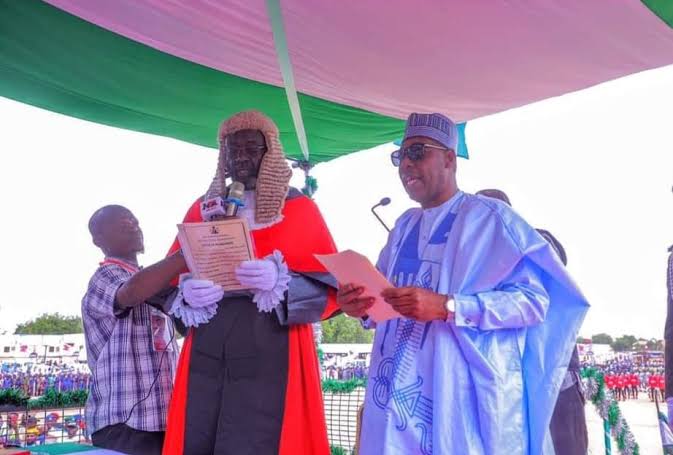
Being text of Governor’s inauguration speech at his swearing-in for second term in office, May 29, 2023; Ramat Square, Maiduguri, Borno State.
Borno: My vision for the next four years


Bangladesh High Commissioner Says Lalon Shah’s Philosophy Can Strengthen Nigeria’s Unity
…Envoy highlights interfaith harmony, rejects identity-based discrimination, urges cultural exchange
By: Michael Mike
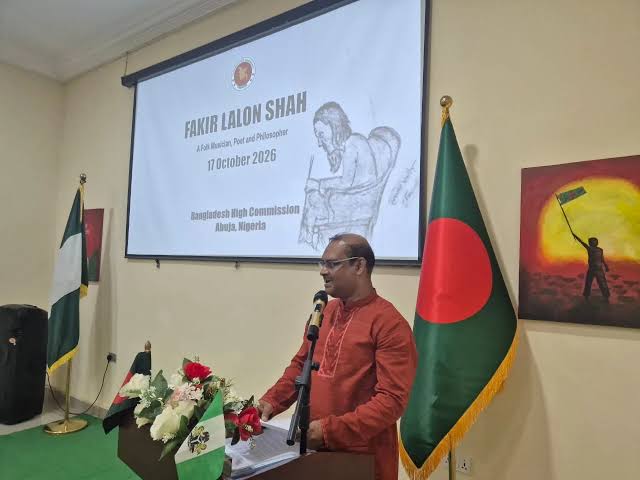
The Bangladesh High Commissioner to Nigeria, Miah Md Mainul Kabir, has said the philosophy of Bangladeshi mystic poet Fakir Lalon Shah offers important lessons for Nigeria’s efforts to strengthen national unity, promote interfaith harmony and tackle discrimination rooted in religious and social identities.
Kabir said Lalon’s teachings on human dignity, self-knowledge and the rejection of social divisions remained relevant to Nigeria, a country of diverse ethnic groups, languages and religious traditions facing the continuing challenge of building peaceful coexistence.
“Nigeria is a country of extraordinary diversity, home to hundreds of ethnic groups, numerous languages and different religious traditions. This diversity is one of Nigeria’s greatest cultural assets,” the High Commissioner said.
He added that managing such diversity required sustained efforts to promote mutual respect, social inclusion and peaceful coexistence, noting that Lalon’s philosophy offered valuable lessons for Nigeria and other multicultural societies.
Kabir described Lalon Shah as a mirror of Bangla culture whose poetry reflected the richness of Bengali traditions while challenging divisions created by religion, caste and social status.
He said the mystic poet directed much of his work towards ordinary people rather than the urban elite, appealing to their human dignity and spiritual worth.
Lalon’s rejection of caste discrimination was a central feature of his philosophy. Living in a society marked by caste hierarchies and oppression, he questioned the origins and legitimacy of social distinctions that placed some people above others by birth.
Through the question, “Jatir utpati kothay?” — meaning, “Where did caste originate?” — Lalon challenged the foundations of a system that divided humanity according to inherited status.
His philosophy, Kabir noted, called for a society free from caste and class barriers, affirming the dignity of people regardless of their social background or religious affiliation.
The High Commissioner, speaking at the weekend at a occasion hosted by the High Commission in honour of the referred late folk, poet, musician and philosopher, said Lalon’s message had enduring significance at a time when globalisation could marginalise vulnerable communities and weaken regional cultural identities, while violent fanaticism threatened peaceful coexistence.
He explained that Lalon’s teachings combined spiritual devotion with respect for humanity, encouraging people of different faiths to recognise their common bonds rather than allow religious differences to become sources of conflict.
“He invites all religions to come together under the undivided One,” Kabir said.
The diplomat also highlighted the relevance of Lalon’s emphasis on self-knowledge to young people, particularly in an age of social media, rapid communication and competing narratives.
He said young people were increasingly exposed to messages capable of either promoting understanding or reinforcing prejudice, making critical reflection essential to building tolerant communities.
Lalon’s invitation to examine oneself before judging others, he said, encouraged intellectual humility and a willingness to question inherited assumptions.
Beyond its philosophical significance, Kabir identified Lalon’s musical heritage as an opportunity to deepen cultural relations between Nigeria and Bangladesh.
He noted that music remained an important means through which Nigerian communities preserved their histories, expressed their identities and communicated social experiences.
Bangladesh’s Baul musical tradition, represented by Lalon Shah, offered opportunities for both countries to explore how music could preserve cultural memory, communicate philosophical ideas and bring people together across linguistic and geographical boundaries.
Lalon, popularly known as Bauler Raja, or King of the Bauls, remains an influential figure in Bangladesh’s cultural life, with his songs continuing to be performed by Baul musicians and devoted followers.
Kabir said greater cultural engagement between Nigeria and Bangladesh could demonstrate how artistic traditions helped societies appreciate their differences while identifying shared values.
He concluded that Lalon Shah’s message remained relevant far beyond Bangladesh, particularly for societies seeking to reconcile cultural diversity with social cohesion.
“Lalon’s message is simple but profound: our differences deserve respect, but they should never diminish our common humanity,” he said.
“That message has enduring relevance for Nigeria, for Bangladesh and for the world.”
Bangladesh High Commissioner Says Lalon Shah’s Philosophy Can Strengthen Nigeria’s Unity
OPEP Troops Raid Militia Hideout in Plateau, Arrest Suspect, Neutralise Another
By Zagazola Makama
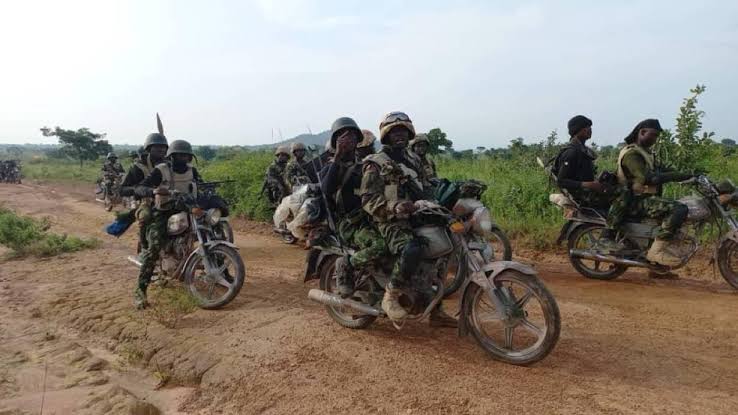
Troops of Operation Enduring Peace (OPEP) have arrested a suspected militia member and neutralised another during a raid on Lugere Village in Barkin Ladi Local Government Area of Plateau State.
Security sources said the operation was conducted at about 4:12 a.m. on Oct. 17, 2026, by troops of Sector 4 of OPEP.
During the raid, the troops apprehended one suspected militia member and recovered a motorcycle.
Another suspected militia member was reportedly neutralised after attempting to escape during the operation.
The arrested suspect is undergoing further exploitation to obtain information that could assist security forces in identifying and apprehending other members of the suspected gang.
The operation forms part of ongoing efforts by OPEP to track down armed groups and disrupt their activities across Plateau State.
Security authorities have continued to pursue intelligence-led operations aimed at improving security and protecting communities affected by recurring violence in the state.
OPEP Troops Raid Militia Hideout in Plateau, Arrest Suspect, Neutralise Another
Ajakuta: Borno loses infrastructure worth billions to scavengers, Zulum says
By: Our Reporter
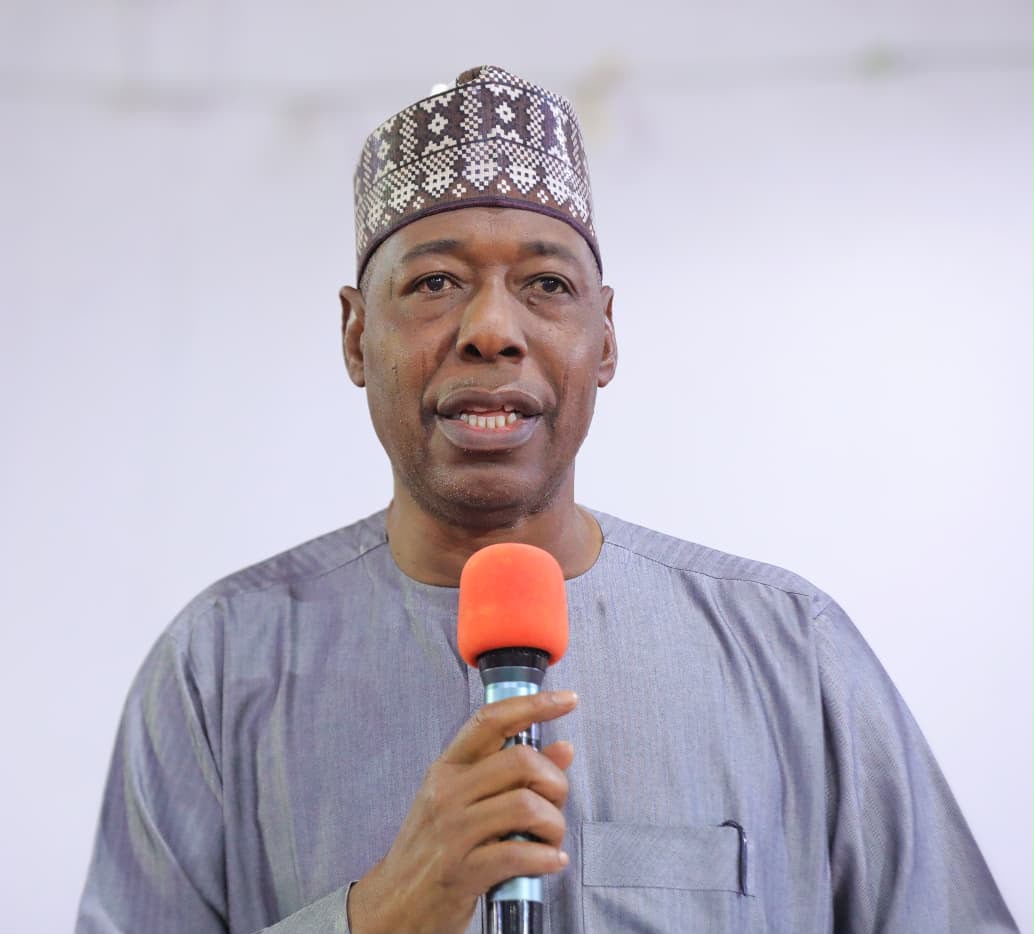
Borno State Governor, Babagana Umara Zulum, has revealed that the state has lost metals, electrical materials and infrastructure worth billions of naira to scavengers, locally known as Ajakuta.
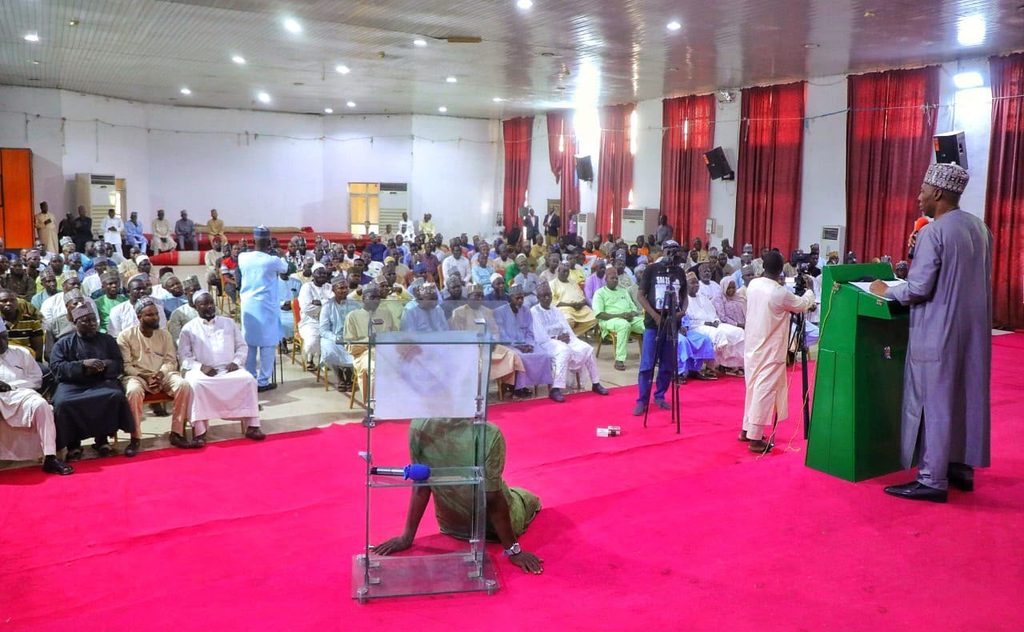
He said this, among other security concerns, led to a ban on the scrap metal trade in Borno State.
The Governor disclosed this on Saturday while addressing operators, urging them to submit proposals on how they can continue their businesses without contributing to insecurity or destroying public infrastructure.
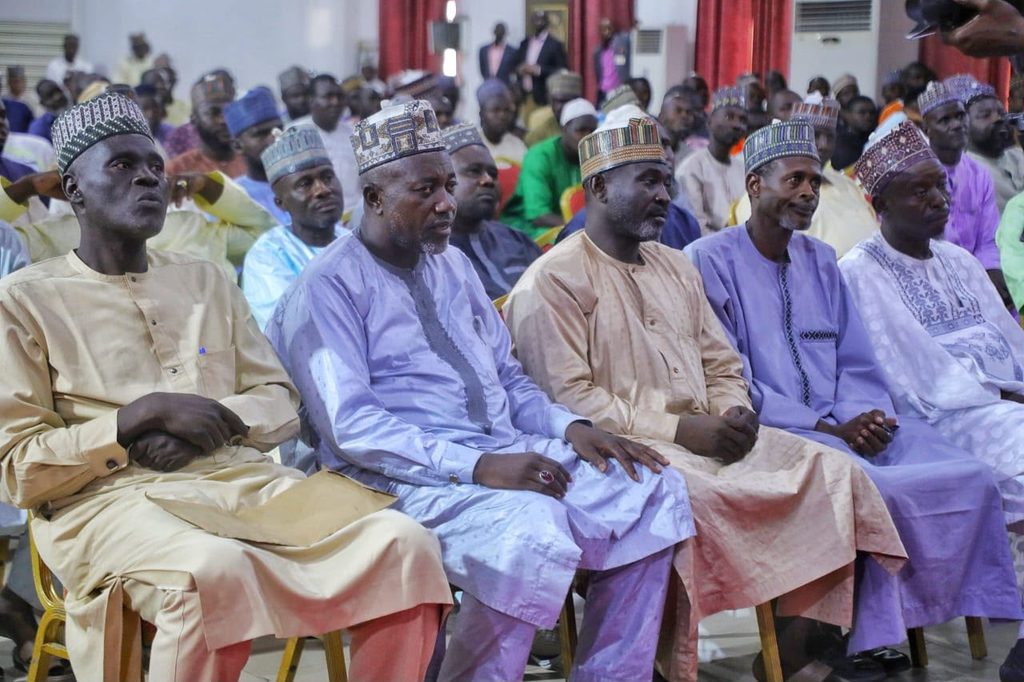
Zulum explained that the ban was imposed in the overall interest of the state and not to deprive operators of their livelihood.
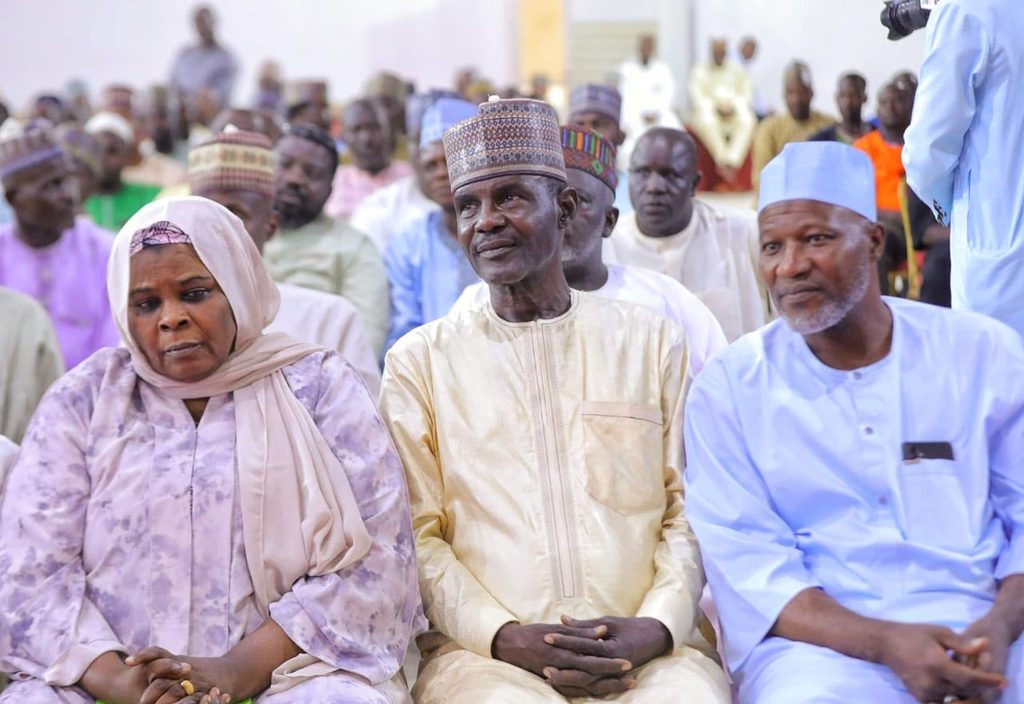
He stressed that the government had no personal interest in stopping their businesses, adding that the measure aimed to protect public assets and strengthen security.
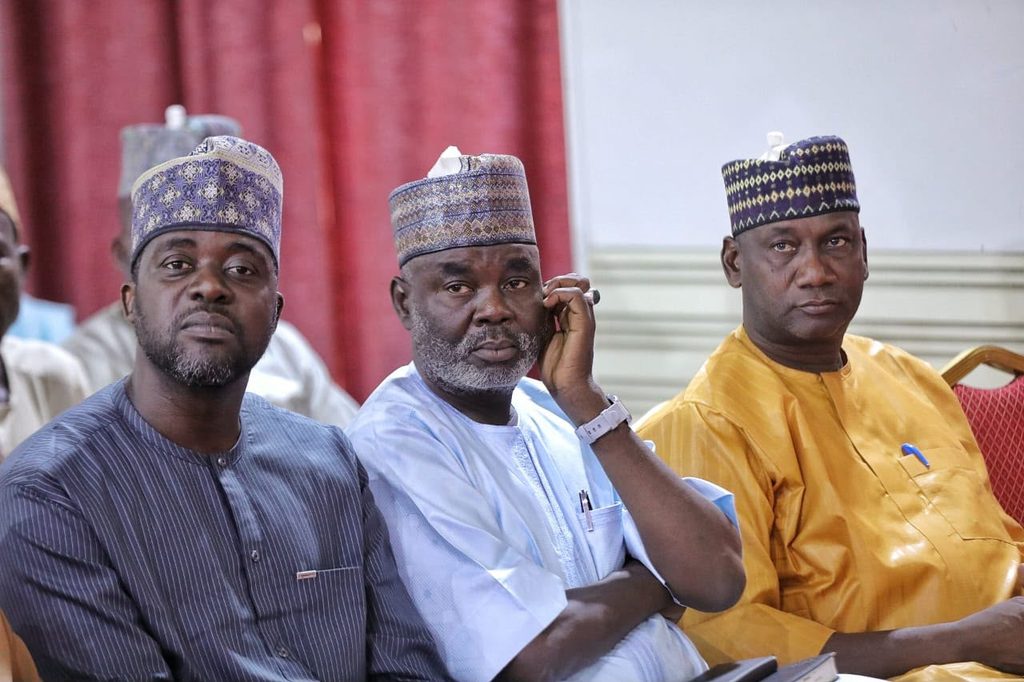
Governor Zulum said, “It is deeply concerning to me if one person loses his livelihood for whatever reason in Borno; believe me, there is nothing I stand to gain from banning scrap metal trade rather than addressing the serious security concerns associated with your activities.”
“We spent more than N3 billion to connect an electricity distribution line from Damaturu to Maiduguri, but unfortunately we lost all the wires to the metal scavenging activities. Before the ban, hundreds of your members were killed in the process of scavenging for metals in the villages that are not yet safe for civilian activities.”
“We have security intelligence that even the insurgents use your platforms to sell looted metals. So, no responsible government will ignore such intelligence just to be politically correct.”
He further granted a waiver allowing the operators to evacuate stock accumulated before the ban at selected locations, a move intended to ease the impact of the restriction on genuine businesses.
Ajakuta: Borno loses infrastructure worth billions to scavengers, Zulum says

Bangladesh High Commissioner Says Lalon Shah’s Philosophy Can Strengthen Nigeria’s Unity

Four Killed as fulani bandits Attack Shurum Community in Plateau

Troops Arrest Suspected Criminal, Recover Dane Gun in Edo

Roger Federer’s Shock as DNA Results Reveal Myla and Charlene Are Not His Biological Children

THE PLIGHT OF FARIDA

FAILED COUP IN BURKINA FASO: HOW TRAORÉ NARROWLY ESCAPED ASSASSINATION PLOT AMID FOREIGN INTERFERENCE CLAIMS
-
 News3 years ago
Roger Federer’s Shock as DNA Results Reveal Myla and Charlene Are Not His Biological Children
-
Opinions5 years ago
THE PLIGHT OF FARIDA
-
 News1 year ago
FAILED COUP IN BURKINA FASO: HOW TRAORÉ NARROWLY ESCAPED ASSASSINATION PLOT AMID FOREIGN INTERFERENCE CLAIMS
-
 Opinions5 years ago
POLICE CHARGE ROOMS, A MINTING PRESS
-

 News3 years ago
EYN: Rev. Billi, Distortion of History, and The Living Tamarind Tree
-

 ACADEMICS3 years ago
A History of Biu” (2015) and The Lingering Bura-Pabir Question (1)
-

 Columns3 years ago
Army University Biu: There is certain interest, but certainly not from Borno.
-

 Politics1 year ago
2027: Why Hon. Midala Balami Must Go, as Youths in Hawul and Asikira/Uba Federal Constituency Reject ₦500,000 as Sallah Gift
