
Northeast
Borno: Zulum opens Miringa Medical Centre


Borno: Zulum opens Miringa Medical Centre
By: James Bwala
In response to a peaceful roadside demonstration by some residents, Borno State Governor, Professor Babagana Zulum on Thursday, travelled to Miringa town in Biu Local Government Area to open a Medical Centre said to have been funded by Chevron Nigeria Limited through collaboration with an “Agbami Group”.
The Medical Centre was said to have been completed and virtually commissioned in October 2020, but had no staff and was not put to public use.
On Tuesday, dozens of residents in Miringa town stood by the roadside while Governor Zulum’s convoy was heading to Biu Township from Buratai.
Majority of the residents displayed placards urging the Governor to open a Medical Centre that was left unused since 2020 when it was completed.

The Governor came out of his vehicle, interacted with the residents to hear their demand, and thereafter promised to address their need within 48 hours.
Zulum immediately directed the Borno State Ministry of Health and the Special Adviser on Projects Monitoring and Evaluation to relocate a team and mobilize resources for the purpose of assessing the facility, fixing any problems, and putting the centre to public use.
To see things for himself, the Governor was in Miringa, and during his inspection of the Medical Centre, Commissioner of Health and Human Services, Professor Mohammed Arab Alhaji said his team had repaired some leakages found from ceilings and was deploying two nurses to join 41 community health workers deployed from a neighboring healthcare centre.
Also Read:
2023: Tinubu will get 80% of South-West votes, says
Arab explained that the Medical Centre was constructed and fully equipped by Chevron through a collaboration with Agbami Group.
He said Chevron’s collaboration had provided a 100 KVA generator, a solar system, and water facilities to the Medical Centre and commissioned it virtually in 2020.
However, residents informed the Governor that the Medical Centre was never put to use since it was completed.

Zulum thanked Chevron and its partner, Agbami Group, for the healthcare intervention in Miringa and directed that medical services should begin.
… Orders construction of staff quarters, fencing
Governor Zulum directed that the opened Medical Centre be fenced immediately.
He also directed the construction of staff quarters to accommodate medical staff, and make them readily available to meet healthcare needs.
… Approves staff employment, gifts them N1m
Aside from directing structures, Governor Zulum directed the recruitment of medical staff specifically for the donated and opened Medical Centre.
Zulum interacted with temporary staff, assessed their qualification and directed the permanent employment of all those with healthcare qualifications.
The Governor also directed that anyone desirous of furthering his or her medical education was going to be supported by Borno State Government provided he or she is returning to Miringa to continue providing healthcare services.
Borno: Zulum opens Miringa Medical Centre


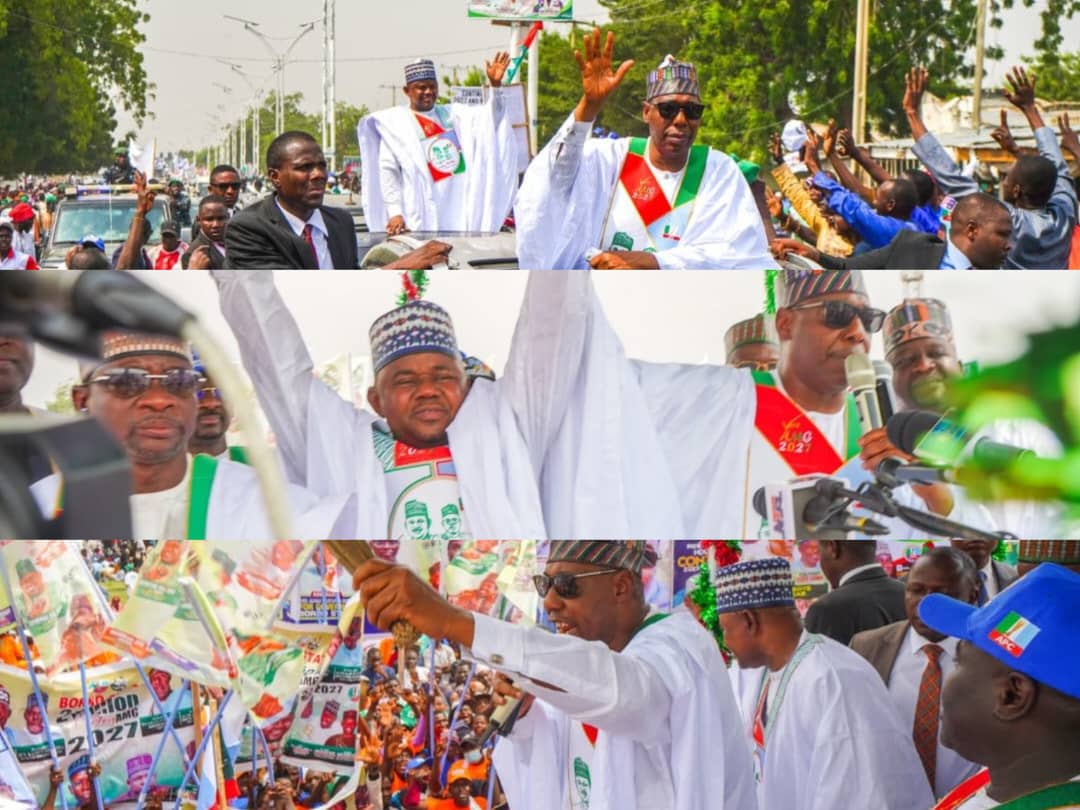
Borno 2027: The General’s Charge and How Zulum Unleashes Borno’s Heavyweight Political Squad
By Abubakar M. Kareto
In Nigerian politics, elections are rarely won on auditorium stages; they are decided in the quiet corridors of rural wards and the long queues of remote polling units.
The formal inauguration of the Borno State All Progressives Congress (APC) Campaign Council at the Government House followed by a massive, open-air campaign flag-off at the Sports Centre in Maiduguri represents a calculated departure from routine rally-making toward micro-targeted grassroots mobilization.
By commanding party stalwarts to abandon executive comfort and embed themselves directly within their local communities, Governor Babagana Umara Zulum is deploying a bottom-up doctrine aimed at locking down political legitimacy where it matters most.
At the heart of this strategy is the critical task of maintaining party cohesion after intense internal primaries. Zulum’s explicit instruction for victorious candidates to reach out and heal rifts with aggrieved aspirants reflects a realistic understanding of political arithmetic: internal resentment erodes turnout faster than any opposition campaign. By coupling reconciliation with firm warnings against subversion, the leadership is attempting to forge an unbreakable front out of potentially volatile factions.
The sheer scale of political unity displayed in Maiduguri underscores the formidable nature of this campaign structure. Bringing together political titans including former Governors Senator Maina Ma’aji Lawan and Senator Ali Modu Sheriff, alongside APC Deputy National Chairman Ali Bukar Dalori and the state’s complete senatorial delegation demonstrates an unprecedented level of internal alignment.
This public display of solidarity among historical heavyweights signals organizational stability, minimizing space for opposition inroads while keeping rank-and-file members firmly aligned.
Beyond local dynamics, Borno State occupies a unique position on the national political chessboard as the home state of Vice President Senator Kashim Shettima. In this high-stakes arena, sheer victory is insufficient; the turnout margin itself serves as a barometer of political influence.
Delivering a massive vote tally is therefore both a local objective and a strategic demonstration of national strength, cementing the state’s leverage within the governing alliance.
To turn political influence into actual votes, the campaign relies heavily on record-based persuasion and visible governance dividends. By grounding the campaign pitch in key developmental gains achieved despite severe security challenges and highlighting major federal institutions acquired in Gwoza, Bama, and Azare canvassers are equipped with a tangible policy narrative. Framing voter turnout for President Bola Ahmed Tinubu, gubernatorial candidate Engr. Mustapha Gubio, and all legislative candidates as a direct return on investment gives party workers a clear, evidence-backed story for every doorstep across the state’s 27 local government areas.
A vital strength of this expanded outreach is the deliberate inclusion of women and youth as core engines of voter mobilization. The strong presence of the women’s delegation led by Borno First Lady Dr. Falmata Babagana Umara Zulum alongside the wife of the Deputy Governor and the wives of party candidates highlights an organized effort to engage families and community networks directly. Demanding structured participation across all demographics ensures that campaign directives actively translate into voter registration and turnout.
Deputy Governor Umar Usman Kadafur’s commitment to an issue-based, unit-by-unit campaign outlines the operational mechanics needed to execute this vision. Requiring regular field reports creates a system of measurable accountability across every precinct. In a vast state with complex logistics, such systematic tracking ensures that high-level strategy is actively carried out at every single polling station.
Lastly, the Maiduguri launch demonstrates how strategic discipline, elite reconciliation, and precinct-level focus converge to shape electoral outcomes. In an increasingly competitive political landscape, the Borno APC has laid out a clear blueprint: harness the full weight of a unified leadership squad, but win the election one polling unit at a time.
About the Author
Abubakar M. Kareto is a Public Affairs Analyst and Communications Strategist focusing on governance, policies, economy, and institutional reforms across Nigeria and Africa. He can be reached on X @amkareto and via email at amkareto@gmail.com.
Borno 2027: The General’s Charge and How Zulum Unleashes Borno’s Heavyweight Political Squad
Northeast
Diaspora Investment: NiDCOM, NDSI Move to Bridge Trust Deficit, Unlock Billions in Nigerian Capital

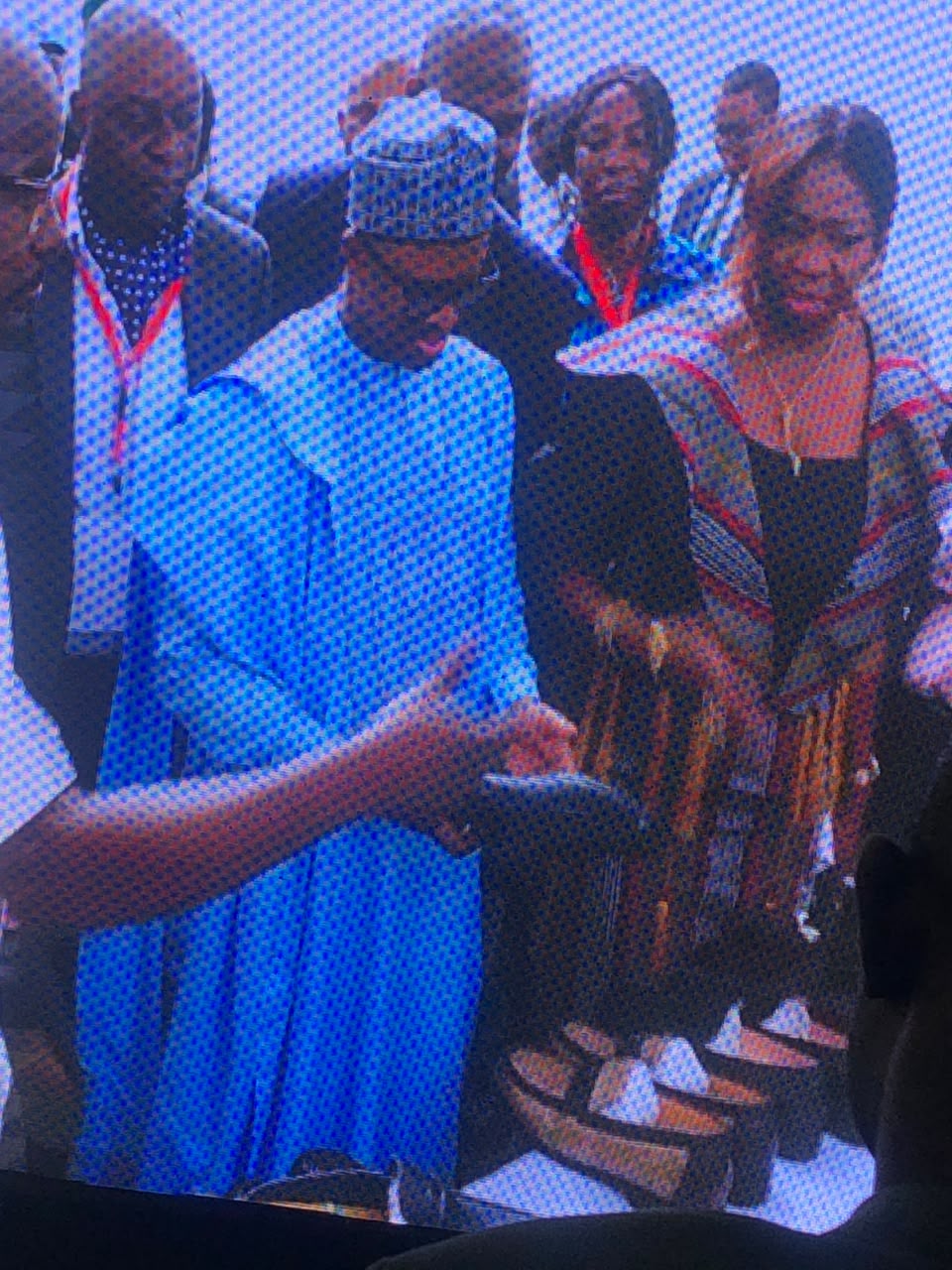
Diaspora Investment: NiDCOM, NDSI Move to Bridge Trust Deficit, Unlock Billions in Nigerian Capital
…Investors demand credible projects, transparency, stronger safeguards as regulators open direct engagement with Nigerians abroad
By: Michael Mike
Nigeria is seeking to unlock billions of dollars in potential diaspora investments by confronting the trust deficit, weak investment transparency and inadequate investor protection mechanisms that have discouraged many Nigerians abroad from committing capital to projects at home.
The Nigerians in Diaspora Commission (NiDCOM) and the Nigeria Diaspora Summit Initiative (NDSI) have identified the credibility of investment opportunities, regulatory transparency and accountability in project execution as critical to converting diaspora financial resources into productive investments capable of driving economic growth.
Chairman/Chief Executive Officer of NiDCOM, Hon. Abike Dabiri-Erewa, said Nigeria’s diaspora community possessed enormous financial, professional, entrepreneurial and intellectual resources that could support the country’s ambition to build a $1 trillion economy if credible investment channels and adequate institutional safeguards were put in place.
Dabiri-Erewa spoke on Tuesday at the opening of the ninth Nigeria Diaspora Investment Summit (NDIS) 2026, organised around the theme, “Bridging the Trust Gap: Connecting Diaspora Capital with Credible Home-Based Opportunities.”
She said the time had come to move diaspora engagement beyond remittances and informal investment arrangements to structured, transparent and commercially viable opportunities capable of generating sustainable economic returns.
According to her, although Nigerians in the diaspora contribute billions of dollars annually through remittances, their wider investment potential remains largely untapped because of concerns over transparency, unreliable project information, opaque transactions and fraudulent investment schemes.
She identified the knowledge gap and trust deficit as two major barriers that have continued to constrain the flow of diaspora capital into productive sectors of the Nigerian economy.
“Unlocking diaspora capital requires more than passion or patriotism; it demands institutional transparency, robust regulatory safeguards, verified service providers, and clear investor protection frameworks,” she said.
The NiDCOM chief executive said the Commission was committed to transforming diaspora engagement from general advocacy into structured, secure and profitable investment pathways.
She explained that the summit had been designed to give prospective investors direct access to institutions responsible for regulating Nigeria’s financial markets, facilitating infrastructure investments and improving the business environment.
The first day’s deliberations focus on capital market opportunities, with the Securities and Exchange Commission (SEC), Nigerian Exchange Group (NGX), Central Bank of Nigeria (CBN) and Ministry of Finance Incorporated (MOFI) expected to guide participants on regulated financial instruments, investment risks, entry requirements and dispute resolution mechanisms.
The second day is dedicated to infrastructure and regulatory frameworks, with the Infrastructure Concession Regulatory Commission (ICRC), Nigerian Sovereign Investment Authority (NSIA), MOFI and Corporate Affairs Commission (CAC) expected to provide information on infrastructure projects and investment opportunities under Public-Private Partnerships.
Other participating institutions, including the Presidential Enabling Business Environment Council (PEBEC) and Nigerian Export Promotion Council (NEPC), are expected to address business registration, regulatory compliance, anti-fraud safeguards, property documentation and reforms aimed at improving the business environment.
Dabiri-Erewa said the interactive sessions would enable diaspora investors to engage directly with regulators, scrutinise investment opportunities and obtain answers to questions relating to due diligence and the protection of their funds.
She urged Nigerians abroad to move away from informal and unverified investment channels and take advantage of the institutional mechanisms being presented at the summit.
“Under the Renewed Hope Agenda of President Bola Ahmed Tinubu, Nigeria is open, improving, and ready for your structured engagement,” she said.
She also challenged regulatory agencies, financial institutions and service providers participating in the summit to demonstrate transparency and strengthen the confidence of Nigerians abroad in the country’s investment environment.
In his welcome address, Chairman of the Summit Organising Committee and NDIS Coordinator, Mobolaji Lewis, said the central challenge confronting diaspora investment was not necessarily a lack of interest or financial capacity among Nigerians abroad, but persistent concerns about the credibility of investment opportunities and the protection of their funds.
He identified transparency, regulatory procedures, project execution, financial accountability and investor protection as critical factors influencing the willingness of Nigerians abroad to commit capital to the domestic economy.
Lewis said the summit had evolved into an important platform for connecting Nigerians in the diaspora with investment opportunities, institutions and stakeholders in Nigeria, while providing an avenue to convert their financial resources, professional expertise, entrepreneurial capabilities and global networks into productive investments.
He explained that the decision to scale down the physical summit in 2026, against the backdrop of the national election campaign season, informed the adoption of a two-day virtual engagement to sustain investment promotion and institutional collaboration.
According to him, the organisers deliberately moved beyond merely showcasing investment opportunities to helping prospective investors understand how to identify, verify, access and participate in credible projects in Nigeria.
“Building investor confidence requires a coordinated institutional response. No single organisation can independently address all the concerns of prospective investors,” Lewis said.
He urged participating regulators, financial institutions and government agencies to make their presentations practical, transparent and investor-focused, while encouraging Nigerians abroad to ask questions, seek clarification and engage directly with institutions responsible for facilitating and regulating investments.
Lewis said the success of the programme should not be measured merely by the number of participants or presentations, but by the quality of engagements established, the confidence generated and the investment partnerships that emerge.
He added that the 2026 engagement would lay the groundwork for the full Nigeria Diaspora Investment Summit in 2027, which would mark the 10th anniversary of the initiative.
The summit is being organised by NDSI in collaboration with NiDCOM, with support from corporate partners, including First Bank of Nigeria Plc, O3 Capital and AG Mortgage.
Nigeria’s renewed effort to attract diaspora investment comes against the backdrop of its longstanding dependence on remittances from citizens abroad as an important source of foreign exchange and household support.
However, converting a greater proportion of these financial flows into long-term productive investments remains a major policy challenge, particularly in an environment where prospective investors demand verifiable projects, transparent transactions, effective oversight and credible mechanisms for resolving disputes.
For the organisers, the challenge therefore goes beyond persuading Nigerians abroad to bring their money home. It is about rebuilding confidence in the country’s investment environment and ensuring that diaspora resources translate into viable businesses, infrastructure and sustainable economic opportunities.
Ultimately, the success of the initiative will depend not on how strongly Nigeria appeals to the patriotism of its citizens abroad, but on how convincingly it demonstrates that their investments are safe, their interests protected and the opportunities presented are capable of delivering sustainable returns.
That is the trust gap the ninth Nigeria Diaspora Investment Summit seeks to bridge, making confidence, rather than patriotism alone, the foundation for bringing diaspora capital into Nigeria’s economy.
Diaspora Investment: NiDCOM, NDSI Move to Bridge Trust Deficit, Unlock Billions in Nigerian Capital
Governor Buni urges citizens to emulate Justice Uwani
By: Yahaya Wakili
Yobe State governor, Hon. Mai Mala Buni CON, COMN, has called on the people of the state to emulate the former supreme court judge, Justice Uwani Abba Aji CFR, as good ambassadors of the state.
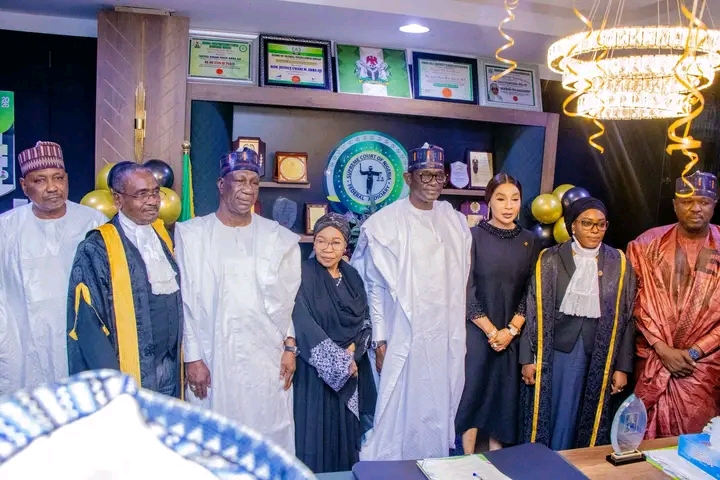
Governor Buni stated this today while attending the valedictory session in honour of the retirement of supreme court judge and distinguished daughter of the state, Justice Uwani Abba Aji CFR.
The governor was accompanied by the Yobe state APC gubernatorial candidate, Alhaji Baba Malam Wali mni, his running mate, Barr. Saleh Samanja, and Senator Mohammed Ibrahim Bomai, Yobe South Senatorial District.
Others dignitaries accompanied the governor include the State Commissioner for Justice, Prof. Abubakar Kagu; the Chief of Staff to the Governor, Buni; Alhaji Abdullahi Gashu’a, Special Adviser on Religious Affairs; and some permanent secretaries.
Similarly, Alhaji Saleh Abubakar DG Great Green Wall, Alhaji Muhammadu Wali Nguru, Barr. Bala Haladu, Engr. Ahmed Amshi and other prominent sons and daughters of the state were at the supreme court to celebrate the glorious exit of the legal luminary from the service.
The Chief Judge of Nigeria, Hon. Justice Kudirat Kekere-Ekun GCON, alongside His Excellency Governor Mai Mala Buni, the Minister of Justice, the Nigeria Bar Association and others, applauded Justice Uwani for her commitment and humility.
Governor Buni prayed to Almighty Allah to grant her a long life and a happy and peaceful life in retirement, Ameen.
Governor Buni urges citizens to emulate Justice Uwani

2027: TAF-Africa urges INEC, security agencies to ensure inclusive voting

Borno 2027: The General’s Charge and How Zulum Unleashes Borno’s Heavyweight Political Squad

Troops Intercept Abandoned Toyota Camry Loaded with 315 Sachets of Suspected Indian Hemp in Kaduna

Roger Federer’s Shock as DNA Results Reveal Myla and Charlene Are Not His Biological Children

THE PLIGHT OF FARIDA

FAILED COUP IN BURKINA FASO: HOW TRAORÉ NARROWLY ESCAPED ASSASSINATION PLOT AMID FOREIGN INTERFERENCE CLAIMS
-
 News3 years ago
Roger Federer’s Shock as DNA Results Reveal Myla and Charlene Are Not His Biological Children
-
Opinions5 years ago
THE PLIGHT OF FARIDA
-
 News2 years ago
FAILED COUP IN BURKINA FASO: HOW TRAORÉ NARROWLY ESCAPED ASSASSINATION PLOT AMID FOREIGN INTERFERENCE CLAIMS
-
 Opinions5 years ago
POLICE CHARGE ROOMS, A MINTING PRESS
-

 News3 years ago
EYN: Rev. Billi, Distortion of History, and The Living Tamarind Tree
-

 ACADEMICS3 years ago
A History of Biu” (2015) and The Lingering Bura-Pabir Question (1)
-

 Columns3 years ago
Army University Biu: There is certain interest, but certainly not from Borno.
-

 Politics1 year ago
2027: Why Hon. Midala Balami Must Go, as Youths in Hawul and Asikira/Uba Federal Constituency Reject ₦500,000 as Sallah Gift
