
News
BOSG urges accounting officers on strict compliance to 2024 budget, increases Target of Internally Generated Revenue in the state

BOSG urges accounting officers on strict compliance to 2024 budget, increases Target of Internally Generated Revenue in the state
By Babagana Wakil
The Borno State government has urged all accounting officers and Director finance in the state to operate within the funds approved in the 2924 budget as assented to by Governor Babagana Zulum.
The state commissioner for Budget and Planning, Professor Mustapha Malumbe who made the call Monday at a press briefing with journalists on 2024 approved budget held at the international conference hall of Usman Musa state secretariat Maiduguri said,”this budget is not just about numbers; it embodies a vision for a more prosperous, secure, and equitable future for all. Consolidation underscores Government’s commitment to building upon the successes of the past year,” .
The Commissioner said “the success or otherwise of this policy will largely depend on each and every one of us. I therefore, crave your indulgence to operate strictly within the bounds of the budget so as to achieve the set objectives”
He said the Borno State government has targeted N27.7 billion Internally Generated Revenues (IGR) with a budget performance of between 80 and 90 percent in 2024 fiscal year, stressing that thee improved budget implementation, was attributed to statutory allocation revenue from the Federal Government and payments of ground rents that raised IGR by 25 per cent.
“This budget is not just about numbers; it embodies a vision for a more prosperous, secure, and equitable future for all. Consolidation underscores Government’s commitment to building upon the successes of the past year,” Malumbe said
He also advised the accounting and finance officers to note that the budget document is a set of policy guide which will enable MDAs operate during the 2024 fiscal year, pointing out that, no request for funds not funded in the budget will be entertained.”
Malumbe said the 2024 Budget is saddled with Government’s commitment in Building on the foundation laid in the previous years; this year’s budget tagged “Budget of Consolidation and Progress marks a significant step forward in the shared journey towards achieving long-term goals.”
The commissioner further explained that the State Government will continue to strengthen fiscal discipline, invest in key infrastructure projects, and implement reforms that create a more enabling environment for businesses and individuals to thrive..
” This budget also embodies progress. Government will be making strategic investments in areas critical for sustained growth and development, such as Education, Healthcare, Works and Reconstruction to also champion initiatives that empower vulnerable communities, return of IDPs and bridge the gap between opportunity and disadvantage,” he added.
“”The expenditure proposals for the fiscal year 2024, aims to strengthen the accomplishments achieved so far and further ensure the delivery of democratic dividends, especially in the realms of socio-economic and political development of the State,” the commissioner said.lb
He further explained also that the 2024 Approved Budget was also in line with the ‘State Government’s Medium Term Expenditure Framework’ wq (MTEF 2024 – 2026) approved by the Borno State House of Assembly, the ‘Strategic Transformation Initiative’ (STI) for 2024 and 25-year State Development Plan in an effort of building Borno Back and Better.
He also emphasized on the key objectives and priorities outlined in the MTEF for the current budgeót yea which include amongst others the complete return and resettlement of all IDPs to their ancestral homes, completion of all on-going projects in the State and
He noted that the aim was to ensure food security and also mitigate some of the negative impacts of climate change, thus providing livelihoods for our rural population and to reduce over-dependence on Federal transfers through improved independent revenue generation achievable via a technological-driven and independent Board of Internal Revenue;
Professor Mustapha Babagana revealed that thhis would involve implementation of programmes that generate employment and create wealth and ensure adequate security while comparing the 2023 budget size which was N235,331,950,000.00 and made up of capital expenditures, based on the fiscal forecast and guidelines provided in the Medium-Term Expenditure Framework (MTEF 2023 – 2025) and aligned to the Budget Estimates.
He said the overall 2023 Budget Performance stood at 74.4% and during the 2024 fiscal year government is going to establishment specialized hospitals and schools of Nursing in the three senatorial district of the state. Construction of ICT centers, Government Lodges, teachers and health workers quarters. Procurement of equipment to the State University Teaching Hospital and completion, provision of scholarships to indigenous people to study nursing and midwifery courses and sponsor students in various fields of study, especially Science, Technology, Engineering, and Mathematics (STEM) courses, languages, and training of pilots
He said the 2023 budget is not without challenges, however because of the doggedness of His Excellency and the resilience of the people there was a huge success in implementation of the budget such as challenges security situation of ongoing Boko Haram .insurgency,, economic recovery and Internally displaced persons (IDPs): The large number of IDPs in the state informed additional resources require to alddress the challenges among others.
BOSG urges accounting officers on strict compliance to 2024 budget, increases Target of Internally Generated Revenue in the state


Zulum Appoints Engr Peter Samuel as General Manager BOSAMA
By: Our Reporter
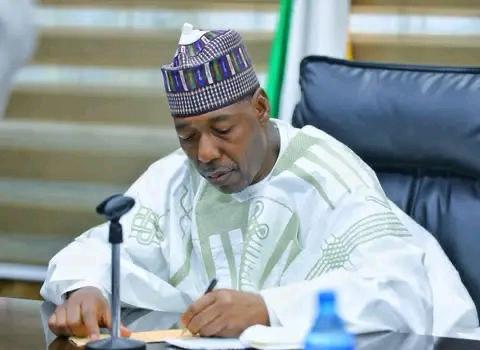
Borno State Governor, Professor Babagana Umara Zulum, has approved the appointment of Engr Peter Samuel, MNSE, MNIAE, as the General Manager of Borno State Agricultural Mechanization Authority (BOSAMA).
In a statement by the Special Adviser to the Governor on Media, Dauda Iliya, the appointment was based on Engr Samuel’s outstanding professional competence, proven track record, and experience in agricultural engineering and mechanization.
The statement noted that Engr Samuel possesses the requisite qualifications, technical expertise and leadership capacity required to reposition BOSAMA in line with Governor Zulum’s agricultural transformation agenda.
The newly appointed General Manager is an Agricultural Engineer with academic, professional, administrative, and practical experience in agricultural mechanization, farm power and machinery, irrigation engineering, and agricultural infrastructure development.
He holds a Master of Engineering (M.Eng.) in Farm Power and Machinery from Joseph Sarwuan Tarka University, Makurdi (formerly the Federal University of Agriculture, Makurdi), a Postgraduate Diploma in Farm Management and Production Economics from Nasarawa State University, and a Bachelor of Engineering (B.Eng.) in Agricultural and Environmental Resources Engineering from the University of Maiduguri.
Engr Samuel has distinguished himself through years of meritorious service in teaching, research, agricultural engineering practice, and project implementation. He currently serves as a Lecturer in Farm Power and Machinery at Ramat Polytechnic, Maiduguri.
Over the years, he has held several strategic leadership positions, including General Manager of a commercial agricultural enterprise, Project Coordinator, Programme Coordinator, and Consultant on numerous agricultural development interventions implemented by reputable national and international organisations.
He is a member of the Nigerian Society of Engineers (NSE) and the Nigerian Institution of Agricultural Engineers (NIAE).
Governor Babagana Zulum congratulated the new General Manager on his appointment and urged him to deploy his wealth of knowledge, technical expertise, and experience in agricultural mechanization to strengthen the operations of BOSAMA
Zulum Appoints Engr Peter Samuel as General Manager BOSAMA
Troops Arrest Suspected Military Impostor in Katsina
By Zagazola Makama
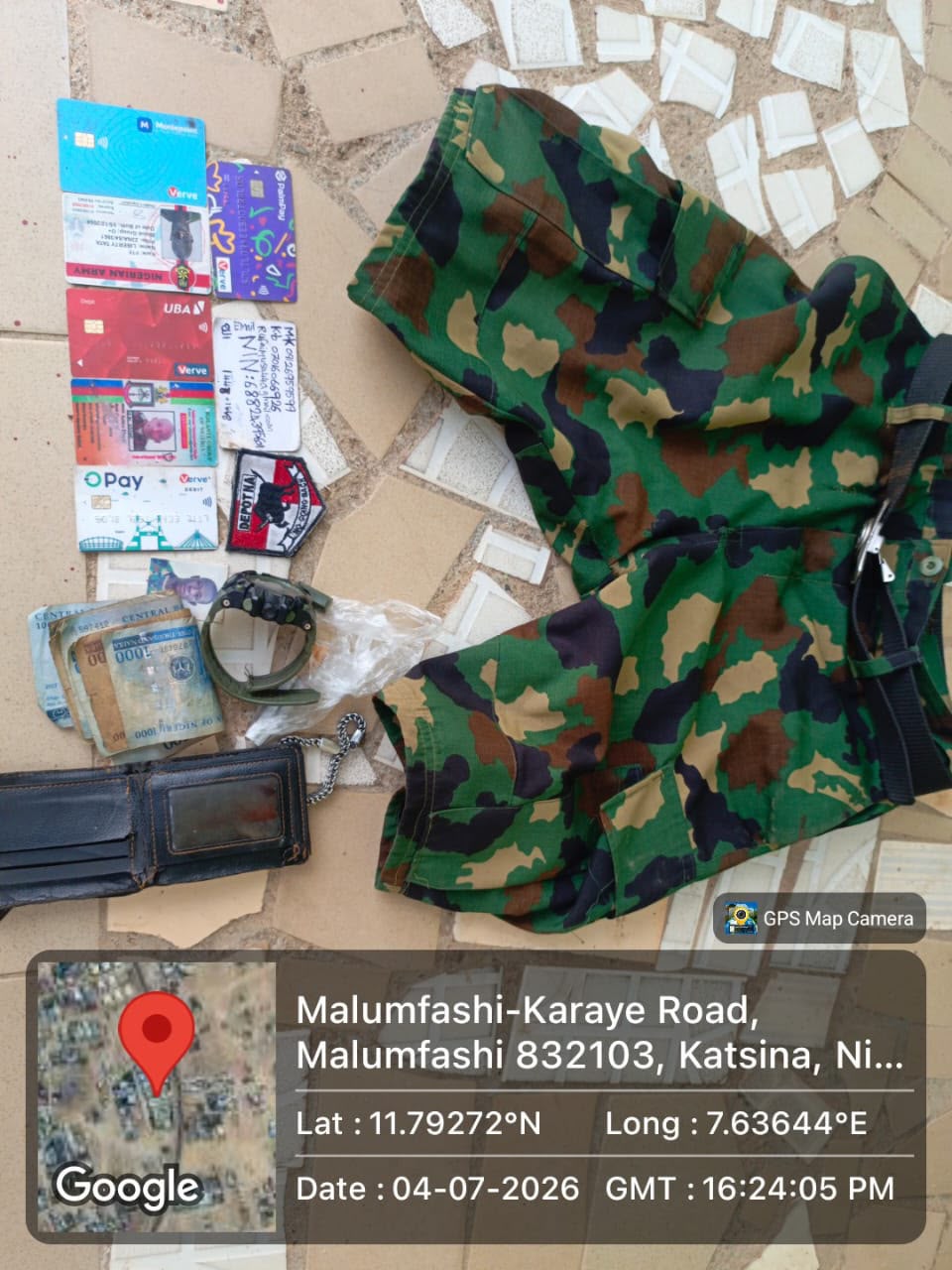
Troops of 17 Brigade have arrested a suspected military impostor during a fighting patrol in Malumfashi Local Government Area.
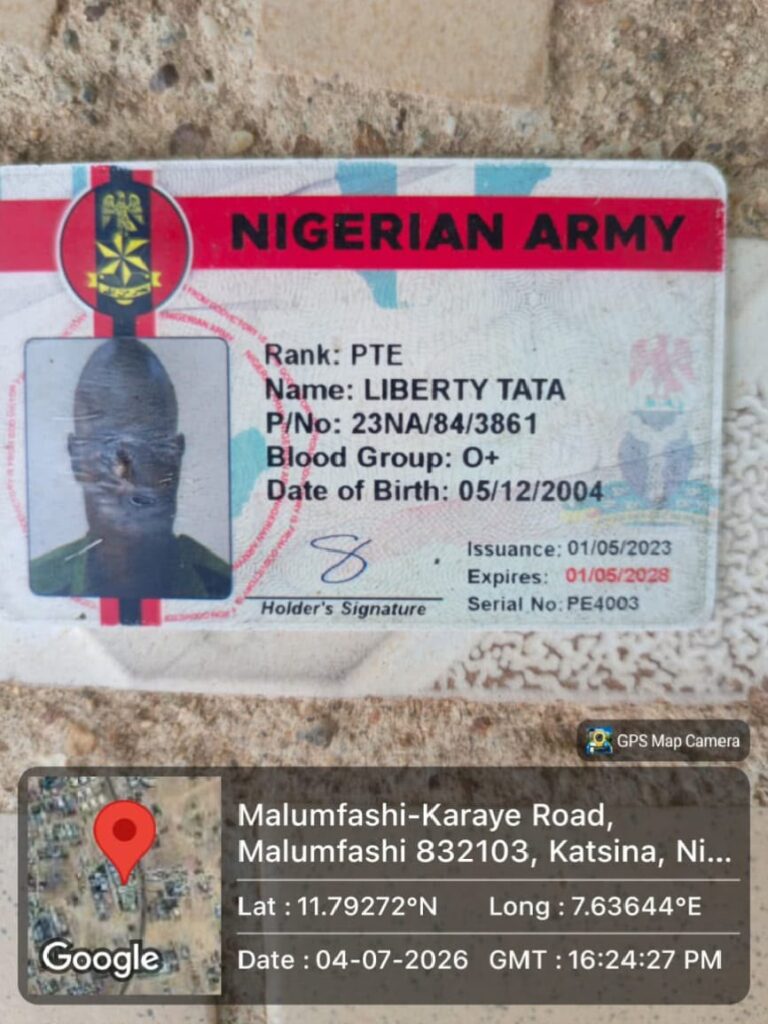
Security sources told Zagazola Makama that the suspect was apprehended at about 1:30 p.m. on July 4 by troops deployed at the Forward Operating Base (FOB) Malumfashi while conducting routine patrols within Malumfashi town.
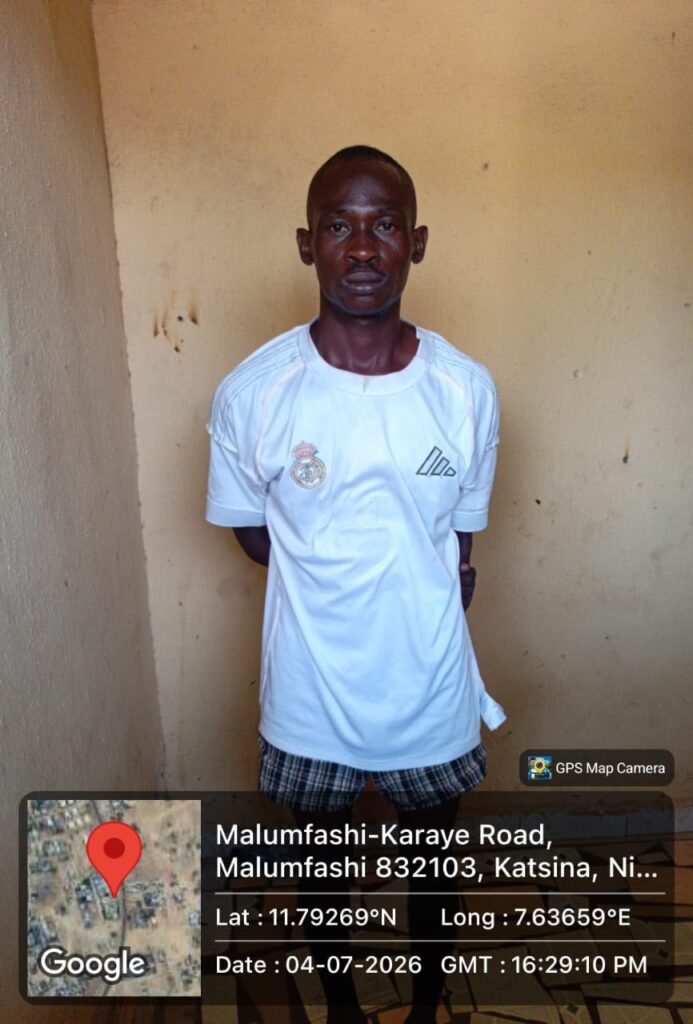
According to the sources, the suspect was intercepted while wearing a woodland camouflage three-quarter short, raising suspicion among the troops.
A search conducted on the suspect led to the recovery of a fake Nigerian Army identity card, four Automated Teller Machine (ATM) cards, one woodland camouflage three-quarter short, a wristwatch and the sum of ₦17,000.
The suspect and the recovered exhibits are currently in military custody pending further investigation.
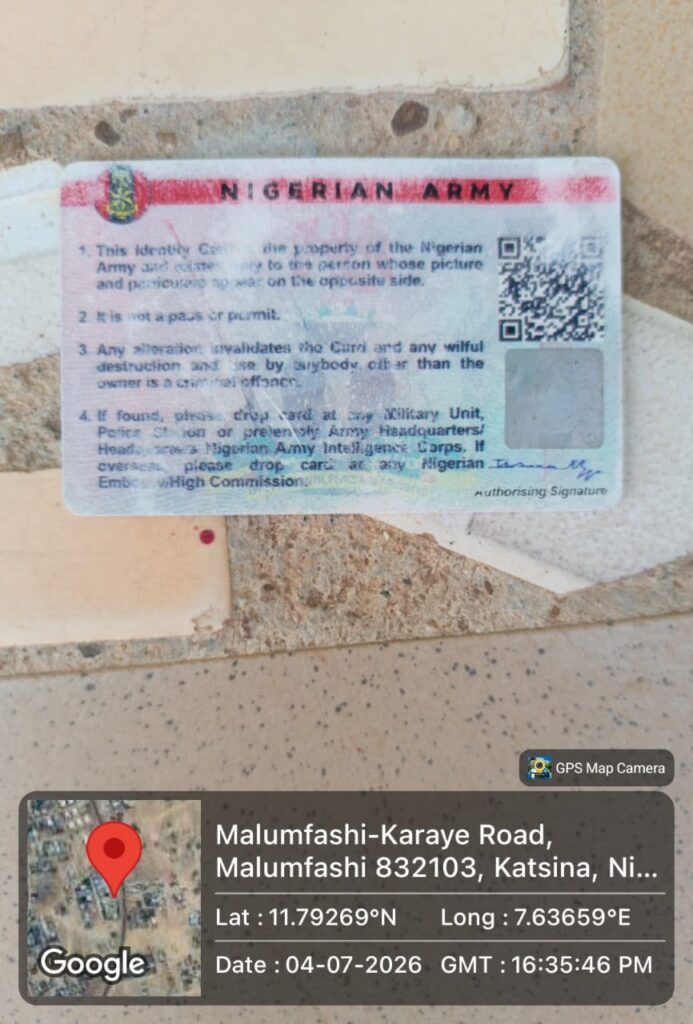
Military sources said the arrest forms part of ongoing efforts to curb impersonation of security personnel and other criminal activities within the area.
Troops Arrest Suspected Military Impostor in Katsina
Troops Recover 50 Rustled Cattle, Repel Suspected Rustlers in Kaduna
By Zagazola Makama
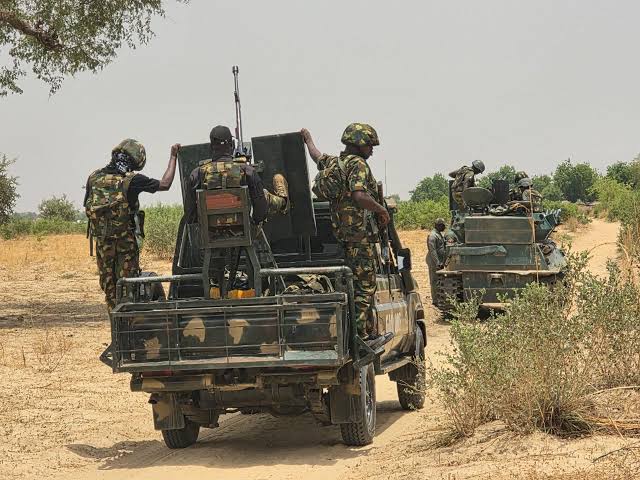
Troops deployed at the Forward Operating Base (FOB) Kankomi have recovered 50 rustled cattle after repelling suspected cattle rustlers during an ambush operation in Chikun Local Government Area.
Security sources told Zagazola Makama that the troops responded to a distress call at about 9:55 a.m. on July 4 over the activities of suspected rustlers at Ungwan Gontu community.
According to the sources, the troops swiftly laid an ambush and made contact with the fleeing suspects, forcing them to abandon the stolen livestock and escape into the surrounding area.
During the operation, the troops recovered 50 rustled cattle, which were subsequently identified and handed over to their rightful owner.
Military sources said efforts are ongoing to track down the fleeing suspects as security operations continue to combat cattle rustling and other criminal activities across Kaduna State.
Troops Recover 50 Rustled Cattle, Repel Suspected Rustlers in Kaduna

Zulum Appoints Engr Peter Samuel as General Manager BOSAMA

DSS Frees Cardiac Surgeon Martin Aghaji on Bail Over Alleged Economic Crime

Troops Arrest Suspected Military Impostor in Katsina

Roger Federer’s Shock as DNA Results Reveal Myla and Charlene Are Not His Biological Children

THE PLIGHT OF FARIDA

FAILED COUP IN BURKINA FASO: HOW TRAORÉ NARROWLY ESCAPED ASSASSINATION PLOT AMID FOREIGN INTERFERENCE CLAIMS
-
 News2 years ago
Roger Federer’s Shock as DNA Results Reveal Myla and Charlene Are Not His Biological Children
-
Opinions4 years ago
THE PLIGHT OF FARIDA
-
 News1 year ago
FAILED COUP IN BURKINA FASO: HOW TRAORÉ NARROWLY ESCAPED ASSASSINATION PLOT AMID FOREIGN INTERFERENCE CLAIMS
-

 News2 years ago
EYN: Rev. Billi, Distortion of History, and The Living Tamarind Tree
-
 Opinions5 years ago
POLICE CHARGE ROOMS, A MINTING PRESS
-

 ACADEMICS2 years ago
A History of Biu” (2015) and The Lingering Bura-Pabir Question (1)
-

 Columns2 years ago
Army University Biu: There is certain interest, but certainly not from Borno.
-

 Politics1 year ago
2027: Why Hon. Midala Balami Must Go, as Youths in Hawul and Asikira/Uba Federal Constituency Reject ₦500,000 as Sallah Gift
