
News
BOTMA: The agency will not tolerate underage driving in Maiduguri


BOTMA: The agency will not tolerate underage driving in Maiduguri
By: Bodunrin Kayode
The general manager of the Borno State Traffic Management Agency (BOTMA), Eng. Baba Tijani, has said that his agency will not tolerate “underaged” kids driving keke napep in Maiduguri and environs.
The GM warned that the brazen display of wrongdoing by Keke Napep was becoming alarming, especially with lots of underage kids being caught committing such crimes.
The Borno traffic management agency boss vowed to bring owners of such erring Keke napeps to book to check their reckless behavior on the streets of the Maiduguri metropolis and beyond.
Tijani, who spoke exclusively during the 2025 Federal Road Safety Corp RS12.2 Borno special marshals sectoral workshop, said that his management is aware of the dangerous excesses of the Keke Napep riders in the town and has never taken it lightly with them.
“I can assure you that we have details of all the excesses of the Keke Napep drivers in the city, and we are not joking with them. As long as we have their details, we can trace and deal with them, and the rest is history.
“I can assure you that there is no keke that is not registered by us regardless of their high numbers. For as long as they are registered in our data bank, we know how to trace them. Even if the keke is used for robbery, I assure you, we know how to sanction them for as long as they are within the state.
“By the way, it is not true that we are not capable of handling them in spite of their numbers and the enormous nature of their offenses. We do not overlook the misdemeanor of Keke Napep drivers in Maiduguri no matter how small they are.”
He told this reporter that under his watch kids who are under 18 were totally forbidden from driving keke napeps in Maiduguri metropolis, adding that residents should also avoid such keke napeps because they are obviously a death trap for commuters.
Eng. Tijani stressed that unless drivers are 18 years or above, they are not permitted to drive a keke napep in the entire Borno state, adding that only stable adults are registered as drivers of napep in their data bank used to sanction erring ones.
Tijani noted that for the remaining part of the year, his men will monitor the main roads in the metropolis thoroughly during the yuletide period to force the napep boys to conform to expected norms and behavioral patterns.
On staff strength, he added that the agency has been making use of what it has, hinting that “we have over 300 personnel in MMC and Jere alone, and we are trying to do our best with what we have even with the confusion at the Custom and Gamboru axis of the town.”
“We are aware of the challenges in many areas, and we believe that very soon the customs area will be handled. We are aware that the area is heavily congested in terms of traffic because the tunnel from one side to the other is not used, but I wish to assure commuters that all this will become history soon.
On the misbehavior of some of his staff, he noted that checks and balances have been placed within the system by management, adding that their provost marshals in white caps are out to oversee the erring staff and will send feedback to us on the next step.
Eng. Tijani called on the general public to cooperate with him and his management team by reporting erring marshals as and when wrongs were committed, adding that as soon as they are reported, action will be taken against such officials.
To press his point home, the GM revealed that about 30 erring marshals have been sacked so far from the agency, stressing that management does not drop their guards when it concerns portraying them in a bad light.
Speaking on the welfare of his staff, the GM agreed that there was an urgent need to boost the salaries of his marshals, as they are quite lower than the current minimum package.
He, however, announced that he was not leaning on his oars concerning their welfare because the matter has been tabled before the executive, and the governor is about to work on it, thereby taking care of his people.
Tijani regretted that they do not have a board that would assist them in putting their challenges on the front burner but is grateful to the media for doing justice to the plight of his people.
BOTMA: The agency will not tolerate underage driving in Maiduguri


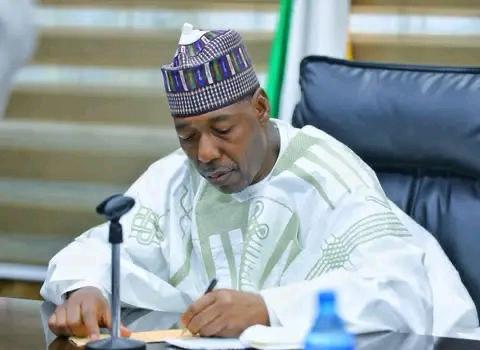
Zulum Appoints Engr Peter Samuel as General Manager BOSAMA
By: Our Reporter
Borno State Governor, Professor Babagana Umara Zulum, has approved the appointment of Engr Peter Samuel, MNSE, MNIAE, as the General Manager of Borno State Agricultural Mechanization Authority (BOSAMA).
In a statement by the Special Adviser to the Governor on Media, Dauda Iliya, the appointment was based on Engr Samuel’s outstanding professional competence, proven track record, and experience in agricultural engineering and mechanization.
The statement noted that Engr Samuel possesses the requisite qualifications, technical expertise and leadership capacity required to reposition BOSAMA in line with Governor Zulum’s agricultural transformation agenda.
The newly appointed General Manager is an Agricultural Engineer with academic, professional, administrative, and practical experience in agricultural mechanization, farm power and machinery, irrigation engineering, and agricultural infrastructure development.
He holds a Master of Engineering (M.Eng.) in Farm Power and Machinery from Joseph Sarwuan Tarka University, Makurdi (formerly the Federal University of Agriculture, Makurdi), a Postgraduate Diploma in Farm Management and Production Economics from Nasarawa State University, and a Bachelor of Engineering (B.Eng.) in Agricultural and Environmental Resources Engineering from the University of Maiduguri.
Engr Samuel has distinguished himself through years of meritorious service in teaching, research, agricultural engineering practice, and project implementation. He currently serves as a Lecturer in Farm Power and Machinery at Ramat Polytechnic, Maiduguri.
Over the years, he has held several strategic leadership positions, including General Manager of a commercial agricultural enterprise, Project Coordinator, Programme Coordinator, and Consultant on numerous agricultural development interventions implemented by reputable national and international organisations.
He is a member of the Nigerian Society of Engineers (NSE) and the Nigerian Institution of Agricultural Engineers (NIAE).
Governor Babagana Zulum congratulated the new General Manager on his appointment and urged him to deploy his wealth of knowledge, technical expertise, and experience in agricultural mechanization to strengthen the operations of BOSAMA
Zulum Appoints Engr Peter Samuel as General Manager BOSAMA
Troops Arrest Suspected Military Impostor in Katsina
By Zagazola Makama
Troops of 17 Brigade have arrested a suspected military impostor during a fighting patrol in Malumfashi Local Government Area.
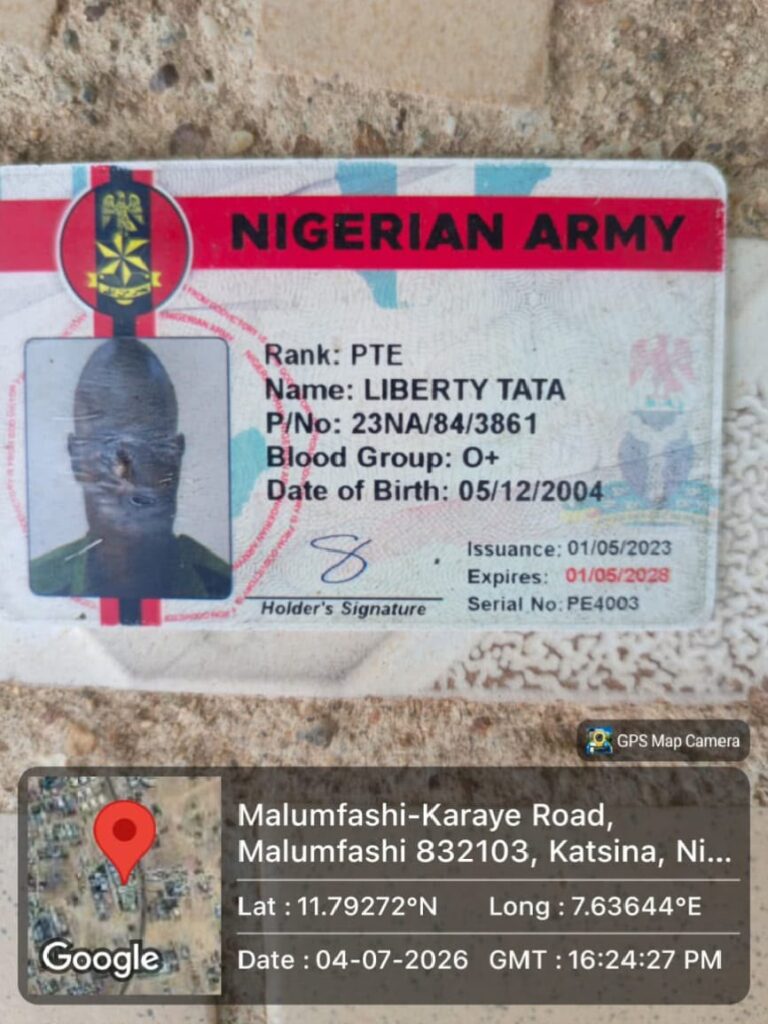
Security sources told Zagazola Makama that the suspect was apprehended at about 1:30 p.m. on July 4 by troops deployed at the Forward Operating Base (FOB) Malumfashi while conducting routine patrols within Malumfashi town.

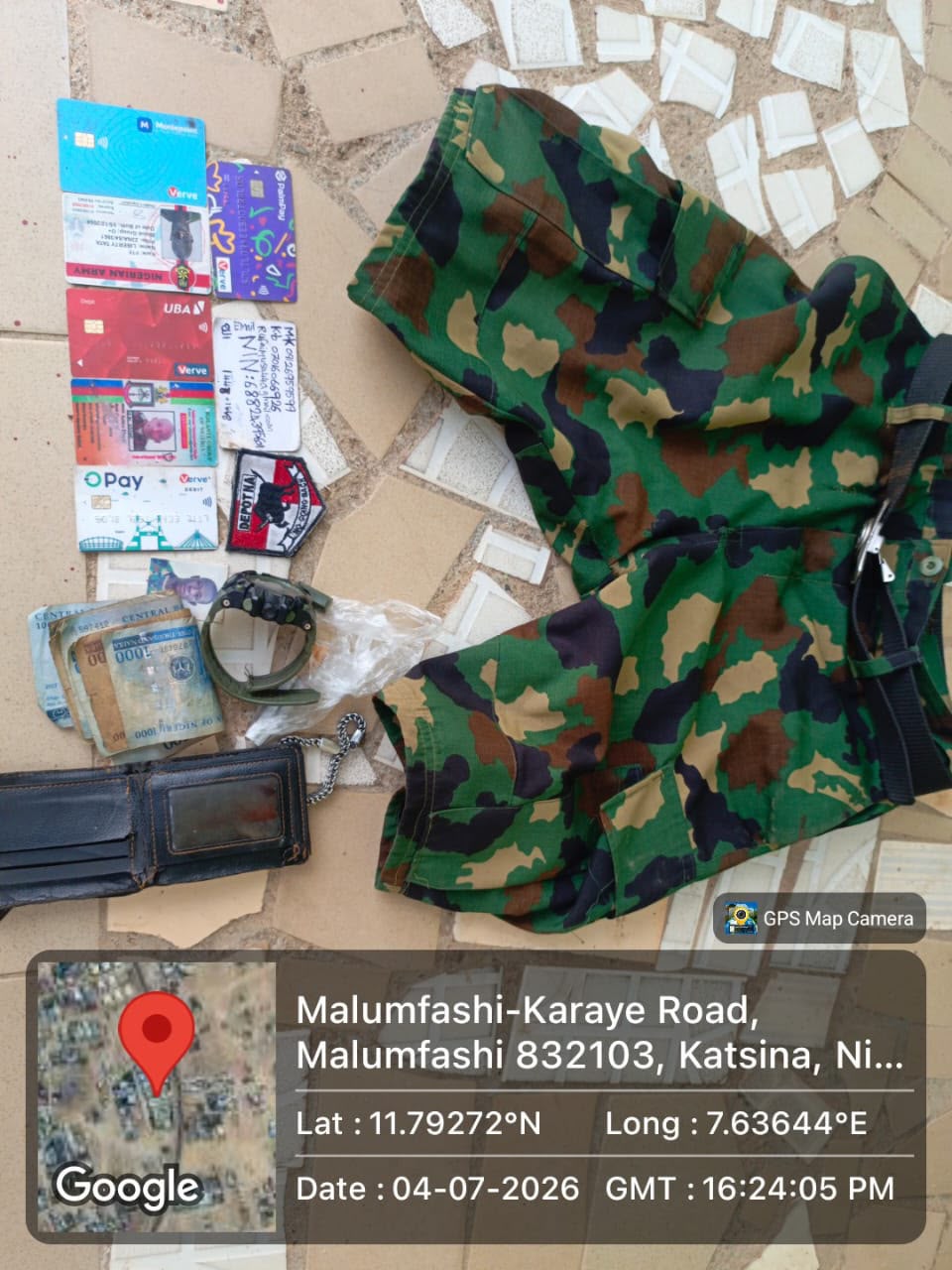
According to the sources, the suspect was intercepted while wearing a woodland camouflage three-quarter short, raising suspicion among the troops.
A search conducted on the suspect led to the recovery of a fake Nigerian Army identity card, four Automated Teller Machine (ATM) cards, one woodland camouflage three-quarter short, a wristwatch and the sum of ₦17,000.
The suspect and the recovered exhibits are currently in military custody pending further investigation.
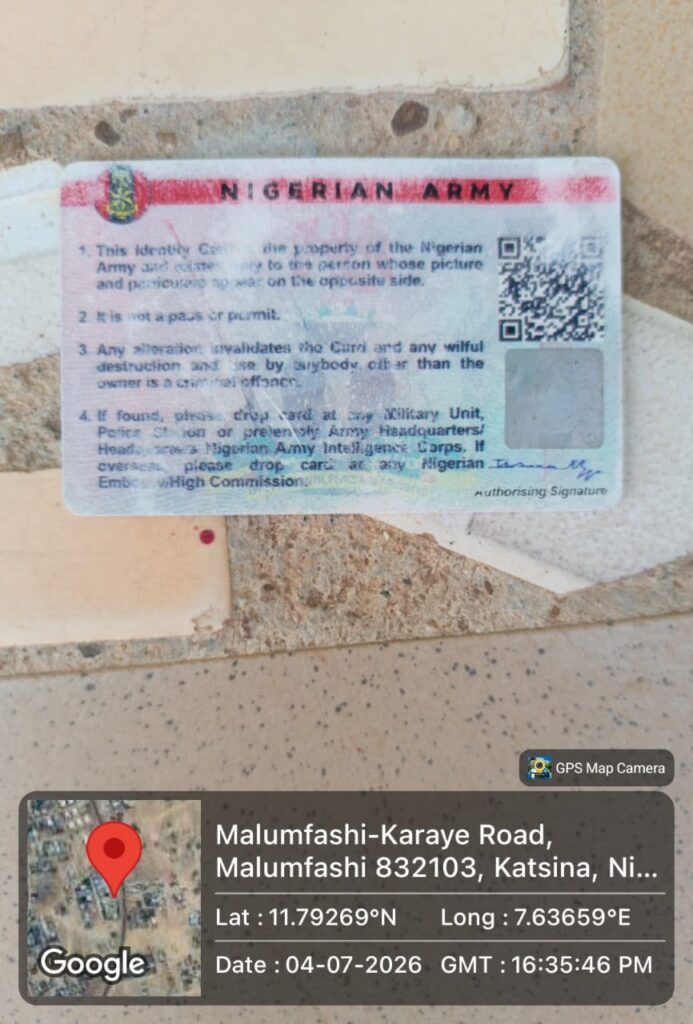
Military sources said the arrest forms part of ongoing efforts to curb impersonation of security personnel and other criminal activities within the area.
Troops Arrest Suspected Military Impostor in Katsina

Troops Recover 50 Rustled Cattle, Repel Suspected Rustlers in Kaduna
By Zagazola Makama
Troops deployed at the Forward Operating Base (FOB) Kankomi have recovered 50 rustled cattle after repelling suspected cattle rustlers during an ambush operation in Chikun Local Government Area.
Security sources told Zagazola Makama that the troops responded to a distress call at about 9:55 a.m. on July 4 over the activities of suspected rustlers at Ungwan Gontu community.
According to the sources, the troops swiftly laid an ambush and made contact with the fleeing suspects, forcing them to abandon the stolen livestock and escape into the surrounding area.
During the operation, the troops recovered 50 rustled cattle, which were subsequently identified and handed over to their rightful owner.
Military sources said efforts are ongoing to track down the fleeing suspects as security operations continue to combat cattle rustling and other criminal activities across Kaduna State.
Troops Recover 50 Rustled Cattle, Repel Suspected Rustlers in Kaduna

Zulum Appoints Engr Peter Samuel as General Manager BOSAMA

DSS Frees Cardiac Surgeon Martin Aghaji on Bail Over Alleged Economic Crime

Troops Arrest Suspected Military Impostor in Katsina

Roger Federer’s Shock as DNA Results Reveal Myla and Charlene Are Not His Biological Children

THE PLIGHT OF FARIDA

FAILED COUP IN BURKINA FASO: HOW TRAORÉ NARROWLY ESCAPED ASSASSINATION PLOT AMID FOREIGN INTERFERENCE CLAIMS
-
 News2 years ago
Roger Federer’s Shock as DNA Results Reveal Myla and Charlene Are Not His Biological Children
-
Opinions4 years ago
THE PLIGHT OF FARIDA
-
 News1 year ago
FAILED COUP IN BURKINA FASO: HOW TRAORÉ NARROWLY ESCAPED ASSASSINATION PLOT AMID FOREIGN INTERFERENCE CLAIMS
-

 News2 years ago
EYN: Rev. Billi, Distortion of History, and The Living Tamarind Tree
-
 Opinions5 years ago
POLICE CHARGE ROOMS, A MINTING PRESS
-

 ACADEMICS2 years ago
A History of Biu” (2015) and The Lingering Bura-Pabir Question (1)
-

 Columns2 years ago
Army University Biu: There is certain interest, but certainly not from Borno.
-

 Politics1 year ago
2027: Why Hon. Midala Balami Must Go, as Youths in Hawul and Asikira/Uba Federal Constituency Reject ₦500,000 as Sallah Gift
