
National News
Buhari’s nationwide address on new naira


Buhari’s nationwide address on new naira
President Muhammadu Buhari has approved the contincontinous use of the old N200 as legal tender till April 10.
The President made this known on Thursday morning during an address to Nigerians following a series of controversies and protests across the country.
See the full text below;
My Dear Compatriots,
I have found it necessary to address you today, on the state of the nation and to render an account of the efforts of our administration to sustain and strengthen our economy, enhance the fight against corruption and sustain our gains in the fight against terrorism and insecurity which has, undoubtedly, been impacted by several internal and external factors.
- Particularly, I am addressing you, as your democratically elected President, to identify with you and express my sympathy, over the difficulties being experienced as we continue the implementation of new monetary policies, aimed at boosting our economy and tightening loopholes associated with money laundering.
- Let me re-assreassureians, that strengthening our economy, enhancing security and blockage leakages associated with illicit financial flows remain the top priority of our administration. And I shall remain committed to my oath of protecting and advancing the interest of Nigerians and the nation, at all times.
- In the last quarter of 2022, I authorised the Central Bank of Nigeria (CBN) to redesign the N200, N500, and N1000 Nigerian banknotes.
- For a smooth transition, I similarly approved that the redesigned banknotes should circulate concurrently with the old bank banknotes on 31 January 2023, before the old notes, cease to be legal tender.
- In appreciation of the systemic and human difficulties encountered during implementation and in response to the appeal of all citizens, an extension of ten days was authorized till 10th February 2023 for the completion of the process. All these activities are being carried out within the ambit of the Constitution, the relevant law under the CBN Act 2007 and in line with global best practices.
- Fellow citizens, while I seek your understanding and patience during this transient phase of implementation, I feel obliged to avail you of a few critical points underpinning the policy decision. These include:
a. The need to restore the statutory ability of the CBN to keep firm control over the money in circulation. In 2015 when this administration commenced its first term, Currency-in-Circulation was only N1.4 trillion.
b. The proportion of currency outside banks grew from 78%in 2015 to 85% in 2022. As of October 2022, therefore, currency in circulation had risen to N3.23 trillion; out of which only N500 billion was within the Banking System while N2.7 trillion remained permanently outside the system; thereby distorting the financial policy and efficient management of inflation;
c. The huge volume of Bank Notes outside the banking system has proven to be practically unavailable for economic activities and by implication, retard the attainment of potential economic growth;
d. Economic growth projections make it imperative for government to aim at expanding financial inclusion in the country by reducing the number of the unbanked population; and
e. Given the prevailing security situation across the country, which keeps improving, it also becomes compelling for government to deepen its continuing support for security agencies to successfully combat banditry and ransom-taking in Nigeria
- Notwithstanding the initial setbacks experienced the evaluation and feedback mechanism set upset-revealed that gains have emerged from the policy initiative.
- I have been reliably informed that since the commencement of this program, about N2.1 trillion out of the banknotes previously held outside the banking system, had been successfully retrieved.
- This represents about 80% of such funds. In the short to medium and long terms, therefore, it is expected that there would be:
a. A strengthening of our macroeconomic parameters;
b. Reduction of broad money supply leading to a deceleration of the velocity of money in the economy which should result in fewer pressures on domestic prices;
c. Lowering of Inflation as a result of the accompanying decline in the money supply that will slow the pace of inflation;
d. Collapse of Illegal Economic Activities which would help to stem corruption and acquisition of money through illegal ways;
e. Exchange Rate stability;
f. Availability of Easy Loans and lowering of interest rates; and
g. Greater visibility and transparency of our financial actions translating to efficient enforcement of our anti-money laundering legislations.
- I am not unaware of the obstacles placed on the path of innocent Nigerians by unscrupulous officials in the banking industry, entrusted with the process of implementation of the new monetary policy. I am deeply pained and sincerely sympathise with you all, over these unintended outcomes.
- To stem this tide, I have directed the CBN to deploy all legitimate resources and legal means to ensure that our citizens are adequately educated on the policy; enjoy easy access to cash withdrawal through the availability of appropriate amounts of currency; and abilihave try to make deposits.
- I have similarly directed that the CBN should intensify collaboration with anti-corruption agencies so that any institution or person(s) found to have impeded or sabotaged the implementation should be made to bear the full weight of the law.
- During the extended phase of the deadline for currency swap, I listened to invaluable pieces of advice from well-meaning citizens and institutions across the nation.
- I similarly consulted widely with representatives of the State Governors as well as the Council of State. Above all, as an administration that respects the rule of law, I have also noted that the subject matter is before the courts of our land and some pronouncements have been made.
- To further ease the supply pressures, particularly to our citizens, I have givenapprovedCBN that the old N200 bank notes be released back into circulation and that they soothed also be allowed to circulate as legal tender with the new N200, N500, and N1000 banknotes for 60 days from February 10, 2023, to April 10, 2023, when the old N200 notes cease to be legal tender.
- In line with Section 20(3) of the CBN Act 2007, all existing old N1000 and N500 notes remain redeemable at the CBN and designated points.
- Considering the health of our economy and the legacy we must bequeath to the next administration and future generations of Nigerians, I admonish every citizen to strive harder to make their deposits by taking advantage of the platforms and windows being provided by the CBN.
- Let me assure Nigerians that our administration will continue to assess the implementation to ensure Nigerians are not unnecessarily burdened. In this regard, the CBN shall ensure that new notes become more available and accessible to our citizens through the banks.
- I wish to once more appeal for your understanding till we overcome this difficult transient phase within the shortest possible time.
- Fellow citizens, on the 25th of February, 2023 the nation would be electing a new President and National Assembly members. I am aware that this new monetary policy has also contributed immensely to the minimization of the influence of money in politics.
- This is a positive departure from the past and represents a bold legacy step by this administration, towards laying a strong foundation for free and fair elections.
- I urge every citizen, therefore, to go out to vote for their candidates of choice without fear, because security shall be provided and your vote shall count.
- I however admonish you to eschew violence and avoid actions capable of disrupting the electoral processes. I wish us all a successful General Electelectionank you for listening. God bless the Federal Republic of Nigeria.
Buhari’s nationwide address on new naira


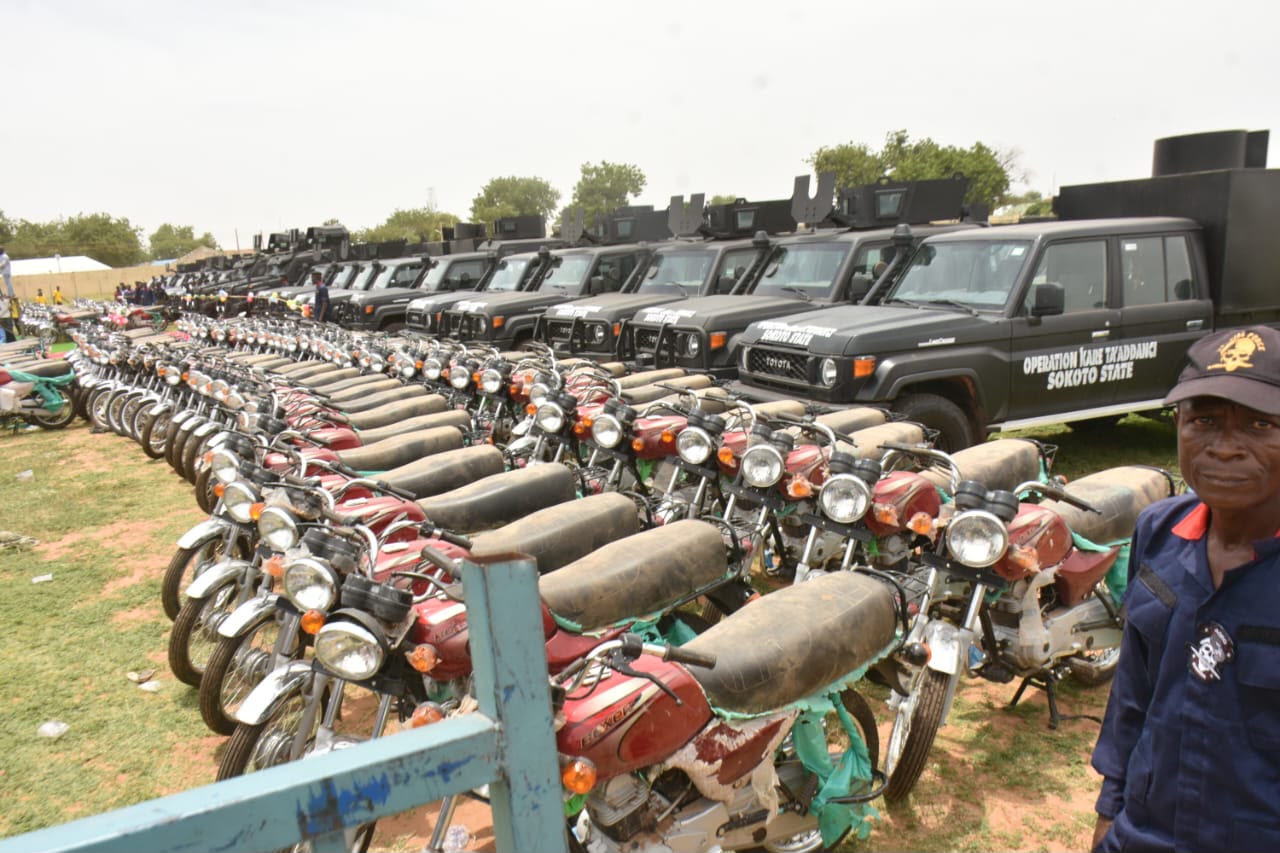
Sokoto donates 62 armoured vehicles, 320 motorcycles to security agencies
By: Zagazola Makama
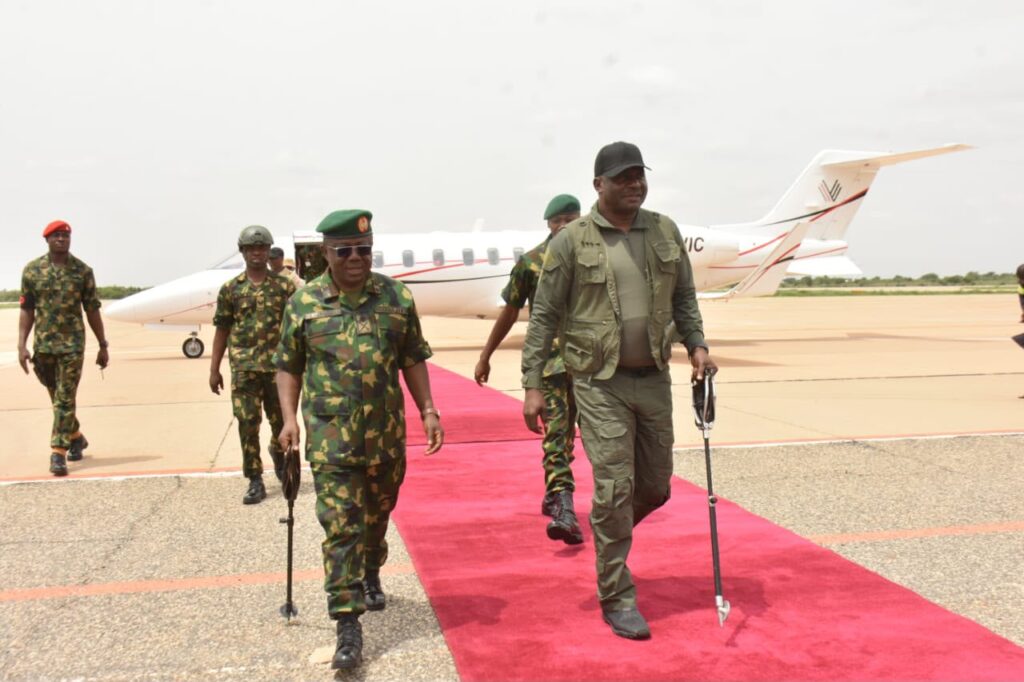
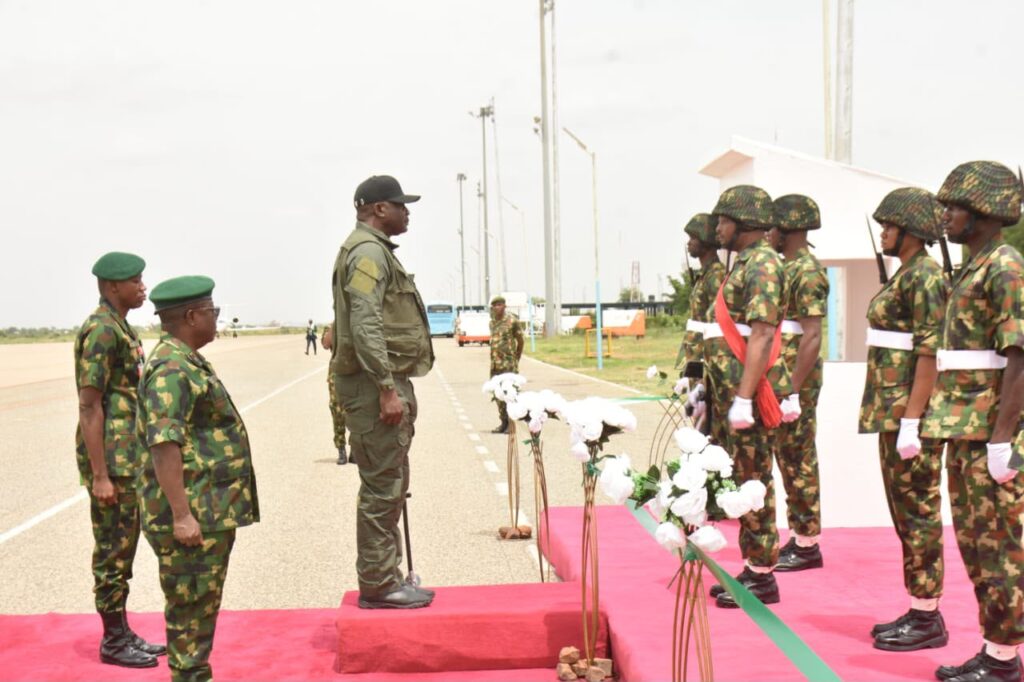
The Christopher Gwabin Musa has expressed confidence that Nigeria’s current security challenges will soon be overcome, urging Nigerians to continue supporting security agencies in the fight against terrorism and banditry.
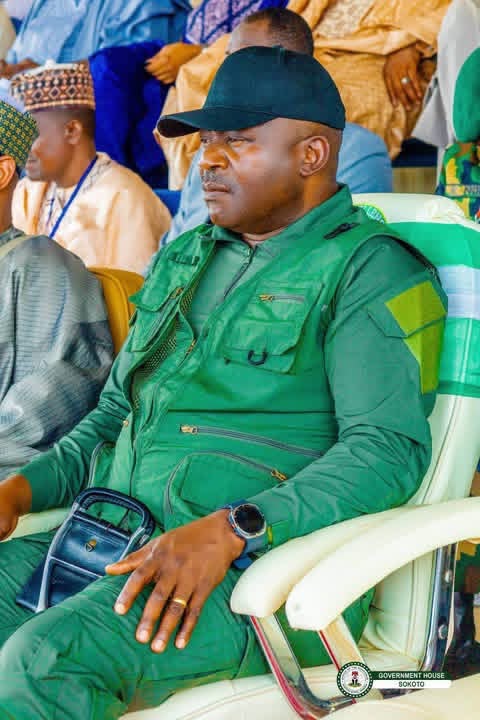
Musa made the remarks on Wednesday in Sokoto during the inauguration of 62 armoured vehicles and 320 motorcycles procured by the Sokoto State Government for deployment by various security agencies operating in the state.
The security assets, valued at about N27.7 billion, are expected to enhance the operational capabilities of security agencies in tackling banditry, terrorism, kidnapping and other violent crimes across the state.
The defence chief stressed the need for security personnel to remain resolute in confronting criminal elements, while urging Nigerians to regard security as a collective responsibility through timely intelligence sharing and community support.
He described Sokoto as his home state, recalling that he was born and raised there, and commended the efforts of the state government in sustaining peace despite recent security challenges in some parts of the state.
According to him, the administration of Ahmed Aliyu has consistently supported security agencies with critical logistics, noting that the latest intervention would further boost troop morale and operational effectiveness.
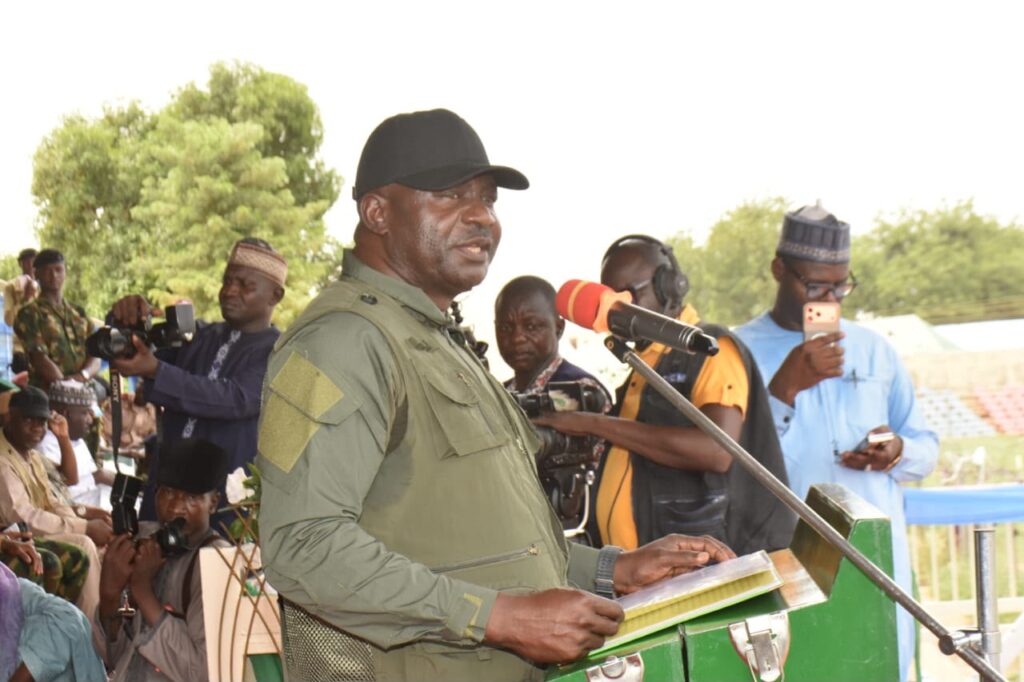
Musa appealed to other state governments and well-meaning Nigerians to emulate the Sokoto Government by supporting security agencies with logistics and other resources needed to combat insecurity.
He also said that security remains a key priority under the Renewed Hope Agenda of Bola Ahmed Tinubu, assuring Nigerians of the Federal Government’s commitment to restoring lasting peace and stability across the country.
Earlier, Gov. Ahmed Aliyu said the newly acquired armoured vehicles and motorcycles would be deployed to identified flashpoints to strengthen ongoing operations against bandits, kidnappers and other criminal elements.
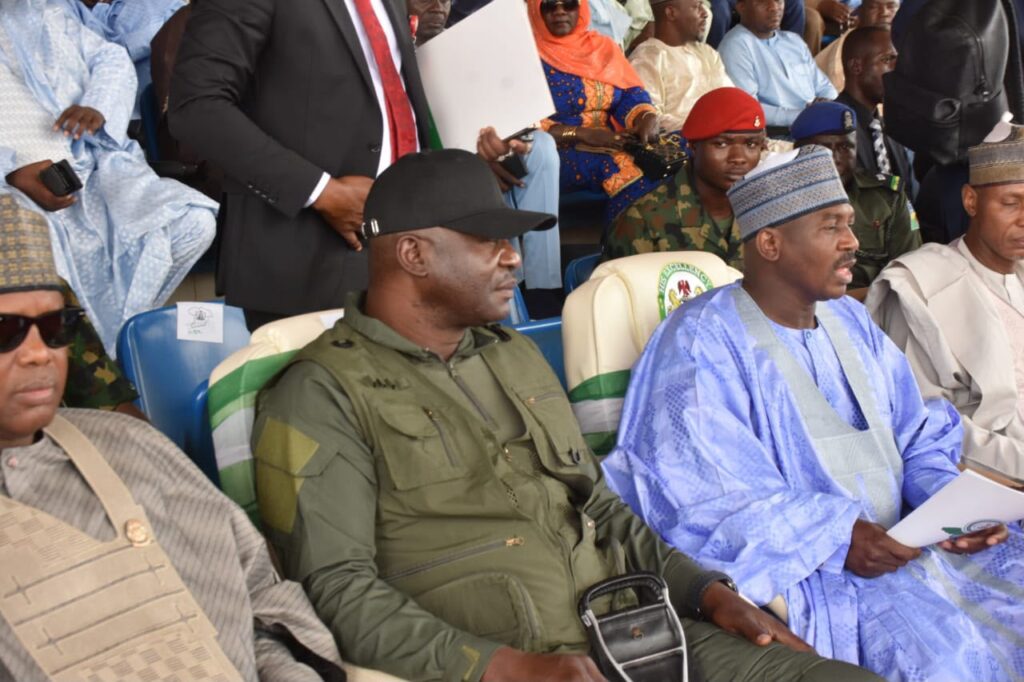
The governor said the intervention was aimed at improving the operational efficiency of security agencies and ensuring the protection of lives and property across the state.
He disclosed that his administration had previously spent more than N36.27 billion on similar logistics support for the Armed Forces and other security agencies operating in Sokoto State.
Aliyu further revealed that the Sokoto State House of Assembly was considering legislation that would prescribe sanctions for informants aiding criminal groups, similar to those imposed on bandits.
He reaffirmed that security remains a top priority under his administration’s Nine-Point Smart Agenda and commended the Federal Government, the Armed Forces, other security agencies and stakeholders for their continued efforts in addressing insecurity.
The governor also appreciated President Bola Tinubu for his sustained support towards improving the nation’s security architecture.
In his remarks, the Sa’ad Abubakar, represented by the Wazirin Sokoto, Sambo Wali Junaidu, commended the governor for his sustained investment in security, describing the intervention as a significant contribution to the protection of lives and property in the state.
Sokoto donates 62 armoured vehicles, 320 motorcycles to security agencies
Nigeria Mourns 21 Killed in China Landslide, Reaffirms Strategic Partnership
By: Michael Mike
The Federal Government has extended its condolences to the Government and people of China following the devastating landslide that struck Tanchang County in Gansu Province, killing at least 21 people and leaving several others affected, as Abuja reaffirmed the enduring strategic partnership between the two countries.
In a statement issued on Wednesday, the spokesperson for the Ministry of Foreign Affairs, Kimiebi Ebienfa, described the disaster as a tragic incident and said Nigeria stood in solidarity with China as rescue teams continued efforts to reach victims and support affected communities.
The landslide occurred on Tuesday in Tanchang County, a mountainous area in northwestern China’s Gansu Province, where heavy rainfall triggered the collapse of earth and debris, burying homes and disrupting transportation. Emergency responders were immediately deployed to search for survivors, evacuate residents and provide humanitarian assistance.
Expressing the Federal Government’s sympathy, Ebienfa said Nigeria shared in China’s grief over the lives lost.
“The Federal Government of Nigeria expresses deep condolences to the Government and people of the People’s Republic of China following the tragic landslide that struck Tanchang County in Gansu Province on Tuesday, July 7, 2026,” he said.
He added: “Nigeria mourns the loss of lives in this disaster, which has claimed at least 21 lives, with others affected amid the rescue operations. Our thoughts and prayers are with the families of the deceased, the injured, and all those who have lost loved ones or property in this unfortunate incident.”
The spokesperson also commended the swift response mounted by the Chinese authorities, praising emergency personnel for their efforts to rescue survivors and provide relief to victims.
“Nigeria commends the swift response of the Chinese authorities and rescue teams in their efforts to save lives and provide relief to those impacted,” he stated.
Beyond the immediate humanitarian message, Nigeria used the occasion to reaffirm the strength of its diplomatic and economic relationship with China, one of its largest trading partners and a key investor in critical infrastructure projects across the country.
Over the years, China has played a significant role in financing and constructing major Nigerian infrastructure, including rail lines, airport terminals, highways and power projects. The two countries have also deepened cooperation in trade, investment, security, agriculture, technology and human capital development under the framework of their Comprehensive Strategic Partnership.
Reflecting on these longstanding ties, Ebienfa said: “Nigeria and China share a long-standing strategic partnership built on mutual respect, friendship, and cooperation. Nigeria stands in solidarity with China during this difficult time, and we are confident in the resilience of the Chinese people and government as they work towards recovery and rehabilitation in the affected areas.”
He also offered prayers for those affected by the disaster.
“We pray for the peaceful repose of the souls of the departed, the speedy recovery of the injured, and strength and comfort for the bereaved families,” he said.
The latest tragedy underscores the vulnerability of many mountainous regions in China to landslides and flash floods, particularly during the annual rainy season. Chinese authorities have in recent years strengthened early warning systems, disaster preparedness and emergency response mechanisms, but extreme weather events linked to intense rainfall continue to pose significant risks to lives and infrastructure.
Nigeria’s condolence message joins those from countries around the world expressing solidarity with China as rescue operations continue and recovery efforts begin in the affected communities.
Nigeria Mourns 21 Killed in China Landslide, Reaffirms Strategic Partnership
National News
President Tinubu Flags Off the Construction of Dikwa–Gamboru Ngala, Bama–Banki International Road Projects
President Tinubu Flags Off the Construction of Dikwa–Gamboru Ngala, Bama–Banki International Road Projects
By: Bodunrin Kayode
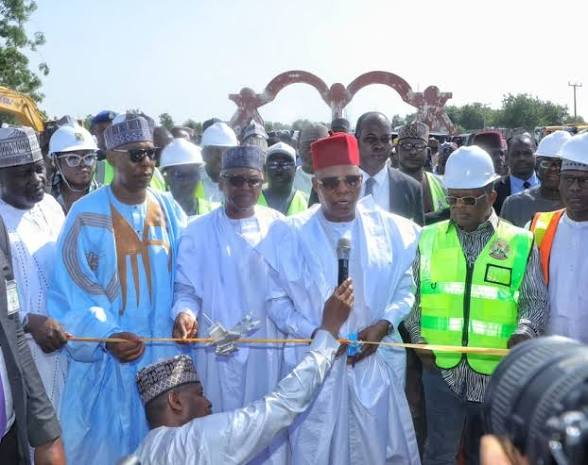
President Bola Tinubu on Saturday flagged off the construction of the 49.55-kilometre Dikwa–Gamboru Ngala Road and the 49.15-kilometre Bama–Banki Road, describing the strategic highways as critical to economic growth, regional integration, and national security.
The two road projects, regarded as economic lifelines of North-East Nigeria, serves as key gateways to neighbouring African countries, which will bolster cross-border trade, facilitate the movement of agricultural produce, and strengthen security operations in a region recovering from over a decade of insurgency.
The groundbreaking ceremony was held along the Maiduguri–Gamboru Ngala Road, where President Tinubu was represented by Vice President Senator Kashim Shettima.
The Vice President said the rehabilitation of the roads would improve connectivity and deliver on the administration’s commitment to infrastructure development across the country.
“His Excellency, President Bola Ahmed Tinubu, GCFR, has made infrastructure a central priority. This is what Mr. President promised Nigerians, and I’m here today to affirm our readiness to redeem the promise and to convey his goodwill and gratitude for the support you have shown us,” Shettima said.
“The Bama–Banki Corridor carries special strategic weight. It is a top route of agriculture, movement, and national security. The Dikwa–Gamboru Ngala Road belongs to the same vision of reconnecting communities and restoring economic confidence across Borno State.”
The President also commended Borno State Governor, Professor Babagana Zulum, for prioritising infrastructure and maintaining a strong partnership with the Federal Government.
“The partnership between the Federal Government and Borno State shows what becomes possible when public institutions are united by the urgency of service. Certainly, Your Excellency, Professor Babagana Umara Zulum, you are one of the best-performing governors in the federation,” Tinubu stated.
Governor Zulum expressed appreciation to President Tinubu for approving the road projects and other critical interventions in Borno State.
“The successful commencement of this project reflects the strong partnership between the Federal Government and the Borno State Government. We deeply appreciate and remain eternally grateful to the President of the Federal Republic of Nigeria, President Bola Ahmed Tinubu, GCFR, for his unwavering commitment to the development, peace, and security of the North East and Nigeria as a whole.
“Borno State Government recognizes that infrastructure remains a critical foundation for development. Since assuming office, our administration has prioritized the rehabilitation and construction of roads, schools, hospitals, water facilities, and other critical infrastructure as part of our commitment to improving the lives of our citizens,” he added.
Governor Zulum also pledged the state’s political support for President Tinubu in the next presidential election.
“I want to assure the President and indeed the Vice President that, Insha Allah, come January 2027, the people of Borno State will overwhelmingly vote him into office.”
The Governor equally praised his representative Vice President Shettima for his sustained support towards the reconstruction and development of Borno State.
“Your Excellency, your personal interest in the reconstruction and development of our state continues to inspire confidence among our people. We sincerely appreciate your leadership and steadfast commitment.” said Zulum.
Zulum also acknowledged the humanitarian contributions of Alhaji Aliko Dangote, particularly through the Aliko Dangote Foundation, during the state’s recovery from insurgency and the 2024 flood disaster.
He recalled the construction of Dangote Village, the donation of ₦1.5 billion to the National Emergency Management Agency (NEMA), ₦1 billion to the Borno State Government following the 2024 flood, and the distribution of relief materials to internally displaced persons.
“Through the Aliko Dangote Foundation, thousands of displaced persons received food and non-food items. Essentially, in 2017, he donated 106 trucks of food to IDPs.
“Alhaji Aliko Dangote has also donated ₦1.5 billion to NEMA to support flood victims in Borno State in the year 2024.”
Governor Zulum assured that the road projects would be closely monitored to ensure value for money and strict compliance with quality standards. He also appealed to the Minister of Works to grant the Borno State Government a waiver to regulate the activities of heavy-duty truck drivers using the roads intermittently.
Earlier, the Minister of Works, Senator David Umahi, disclosed that the projects would be executed in two phases and expressed confidence that construction would be completed within six months.
The ceremony was attended by the Borno State Deputy Governor, Umar Kadafur; APC Deputy National Chairman (North), Hon. Ali Dalori; senators; members of the House of Representatives; the Shehu of Borno, represented by the Shehu of Dikwa; ministers; members of the Borno State House of Assembly; APC leaders; the Secretary to the State Government; the Head of Service; the Acting Chief of Staff; commissioners; heads of government agencies; and other dignitaries.
President Tinubu Flags Off the Construction of Dikwa–Gamboru Ngala, Bama–Banki International Road Projects

Centre lauds Kaduna Govt over life skills, gender education policies approval

Troops Kill Six ISWAP Fighters, Wound Seven in Failed Attack on Borno Military Base

Cholera Outbreak Kills Nine ISWAP Terrorists in Timbuktu Triangle

Roger Federer’s Shock as DNA Results Reveal Myla and Charlene Are Not His Biological Children

THE PLIGHT OF FARIDA

FAILED COUP IN BURKINA FASO: HOW TRAORÉ NARROWLY ESCAPED ASSASSINATION PLOT AMID FOREIGN INTERFERENCE CLAIMS
-
 News2 years ago
Roger Federer’s Shock as DNA Results Reveal Myla and Charlene Are Not His Biological Children
-
Opinions4 years ago
THE PLIGHT OF FARIDA
-
 News1 year ago
FAILED COUP IN BURKINA FASO: HOW TRAORÉ NARROWLY ESCAPED ASSASSINATION PLOT AMID FOREIGN INTERFERENCE CLAIMS
-

 News2 years ago
EYN: Rev. Billi, Distortion of History, and The Living Tamarind Tree
-
 Opinions5 years ago
POLICE CHARGE ROOMS, A MINTING PRESS
-

 ACADEMICS2 years ago
A History of Biu” (2015) and The Lingering Bura-Pabir Question (1)
-

 Columns2 years ago
Army University Biu: There is certain interest, but certainly not from Borno.
-

 Politics1 year ago
2027: Why Hon. Midala Balami Must Go, as Youths in Hawul and Asikira/Uba Federal Constituency Reject ₦500,000 as Sallah Gift
