
Northeast
Buni constructs 56.6km roads, drainages across 9 LGAs in Yobe

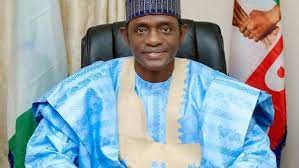
Buni constructs 56.6km roads, drainages across 9 LGAs in Yobe
By: Yahaya Wakili
The Yobe state government has constructed over 56.6 kilometers of roads and drainages across the 9 local government areas of the state within three years of Governor Mai Mala Buni administration.
Engineer Umaru Wakil Duddaye, State Commissioner of Works disclosed this while briefing the Journalists on some of the achievements recorded under the administration of Governor Mai Mala Buni at the NUJ Secretariat, Damaturu.
He said, in an effort to commemorate the aims and objectives of Buni’s administration, Yobe state ministry of Works has constructed roads and drainages in 9 local government areas of the state.
These include, 2.0km roads and drainages at Zanna Zakariya Estate, 2.5km Obasanjo Malam matari Gujba road, 5.7km road from NTA Potiskum Gujba Road and 1.5km roads and drainages at Shehu Sule college of Nursing and Midwifery.
Also Read: ISWAP kills 2 Boko Haram Commanders, Abou Hamza, Abou…
Others are 3.8km Earth Road around New Bra-Bra, Nyanya Estate and 4.2km Earth Road from Gashua Road to Nana Aisha by pass and 1.5km Earth Road within state Secretariat all in Damaturu local government area.
“2.7km roads and drainages were constructed within Potiskum Township, 3.7km roads and drainages within Nguru township and 2.0km roads and drainages within Geidam township, while 2.0km road and drainages have been constructed within Gashua township.
He said, “2.3km roads and drainages within Jajimaji town, 4.0km roads and drainages Buni Yadi town and 1.6km roads and drainages within Babbangida town in Tarmuwa local government area.
The Commissioner further revealed that, there are also ongoing projects being handled by the ministry, 13km Road Damagum- Gubana, 18km Road Danchuwa – Garin Bingel, 16km Road Nguru – Balanguwa, 30km Road Balanguwa – Kumagannam and 10km Road Chumbusko – Tagali.
He maintained that the construction of pedestrian bridges at Nguru, Gashua and Potiskum modern markets, while the Damaturu modern market as well as Damaturu cattles market has been completed and put to use.
Engineer Duddaye revealed that all the roads and drainage projects have been completed and have eased the movement of goods and services in the respective local government area of the state.
According to him, the effort of this ministry in complementing the efforts of the state government in providing immediate intervention and remedy for communities affected by the recent perennial floods cannot be over emphasized.
Buni constructs 56.6km roads, drainages across 9 LGAs in Yobe



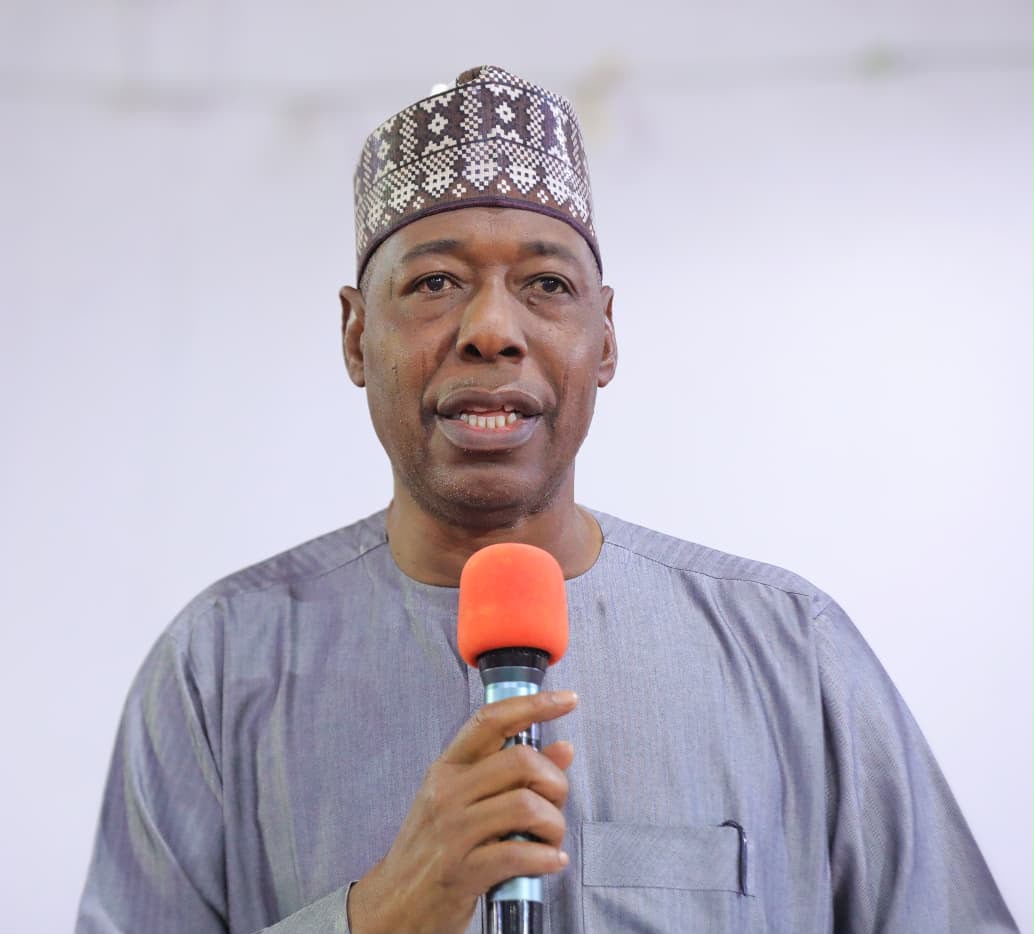
Ajakuta: Borno loses infrastructure worth billions to scavengers, Zulum says
By: Our Reporter
Borno State Governor, Babagana Umara Zulum, has revealed that the state has lost metals, electrical materials and infrastructure worth billions of naira to scavengers, locally known as Ajakuta.
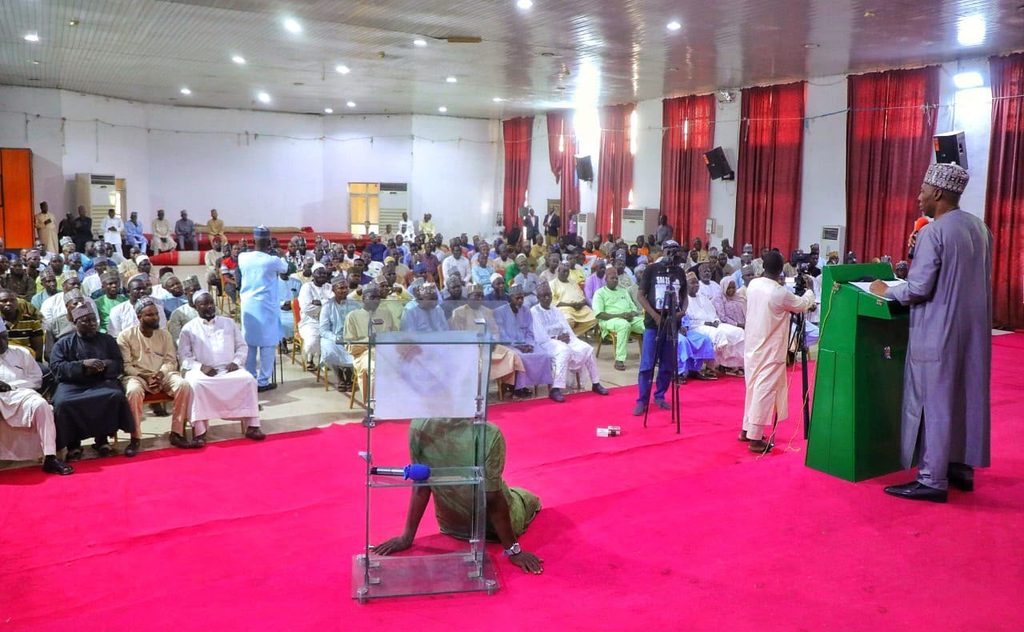
He said this, among other security concerns, led to a ban on the scrap metal trade in Borno State.
The Governor disclosed this on Saturday while addressing operators, urging them to submit proposals on how they can continue their businesses without contributing to insecurity or destroying public infrastructure.
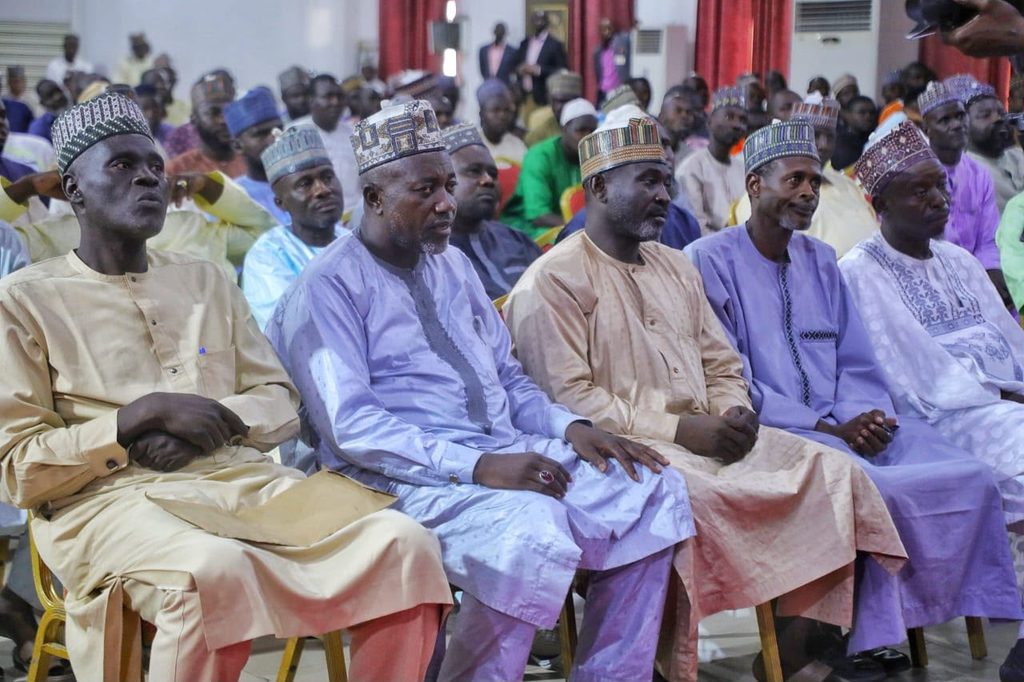
Zulum explained that the ban was imposed in the overall interest of the state and not to deprive operators of their livelihood.
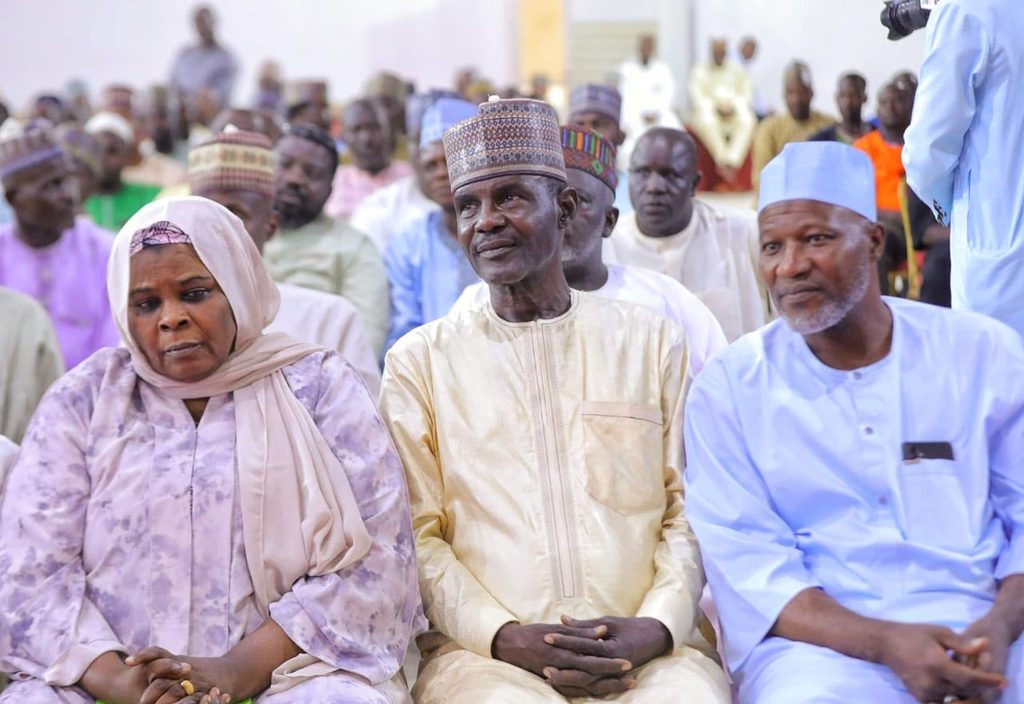
He stressed that the government had no personal interest in stopping their businesses, adding that the measure aimed to protect public assets and strengthen security.
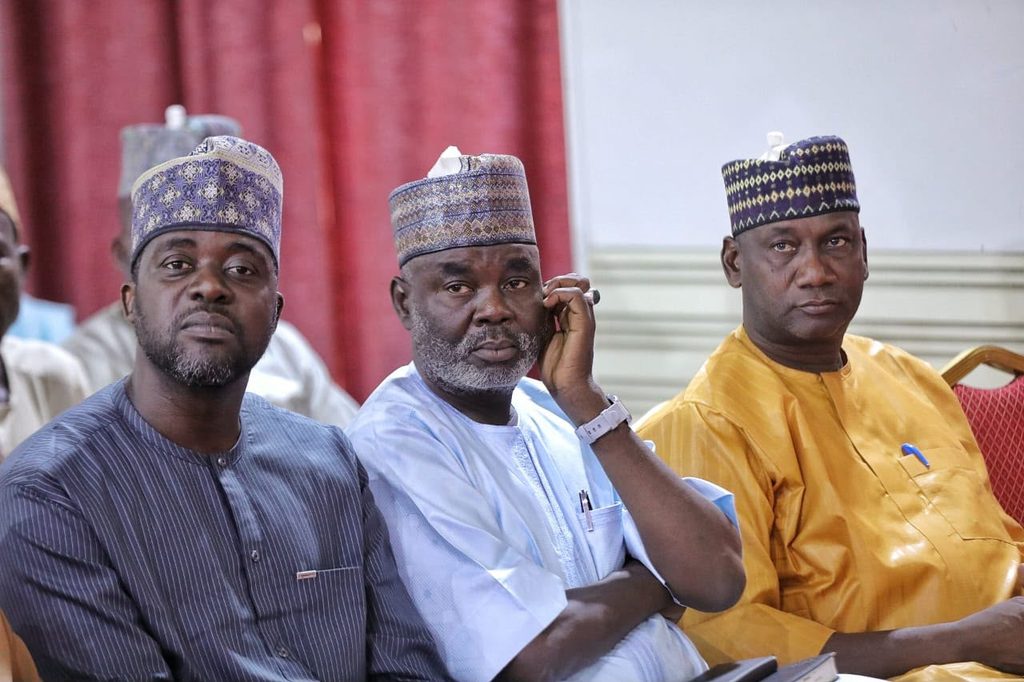
Governor Zulum said, “It is deeply concerning to me if one person loses his livelihood for whatever reason in Borno; believe me, there is nothing I stand to gain from banning scrap metal trade rather than addressing the serious security concerns associated with your activities.”
“We spent more than N3 billion to connect an electricity distribution line from Damaturu to Maiduguri, but unfortunately we lost all the wires to the metal scavenging activities. Before the ban, hundreds of your members were killed in the process of scavenging for metals in the villages that are not yet safe for civilian activities.”
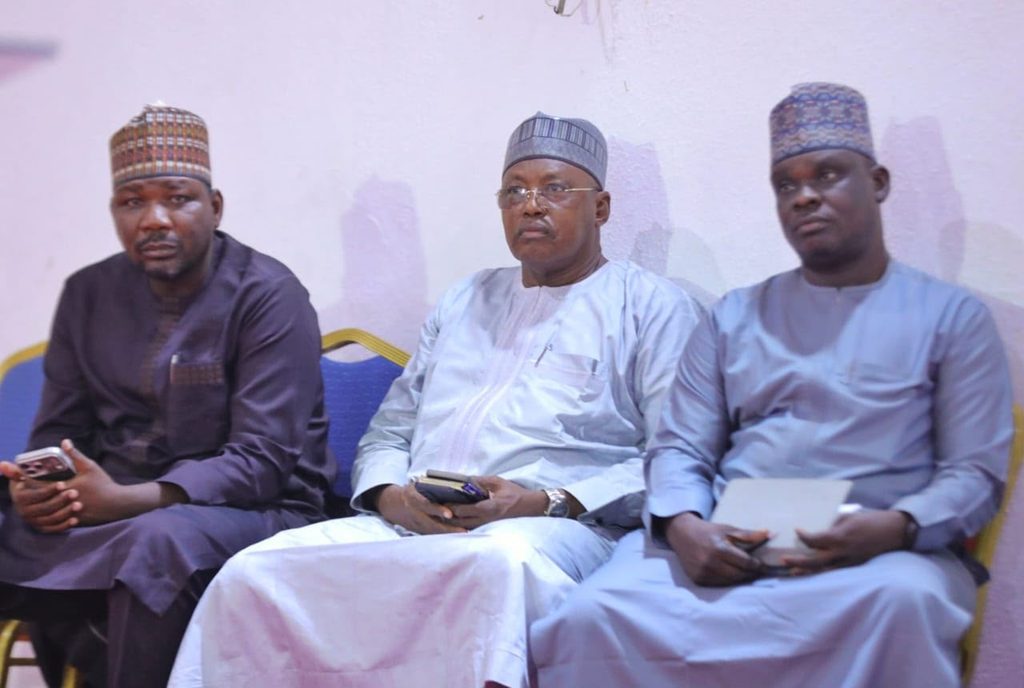
“We have security intelligence that even the insurgents use your platforms to sell looted metals. So, no responsible government will ignore such intelligence just to be politically correct.”
He further granted a waiver allowing the operators to evacuate stock accumulated before the ban at selected locations, a move intended to ease the impact of the restriction on genuine businesses.
Ajakuta: Borno loses infrastructure worth billions to scavengers, Zulum says

NHRC builds capacity of Gombe MDAs on human rights protection
By Elizabeth Ogunjobi
The National Human Rights Commission (NHRC), in collaboration with Viva Atlantic Limited, has organised a two-day workshop for Ministries, Departments and Agencies (MDAs) in Gombe State to strengthen human rights protection.
Dr Tony Ojukwu, Executive Secretary of NHRC, said at the event in Gombe on Thursday that the training aimed to enlighten MDA officials on their roles in promoting human rights effectively.
The theme of the training was: “Implementation of the National Action Plan (NAP) for the Promotion and Protection of Human Rights in Nigeria 2024-2028,” focusing on institutional responsibility across government agencies.
Ojukwu, represented by Dr Joseph Wanshe, the Gombe State coordinator, said participation by MDAs remained key to the successful implementation of the NAP and promotion of human rights across government.
He described the NAP as a national framework whose implementation should not be reserved for NHRC, but should be a collective responsibility involving all relevant stakeholders across government and society.
He said the training was also designed to ensure that a human rights-based approach became part of government planning, policy formulation, budgeting, regulation, programme implementation, service delivery, monitoring and evaluation processes.
“The 2024-2028 NAP provides us with the opportunity to move from commitment to implementation, from policies to measurable results, from the institutional responsibility to institutional accountability.
“Your participation is significant because the successful implementation of this NAP depends to a very large extent on the ownership and commitment of MDAs in government.
“The question before us is no longer simply whether we support human rights. The question is what each MDA is doing to advance and protect human rights within its mandate.
“The success of the NAP must be measured by the difference that Nigerians experience in their everyday lives.
“Behind every policy, behind every person, behind every government programme is a citizen whose rights may be affected by the decision that we make.
“Our collective responsibility, therefore, is to ensure that Nigerians within our jurisdiction as MDAs can enjoy their rights without discrimination and with effective access to justice and remedies,” he said.
Ojukwu urged participants to remain committed to NAP implementation, so that “we can transform the NAP from a policy document into a living instrument of governance for the promotion and protection of human rights in Nigeria.”
Some participants who spoke to newsmen pledged commitment to mainstreaming human rights into their institutional processes and working with the commission to entrench a culture of human rights in the state.
Mrs Rebecca Bature, Manager, News, Nigerian Television Authority (NTA), Gombe, and Mr Daniel Salihu, Assistant Director and Head of Civic Values and Democracy Education, National Orientation Agency, commended NHRC for training.
The News Agency of Nigeria (NAN) reports that 35 officials drawn from different MDAs in Gombe State participated in the two-day training on human rights and NAP implementation.
NHRC builds capacity of Gombe MDAs on human rights protection

Zamfara Peace Gains Face Fresh Threat as IOM Programme Ends
…EU unveils €25m wider Northwest security intervention, urges states to take ownership
By: Michael Olugbode
The fragile peace returning to parts of Zamfara State could be jeopardised by a premature withdrawal of development support, stakeholders warned on Tuesday as the International Organisation for Migration (IOM) reviewed the gains of its conflict-prevention programme in the state and the wider Northwest.
The warning came against the backdrop of continuing armed banditry, kidnapping, farmer-herder conflicts, displacement, poverty and climate-related pressures that have left communities across the region vulnerable to renewed violence.
At the Project Steering Committee meeting of the Conflict Prevention, Crisis Response and Resilience (CPCRR) Programme in Abuja, Zamfara State Government appealed for sustained international support beyond the programme’s current phase, saying communities that had begun rebuilding their lives still faced significant challenges.
Representing Governor Dauda Lawal, Commissioner for Budget and Planning, Yahya Zakari, said the interventions had helped communities affected by insecurity rebuild livelihoods, strengthen local peace structures and develop mechanisms for preventing conflicts before they escalate.
Zakari, who chairs the CPCRR Project Steering Committee, said restoring peace, securing lives and rebuilding the resilience of residents remained central to the administration’s agenda.
“We made firm commitment under our rescue agenda to restore peace, secure lives, and build the resilience of our people,” he said.
But he warned that the progress achieved could not be taken for granted, urging development partners to maintain their engagement rather than allow the programme to end without a mechanism for consolidating its achievements.
“I wish to make a passionate appeal for sustained engagement, consolidation of the gains, and consideration for additional funding and a follow-on program,” Zakari said.
The appeal reflects the difficult task facing Zamfara and other Northwest states, where military and law-enforcement operations have been accompanied by efforts to address the economic and social conditions that allow violent groups to exploit vulnerable communities.
IOM Acting Deputy Chief of Mission, Taha Amr, said the CPCRR programme had reached almost 70,000 beneficiaries, with interventions spanning peacebuilding, livelihood recovery, climate resilience, protection, mental health and access to essential services.
He said the Northwest continued to experience the combined effects of armed banditry, kidnapping, farmer-herder conflicts and climate shocks, with the resulting displacement and economic vulnerability placing additional pressure on communities and public services.
“To date, we are proud to share that IOM has reached almost 70,000 beneficiaries, strengthening local-led peacebuilding architecture,” Taha said.
According to him, areas covered by the programme had recorded fewer reports of community tensions, conflicts and kidnappings, suggesting that locally driven prevention mechanisms could play an important role alongside conventional security responses.
The European Union Ambassador to Nigeria and ECOWAS, Gautier Mignot, disclosed at the meeting that the EU had invested more than €5 million in the CPCRR project because of the scale of conflict and displacement confronting the Northwest.
The project, he said, was designed around conflict prevention, early warning, dialogue, mediation and resilience-building through existing community and government institutions.
“The project reflects the EU’s conviction that effective conflict prevention must be locally anchored,” Mignot said.
However, he challenged the Zamfara Government and other state authorities to ensure that structures strengthened through international assistance did not collapse once external funding ended.
“I would like very much to also encourage the state government, all of you, to take over, to take full responsibility to build on what has been reinforced by this project,” he said.
Mignot also announced that the EU was working on a broader €25 million programme targeting insecurity in Northwest Nigeria, including Zamfara, which is expected to be adopted by the end of 2026.
The proposed intervention offers a fresh opportunity for the region, but stakeholders at the meeting stressed that sustainable peace would ultimately depend on domestic ownership rather than indefinite dependence on development partners.
The Katsina experience presented at the meeting illustrated what such ownership could mean in practice.
Executive Secretary of the Katsina State Development Management Board, Mustapha Shehu, said the state had trained about 1,700 community members and stakeholders to identify emerging tensions and communicate early warning signals to the appropriate authorities.
“Now they know when to report, who to report… The earlier we know this, the earlier we can act. So, very important that early warning, early signs, then early actions,” he said.
Shehu said Katsina had also mapped 109 transhumance corridors containing water points, livestock markets, grazing areas, veterinary facilities and rest areas, identifying them as potential flashpoints requiring early intervention.
“These are not just corridors. They are flash areas where action must be taken,” he said.
The state has also expanded the use of Alternative Dispute Resolution through a mediation centre established by the High Court and Ministry of Justice, providing communities with a mechanism for resolving disputes before they develop into wider conflicts.
Shehu said such interventions were important because peacebuilding was not simply about ending immediate violence but also rebuilding relationships between communities.
“Peace process can restore confidence, trust and relationship,” he said.
Katsina has equally assumed greater responsibility for its nutrition response, with about 132 state-managed outpatient therapeutic programme centres established, supported by development partners.
The developments point to an emerging shift in the Northwest’s peacebuilding strategy—from responding to violence after it occurs to identifying grievances and flashpoints early, strengthening community institutions and giving vulnerable populations economic alternatives.
For Zamfara, however, the central test will be whether the state can preserve those gains as the current CPCRR funding cycle winds down.
After years of insecurity that have disrupted farming, displaced families, weakened local economies and strained public services, stakeholders say a return to violence would erase not only the security gains but also the investments made in rebuilding communities.
The message from the Abuja meeting was therefore unequivocal: peace in Zamfara cannot be treated as a project with an expiry date.
Zamfara Peace Gains Face Fresh Threat as IOM Programme Ends

Troops Arrest Five Suspects Over Abduction of Corps Members in Imo, Recover Weapons

Ajakuta: Borno loses infrastructure worth billions to scavengers, Zulum says

NDLEA Intercepts Saudi-Bound Cannabis in Palm Oil Keg, Seizes N7bn Tramadol at Lagos Port

Roger Federer’s Shock as DNA Results Reveal Myla and Charlene Are Not His Biological Children

THE PLIGHT OF FARIDA

FAILED COUP IN BURKINA FASO: HOW TRAORÉ NARROWLY ESCAPED ASSASSINATION PLOT AMID FOREIGN INTERFERENCE CLAIMS
-
 News3 years ago
Roger Federer’s Shock as DNA Results Reveal Myla and Charlene Are Not His Biological Children
-
Opinions5 years ago
THE PLIGHT OF FARIDA
-
 News1 year ago
FAILED COUP IN BURKINA FASO: HOW TRAORÉ NARROWLY ESCAPED ASSASSINATION PLOT AMID FOREIGN INTERFERENCE CLAIMS
-
 Opinions5 years ago
POLICE CHARGE ROOMS, A MINTING PRESS
-

 News3 years ago
EYN: Rev. Billi, Distortion of History, and The Living Tamarind Tree
-

 ACADEMICS3 years ago
A History of Biu” (2015) and The Lingering Bura-Pabir Question (1)
-

 Columns3 years ago
Army University Biu: There is certain interest, but certainly not from Borno.
-

 Politics1 year ago
2027: Why Hon. Midala Balami Must Go, as Youths in Hawul and Asikira/Uba Federal Constituency Reject ₦500,000 as Sallah Gift
