
Politics
Buni was not stoned at any rally- DG Campaign

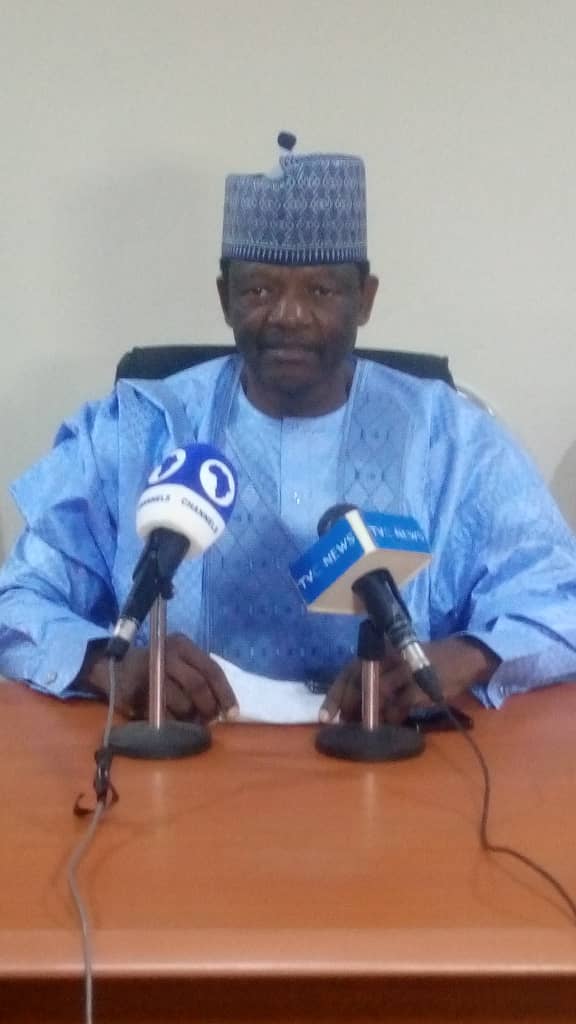
Buni was not stoned at any rally- DG Campaign
By Michael Mike
The Director General of Yobe State Governor Mai Mala Buni’s re-election campaign organisation, Sen. Mohammed Hassan has denied the alleged stoning of the governor during a campaign tour of Gashua, one of the biggest town in the state.
Some news outlet have reported that the governor was pelted with stone during his campaign tour of Gashua.
Responding to enquiries from journalists at the weekend, Hassan popularly called Dambu by his teeming supporters, said the story making the round that the governor was pelted with stone at the All Progressives Congress’s rally was the handiwork of the opposition.
He said the alleged stoning of the governor by some irate youths was a figment of imagination of some mischievous opponents.
He said: “What is being concocted and peddled around was not true. Sincerely, speaking I was among those standing on the surface of the podium when the whole drama started.
“We give chance for the Senate President, Ahmed Lawal to first address the crowd knowing fully well that being an indigene of the town, he should say something before any other person unfortunately, immediately after he finish his turn as Governor Mai Mala stood to take his turn many unwanted elements also took to the podium, later we realize that the podium could not withstand the load, so all of us decided to go down in a hurry”.
He added that: “To my knowledge, that was all that happened, but to everybody’s dismay we learned about so many negative versions of the story.
“Consequently, we smiled that it was the handiwork of the oppositions who are out to create mischief by providing false scenarios against our campaign team”.
“What they did, didn’t come as a surprise simply they notice the way and manner we are conducting our rallies, particularly in major towns of the state that is why they the ( opposition ) introduced what they did in Gashua just to reduce our Governor and the entire All Progressives Congress, campaign members.”
The media had reported that youths believed to be supporters of the Senate President, Ahmed Lawan, have allegedly rained Gov Mai Mala Buni with stones while chanting ” Bamayi, Bamayi – Bamaso, Bamaso” literally means we don’t want, we don’t want in English.
The incident happened on Saturday at the playing ground of the Katuzu area of Gashua, the headquarters Bade Local Government of the state.
According to the reports, the incident occurred when the youths threw stones directly at the podium when it was the turn for the Governor to address teaming party supporters who stormed the venue of the planned rally.
As a result, the venue turned to the commotion, and the whole scheduled activities came to an end, thereby all the dignitaries as well as the spectators ran for their safety.
Similarly, the reports indicated that the governor was immediately whisked away by security operatives when the
irate youths disrupted the event organized to celebrate the recent Supreme Court’s judgment in favor of Senator Ahmed Lawan, the APC candidate for Yobe North Senatorial District.
Buni was not stoned at any rally- DG Campaign



APC splits in Yobe as Unity Forum urges Buni to intervene
By: Yahaya Wakili
The faction of the All Progressives Congress (APC) in the Nangere local government area of Yobe State. Nangere Local Government Unity Forum (NLGUF) has called on Governor Mai Mala Buni to intervene to solve the crisis that split the party in the local government ahead of the 2027 general elections.
The chairman of the faction group, Alhaji Sule Hussaini Garin Buzu, made the call in a meeting with the chairmen of the forum of the 11 wards in Garin Buzu village, in the Nangere local government area of Yobe state. He said, “This call has become imperative at this moment and requires urgent attention.”
“We are full members of the APC, but our critical stakeholders and the elected office holders of the local government have neglected and abandoned our people, and the 2027 general elections are approaching. We noted that if necessary action is not taken to solve this crisis before the elections, our people will change their minds to vote for another candidate,” Garin Buzu said.
Buzu revealed that 79 boreholes were grounded, 6 dispensaries were dilapidated with no equipment, and health workers were there; therefore, our people in the rural areas are seriously suffering. Instead of our stakeholders and elected office holders coming to the aid of our people and rescuing them from this hazard, they just abandoned them.
Garin Buzu further calls on Governor Buni and APC leaders to immediately effect the replacement of the state house of assembly member of the Nangere constituency, Hon. Saminu Musa Lawan, and the chairman of the Nangere local government area, Hon. Samaila Musa, respectively.
According to Sule Buzu, our electives office holders and critical stakeholders don’t know the value of our people, noting that when they were elected or appointed, nobody would ever see them again until, after three and a half years, they would come back for another tenure.
Hon. Ahmed Abubakar, alias Draga, the secretary of the unity faction, said our stakeholders and our elected office holders have failed; they don’t care about our people, and they think they were wise, especially the chairman of the local government and a member of the state house of assembly.
“The member of the state house assembly, Nangere constituency, pHon, Saminu Musa Lawan, after five aspirants were asked to withdraw for him, saying that he will not thank anybody, because he was already appointed or elected him from the top, warned that if action was not taken before the elections, definitely we are going to show them that our votes were useful, we are going to change them, our people are suffering in rural areas, no drinking water, no anything to make their lives better. ”Draga said.
APC zonal vice chairman Zone B, Alhaji Yunusa Saban Auta, said he was here to represent the state chairman, Alhaji Mohammed Gadaka, and urged all APC members to be patient with one another.
He promised them that he would deliver all their complaints to the state party chairman and onward to His Excellency Governor Mai Mala Buni CON, COMN, adding that APC is one family and there was no friction in the party.
APC splits in Yobe as Unity Forum urges Buni to intervene
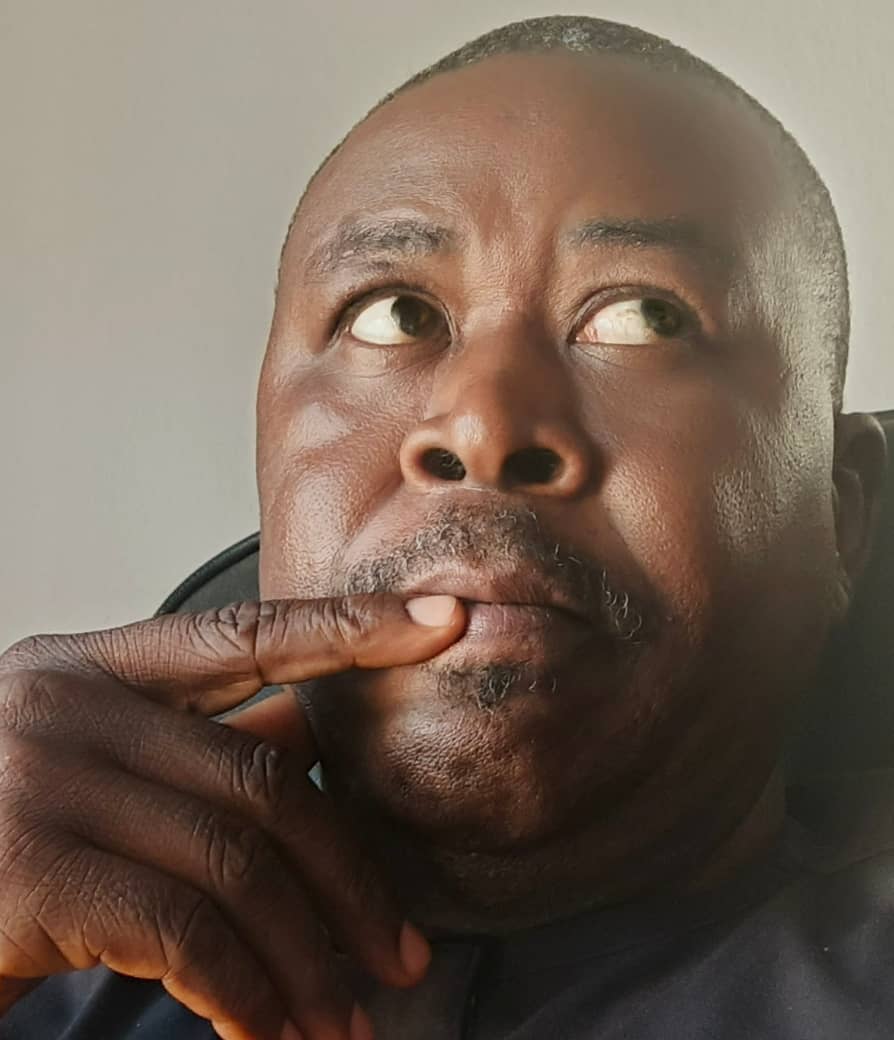
To end insecurity, kill religion in Nigerian politics
By: Dr. James Bwala
Last week I was at the Garki area, specifically at the Kiss FM 99.9, to supervise one of my students on SIWES at the radio station. I arrived while a call-in program was on air with discussions and contributions coming in as I took a seat in the studio. The discussion was centered around politics and religion, with the visits of some religious leaders to the presidency and endorsement of the Tinubu and Kashim Shettima’s administration for the 2027 general elections in the country. This program got hot at some point, and I smiled as I followed. In the end, we exchanged pleasantry and did the introduction because the anchor of that program, Mr. Felix, happened to be my student’s organization supervisor. While discussing the program, I told him that every political leader is a religious leader, and I explained. He concurred and also suggested I come up someday for his program live, which I will someday.
While I left the station, I also arrived at Gwani Street to see one of my students on an industrial assignment. While I was waiting in that office, I listened to conversations amongst staff of that organization still hitting on politics and religion. This time they were looking at the insecurity situations in Nigeria and the government and its agencies’ inability to deal with the situation and bring it to an end. I smiled and nodded as if agreeing with one of the staff’s views when he pointed at the failure of the Tinubu administration and the lack of commitment on the part of the Nigerian military to end the terror conflicts of Boko Haram in the Northeast, banditry in the Northwest, and kidnapping and other crimes across other parts of the country.
He then turns to me and seeks my opinion after learning I was a lecturer with one of the universities. He asked a specific question and needed a straight answer as to how I think the insecurity in the country can come to an end. I simply said, “To end insecurity, kill religion in Nigerian politics.” This statement hits them like a bomb. One asked if I am serious. I smile, look at him straight in the eyes, and ask what he thinks. I told them I am seeing the prophecy of Malam Aminu Kano in 1956 when he cautions about the day politicians and religious leaders will come to the table in agreement and the outcome he foresaw of the common man. I told them what I earlier told the anchorman at Kiss Radio—that every political leader is a religious leader. And every word coming from such a leader makes or destroys.
The conversation went on, and I told them that the pervasive issue of insecurity in Nigeria has become a constant source of national anxiety, prompting widespread calls for decisive action from the government and military.
My point is that, while the populace is quick to attribute the persistent state of insecurity to the perceived failures of these institutions, a deeper examination reveals a more complex web of underlying factors that hinder effective resolution. Among these, the pervasive influence of religion, often exploited or manipulated, stands out as a potent catalyst and impediment to lasting peace in Nigeria.
My observation is that it is a common refrain in Nigerian discourse to point fingers at the government and the military for the nation’s security woes. From banditry in the North to farmer-herder conflicts in the Middle Belt and secessionist agitations in the South, the blame is often laid at the feet of ineffective governance and a poorly equipped or corrupt security apparatus. While these institutions undoubtedly bear responsibility for maintaining law and order, this singular focus often overshadows the intricate socio-religious dynamics that fuel and sustain these conflicts. The narrative of government failure, while partly true, serves as a convenient shield, deflecting attention from the deeply entrenched communal grievances and the ways in which religious identity is weaponized.
I see religion in Nigeria as not merely a private belief system; it is a powerful social and political force that permeates nearly every aspect of life. Unfortunately, this influence is often exploited to sow division and incite violence. Extremist interpretations of religious doctrines, propagated by unscrupulous individuals or groups, have fostered an us-versus-them mentality, dehumanizing those of differing faiths and justifying aggression.
The proliferation of religious militias and other influences of religion often exacerbates the cycle of violence, blurring the lines between self-defense and offensive action. For example, the farmer-herder crisis is frequently framed in religious terms, pitting predominantly Christian farmers against Muslim herders, thereby obscuring the underlying issues of land scarcity, resource competition, and historical grievances. This religious framing simplifies complex socio-economic problems into an intractable faith-based conflict, making genuine reconciliation immensely difficult.
In fact, the influence of religious leaders in Nigeria is immense, and their pronouncements carry significant weight within their communities.
While many religious leaders advocate for peace and tolerance, a segment actively or passively contributes to insecurity. This can manifest through the dissemination of inflammatory rhetoric, the justification of violence in the name of faith, or the refusal to condemn acts of brutality committed by adherents of their religion. In some cases, religious institutions themselves become centers of power and influence that are unwilling to cede ground or engage in interfaith dialogue, further entrenching divisions.
The inability of many religious communities to engage in critical self-reflection regarding their role in perpetuating conflict is a major impediment to peace. When religious doctrines are interpreted in ways that promote exclusivity and intolerance, the seeds of insecurity are sown.
It is crucial to acknowledge that religion is not the sole driver of insecurity in Nigeria. Poverty, unemployment, corruption, ethnic tensions, and the proliferation of small arms all play significant roles.
However, religion often acts as an accelerant, transforming these underlying vulnerabilities into active conflicts. For example, economic hardship can be more easily exploited by religious demagogues who promise divine retribution against perceived enemies or offer spiritual solace that justifies violent action. Similarly, ethnic rivalries are often overlaid with religious differences, creating a potent and combustible mix. Therefore, any strategy aimed at ending insecurity must acknowledge and actively dismantle the ways in which religion is manipulated to exacerbate these other societal ills.
The brief discussion turns to a lecture series. Given my take on this, I concluded that while the Nigerian government and military remain central to any security strategy, their efforts will continue to fall short if the deeply ingrained religious dimensions of insecurity are not addressed. The tendency to solely blame external authorities obscures the internal societal dynamics that fuel conflict. Until Nigerians, particularly religious leaders and communities, engage in a profound and honest reckoning with how religious narratives and identities are being used to perpetuate violence, lasting peace will remain an elusive dream.
Acknowledging and actively dismantling the manipulative use of religion, fostering genuine interfaith dialogue, and promoting critical engagement with religious texts are vital steps toward breaking the cycle of insecurity that has plagued Nigeria for too long. Only by confronting these “underlying difficulties” can Nigeria hope to achieve lasting stability.
We can learn from the ten most peaceful countries in the world: Iceland, New Zealand, Switzerland, Slovenia, Ireland, Austria, Portugal, Singapore, Finland and Japan. In these countries, there is a great divide between politics, government and religion. Kill religion in government and in politics and Nigeria will end insecurity.
- James Bwala, PhD, writes from Abuja
- To end insecurity, kill religion in Nigerian politics

Dafinone Consults Ughelli North Stakeholders as Egbo Vows APC Victory in 2027
……As Dafinone consults stakeholders, urges unity
The Executive Chairman of Ughelli North Local Government Council, Olorogun Jaro Movudu Egbo, KSC, has declared that the All Progressives Congress (APC) is poised for a decisive victory in Ughelli North in the 2027 general elections.
Egbo made the declaration on Friday when the Senator representing Delta Central Senatorial District, Senator Ede Dafinone, visited the council for a stakeholder consultation at the Executive Council Chamber of the Ughelli North Local Government Secretariat.
Speaking to party leaders, elders and other stakeholders, Egbo said the APC was gaining momentum across the local government, assuring Dafinone of a robust grassroots mobilisation strategy and a united political structure ahead of the polls.
He pledged that Ughelli North would deliver a resounding victory for President Bola Ahmed Tinubu, Governor Sheriff Oborevwori and other APC candidates, stressing that the council remained firmly aligned with the party’s programmes and policies.
The council chairman also called for sustained stakeholder engagement, political stability and internal cohesion, describing them as essential to securing electoral success.
The APC Chairman in Delta Central Senatorial District, Chief Omeni Akpeki, in his remarks, urged party executives, ward leaders and stakeholders to close ranks and resolve grievances amicably.
Akpeki stressed that unity, discipline and mutual respect were critical to building a formidable structure capable of delivering victory for the party in 2027.
Dafinone, who explained the purpose of the consultation, reaffirmed his commitment to inclusive and responsive representation.
He said regular engagement with party leaders, elders, traditional institutions, community stakeholders and constituents was necessary to understand their concerns and aspirations and translate them into meaningful legislative interventions.
The meeting ended with a renewed commitment by APC leaders and stakeholders in Ughelli North to strengthen party unity, intensify grassroots mobilisation and work collectively towards victory in the 2027 elections.
Dafinone Consults Ughelli North Stakeholders as Egbo Vows APC Victory in 2027

NDLEA Arrests Another Mexican Drug Kingpin, Dismantles Ebonyi Meth Lab

MACBAN condemns killing of travellers in Plateau, warns against unverified allegations

COAS charges Plateau troops to sustain security gains, strengthen peace efforts

Roger Federer’s Shock as DNA Results Reveal Myla and Charlene Are Not His Biological Children

THE PLIGHT OF FARIDA

FAILED COUP IN BURKINA FASO: HOW TRAORÉ NARROWLY ESCAPED ASSASSINATION PLOT AMID FOREIGN INTERFERENCE CLAIMS
-
 News3 years ago
Roger Federer’s Shock as DNA Results Reveal Myla and Charlene Are Not His Biological Children
-
Opinions5 years ago
THE PLIGHT OF FARIDA
-
 News1 year ago
FAILED COUP IN BURKINA FASO: HOW TRAORÉ NARROWLY ESCAPED ASSASSINATION PLOT AMID FOREIGN INTERFERENCE CLAIMS
-

 News2 years ago
EYN: Rev. Billi, Distortion of History, and The Living Tamarind Tree
-
 Opinions5 years ago
POLICE CHARGE ROOMS, A MINTING PRESS
-

 ACADEMICS3 years ago
A History of Biu” (2015) and The Lingering Bura-Pabir Question (1)
-

 Columns3 years ago
Army University Biu: There is certain interest, but certainly not from Borno.
-

 Politics1 year ago
2027: Why Hon. Midala Balami Must Go, as Youths in Hawul and Asikira/Uba Federal Constituency Reject ₦500,000 as Sallah Gift
